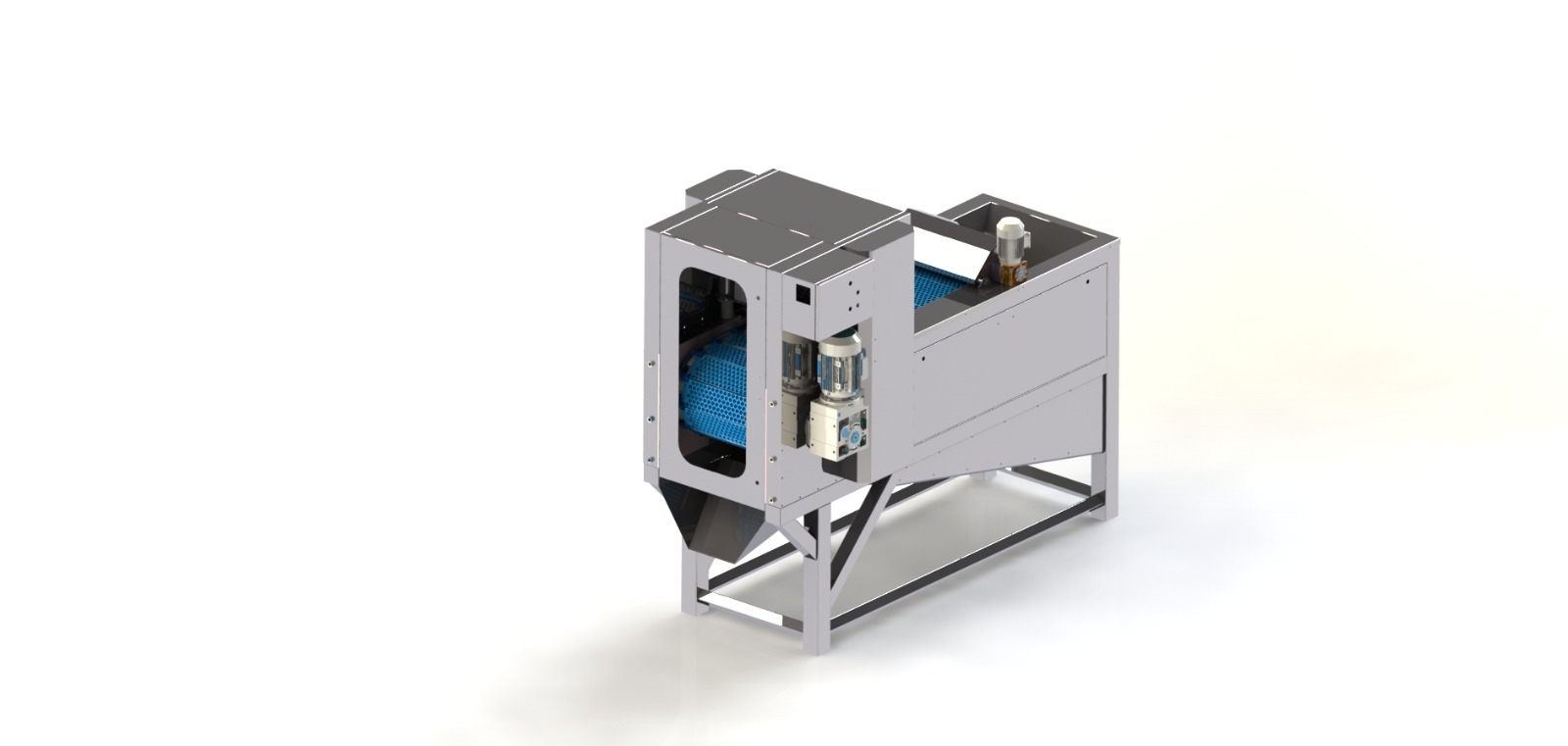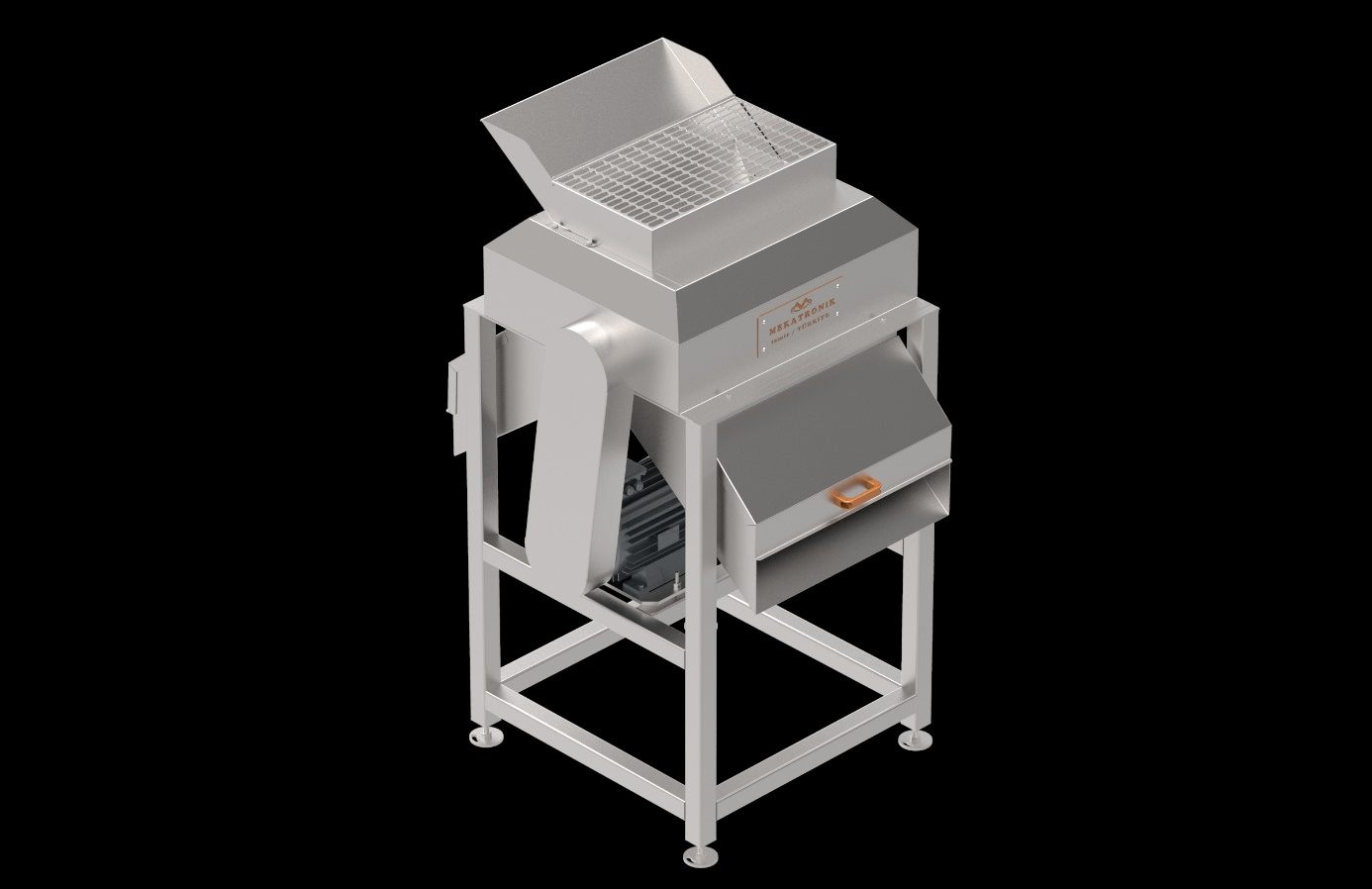
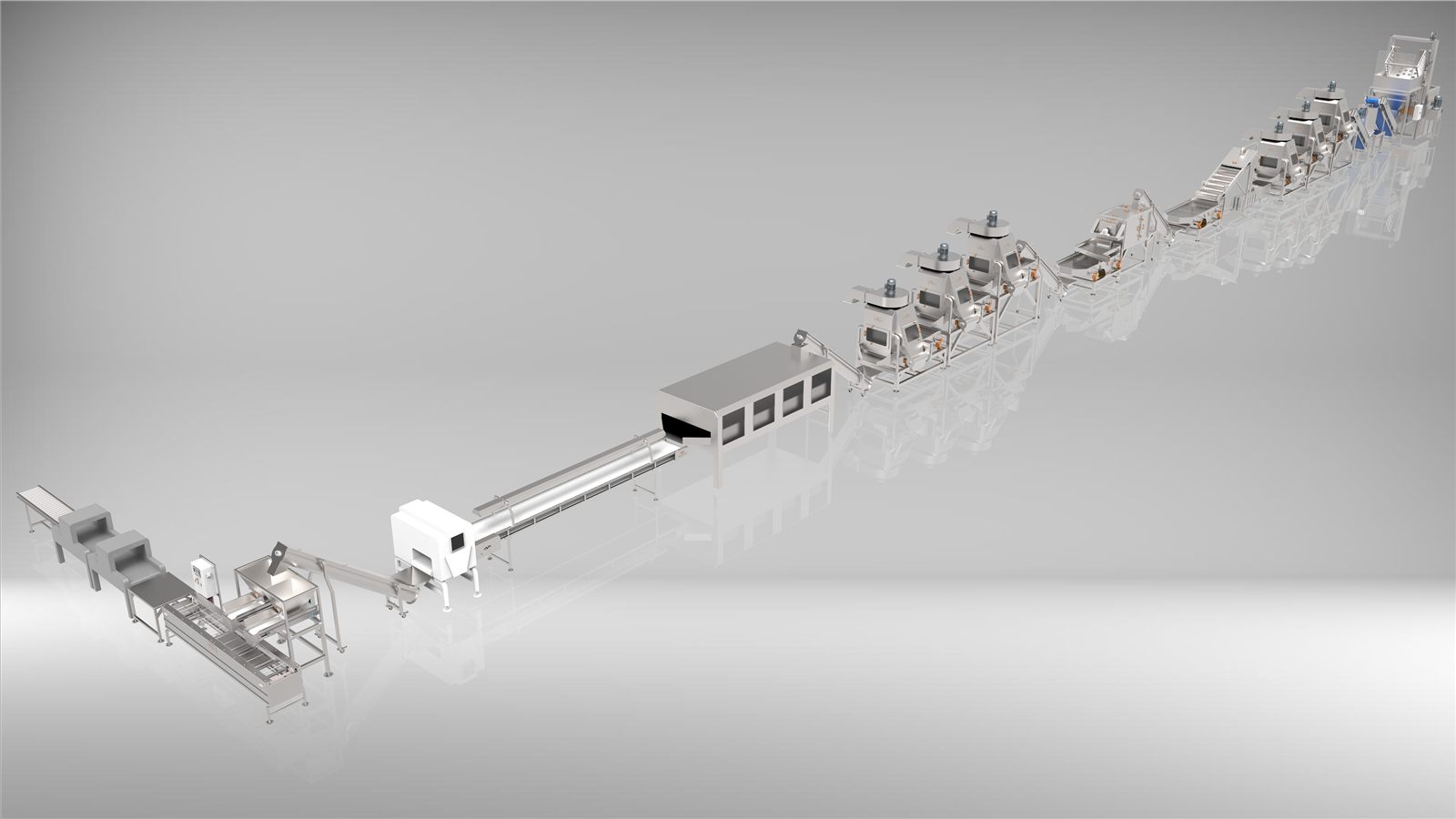
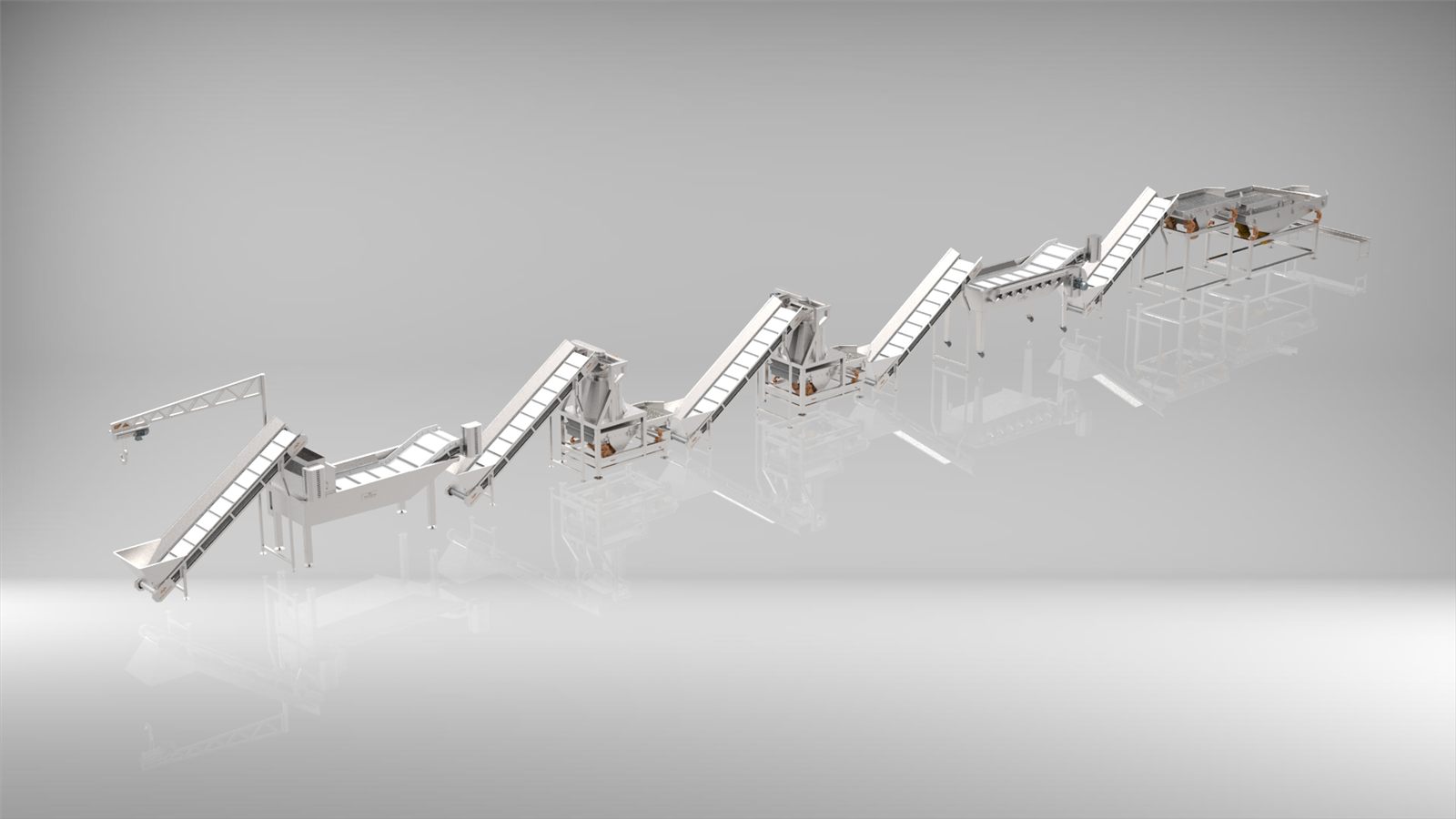
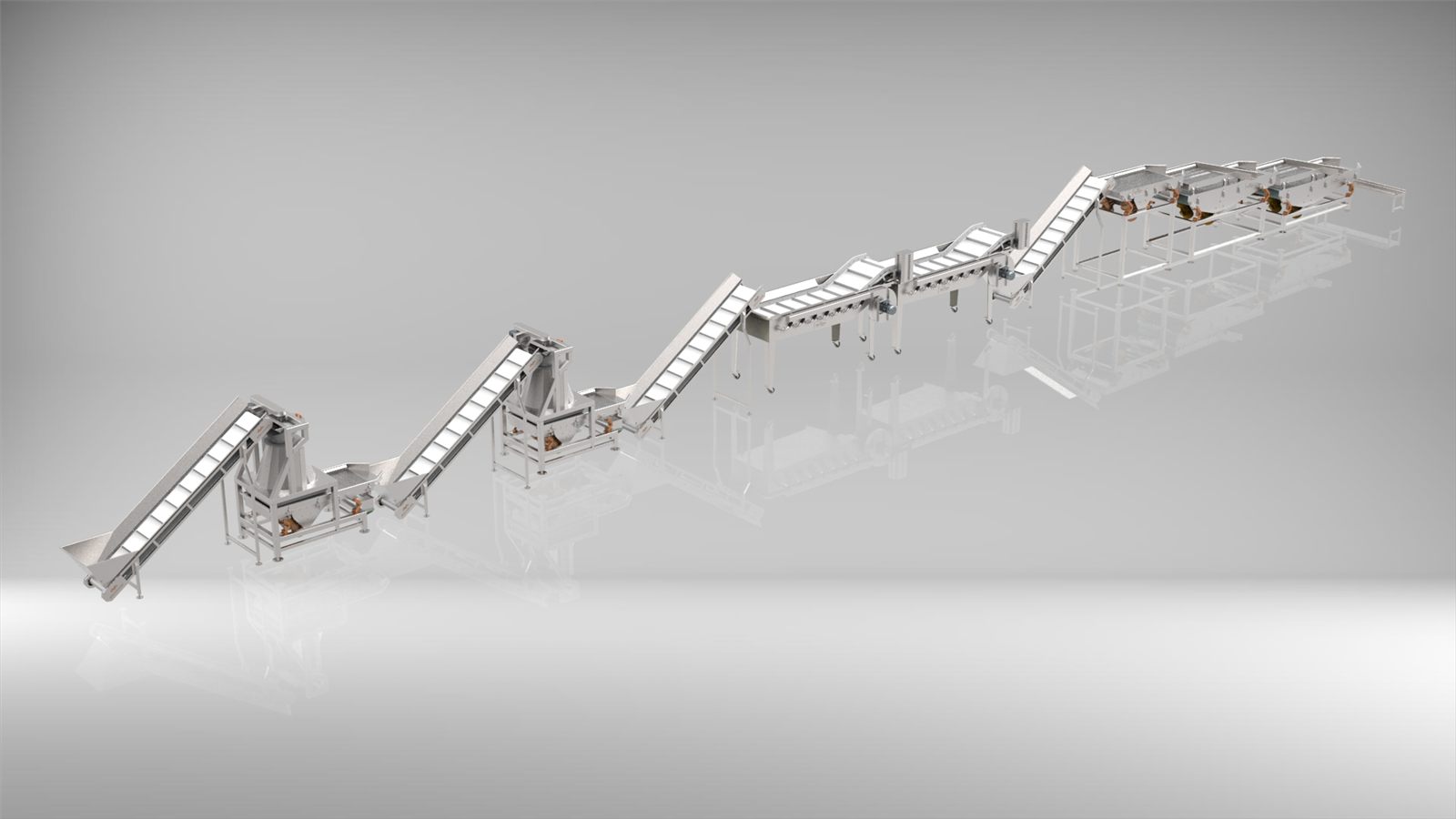
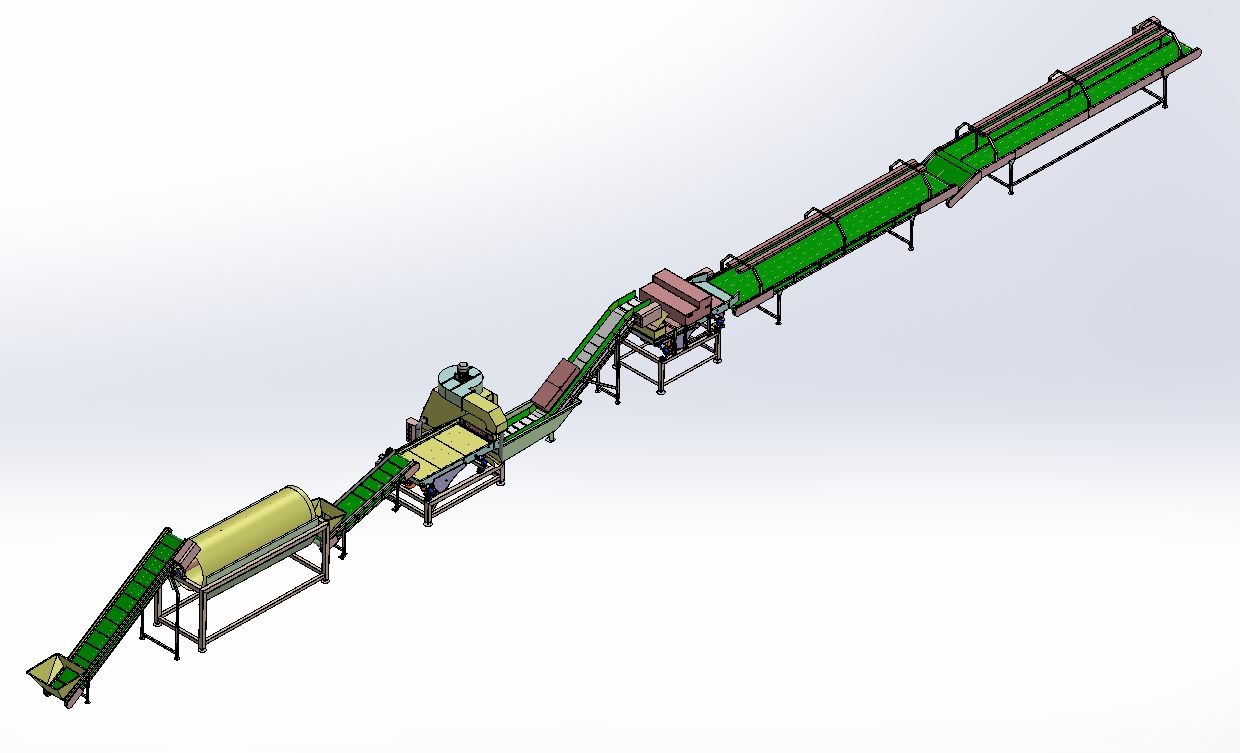
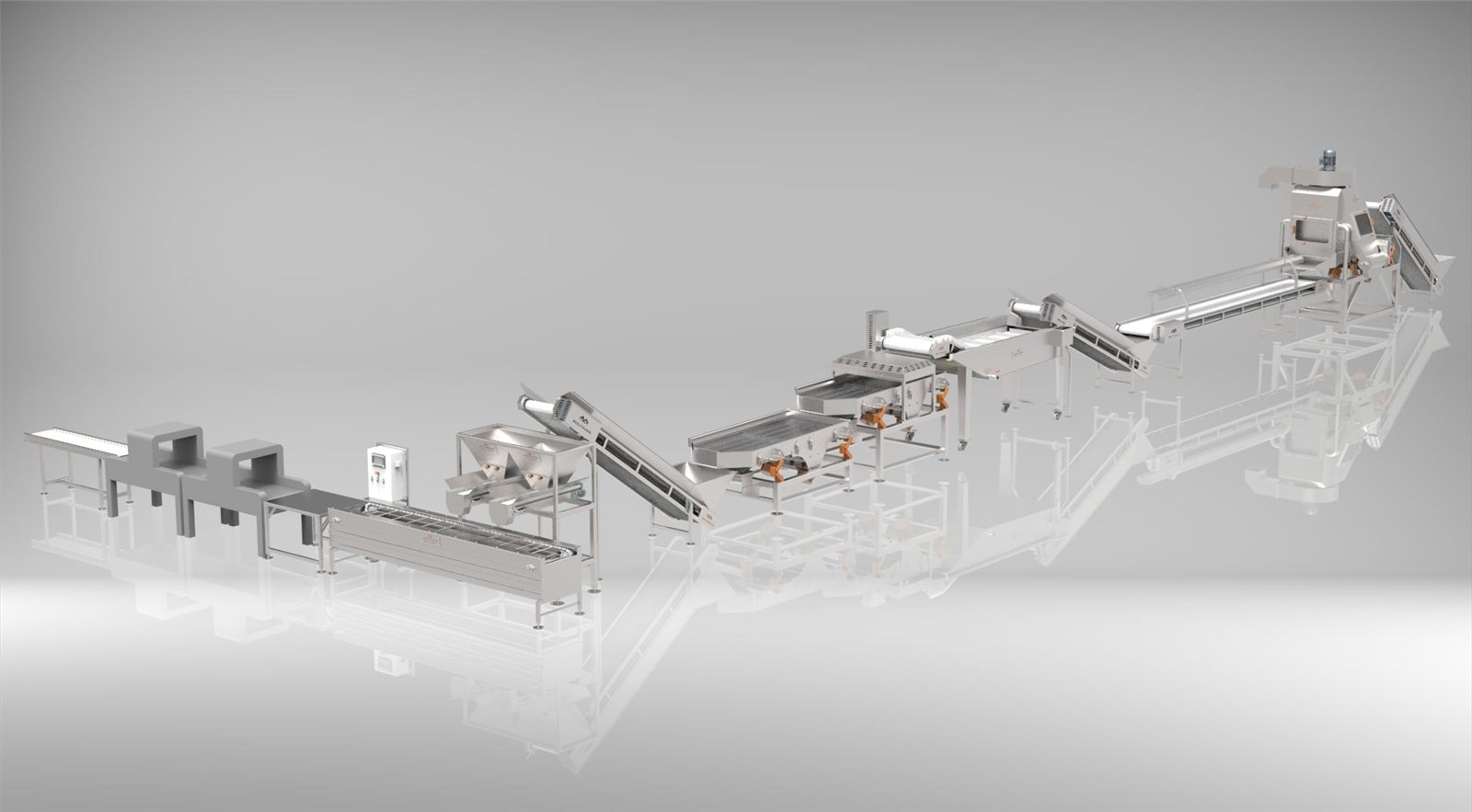
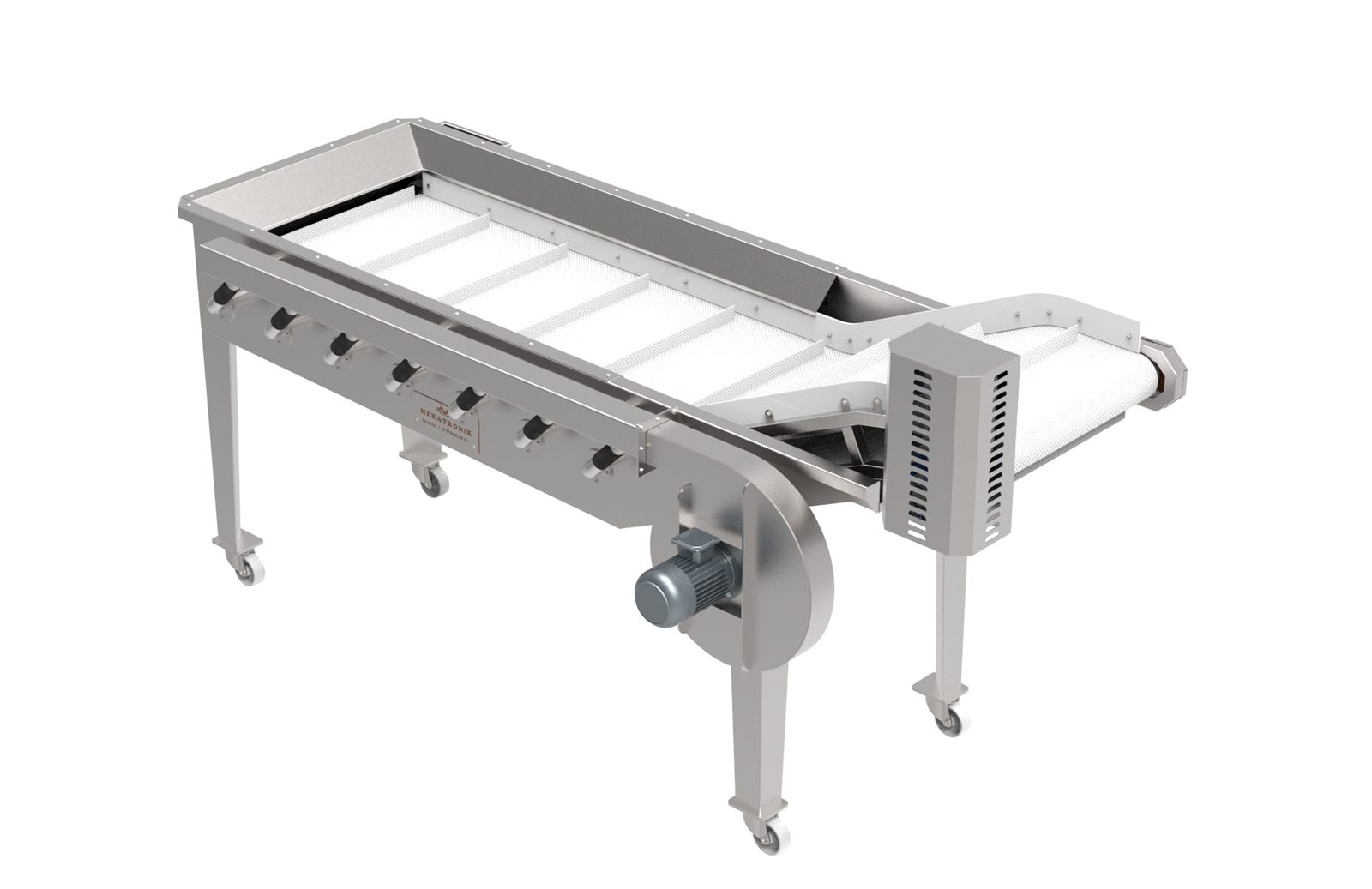
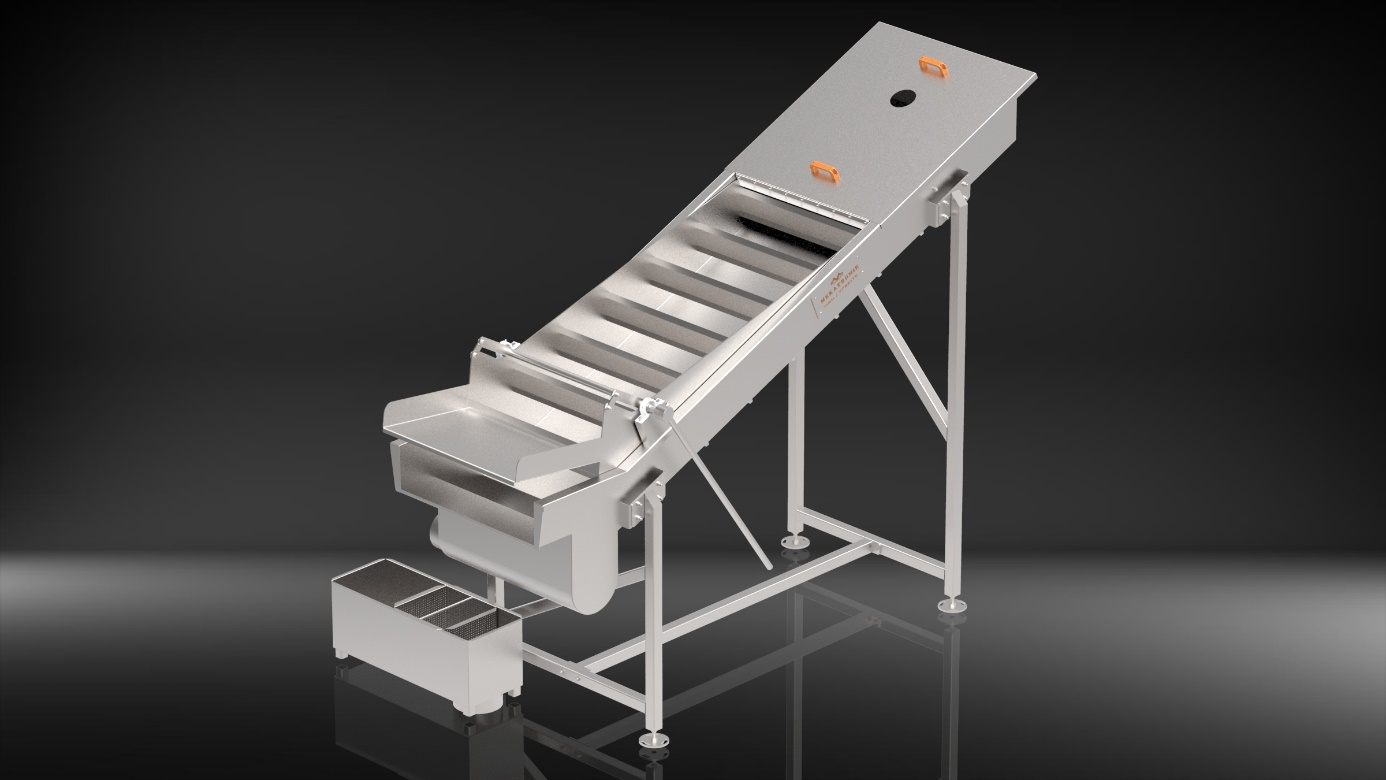
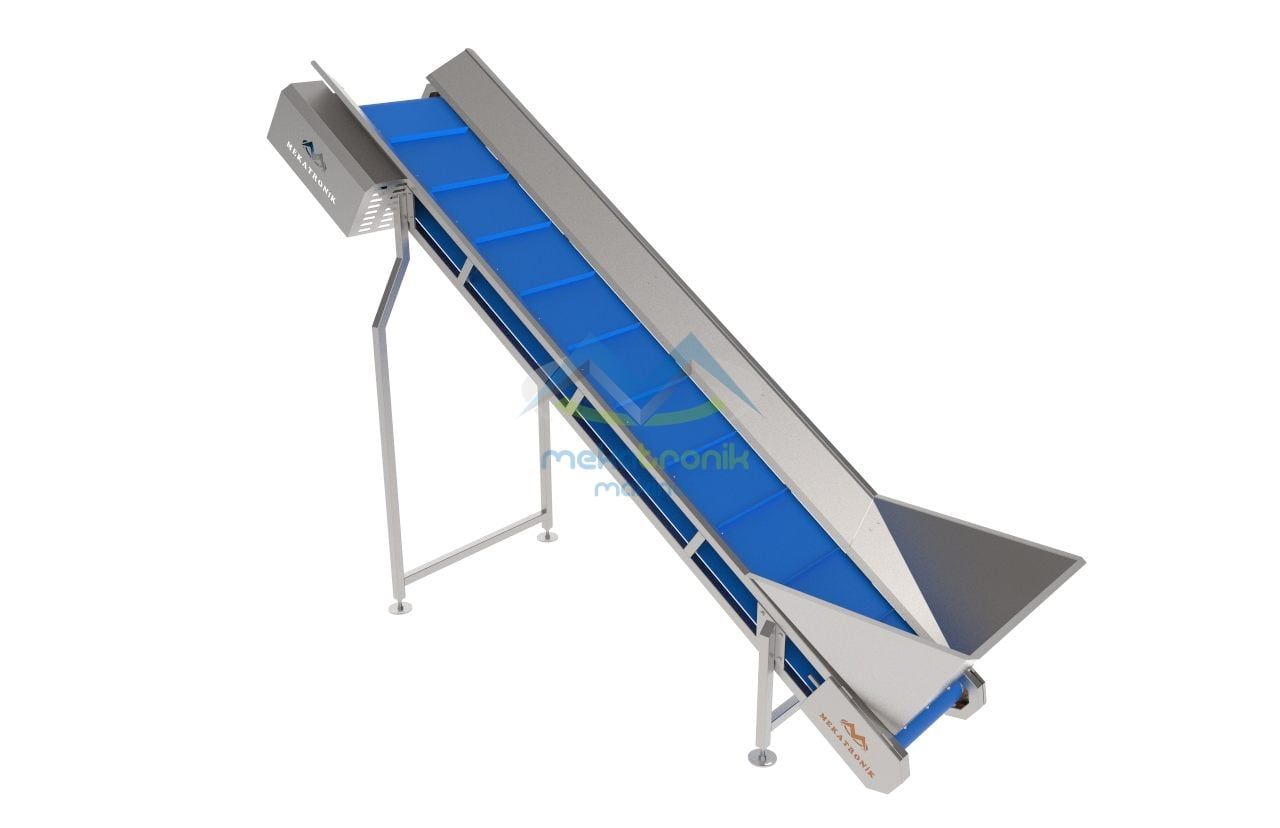
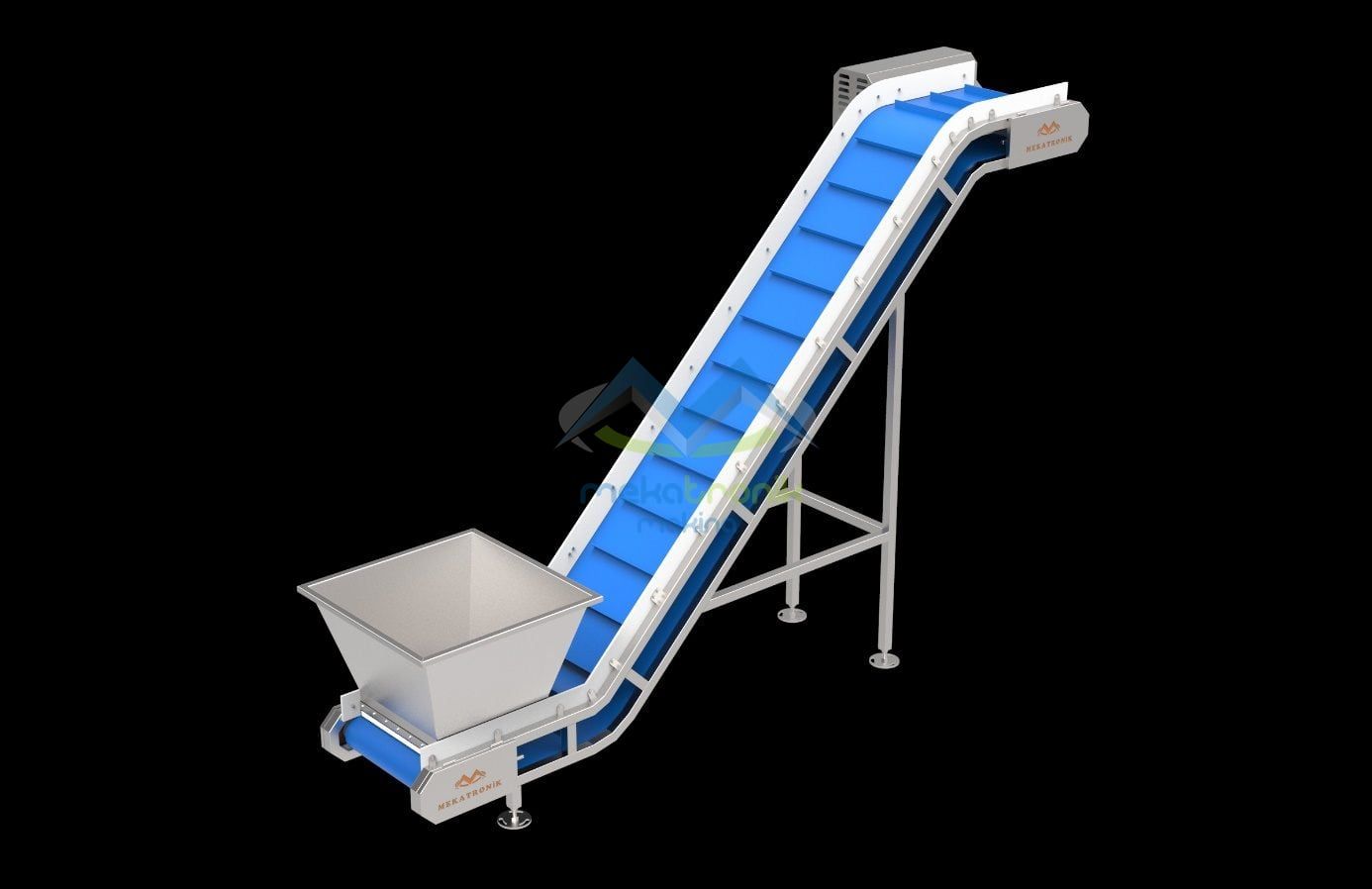
On a cherry and sour cherry line, capacity does not come from a single figure in a catalogue. The seasonal volume of fruit, the working pattern, the losses and the slowest station in the line are read together. The cherry and sour cherry pitting machine runs fully automatically, but its capacity is set per project. This article explains the order in which the calculation is done.
01
Why does the calculation not start with the machine?
A machine's nominal value does not give the real output of a line. Real output is decided by how the fruit reaches the plant, how many shifts run, and which stations sit before and after pitting. Starting from the machine means choosing the answer in advance; the right order runs from the need to the machine.
So the first question is not "which machine" but "how much fruit, in what processing window". The cherry harvest is short and ripe fruit does not tolerate waiting, which makes the processing window the hardest limit in the calculation.
02
Which inputs go into the calculation?
- 01Incoming volume: fresh fruit entering the plant over the season and on the busiest day.
- 02Working pattern: shifts per day, days per week, and time set aside for maintenance and cleaning.
- 03Fruit characteristics: size, variety and ripeness; soft fruit is fed more carefully.
- 04Accepted result: whether pitted fruit is accepted whole or halved.
- 05Next process: jam, freezing, canning or drying; each asks for a different flow rate.
- 06Changeover time: how long the machine stands when the variety changes.
No figures are given in this article for any of these, because all of them are specific to the plant. The numbers are settled at the quotation stage, with the plant's own fruit and shift information.
03
How does the slowest station set the capacity?
A line runs at the speed of its slowest station. If washing, sorting, pitting and the following filling or freezing stage are linked one after another, the narrowest point limits the output however fast the pitting step is. For that reason a capacity calculation covers the whole line layout, not one machine.
A buffer zone between stations stops short stoppages from spreading through the whole line. The size of the buffer is again set by the fruit and the flow, and is not given as a fixed value.
04
How do losses reduce capacity?
Not all fruit that enters leaves in the same quantity. Stem and leaf removal, crushed or split fruit, fruit with the pit left in, and cleaning stops all lower the net output. Because the fruit is soft, the loss allowance is handled more carefully than for dried fruit.
The loss rate cannot be guessed from an article; it is measured in a sample trial with the plant's own fruit. What makes the calculation sound is that this measurement rests on real fruit, not on an estimate.
05
Why is the fruit flow not even through the day?
Harvest does not arrive evenly across the day or from one day to the next. Fruit picked in the morning can pile up at the plant in the afternoon, and after a rainy day deliveries can jump at once. If the capacity calculation is built on the busiest period rather than on the average flow, the line can process fruit on those days without holding it; built on the average, fruit queues up on peak days.
Building excess capacity is not the answer either: a machine that stands idle outside the peak or when the crop is small enlarges the investment. The balance is set between the peak day and the average day, according to the waiting time the plant can accept. That waiting time depends on what happens to the fruit next; fruit going to fresh sale and fruit going straight to freezing do not tolerate the same wait.
The time set aside for cleaning and maintenance belongs in the same calculation. Soft fruit leaves juice and flesh residue, so cleaning intervals may be frequent; counting them in advance prevents a surprise loss of capacity in the middle of the season.
06
Which questions are asked, and in what order?
| Question | What it depends on | Where it is settled |
|---|---|---|
| How much fruit per season? | Harvest and purchase plan | Plant information |
| How long is the processing window? | Shifts and working days | Plant information |
| Which station is the narrowest? | Line flow | Line design |
| How large is the loss? | Variety, ripeness, setting | Sample trial |
| How many machines? | Combination of the above | Quotation |
The order in the table is deliberate: the number of machines comes last, because it is derived from the four answers before it.
07
Next step
To discuss capacity with your own fruit and shift pattern, you can leave your details on the quotation page. To get to know the machine, see the pitting machines category. Mekatronik Makina fixes the exact values at the quotation stage and at commissioning, with the plant's real fruit.