When sizing a fumigation chamber, the first question is not how many cubic metres it should have but how much product one batch holds and how long that batch stays inside. Volume is the result of those two inputs. For the Vacuum Fumigation Chamber, capacity is set per project and exact figures are finalised in the quote.
01
What decides the batch size?
A batch is the amount of product loaded into the chamber in one go. If it is set too large, the chamber often runs half empty and product types get mixed; if it is too small, the line waits in front of the chamber. These inputs decide the batch:
- 01The daily flow leaving the line at peak season: the calculation is made for the busiest day, not for an average one.
- 02The handling unit: crate, pallet or sack. The chamber is dimensioned around the size of that unit and the stacking height.
- 03The number of product types: if dried fig, raisins and dates share one chamber in turns, batches are separated by product.
- 04The buyer's specification: some buyers want a batch to be traceable as one lot, which caps the batch at the lot size.
02
What makes up the total time inside the chamber?
Vacuum time alone does not set the chamber's throughput. The time a batch occupies the chamber is the sum of these steps: loading, closing the door, vacuum, holding the product, releasing the gas and confirming a safe level by measurement, then unloading. The vacuum level, the holding time and the type of fumigant are not tied to a fixed number; they depend on the product, the regulation and the instructions of the authorised person carrying out the application. That is why this article gives no figures.
The ventilation and measurement step is often overlooked, yet it is the last step that makes the chamber ready for the next batch. The details are in our article on ventilation and waiting time after fumigation.
03
How do volume and cycle time relate?
The calculation rests on two simple comparisons. First: how many batches the product arriving on the busiest day makes when divided by the batch size. Second: whether that number of batches, multiplied by the total time one batch spends in the chamber, fits into the working day. If it does not fit, there are three ways out: enlarge the batch, add a second chamber, or extend the shift.
The numbers for this calculation come from your operation; we do not guess figures. In the quote stage the chamber size is settled together with your line flow and storage plan.
04
One large chamber or two smaller ones?
| Question | One large chamber | Two smaller chambers |
|---|---|---|
| Mixing of product types | Batches run in sequence; a change of product needs cleaning and measurement | Product types can be kept in separate chambers |
| Partial loads | A small batch runs with unused volume | A small batch goes into one chamber, the other stays empty |
| Maintenance and faults | Treatment stops when the chamber stops | One can run while the other is in maintenance |
| Space needed | One area, one connection | More area and two separate installations |
For plants that ship to different buyers under different specifications, separate chambers often simplify the routine. With a single product type and a steady flow, one chamber may be enough.
05
How do the door and loading layout affect the volume?
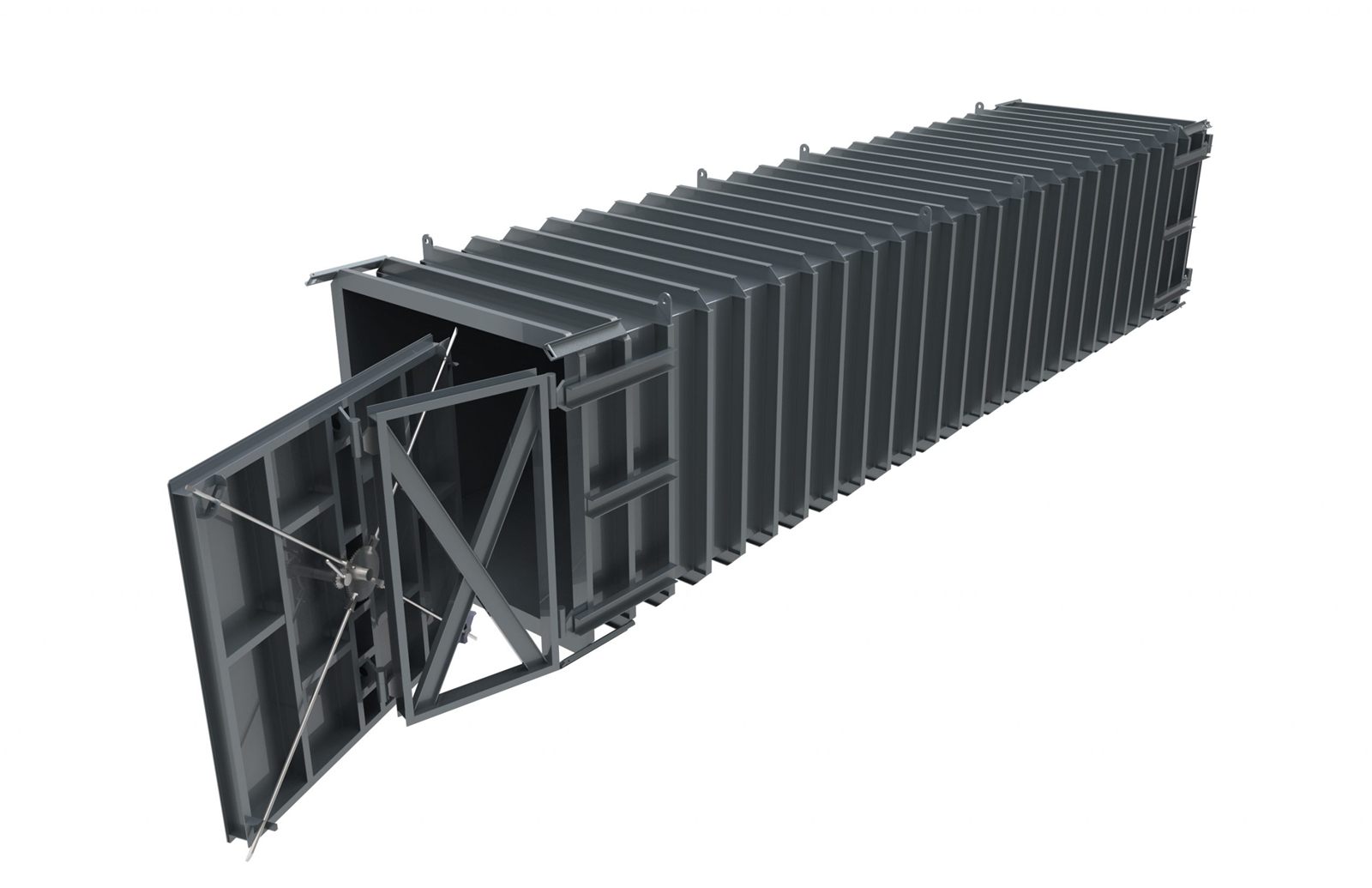
The front of the chamber matters as much as the inside. Single or double-sided moving doors free up room for forklift and crate manoeuvring in a tight space; with a double-sided door, untreated product goes in on one side and treated product comes out on the other, so the two flows never cross. The pneumatic fumigant release system removes the need to open and close the door repeatedly just to apply the fumigant.
The gap between crates that lets gas circulate, and the stacking height, also enlarge the chamber. If these gaps are left out of the calculation, a chamber that is enough on paper is not enough on site.
06
What should be ready for a quote?
- 01Product type and handling unit (crate, pallet, sack)
- 02Target product quantity for the busiest day
- 03Dimensions of the planned chamber location and the forklift manoeuvring area
- 04Treatment and traceability requirements from the buyer's specification
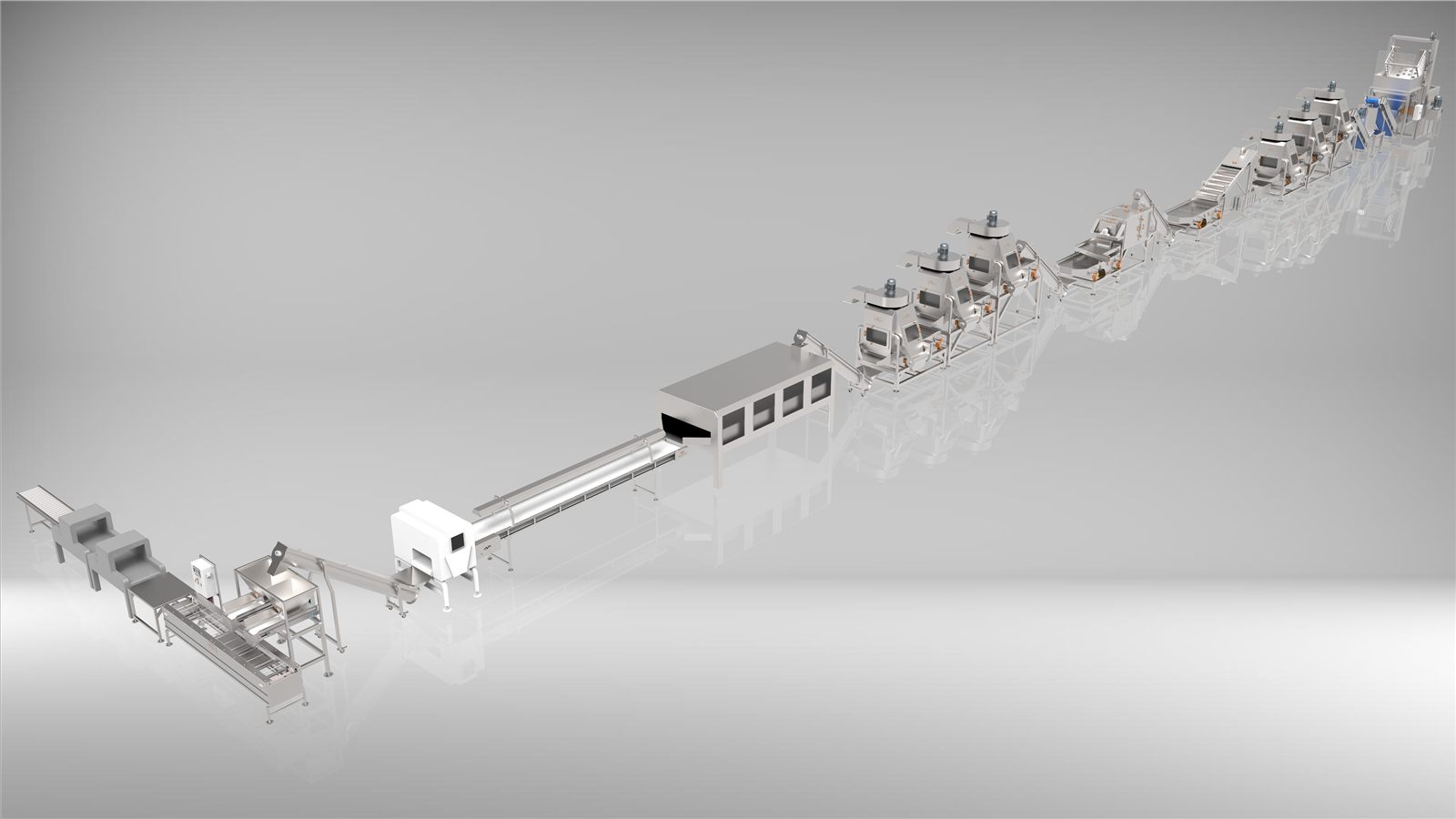
Product-contact surfaces are built in AISI 304 stainless steel, or AISI 316 depending on the process, and the line is engineered to meet CE conformity requirements. Next step: send these details through our quote page and we will settle the chamber size against your flow together.