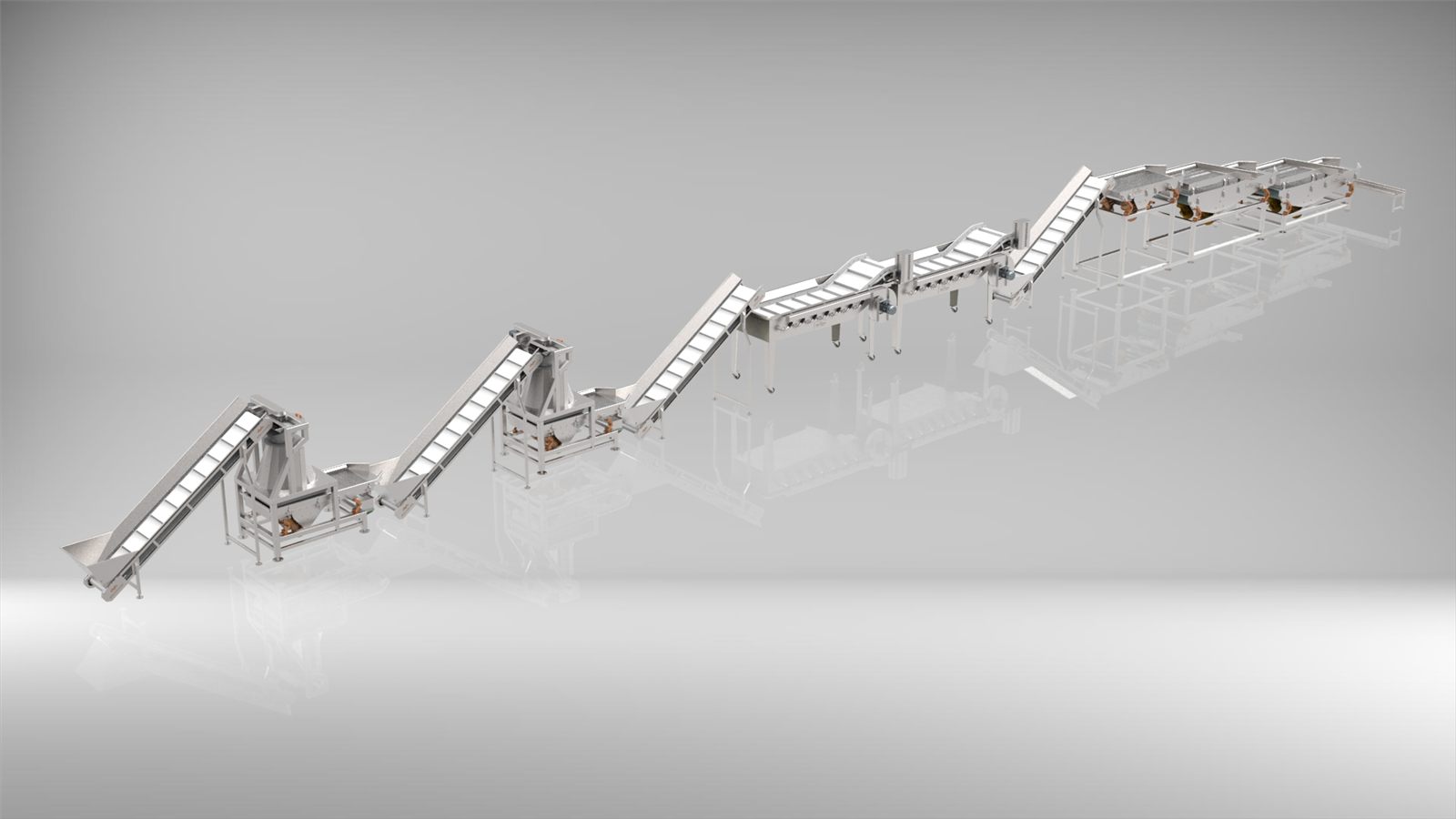
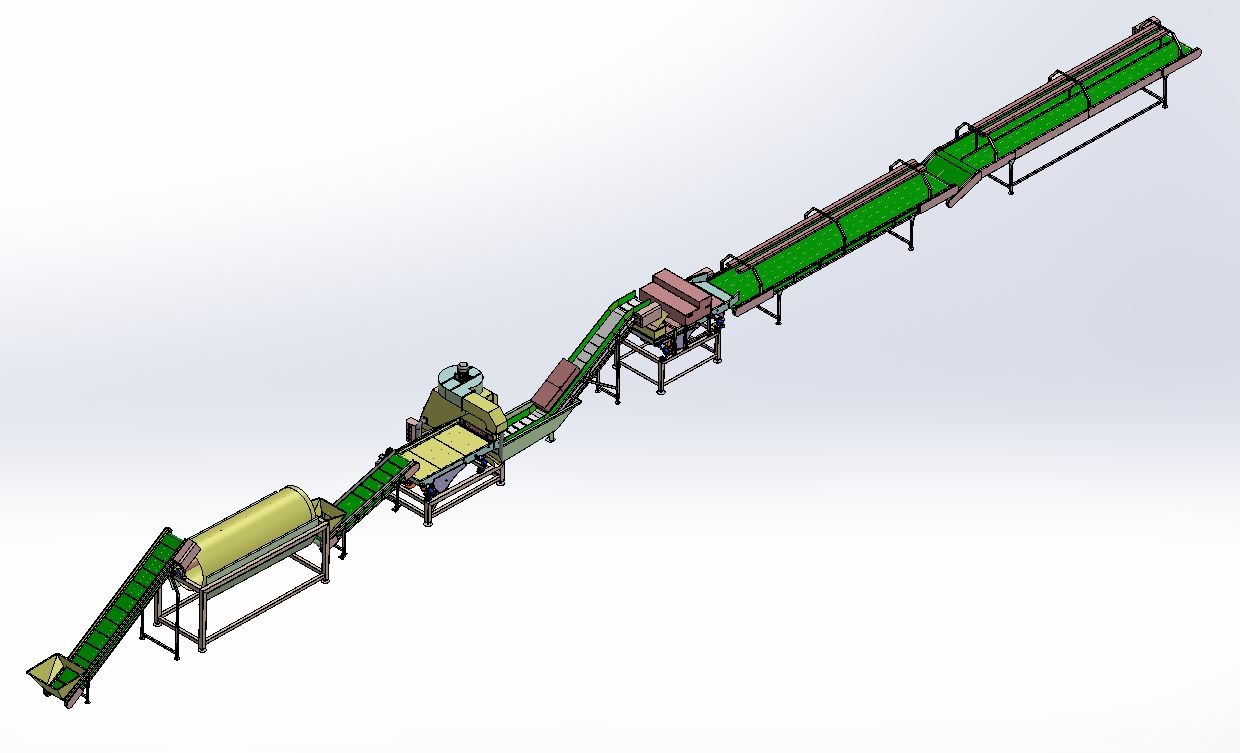
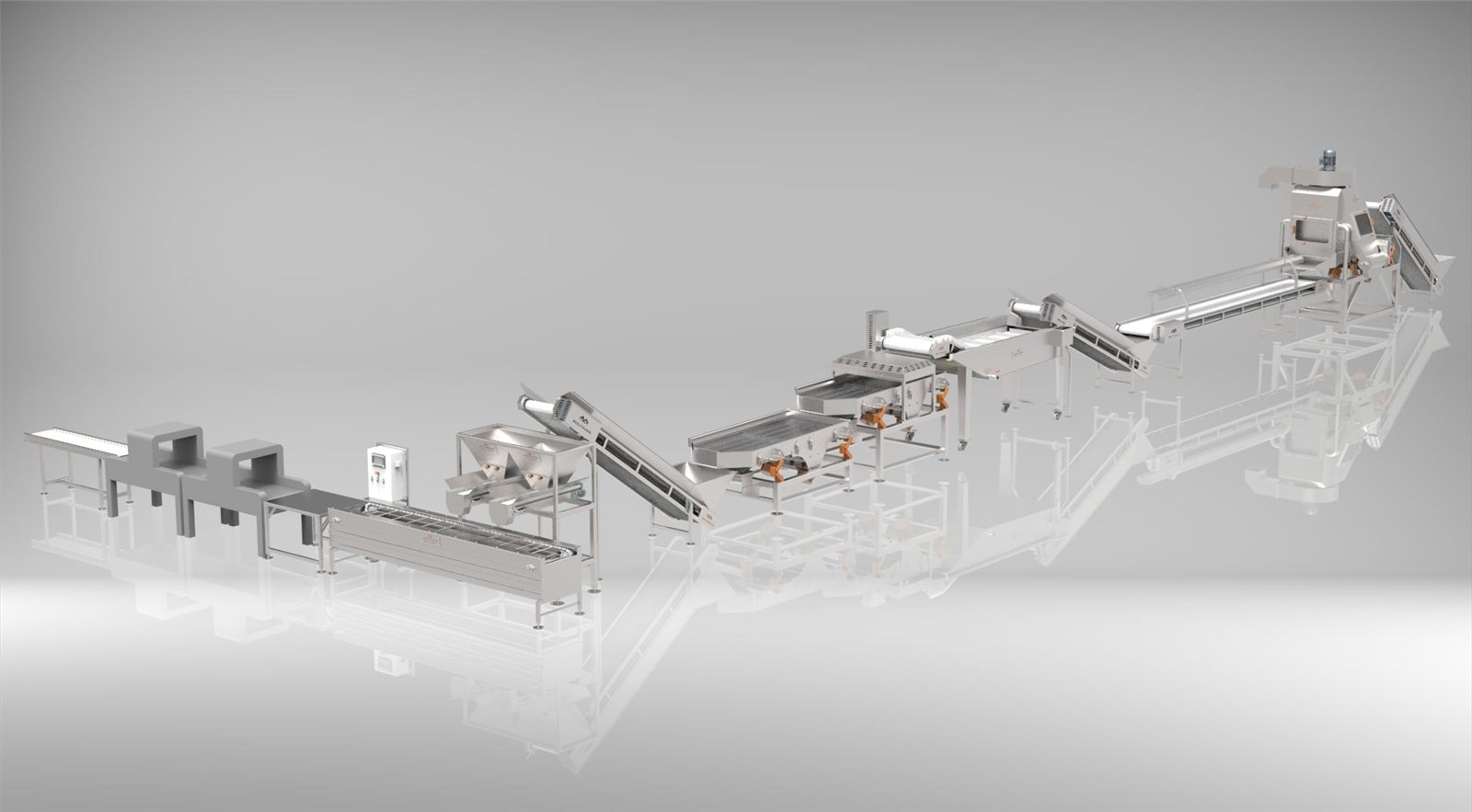
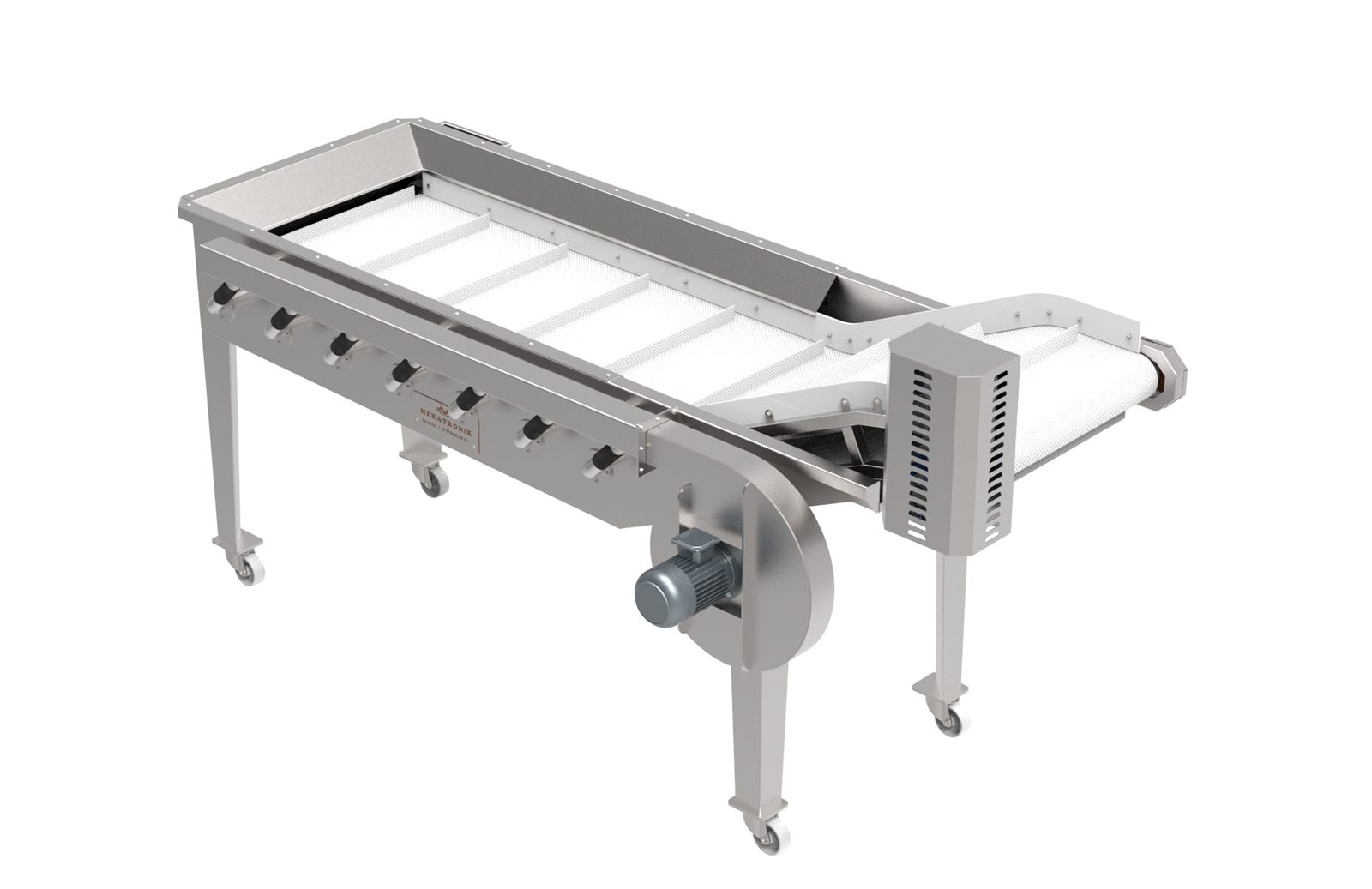
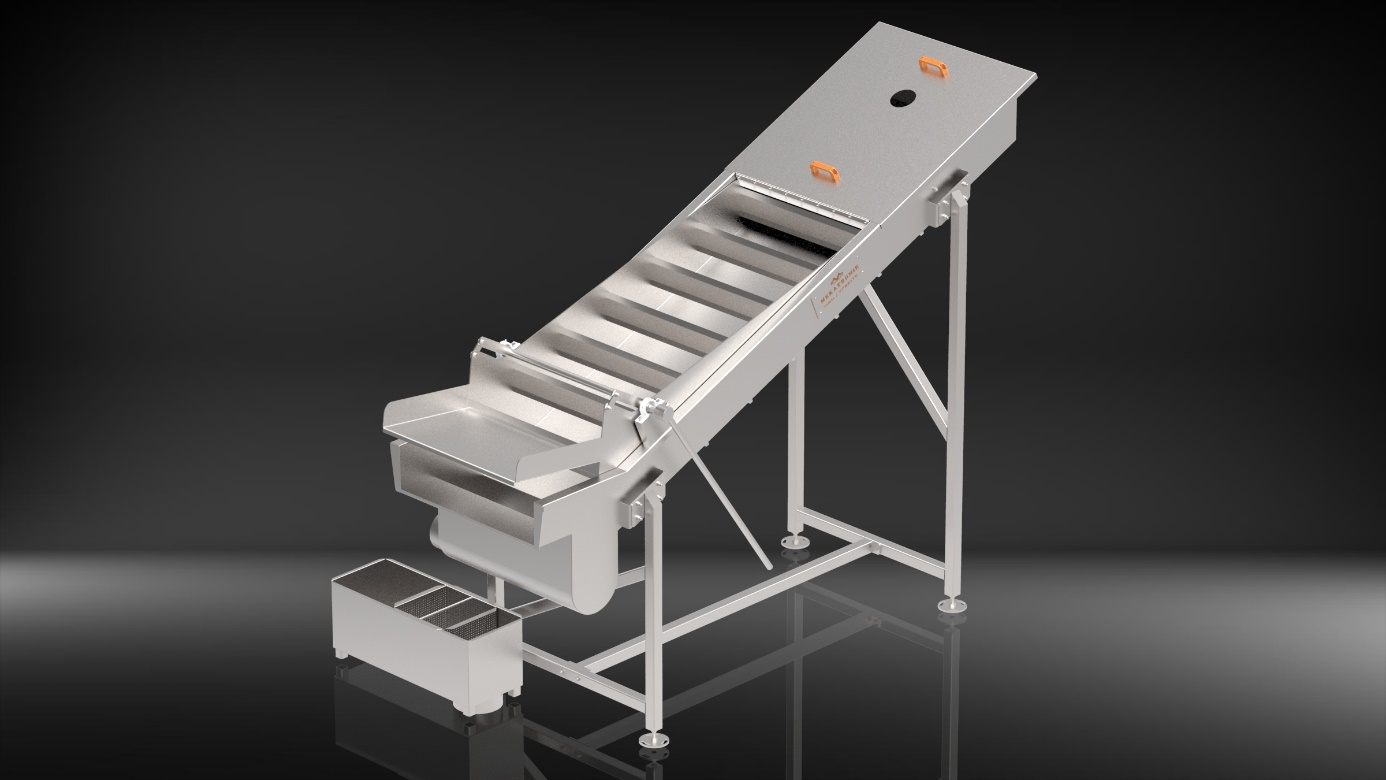
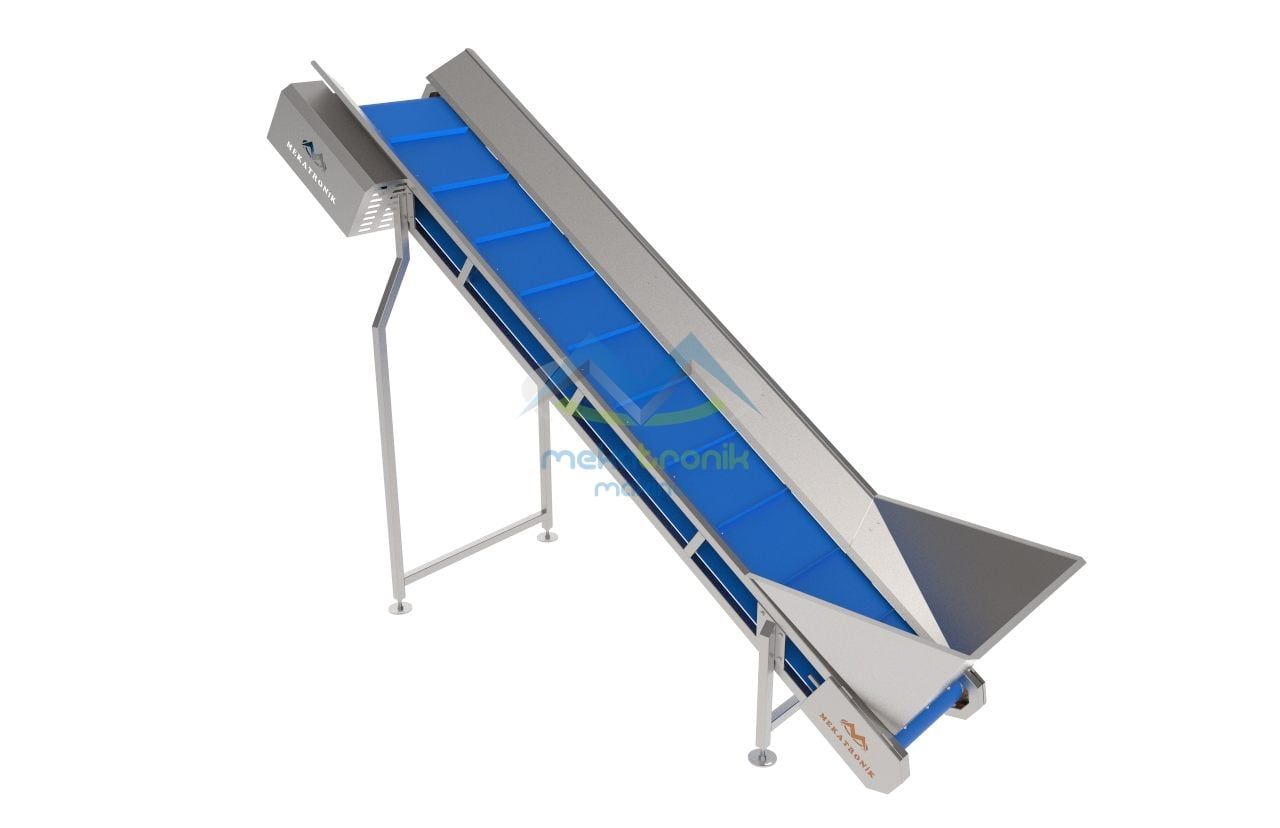
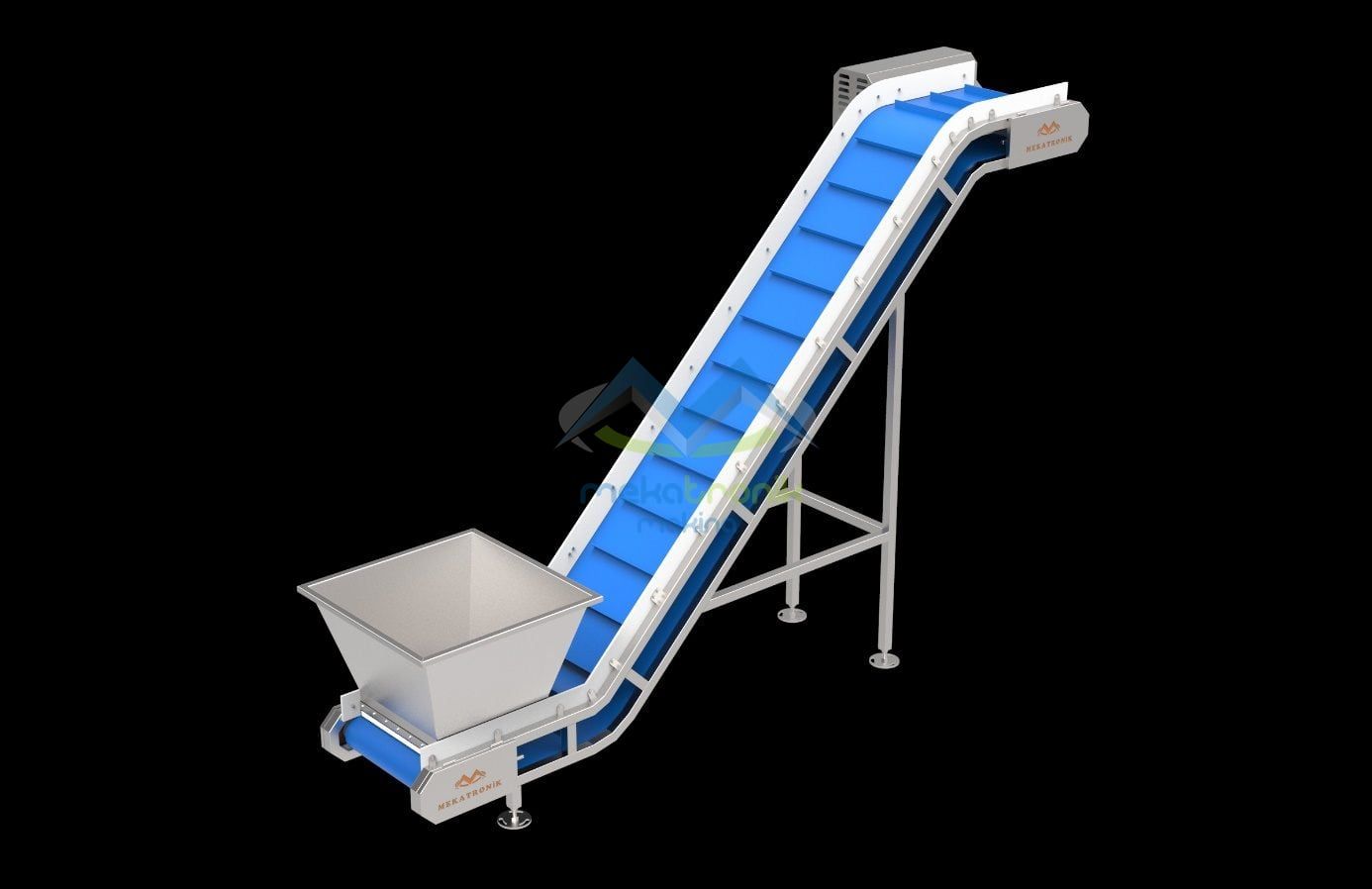
Once sizing and screening are finished, the product still has to get into a crate, from the crate into a box, and from the box to the taping machine. In these last metres the work is usually done by the operator, and the crate filling stand, the box closing table and the roller conveyor table are three simple stations that organise it. None of them has a motor; their job is not to speed the product up but to let manual work happen at the right height, on a hygienic surface and in a set order.
01
Why are end-of-line stations planned separately?
Washing, cutting and sizing machines do the heavy work of the line. After the product leaves them, most plants continue by hand. If the place of the stand and the table is left undefined, product gets filled into crates anywhere, and boxes are closed on the floor or on makeshift surfaces. Efficiency drops and product-contact surfaces slip out of control. A fixed station decides where the work is done and in what order.
02
What does the crate filling stand do?
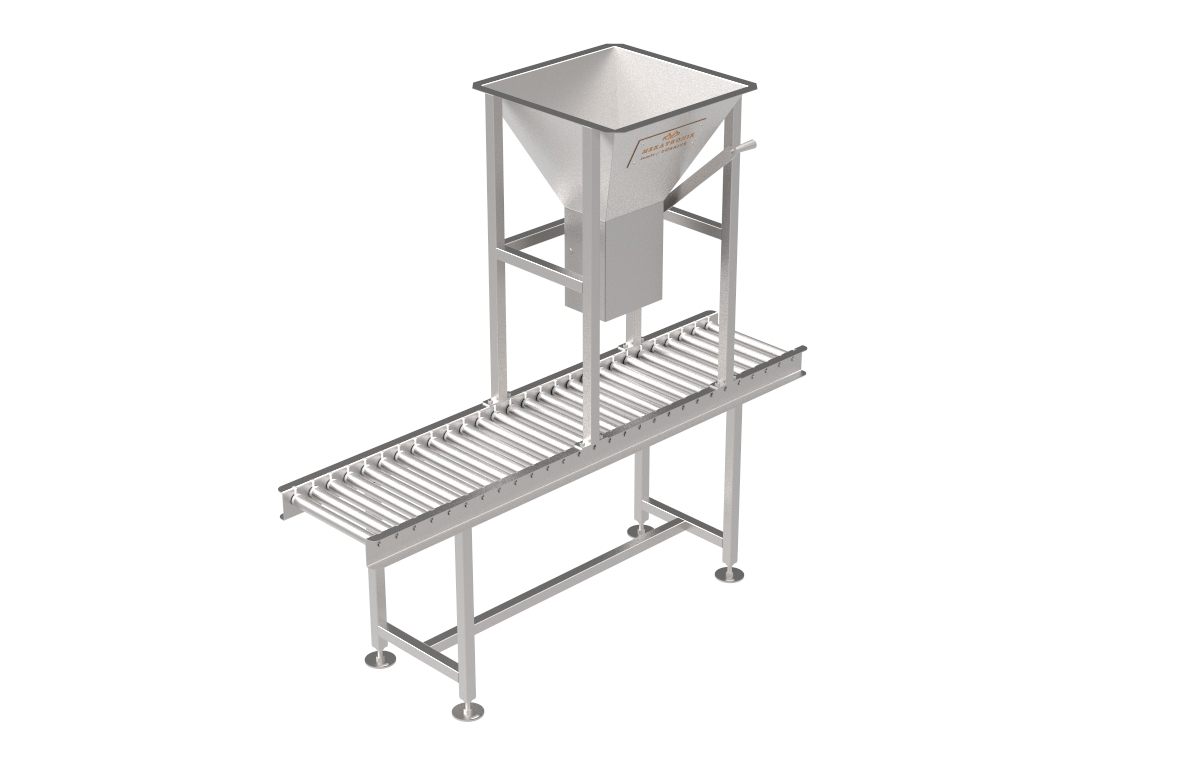
According to the catalogue record, the crate filling stand makes it much easier to fill product into crates after operations such as sizing and screening. It is a fixed structure with no drive and no motor. The operator takes the product at the stand and fills it into the crate, so the filling task is gathered at one point. The body is AISI 304 stainless steel, the product-contact surfaces are the same material, and the surface can be washed and kept hygienic.
On dried apricot and dried fig lines this stand acts as a natural link between the operations before and after filling. Dimensions can be built in custom shapes and sizes for the place and purpose of use.
03
Where does the box closing table sit in the line?
The box closing table is the operator's table where the lids of boxed product are closed before the boxes enter the box taping machine. It comes after filling and before taping. It also has no motor and is built entirely from stainless material; the surfaces that touch the box and the product are AISI 304 stainless steel.
A taping machine does not close lids, it only tapes a box that is already closed. If a box whose lid has not closed properly goes unnoticed before taping, the problem appears later. The table lets that check be done in comfortable working conditions.
04
When does the roller conveyor table come in?
The roller conveyor table is a rolled surface used to move boxed product from one point to another. The box is pushed by hand from the table to the taping machine or the stacking area, and the rollers reduce friction. The body and carrying surface are AISI 304 stainless steel; the stainless claim does not cover the roller bearings.
05
Why do the stainless surface and cleaning matter here?
At the end of the line the product has already been washed, cut or sized, and the next stop is packaging. Every surface that touches product or box therefore has to be easy to clean. On the crate filling stand and the box closing table, fully stainless construction and a washable surface were chosen for exactly that reason. Washing the surface between shifts or at a product change is part of daily cleaning, not a separate maintenance item.
On the roller conveyor table the body and carrying surface are stainless, while the roller bearings are outside that scope. The cleaning plan should give the roller area separate attention.
06
How is the layout of the stations planned?
The order is the same on most lines: sizing and screening, crate filling, boxing, lid closing, taping. The stand and the table are placed in this chain so that the operator walks as little as possible. The direction the product arrives from, where crates are picked up and put down, and the position of the taping machine decide the layout. Because dimensions can be made to order, the station can be fitted to the plant, instead of fitting the plant to a ready-made template.
07
How do the three stations compare?
| Station | What it does | Drive |
|---|---|---|
| Crate filling stand | Fills product into crates after sizing and screening | None, fixed motorless structure |
| Box closing table | Closes box lids before taping | None, fixed motorless table |
| Roller conveyor table | Moves boxed product on a rolled surface | None, product is pushed by hand |
For all three, capacity is set per project; how many crates or boxes per hour will be handled is not given as a fixed figure in the catalogue, and exact values are settled in the quotation.
08
What should be clear before requesting a quotation?
- 01Which product is handled and at which point it leaves sizing or screening
- 02Crate and box dimensions, and the shape and size of the stand and table to match them
- 03The space the operator works in and the distance between stations
- 04How closed boxes reach the taping machine or the stacking area
- 05The cleaning routine: how often and by what method the surfaces are washed
This information lets the stations fit into the line without taking unnecessary space or tiring the operator. You can see the full range under auxiliary machines and equipment.
09
Next step
To decide together which stations your line needs at its end, write to us through the quotation page with your product, crate and box dimensions. Mekatronik Makina has worked since 1992 and has more than 2,000 machines in the field; custom shape and size requests are handled within the project.