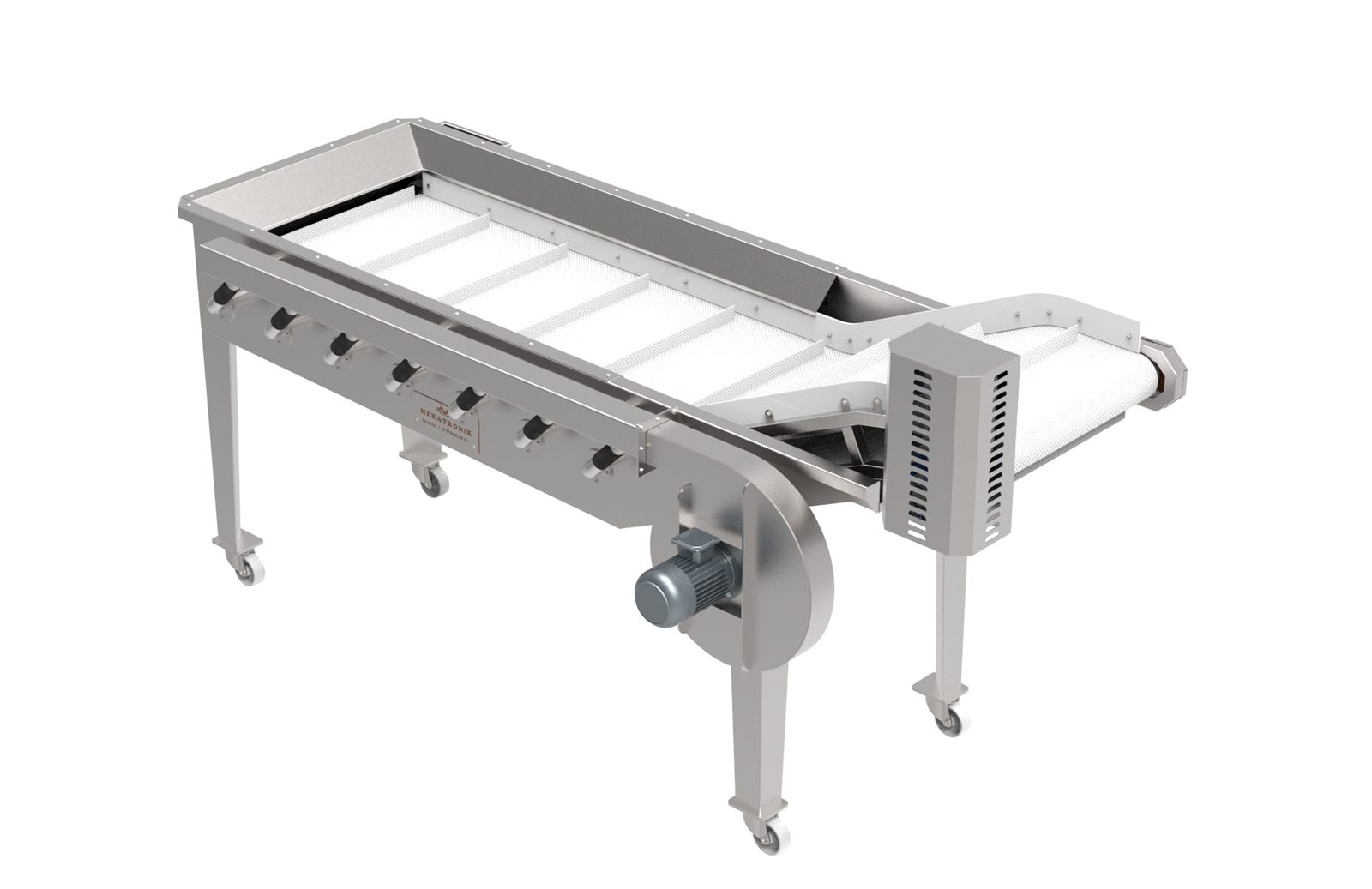
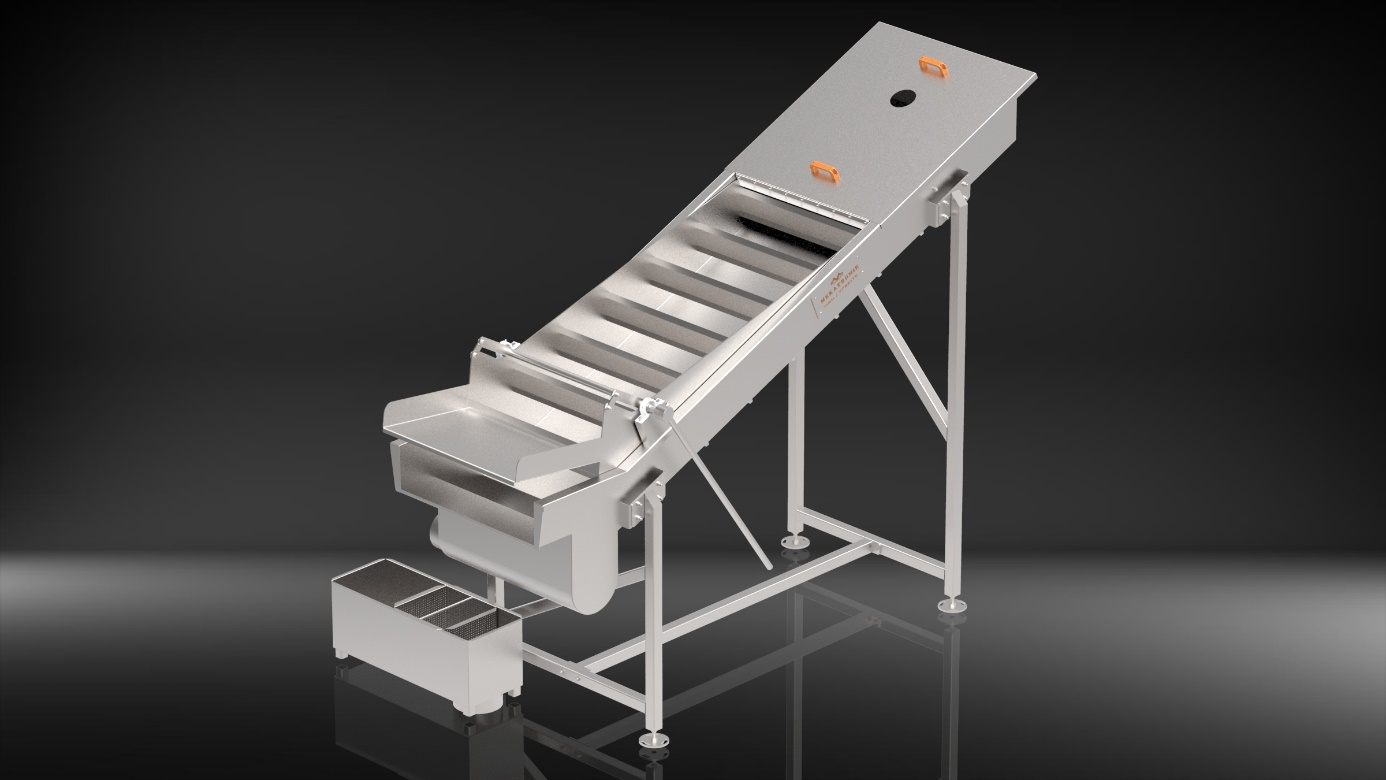
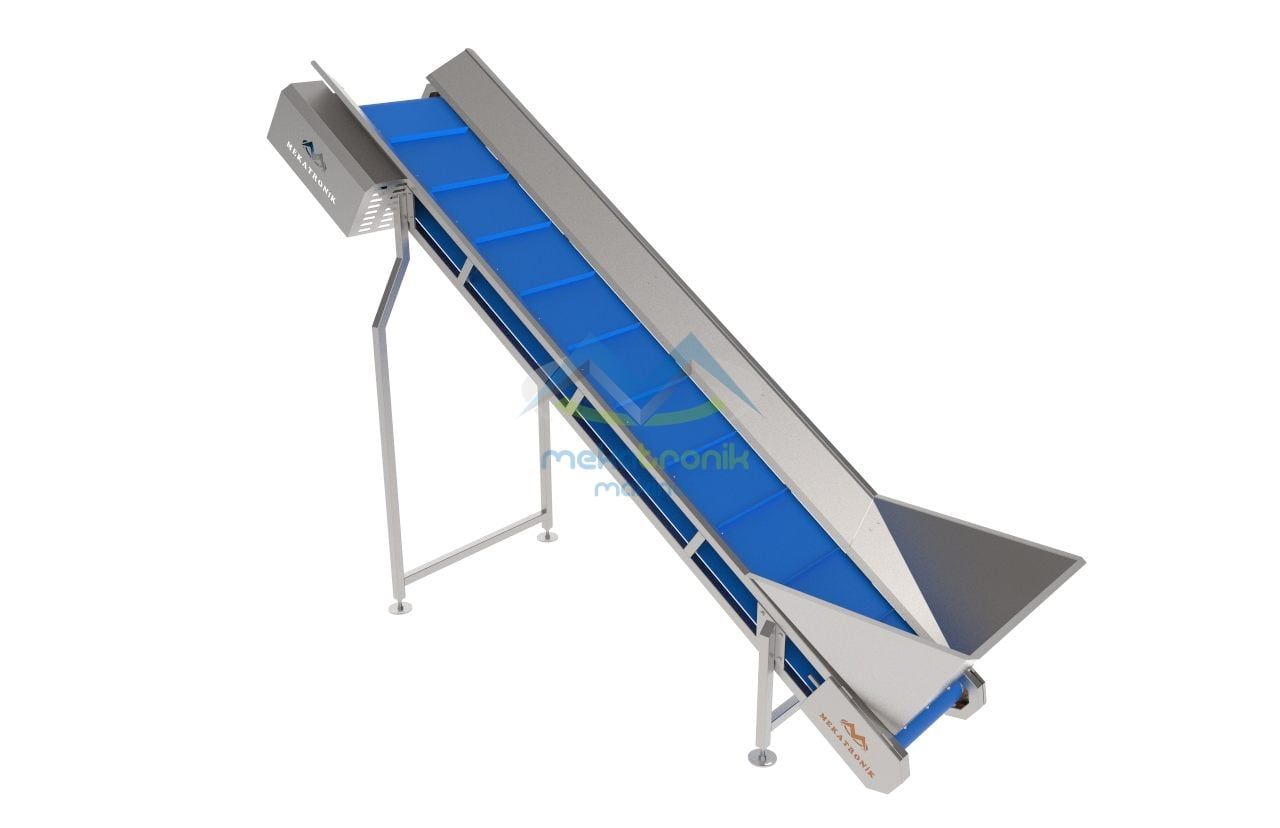
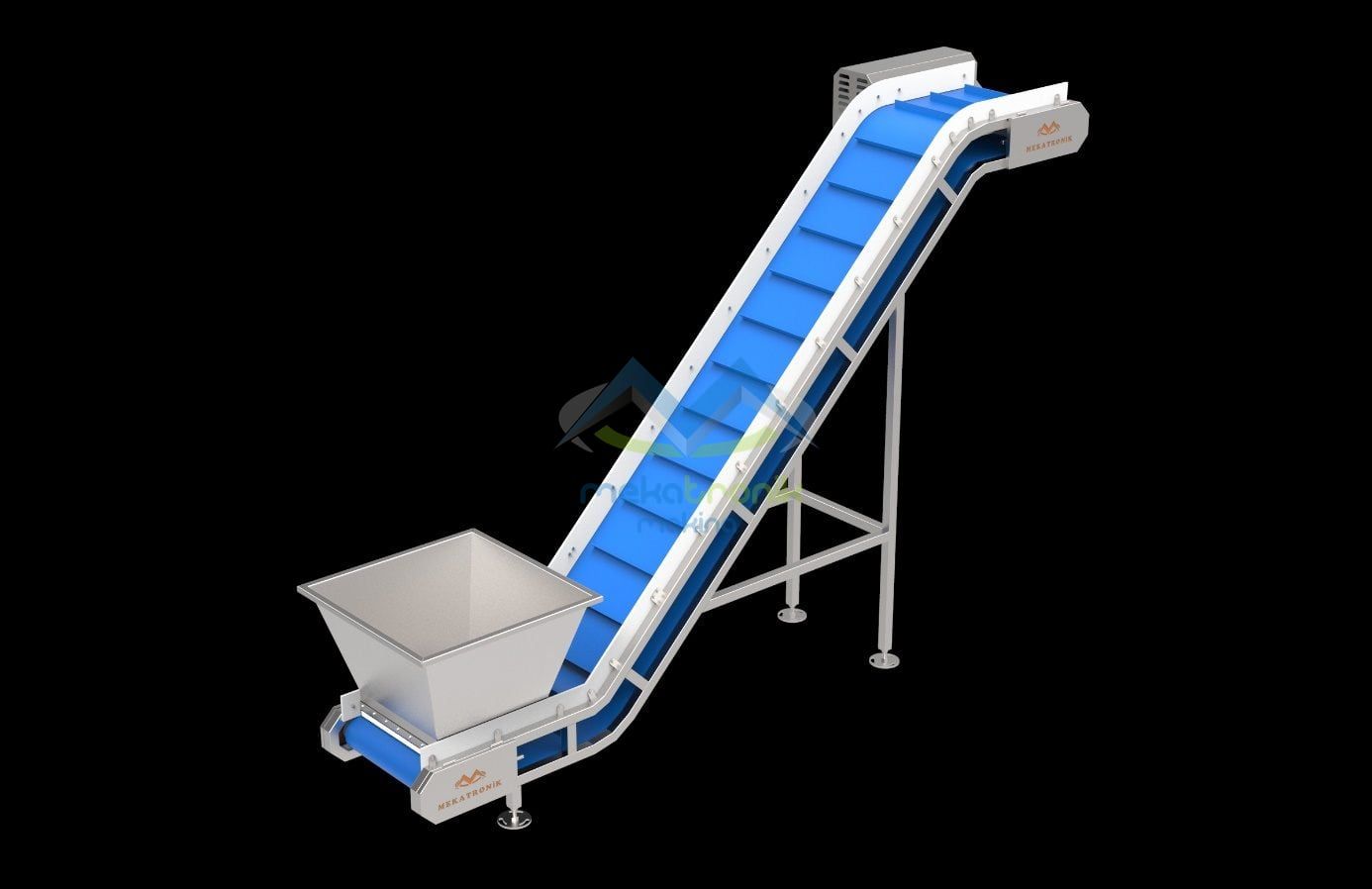
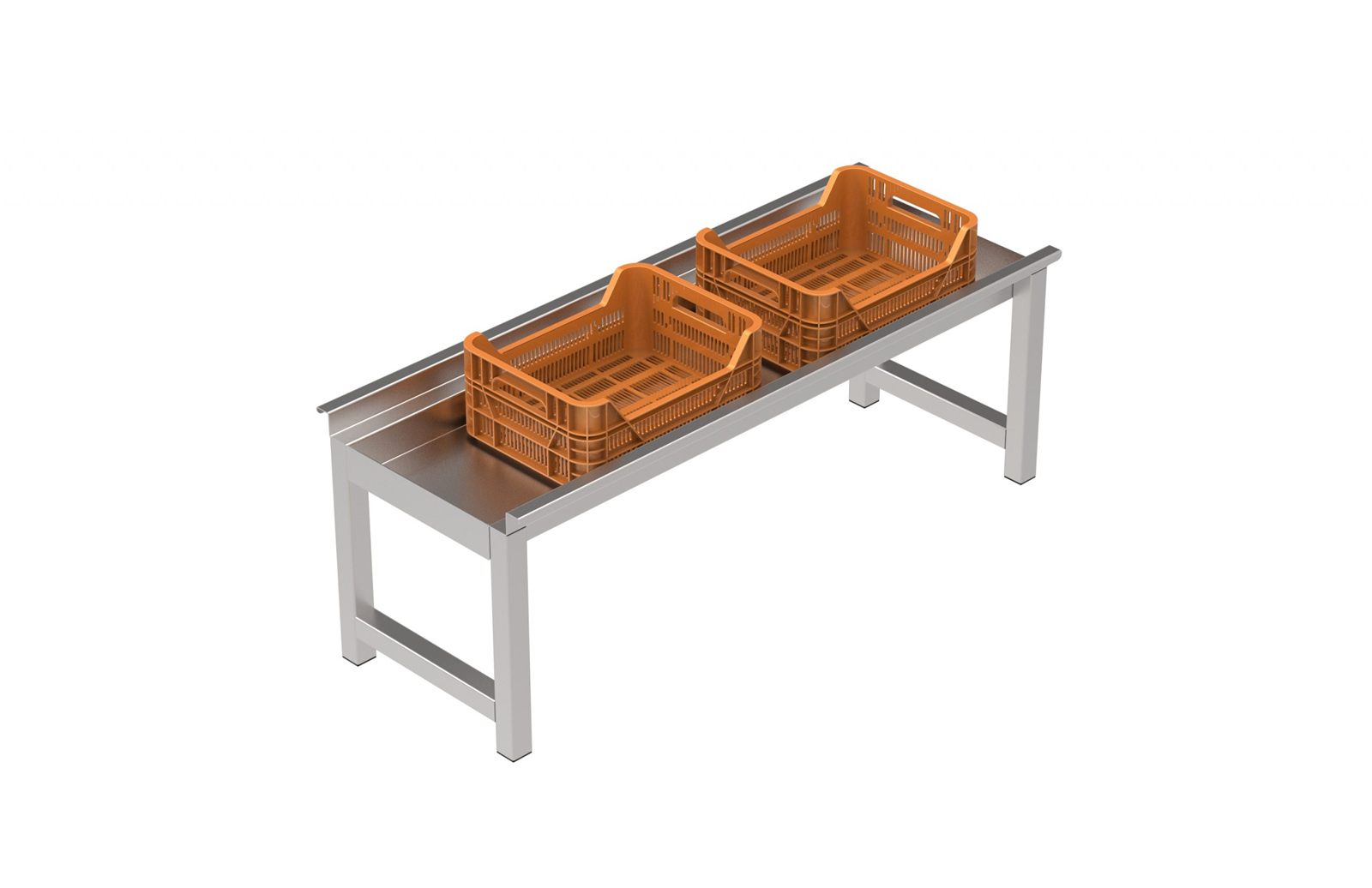
A filling point looks simple until the product starts to bruise, spill or pile up on one side of the crate. Most of that comes from two things that are easy to set and easy to get wrong: how far the fruit falls into the crate, and how the person at the stand has to stand and reach. This article walks through both, using the Crate Filling Stand as the example.
01
What is a crate filling stand, and what is it not?
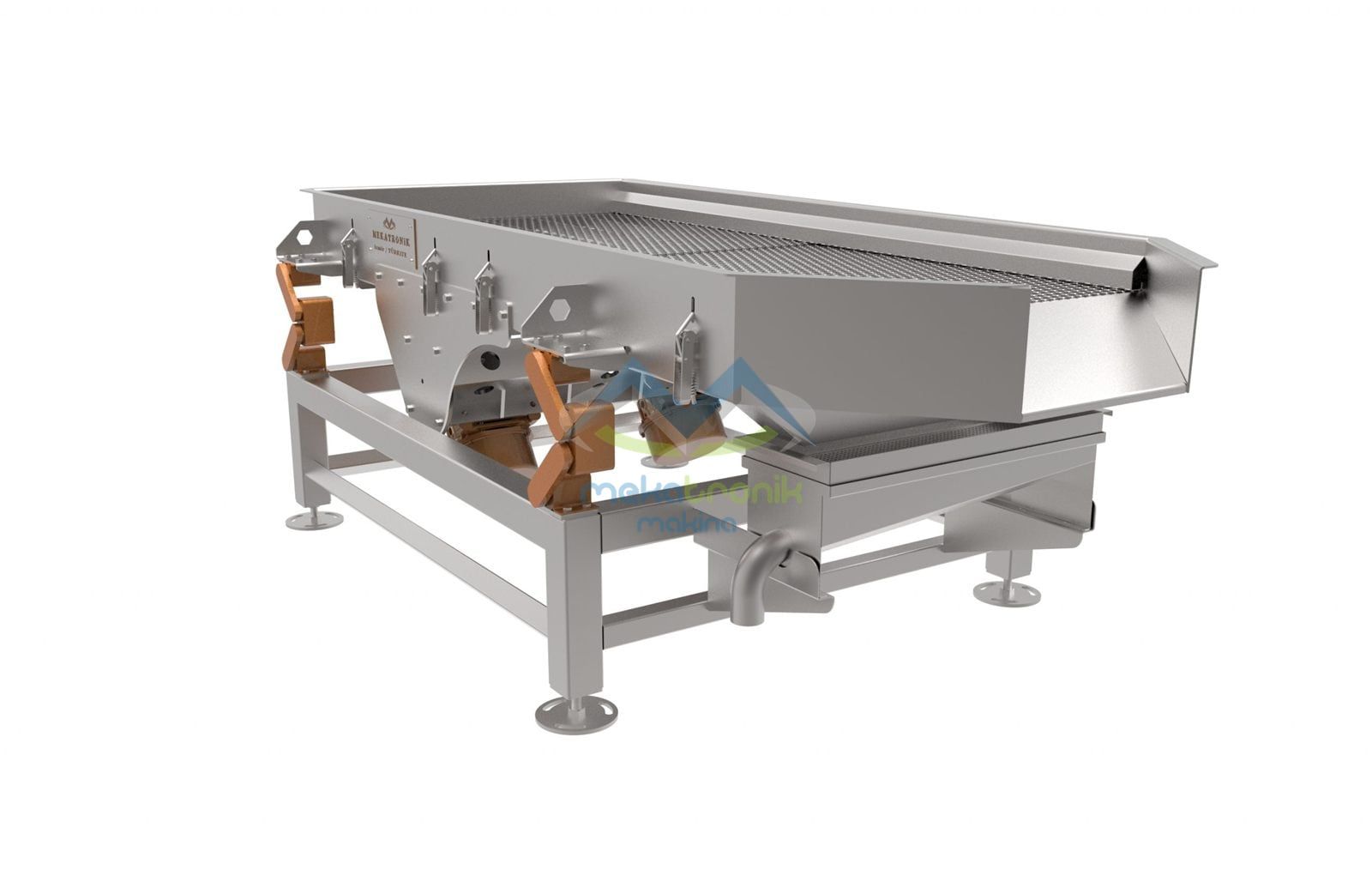
It is a fixed stainless frame that holds the crate while product is filled in after sizing and screening. It has no motor and no drive: nothing in it moves. That is a deliberate choice. A stand that does not move cannot jam, needs no electrical protection near the wash-down area and gives the operator a stable place to work.
It is also not a weighing or dosing machine. If you need the crate filled to a controlled weight, that is a different job, handled by equipment such as the Semi-Automatic Box Filling Scale. The stand deals with where and how the product lands, not with how much.
02
Why does the drop height matter?
Every centimetre of free fall is energy the fruit has to absorb when it lands. Soft, sugary product such as dried apricots and figs takes that energy as pressing and scuffing, and the first layer on the crate floor carries the most. The line description for the Dried Apricot Processing Line states the purpose plainly: the stand fills crates by shortening the drop height. That is the whole mechanism, and it is worth designing around.
A shorter drop is not only about the first layer. As the crate fills, the surface rises toward the outlet and the drop gets shorter on its own, so the difference between an empty crate and a full one is largest at the start. Part of setting the stand is therefore deciding how the first layer is received.
- 01Where the product leaves the previous machine and where the crate floor sits decide the starting drop.
- 02The crate height decides how quickly the drop shortens as filling goes on.
- 03The stand should hold the crate so that the outlet can be brought close to the crate floor without the operator reaching over a barrier.
- 04The first layer is the one most exposed, so it is the one to watch when you trial the stand with real fruit.
03
How should the operator stand?
A person who fills crates for a whole shift is working at the stand's height, not the machine's. If the crate sits too low, the operator bends forward every cycle. If it sits too high, the arms stay raised and the shoulders tire. Both end in rushed filling, and rushed filling is where spills and uneven crates come from.
There is no single correct height, because it depends on who works there, the crate used and the layout around the stand. We do not publish a number for that reason. The stand is built in special shapes and dimensions for the place and purpose of use, and the working height is one of the things agreed at the quote stage.
04
What do you observe, and what does it point to?
| What you see | Likely cause | What to check |
|---|---|---|
| Bruised fruit in the bottom layer | Drop into the empty crate is too long | Outlet position relative to the crate floor |
| Product piling on one side | Crate not centred under the outlet | Crate seating on the stand |
| Operator leaning or reaching constantly | Working height does not suit the operator | Stand height and crate position |
| Spills around the stand | Outlet too far from crate edge | Stand shape and the outlet position |
| Residue after a shift change | Cleaning routine unclear | Wash-down of the frame |
05
Where does it sit in the line?
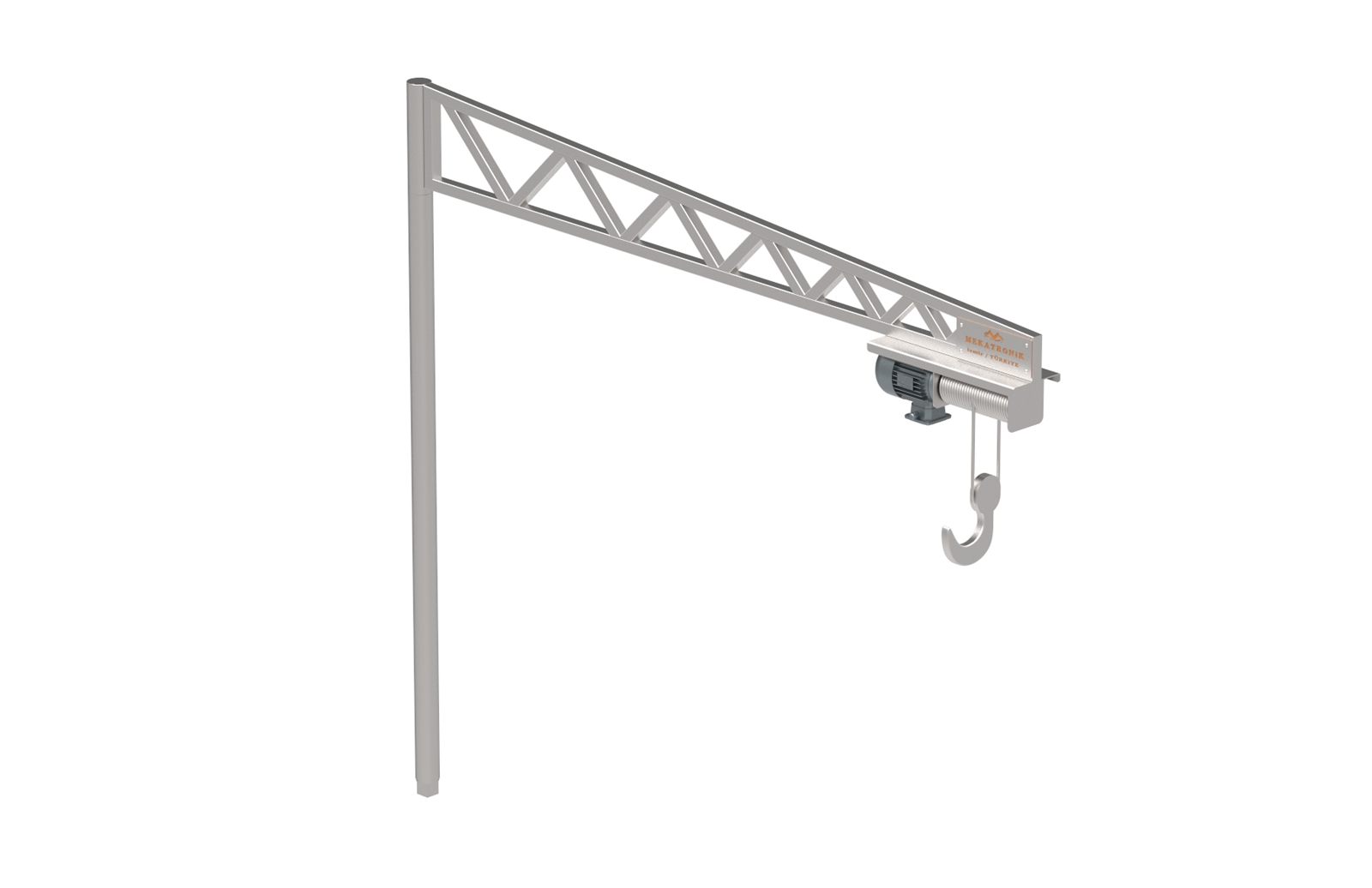
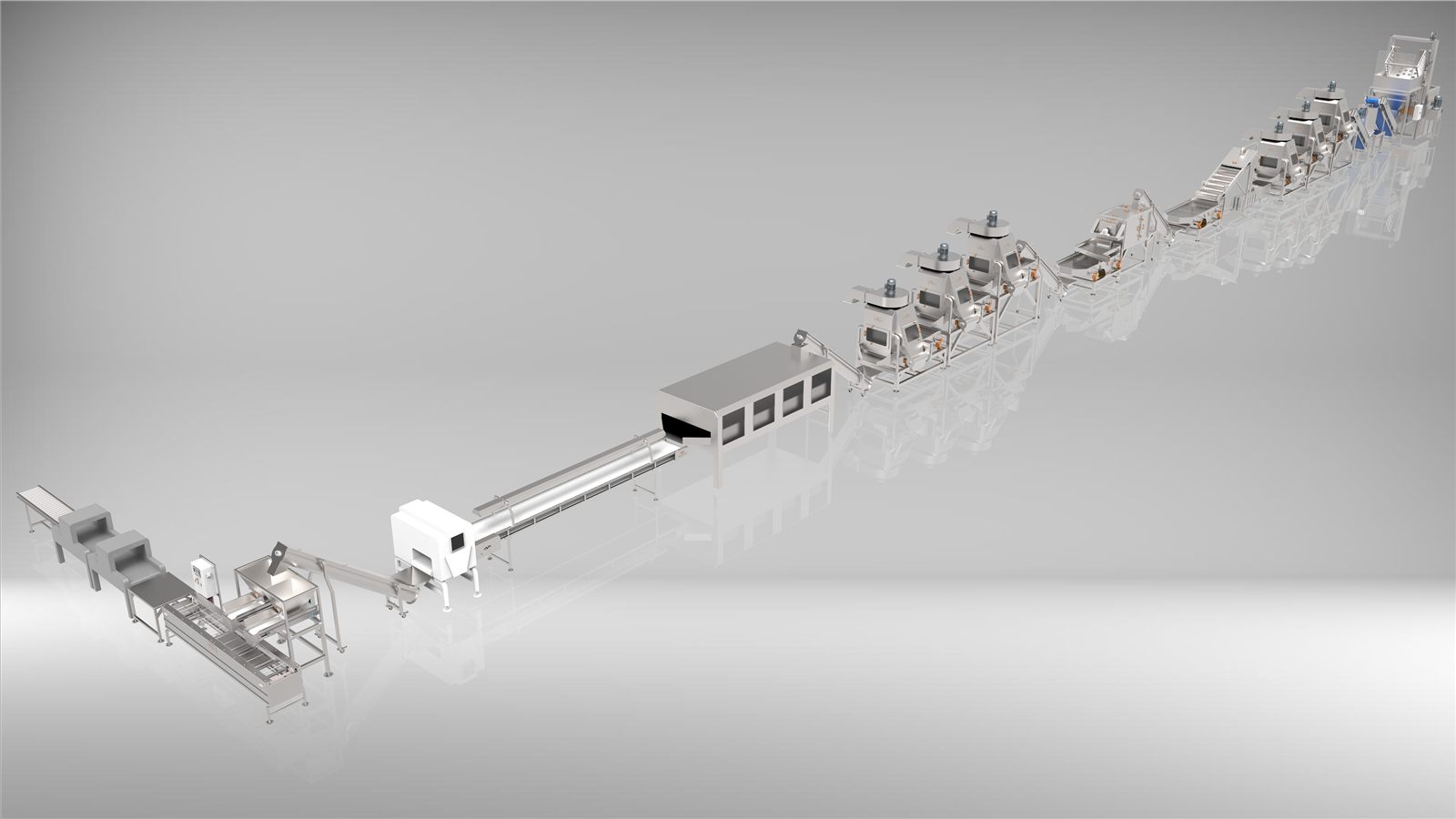
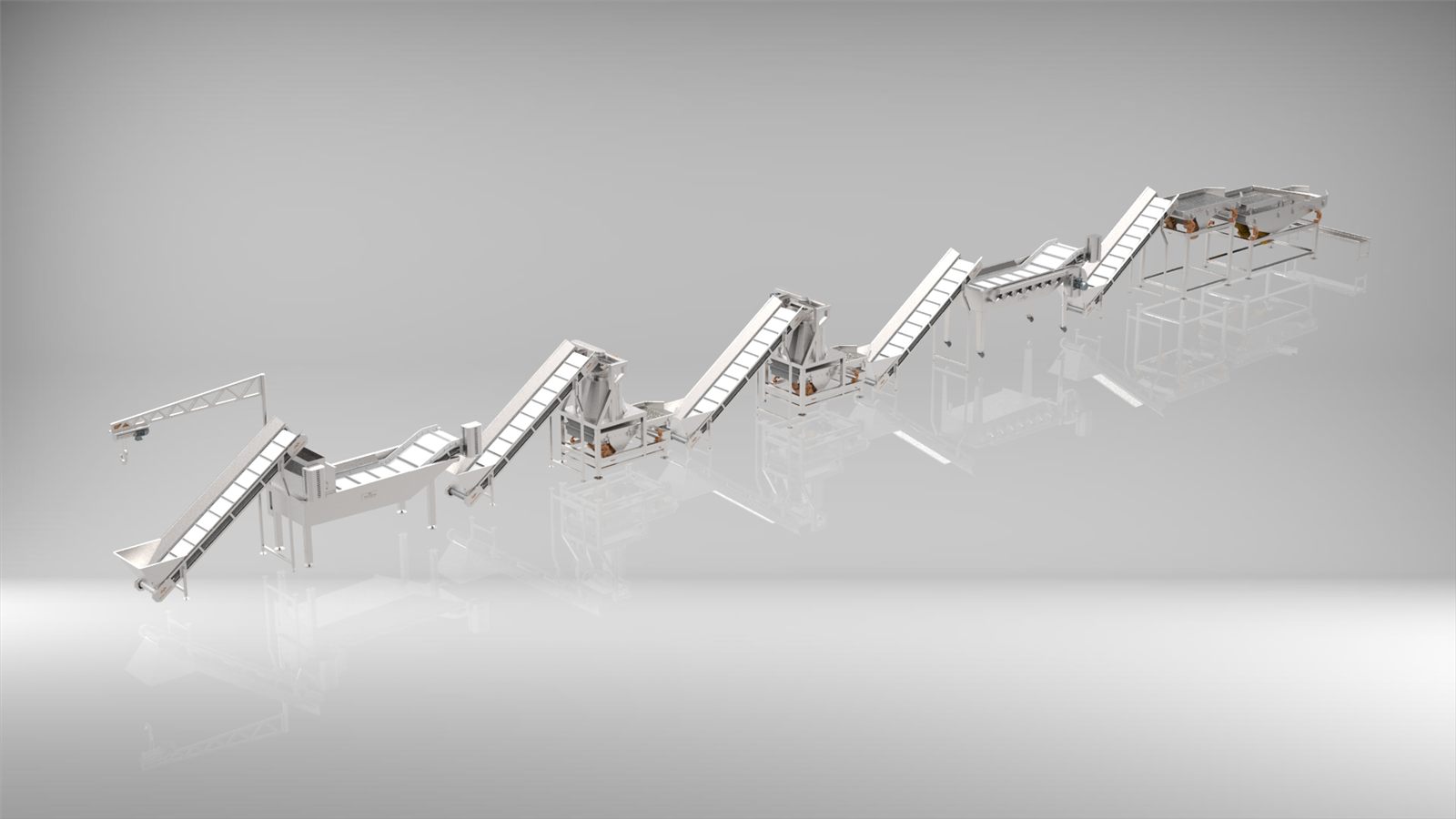
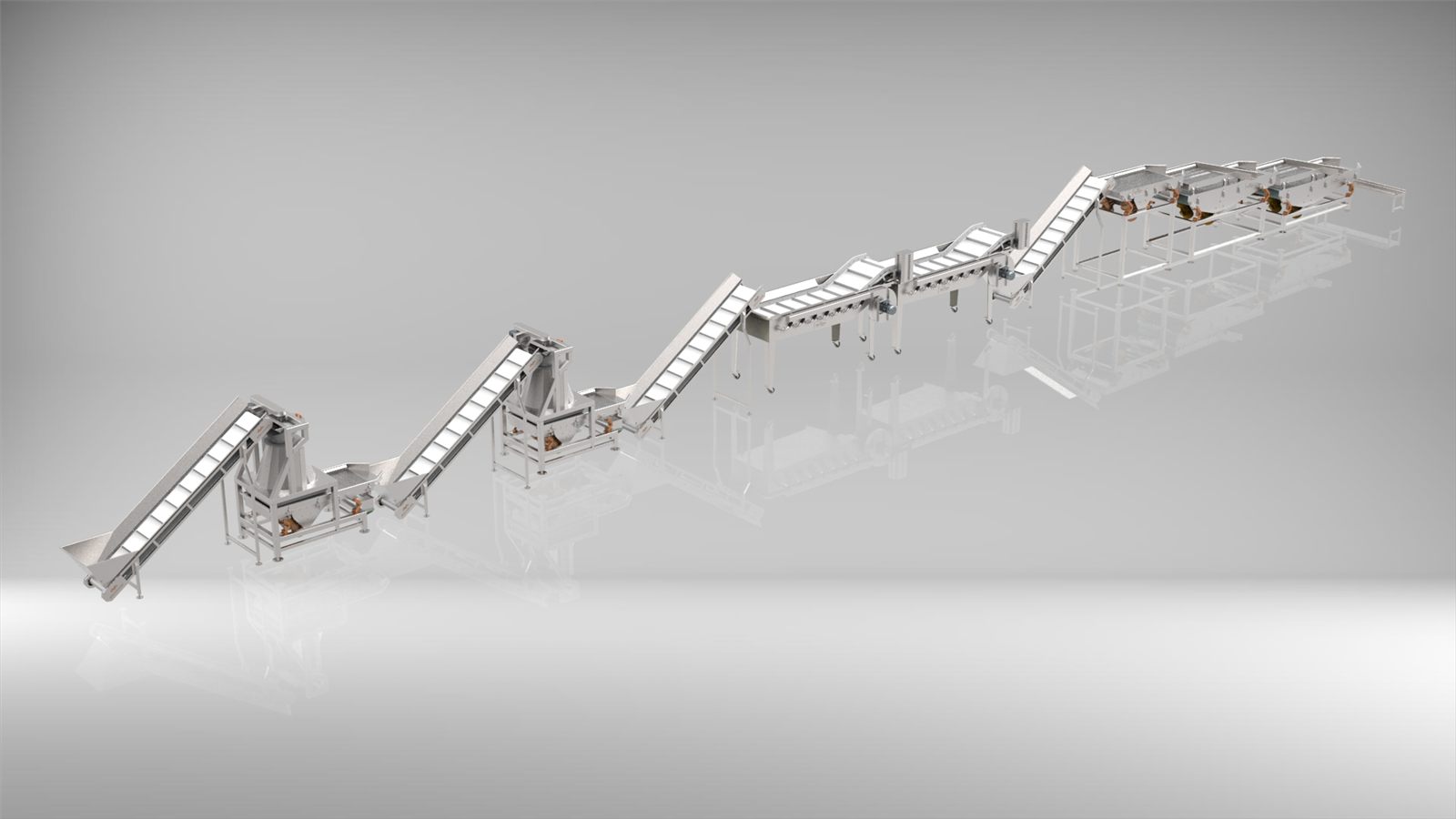
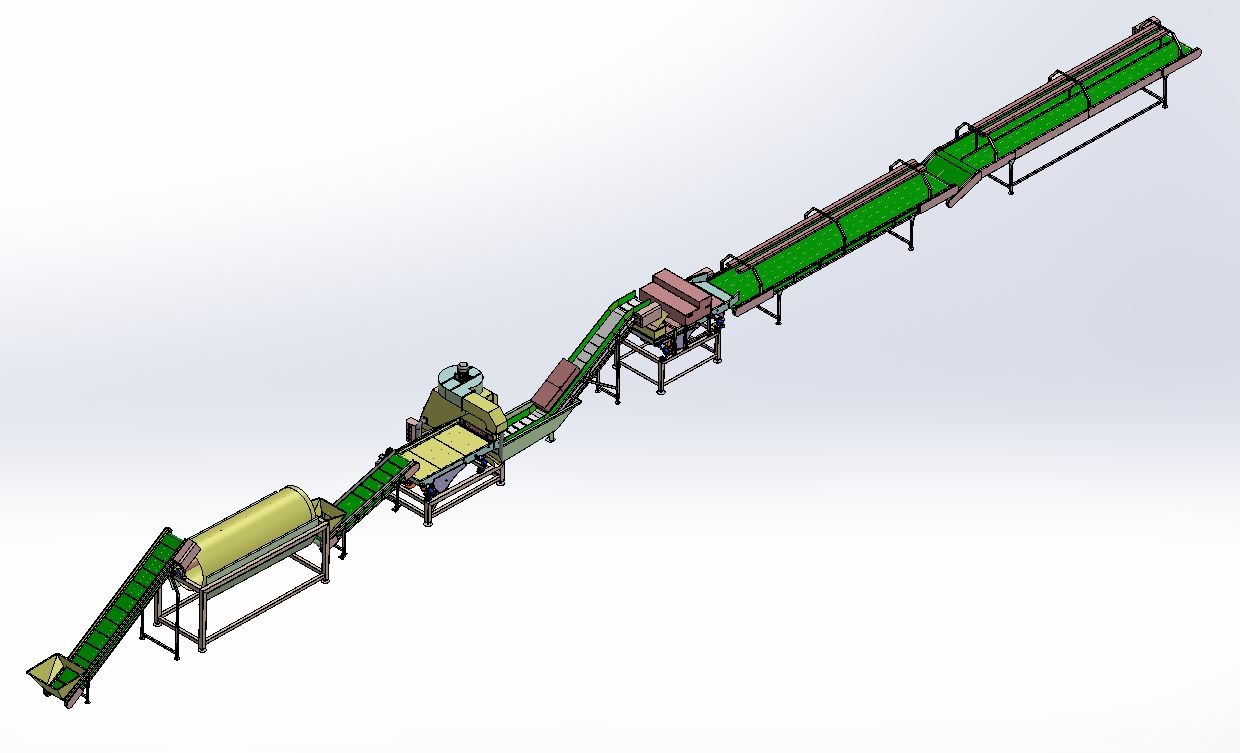
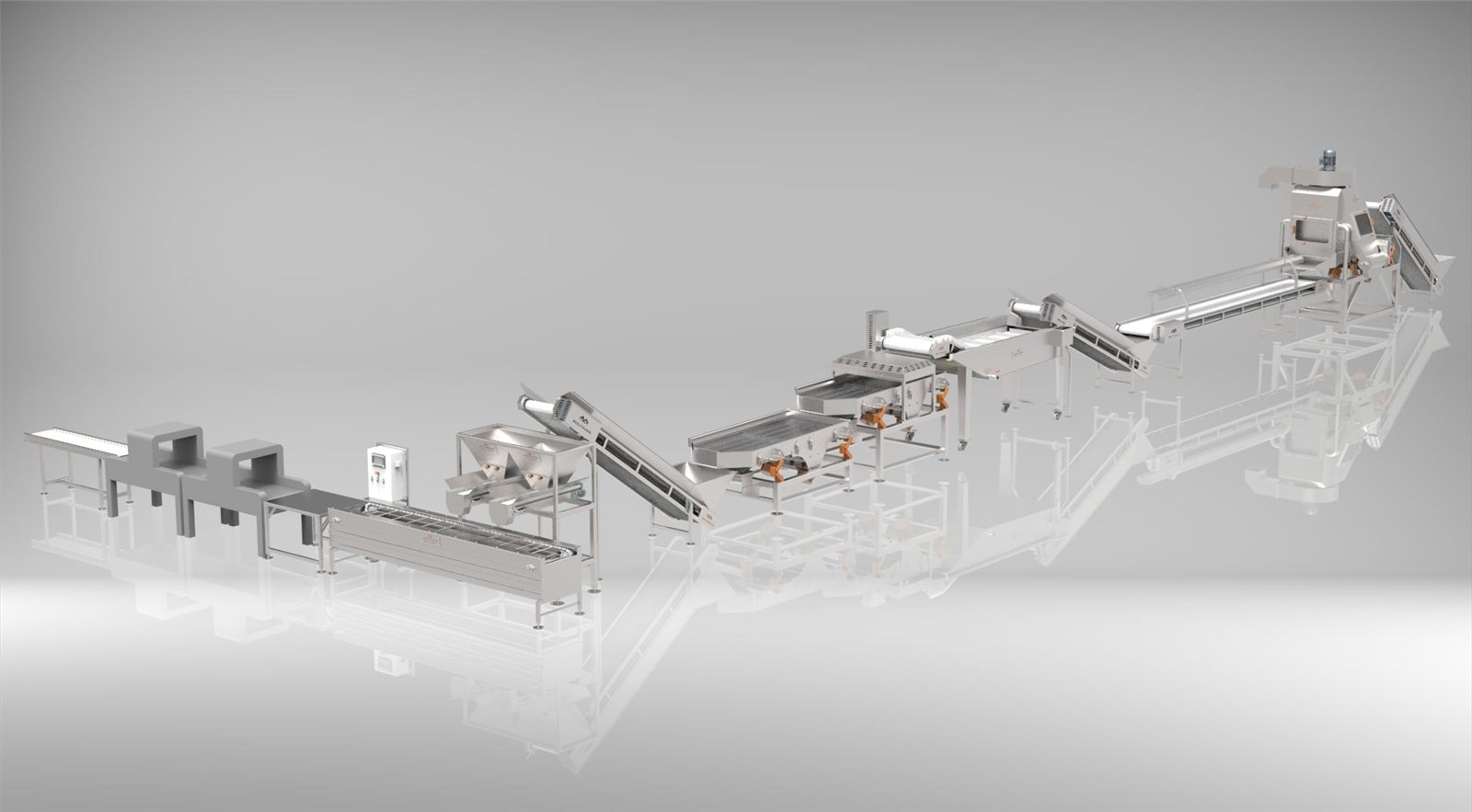
On the Dried Apricot and Dried Fig lines it is the last station of the Filling Line: sacks are brought in with the sack lifting hoist, the Balanced Product Feed Doser feeds the filling point in an even flow, and the stand takes the product into crates. Feeding evenly matters here, because an uneven stream puts the drop and the operator's reach out of balance at the same time.
06
Material and cleaning
The stand is built entirely from AISI 304 stainless steel, including the surfaces the product and the crate touch. A fully stainless frame can be washed down without worrying about coating damage, and there is no motor or electrical part to protect. Wash it at the end of a shift and whenever the product changes, so sugar residue does not carry over.
07
What should you tell us?
- 01The product and how it arrives at the filling point.
- 02The crate type you fill, and how the full crates leave the stand.
- 03How many people work at the stand and whether they stand or sit.
- 04The floor space and any height limit around the station.
08
Next step
Send us those four points and a photo of the filling area, and we will propose the stand shape and working height on the quote page. Capacity is defined per project, and the final dimensions are confirmed together with the layout drawing.