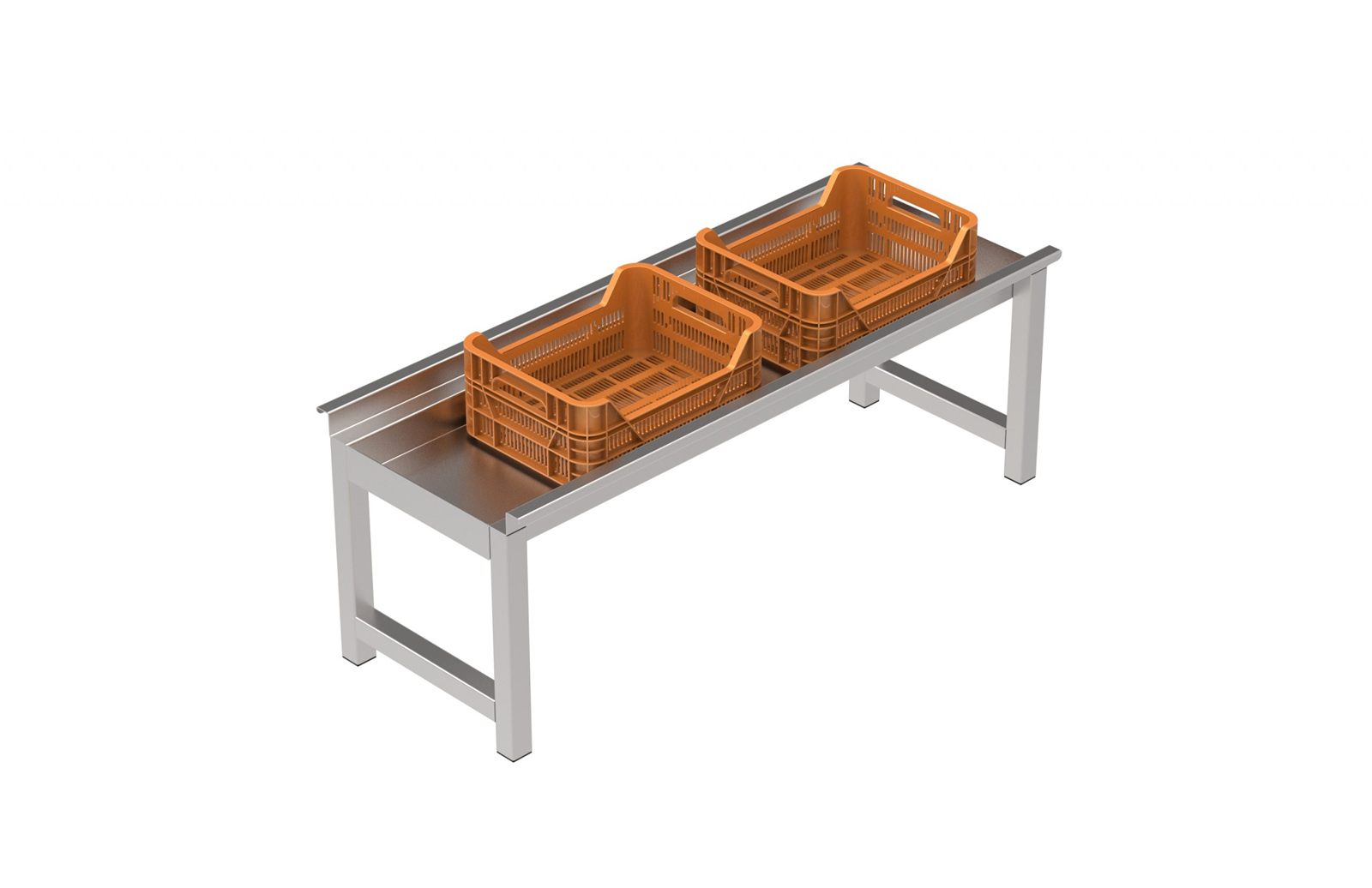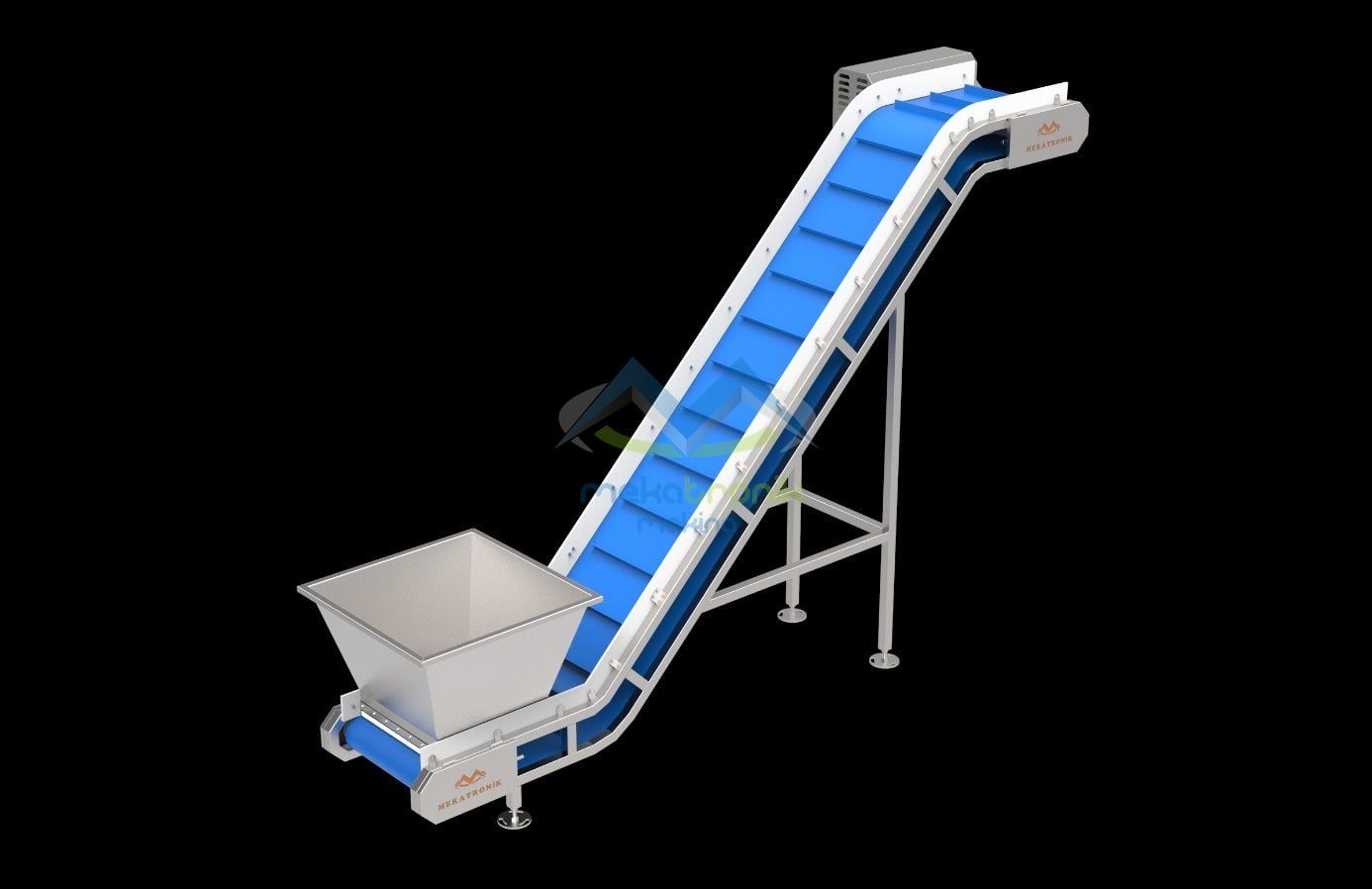
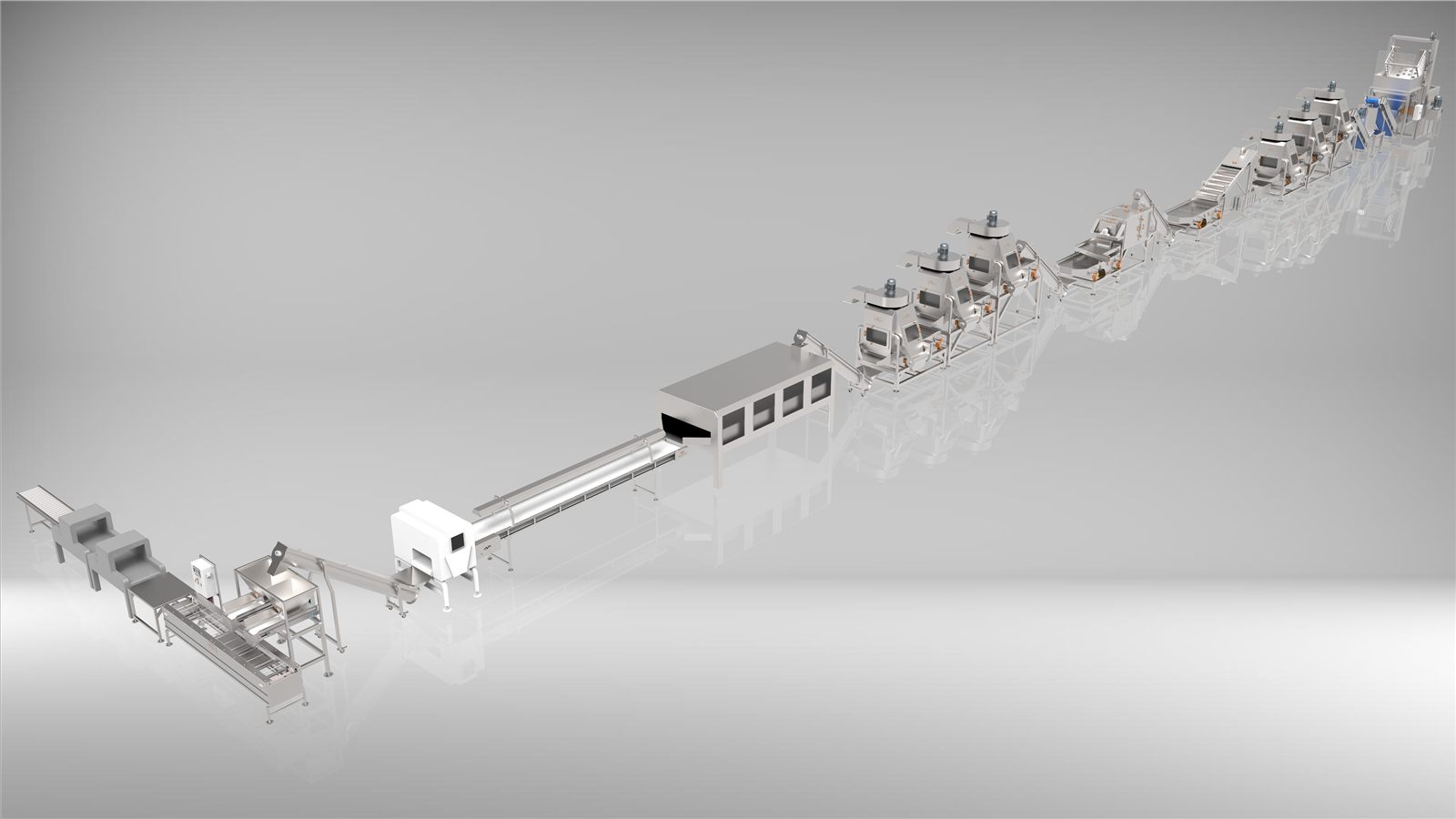
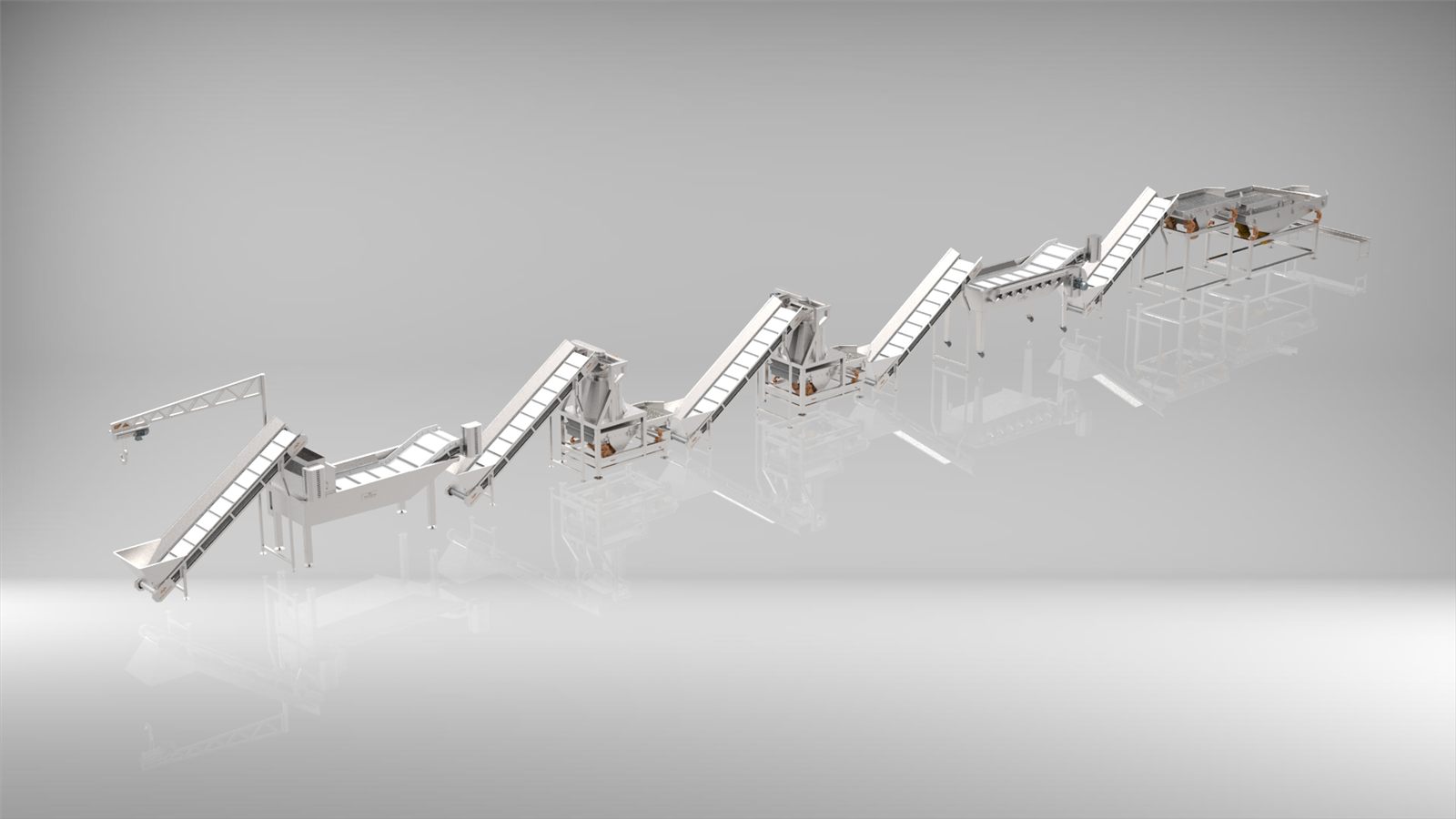
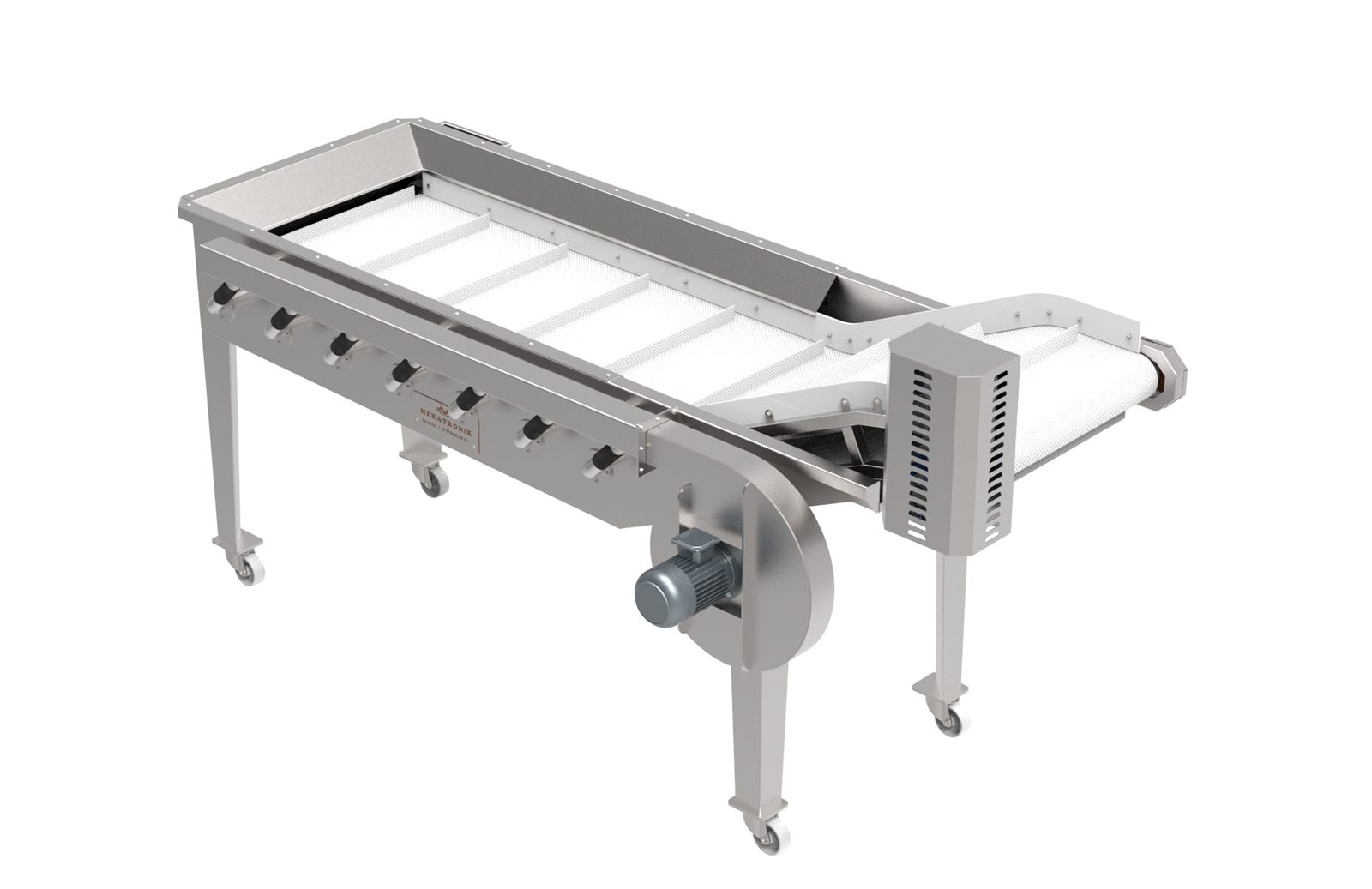
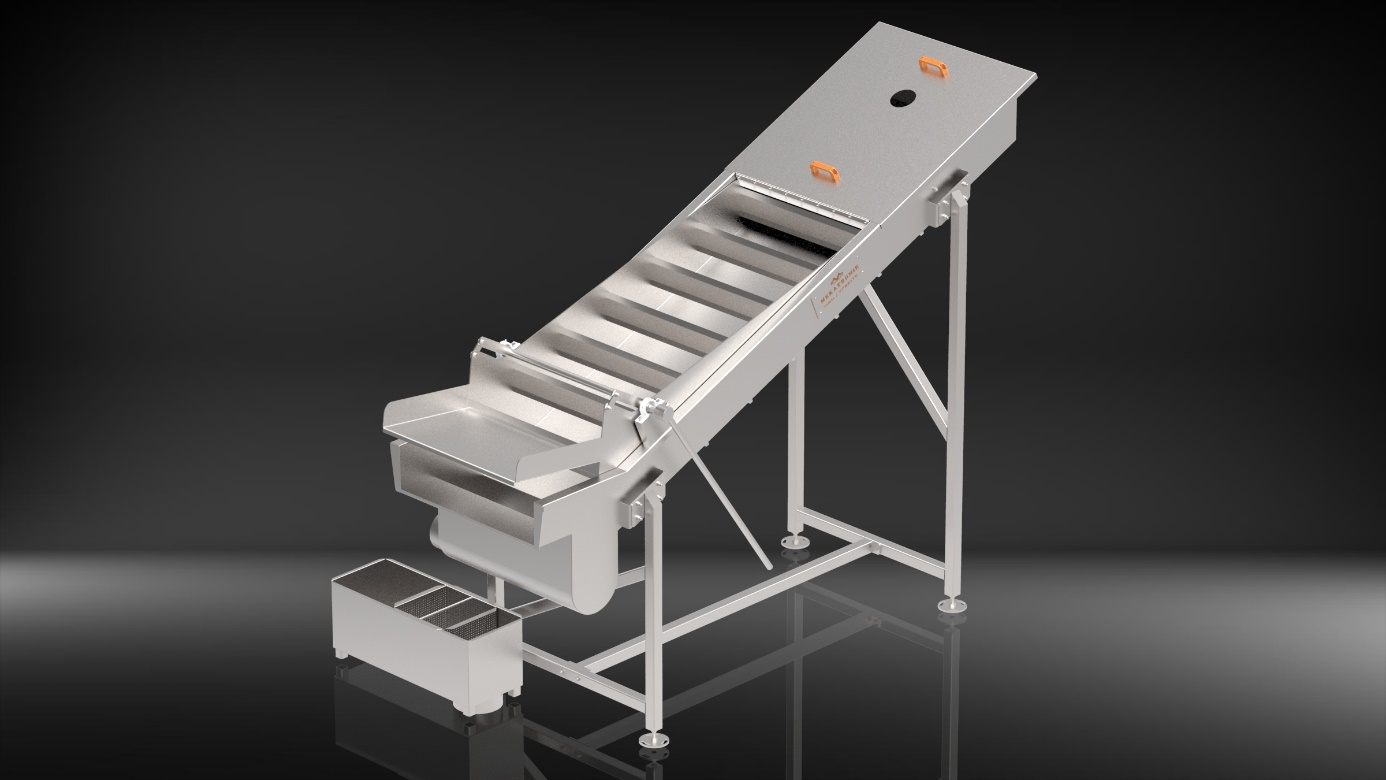
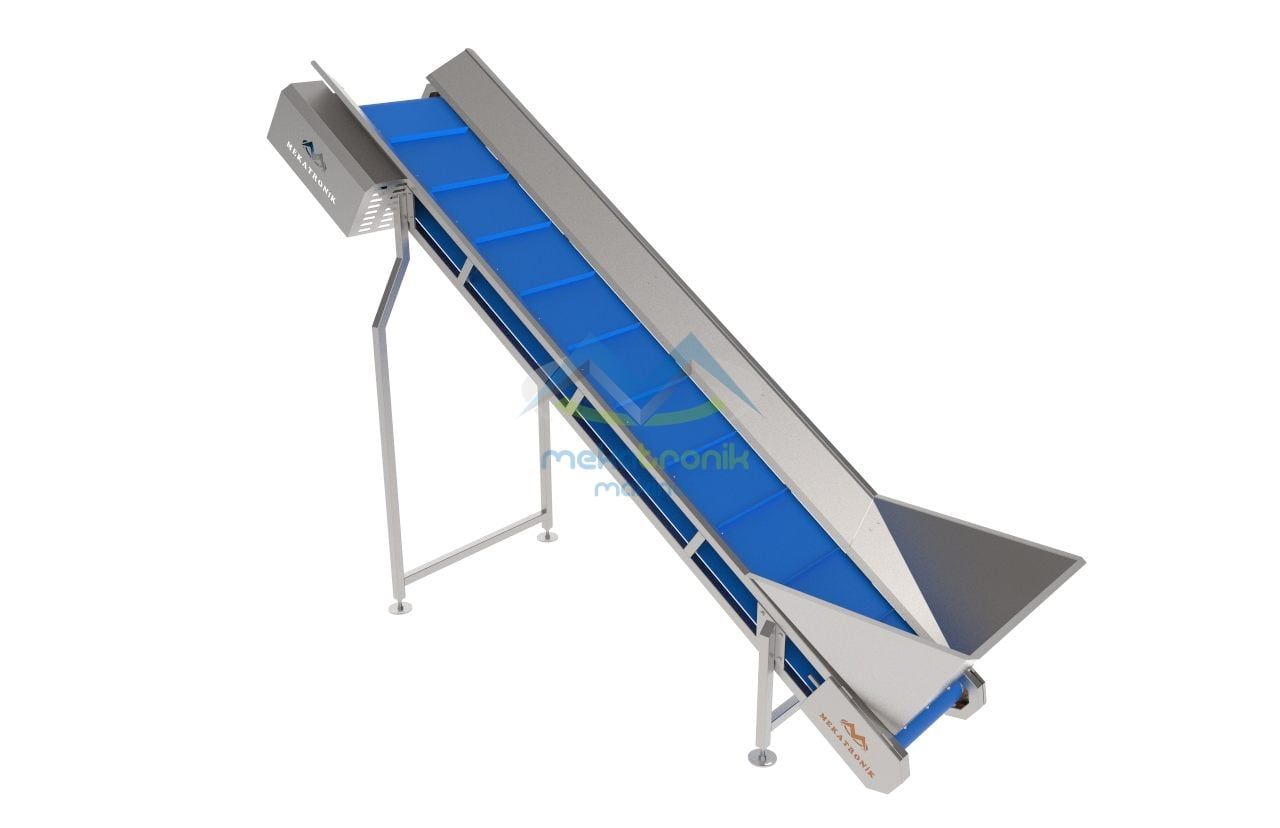
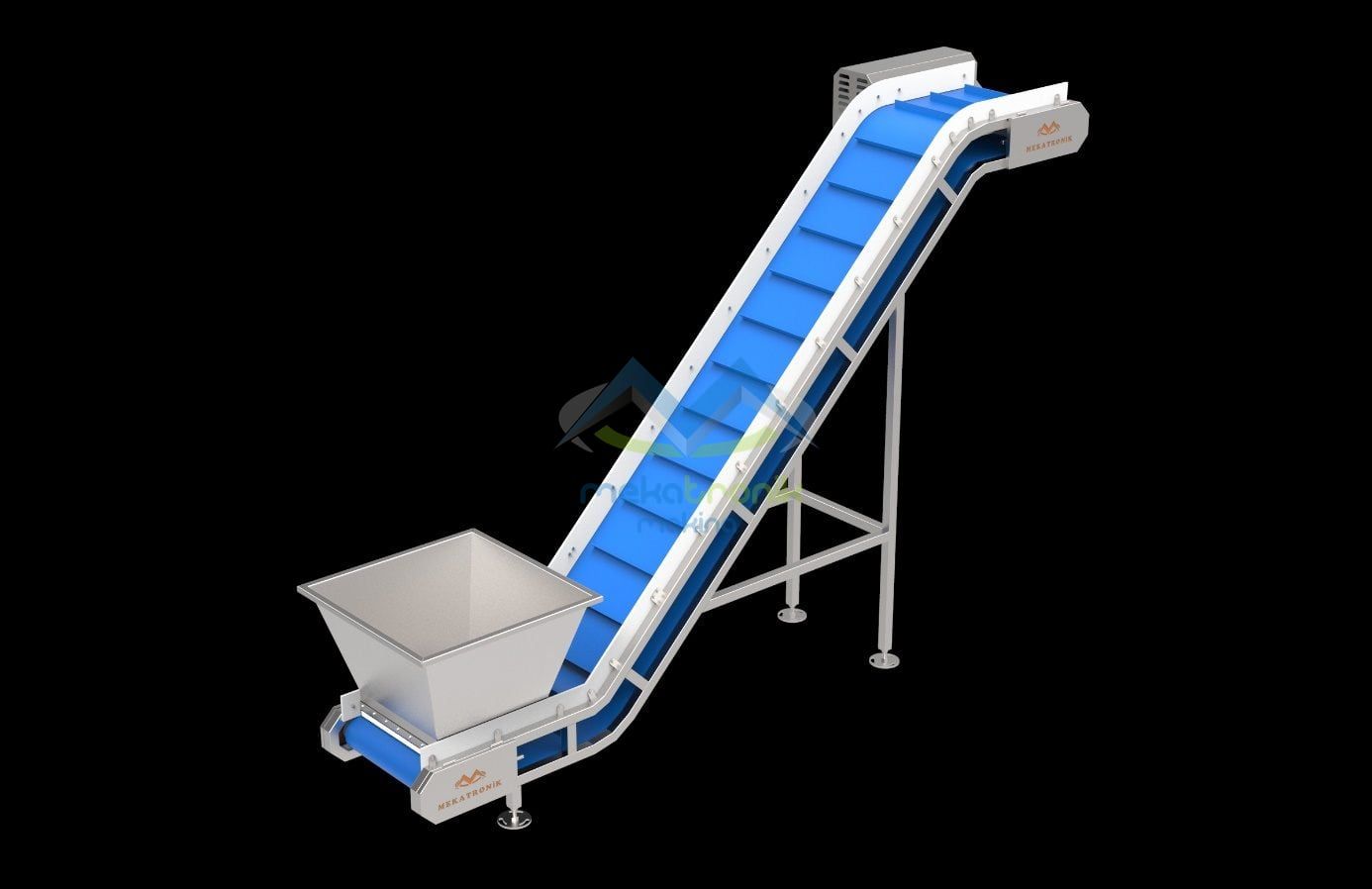
A roller conveyor table is a rolling surface that carries boxed product from one point to another at the end of a processing line. Because the box rides on rollers, the operator only guides it with a push rather than lifting it, which keeps the flow steady as product leaves the line. This article covers what the table solves, how it is placed in the layout, and what to settle before asking for a quote.
01
What problem does a roller conveyor table solve at the end of the line?
Once dried fruit is filled into a crate or box, it still has to reach the next station: closing, labelling, palletising or the store. Even over a short distance, lifting and carrying every box costs time and tires the operator. On a roller conveyor table the carrying surface is made of rollers. The box sits on them and a light push moves it forward, so the weight is not carried, only directed.
02
Why does a roller surface suit hand pushing?
Pushing a box across a flat plate means working against friction. On rollers the box moves together with the rollers, so far less force is needed. For that reason the table works as a station that does not set the pace itself; it follows the rhythm of the operator. The operator decides how fast each box travels, which makes it easier to balance work that builds up at the box closing table or the filling stand.
Whether a powered belt is needed instead is a separate decision. Box weight, the distance between stations and the tempo of the line vary by project, and exact values are settled in the quote.
03
What are the frame and surface made of?
The frame and carrying surface of the roller conveyor table are built from AISI 304 stainless steel, with the roller bearings outside that scope. In a station that shares the room with food, this matters: being able to wipe down the outside of the boxes and the table itself is part of the hygiene routine. Surfaces in direct contact with product use AISI 304, and AISI 316 where the process calls for it. With boxed product the contact is indirect, so the choice usually follows the rest of the line.
04
How is the table placed in the line?
The first rule is that the table acts as a natural bridge between two stations. It closes the gap between the point where filling happens and the point where closing happens, so that no box has to be carried through the air. Together with a crate filling stand, the roller conveyor table forms the exit path of the filled box.
- 01The first contact between the filled box and the table should sit at a comfortable working height for the operator.
- 02The length of the table sets how many boxes can wait at once; this number depends on the project.
- 03The closing or labelling station sits at the end of the table so the box moves in one direction.
- 04An operator opening is left beside the table for passage and cleaning.
05
How do the three end-of-line stations read side by side?
The end of a line is not one machine but a short chain. Each link has a different job, and being clear about which does what makes layout decisions easier.
| Station | Job | Product state |
|---|---|---|
| Crate filling stand | Filling product into the crate or box | Loose product moving into the box |
| Roller conveyor table | Moving the filled box to the next point | Boxed product |
| Box closing table | Closing and taping the box | Boxed product |
06
What should be settled before requesting a quote?
The size of a roller conveyor table is set by where it is used and what it is for, and its capacity is project specific. Preparing the following shortens the process:
- 01The size of the box or crate and its weight when full
- 02The distance between the filling and closing points, and any height difference
- 03Which product the line runs, for example a raisin processing line or an apricot line
- 04Other work done beside the table: labelling, inspection, palletising
- 05Floor and wall dimensions and the cleaning method
Because special shapes and sizes can be made, there is no need to expect a standard length; the plan of the facility decides the table.
07
Next step
To plan a table for your end of line, send your box size, product and layout dimensions through the quote page. The technical details and equipment options are listed on the roller conveyor table page.