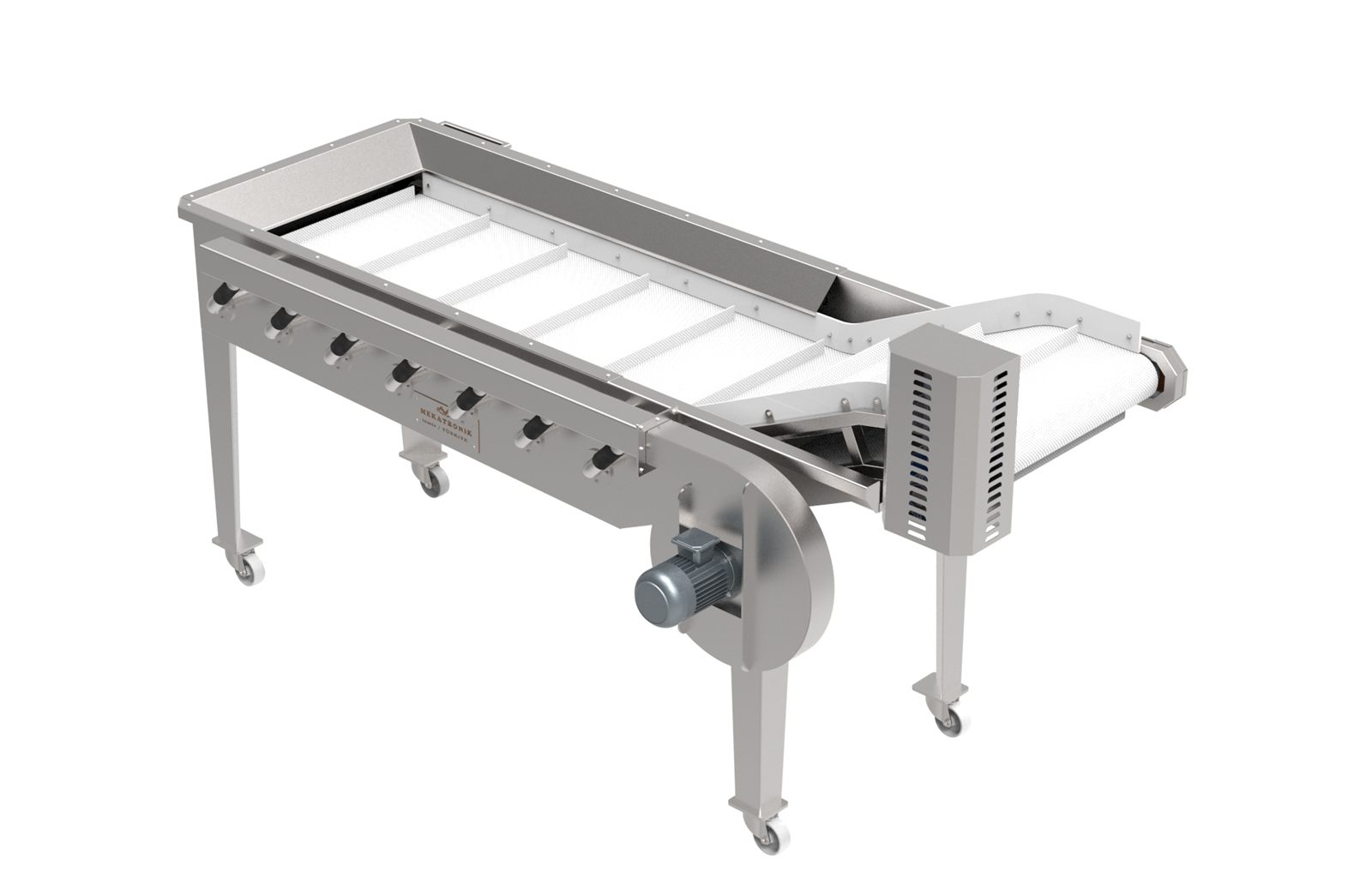
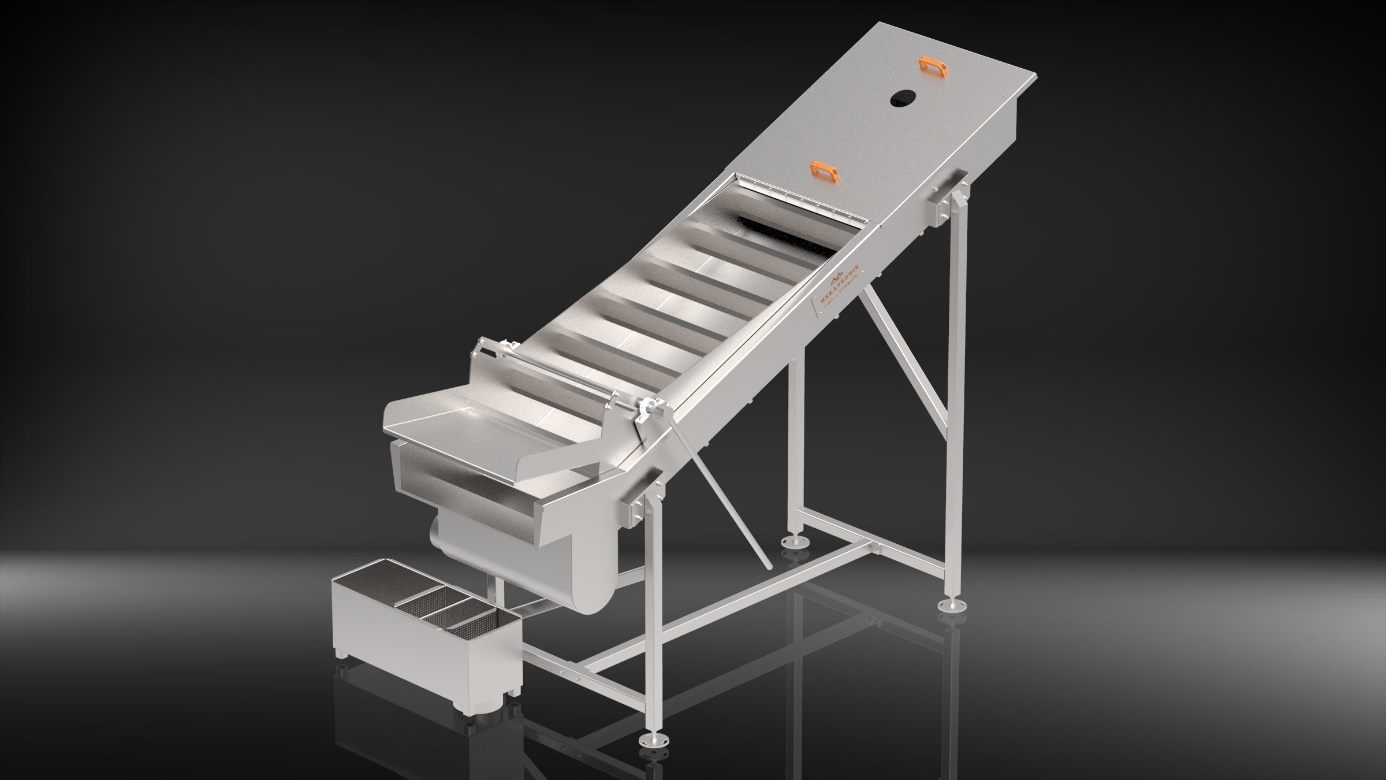
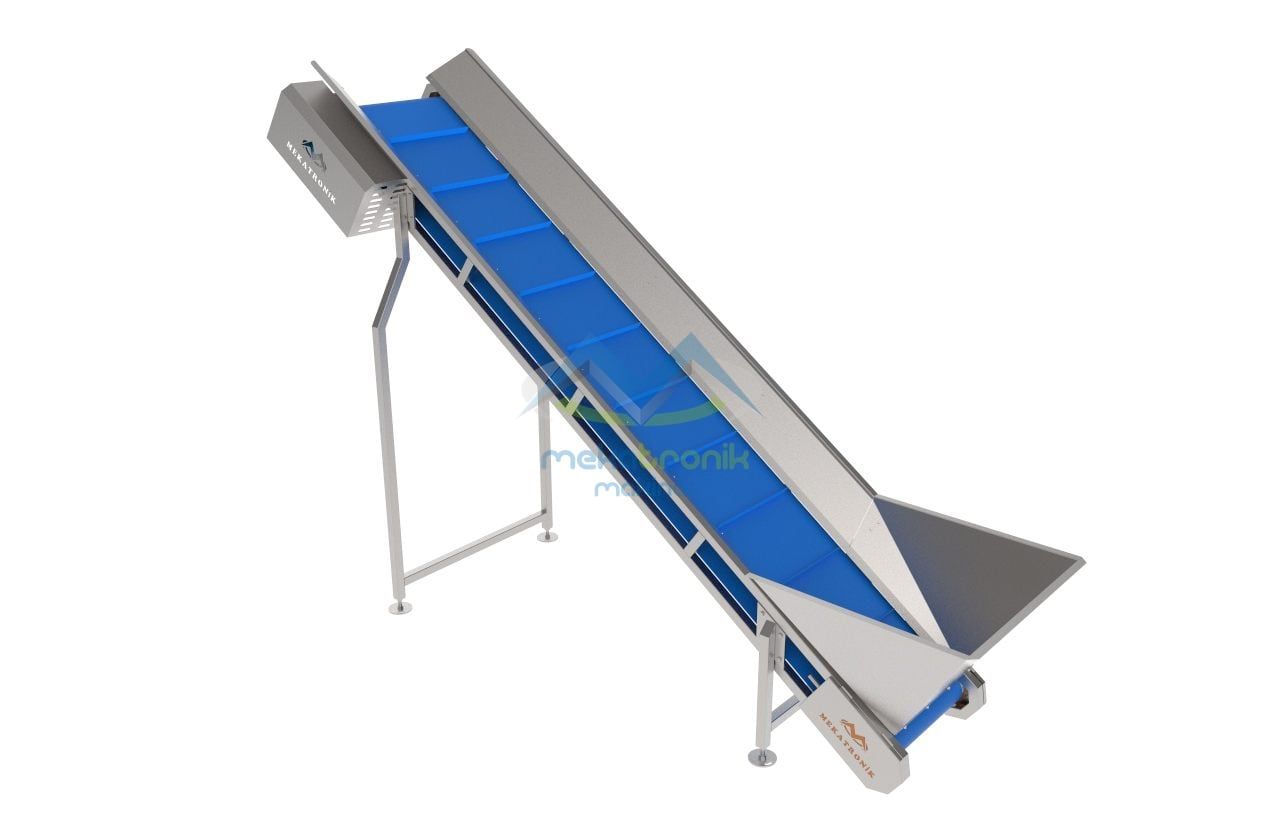
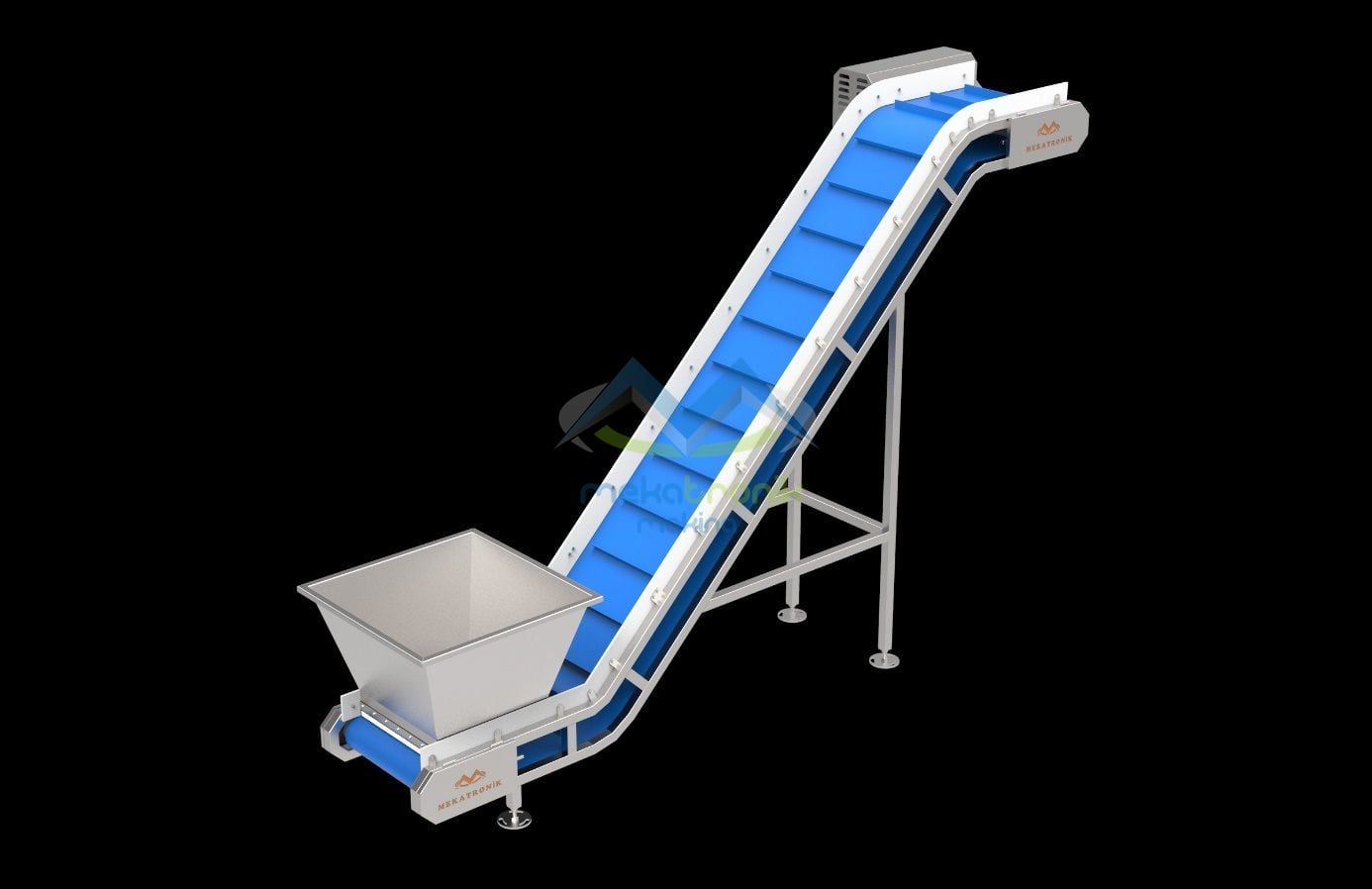
A box closing table is a work table built for one narrow task: closing the lids of filled boxes before they enter the box taping machine. It is entirely stainless, has no motor and moves nothing by itself. Its value is not in what it does but in giving the closing step a defined place, so that filling and taping do not interfere with each other.
01
What is the box closing table for?
After a box is filled, its lids have to be folded and set in position before tape can be applied. When that happens on a loose pallet or on a general table, the box is handled twice and the area becomes crowded. The closing table gives the operator a comfortable working surface for closing lids before taping, which is exactly the purpose written in our machine data.
Our description of the machine is short on purpose. It is a fixed operator table, without a drive, used before the box taping machine. It does not close or tape automatically, and it should not be presented as such.
02
What is it made of and how is it cleaned?
The table is manufactured entirely from stainless material. The body is AISI 304 stainless steel, and the surfaces that touch the box and the product are AISI 304 as well. The surface is washable and hygienic in structure, which matters in food plants where boxes may carry traces of product on the outside after filling.
Stainless construction also means the table follows the same hygiene logic as the rest of the line, rather than introducing a painted or wooden surface at the very end of it. If your process asks for a different grade at any contact point, state it in the request so the offer reflects it.
03
Where does it fit between filling and taping?
The correct position is directly after filling and directly before taping. A typical order in a plant is: filling, closing of lids at the table, taping, then handover to storage. For the filling step you can use a manual box filling hopper where the operator releases product by lever, or the semi-automatic box filling scale where the box must be filled by weight.
| Step | Machine or station | Role |
|---|---|---|
| 1 | Filling hopper or filling scale | Puts the finished product into the box |
| 2 | Box closing table | Closes the lids in a comfortable work position |
| 3 | Box taping machine | Seals the closed box with tape |
The table sits in the middle of that sequence, so its height and edge should match the exit of the filling station and the entry of the taping machine. A box that has to be lifted over a step before it reaches the tape loses the comfort the table was meant to provide.
04
How should the size be decided?
The shape and dimensions are not fixed. The table can be built in special shapes and dimensions for the place and purpose of use, and its capacity is defined per project. We do not give a general figure, because the right surface depends on your box size, the number of operators working at the same table, and how much space the line leaves.
- 01Box dimensions, including the largest box you expect to run.
- 02Number of operators who will stand at the table at the same time.
- 03Whether full boxes arrive by hand, by roller or by belt.
- 04Height of the inlet of your taping machine, so the table edge can match it.
- 05Free floor space and the direction in which boxes should leave.
05
What mistakes make a closing station slow?
The most common mistake is to treat the table as an afterthought and place it wherever there is room. Then the operator carries boxes across a walkway, and full boxes cross the path of empty ones. Two simple rules prevent it: the table stands in line with the taping machine, and the boxes travel in one direction only.
The second mistake is mixing the closing step with storage. Because the table is washable, it can be cleaned at the end of a shift, but this is easier if nothing is left on it that would trap product residue. Keep tools and stacks of boxes beside the table rather than on it.
06
What should you send for an offer?
Send us the box type with its dimensions, the layout drawing or a photo of the intended area, the machine that fills the boxes and the taping machine that follows. With these, the table dimensions can be defined and the neighbouring stations can be checked. Since 1992 we have placed more than 2,000 machines in 22 countries, and a closing station is one of the simplest parts of that experience to get right when the layout is known.
Next step: share your box and layout details through the offer page, and if the product is filled into crates instead of boxes, take a look at the crate filling stand as well.