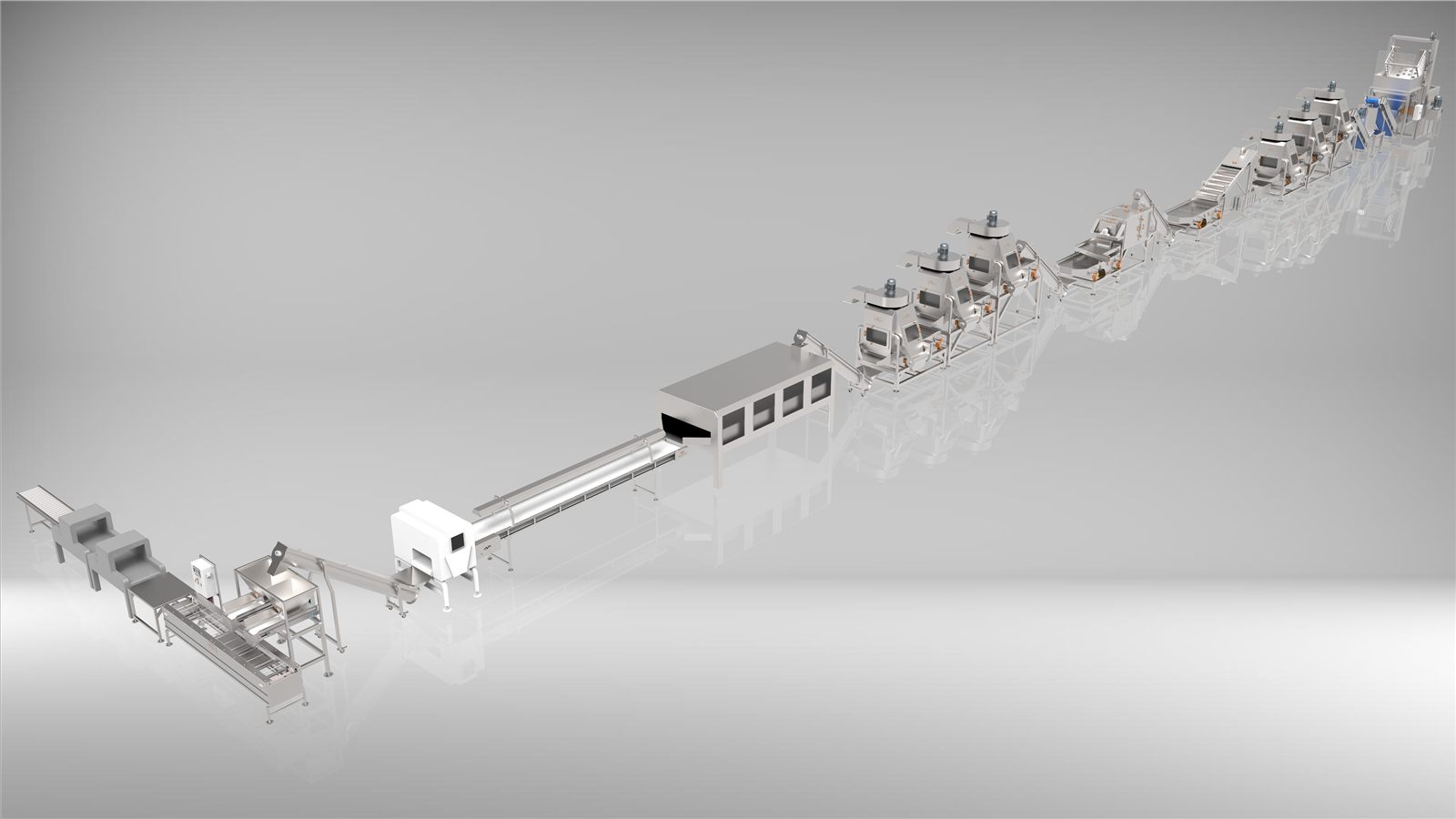
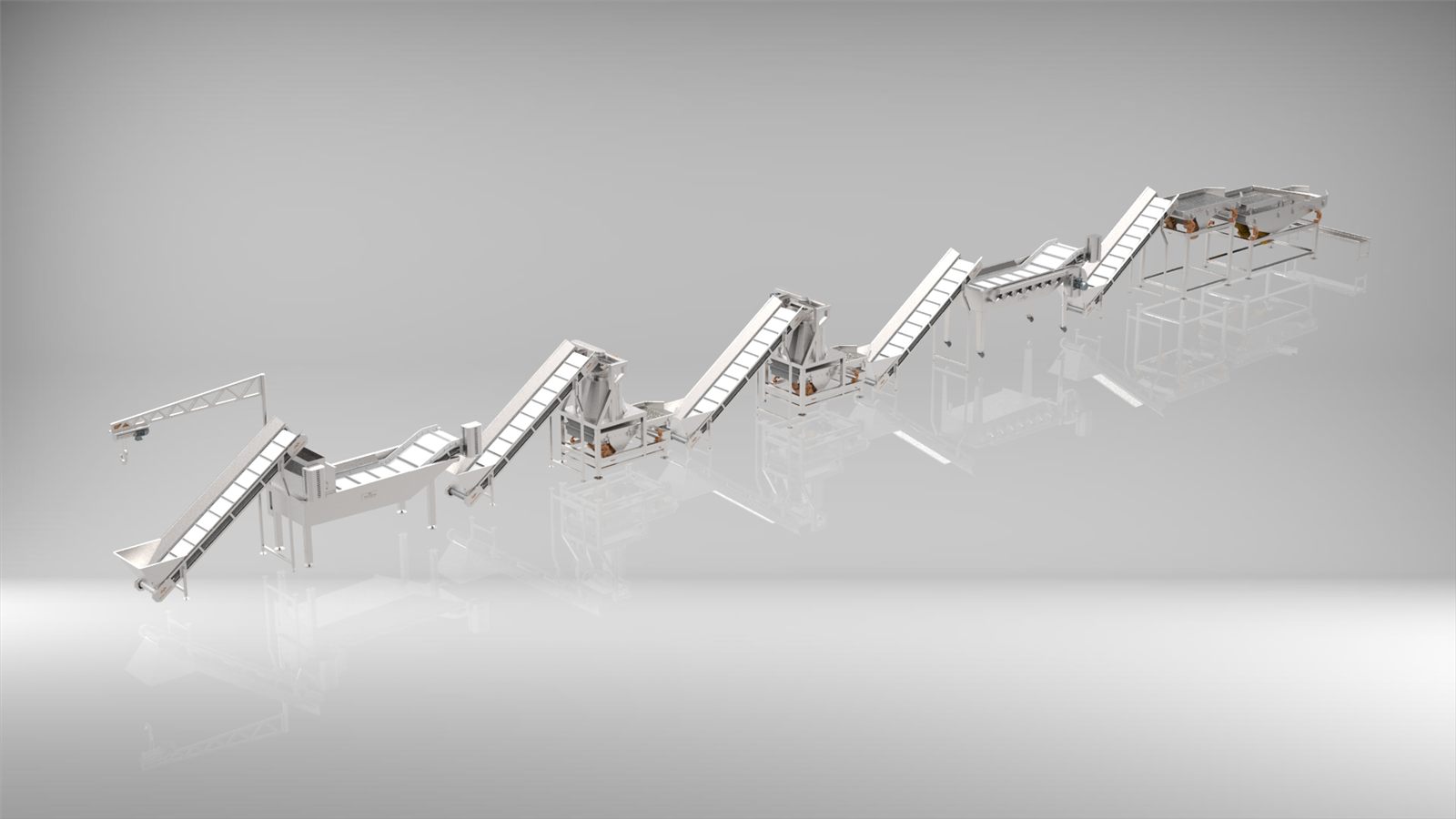
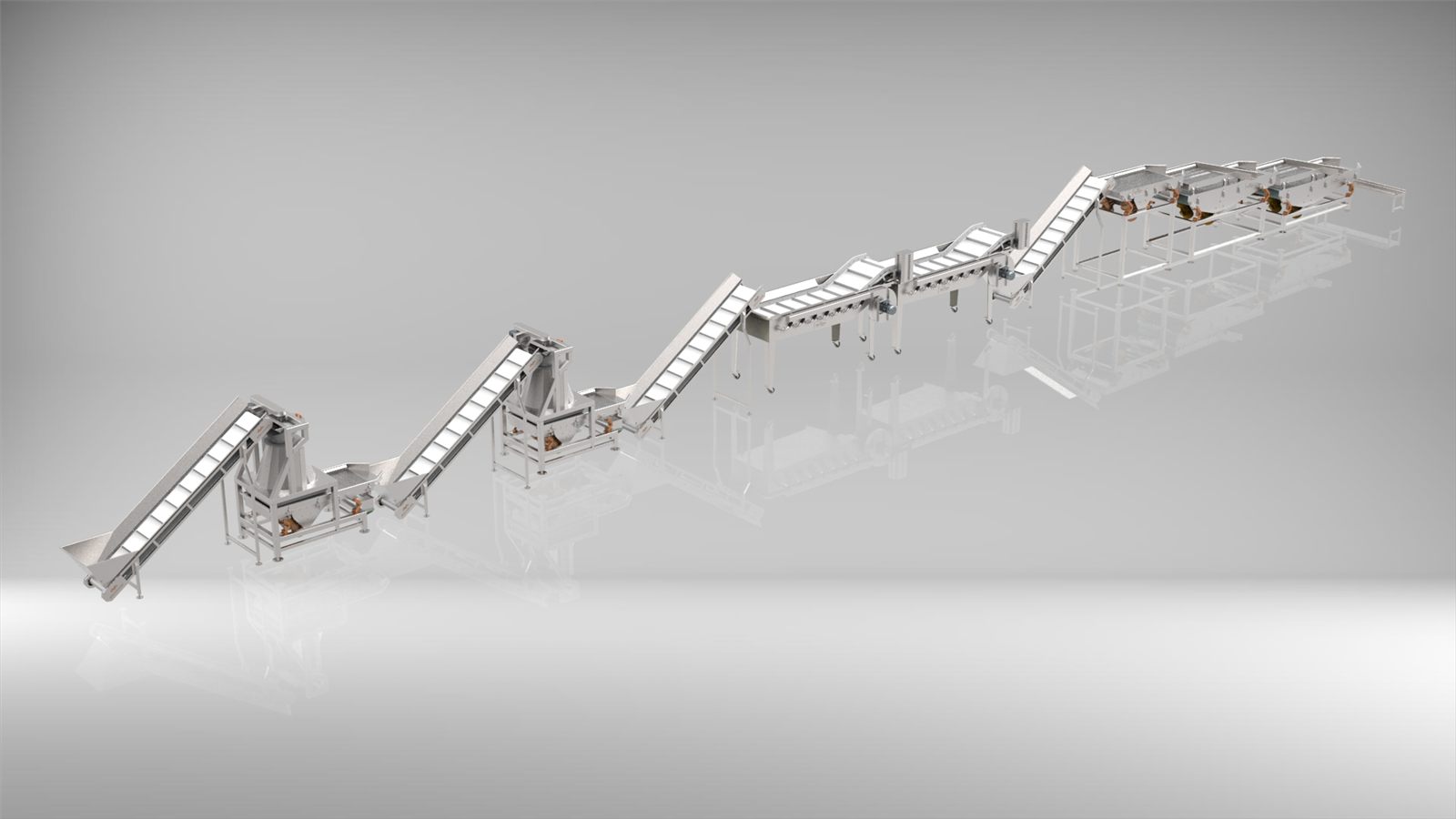
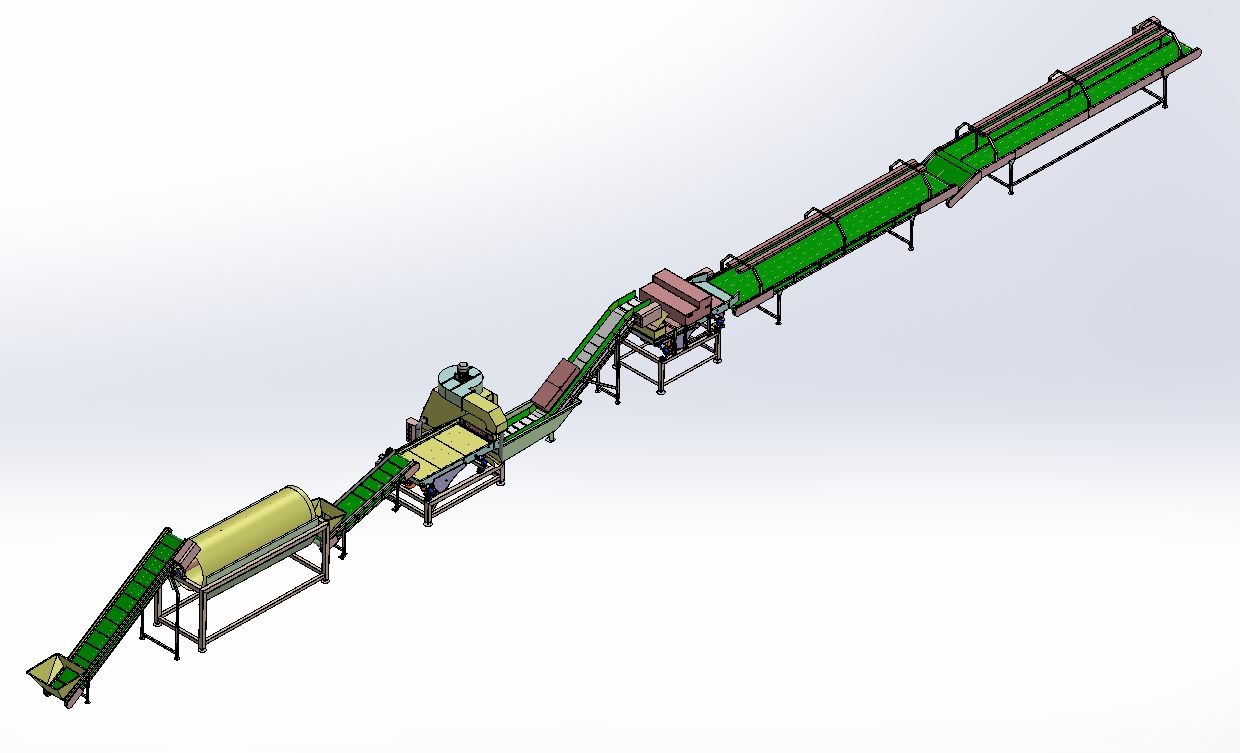
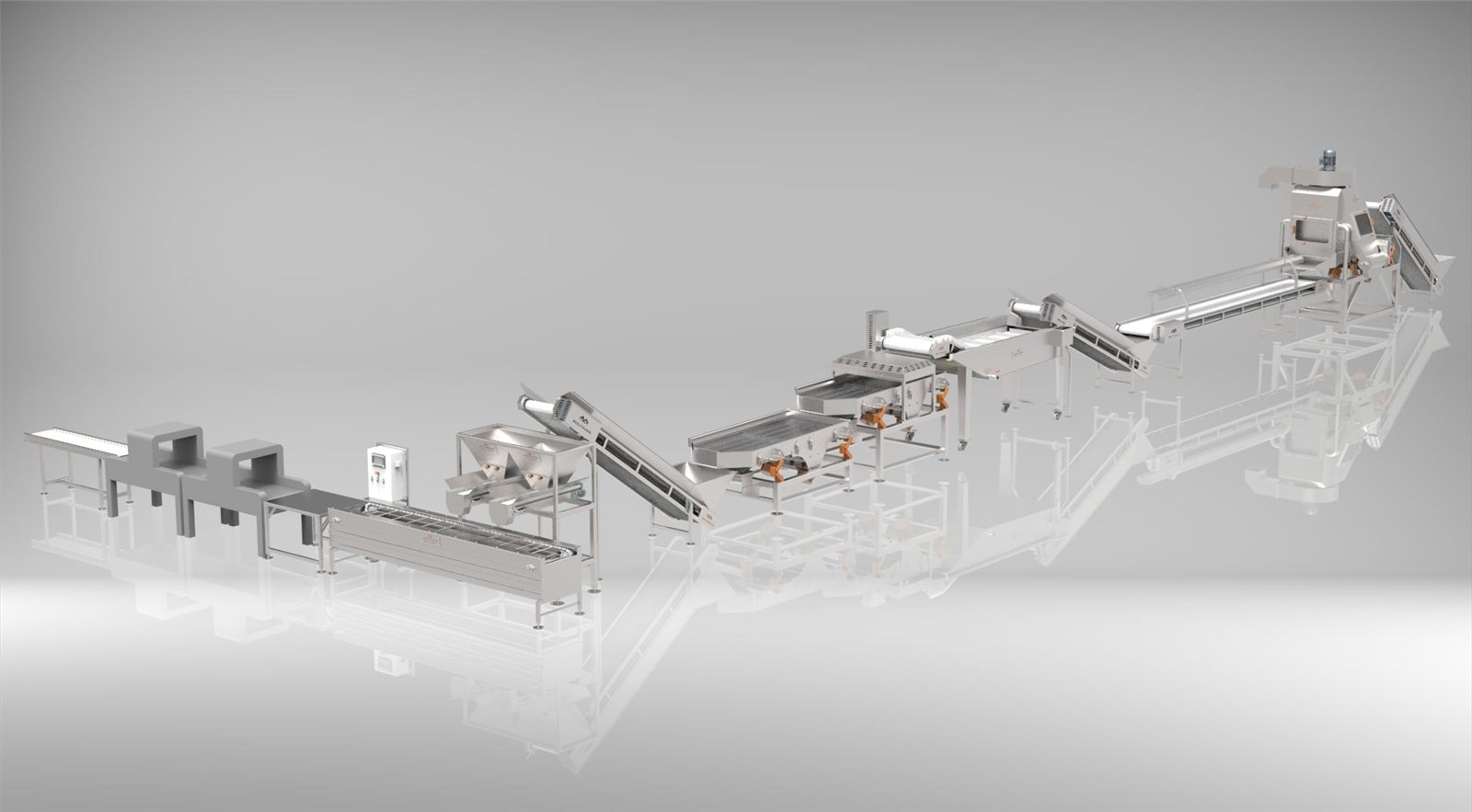
In a dried fig line, the order of stations starts from the condition of the product: figs arrive as pressed blocks, they are sticky, and their surface carries dust. This article explains why washing, sizing, sorting and crate filling are arranged in the sequence they are within a dried fig processing line.
01
Why does the line begin with block opening?
Pressed figs do not flow one by one. If a block enters the washing machine as it is, the brushes and water reach only the outer surface of the block. For that reason the line starts with a sack lifting hoist that empties product at the feed point, a balanced product feed doser that turns it into an even flow, and then a wet-process block opening conveyor.
The conveyor softens the blocks in water and separates the fruit from one another. If this step were out of order, every later station would be working on badly prepared product, which is why block opening comes before washing.
02
In what order do the washing stations work?
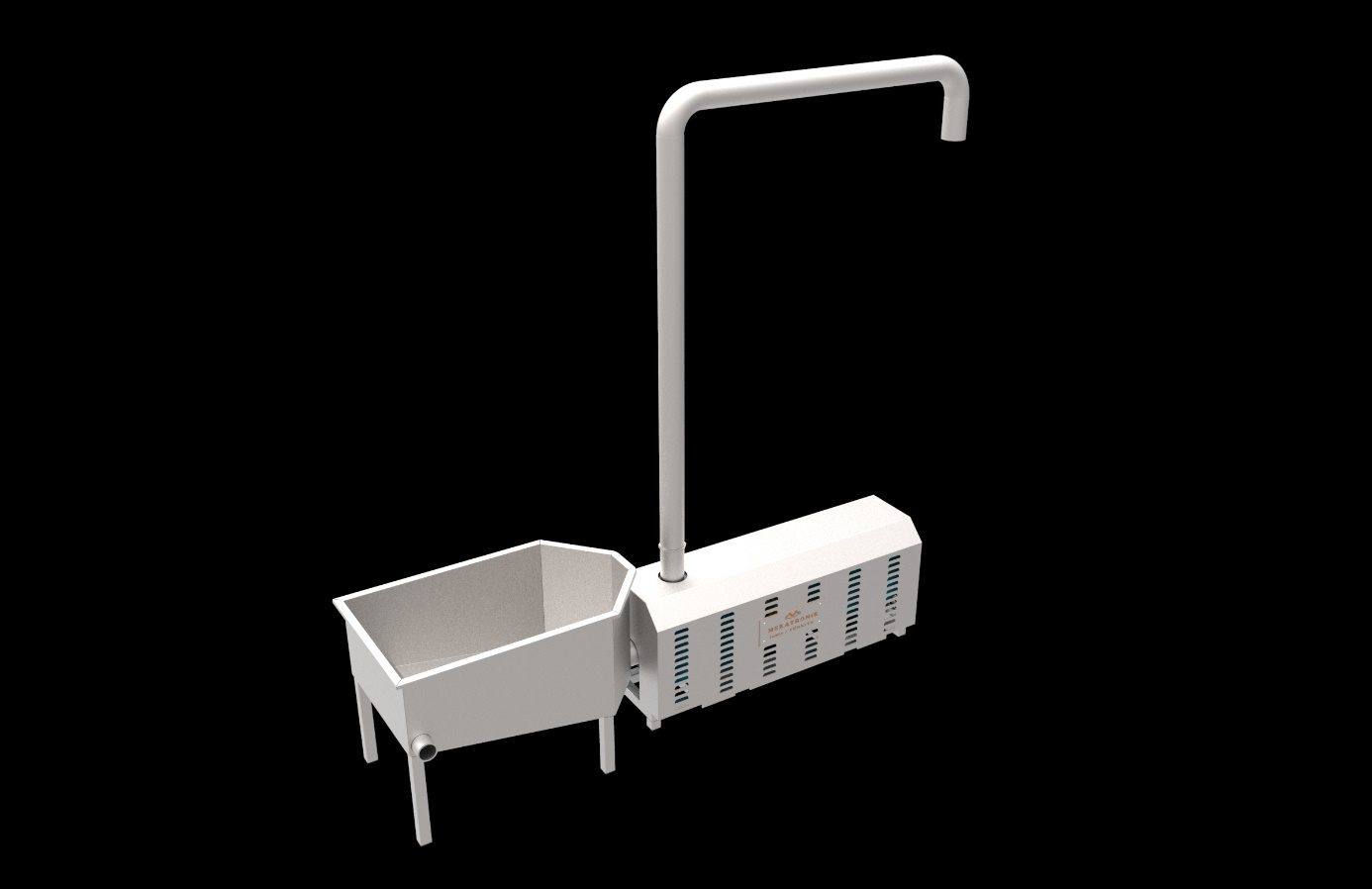
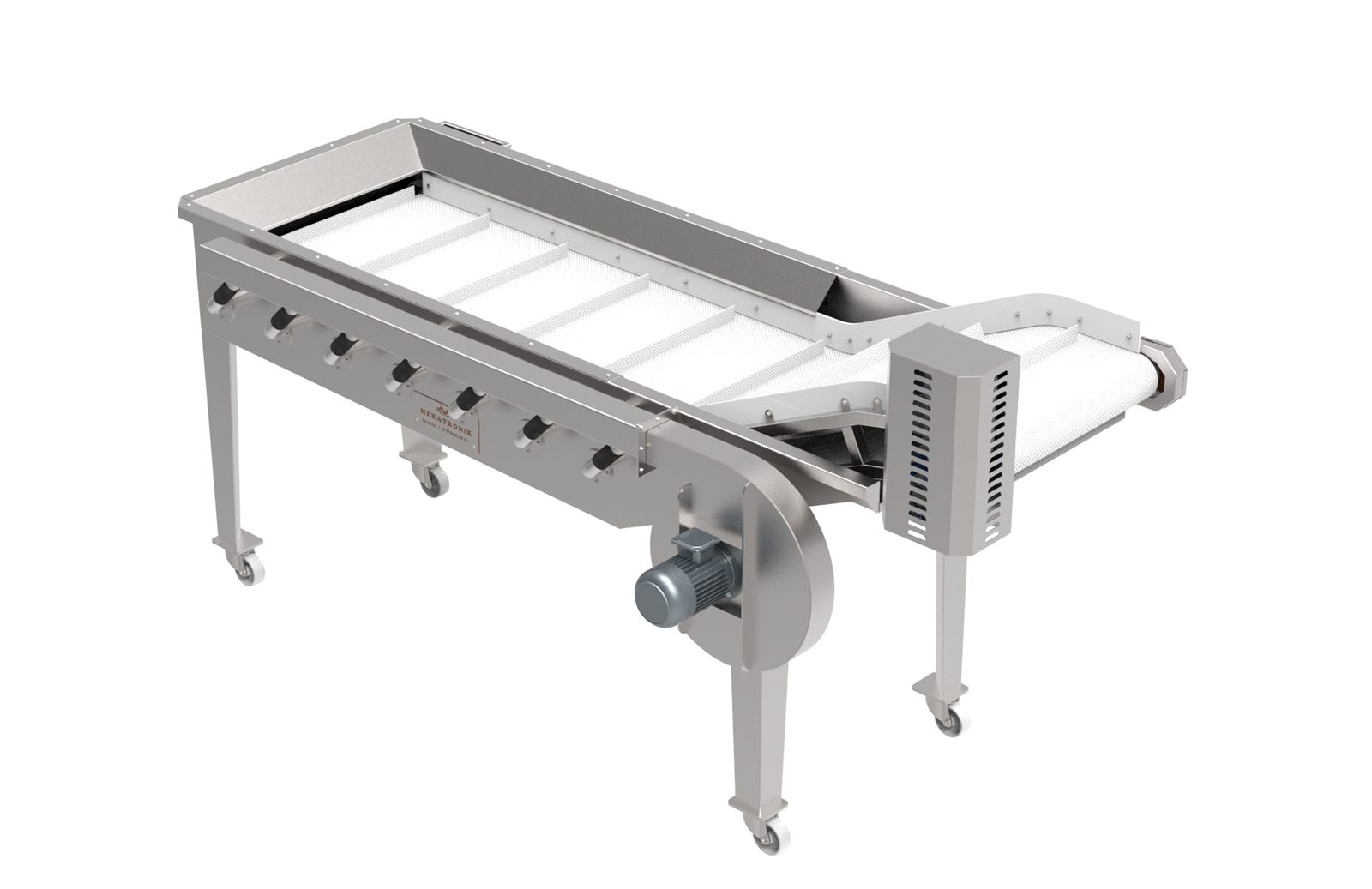
After block opening, the fruit passes to the vertical brush washing machine, where rotating brushes remove dust and residue from the surface. The jacuzzi then completes the cleaning with a bubbling water bath. The brine used in fig washing is prepared in the salt dissolving tank connected to the line; used together with the jacuzzi, it extends the jacuzzi's service life.
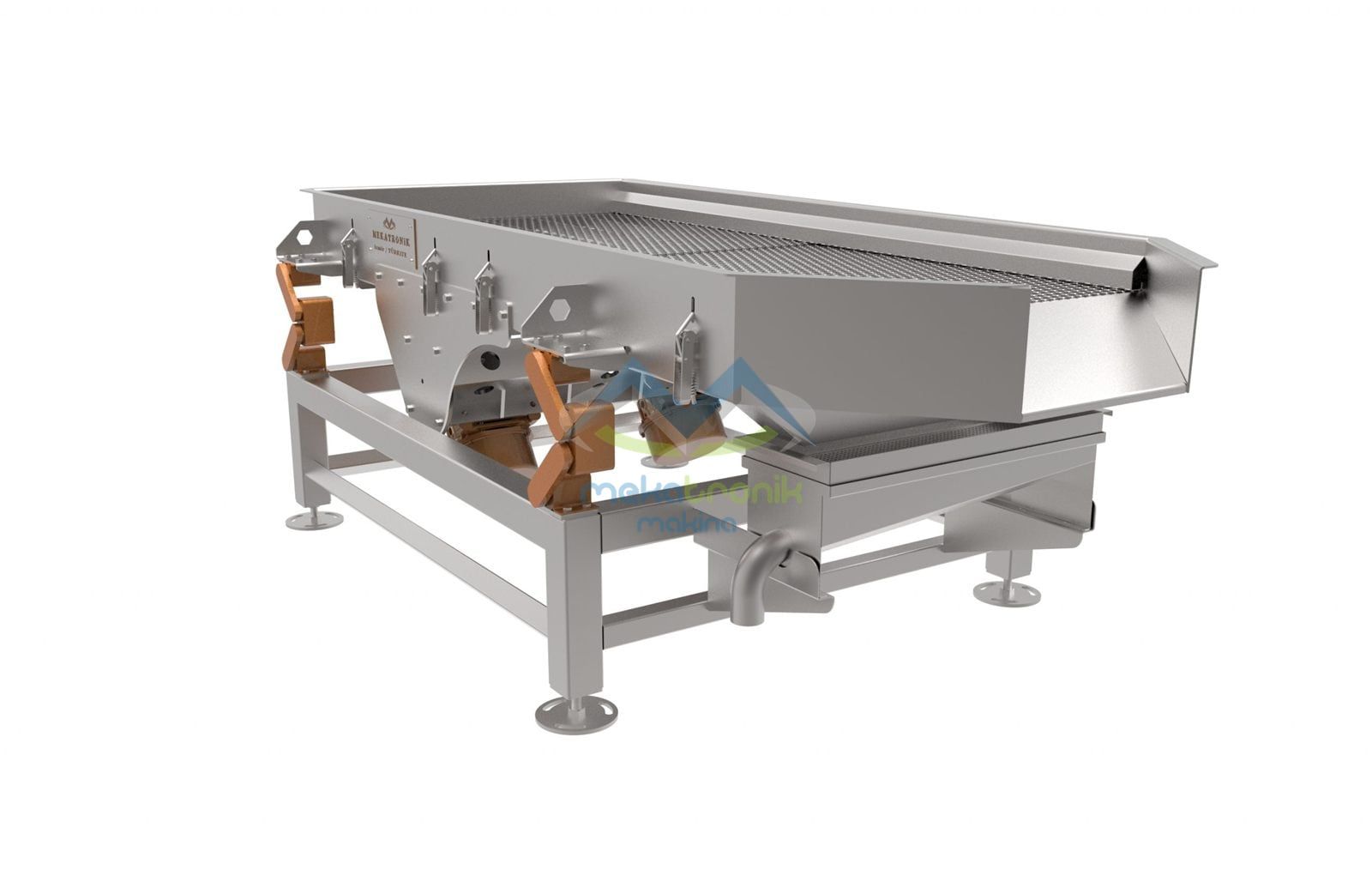
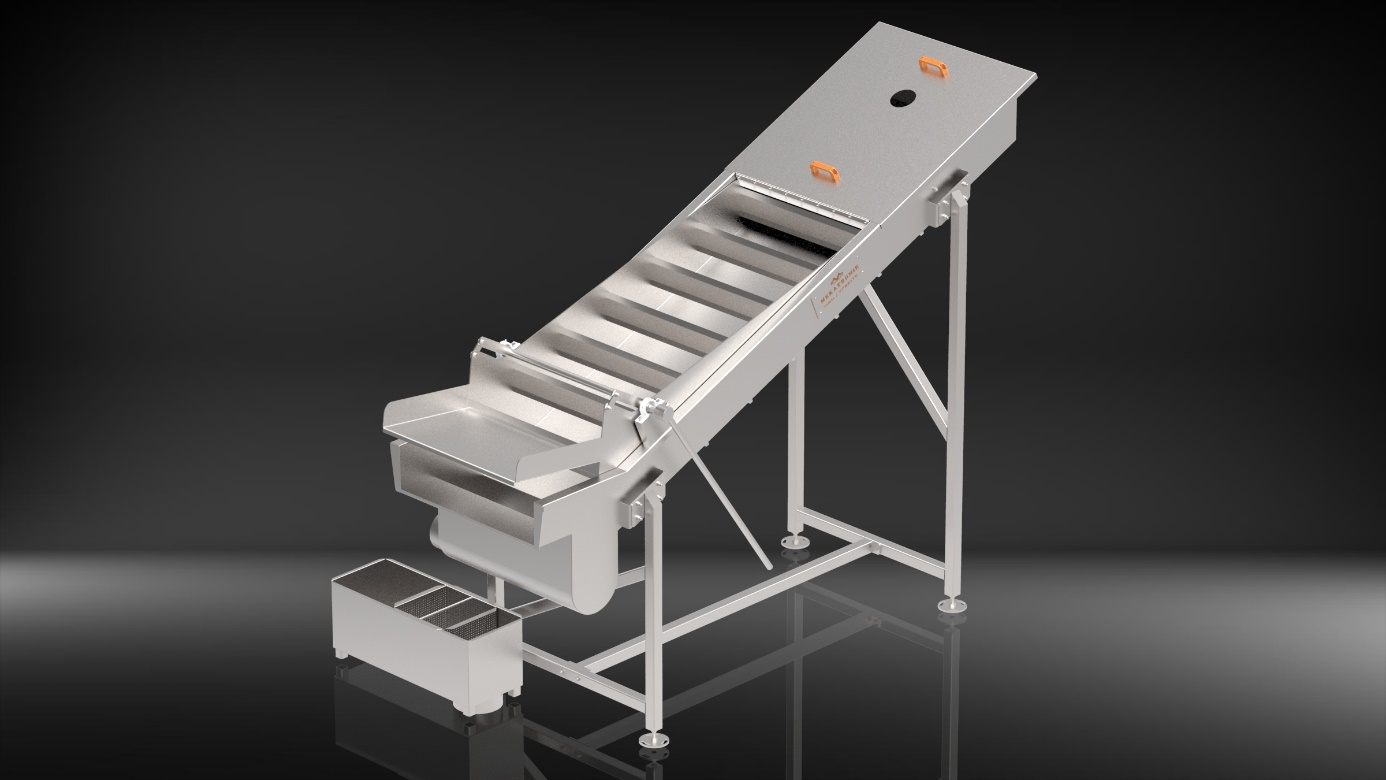
The last link in washing is the dewatering shaker screen. Vibration removes the excess water left on the washed product. Wet fruit entering a sizing screen can cling to the screen apertures and disturb classification, so water removal comes before sizing.
- 01Sack lifting hoist: empties product at the line's feed point
- 02Balanced product feed doser: turns the intake into an even flow
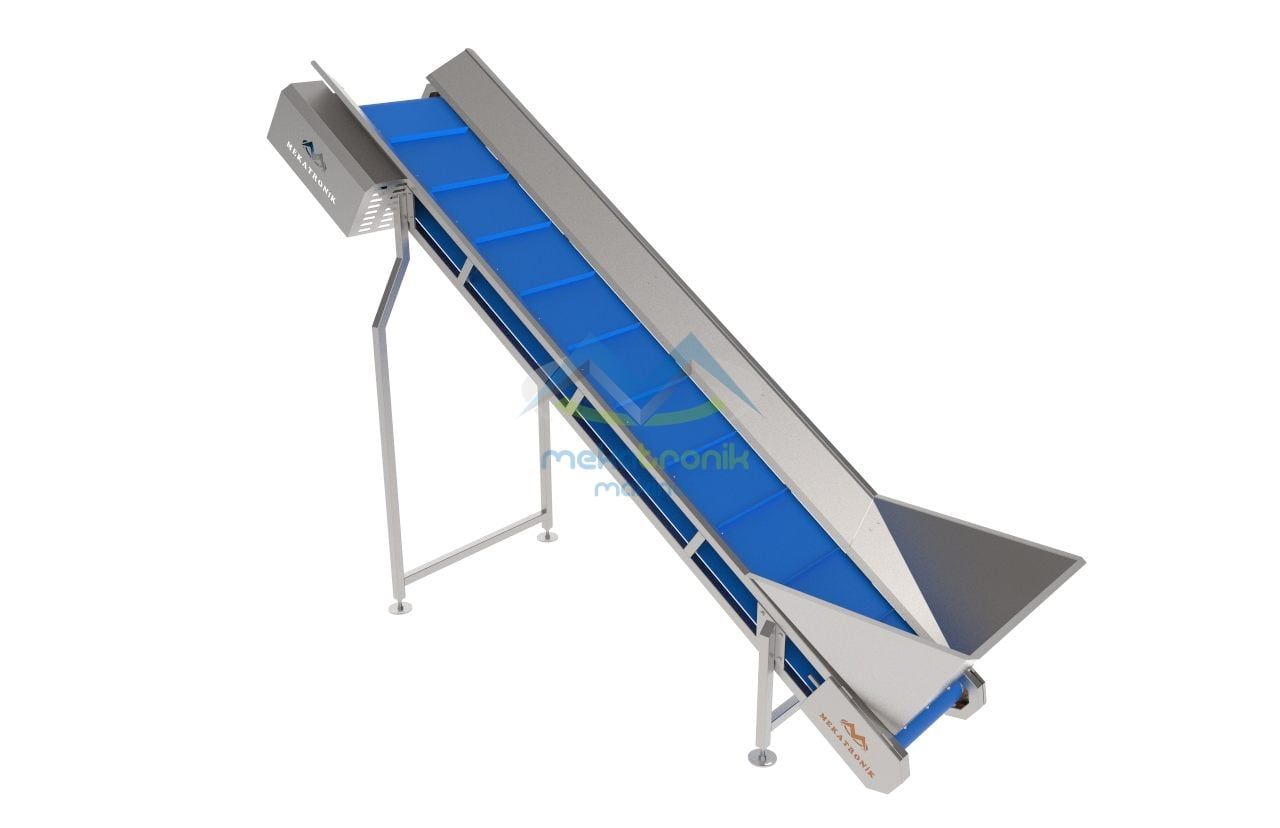
- 03Wet-process block opening conveyor: separates blocks into single fruit
- 04Vertical brush washing machine and jacuzzi: surface cleaning
- 05Dewatering shaker screen: removes excess water after washing
03
Why do sizing and sorting come after washing?
Clean fruit with its surface water removed behaves more predictably on a screen. The dried fruit vibrating screen (sizing) passes the figs over screen apertures and separates them by size; thanks to the double-deck screen system, coarse debris is also separated at this stage. Each size fraction is taken off through its own outlet.
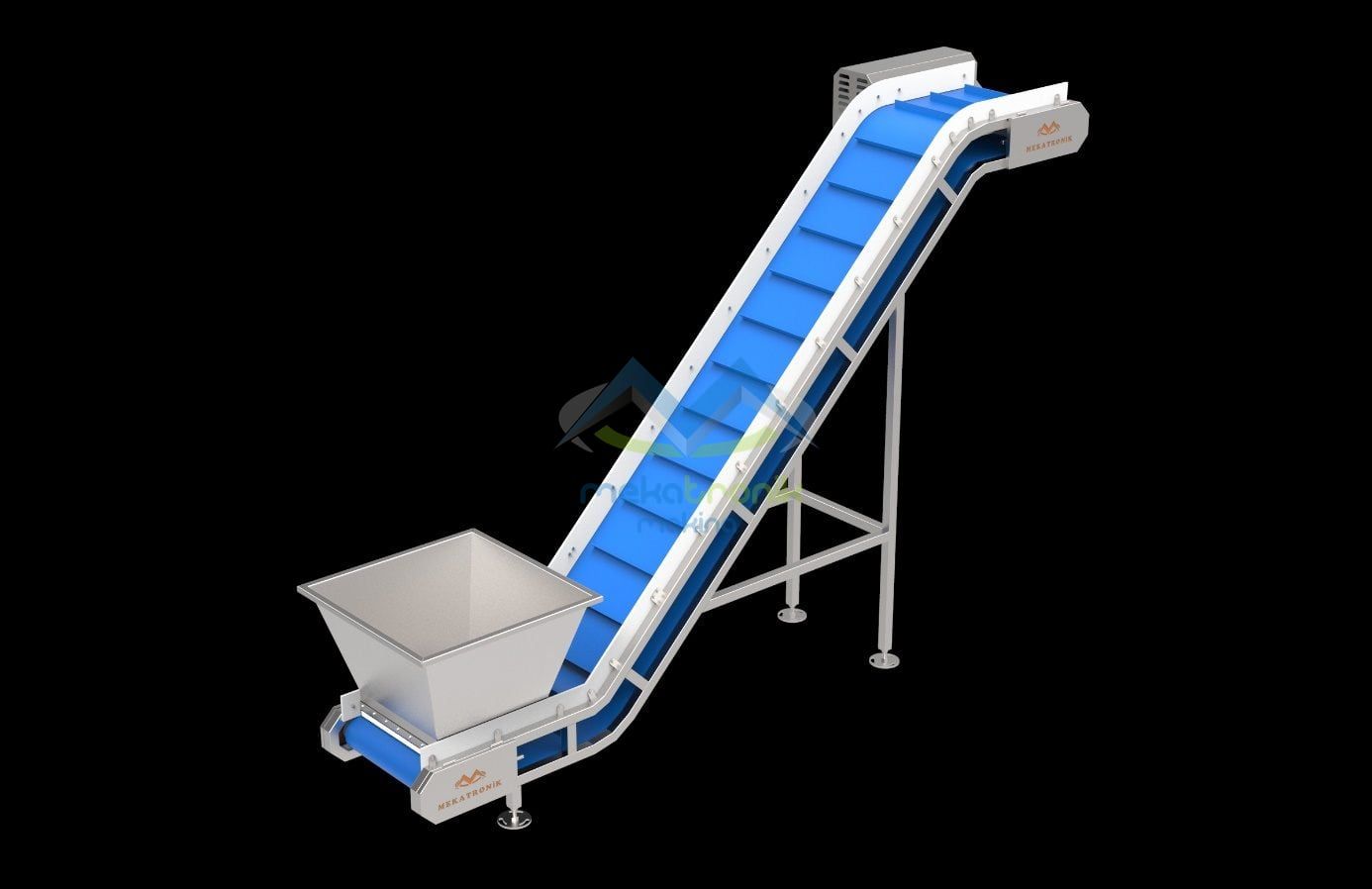
After sizing, the product moves to the illuminated sorting conveyor. Defective fruit and foreign matter are picked out by hand over the illuminated belt. Sized product looks more uniform, which makes visual inspection easier, and the operator can assess each size fraction separately.
04
Where do dicing, paste and filling sit in the line?
The line is not a single sequence. It is arranged as washing, sizing, cutting, paste and filling sub-lines. Where figs are processed into cubes, the cutting machine and the flour dusting cyclone work together: the cut cubes are dusted with flour so they do not stick to one another. The paste line turns figs into the paste form the food industry uses as a raw material.
In the filling line the product goes through a final visual check and is filled into crates at the crate filling stand, where the drop height is shortened. A short drop reduces the impact of fruit landing in the crate.
05
Is this order applied the same way in every plant?
No. The shape and size of the finished product are set in the project according to the product to be processed and the target capacity. Some plants want only washing and sizing; others add cutting or paste. The sub-lines can be engineered separately or as an integrated whole.
| Sub-line | Condition of the product | Core stations |
|---|---|---|
| Washing | Pressed block, dusty | Block opening conveyor, brush washer, jacuzzi, dewatering shaker screen |
| Sizing | Washed fruit | Sizing screen, illuminated sorting conveyor, crate filling stand |
| Cutting | Sized fruit | Cutting machine, flour dusting cyclone |
| Paste | Sized fruit | Paste machine, crate filling stand |
| Filling | Sorted product | Illuminated sorting conveyor, crate filling stand |
Product-contact surfaces are AISI 304 stainless steel, with AISI 316 available depending on the process. Capacity, number of stations and layout vary by project; exact values are confirmed in the quote.
06
Next step
To see which sub-lines your plant needs for its product volume and target output, review the sizing line page or request information through the quote page.