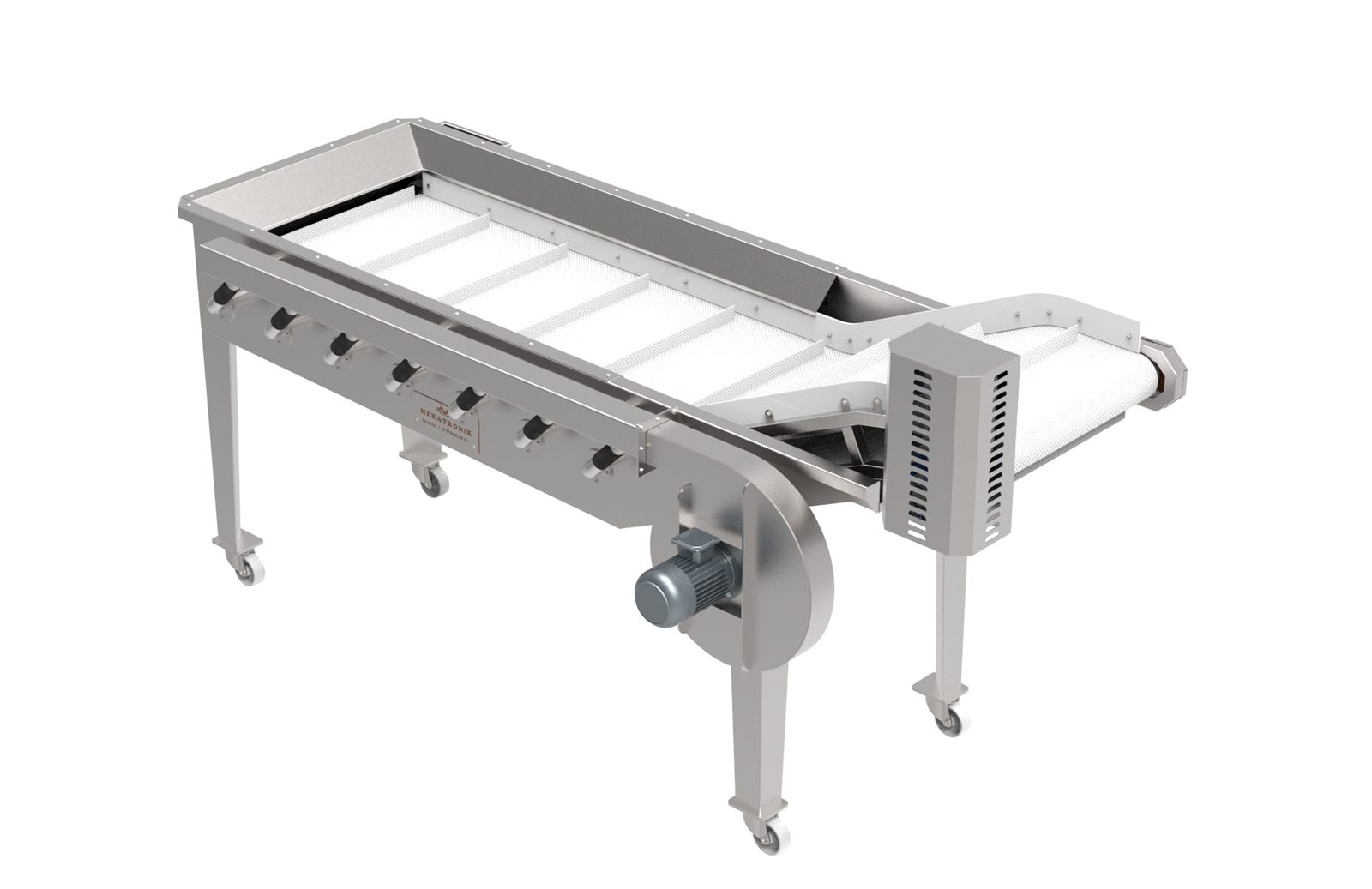
After washing, product leaves the washer as a dense mix of water and fruit, and every bit of water that rides along into the next machine becomes load for that machine. The Dried Fruit Dewatering Vibrating Screen separates that mix on a vibrating stainless screen so the product can move on quickly. Below is how the water leaves, what the machine is built around, and the point where a fan-assisted model becomes the better question.
01
Where does the water go between the washer and the next station?
Washing is wet by design. In a dried apricot washing line, and likewise in raisin and fig lines, the product comes off the washing stage with water on its surface and a good deal of free water around it. If that mix goes straight on to sizing, drying or packing, the next station inherits the water: belts get wet, product can clump and drains fill up. The dewatering screen is the station that takes the free water out of the flow first.
02
How does the screen separate water from product?
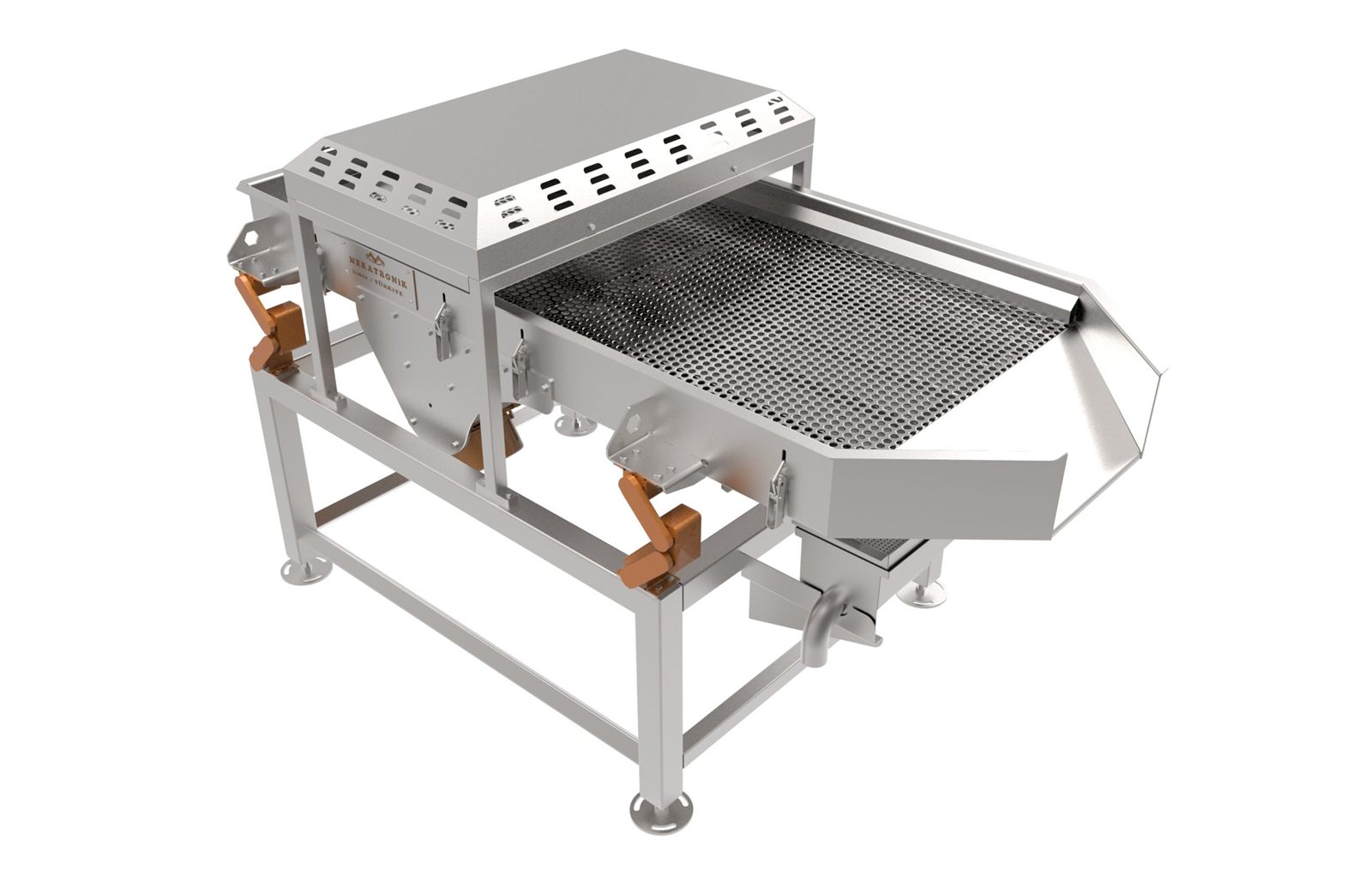
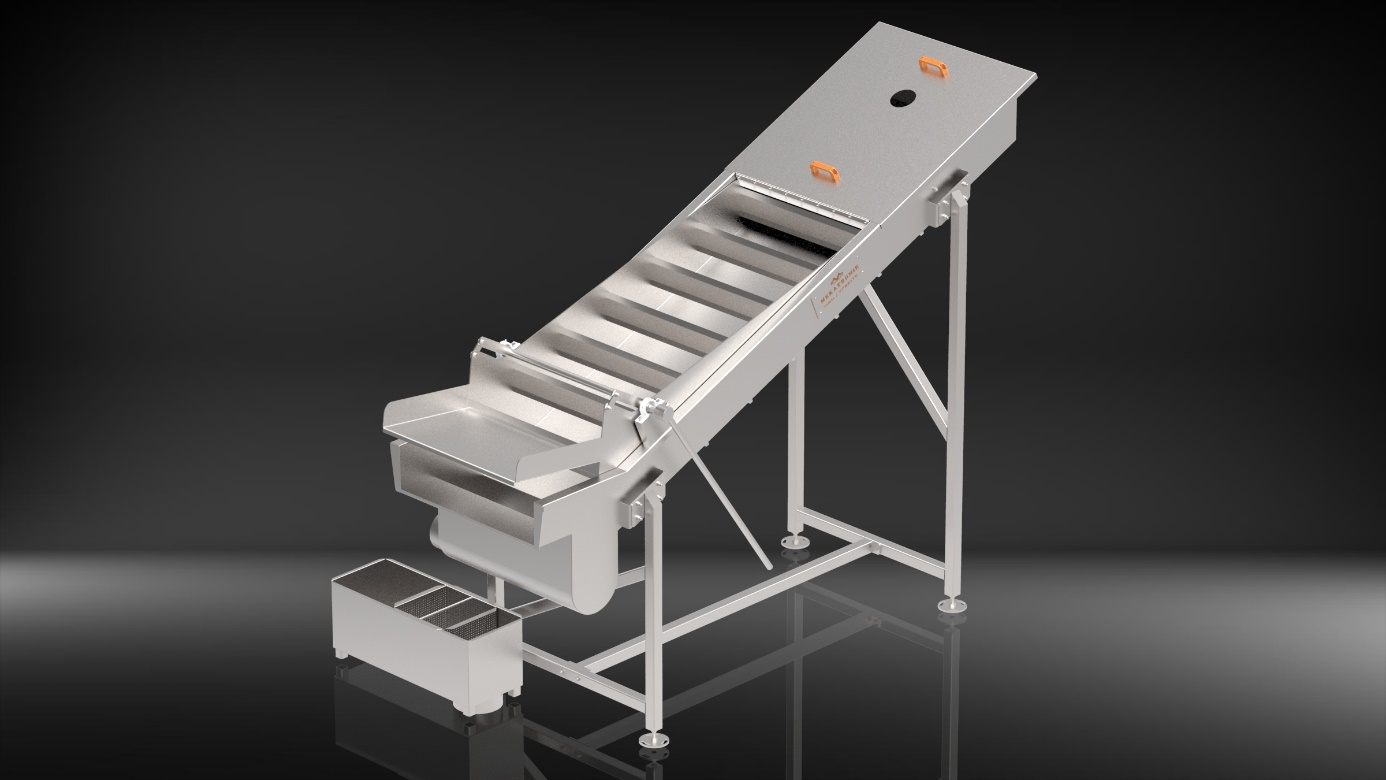
The movement comes from two vibration motors. The mix of water and product is spread over stainless screens designed specifically for the product group. The product travels along the screen towards the next stage, and the water passes through the screen openings and drops below. Nothing in this sequence relies on a heater or a press; it is vibration, gravity and screen geometry.
- 01The mix of water and product arrives on the shaker screen.
- 02Vibration separates the two: the product moves forward over the stainless screen and the water falls through.
- 03The product leaves towards the next stage while the waste water collects in the trough underneath.
Screen opening and structure follow the product group, so this is not a one-size screen. A small raisin and a soft apricot half do not behave the same way on the same surface, which is why the screen is designed around the product rather than copied from another line.
03
What does the waste water trough add?
The water that falls through the screen does not go straight to the floor drain. It collects in a trough below the screen, and the trough holds back large fruit and debris that slipped through, which lowers the risk of the drain clogging. The wording matters: it lowers the risk, it does not remove it, so the trough still has to be emptied and washed as part of normal cleaning. When the line is planned, a floor drain point for the separated water is marked on the layout together with the machine.
04
Is surface water the same as moisture inside the fruit?
No, and the distinction decides what to expect. The screen removes the free water and the film clinging to the outside of the product. Moisture inside the flesh of an apricot, a fig or a date is a different matter and is not this machine's task. If a line needs the product drier at the exit than vibration alone can deliver, the question belongs to the station that follows, not to a longer shaking time.
05
When is the standard model enough, and when does the fan-assisted one come in?
The Fan-Assisted Dewatering Shaker Machine uses the same screen principle with a fan drying system added. The airflow removes the water on the product in a shorter time than a shaker without a fan. The catalogue prints no time figure, because the time depends on the product, the feed and the water arriving from the washer; the difference is measured together with the customer at commissioning, using your own product.
| Question | Leans towards the standard model | Leans towards the fan-assisted model |
|---|---|---|
| What follows the screen? | Sizing or screening | Packing or drying soon after |
| How does the next station cope with surface water? | It copes | Residual surface water becomes a problem |
| Control and supply | Stand-alone, 380 V / 50 Hz | Stand-alone, 380 V / 50 Hz |
Adding a fan where it is not needed and leaving it out where it is needed both disturb the flow of the line, so the decision is made on a measurement, not on a preference.
06
Which lines use the dewatering screen?
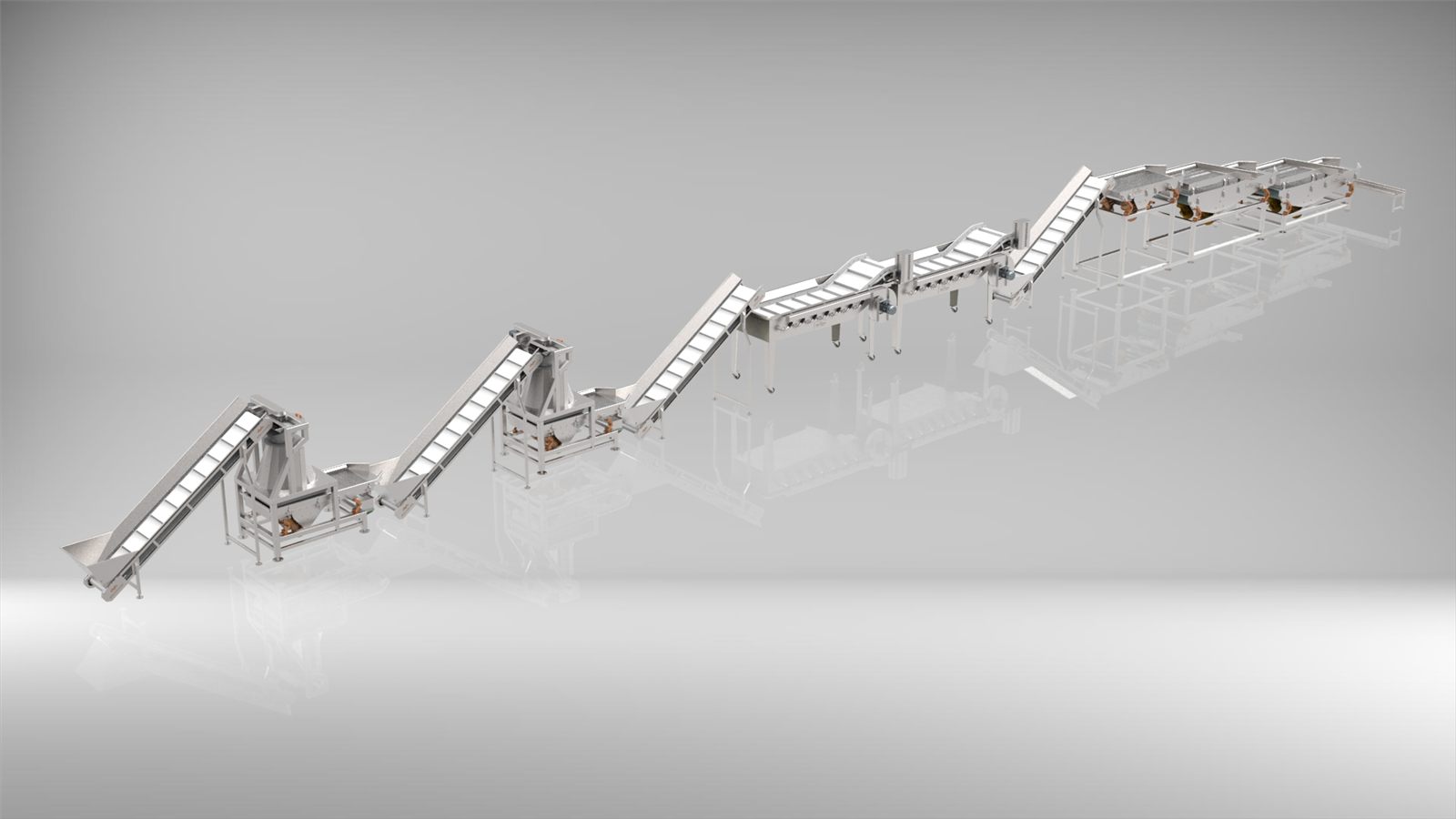
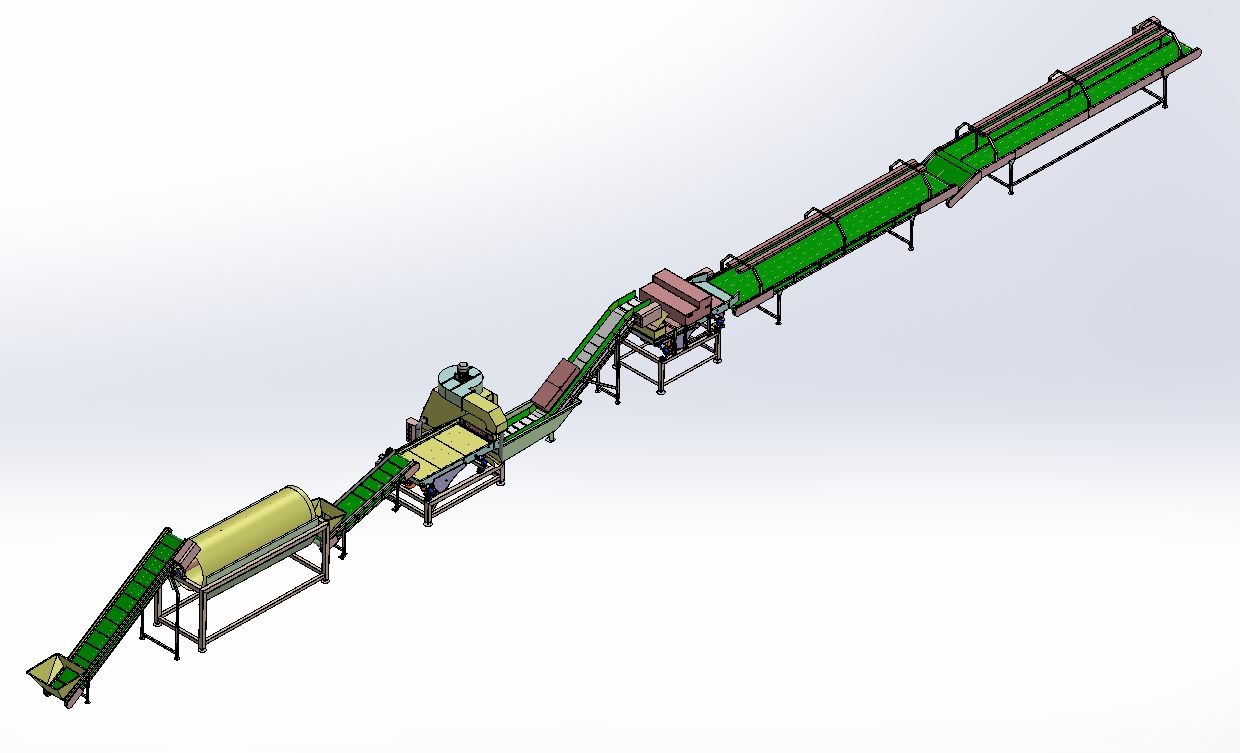
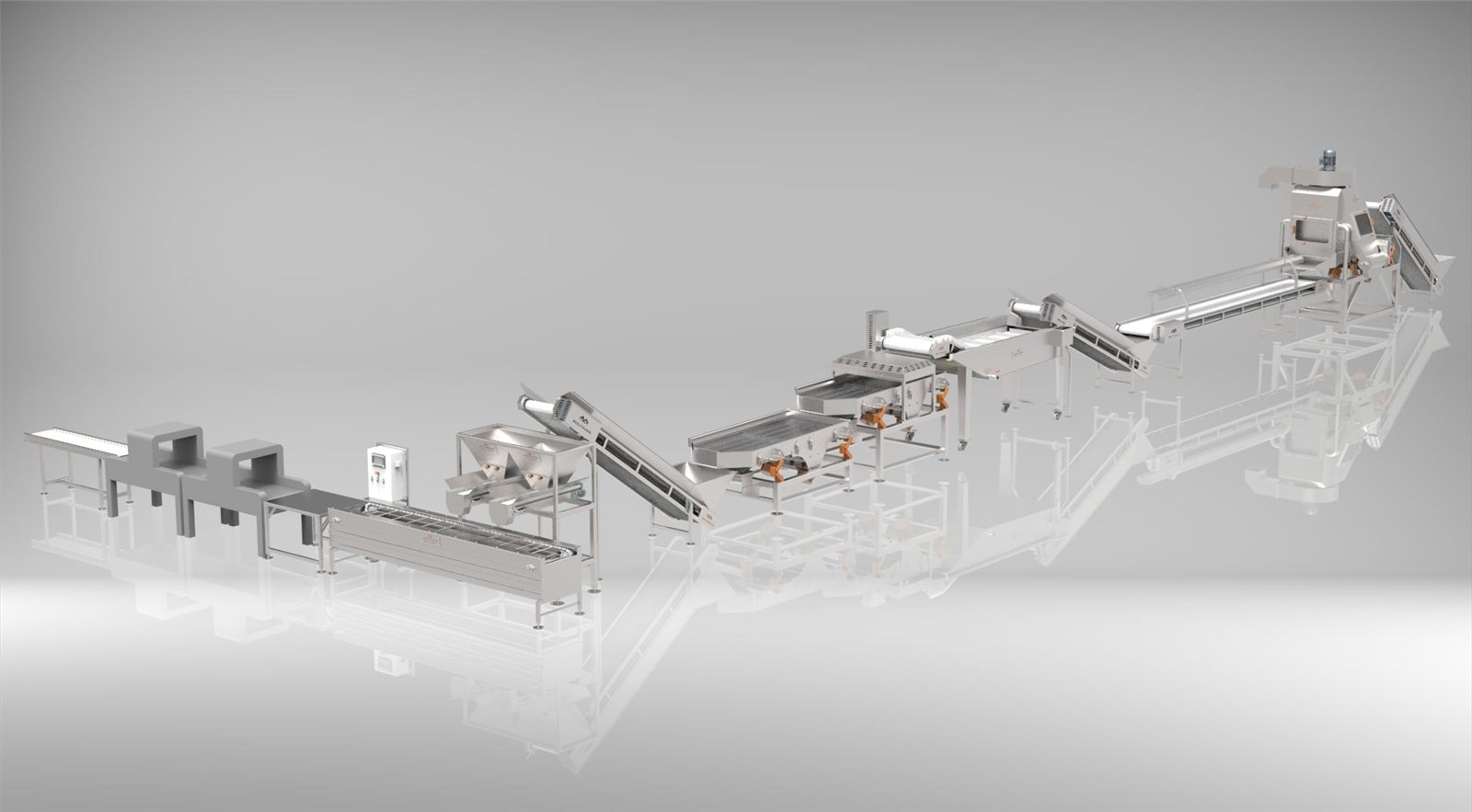
The catalogue lists the machine for raisin, dried apricot and dried fig lines. It sits at the end of the washing stage: washing itself is done in machines such as the jacuzzi, and the screen takes over the flow from there and hands the product to the next station. The order of machines around it changes from line to line, so the position is fixed on the line plan and not assumed.
07
Materials, cleaning and what to send for a quotation
The body and the product-contact surfaces are AISI 304 stainless steel, with AISI 316 as an option where the process calls for it. Supply is 380 V / 50 Hz, the machine runs stand-alone and the structure is easy to dismantle and wash. Capacity is set per project, so figures are confirmed in the quotation. For an accurate answer, have these ready:
- 01Product type and size, since the screen is designed around them.
- 02How the product arrives from the washer: an even flow or in surges. Piling slows drainage.
- 03The station after the screen: sizing, drying or packing.
- 04Where the separated water will drain.
- 05Floor space and electrical supply.
Tell us which station follows washing in your line and which product you run, and we can say whether the standard screen is enough or the fan-assisted model should be measured on your product. Mekatronik Makina has built lines since 1992, with more than 2,000 machines in the field across 22 countries. You can send the details through the quotation page.