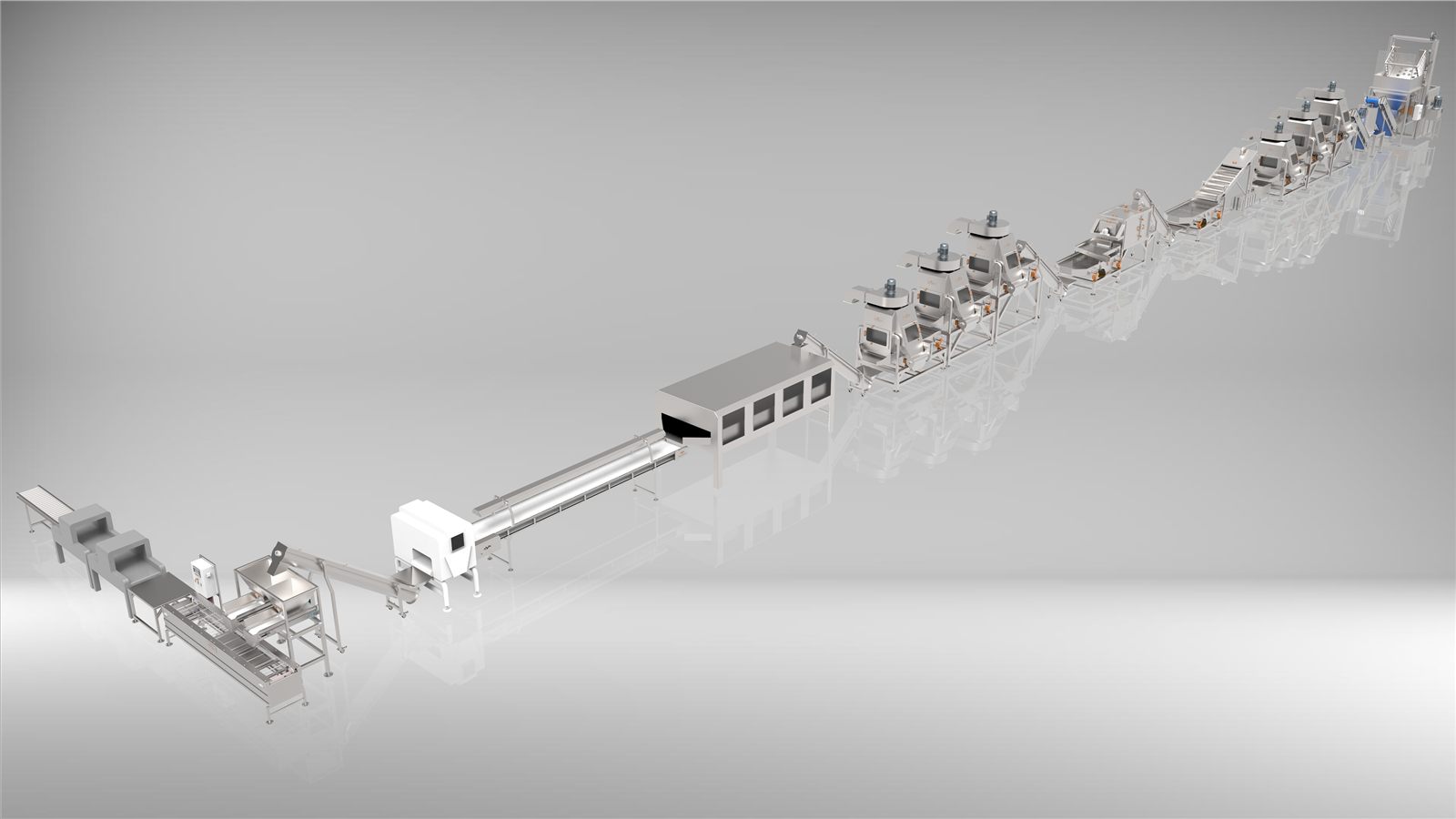
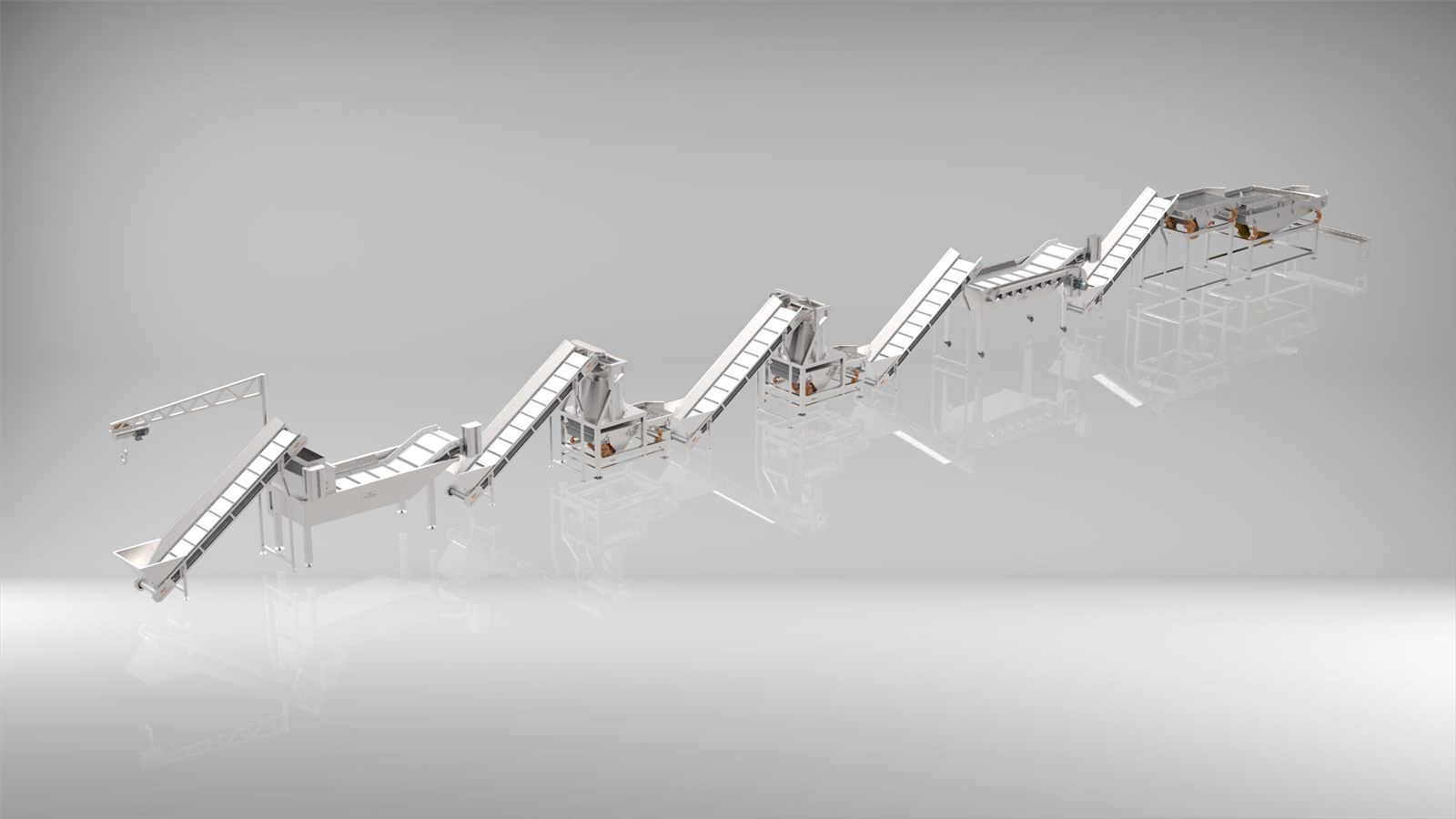
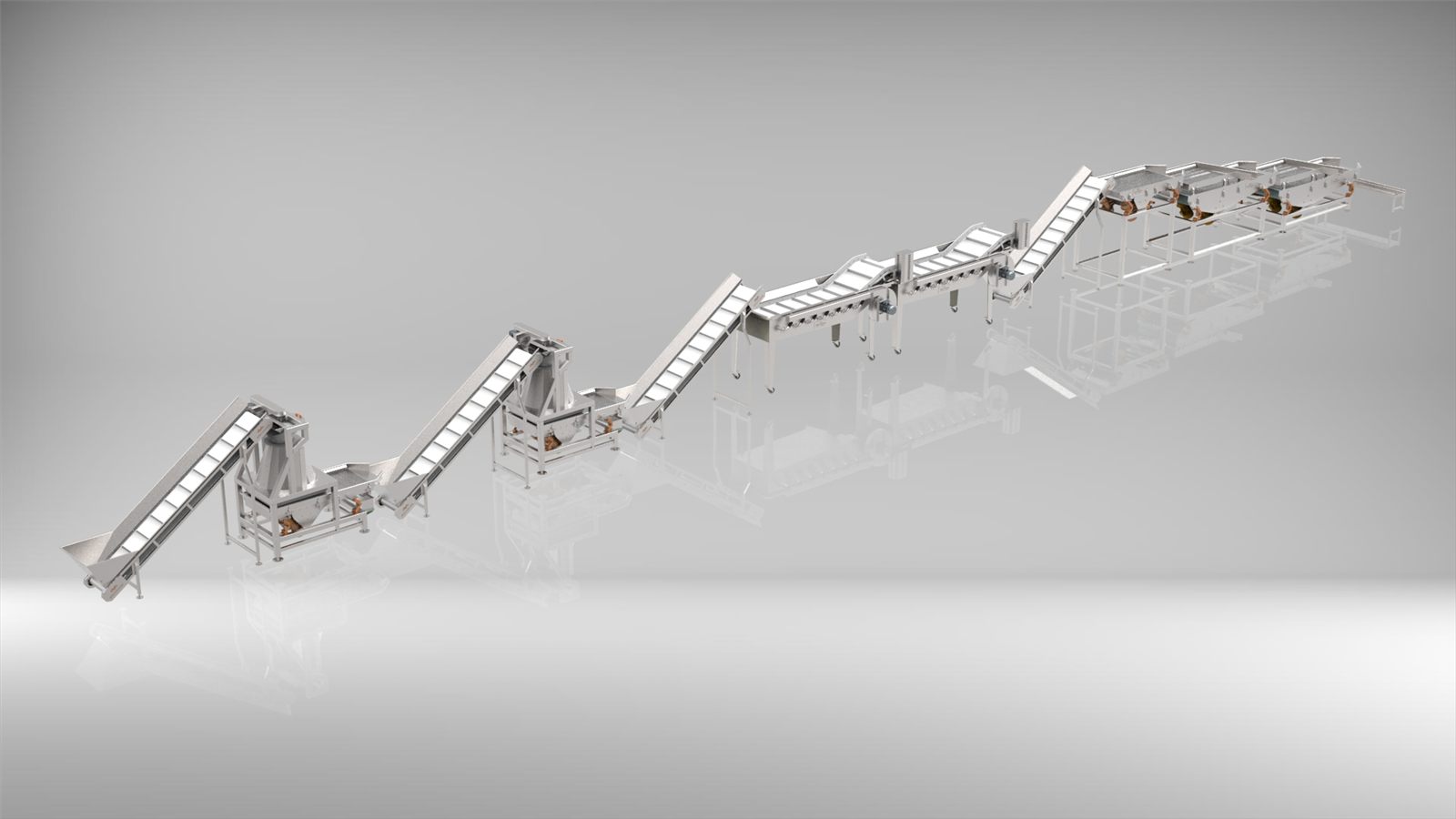
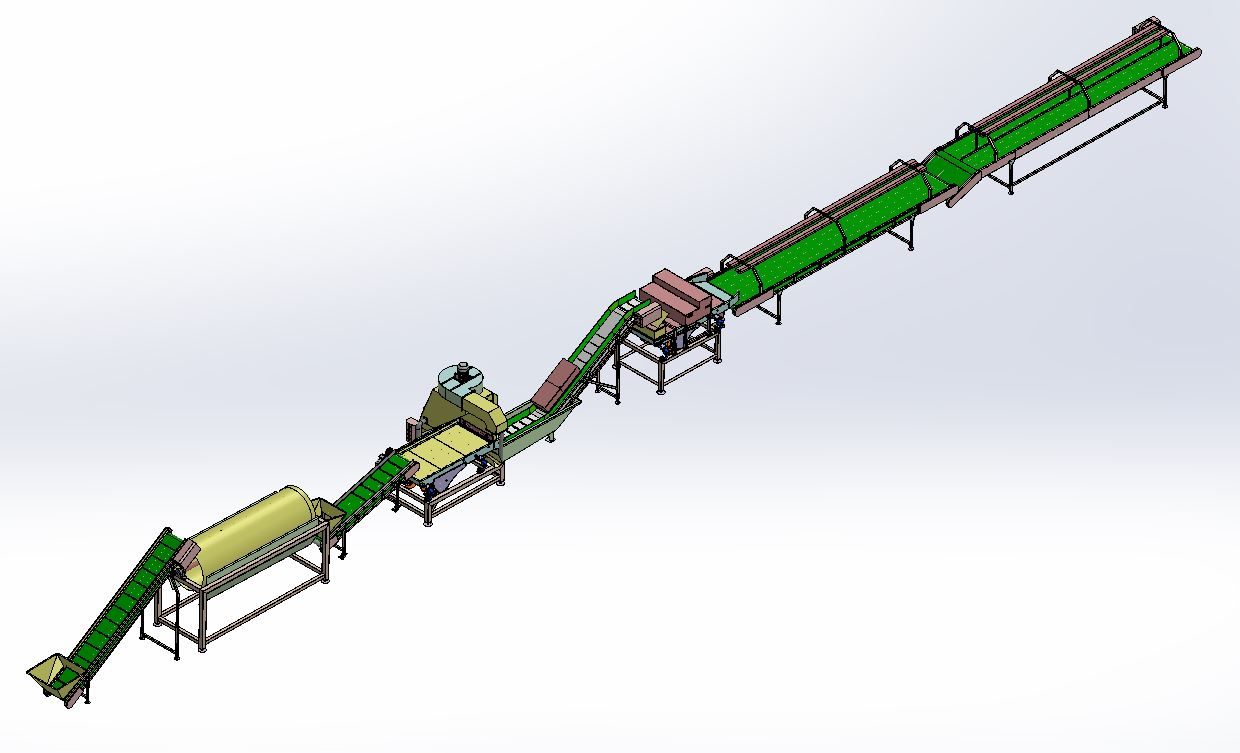
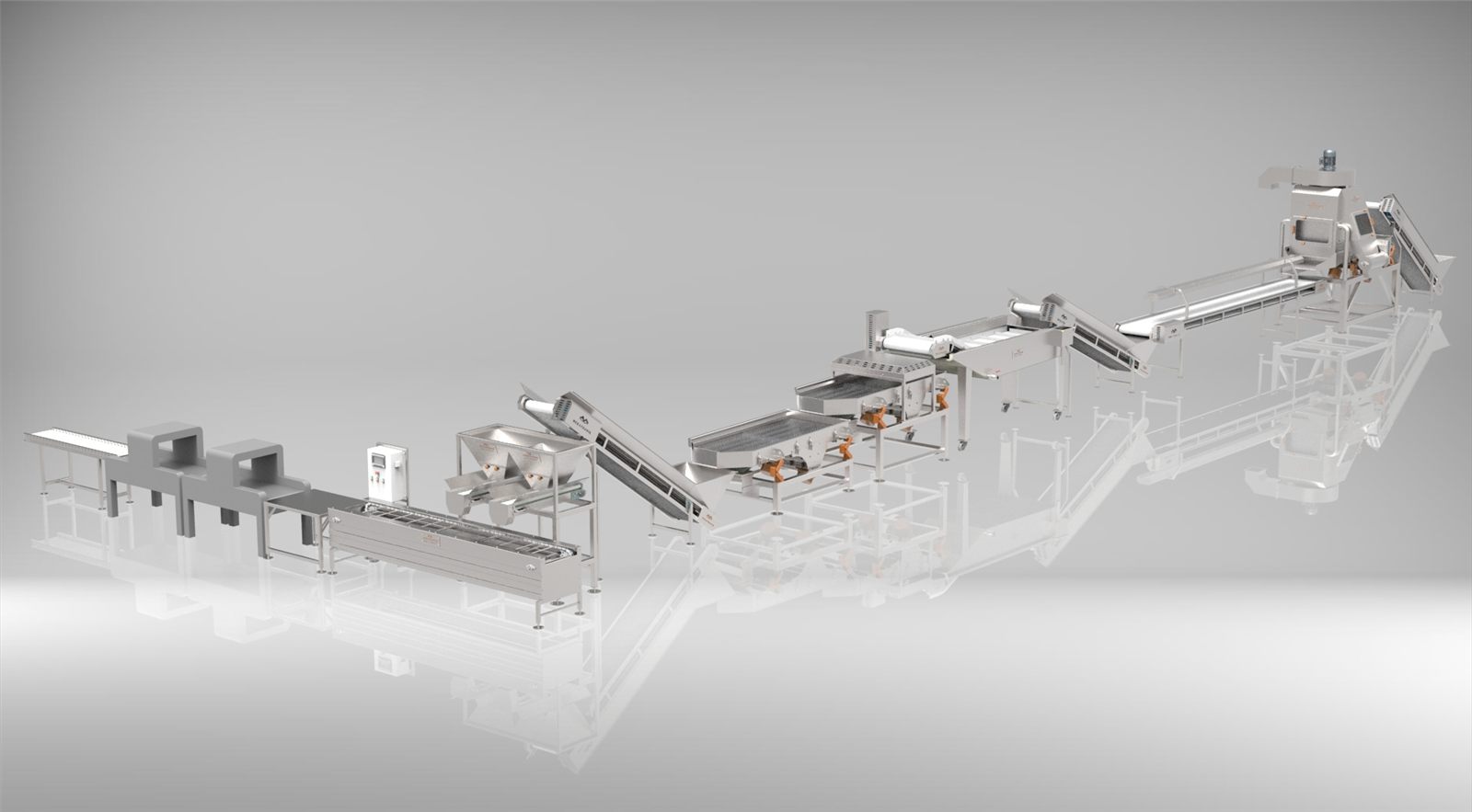
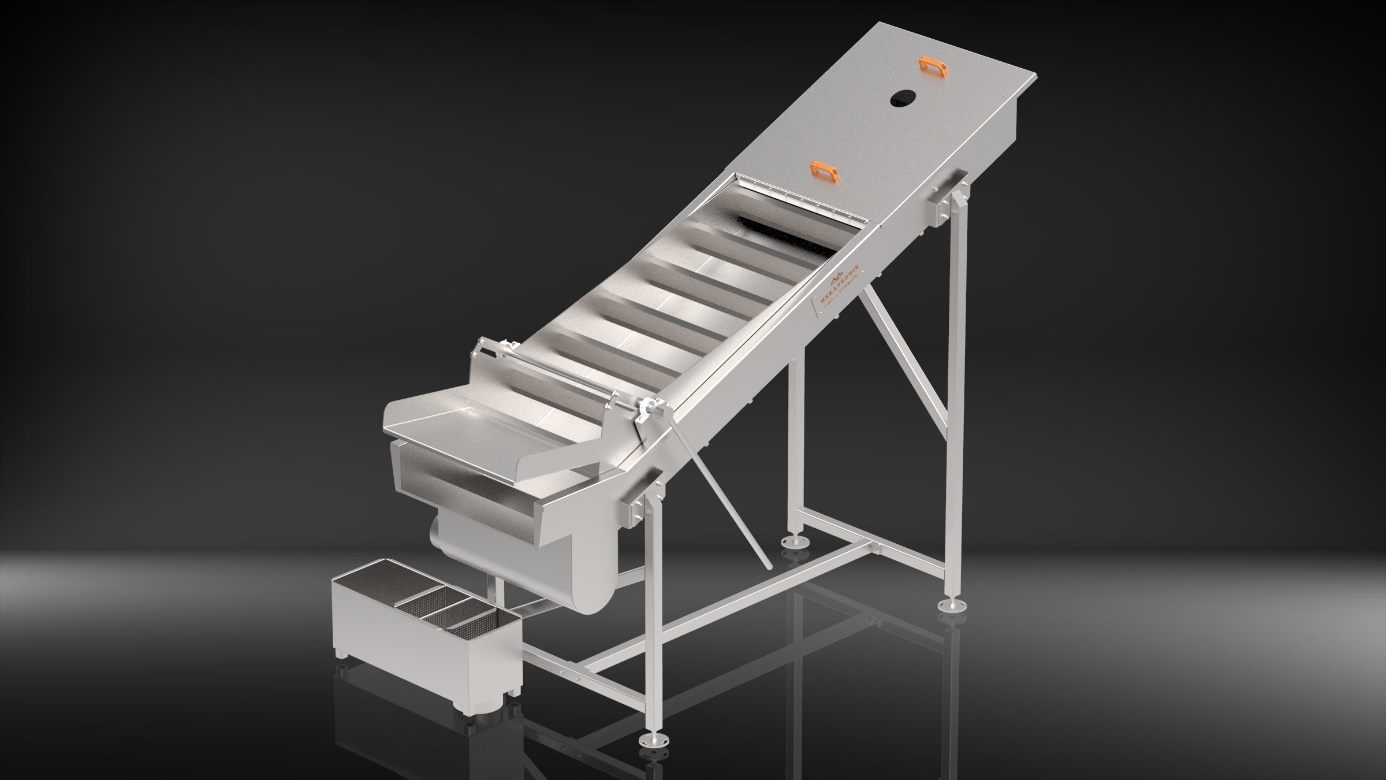
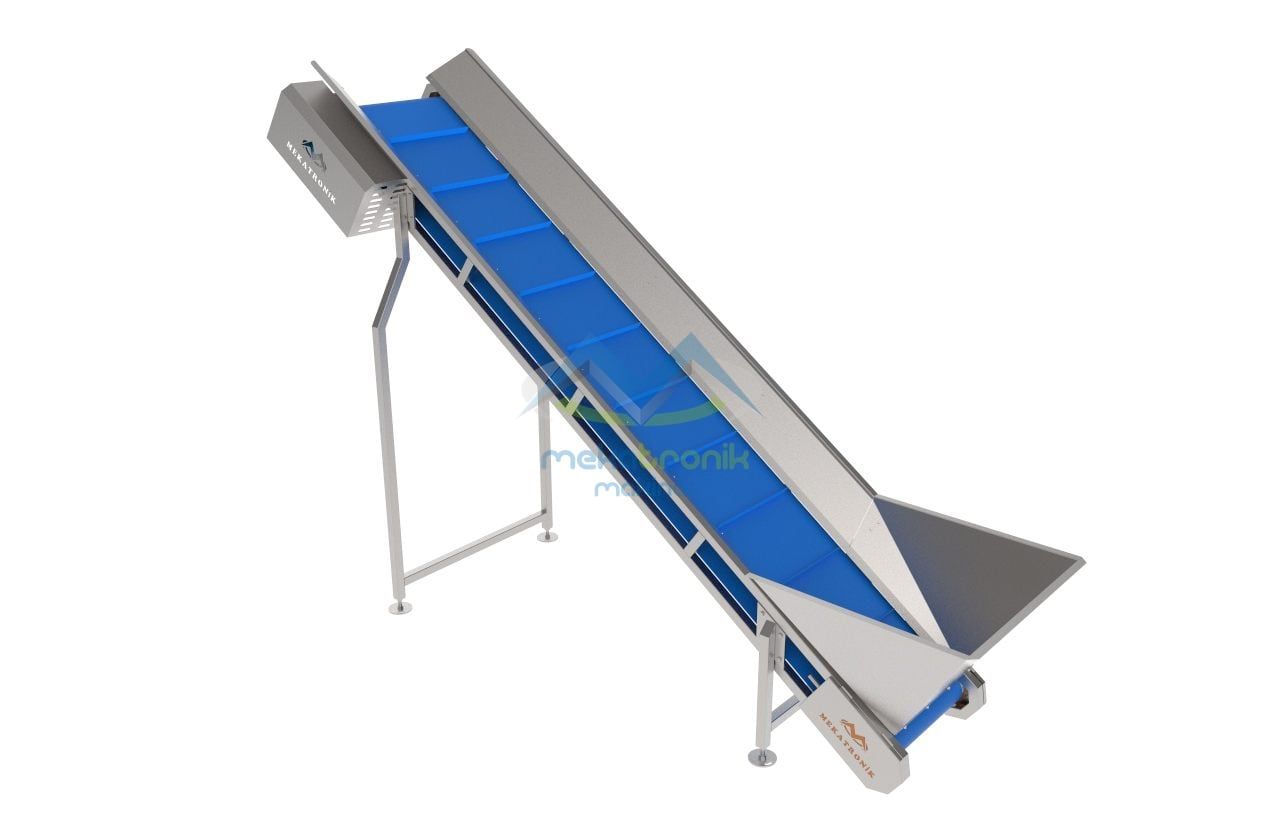
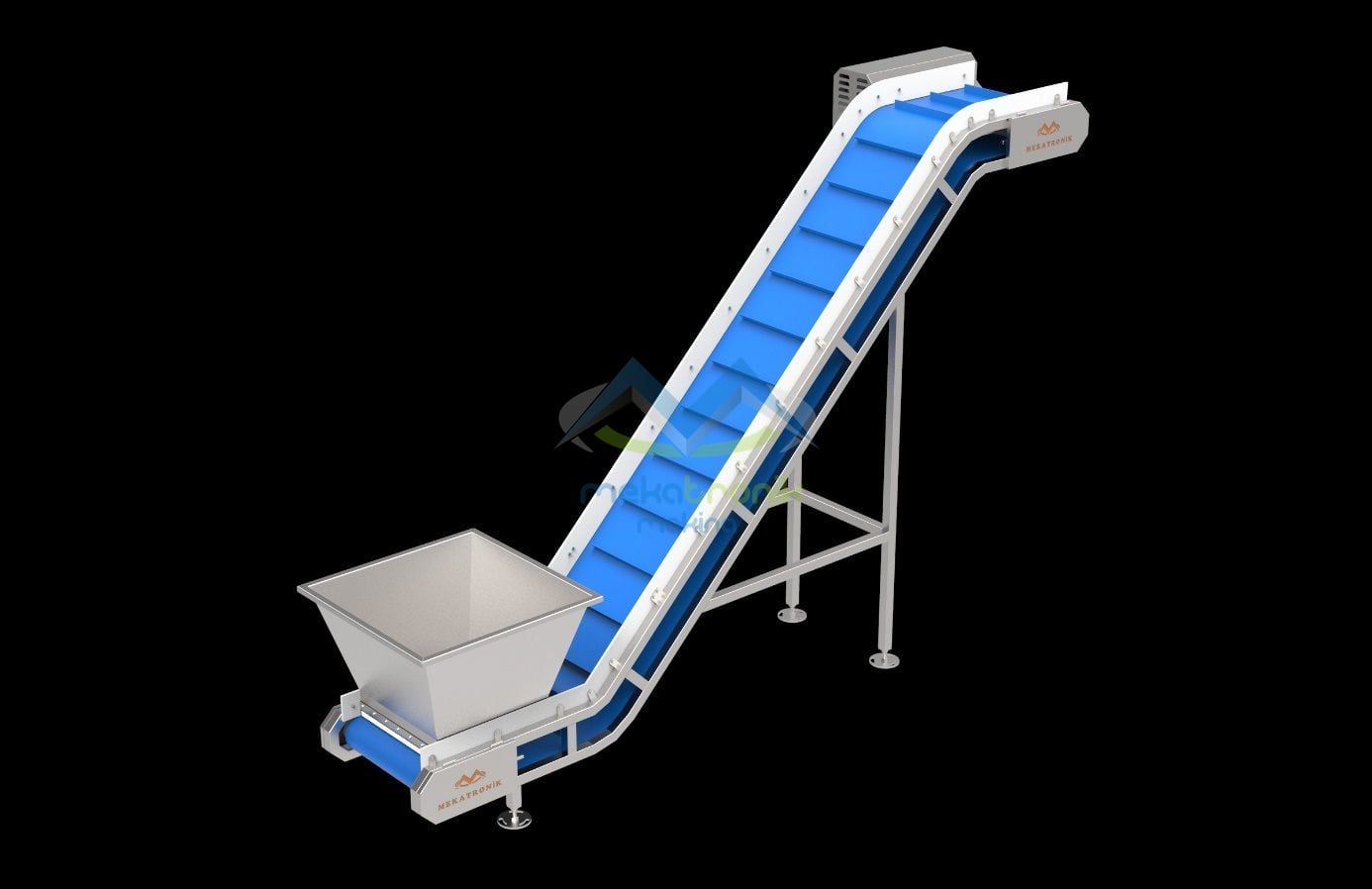
Dried apricots reach a processing plant as sun-dried or sulfured fruit that still carries field residue, mixed sizes and inconsistent shape. Before it can be packed or exported, it has to move through washing, sizing, cutting and filling, in that order, because each stage depends on what the previous one already corrected. The sequence and the machines used in each step are set per project, based on the fruit, the target market and the final package format.
01
Washing: clearing field residue before anything else happens
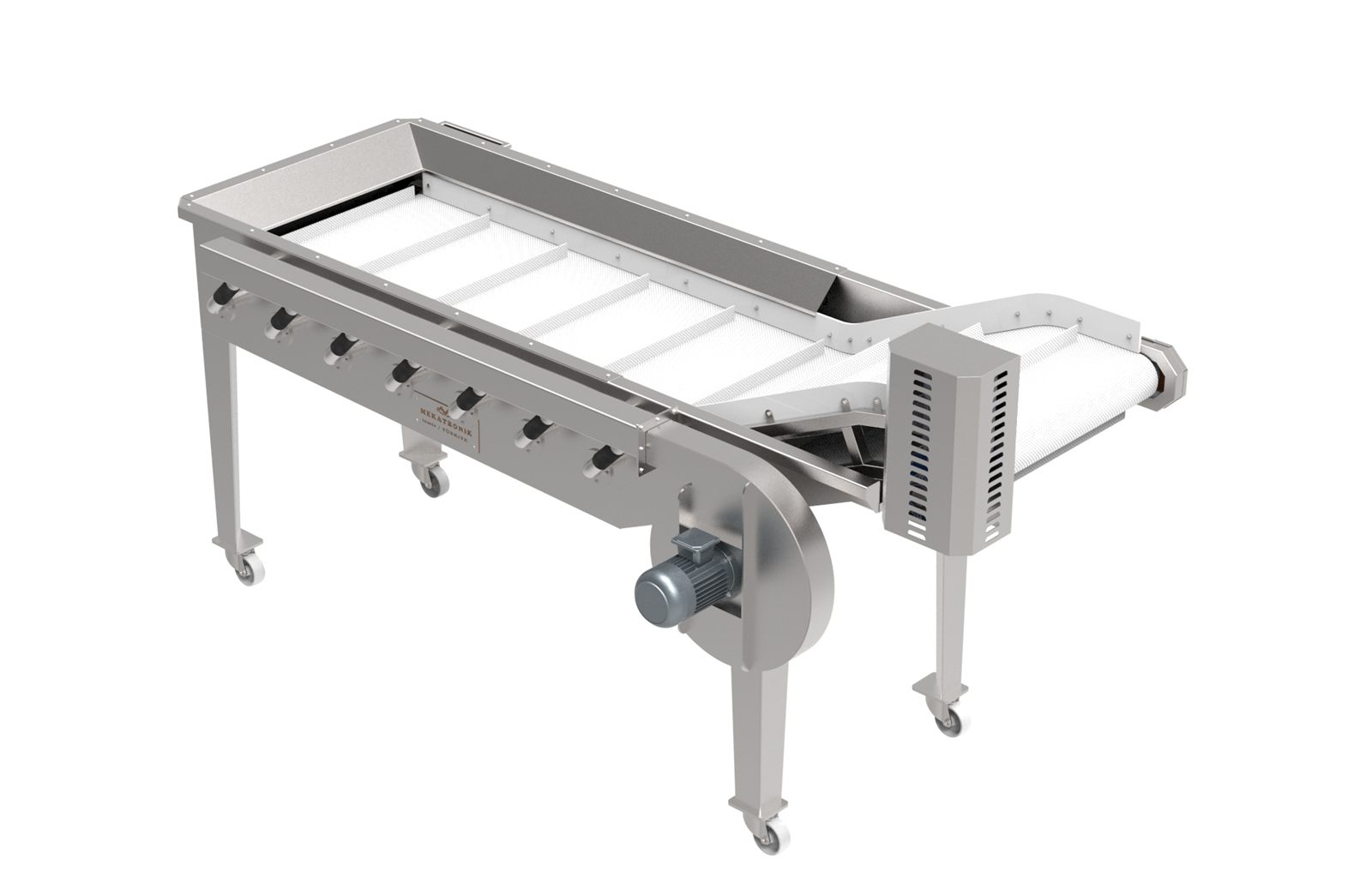
Dried apricots coming off open-air or tunnel drying still carry dust, stem fragments and occasional stones from the drying yard. The washing stage runs the fruit through an immersion or brush wash before any sizing or cutting takes place, because grading and cutting equipment work more reliably on a clean, debris-free product stream. Surfaces in contact with the fruit at this stage are AISI 304 stainless steel as standard; where the wash or soak step calls for a more resistant grade, AISI 316 is used on the parts exposed to it.
02
Sizing: sorting fruit into consistent grades
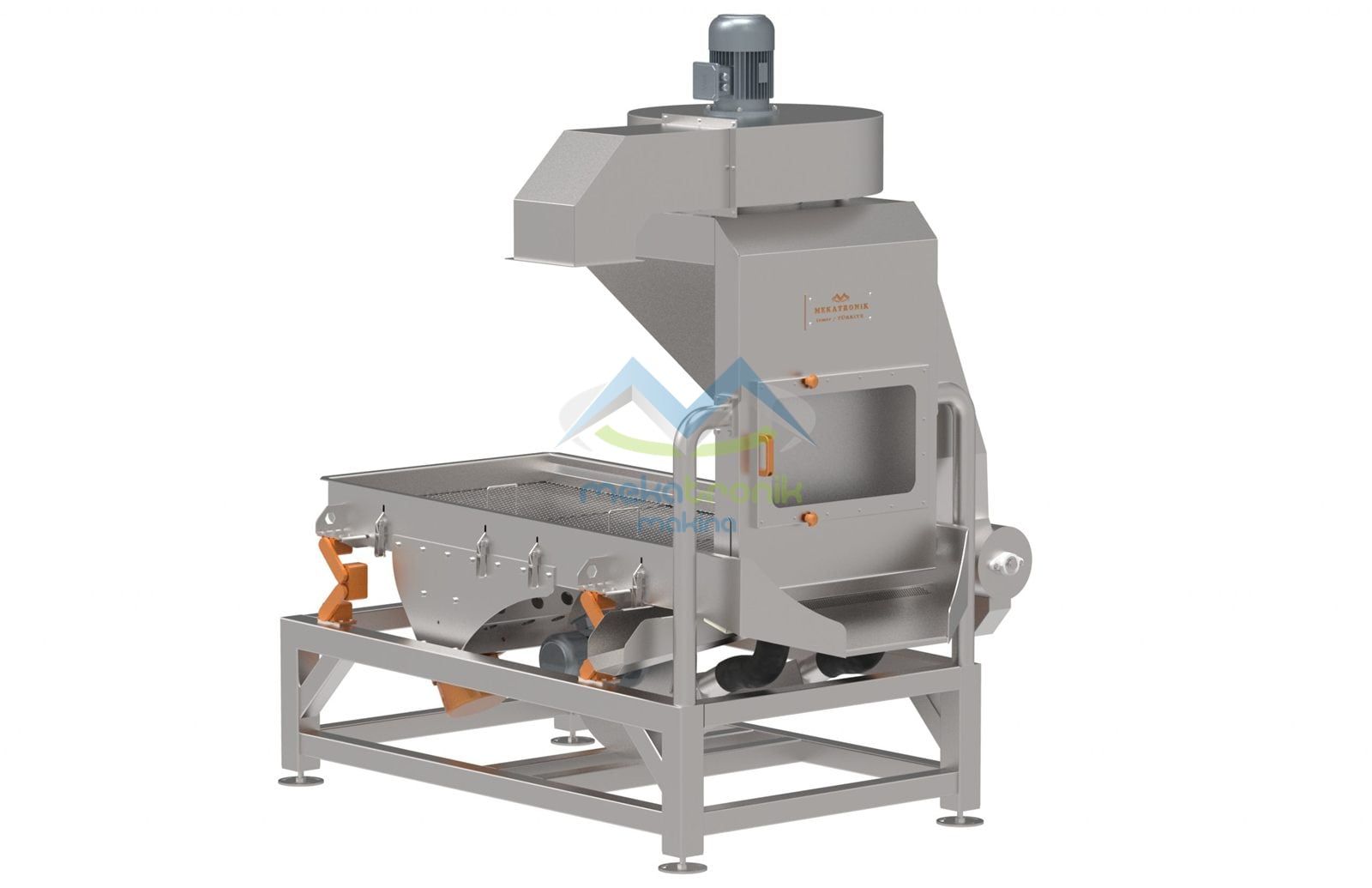
Apricots from the same orchard, even the same lot, do not dry to a uniform size. The sizing stage sorts washed fruit into size classes using graded screens, so that everything moving into cutting and filling is consistent enough for a stable pack. What counts as an acceptable size range is not fixed; it depends on the order.
- 01Fruit size varies by orchard, season and drying method, not just by variety
- 02Export markets often specify a size grade (for example jumbo versus standard) rather than accepting mixed sizes
- 03Package format sets a practical size cut-off: whole fruit for retail bags behaves differently from fruit destined for dicing
- 04Downstream cutting equipment performs more consistently on a size-graded input than on a mixed batch
03
Cutting: matching the fruit format to the order
Not every order calls for whole dried apricots. Depending on the customer, the cutting stage can produce halves, dice or slices, and the blade configuration is set to the size grade coming out of the previous stage rather than run as one fixed setting across the whole batch. As with washing, product-contact parts are AISI 304 stainless steel, with AISI 316 used where the specific cutting process requires it.
04
Filling: closing the line at a stable net weight
The filling stage is where the line's output becomes a sellable unit: cut or whole fruit is dosed into boxes or bags at a target net weight before sealing. Consistency here depends directly on what happened upstream. Fruit that entered filling still mixed in size or poorly cleaned produces uneven fill weights and slower line speed, which is why filling is treated as the last stage rather than a station that can compensate for gaps earlier in the process.
| Stage | Main concern | Typical equipment |
|---|---|---|
| Washing | Field residue, dust, stones | Immersion or brush washing machine |
| Sizing | Consistent size grade | Vibrating size-grading screens |
| Cutting | Format matching the order (halves, dice, slices) | Cutting unit set to blade configuration |
| Filling | Stable net weight | Box or bag filling scale |
05
Why the sequence is fixed but the equipment is not
The order of washing, sizing, cutting and filling does not change from project to project, because each stage is built to receive an input the previous one already corrected. What does change is the equipment selection and layout: capacity, machine count and line configuration depend on the plant's product mix and target output, and exact figures are confirmed during the quotation rather than assumed from a generic line.
Mekatronik Makina has been building fruit and vegetable processing equipment since 1992, with more than 2,000 machines running in plants across 22 export markets, all engineered to meet CE conformity requirements. If you are specifying a new or upgraded dried apricot line, the quotation process is where the product, format and layout for your plant get worked out in detail.