Dried fruit does not arrive from the field or the store on its own. Stems, leaves, pieces of debris and occasionally harder objects travel with the product. Which station separates them looks like a matter of preference, but it really decides how hard the rest of the line has to work.
01
The cost of separating late
If foreign material is taken out further down the line, it has passed through every station up to that point. It enters the wash water, it builds up on screen surfaces, and if it reaches the cutting section it can damage the blade set. A delayed separation decision shortens the maintenance interval of the machines after it.
The second cost is on the water side. Product entering the wash dirty loads the water faster and water management gets harder. That is why coarse separation ahead of washing is such a common choice.
02
What the impurity removal screen takes out
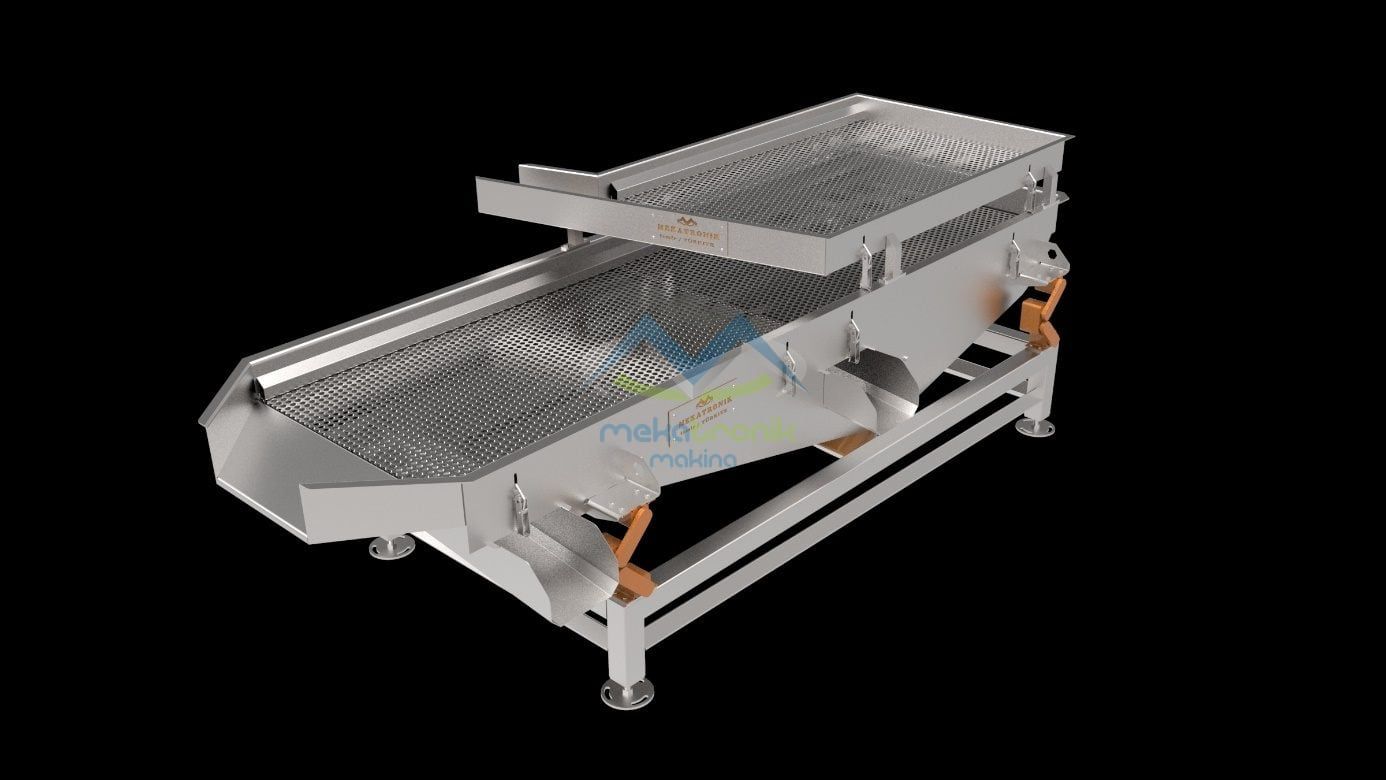
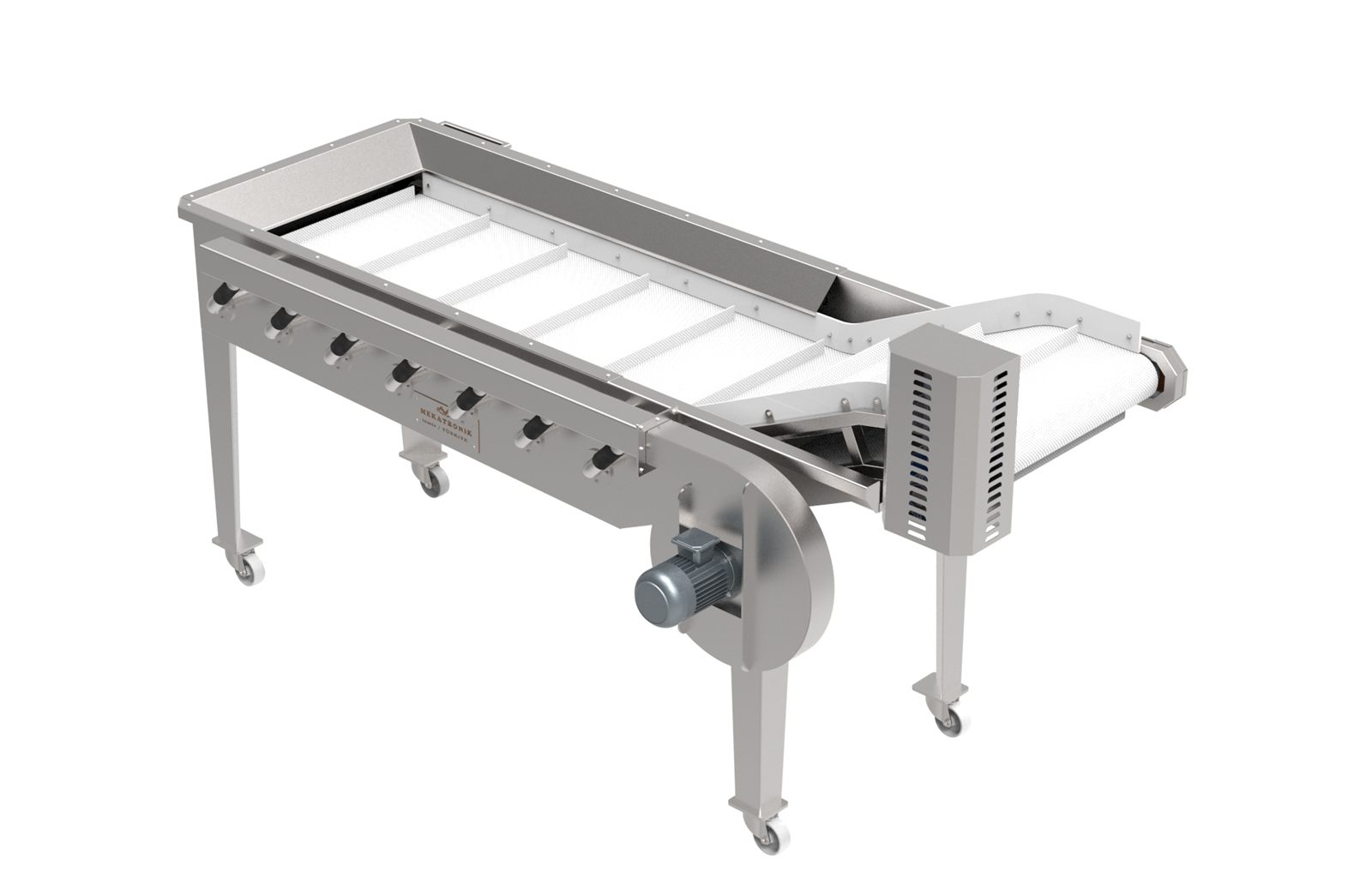
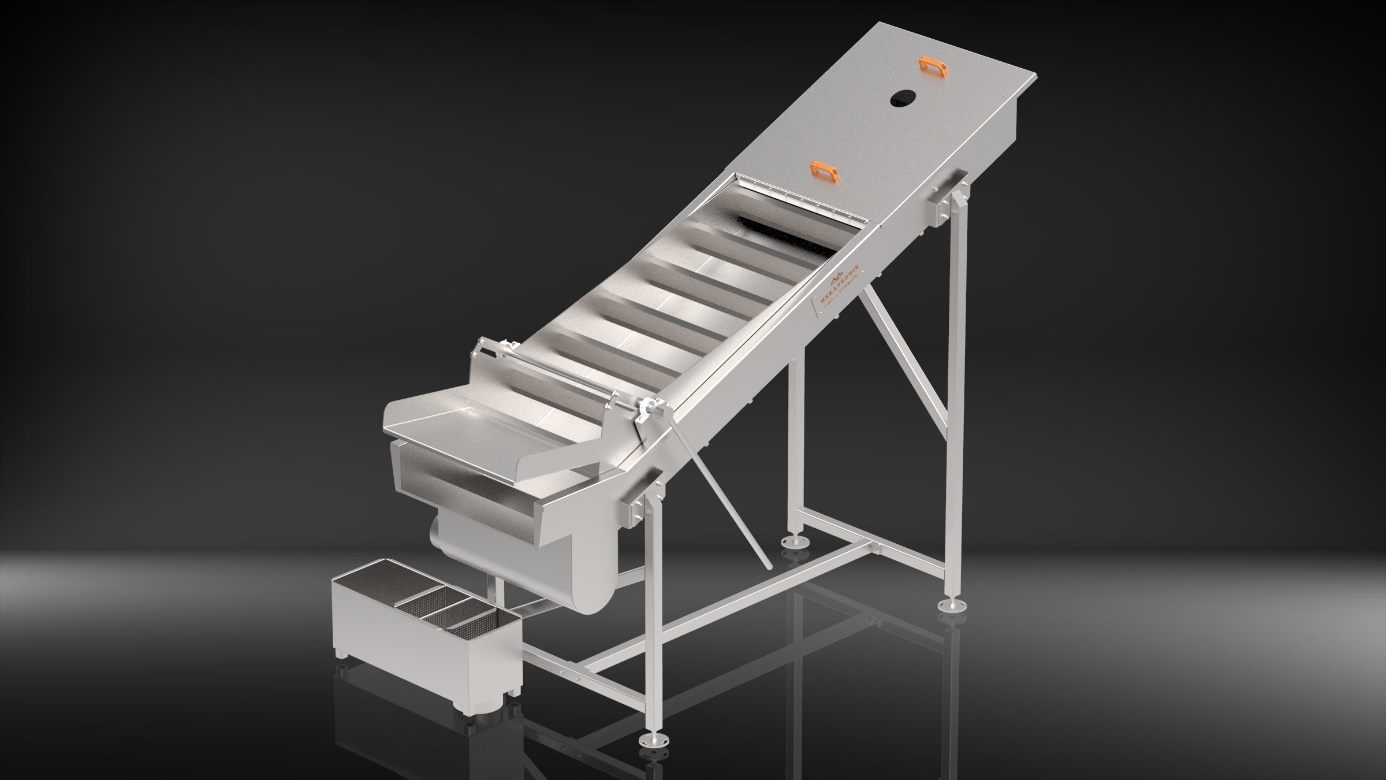
The dried fruit impurity removal screen uses a double deck screen system to separate coarse debris arriving with the product. Screens are designed specifically for the product group, because the debris profile of raisins is not the debris profile of dried figs.
There is a limit here that is worth knowing at the start: this machine separates on the basis of size difference. Foreign material that is the same size as the fruit, and passes the screen the same way, will not be removed by screening. For materials such as metal there is a separate check further down the line.
03
A typical order
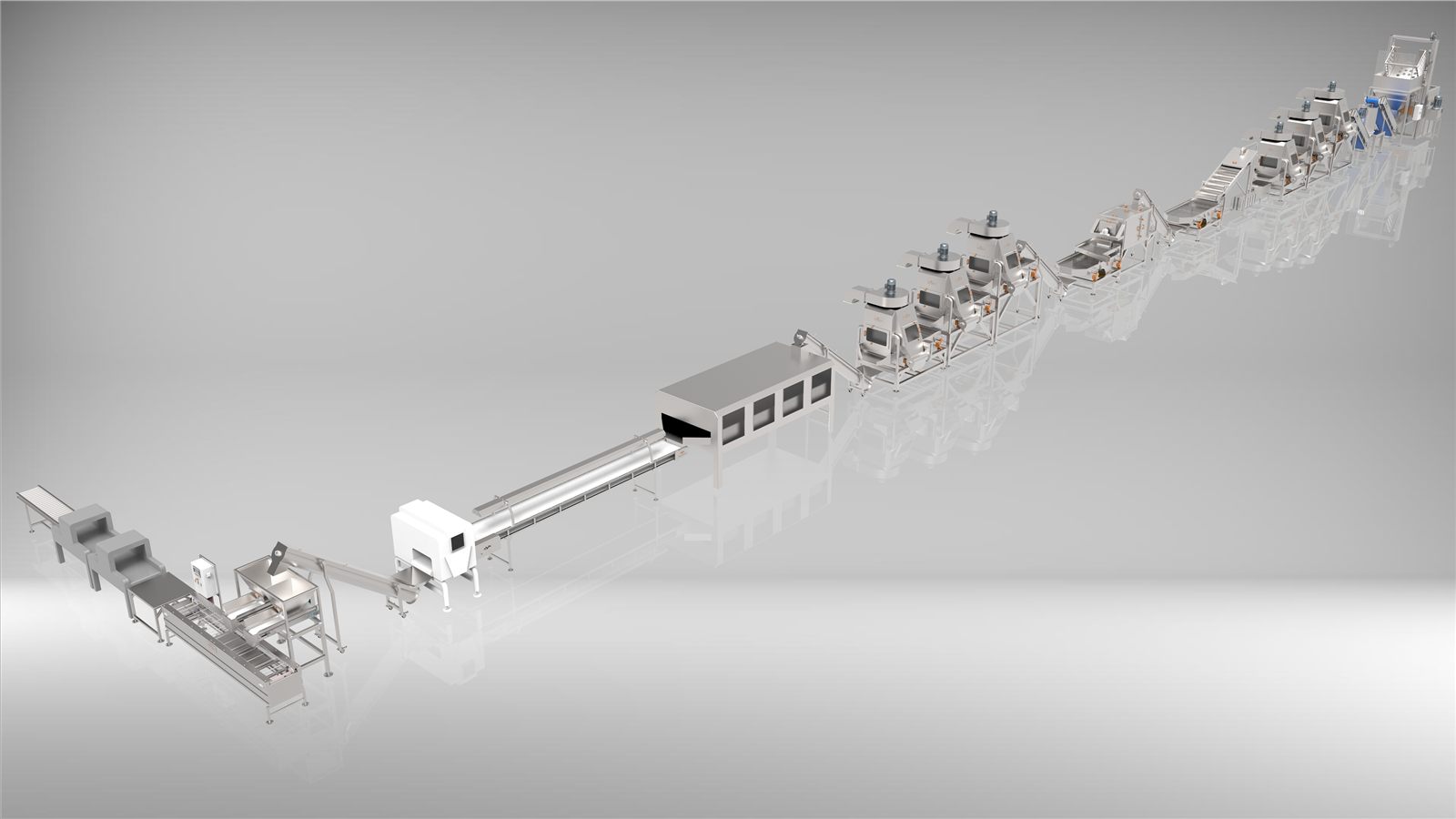
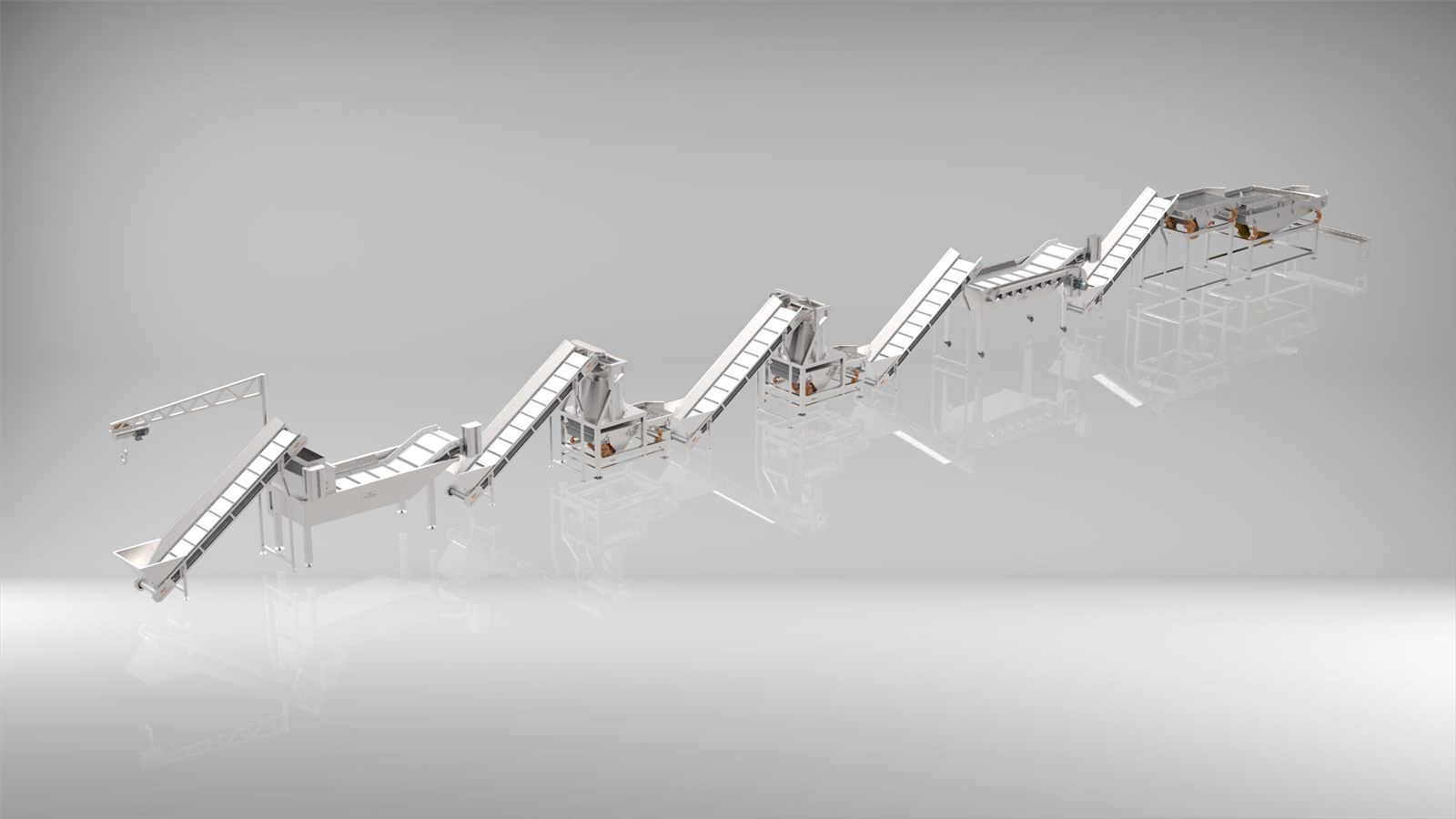
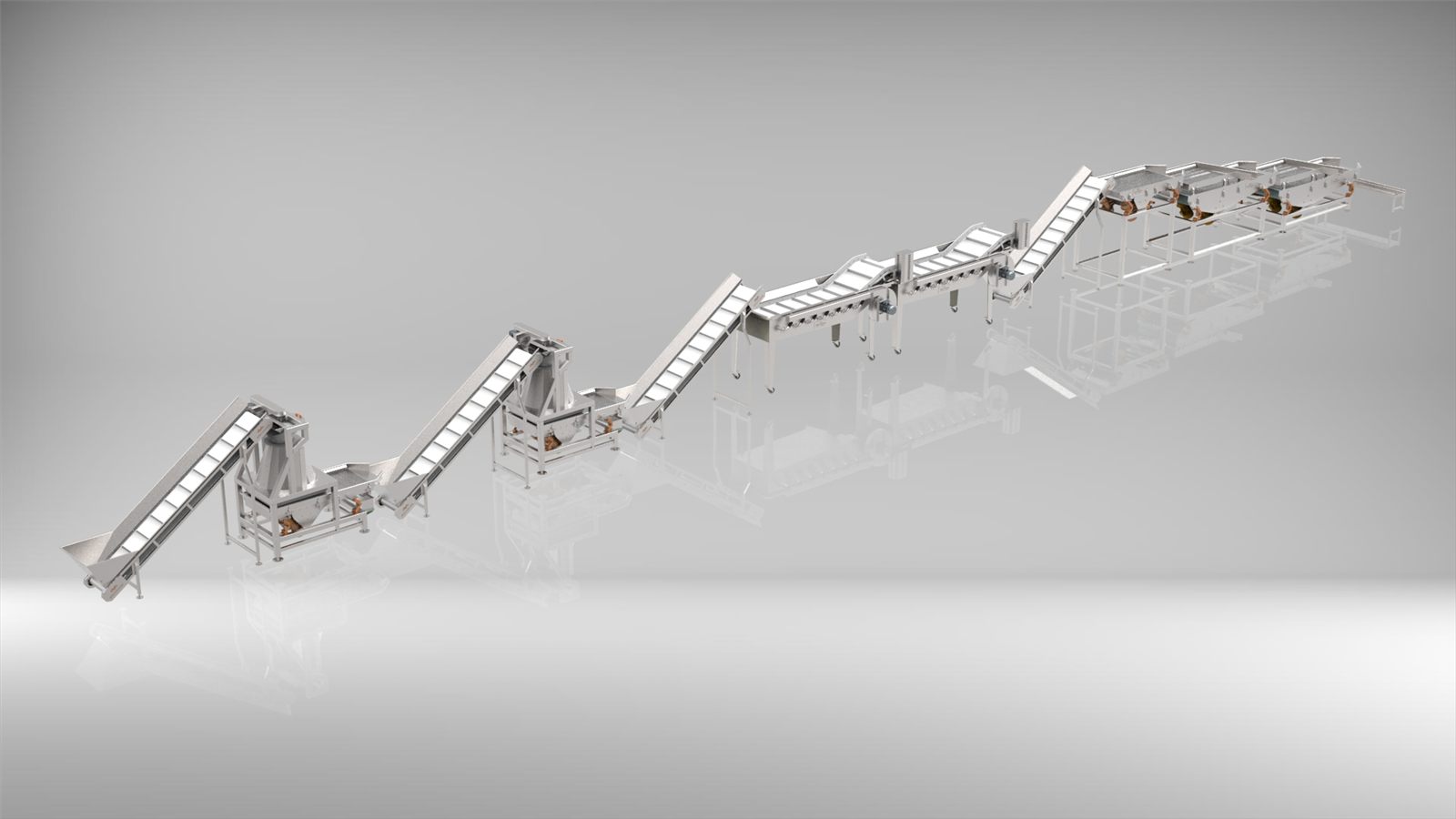
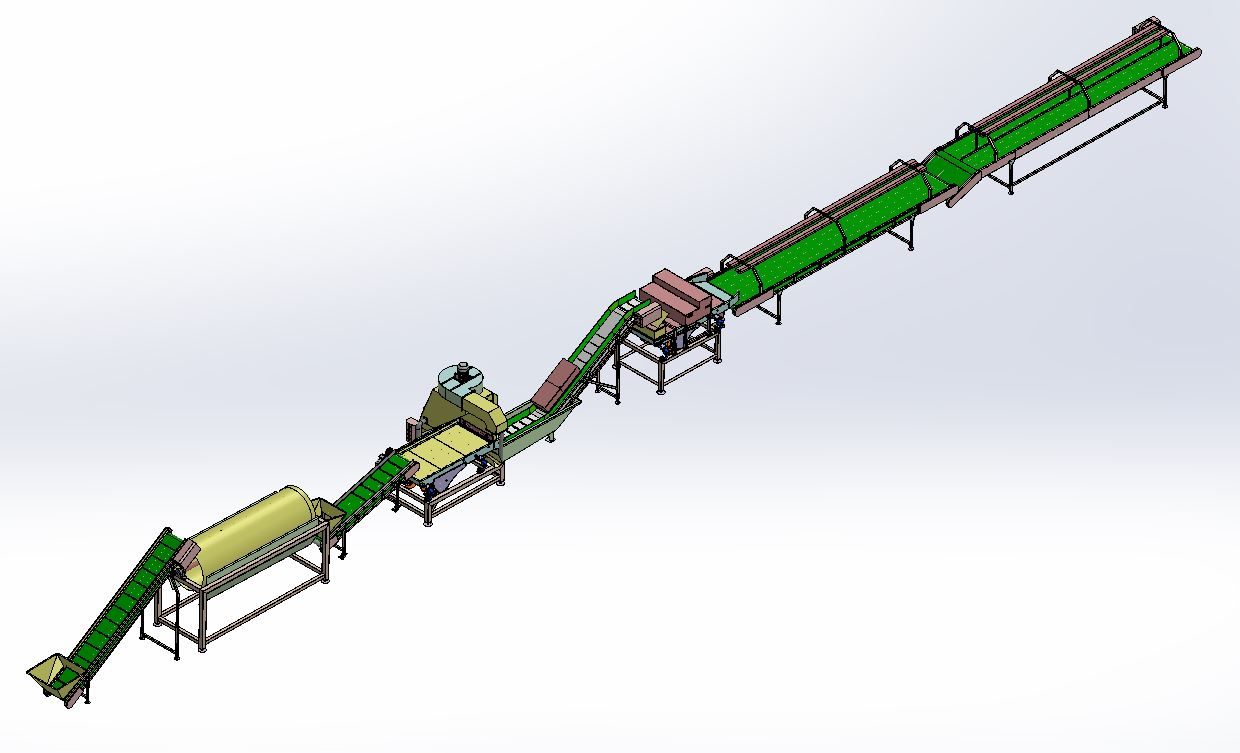
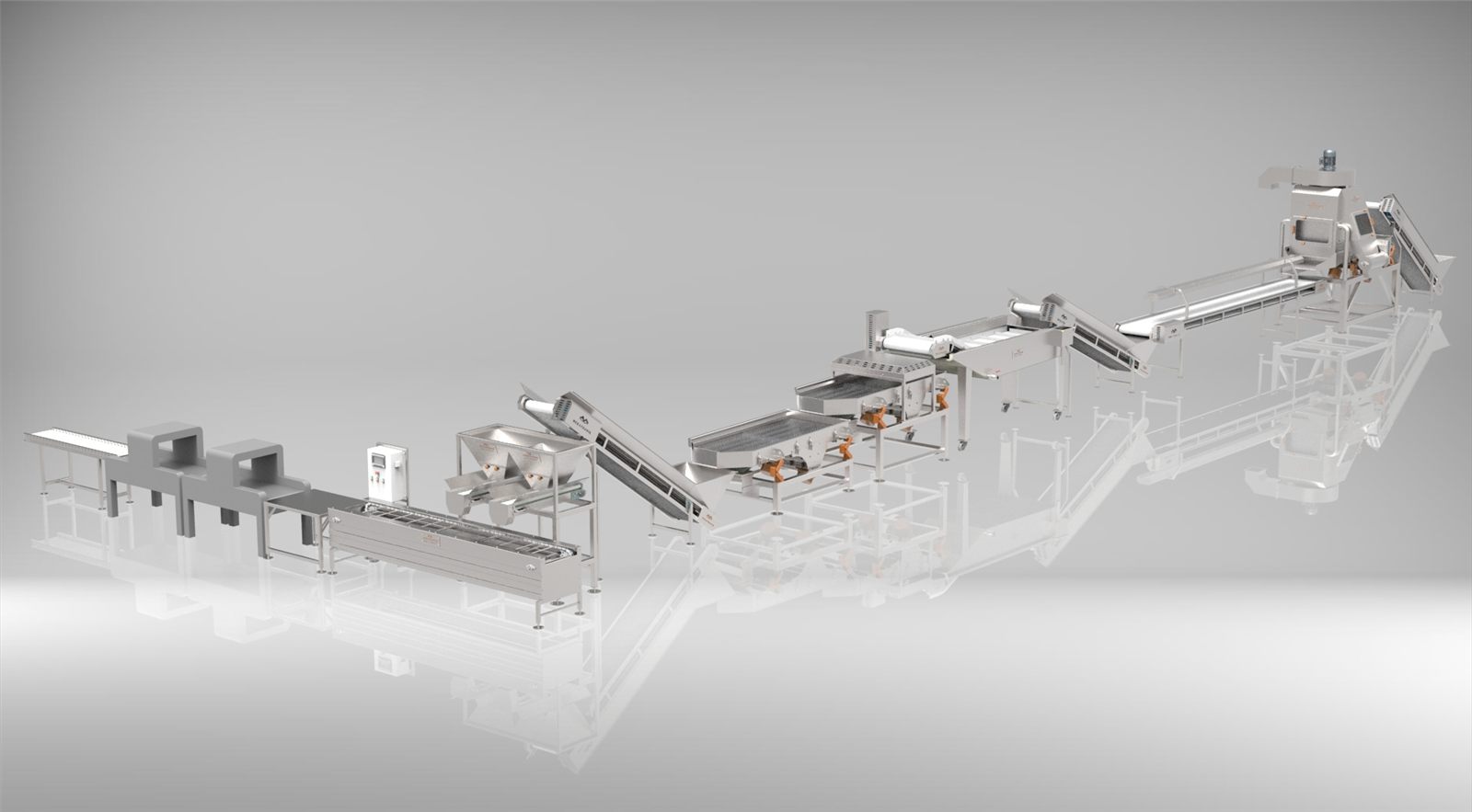
The sequence commonly built in practice runs like this:
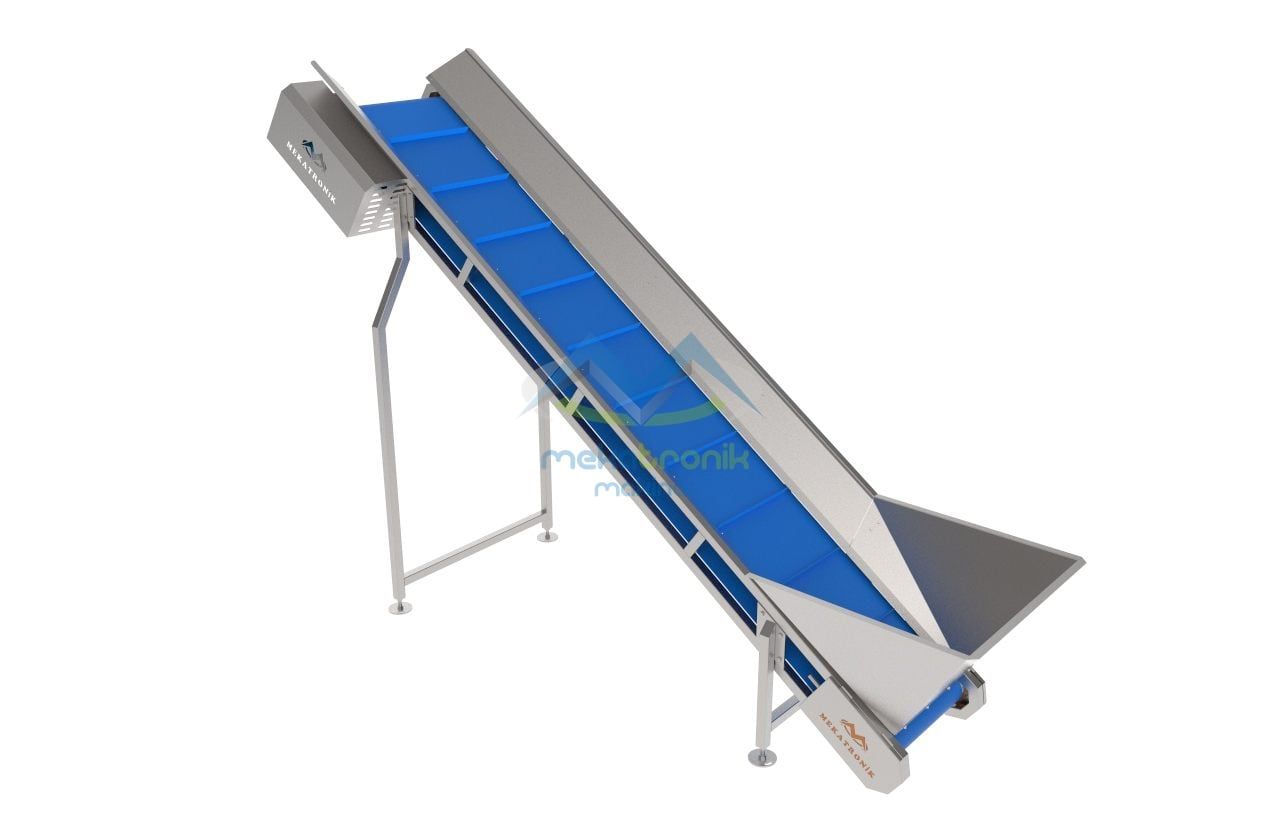
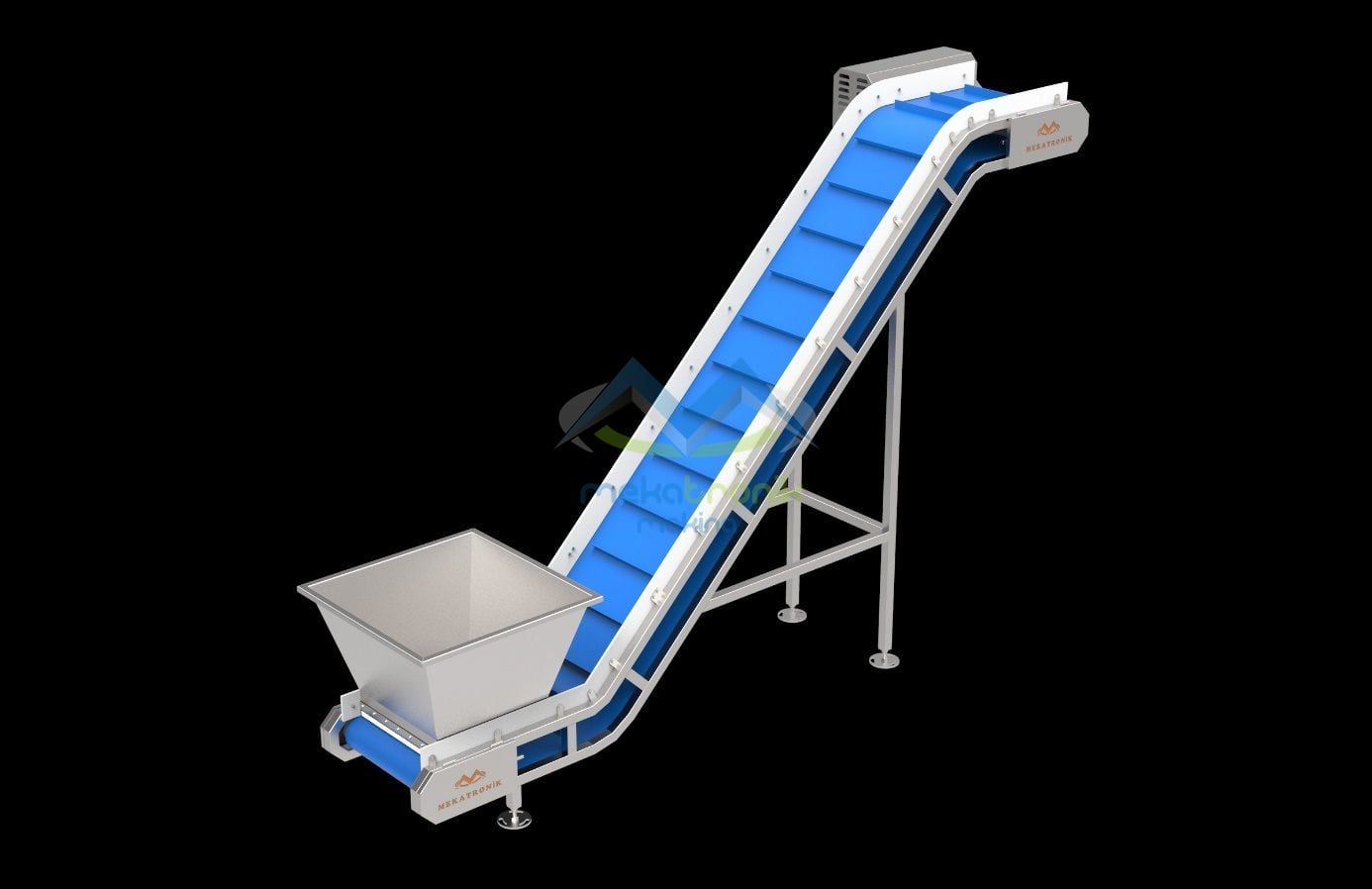
- 01Crate tipping to bring the product onto the line
- 02Even feeding, so the product advances as a single layer
- 03Impurity removal, separating coarse foreign material
- 04Washing and dewatering
- 05Sizing
- 06Cutting, weighing and filling
Even feeding coming before impurity removal is not an accident. If product reaches the screen in heaps, debris underneath sits below the fruit and the screen cannot see it. Separation works on product advancing in a single layer.
04
The technical frame of the machine
| Item | Value |
|---|---|
| Body material | AISI 304 stainless steel |
| Product contact surface | AISI 304, AISI 316 optional per process |
| Operating principle | Vibratory screening, double deck screen system |
| Screens | Stainless screens designed for the product group |
| Drive | Vibro motor driven vibration system |
| Capacity | Defined per project |
| Supply | 380 V / 50 Hz |
Custom dimensions can be produced for the place and purpose of use. When the machine is added to an existing line, its size is usually set by the space available.
05
Often confused with the sizing screen
Both machines are vibratory and both carry a double deck screen, so they get mixed up. The difference is purpose: a sizing screen separates product into size classes and holds back coarse debris while doing so, whereas an impurity removal screen is built to separate foreign material directly. Where incoming product is heavily soiled, the two are used together. Machines in the same family are listed under the screening and debris removal category.
06
Foreign material screening cannot catch
The limit of separation by size difference is foreign material that arrives at the same size as the fruit. A small stone or a fragment of metal can pass the screen along with the product. Screening is therefore not designed as the only safety step on the line.
Further down the line, close to packing, there is a separate check. The two approaches do not substitute for each other: screening takes out what is coarse and bulky at the start, while the check at the end exists to catch what got through.
07
Screen changes and maintenance
Because screens are designed specifically for the product group, moving the plant onto a new product group usually means changing the screen as well. That does not mean changing the machine: the body stays, the surface doing the separation changes.
On the drive side there is a vibro motor driven vibration system. The regularity of that vibration is the separation itself, so a noticeable change in the sound of the machine or in how product travels across the deck can come from screen tension or from the drive, and it is the first place to look before separation degrades.
Where the debris removal step sits varies with the product; the order of stations can be followed on the raisin processing line page.
Tell us the contamination profile of the product reaching your line and your daily target, and we can work through the screen arrangement and station order together. The quotation page is the quickest way to reach us.