Most questions about a screening machine land on the body, but what decides separation quality is the screen. The same body fitted with a different screen gives a completely different result. So the useful question is a narrower one: which screen for this product group?
01
What the double deck is for
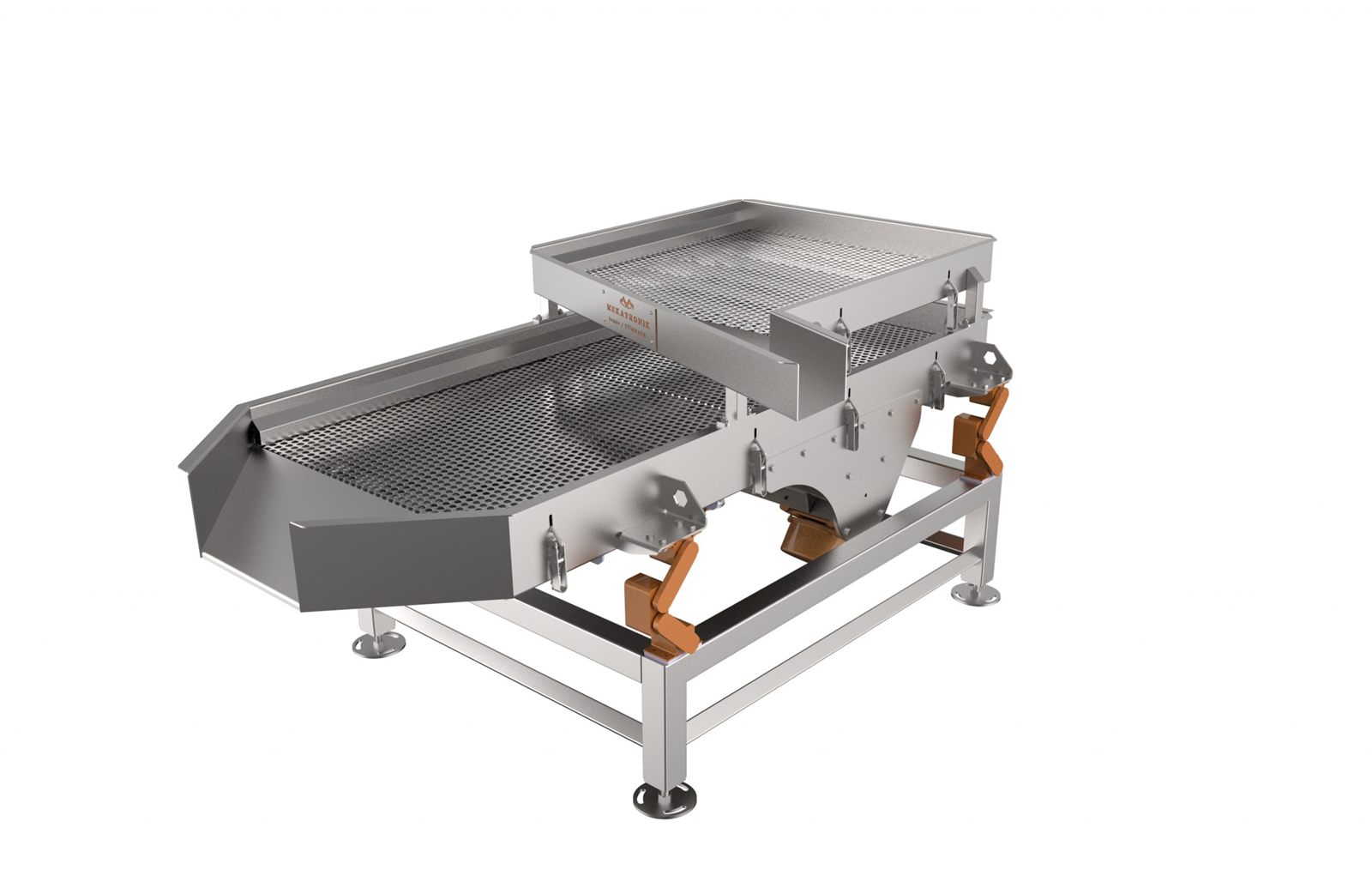
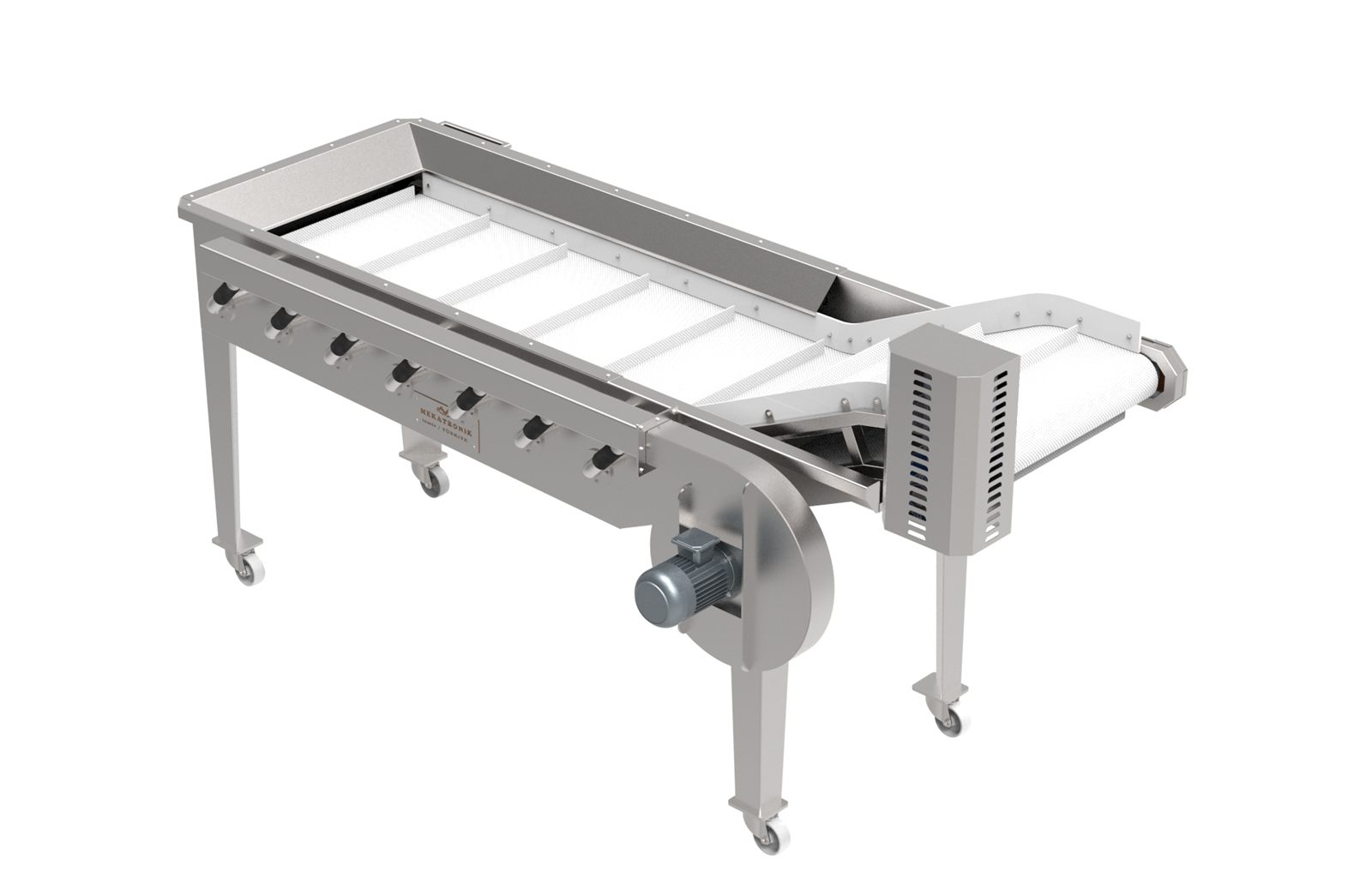
On the dried fruit vibrating screen the product travels over a double deck screen system. The upper deck holds back coarse debris while the lower deck separates the fruit by size, so coarse debris removal happens in the same machine as sizing.
That does not always remove the need for a separate station. If the incoming product is heavily soiled, a dedicated debris removal step is still required ahead of sizing; the screening machine complements that step rather than replacing it.
02
How the mesh opening is chosen
Opening size follows the size classes you want to separate. Screens are designed specifically for the product group: dried apricot and dried fig are not expected to share an opening, because the shape and surface of the two products differ. A flat product and a round product behave differently at the same opening.
A recurring mistake is selecting the opening from the largest dimension of the fruit alone. Product is in motion on the deck, and whether it passes depends on which face arrives at the opening. The choice therefore follows the behaviour of the product on the screen, not a single measurement.
03
Deck count and outlet width
The screen arrangement is built around how many size classes are wanted. To keep separated fractions from mixing again, the machine has wide outlets for the different sizes; a narrow outlet lets sorted product pile up at the discharge and the separation you just gained is lost.
Wide outlets help with cleaning too. Being able to empty the machine quickly during a product changeover reduces the risk of carry over between two batches.
04
What stays fixed on the machine
| Item | Value |
|---|---|
| Body material | AISI 304 stainless steel |
| Product contact surface | AISI 304, AISI 316 optional per process |
| Operating principle | Vibratory screening, double deck screen system |
| Screens | Stainless screens designed for the product group |
| Drive | Vibro motor driven vibration system |
| Discharge | Wide outlets for the different size fractions |
| Capacity | Defined per project |
| Supply | 380 V / 50 Hz |
Custom dimensions can be built for the place and purpose of use, which is usually how the machine is sized when it is added to an existing line.
05
Where it sits on the line
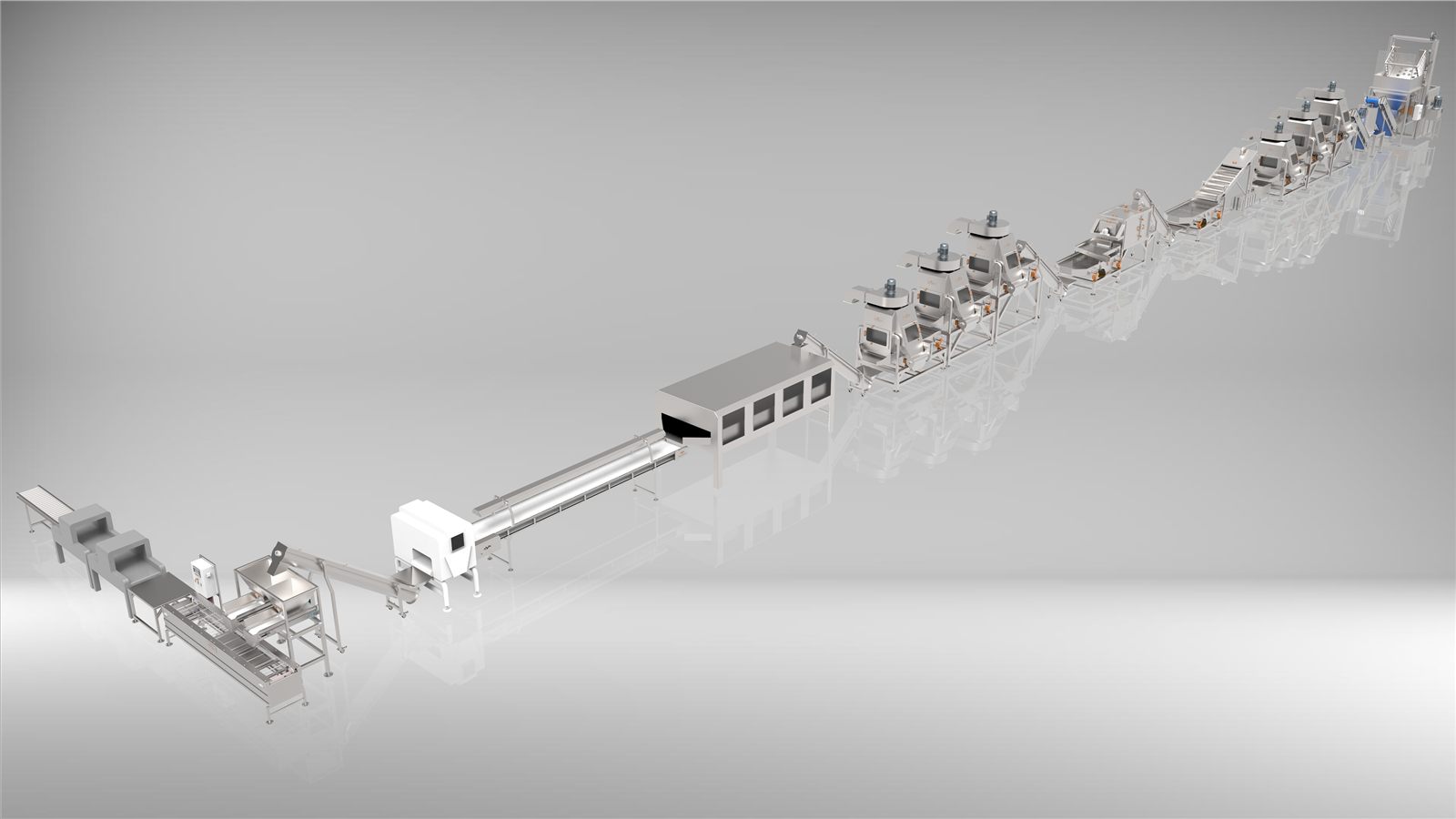
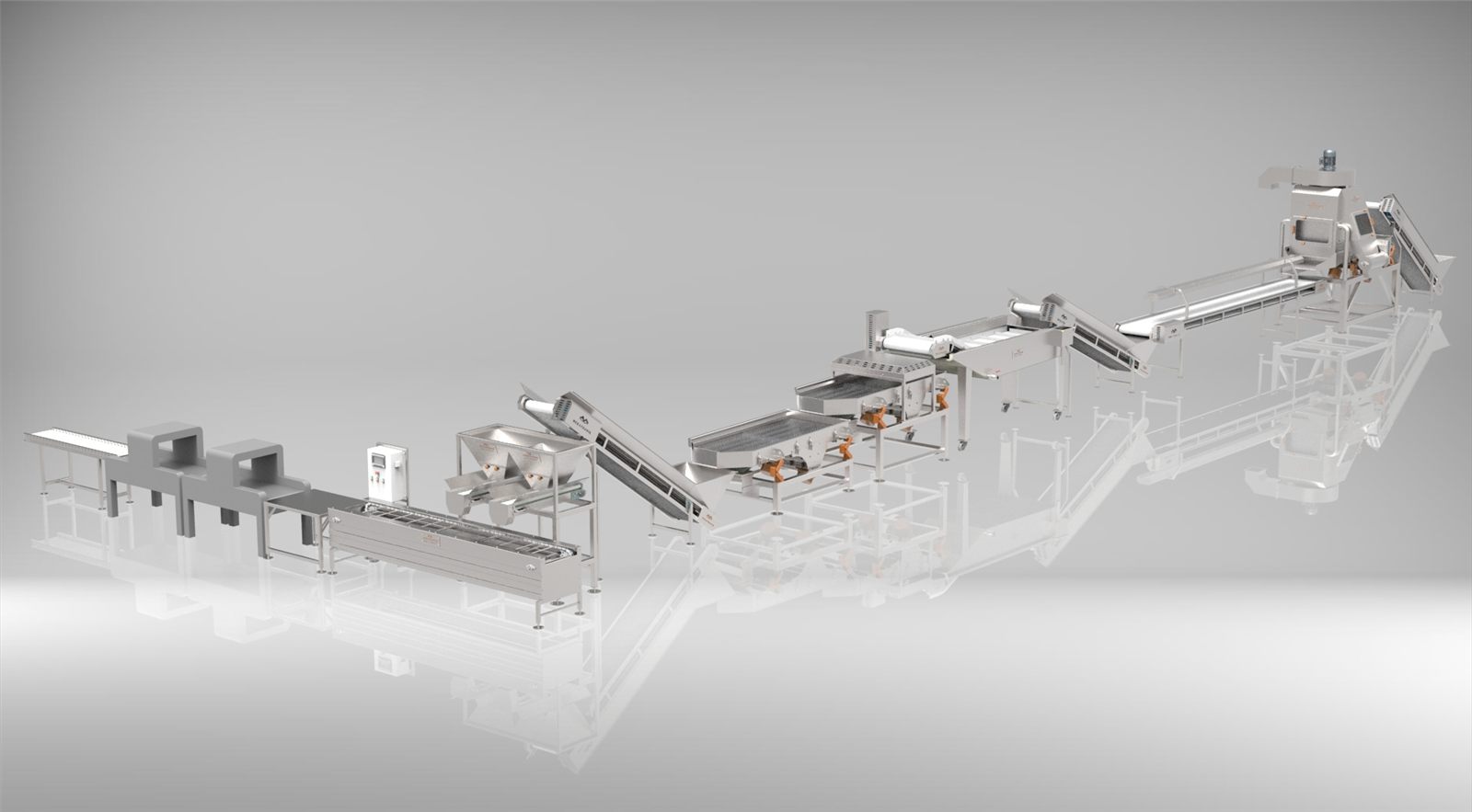
Sizing comes after the product is on the line and roughly cleaned. A typical order:
- 01Even feeding of product onto the line
- 02Foreign material and coarse debris separation
- 03Washing and dewatering where the product needs it
- 04Sizing, that is separation into size classes
- 05Cutting, weighing and filling
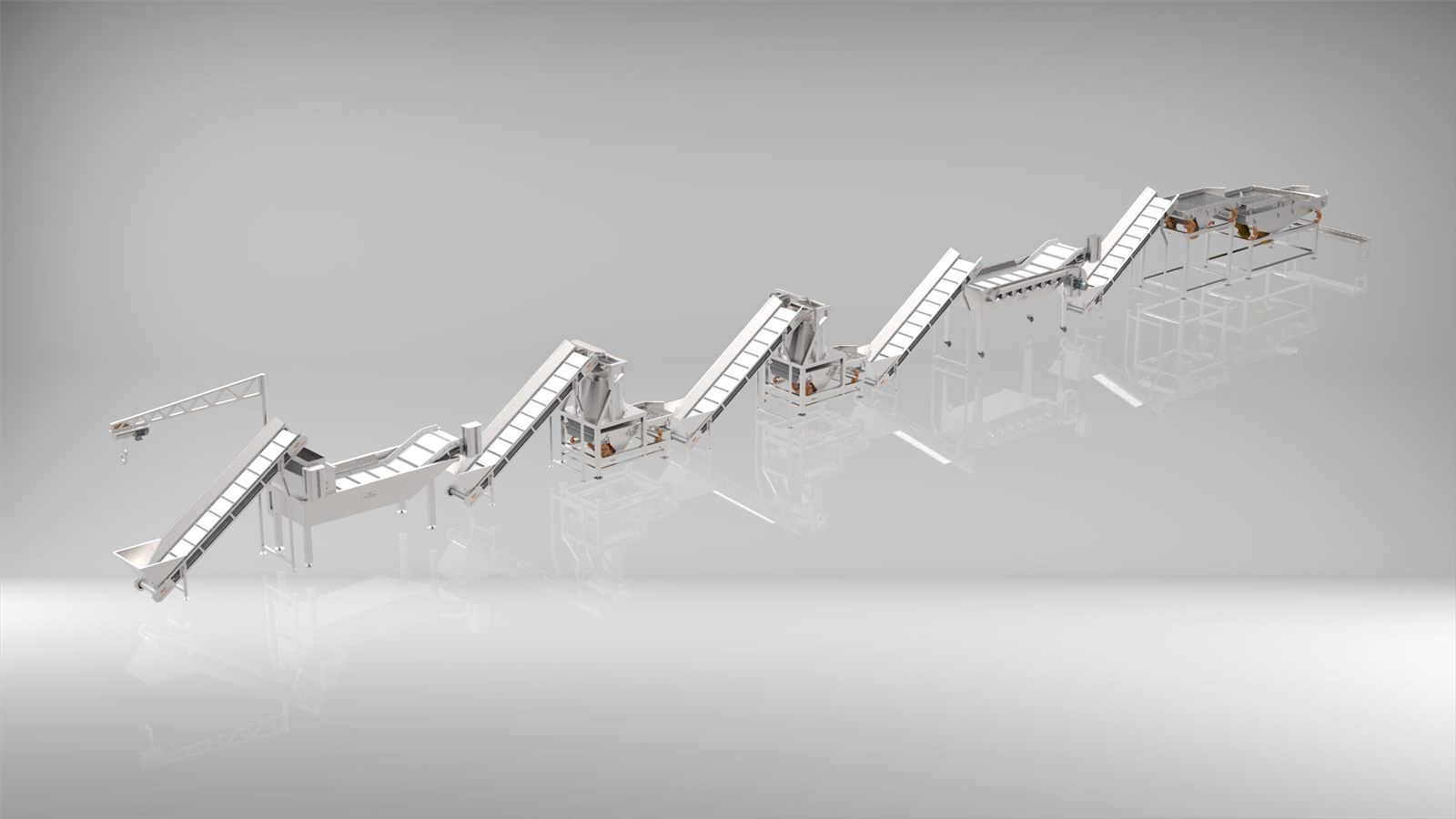
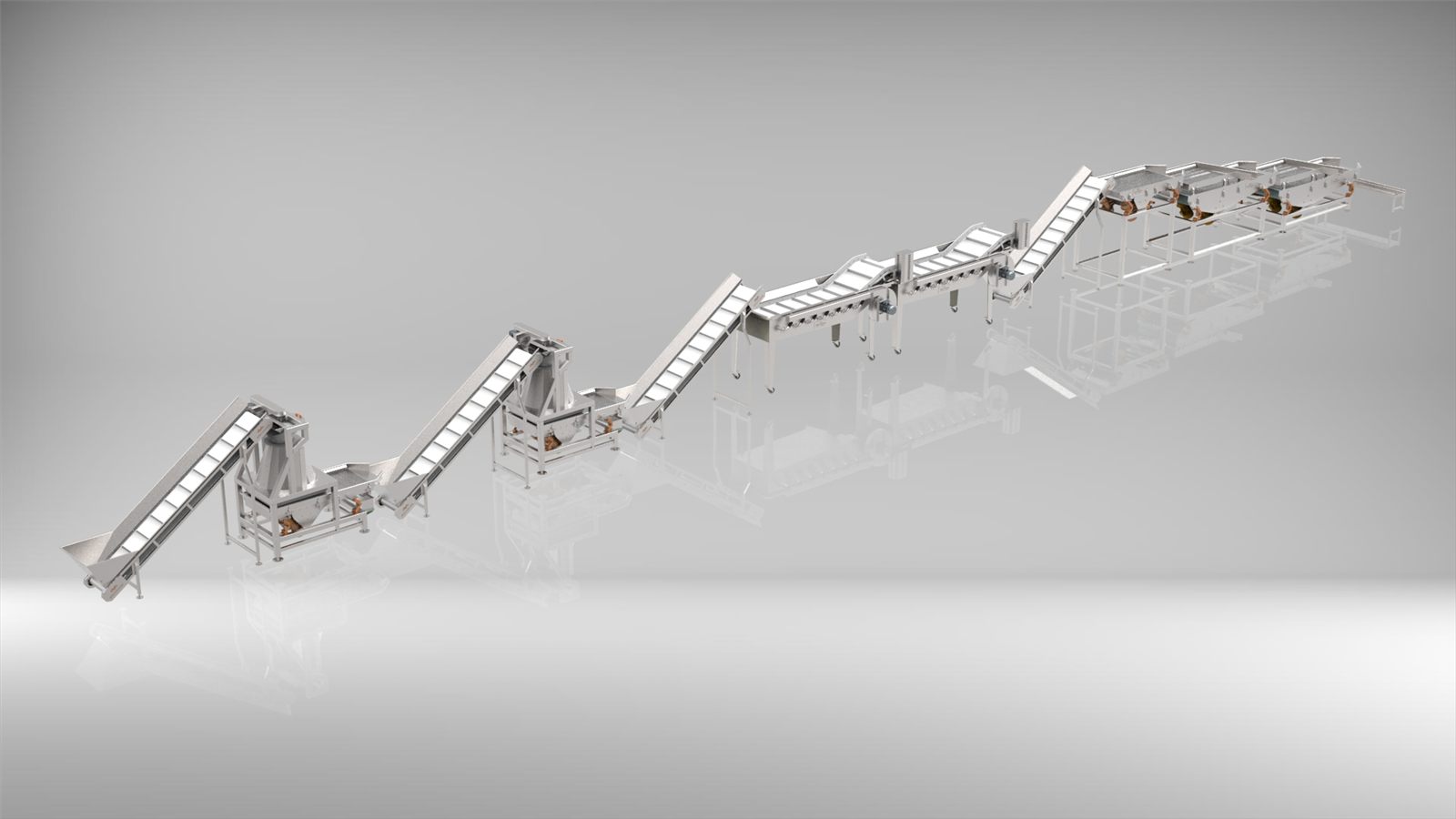
Sizing precedes cutting because fruit of similar dimension enters the blade more squarely. The other shaker machines in the same family are grouped under the vibratory conveying and sizing category.
06
Why screens blind over
Even with the opening chosen correctly, screens can blind. The most common cause is product moisture: fruit with a sticky surface seats in the opening and stays there. The second is debris that was not reduced enough before the product reached the screen.
Blinding progresses quietly. The machine keeps running, but as fewer openings stay clear the separation degrades and size classes begin to mix at the outlets. The screen surface is therefore checked on a regular interval, and that interval is set by the product.
07
The relation between capacity and screen area
Screening depends on the time product spends on the deck. If the area is small, product passes quickly and pieces that should have been separated reach the outlet unsorted. When capacity is to be increased, the screen area is therefore examined alongside the feed rate rather than instead of it.
Capacity figures are defined per project, and custom dimensions can be built for the place and purpose of use. Where the machine is added to an existing line, its size is usually resolved through that route, against the available space and the target flow together.
Where sizing sits varies with the product; the dried fig processing line page shows the order of the sizing and sorting steps.
Send us your product group and the size classes you need to separate, and we can work through the screen arrangement for it. The quotation page is the quickest way to reach us.