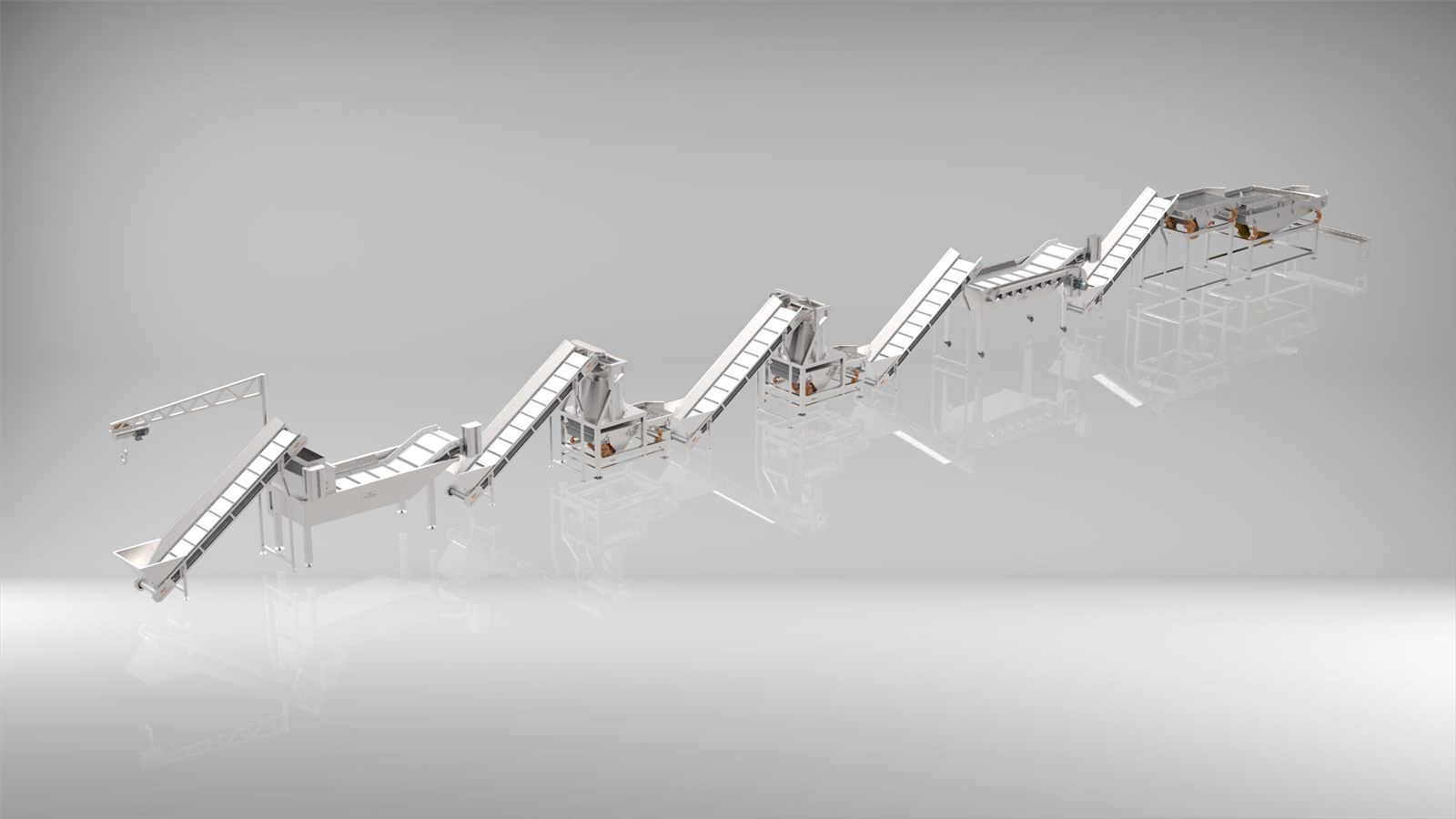
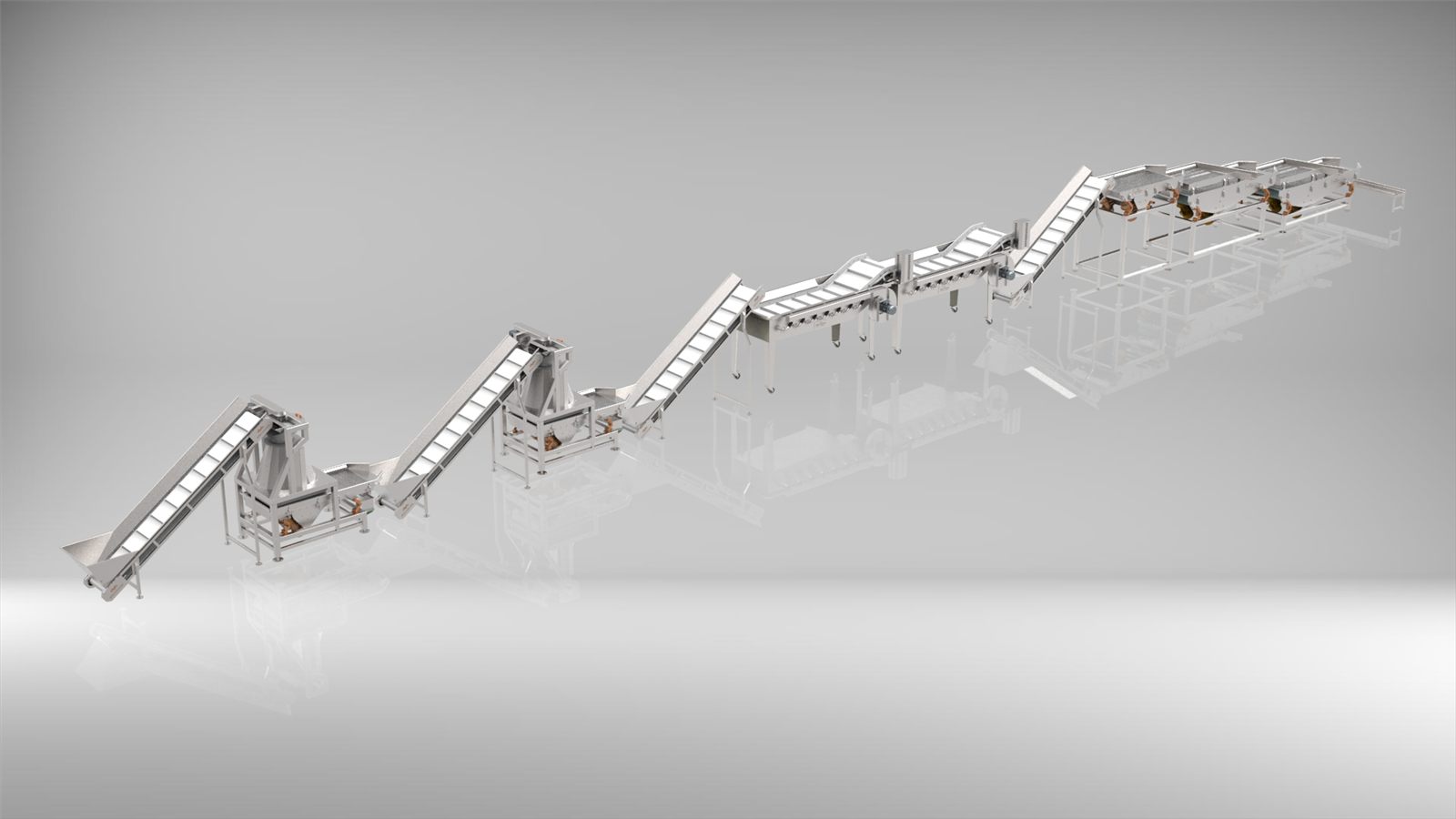
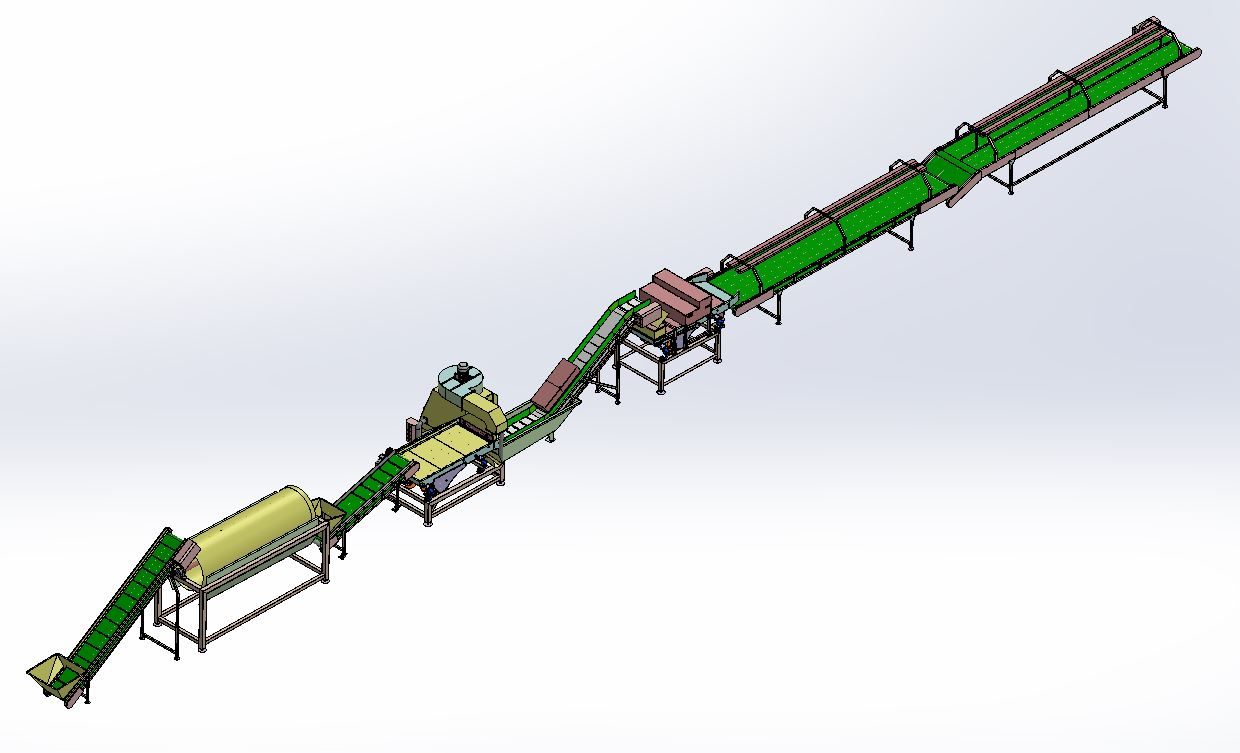
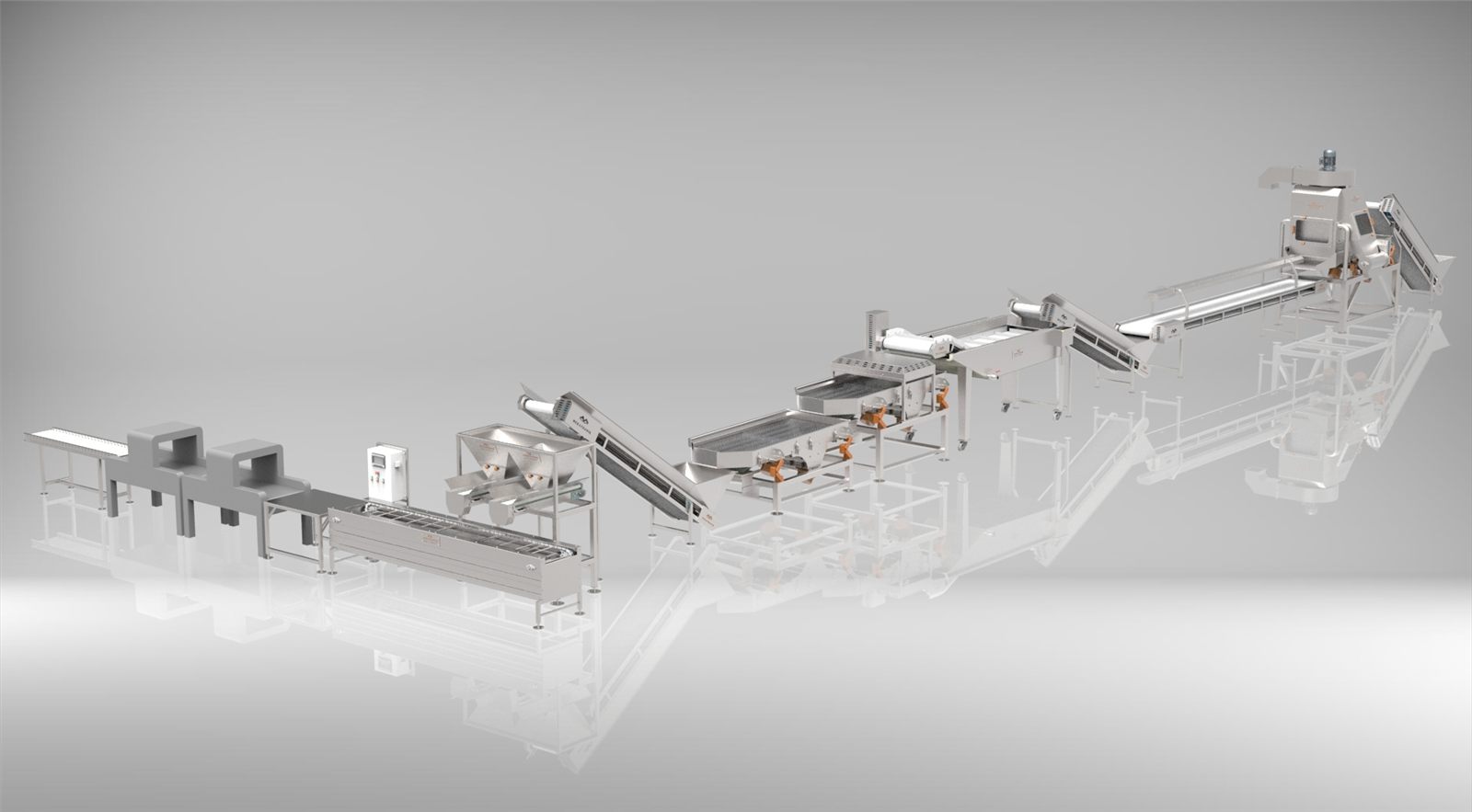
Dried fruit does not arrive at the line as fruit alone. Coarse debris travels with it, and pre-cleaning is the station where that debris is taken out before it reaches the rest of the line. This article separates what that station does from what it does not.
01
What is separated at the pre-cleaning stage?
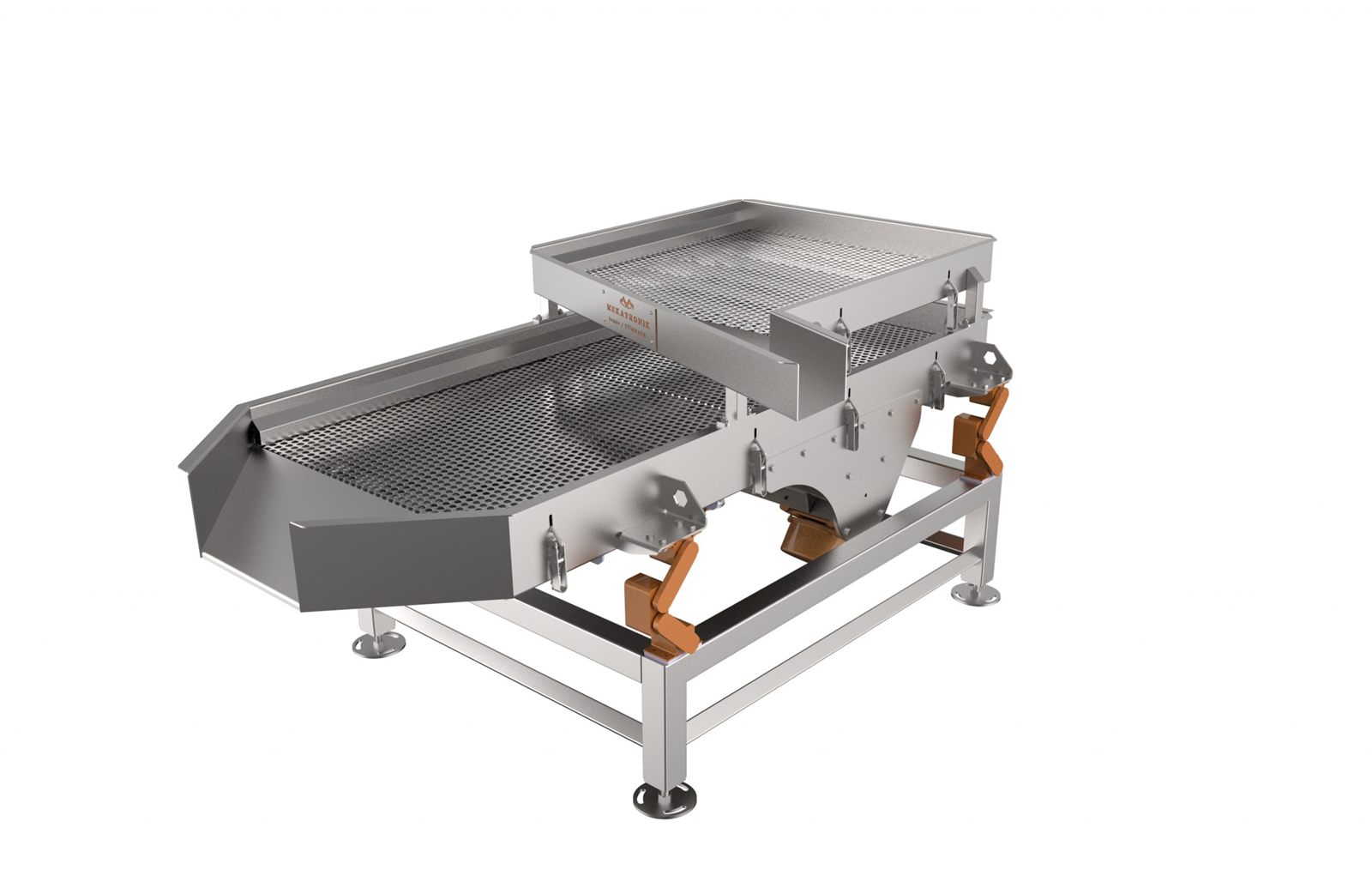
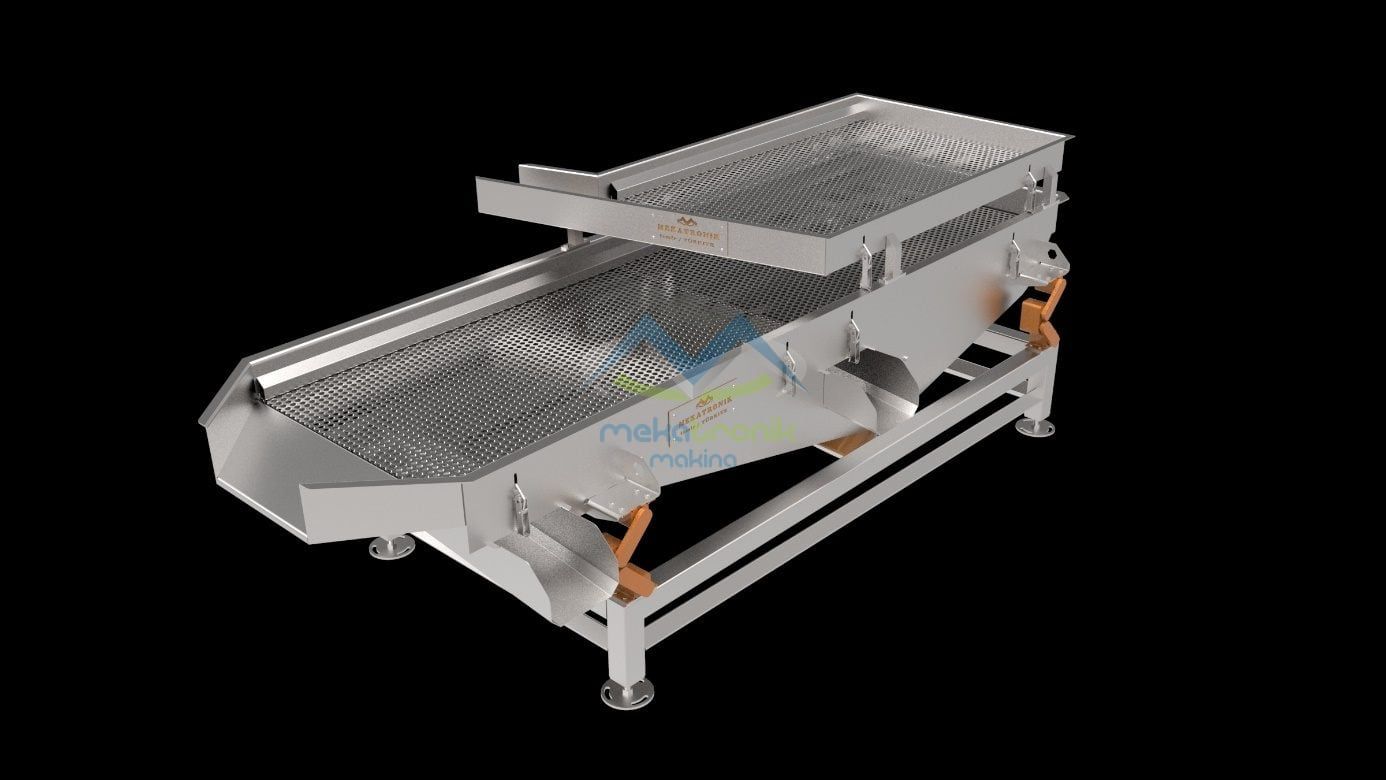
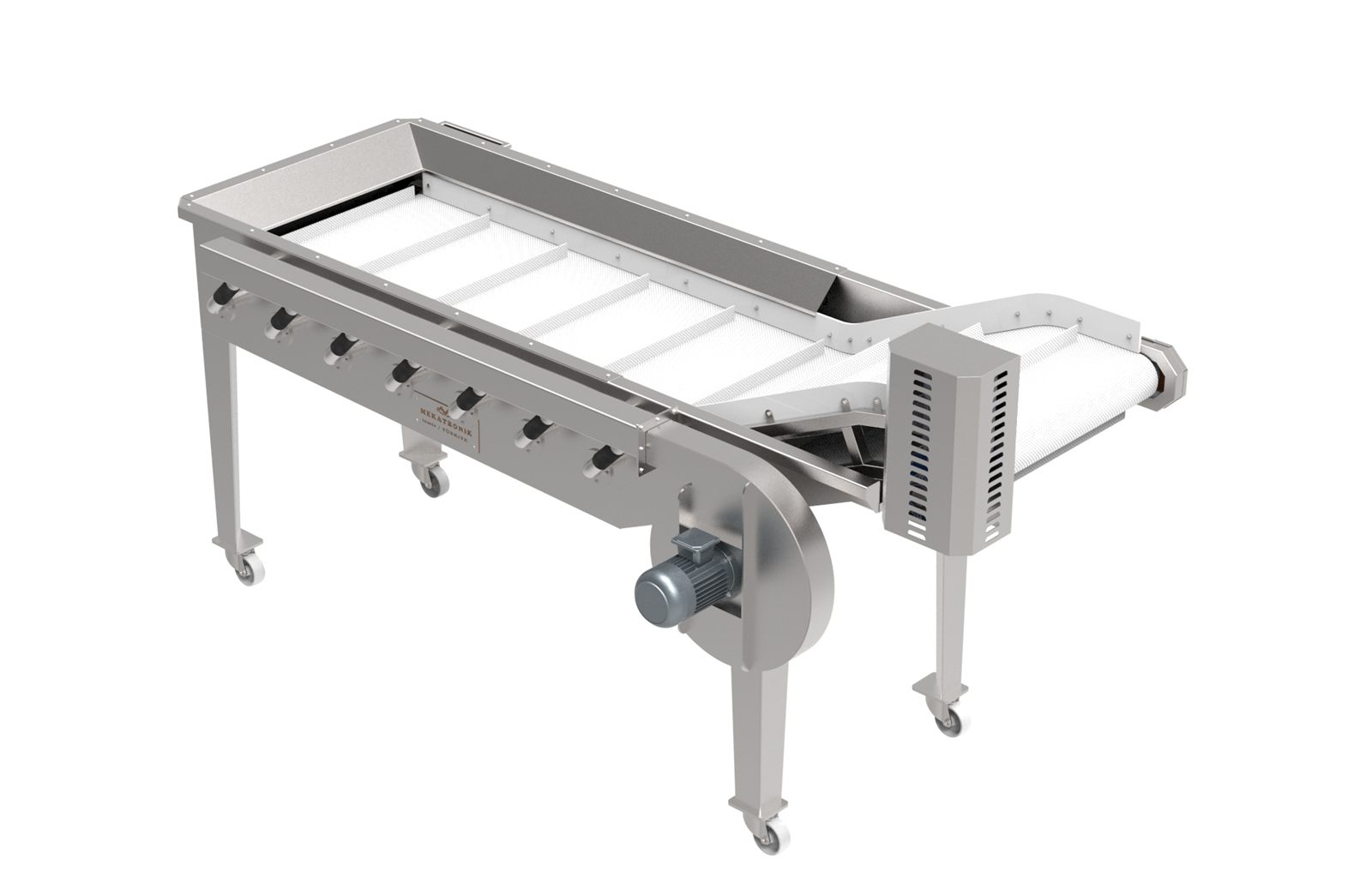
The dried fruit impurity removal screen uses a vibrating double-deck screen system to separate the coarse debris that arrives with the product. The word that matters is "coarse": what counts as coarse is set by the screen opening, and that opening is designed for the product group.
The machine therefore does not recognise every foreign object. It separates pieces whose size differs from the screen opening, and knowing that from the start defines what you can and cannot expect from the station.
02
Which foreign matter does screening not remove?
Every size-based separation shares one limit: anything the same size as the product, passing the screen the same way, is not separated. That group includes:
- 01Hard foreign objects of the same size as the product, because a screen judges size, not material
- 02Metal fragments, for which a separate check further along the line is planned
- 03Dust and very light matter, which needs air-based separation, a different method
For light matter there is an answer inside the same machine family: the screening shaker with aspiration unit combines screening and air suction in one machine. Which one is needed depends on the condition in which the product arrives.
03
Why does it come before washing?
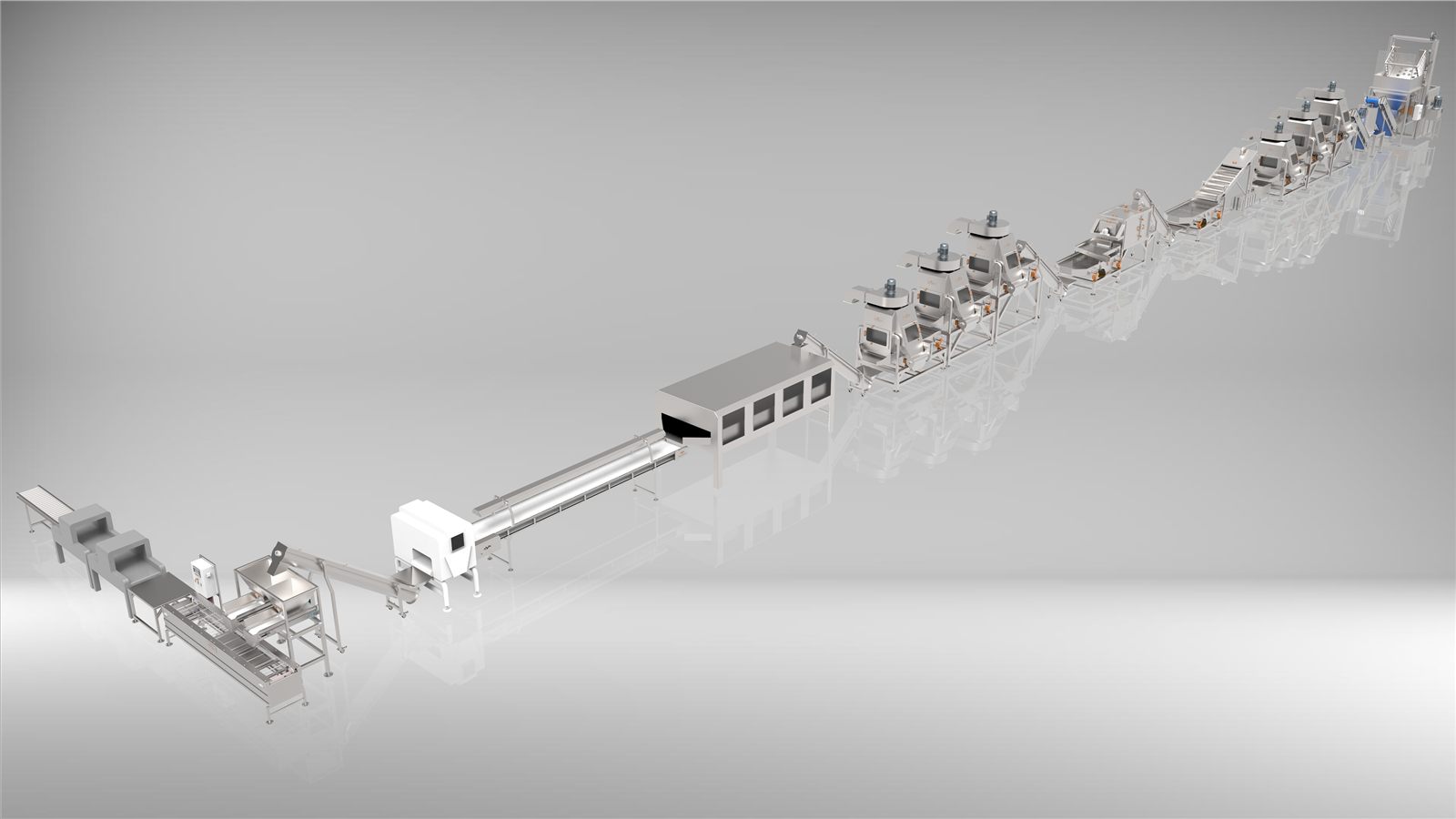
The further debris travels down the line, the more stations it has passed through. Product that enters washing dirty fouls the water faster and makes water management harder. Debris also builds up on screen surfaces, and a hard piece that reaches the cutting section can damage the blade set.
Coarse separation is therefore commonly done ahead of washing. The mixture of water and product leaving the washer is handled by a different shaker whose job is not debris removal but taking the water off the product; that is the role of the dried fruit dewatering vibrating screen.
04
Why does feeding need to be a single layer?
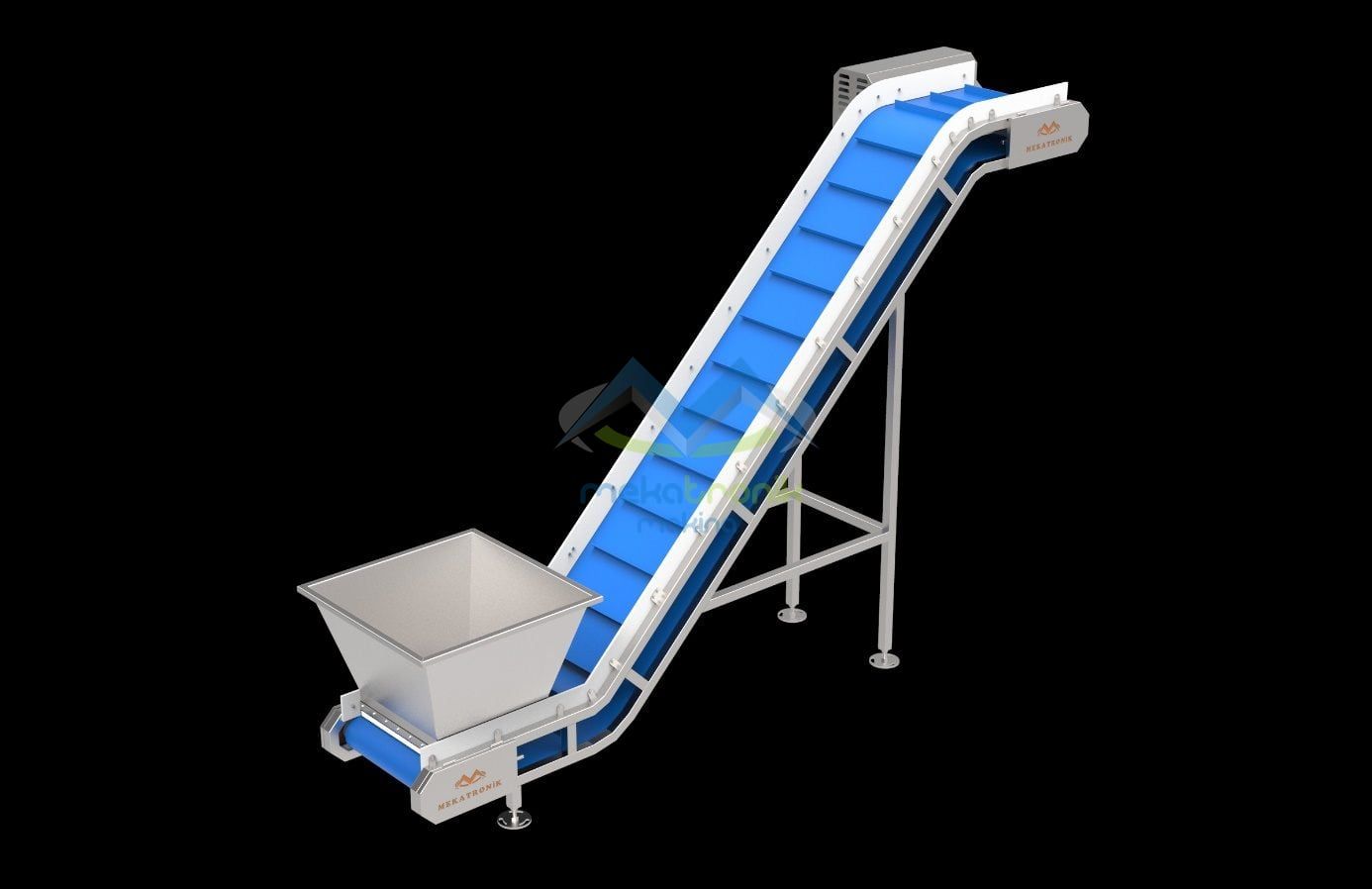
A screen can only separate what reaches its surface. If product arrives in a heap, the debris underneath stays under the fruit and the screen never sees it. That is why balanced feeding follows the crate tipper: separation works when the product moves forward in a single layer.
On a line with uneven feeding, what looks like a screen problem is often a feeding problem. When troubleshooting, look first at how the product reaches the screen.
05
Why does the screen change with the product group?
Raisins and dried figs do not have the same debris profile, and the two products differ in shape and surface. Screens are therefore designed for the product group, and the same body fitted with a different screen gives a different result. Choosing an opening from a single dimension of the fruit is not enough, because the product moves on the deck and whether it passes depends on which face arrives at the opening.
A sizing shaker also removes coarse debris during sizing through its double deck, but for heavily soiled product a dedicated debris removal step is still needed; sizing complements it rather than replacing it.
Blinding advances quietly. The machine keeps running, but as fewer openings stay clear the separation degrades. The most common cause is sticky-surfaced fruit seating in the openings. The screen surface is therefore checked at a regular interval, and the interval is set by the product.
The condition in which product arrives varies with the harvest and with storage. A screen chosen on one lot should therefore be tried on other lots too; setting the opening from a single sample can later let too much debris through, or take good product out together with the debris.
The station shows that it is doing its job in two places: how quickly the wash water fouls, and how much debris collects on the sizing screens. If both increase, separation is falling short and the screen arrangement is reviewed.
06
The fixed technical frame of the machine
| Item | Value |
|---|---|
| Body material | AISI 304 stainless steel |
| Product contact surface | AISI 304, AISI 316 optional per process |
| Operating principle | Vibratory screening, double deck screen system |
| Screens | Stainless screens designed for the product group |
| Drive | Vibro motor driven vibration system |
| Capacity | Defined per project |
| Supply | 380 V / 50 Hz |
Custom dimensions can be built for the place and purpose of use. Capacity values vary by project; exact figures are finalised in the quote.
The following information is needed before a quote:
- 01Which product group will be processed
- 02The condition in which the product arrives and how much debris it carries
- 03The type and size of the foreign matter to be separated
- 04The space available in the plant and the existing layout of the line
Send us your product group and the condition of the incoming product, and we can work through the screen arrangement together. The quotation page is the quickest way to reach us.