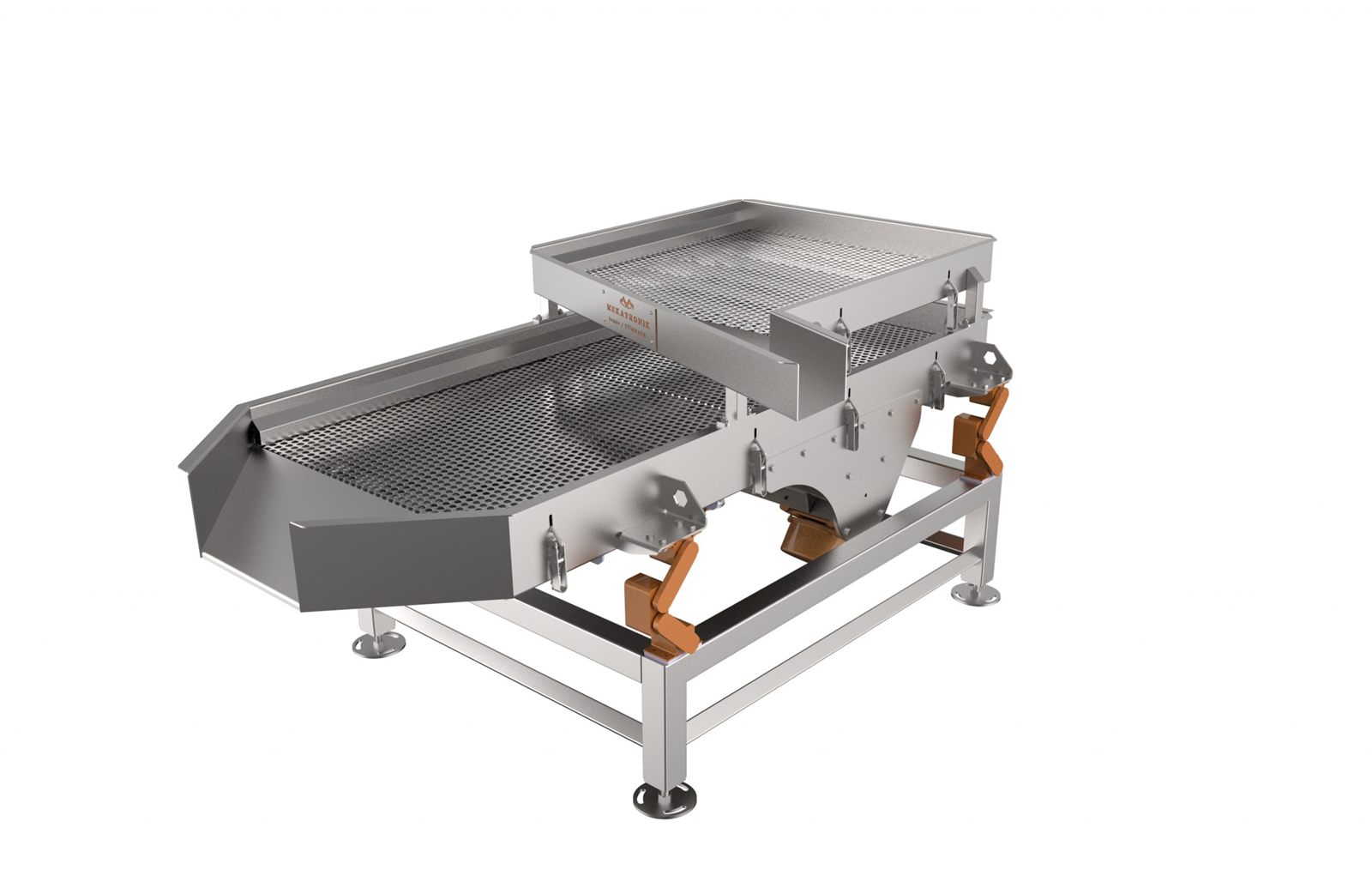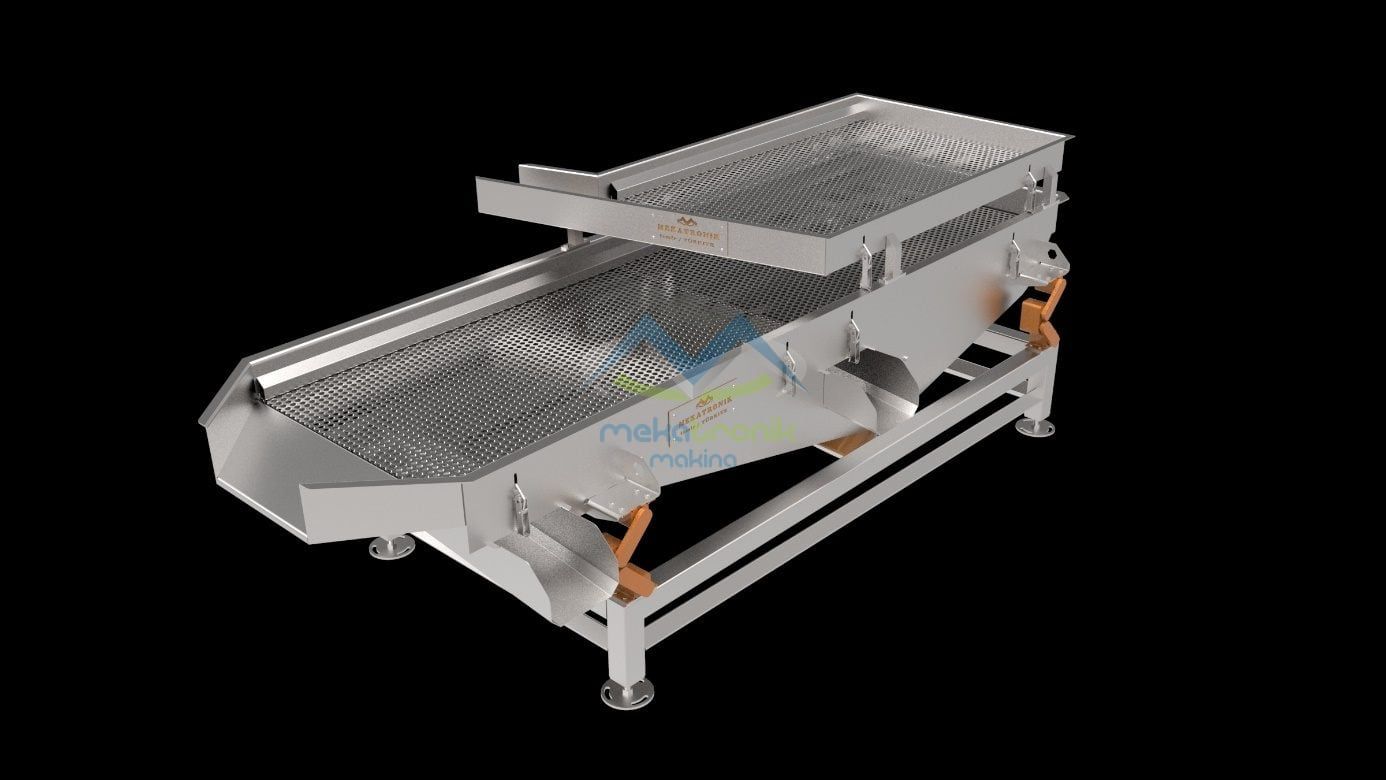
Stones and leaves cannot be separated the same way: one is heavy and passes through a screen, the other is light and rises in an air stream. A screening shaker machine with an aspiration unit combines these two properties in one machine. Below is how it works and when it is chosen.
01
How does the machine do two separations?
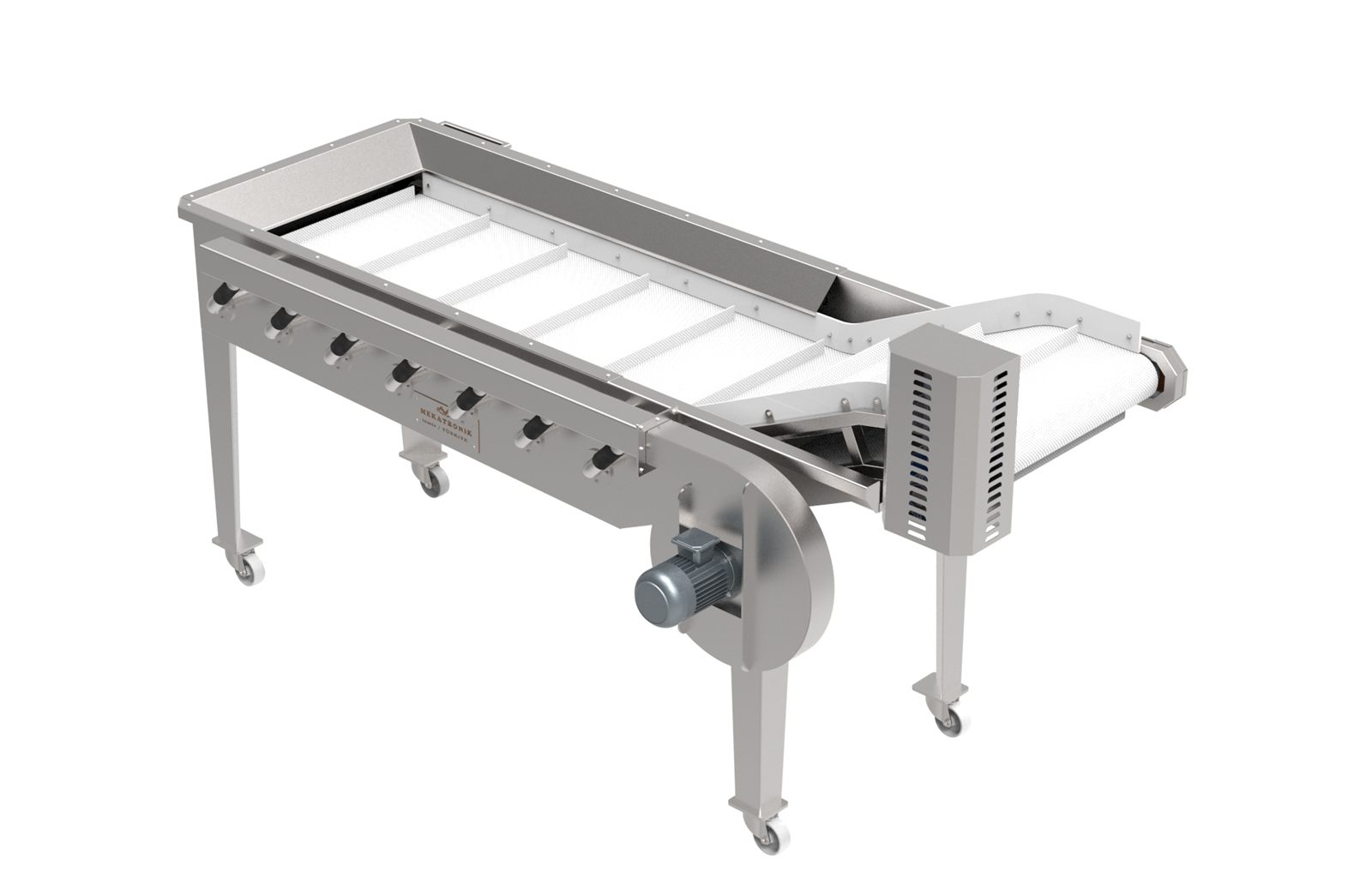
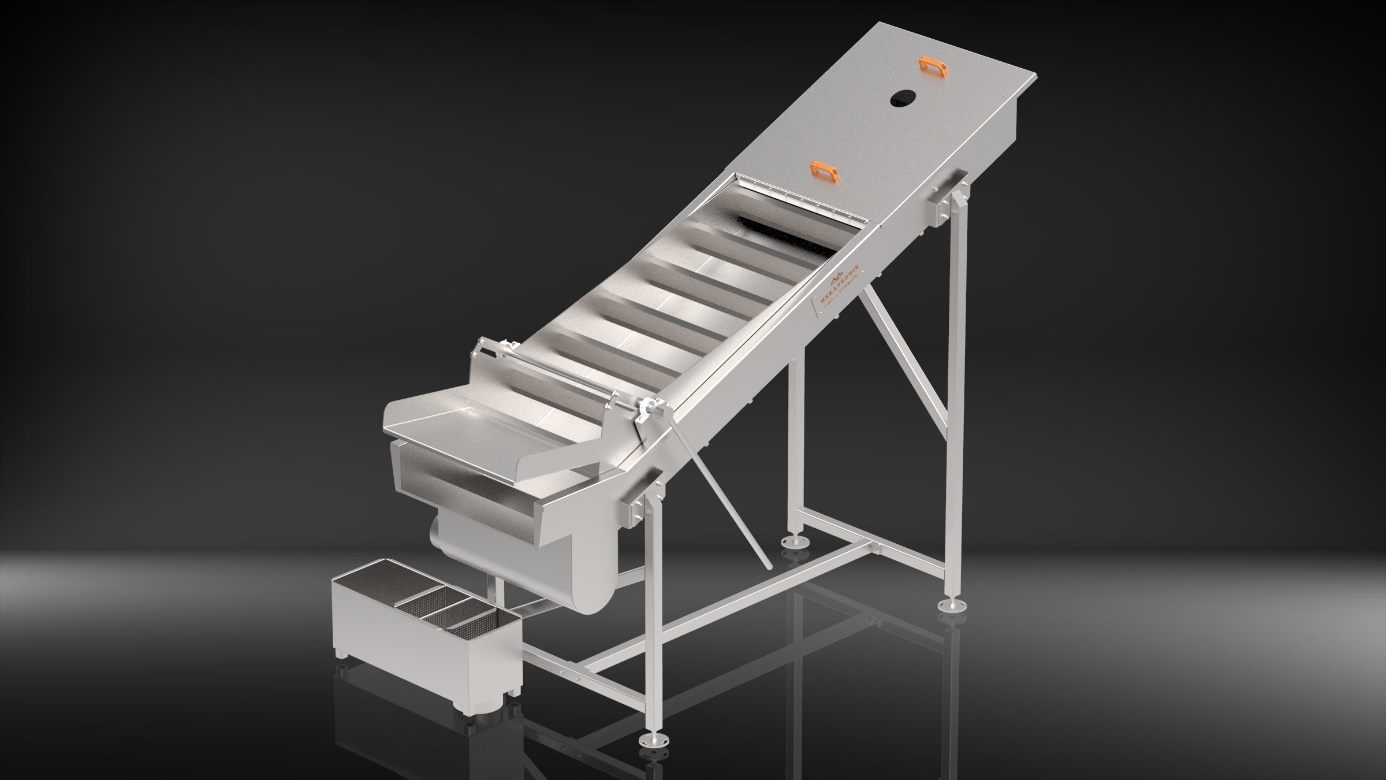
On the screening shaker machine with aspiration unit the operation has two steps. The product dropping onto the screen deck is sieved, separating out objects such as stones and soil. Light matter such as leaves, stems and debris is drawn off by aspiration and discharged.
The first step relies on size and weight, the second on lightness. The two complement each other: a screen cannot always catch light matter, and air suction cannot lift a heavy object.
02
Why one machine instead of two?
- 01Product passes both separations in a single pass, with no extra transfer between machines
- 02One station takes up floor space on the line instead of two machines and the conveying between them
- 03Sizing and foreign matter removal can be done together
- 04Cleaning and maintenance are concentrated on a single machine
How much of this applies in a given plant depends on the line layout; exact figures are settled per project in the quote.
03
Which products is it used for?
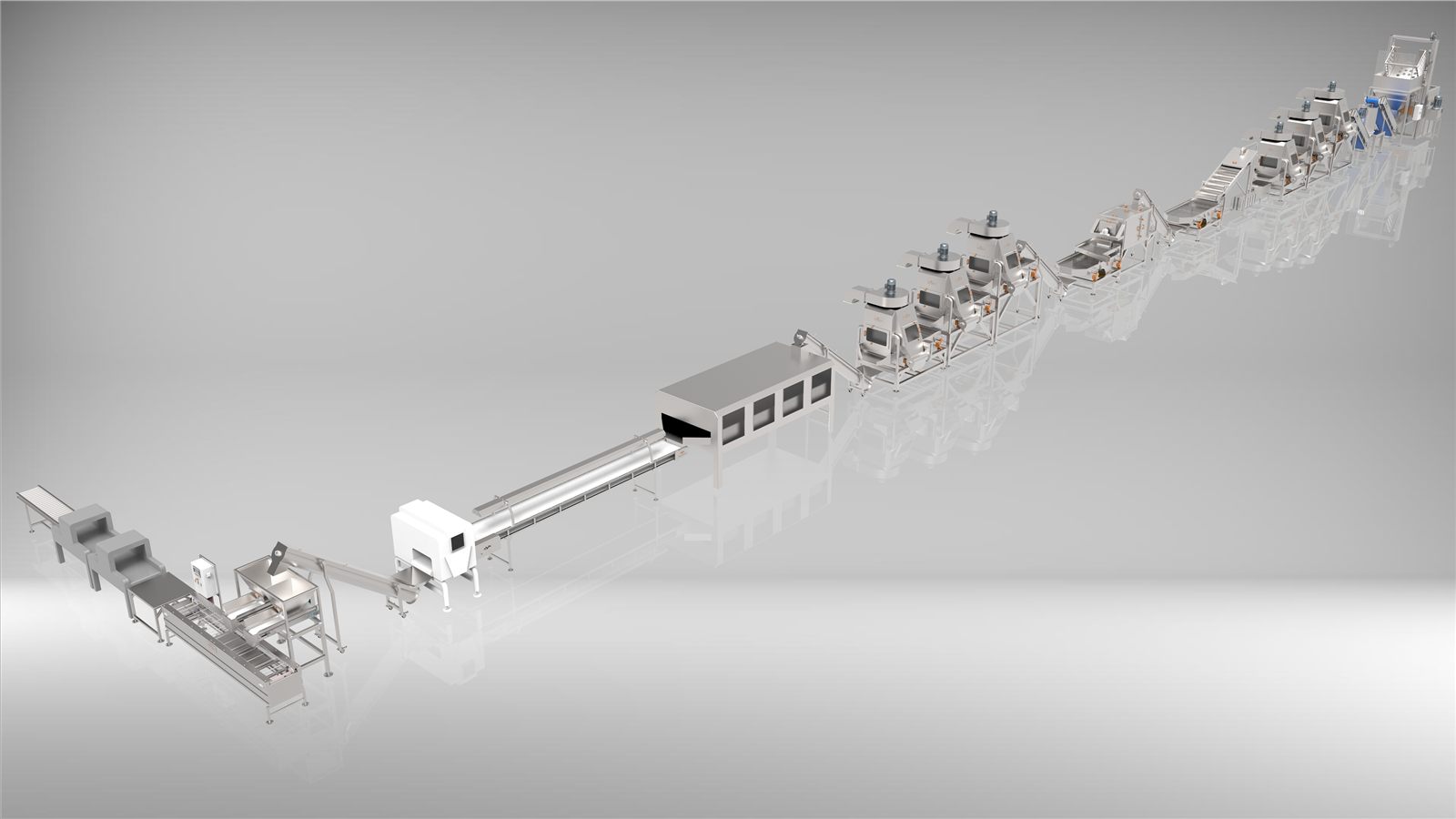
The machine page lists products such as raisins, beans, chickpeas, sunflower seeds and pumpkin seeds, and states that it can perform sizing and foreign matter removal on them. In dried fruit, the machine works on the raisin and date processing lines.
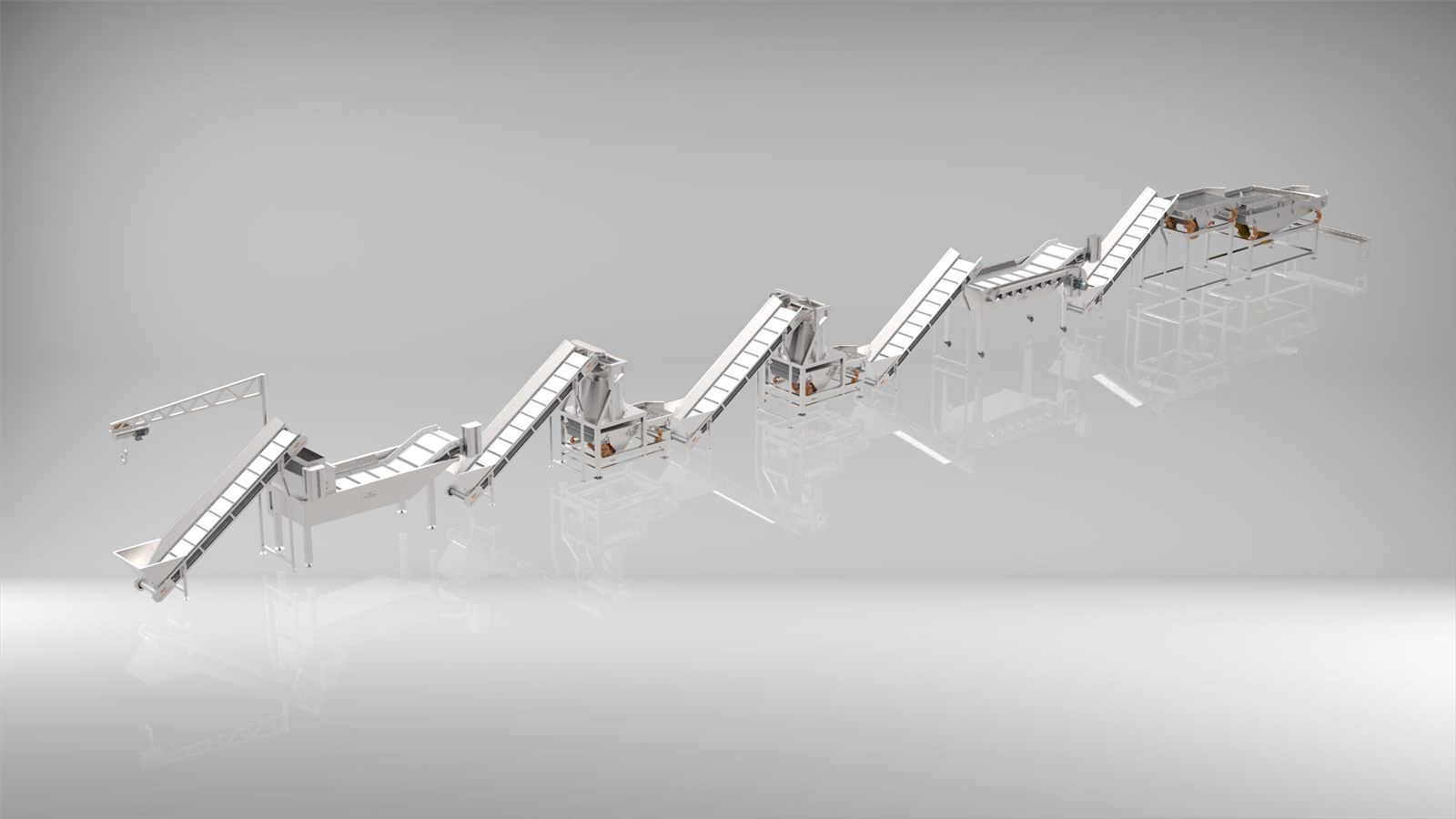
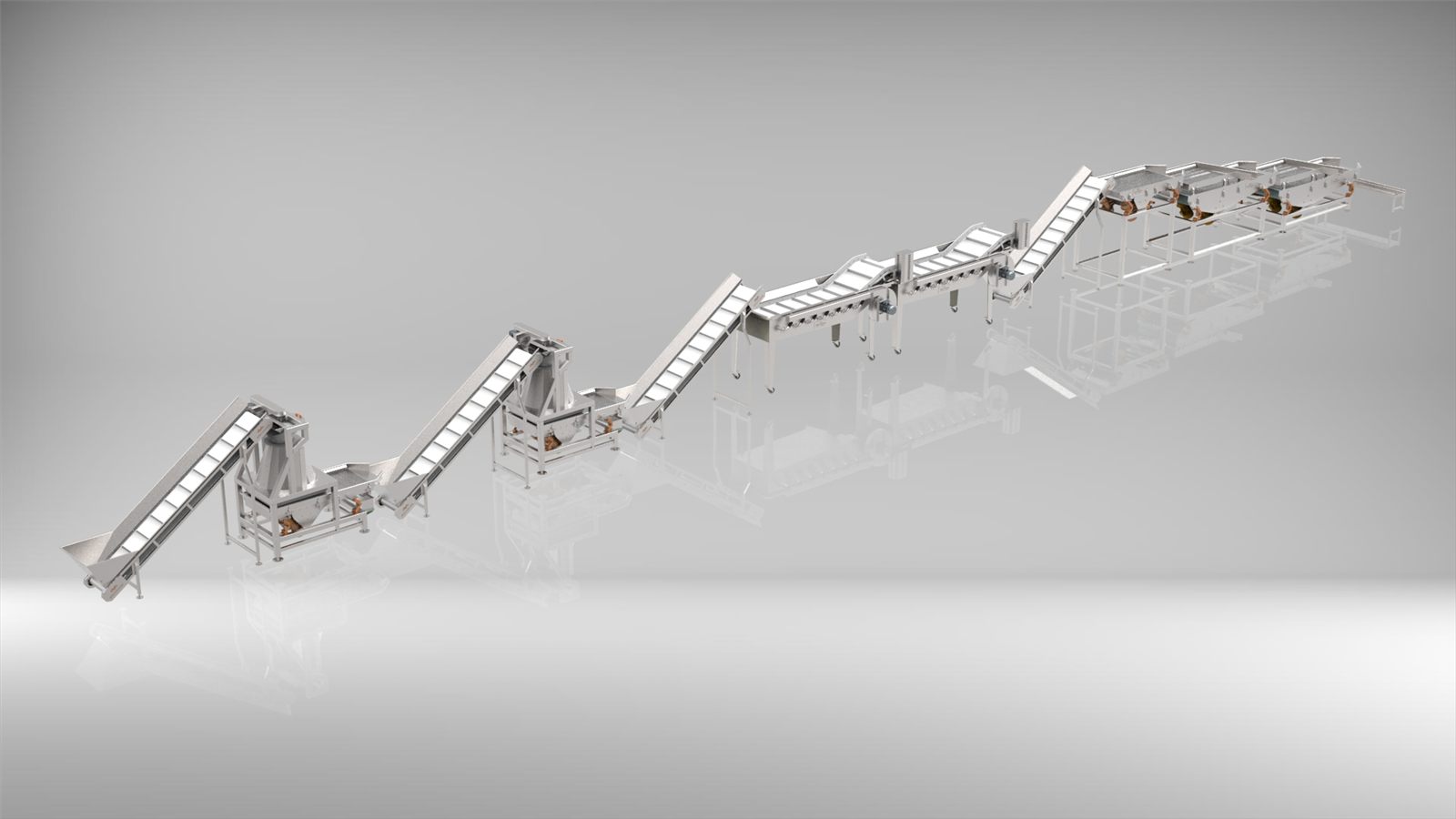
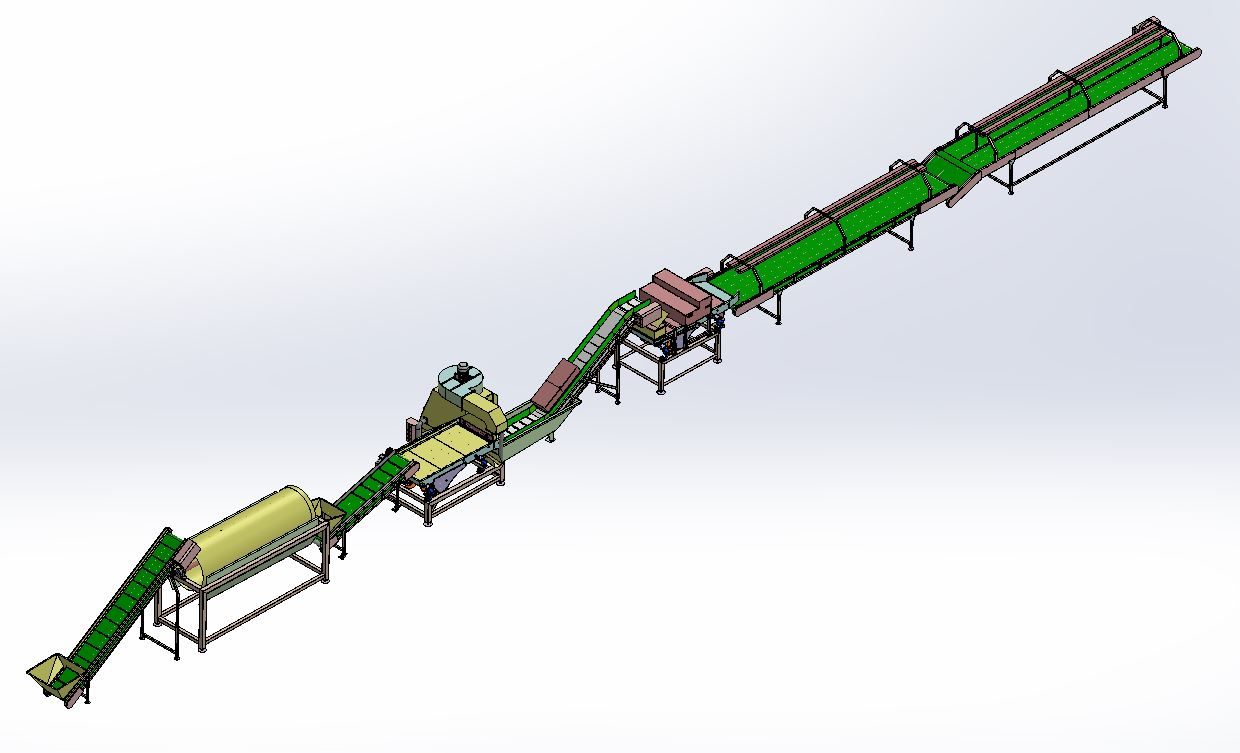
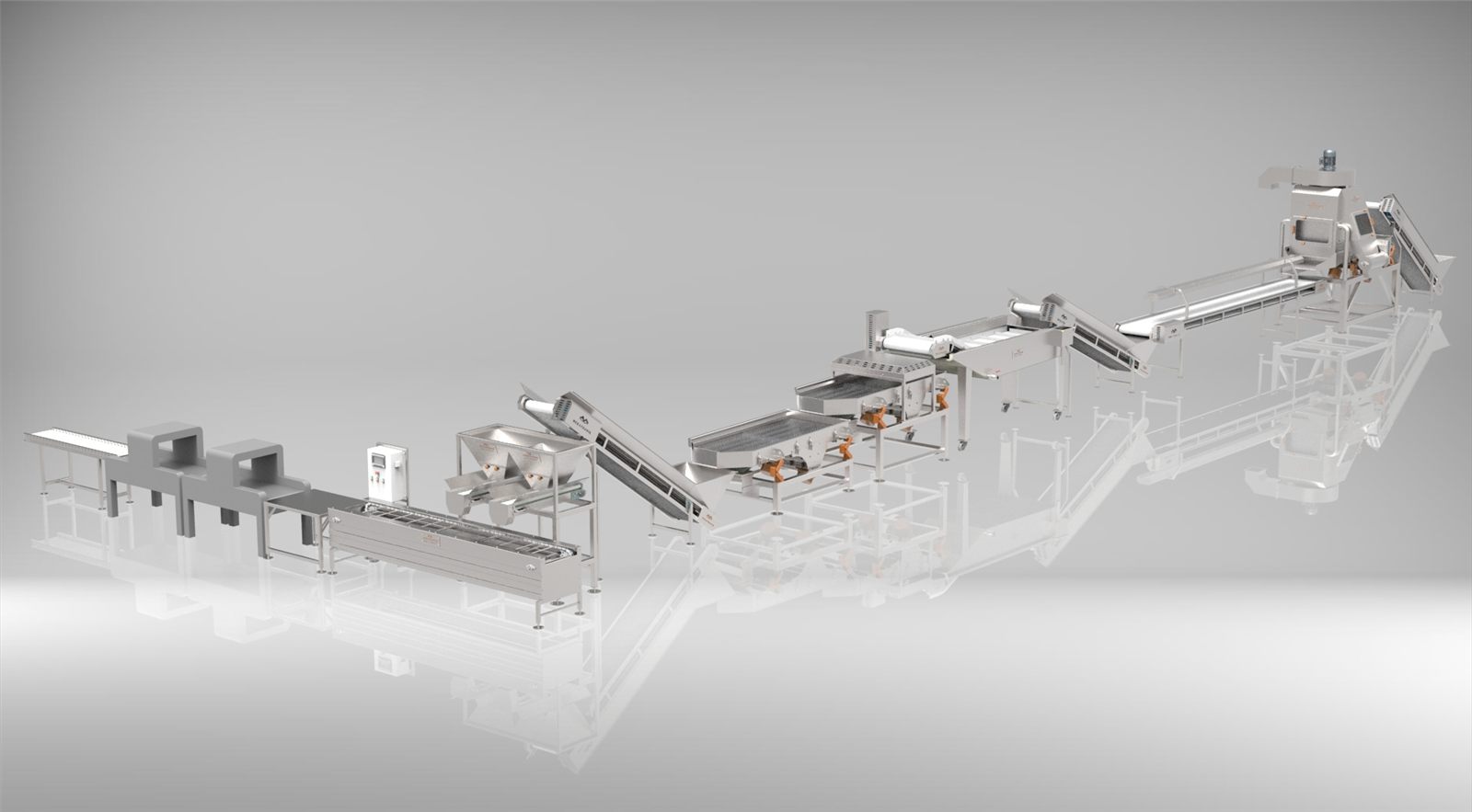
The same machine also appears as a station on the sun-dried tomato line. The sun-dried tomato pre-screening line has three stations: balanced feeding, the aspirated shaker screen and an illuminated sorting conveyor. The role of the aspirated shaker there is to separate dust, stems and light foreign matter from the vibrating product stream by air suction.
04
How does it differ from a debris removal screen?
The dried fruit impurity removal screen separates coarse debris with a double-deck screen; its separation rests on size alone. The aspirated shaker adds air suction and so covers light matter as well.
If the product arrives mostly with coarse debris, a double-deck screen may be enough. If it also carries light matter such as leaves, stems and dust, the aspirated model comes into play. The decision is made by looking at the condition in which the product reaches the line.
Standard equipment includes stainless screens made specifically for the product group, fitted on a replaceable, quick-release system. When the product changes, the screen can change with it.
A bottom-blown model is available as an option: blowing carries the debris to the aspirator faster. It is worth considering where the share of light matter is high.
05
Maintenance and cleaning
Easily accessible maintenance covers allow quick cleaning. Being able to empty and clean the machine quickly at a product changeover reduces the risk of carry over between two batches, and because the screens can be removed, checking the screen surface is easier as well.
An aspirated shaker does not replace the illuminated sorting conveyor. On the sun-dried tomato pre-screening line, the third station is a sorting conveyor where defective product and foreign matter are picked out by hand over an illuminated belt. Screening and air suction remove debris and light matter; picking out defective product, or an object that passes the screen the same way as the product, remains a separate step.
Aspiration carries the separated light matter out of the machine. Where that matter goes, and how dust is managed in the working area, depends on the plant layout and is addressed separately at the project stage. When choosing the machine, look not only at the screen surface but also at where this air outlet sits in the plant.
06
Technical sheet
| Item | Value |
|---|---|
| Body material | AISI 304 stainless steel |
| Product contact surface | AISI 304, AISI 316 optional per process |
| Operating principle | Vibratory screening with aspirated debris removal |
| Screen | Replaceable stainless screen, quick-release system |
| Drive | 2 vibration motors (2 x 0.75 kW) and a 5.5 kW aspiration fan; total power about 7 kW |
| Capacity | Defined per project |
| Supply | 380 V / 50 Hz |
| Optional | Bottom-blown model |
Values vary by project; exact figures are finalised in the quote.
The following information is needed before a quote:
- 01The product to be processed and the condition in which it arrives
- 02The main type of foreign matter: stones and soil, or leaves and stems
- 03The target capacity and the space available in the plant
- 04Whether sizing is to be done on the same machine
Send us your product, target capacity and the condition of the incoming product, and we will work out together which machine fits. The quotation page is the quickest way to reach us.