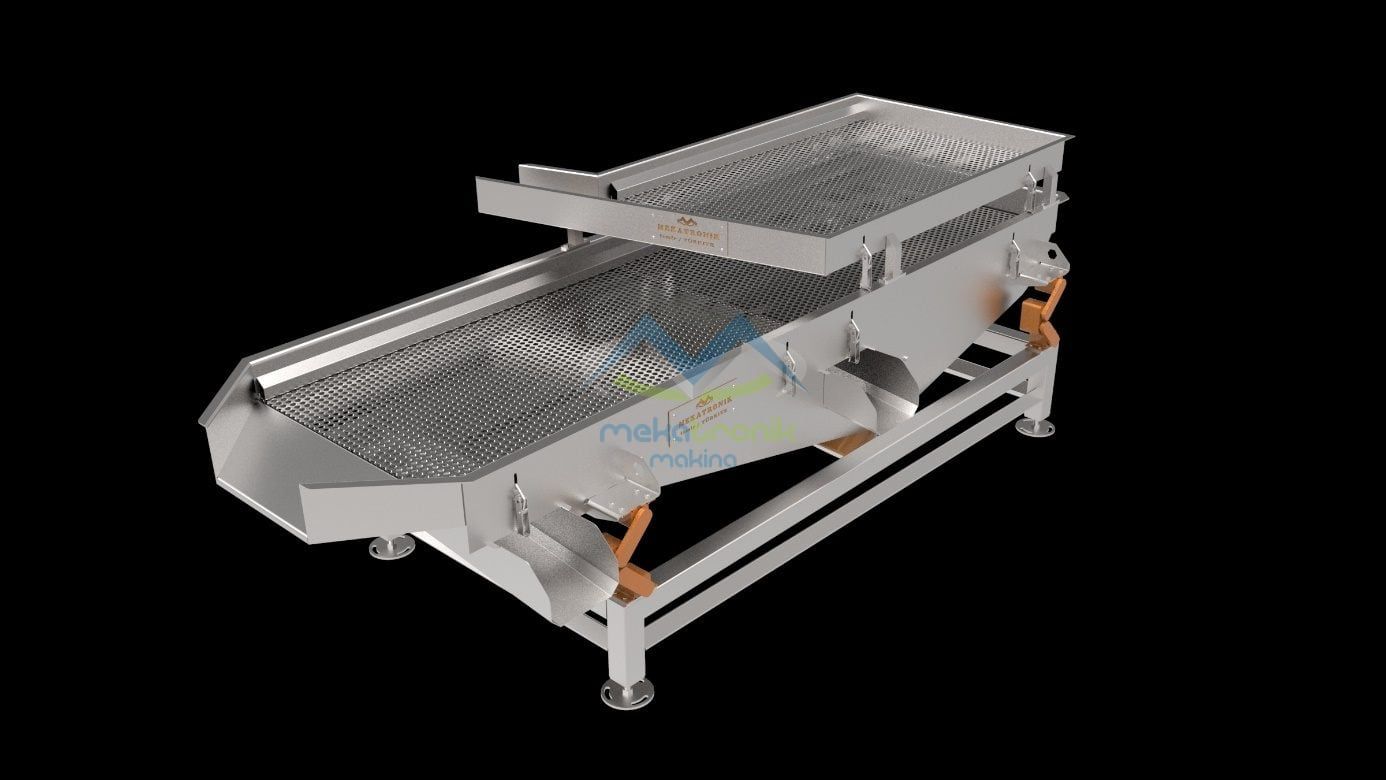
Product that reaches a cutter or filler in mixed sizes throws off blade settings and fill weights further down the line. A dried fruit vibrating screen with a double-deck sieve arrangement handles that separation in a single pass. This article covers how the two decks work together, how mesh aperture is chosen, and what upkeep the sieves need.
01
How does the double-deck screen work?
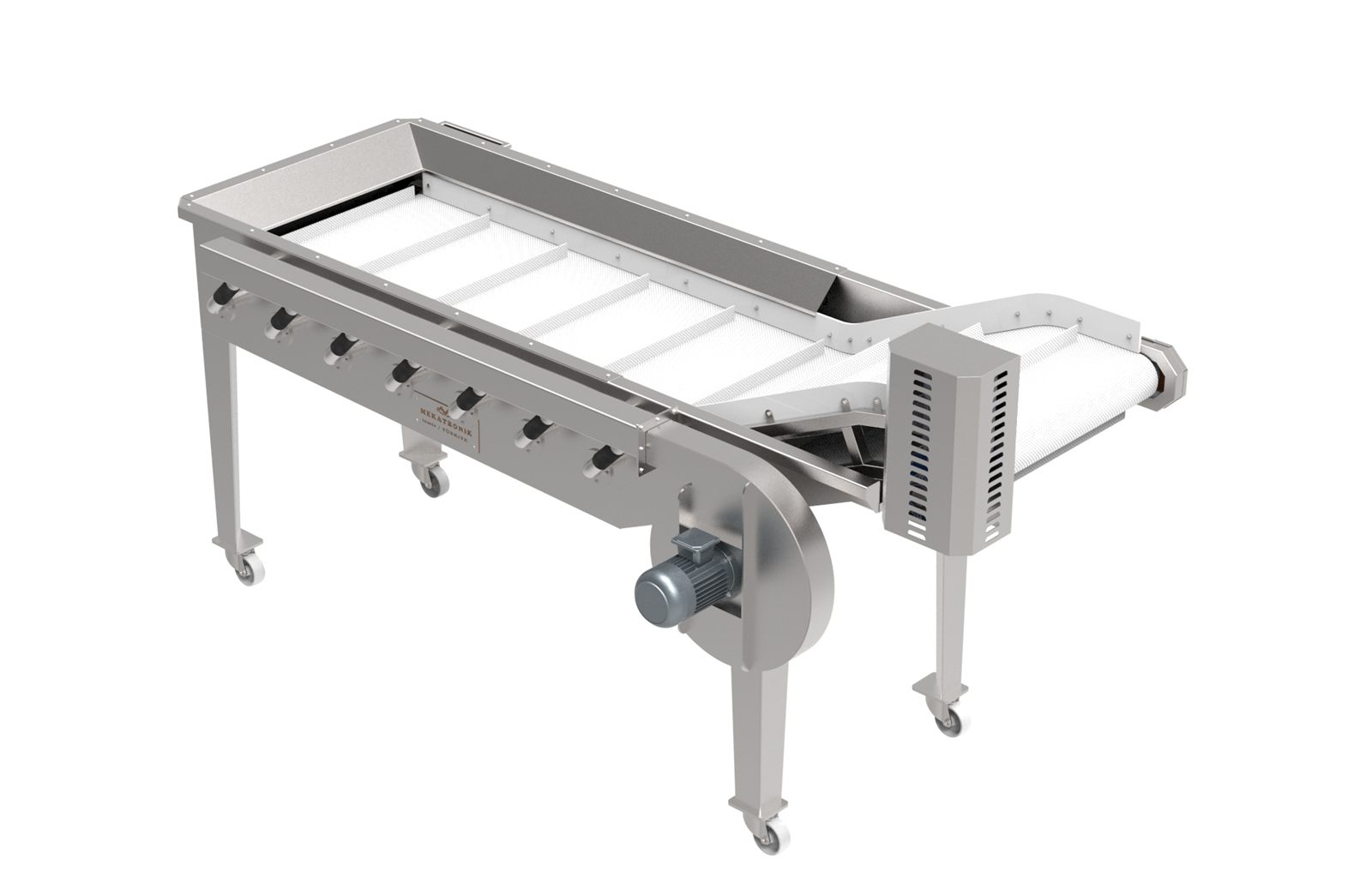
The frame sits at a slight incline and is driven by a vibration motor or an eccentric shaft that shakes it back and forth. Product falls onto the top deck first; as vibration carries it along the mesh, pieces small enough to pass through the aperture drop to the deck below, while oversized pieces ride the top mesh to the discharge end. The second deck repeats the process with a different aperture, so one pass through the machine produces two separation points instead of one.
Vibration amplitude and deck incline set how long product stays on each mesh. Too short a dwell time and separation is incomplete; too long and line throughput drops. Amplitude and incline are set during commissioning against the actual product, not a fixed factory default.
02
How does mesh aperture set the size grades?
The top deck carries the largest aperture and holds back only oversized pieces or clumps above the target grade. The bottom deck carries a smaller aperture and lets undersized fragments and fines pass through. What stays between the two decks is the middle fraction, which is usually the sellable size grade the line is built around. A single pass typically produces:
- 01Oversize retained on the top deck, often routed to a separate cutting or re-screening step
- 02Mid-size fraction caught between the two decks, the target packing grade
- 03Undersize passing the bottom deck, diverted to a different product line or secondary use
- 04Dust and fine debris collected at the bottom pan, removed from the product stream
Mesh aperture is chosen for the specific product and the size range the customer wants; exact aperture values are project specific and get confirmed against a product sample during the quotation stage.
03
What about contact surfaces and CE compliance?
The frame, sieve decks and feed chute that touch the product are built in AISI 304 stainless steel; where a wetter or more acidic product calls for extra resistance, contact surfaces move to AISI 316 instead. The equipment is designed to meet CE compliance requirements, covering electrical safety, vibration guarding and access points around moving parts.
04
What maintenance does the sieve deck need?
- 01Mesh tension is checked regularly; a loose screen breaks the separation and makes vibration uneven
- 02Rubber ball trays or brush systems keep mesh apertures from clogging with sticky residue
- 03Vibration motor or eccentric shaft bearings are lubricated on schedule and checked for wear
- 04Mesh replacement frequency depends on how abrasive the product is and total run hours, not a fixed calendar interval
05
How does feed consistency affect separation?
Product fed onto the screen in an uneven stream or dumped in clumps piles up in more than one layer instead of spreading across the mesh; pieces buried under other pieces never touch the aperture and pass through to the wrong deck, so sizing accuracy drops. Placing a dosing hopper or a leveling feeder ahead of the screen spreads product into a thin, even layer across the full width of the mesh, so both decks work at the aperture they were fitted for.
The screen frame is mounted on spring blocks or rubber isolators rather than bolted directly to the floor; this limits how much vibration transfers into the surrounding structure and nearby equipment. The same mounting also keeps the frame at its intended vibration frequency, since extra shake fed back from the floor would otherwise throw off screening performance.
06
Where does it sit in the line?
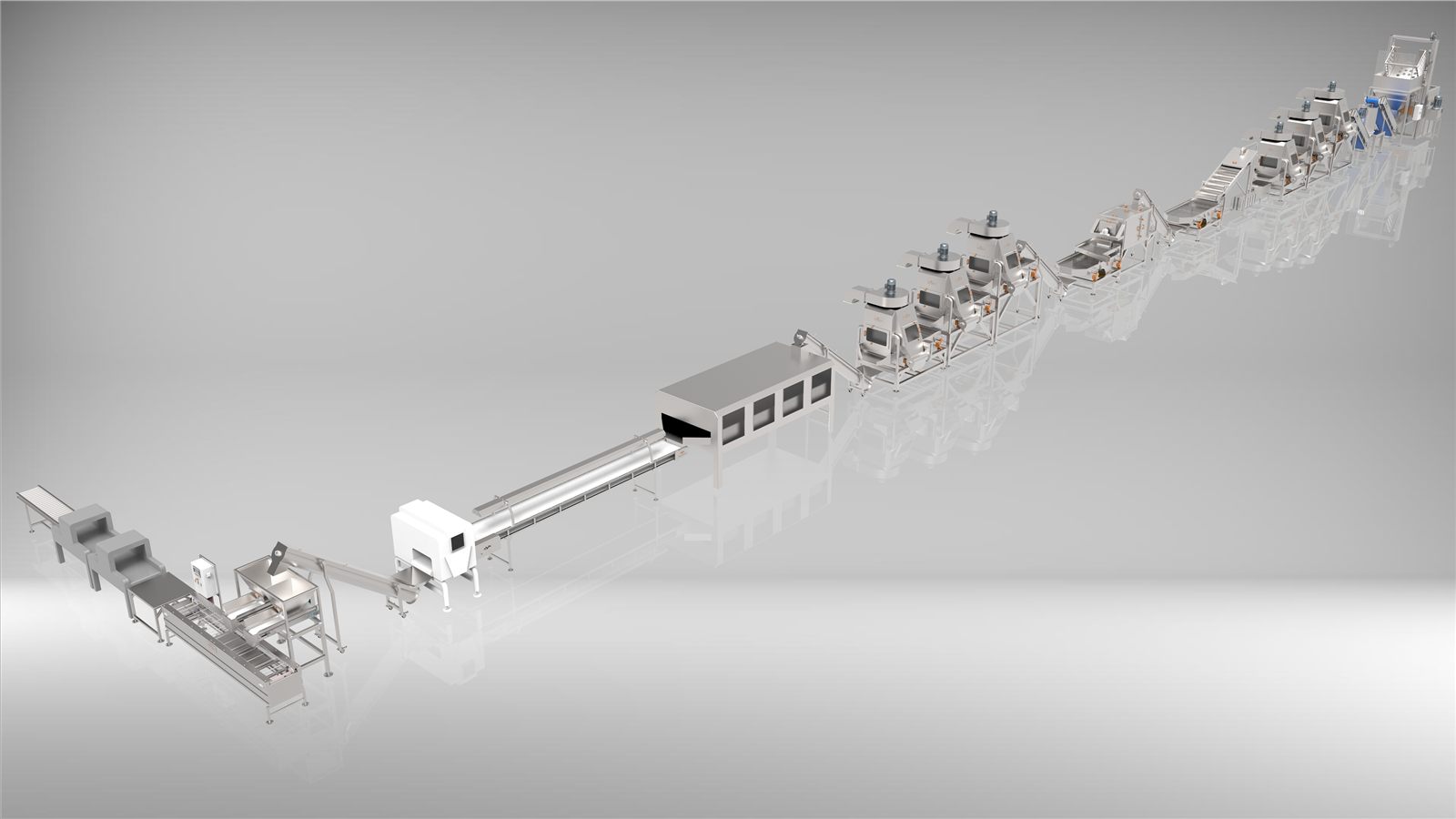
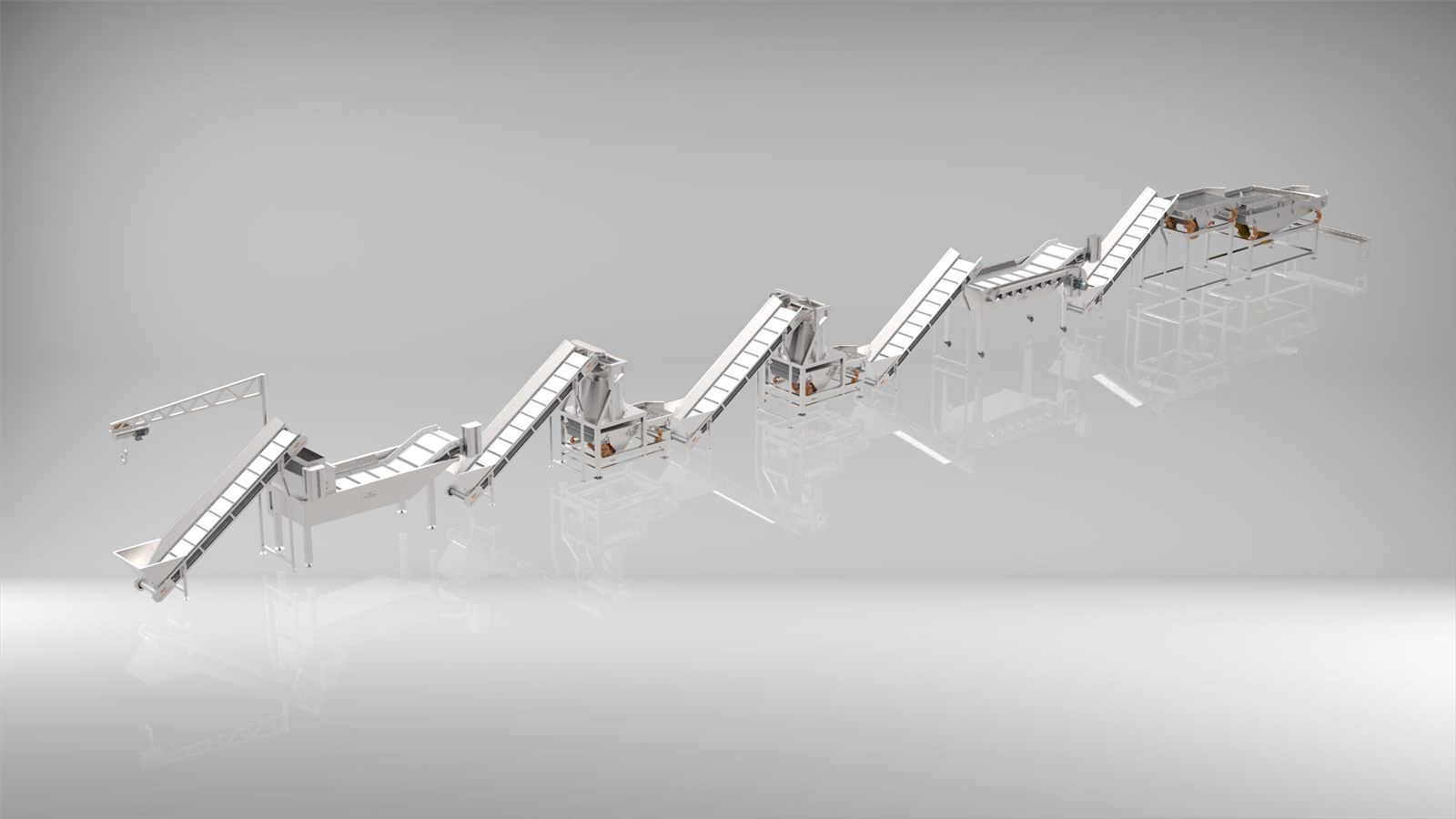
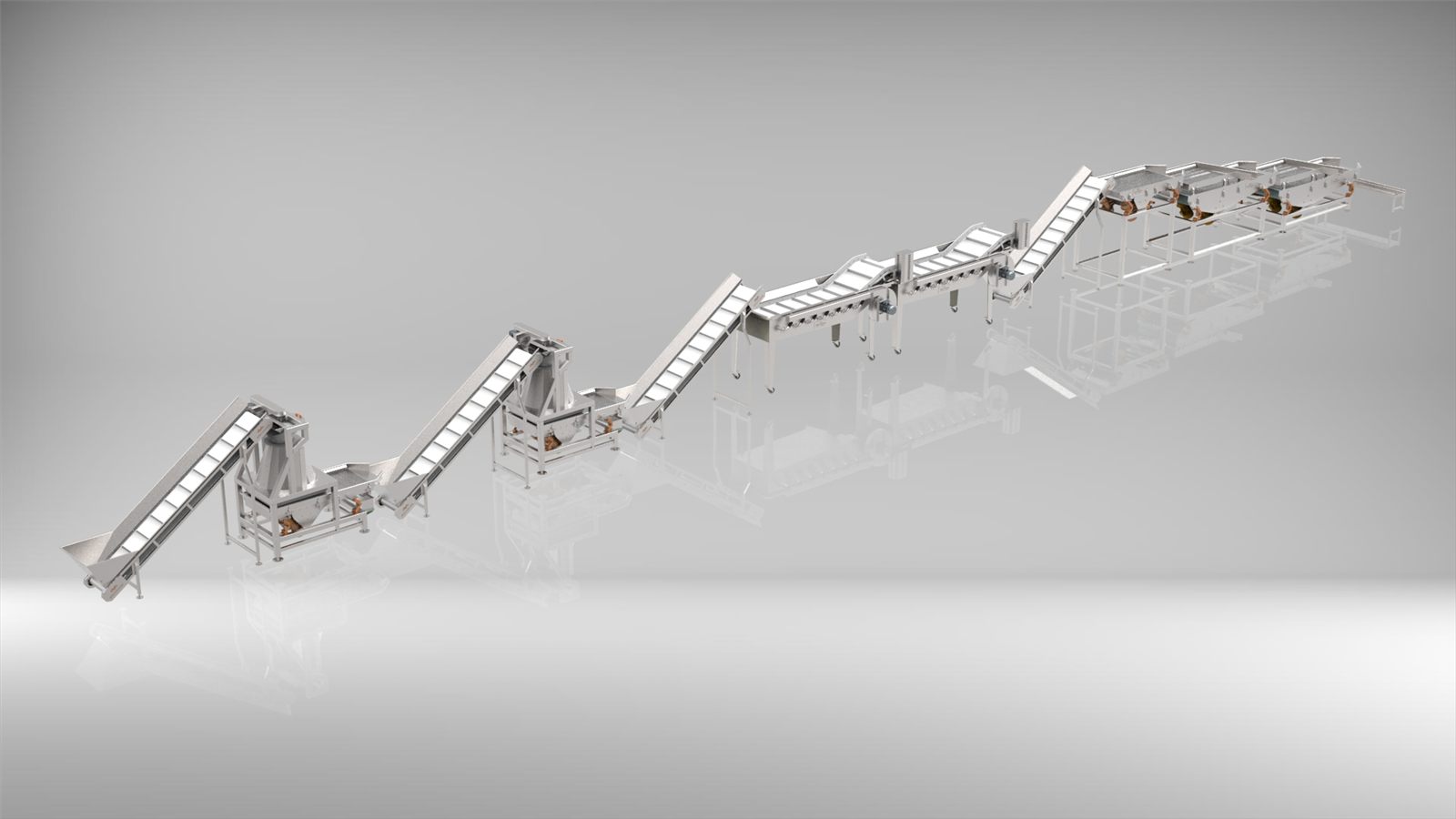
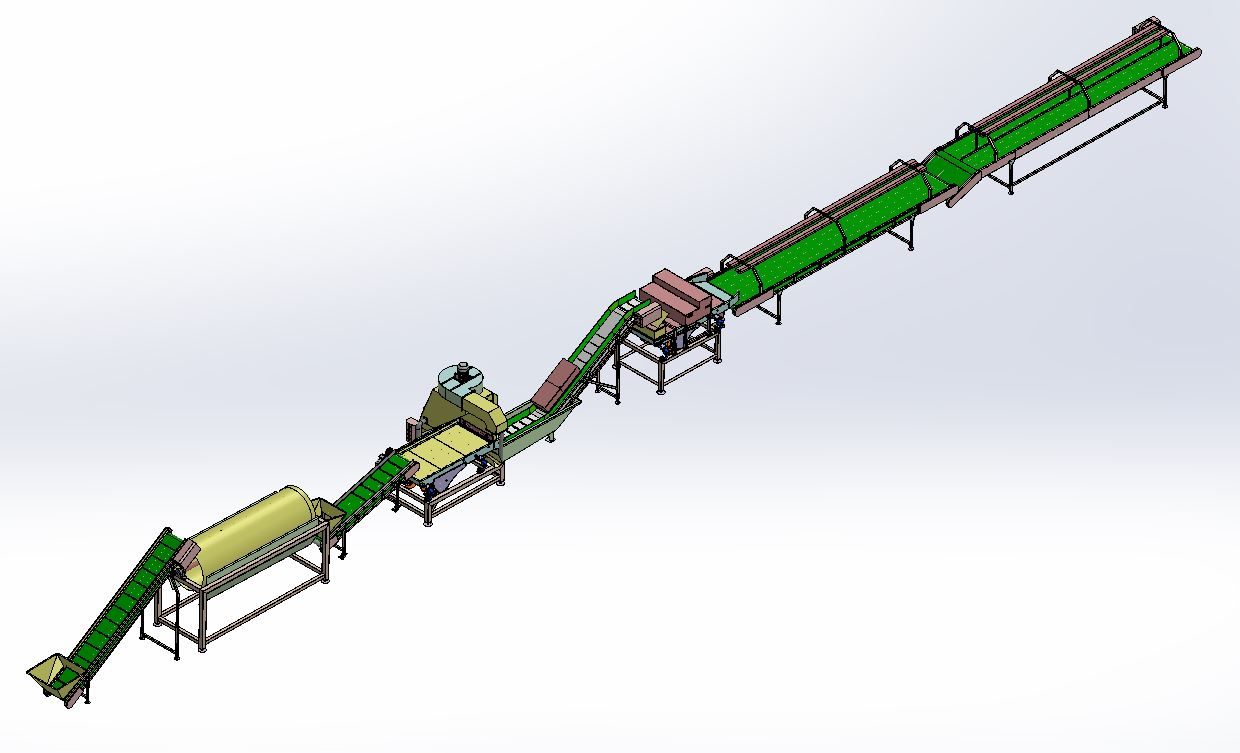
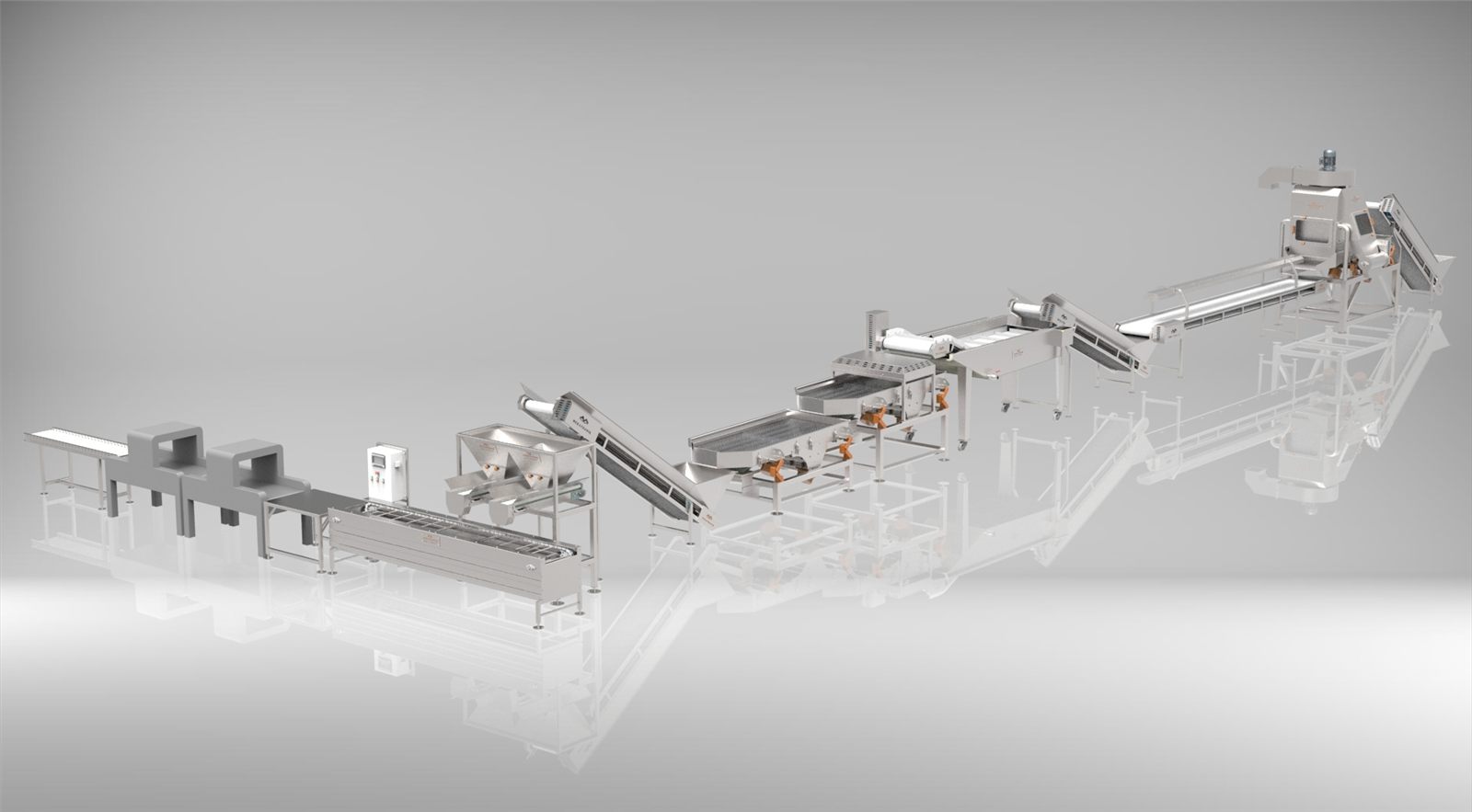
A dried fruit vibrating screen is usually placed after washing and before cutting or filling, so the next machine receives a uniform size grade and blade or fill-weight settings stay consistent. On the apricot sizing stage and the fig sizing stage, this same double-deck logic runs with mesh apertures matched to each product.
As a next step, confirm the product type and the size range you need, then send that together with a sample through the quote page so mesh selection can be matched to your line.