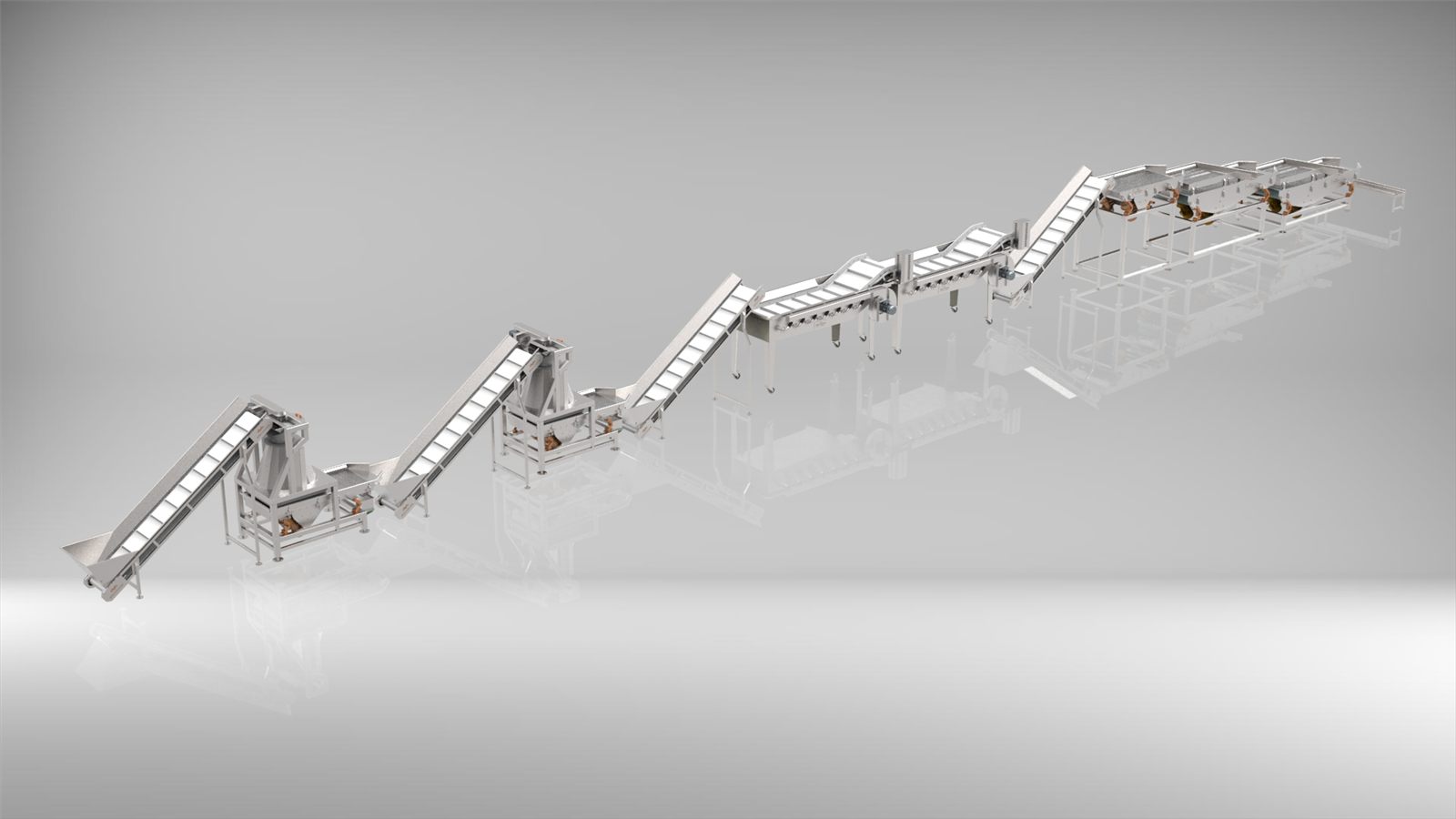
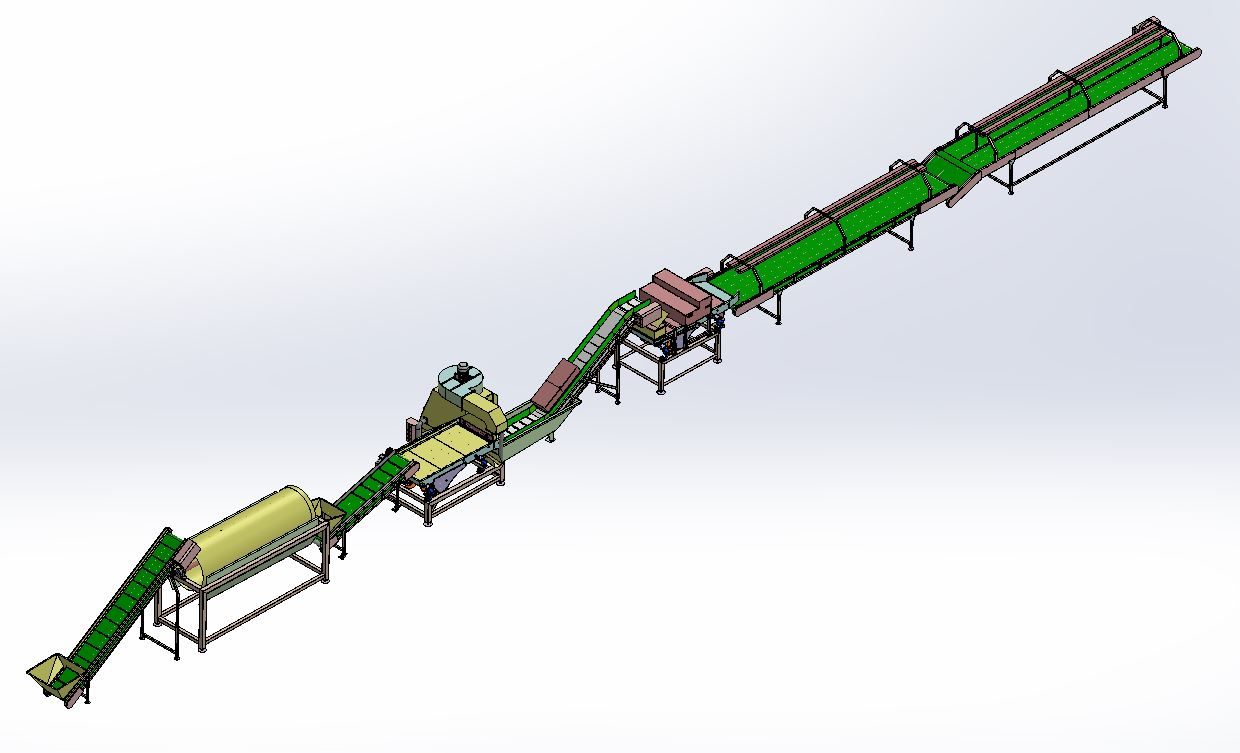
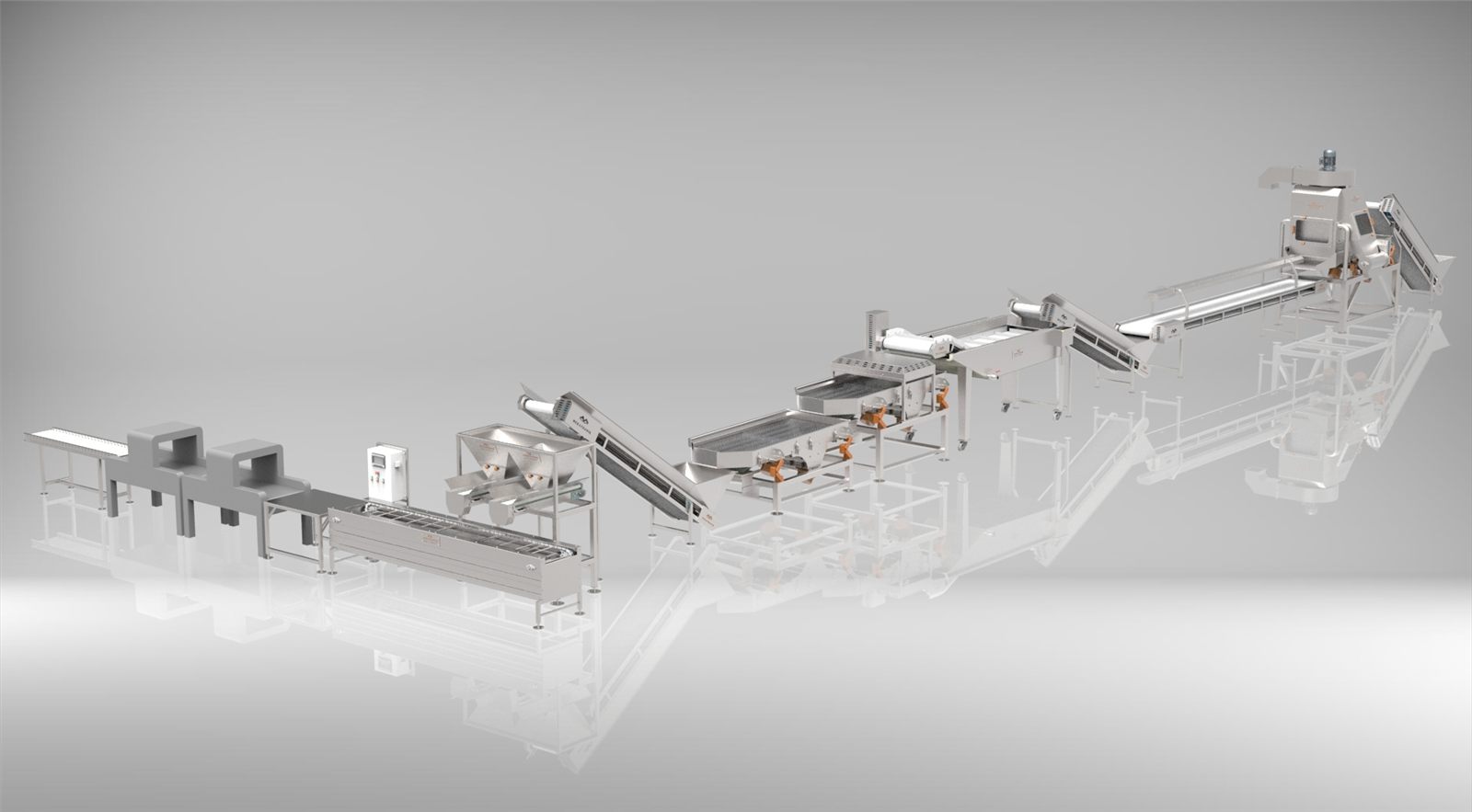
Washing a dried fruit like raisins is not a single machine but a sequence of steps, each removing a different category of contaminant. Getting the order wrong means a later step has to do the work an earlier one should have done, or a contaminant that should have been dropped early ends up carried all the way to packaging. This article walks through the sequence from soaking to dewatering and explains why each step sits where it does.
01
Why does soaking come first?
A soaking tank rehydrates the surface of the dried product and loosens dust, field debris and dried residue before any mechanical action is applied. Agitation is kept gentle at this stage; the goal is to loosen contaminants, not to abrade the product itself. Soaking time depends on the product and on how it arrives at the plant, so it is set per project rather than fixed at a single figure.
02
What does brush washing remove that soaking does not?
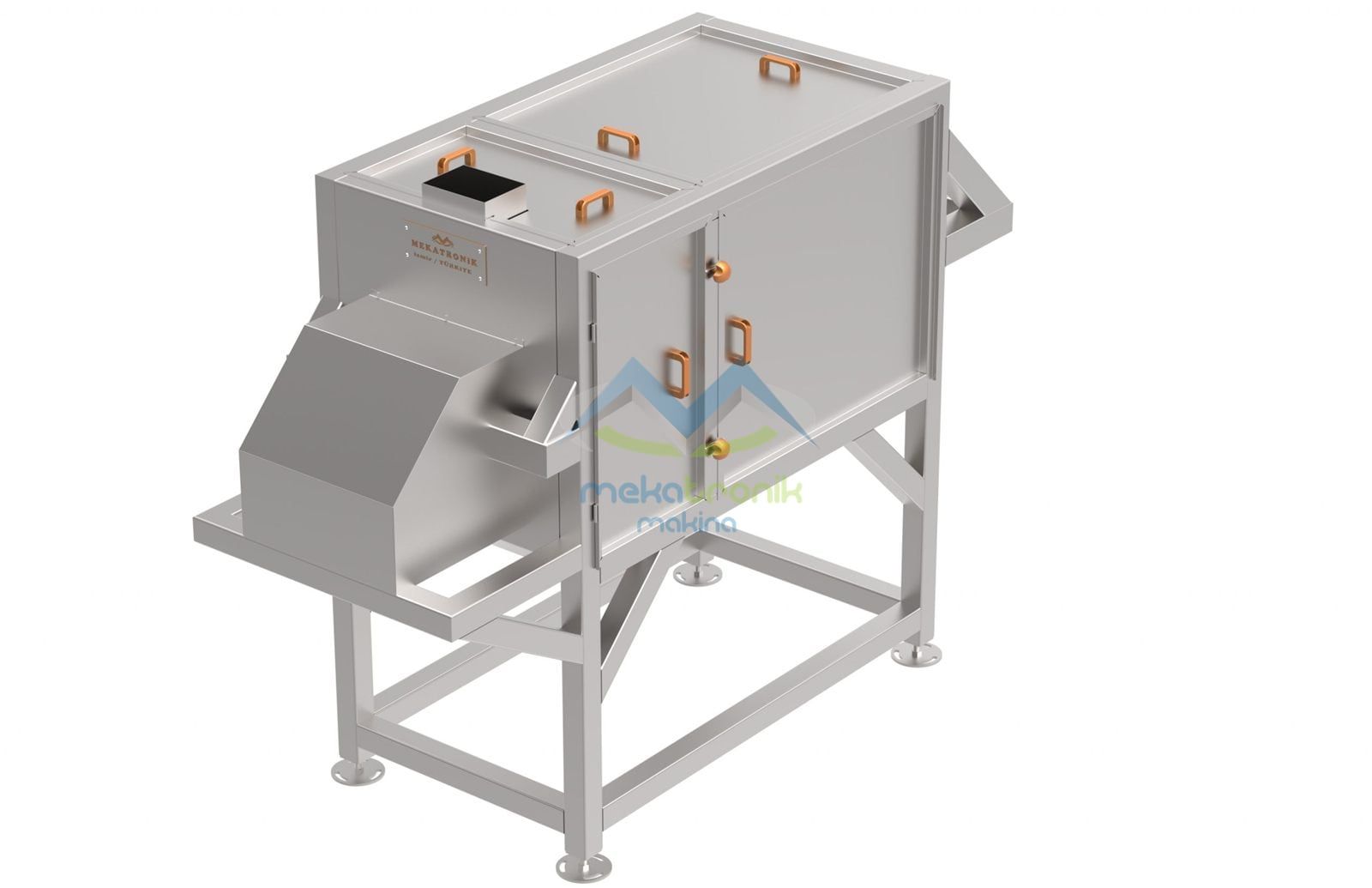
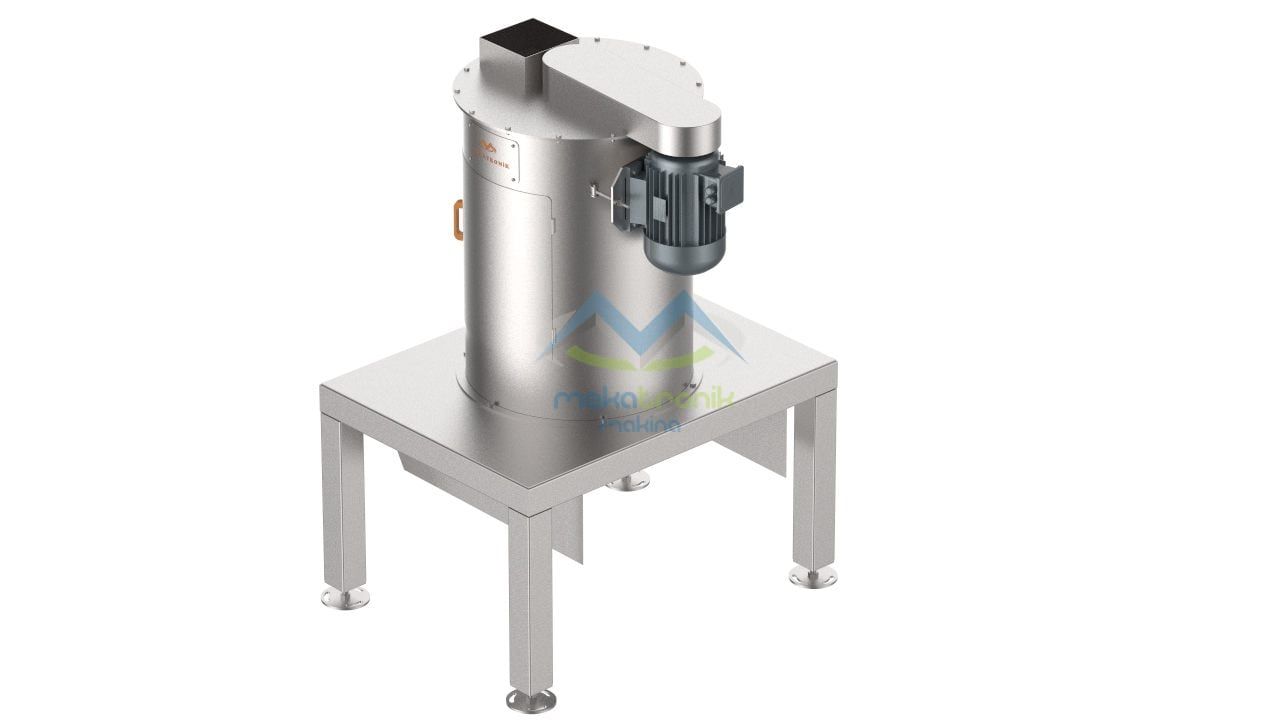
A vertical brush washing machine applies mechanical friction through rotating brushes while product moves through a water bath, removing what soaking alone loosens but does not fully detach, such as adhered dust or surface residue. Brush density and rotation speed are set according to how delicate the product is, since brushes that are too aggressive can mark the skin and reduce visual quality even if the product is still perfectly usable.
- 01Runs after soaking, while product is still fully wetted
- 02Brush contact settings are adjusted per product to avoid surface damage
- 03Water in the bath is typically recirculated through a filtration stage
- 04Throughput is matched to the soaking tank so product does not queue up between the two
03
Where does stone and sand separation fit in?
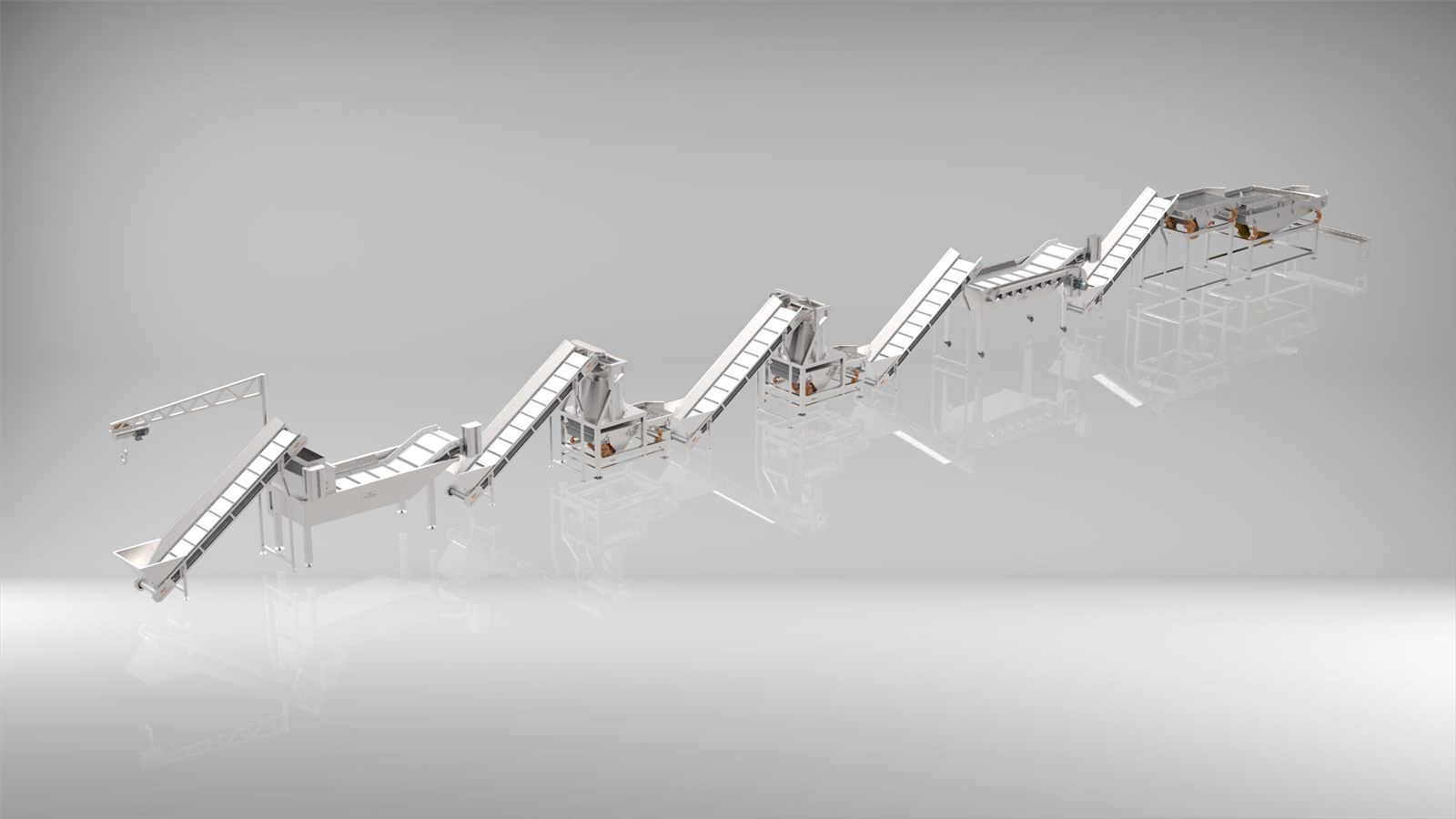
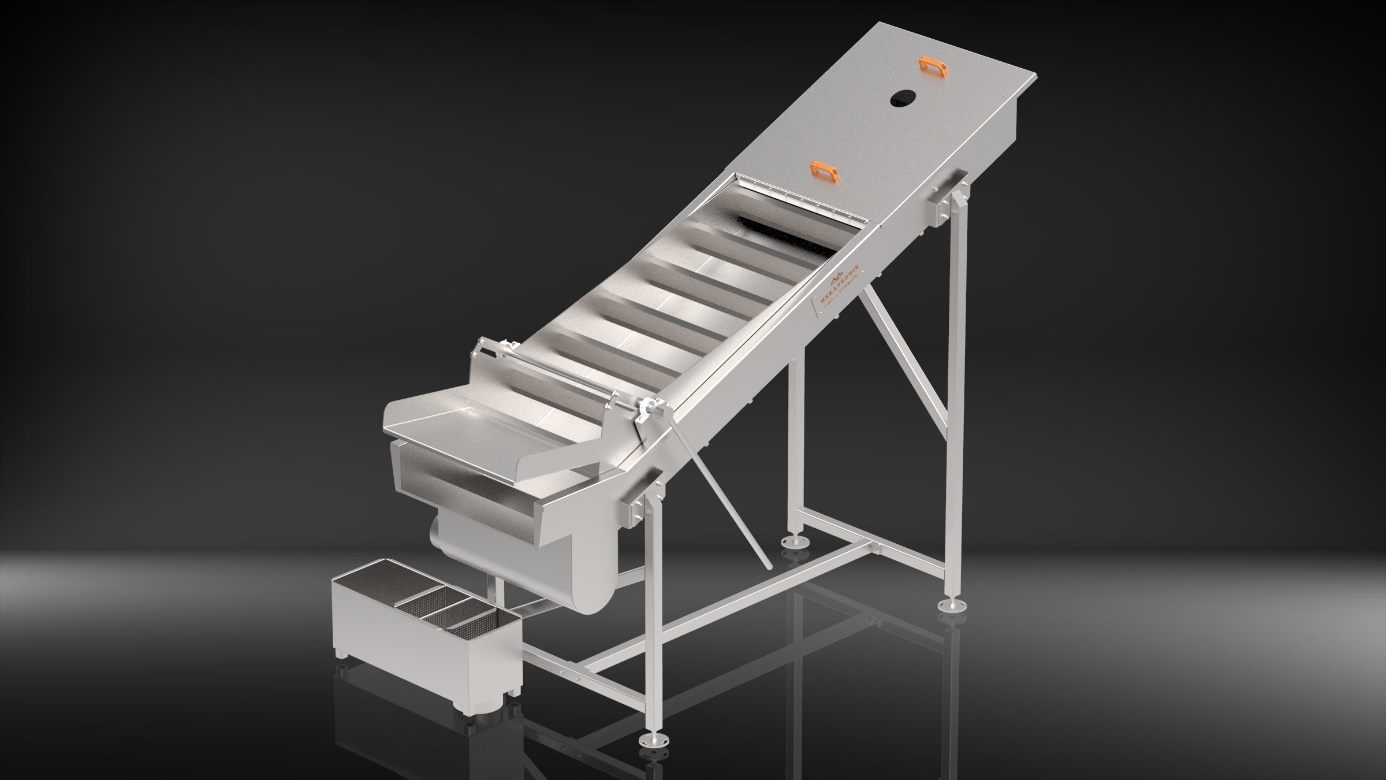
A stone and sand separation cascade uses the density difference in a water flow to let heavier stones and sand sink and drop out while the lighter product continues downstream. This step is placed after brush washing so that dust dislodged in the earlier stage does not interfere with density separation, and before dewatering so that any remaining dense contaminant does not reach the drying section.
04
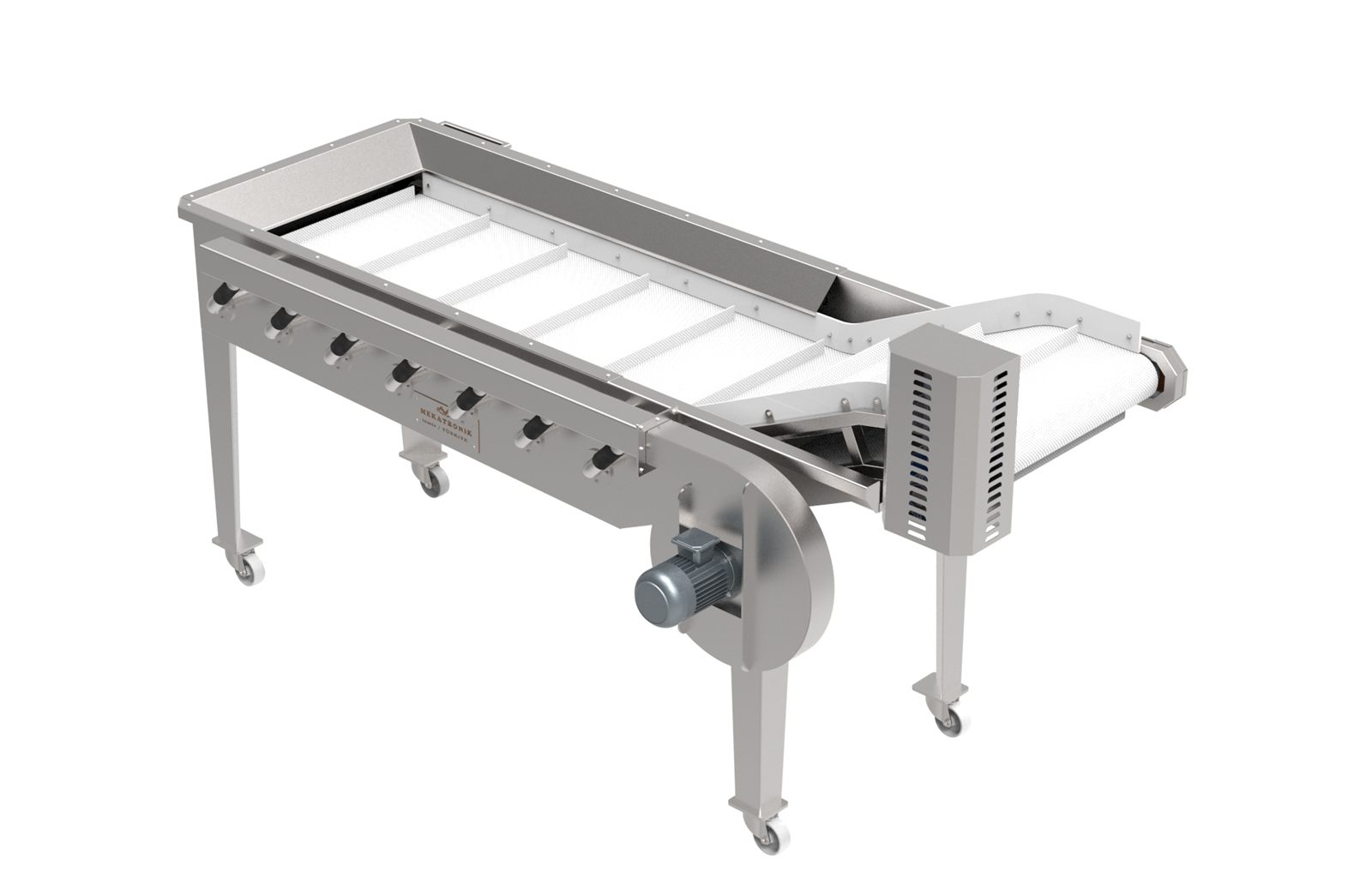
How is water removed before drying?
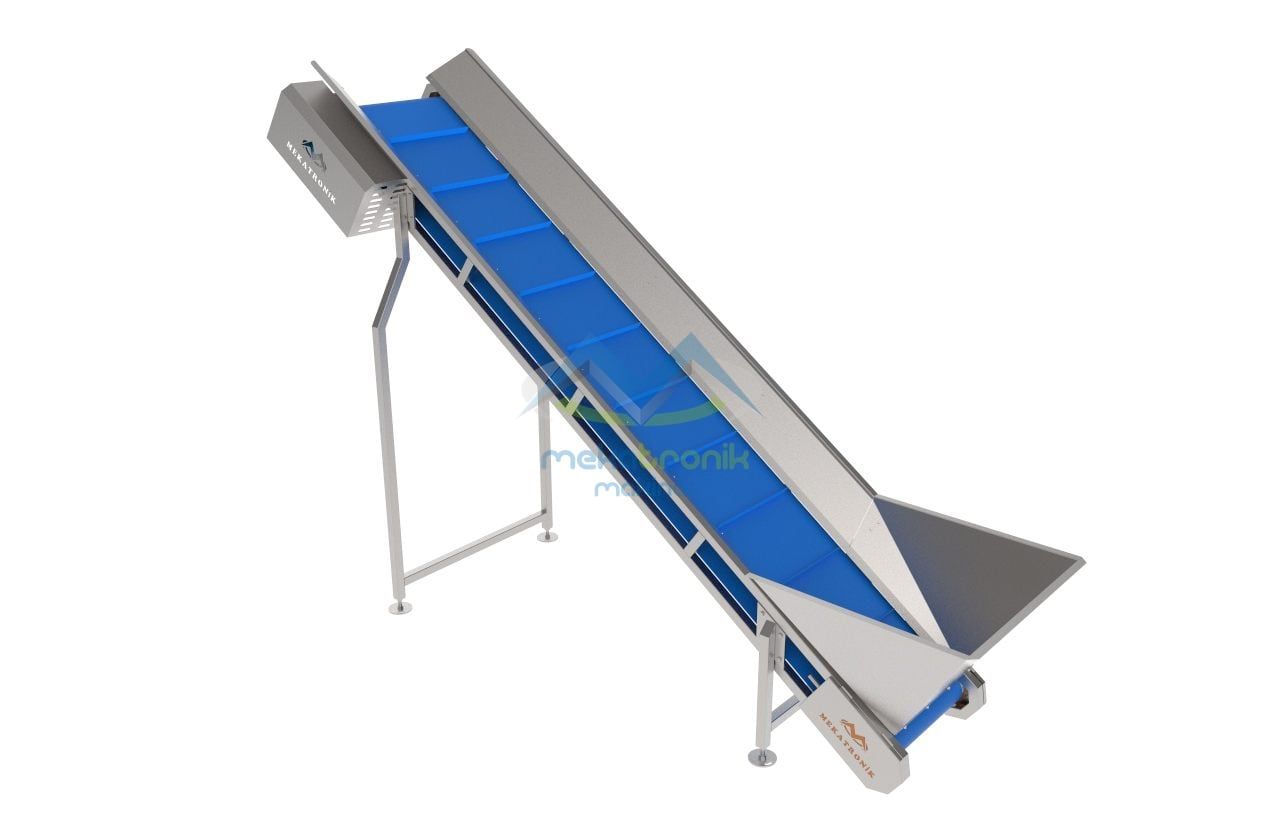
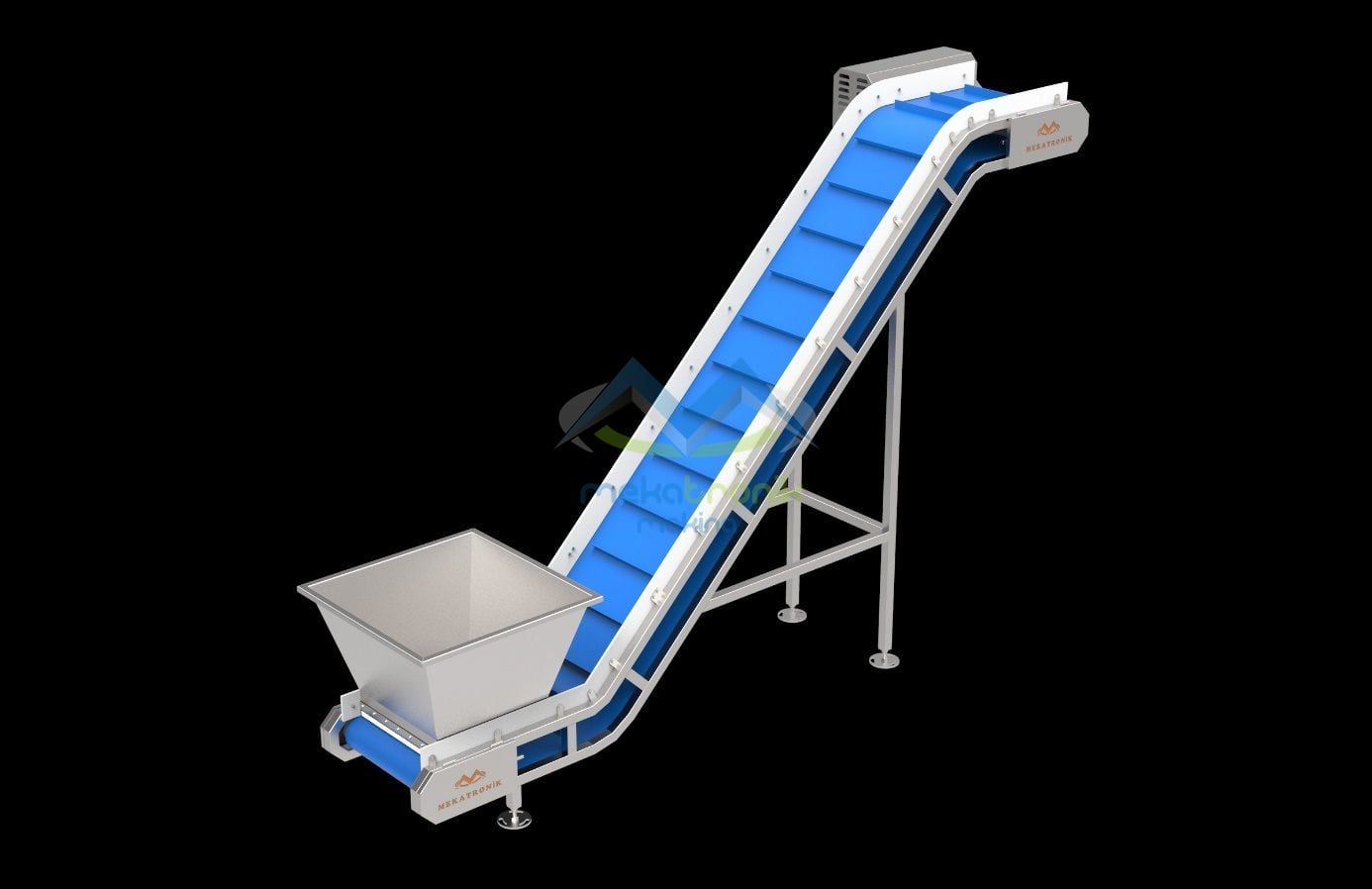
A dewatering shaker uses vibration to shed surface water from the product before it moves to drying or packaging. Reducing surface moisture at this stage matters because a dryer sized for a certain moisture load works less efficiently, and takes longer, if product arrives wetter than expected. Product-contact surfaces on dewatering equipment are AISI 304 stainless steel, moving to AISI 316 where the process calls for it.
05
What happens to the wash water itself?
Water used across soaking, brush washing and stone separation is not simply drained after a single pass; most lines recirculate it through a filtration stage that pulls out the dust and fine debris removed earlier. This keeps consumption down and keeps the water entering each stage reasonably clean, which in turn keeps the separation and washing steps working at the level they were designed for rather than fighting against water that gets dirtier over the shift.
Sequence at a glance
| Step | Main Function | Why This Order |
|---|---|---|
| Soaking | Rehydrate surface, loosen dust and debris | Prepares product before mechanical contact |
| Brush washing | Remove adhered dust and residue | Needs product already wetted from soaking |
| Stone and sand separation | Remove dense foreign matter by density | Works best once surface dust is already gone |
| Dewatering | Shed surface water before drying | Reduces moisture load reaching the dryer |
06
Next step
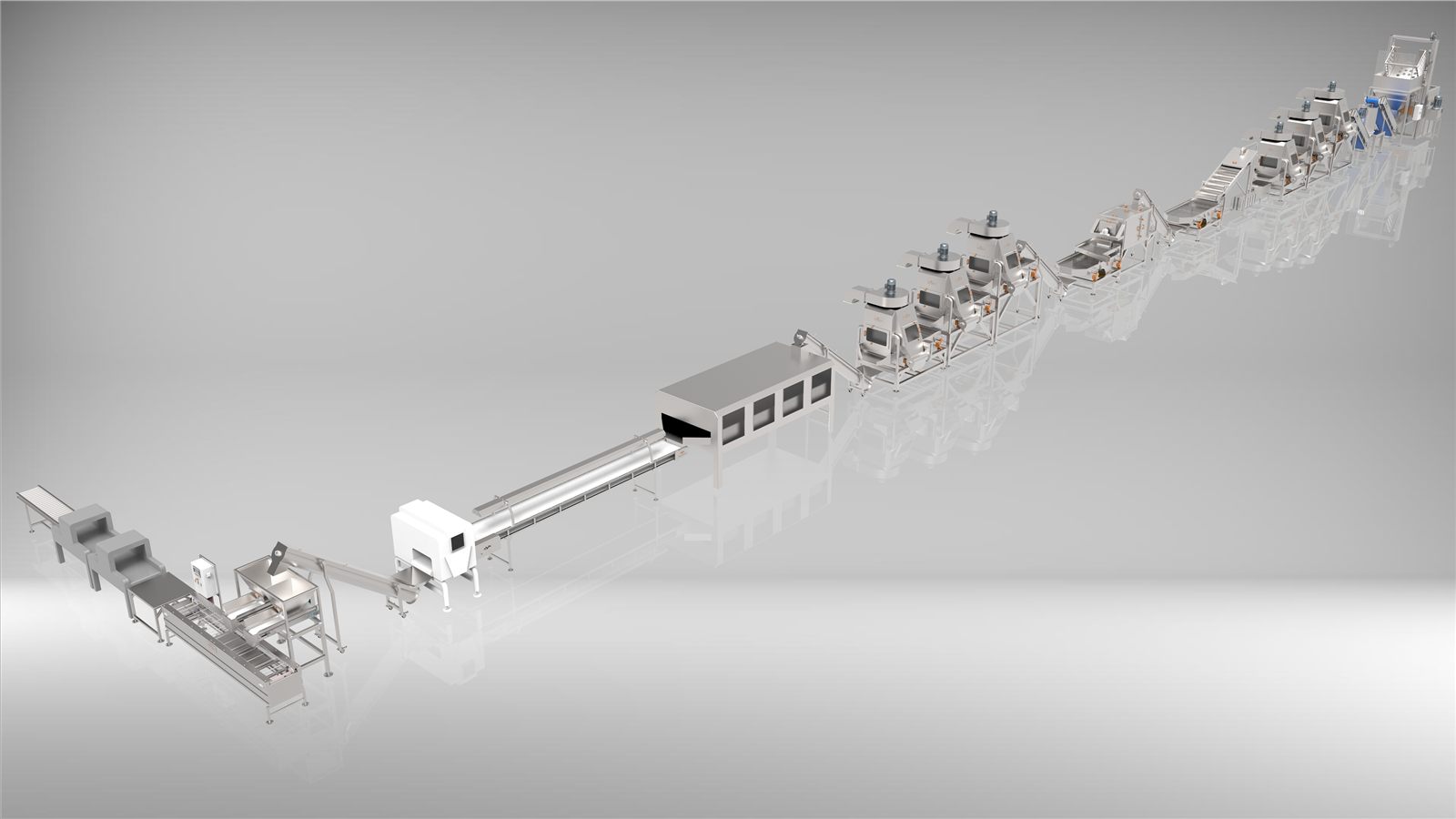
This sequence is the washing section of a full raisin processing line's washing and packaging stage; equipment sizing and layout depend on your product's condition on arrival and target throughput. Get in touch through our quote page to size a washing sequence for your line.