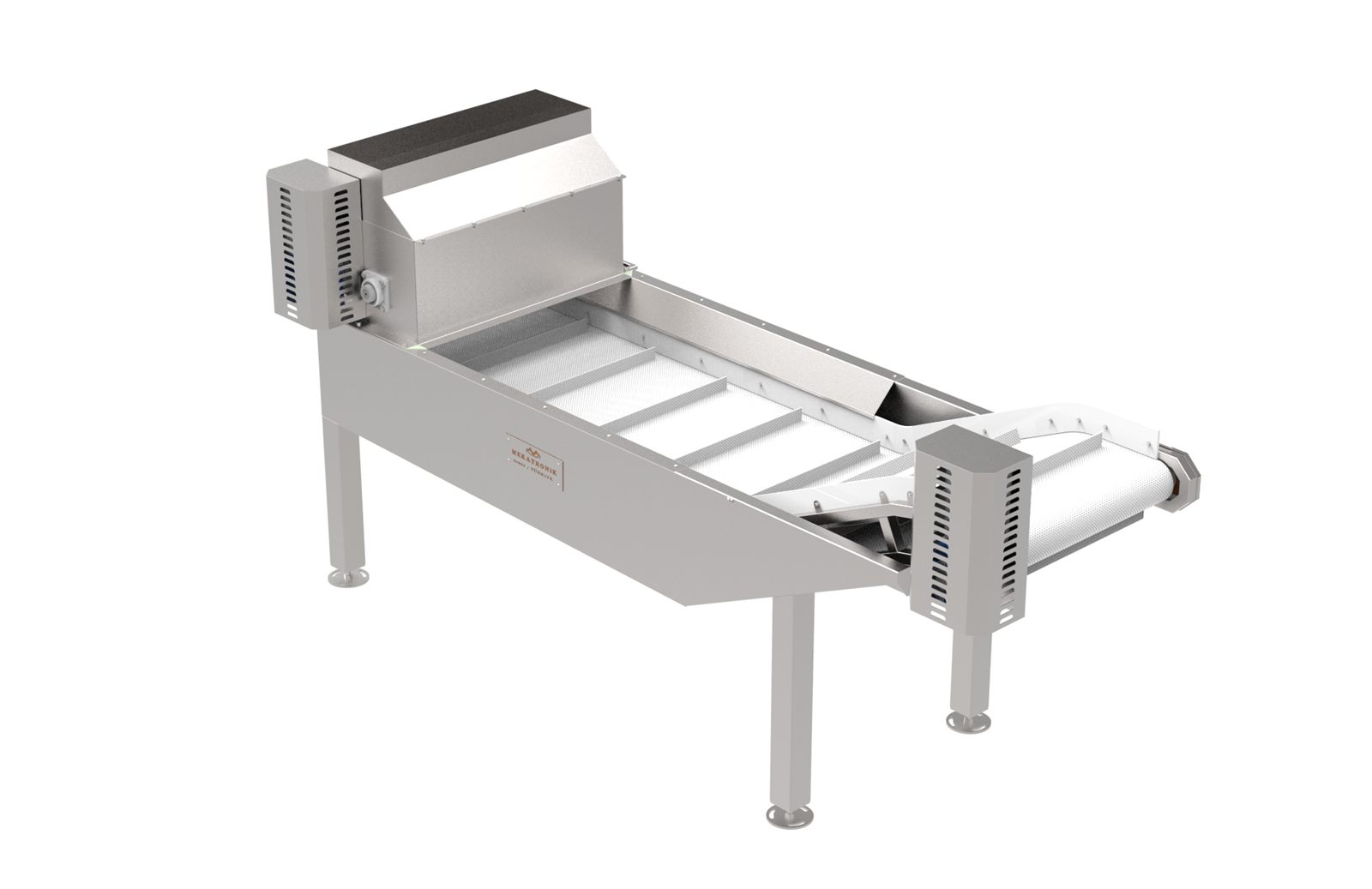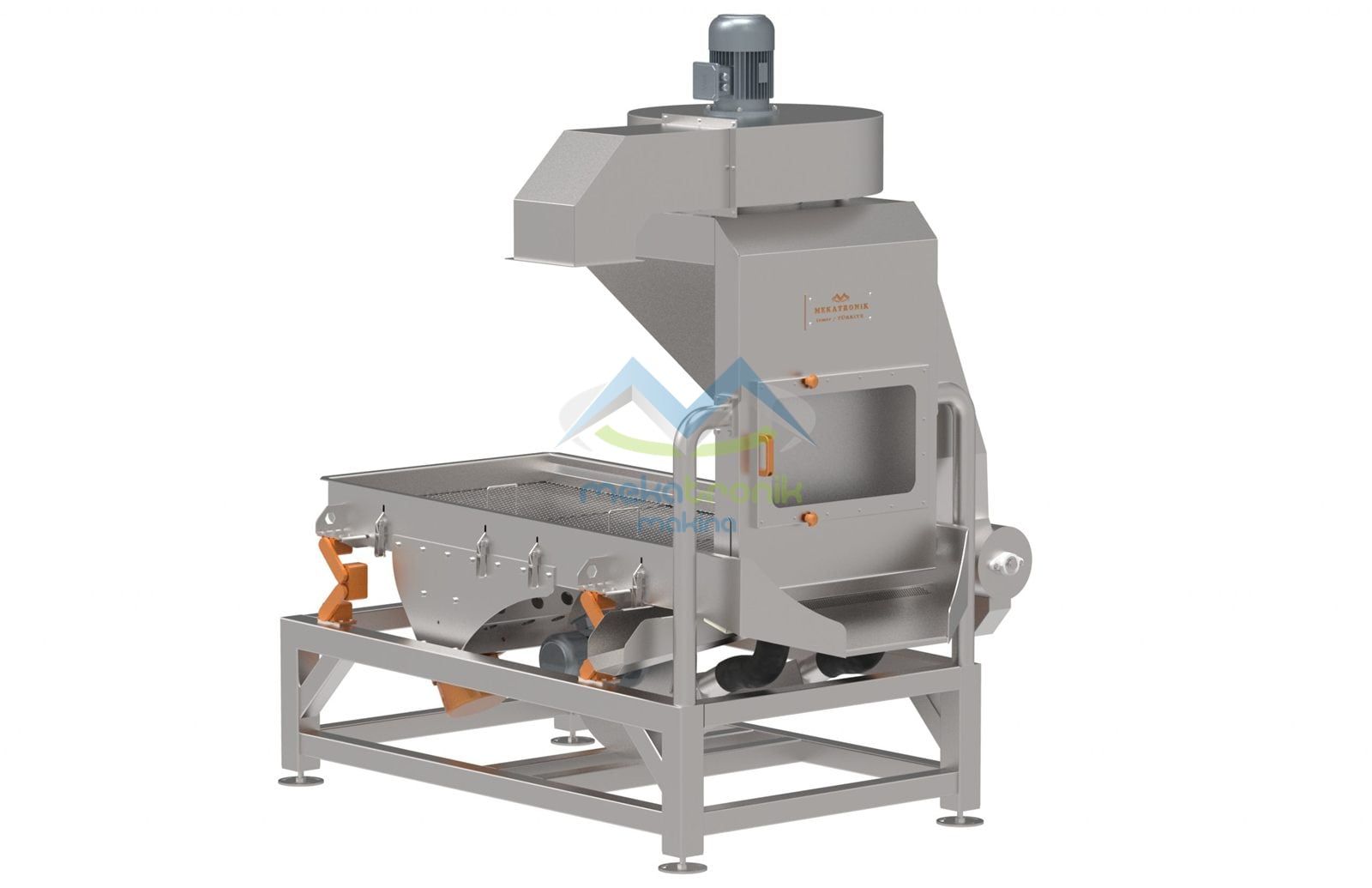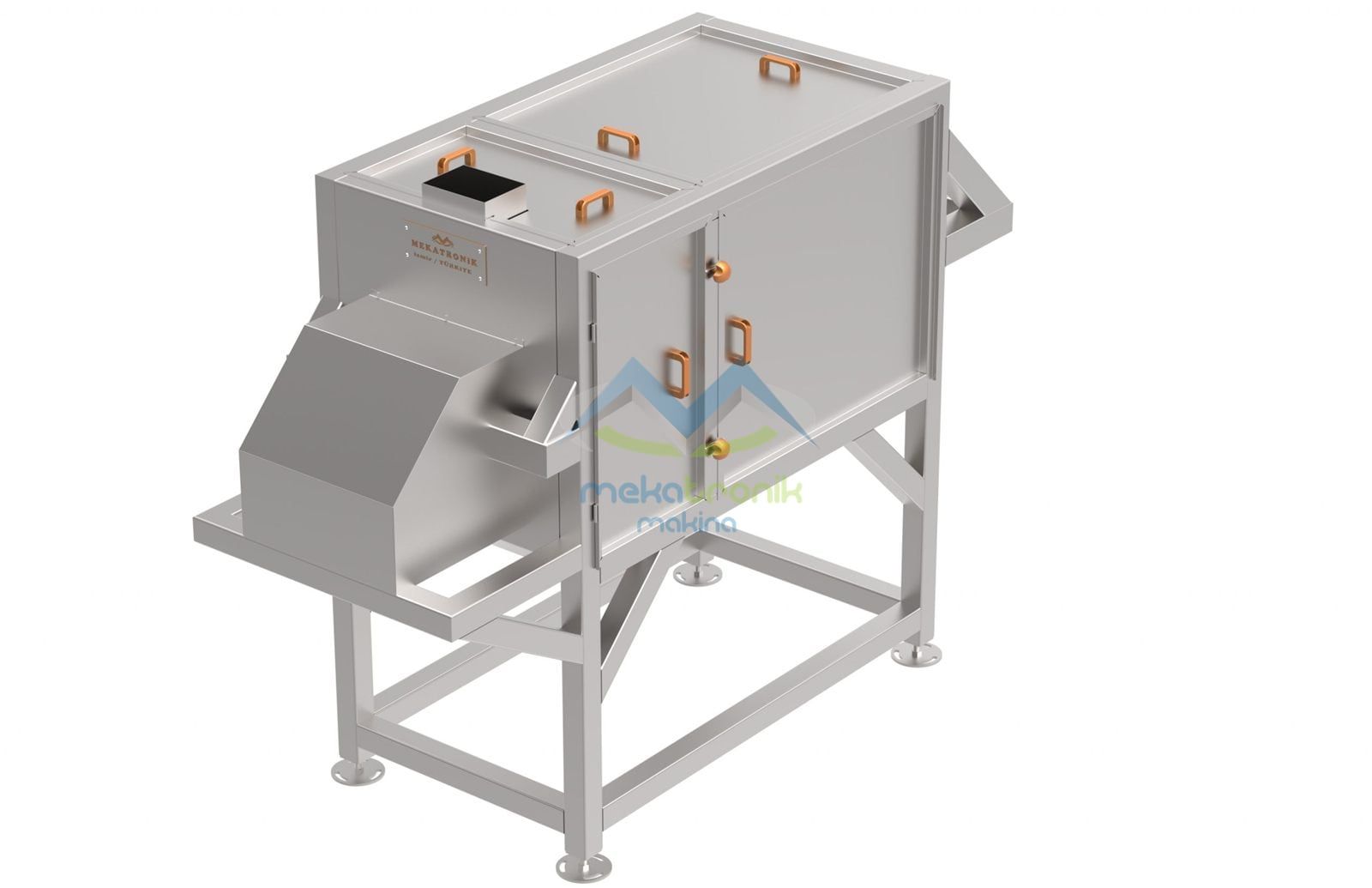
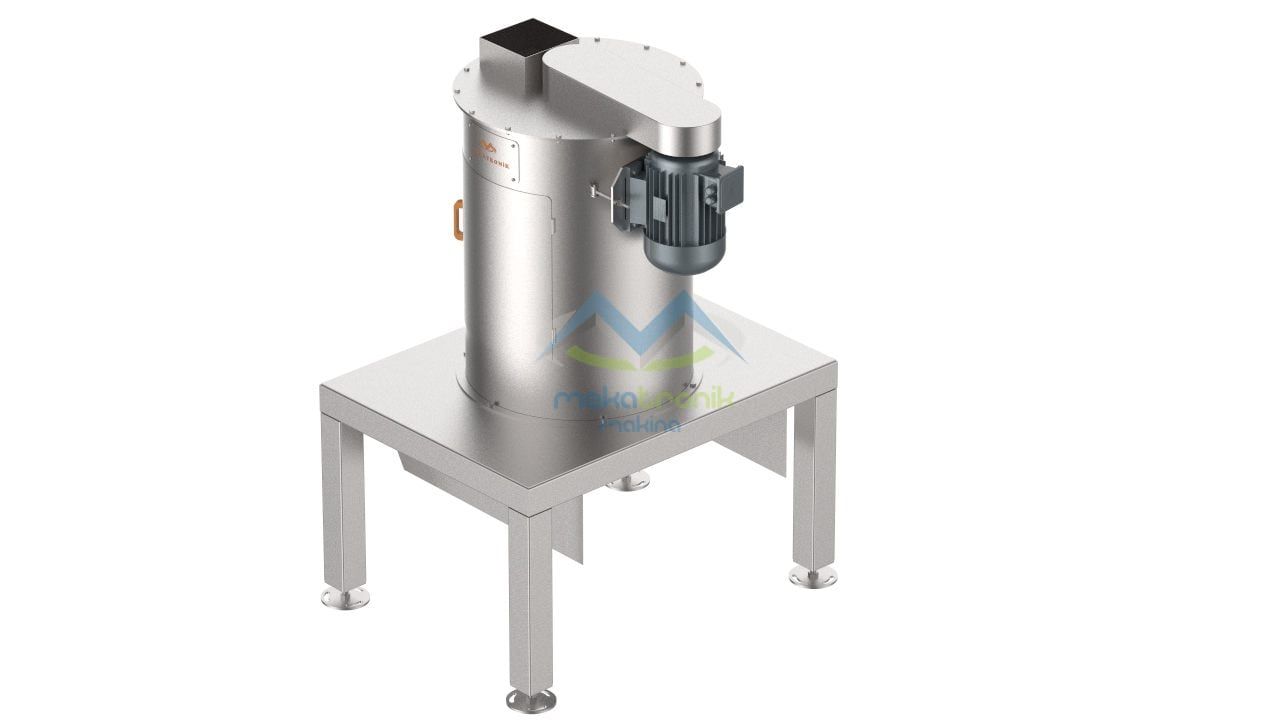
Dried raisins and dates often reach the plant caked together in blocks, straight out of the crate. A block cannot go to washing, sizing or weighing as it is; the fruit has to be separated first. On a dry line this is the job of the clumped product separating machine, a vertical breaker built for exactly this task. Below we explain why blocks form, how the machine works and where it sits in the line.
01
Why does dried fruit clump?
The surface of dried fruit carries a sticky sugar layer. When crates stand stacked for a long time, weight and storage conditions bind the fruit together, and changes in humidity and temperature strengthen the bond. When the crate is emptied, the product comes out as a block rather than as loose fruit. Because how hard a block is depends on the product, the storage time and how full the crate was, no fixed setting is assumed when specifying the machine. A product sample and the target capacity are reviewed together.
02
How does the vertical breaker work?
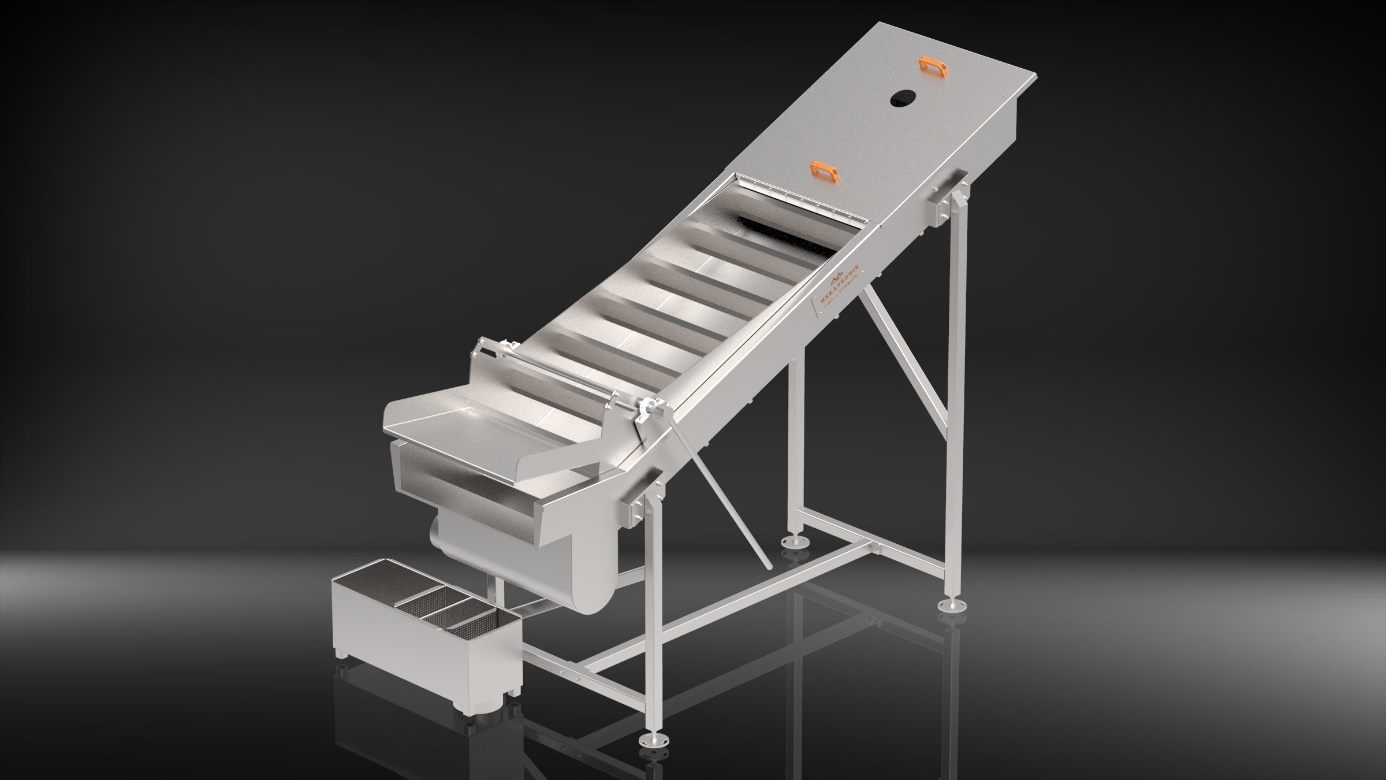
The machine uses a vertical block-breaking system. Blocked product is fed from the top, and a specially designed rotary breaker inside splits the block and separates the fruit from one another. The drive is a geared motor. The aim is not to crush the fruit but to release it along the surfaces where it stuck, so the breaker design and motor rating are fixed in the project according to the product being processed.
- 01The body and product-contact surfaces are AISI 304 stainless steel; AISI 316 is optional depending on the process.
- 02The motor, gearbox and electrical equipment are standard parts in their own class and are not covered by the stainless claim.
- 03Adjustable feet anchor the machine to the floor and reduce shaking during operation.
- 04Control can be PLC-based or stand-alone; the supply is 380 V / 50 Hz.
- 05The structure is easy to wash and clean.
03
Where does it sit in the line?
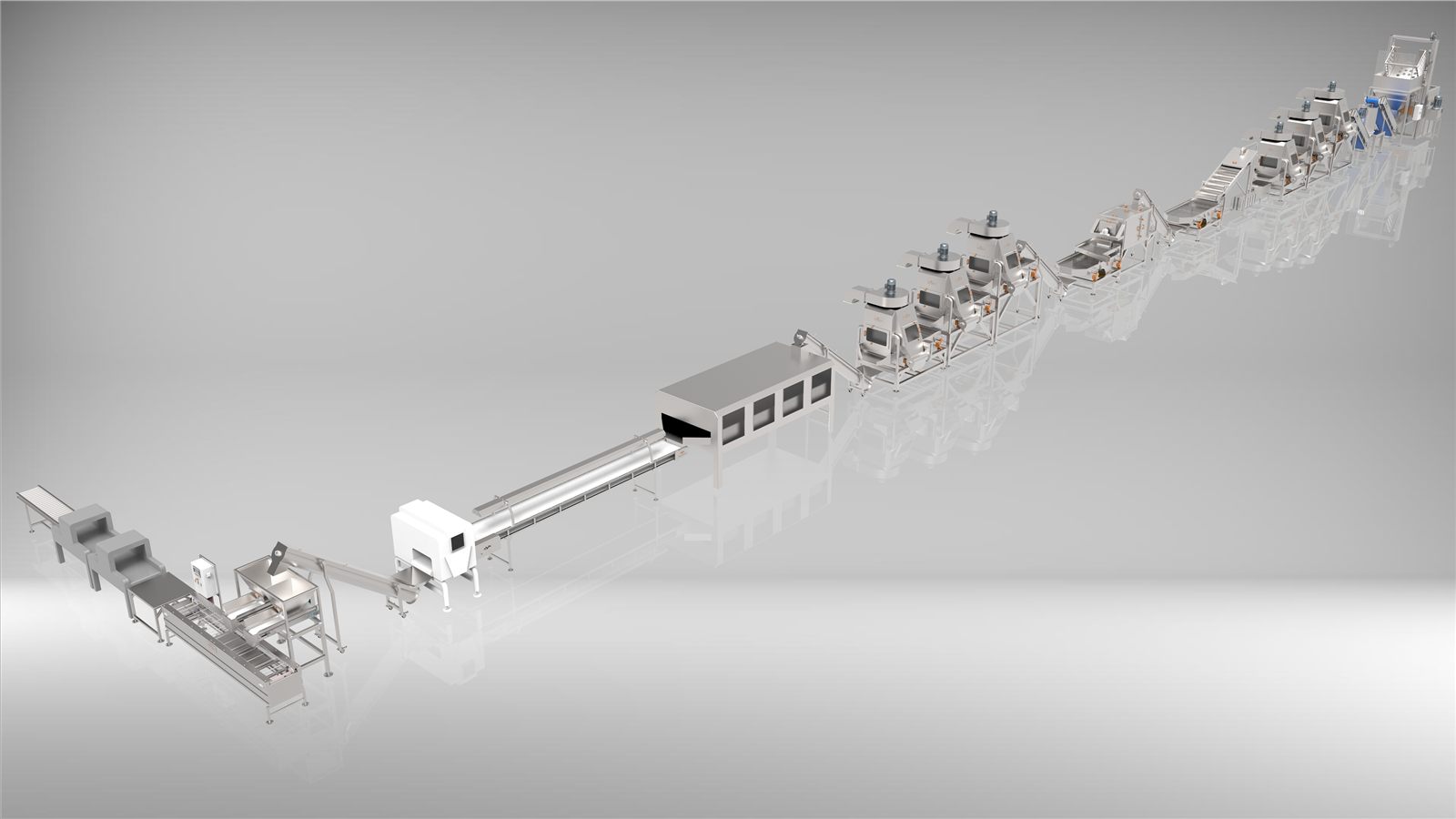
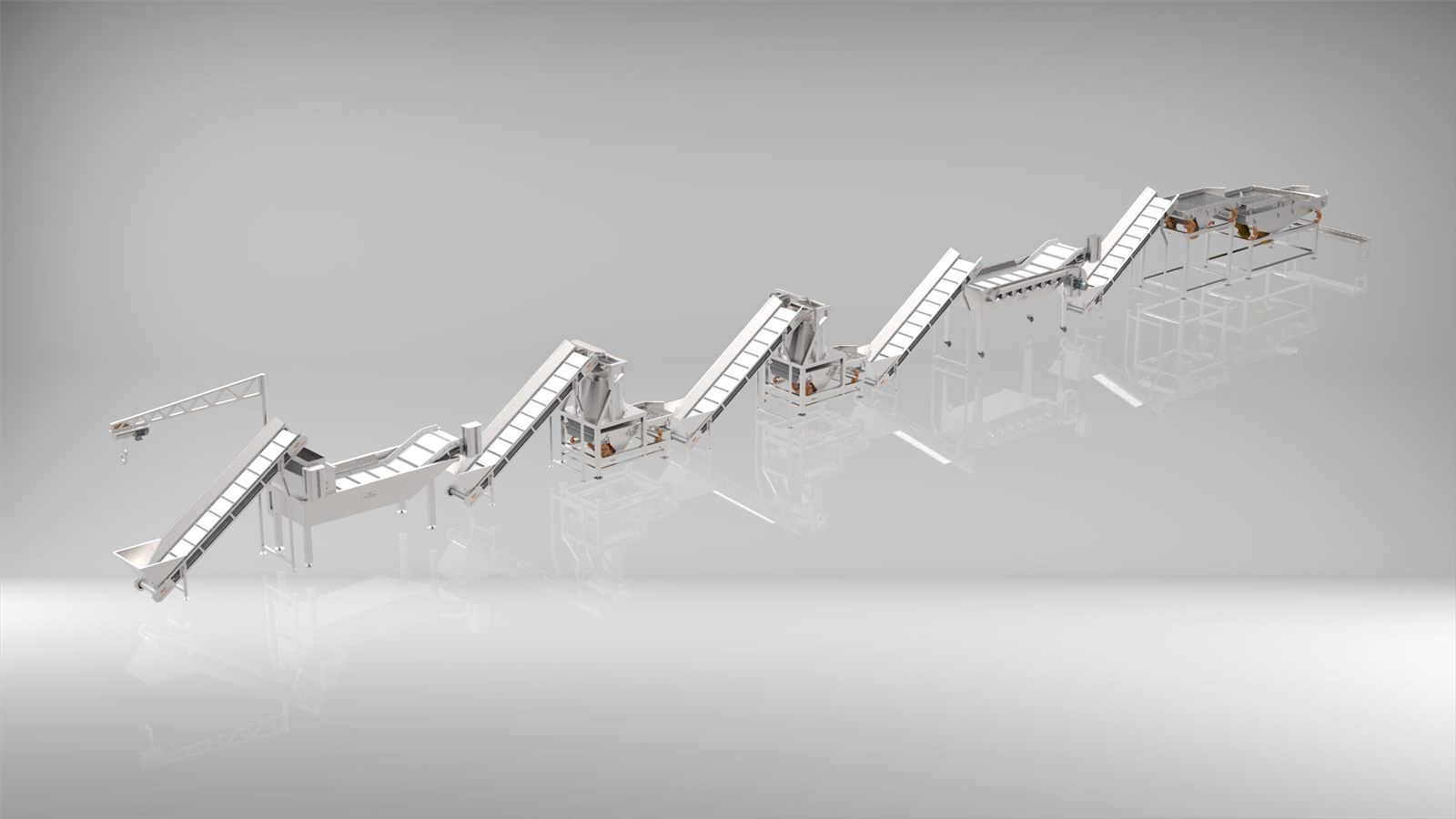
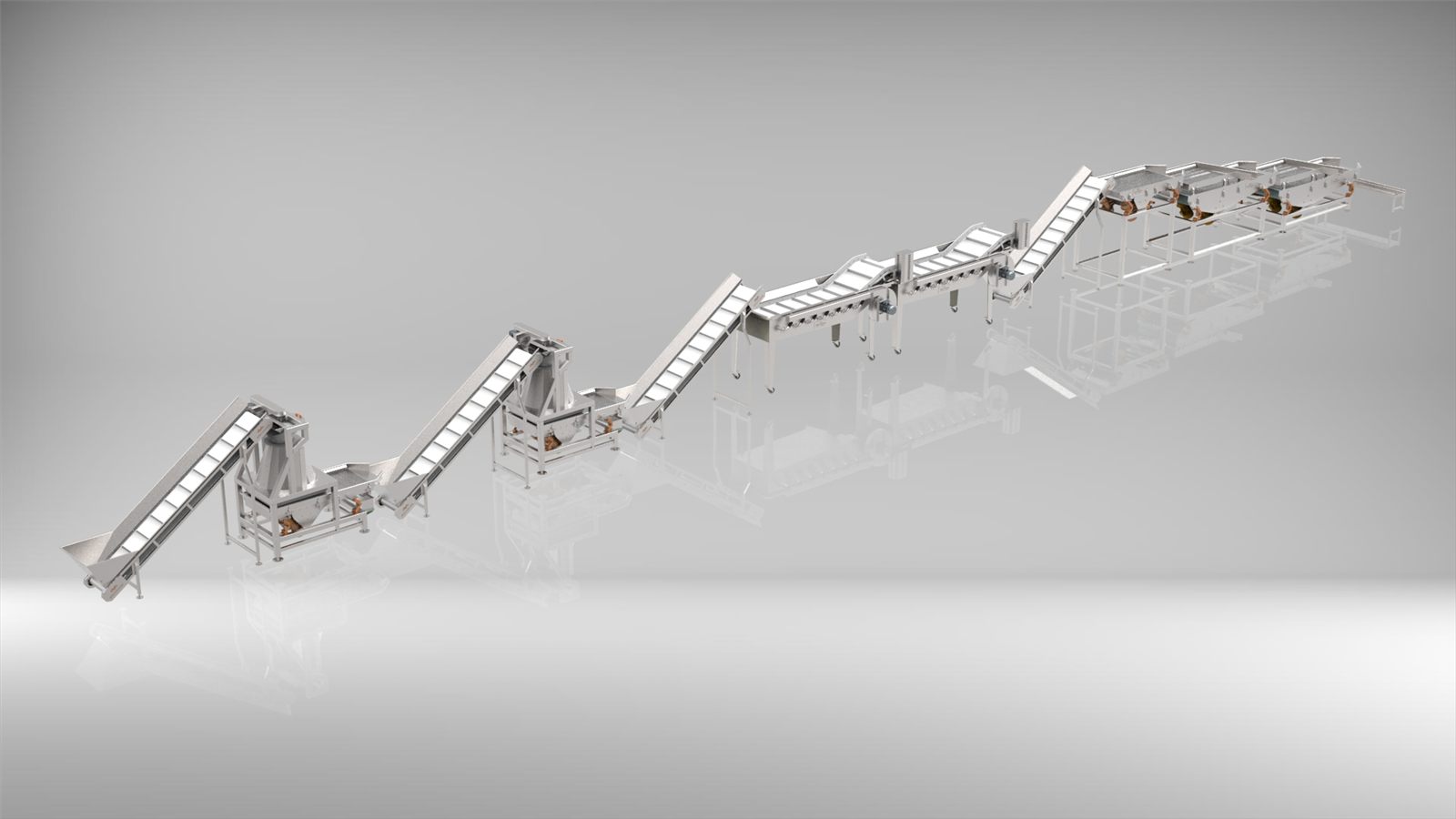
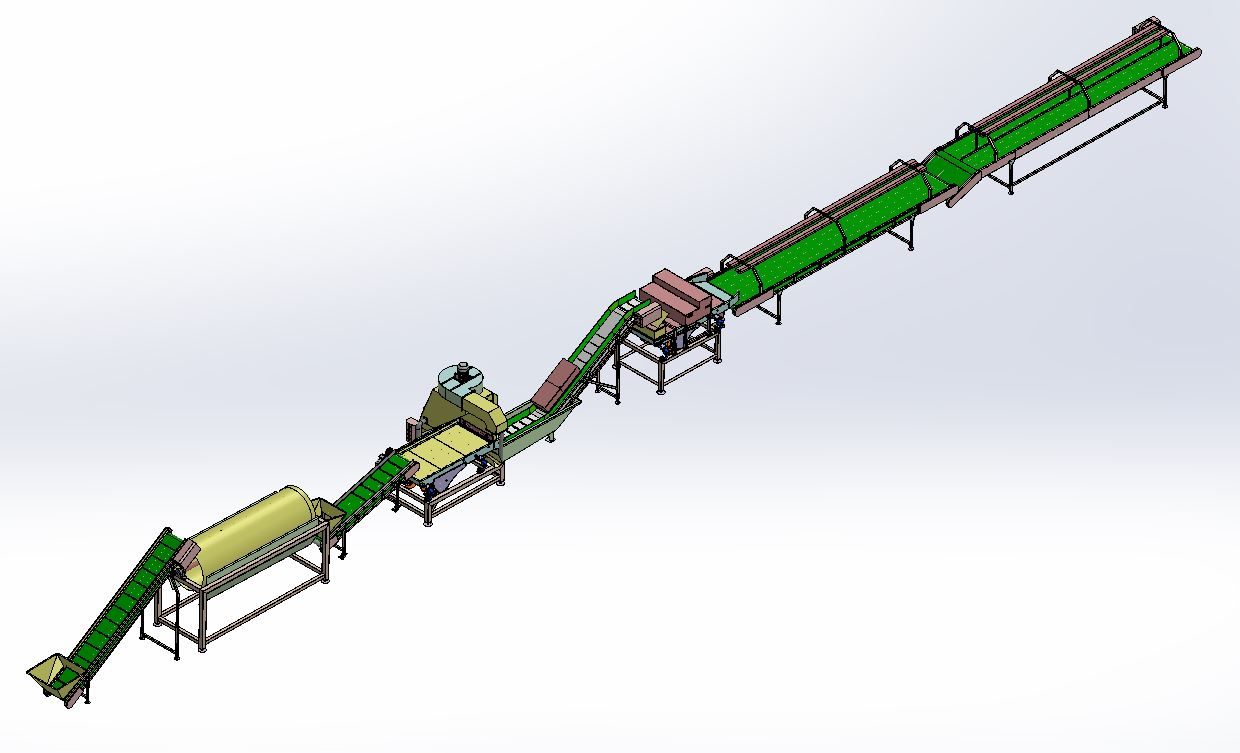
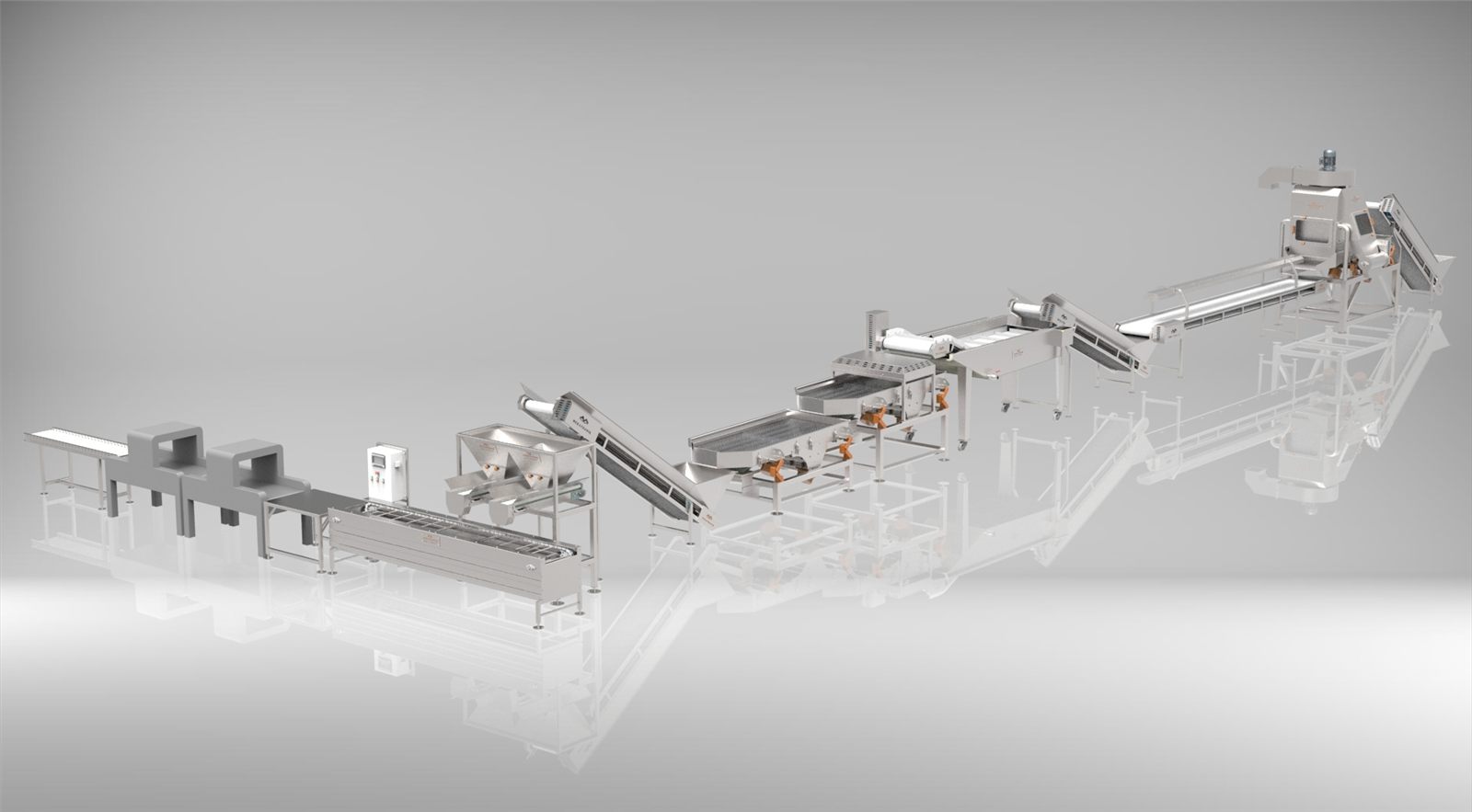
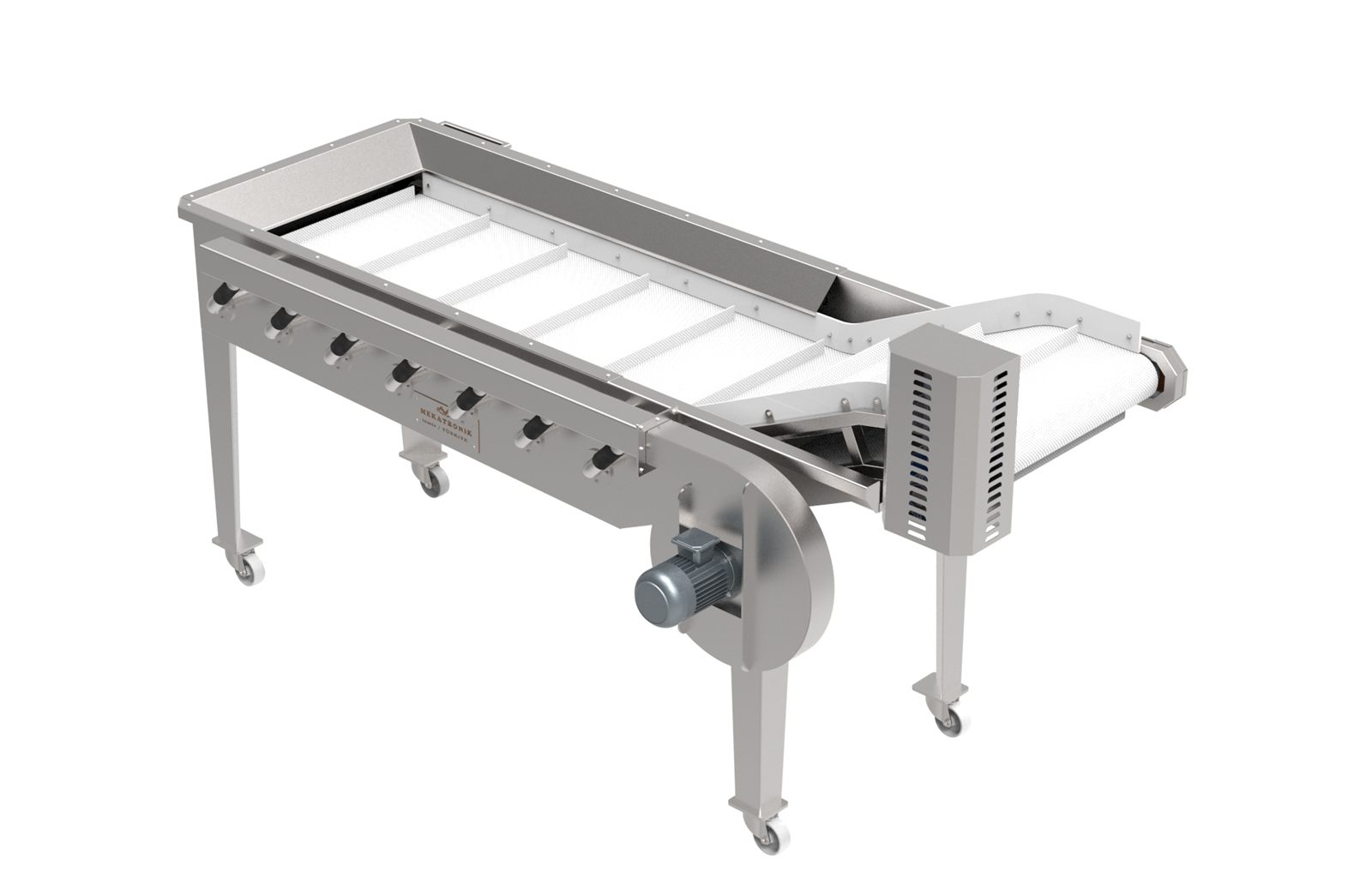
On a raisin line the order is crate tipping, dosing, a transfer conveyor, and then block breaking. At the machine outlet the fruit is already loose and can move to the next station. On many lines that station is the screening shaker machine with aspiration unit, which screens out stones and soil and pulls light material such as leaves and stems away by aspiration. If required, the separating machine can be mounted directly on top of the aspirated shaker, combining two steps in one station. The same logic applies to the date line: block breaking and dosing come first, washing follows.
The order matters. If a block enters washing unopened, it stays together in the water, the wash cannot reach every fruit, and a hand-sorting load appears later.
04
Dry breaking or wet block opening?
Not every stuck product is opened the same way. On raisin and date lines the block is broken mechanically in a dry environment. On dried apricot and dried fig lines the block is opened in a wet process instead, using a wet-process block opening conveyor. The comparison is as follows.
| Criterion | Clumped product separating machine | Wet-process block opening conveyor |
|---|---|---|
| Medium | Dry | In water |
| Working system | Vertical block breaking, rotary breaker | Block opening on perforated modular belt |
| Used on lines | Raisin, date | Dried apricot, dried fig |
| Drive | Geared motor | Geared motor |
05
What to check at the outlet during commissioning?
Whether the machine does its job well shows in the product at the outlet. During trials and the first shifts, the following points are checked by eye. They are not measured values but observations against which the plant can set its own acceptance criteria.
- 01Whether fruit still stuck together, or small clusters, remains at the outlet.
- 02Whether fruit leaves the breaker crushed or with torn skin.
- 03Whether the product moves on to the next station (shaker or washing) in a steady flow or piles up at the outlet.
- 04Whether the machine tends to clog on a humid, sugary batch.
- 05Whether the shaking during operation is acceptable once the adjustable feet have fixed the machine to the floor.
Product moisture and the sugar film vary from batch to batch. The same machine can therefore behave differently on different incoming batches, and the breaker and feed settings are planned in the project to cover that difference.
06
How are cleaning and maintenance handled?
Sugary product builds up on internal surfaces and hardens by the next shift. Because the machine is easy to wash and clean, washing is planned at product changeover and at the end of a shift. AISI 304 on the product-contact surfaces makes work with cleaning water and detergent easier. The motor, gearbox and electrical parts should not be washed directly with water; how they are protected is settled with the plant when the line is installed. Bearing and gearbox maintenance intervals follow the manufacturer information of the part used.
07
What do we need to quote?
- 01Product type and variety, and how hard the blocks arrive.
- 02Target hourly or daily capacity.
- 03The station after block breaking: aspirated shaker or straight to washing.
- 04Plant dimensions and the direction of the existing line.
- 05Whether AISI 316 is needed on contact surfaces.
Capacity, motor rating and price vary by project; exact values are confirmed in the quotation. Next step: send your product, target capacity and plant dimensions through the quotation page and we will reply with a station list and lead time.