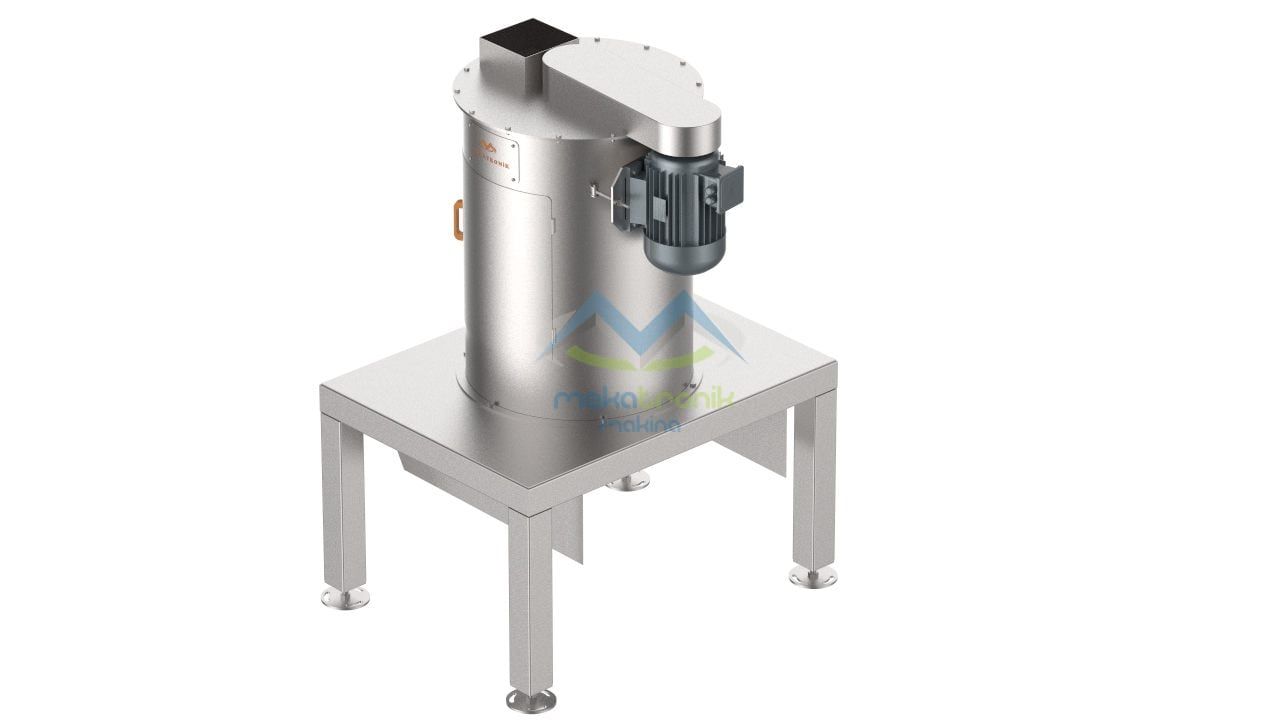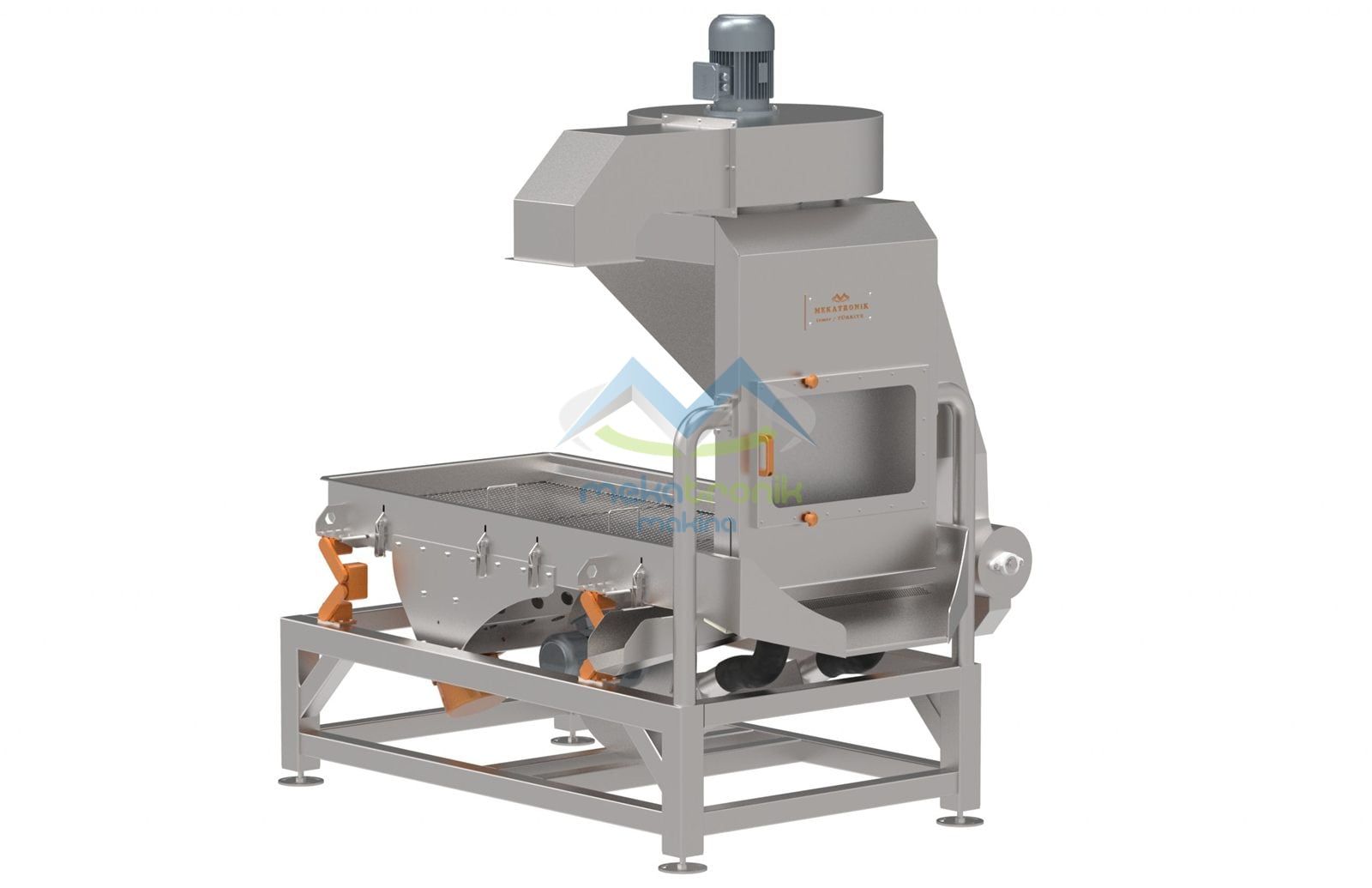
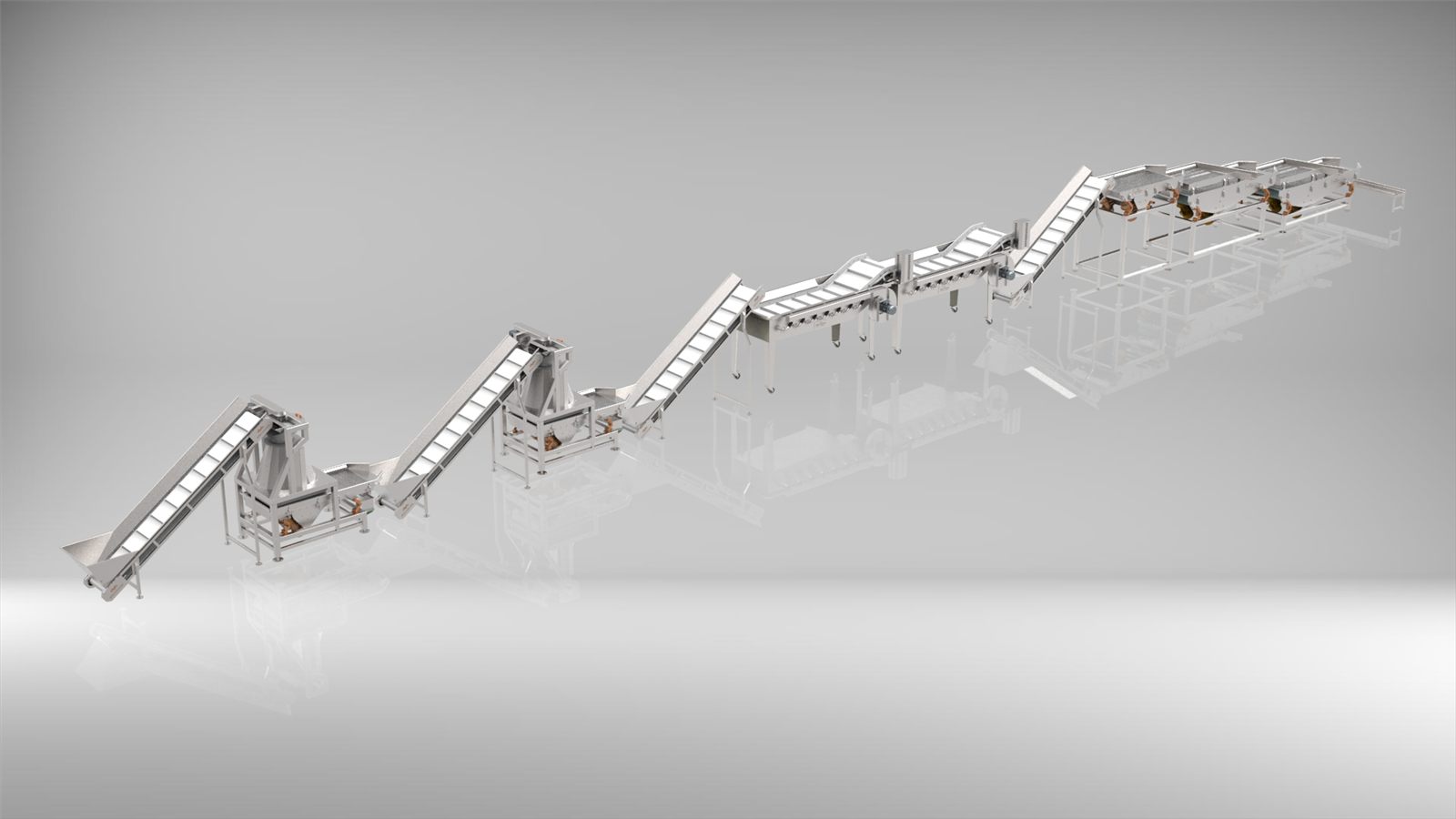
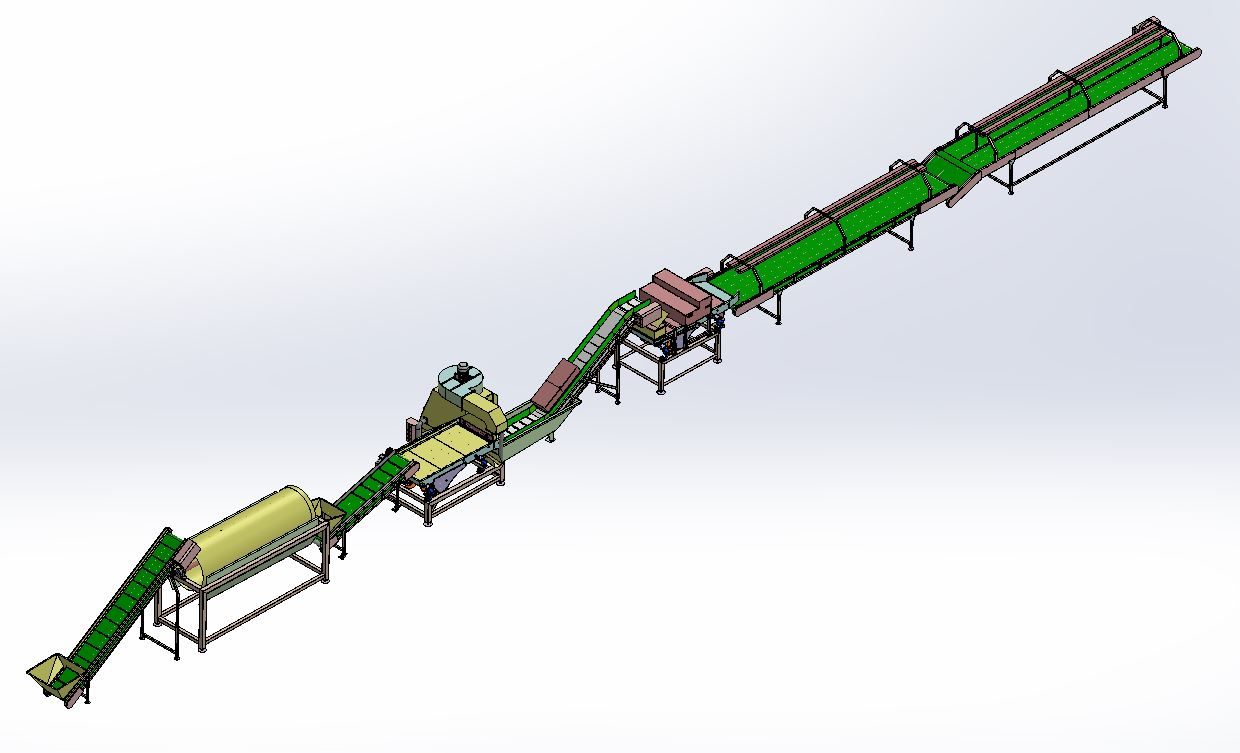
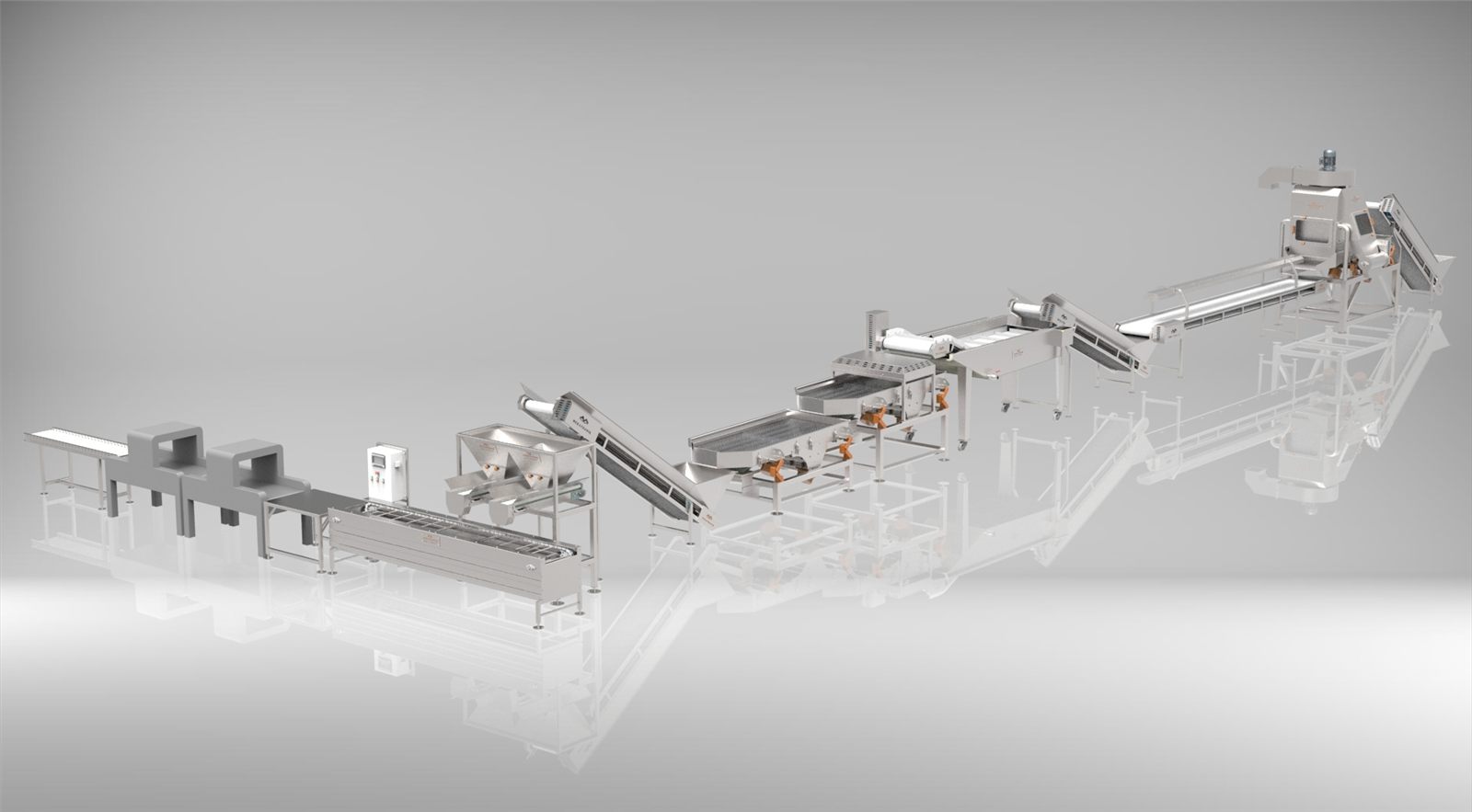
Dried fruit that arrives at a plant can carry more than dust and stems: stones, sand and gravel travel in the same crates. For a buyer exporting to the EU or to other regulated markets, a hard fragment in a retail pack is a complaint at best and a recall at worst. A stone and sand separation cascade deals with this inside the washing flow, using water instead of a second dry station.
01
How does water separate heavy foreign matter from fruit?
The principle is density. Dried fruit is light enough to be carried by moving water, while stones, sand and gravel are clearly heavier. The product drops onto the cascade together with water; as the stream moves on, the fruit follows the flow and the heavy pieces do not, so they are separated out. According to the machine record, product conveying is done by water flow and the cascade is fed with continuous clean water.
Separation here does not rely on a mechanical force that could bruise the fruit. The same stream that washes the product also removes the heavy matter, so no extra transfer or station is needed for this step.
02
How is this different from dry screening?
Dry screening works on size. A pebble the same size as a raisin passes the screen and travels on with the product. In water the deciding factor is density, and a pebble of the same size is far heavier than the fruit, so it does not follow the stream. The two methods complement each other: coarse debris and stems are screened first, and heavy matter is separated during washing.
The cascade works through water moving down in steps. Each step carries the product forward while giving heavy pieces a chance to drop out. Water flow, slope and the number of steps are tuned to the product; no general figure would be honest here, and the exact values are fixed in the quotation for each project.
03
Where does the cascade sit in the line?
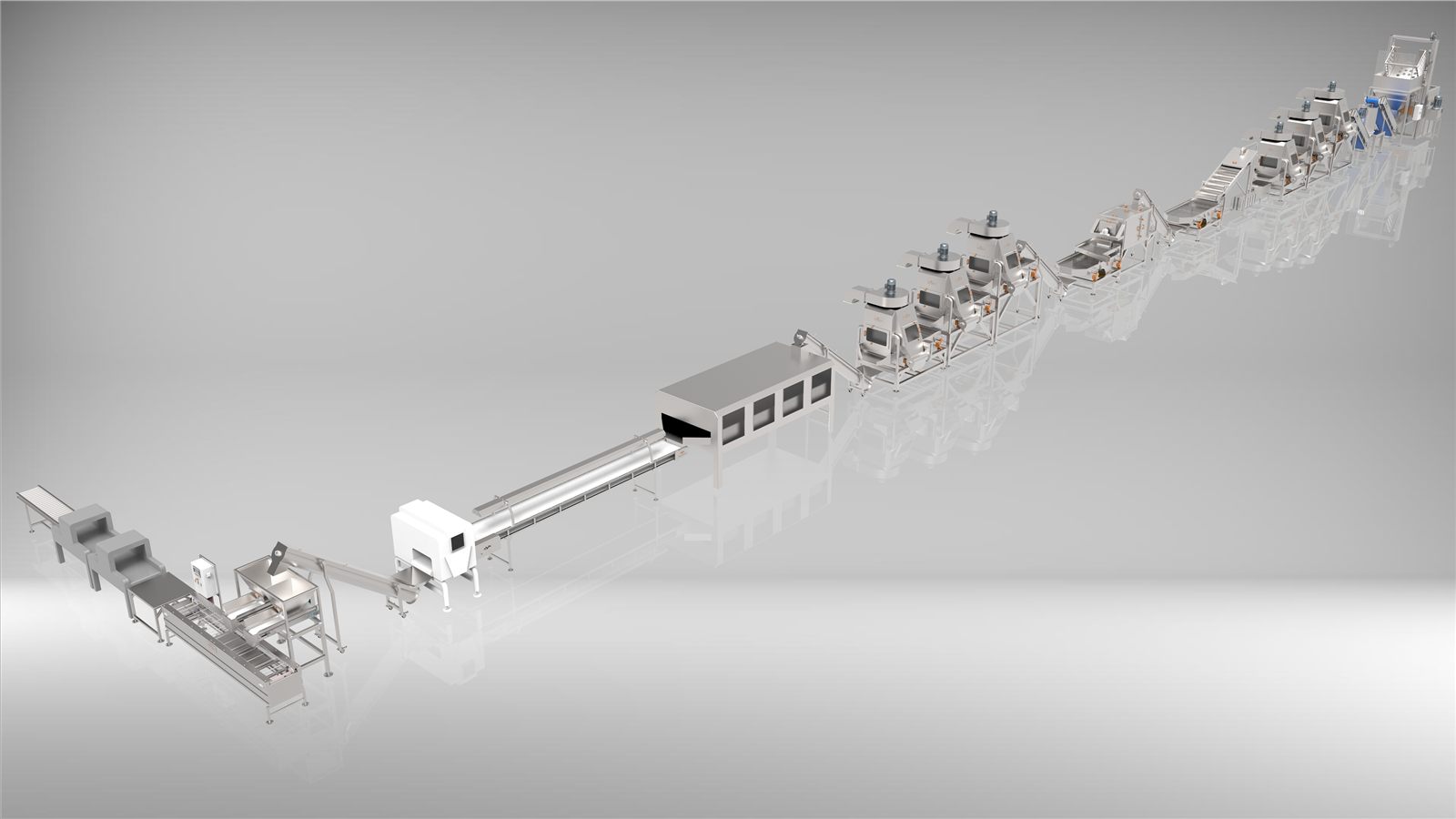
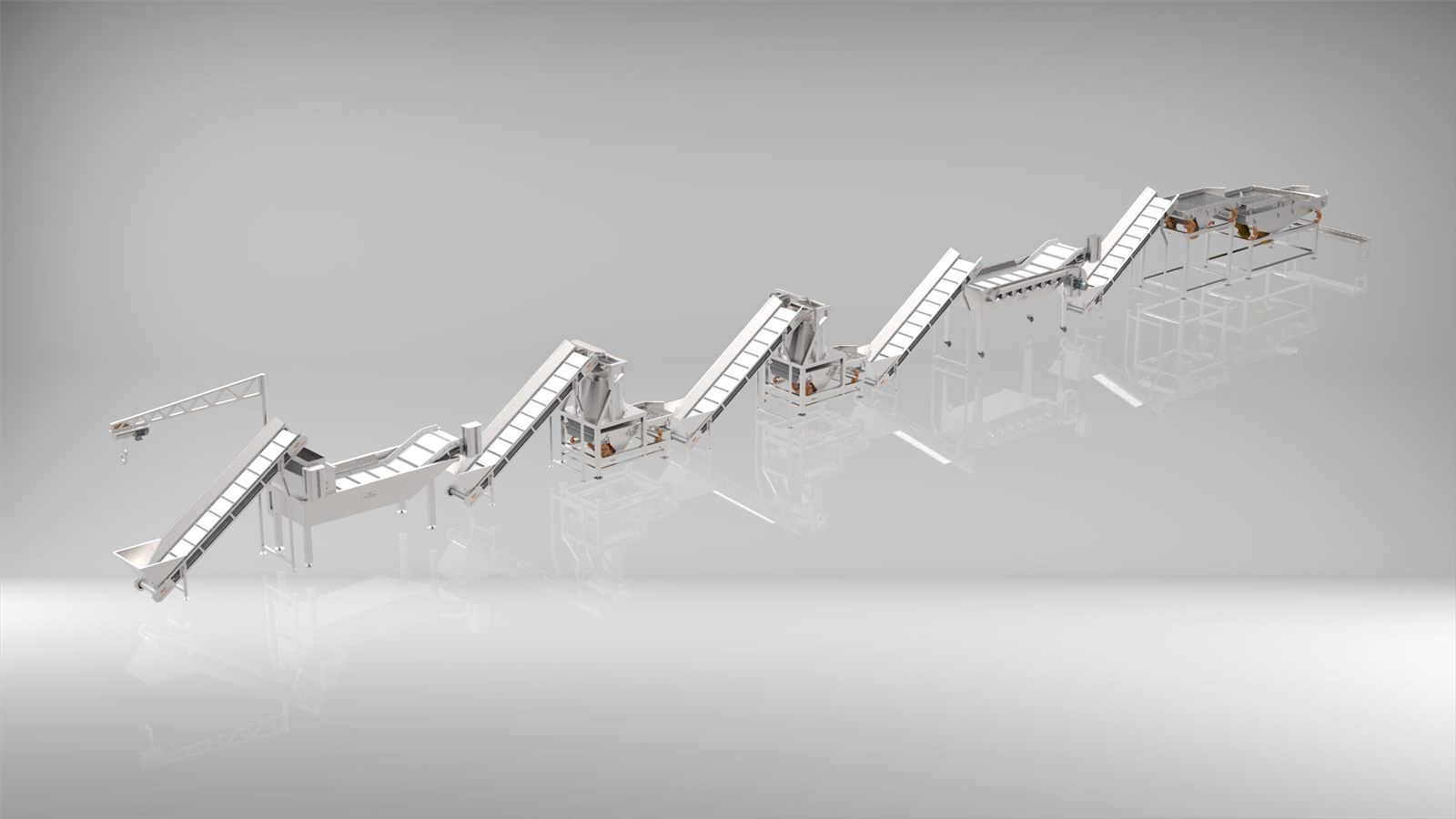
In the raisin line the cascade belongs to the washing flow and comes before the stem-breaking step. In most projects the product reaches it through the wet product transfer pump, which delivers it through pipes onto the cascade. The full sequence is on the dried raisin line page.
The order matters: stones and sand should be taken out before they reach cutting or crushing surfaces, where a hard fragment can wear a blade or a screen. Removing them early lowers both the maintenance load and the risk of anything hard reaching the pack.
04
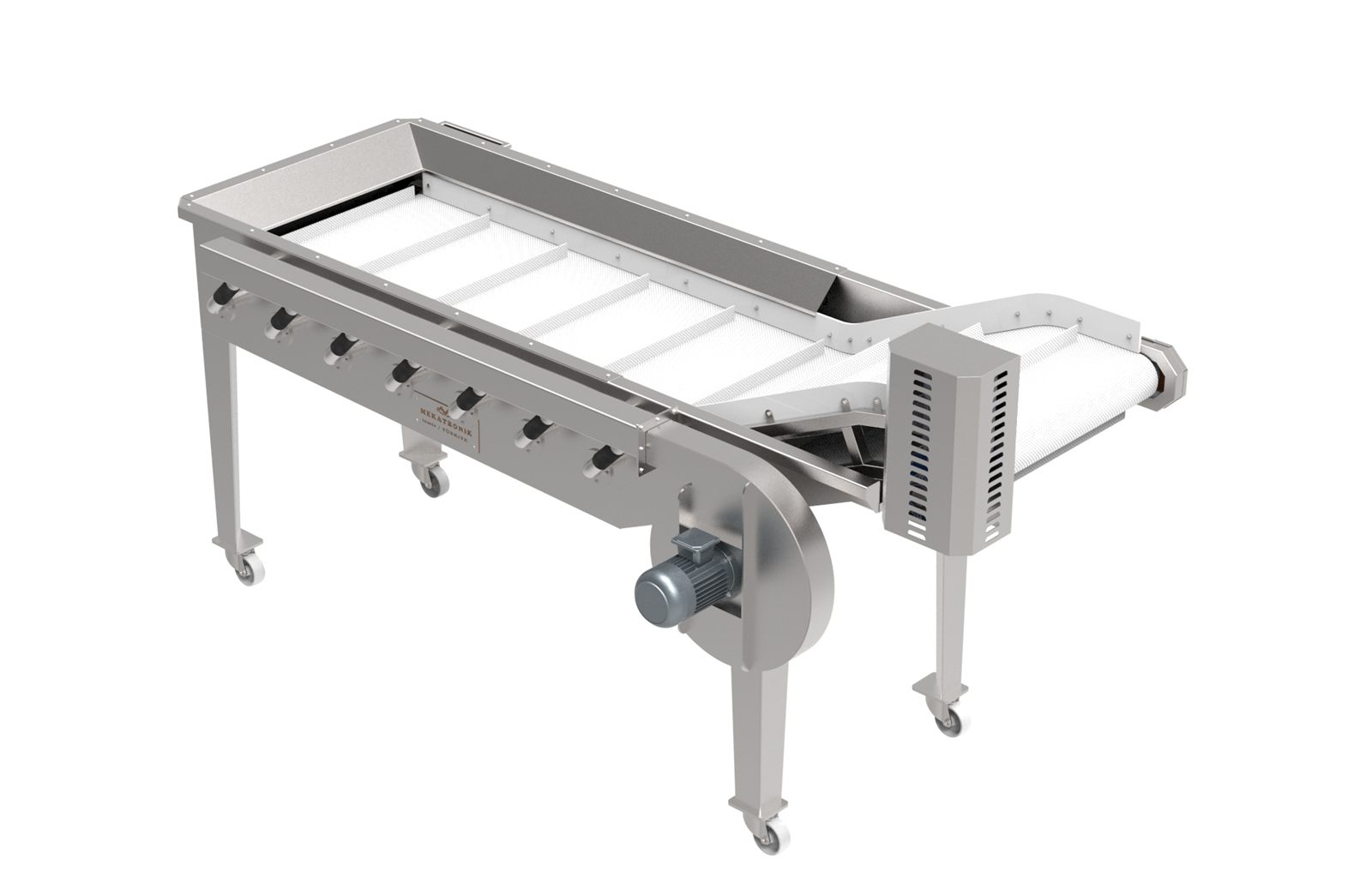
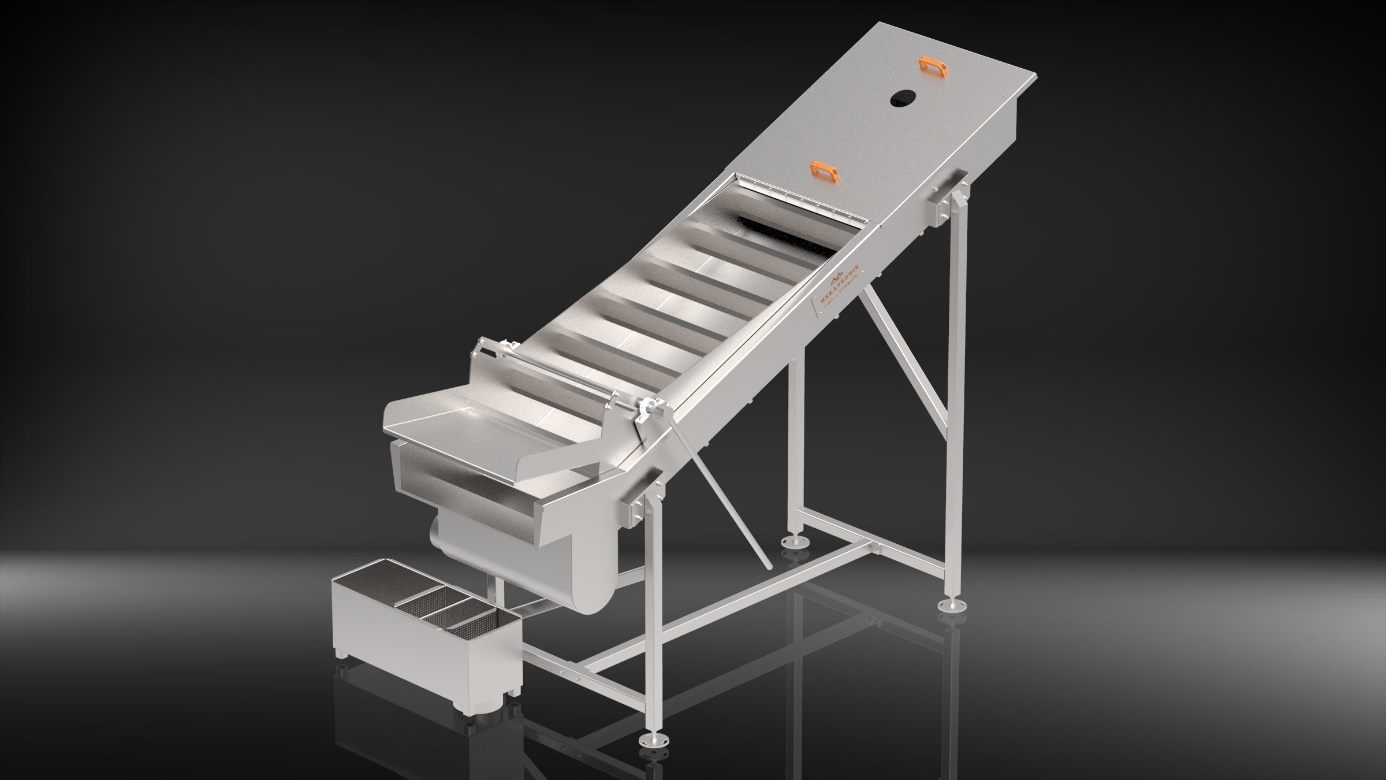
What does the machine consist of?
- 01Rotary screen pre-separation and stepped waterfall (cascade) washing
- 02Product conveying by water flow with continuous clean water supply
- 03A waste water trough underneath that holds back large debris
- 04A waterfall lifting lever for cleaning access
- 05Geared drive system
| Part | Function |
|---|---|
| Cascade section | Moves the product with the water and lets heavy matter separate |
| Waste water trough | Holds back large debris and reduces the risk of drain blockage |
| Waterfall lifting lever | Gives access for cleaning whenever needed |
| Geared drive | Powers the rotary and moving sections |
The body and product-contact surfaces are AISI 304 stainless steel, with AISI 316 available for product-contact surfaces where the process requires it. Supply is 380 V / 50 Hz.
05
How is it cleaned, and what should a buyer ask?
A machine that separates stones and sand collects sediment by nature, so cleaning access is part of the design. The waterfall lifting lever lets the cascade be opened and cleaned at any time. The waste water trough holds back large debris and so reduces the risk of drain blockage; it does not remove that risk entirely, which is why emptying the trough belongs in the plant routine.
- 01How heavy is the foreign matter load of the incoming product, and how was it harvested and dried?
- 02What hourly capacity does the line need? Capacity is project specific and exact values are set in the quotation.
- 03Is clean water supply and drainage available where the cascade will stand?
- 04Do the product-contact surfaces need AISI 304 or AISI 316?
Foreign matter control is also easier to document when it is a named step in the line rather than an afterthought, which matters when an importer audits the plant.
06
What is the next step?
Send us your product type, target throughput and water infrastructure, and we will place the cascade in your line plan with you. For a project-specific capacity and price, use the quotation page.