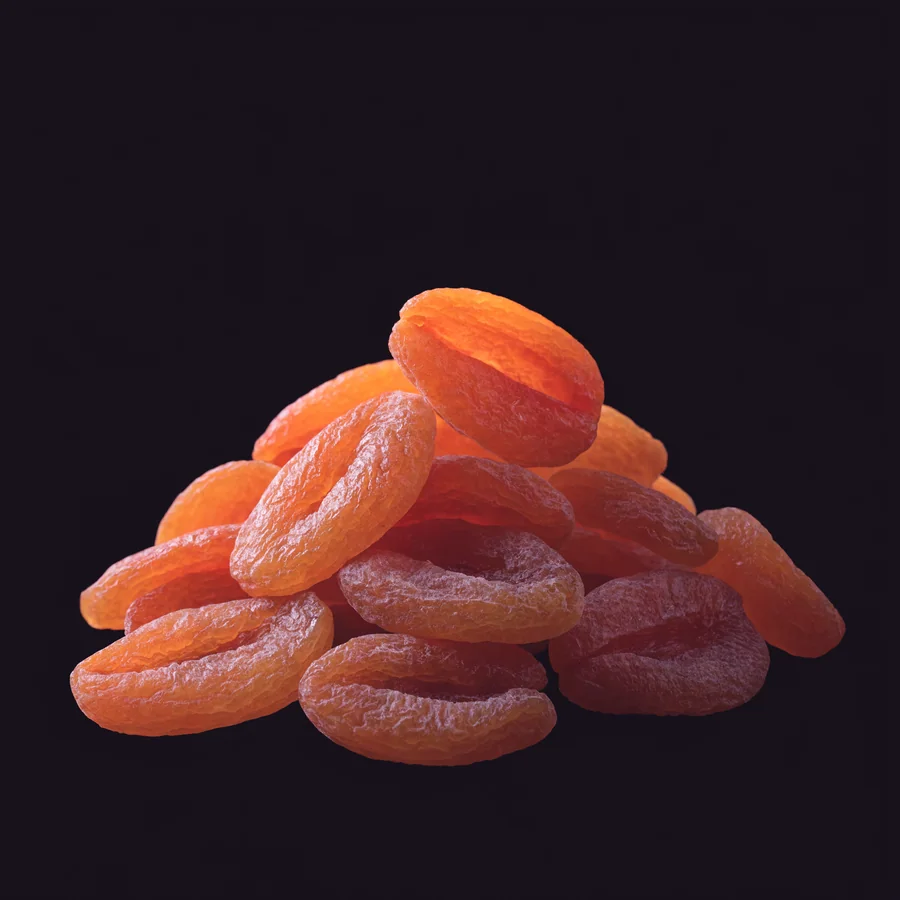
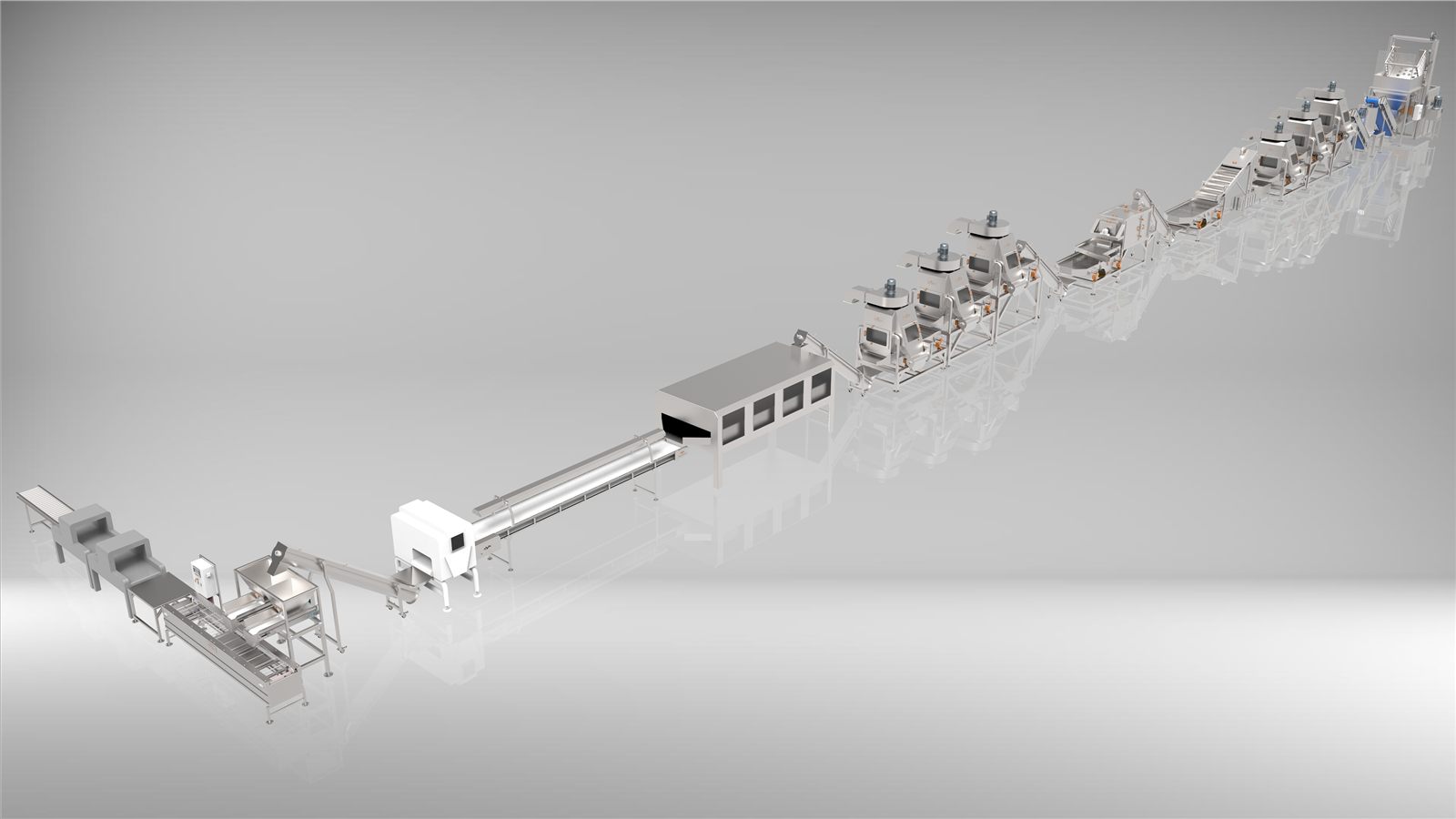
Dried fruit does not stay at whatever moisture level it left the dryer at. Once it is cooled, packed, stored or shipped, it keeps exchanging moisture with the air around it, and how much it gains or loses affects texture, weight and shelf life. This article looks at why that moisture gain happens and where a processing line is built to keep it under control.
01
Why does dried fruit gain moisture after it leaves the dryer?
A dried product and the air around it move toward equilibrium: if the surrounding air is more humid than the product's internal moisture would suggest, the product picks up moisture from that air, and if it is drier, the product loses moisture back to it. This exchange keeps happening through cooling, packaging and storage, not just during the drying stage itself, which is why final moisture at the dryer outlet is only part of the picture.
02
Why does piece size affect how evenly moisture settles?
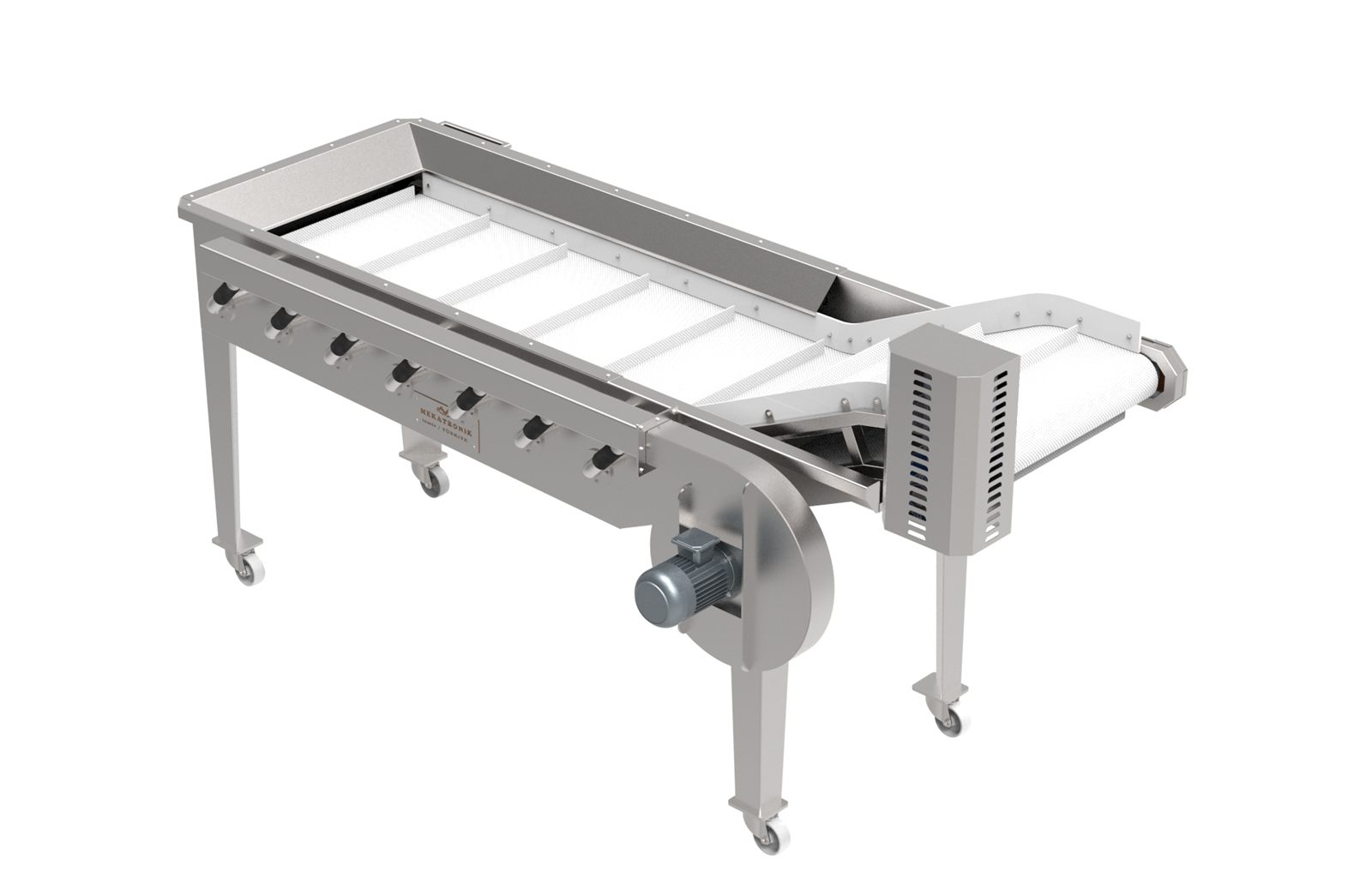
Uneven piece size is one of the more common reasons a batch that measures fine on average still has trouble spots. A calibration and sizing line sorts product into consistent size bands before drying so that heat and airflow reach every piece in a batch in a similar way, instead of larger pieces finishing with more retained internal moisture than smaller ones next to them in the same tray.
- 01Undersized pieces tend to dry faster and can overshoot the target moisture
- 02Oversized pieces can look dry on the surface while the core stays wetter
- 03That internal moisture migrates outward after packaging, not before
- 04Sizing before drying reduces this spread across a batch
03
How does the washing and drying stage set up the rest of the line?
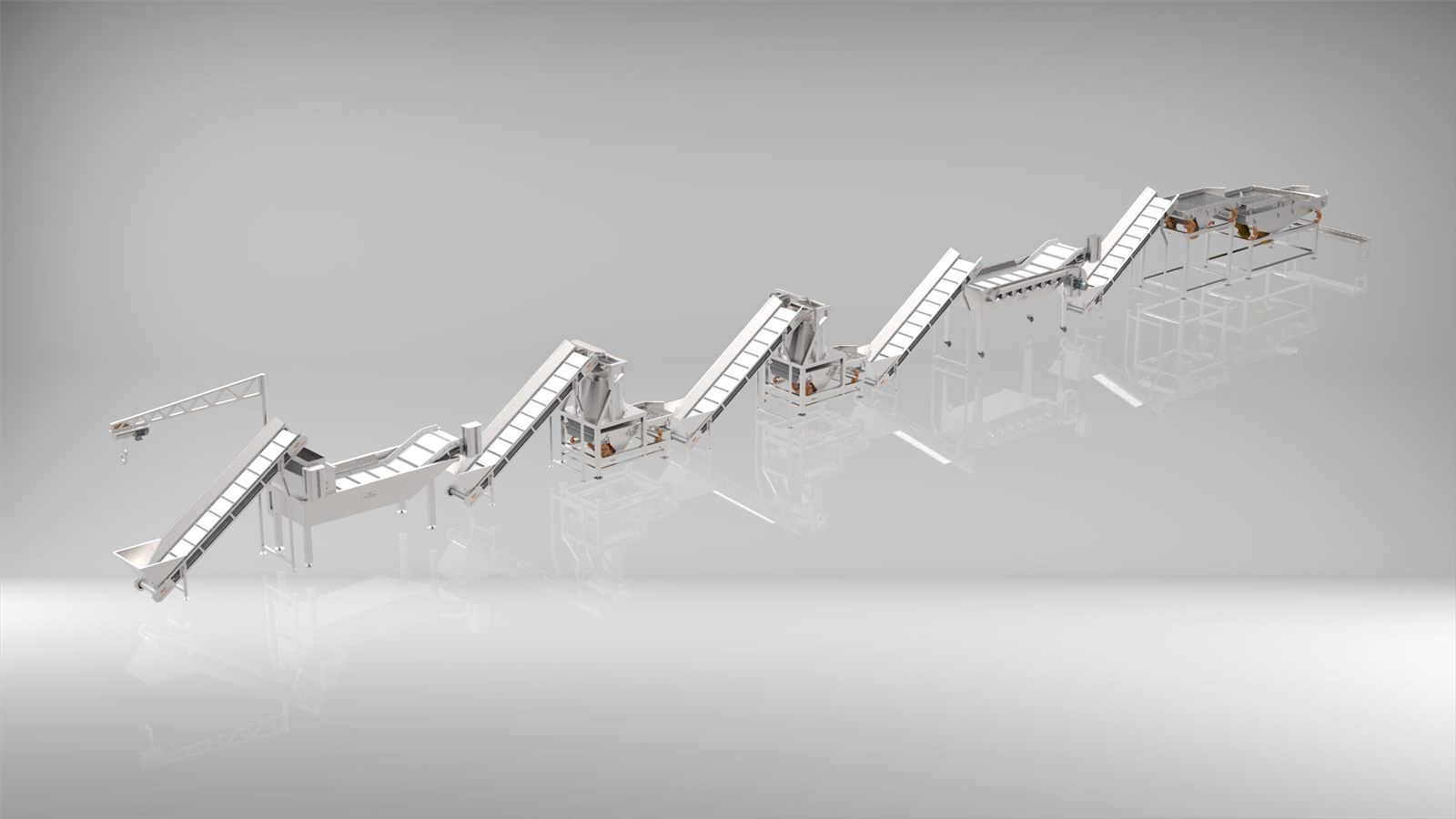
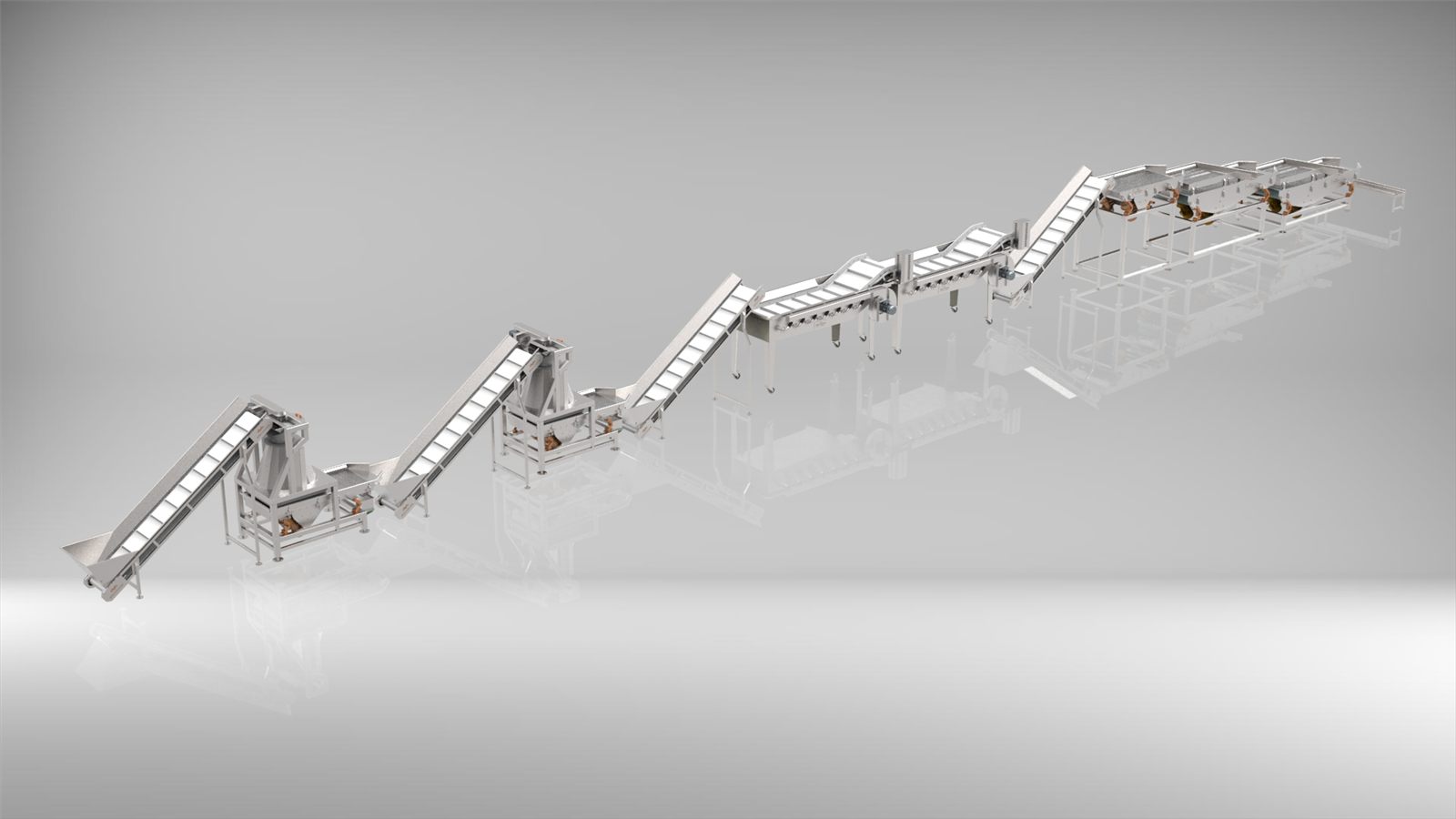
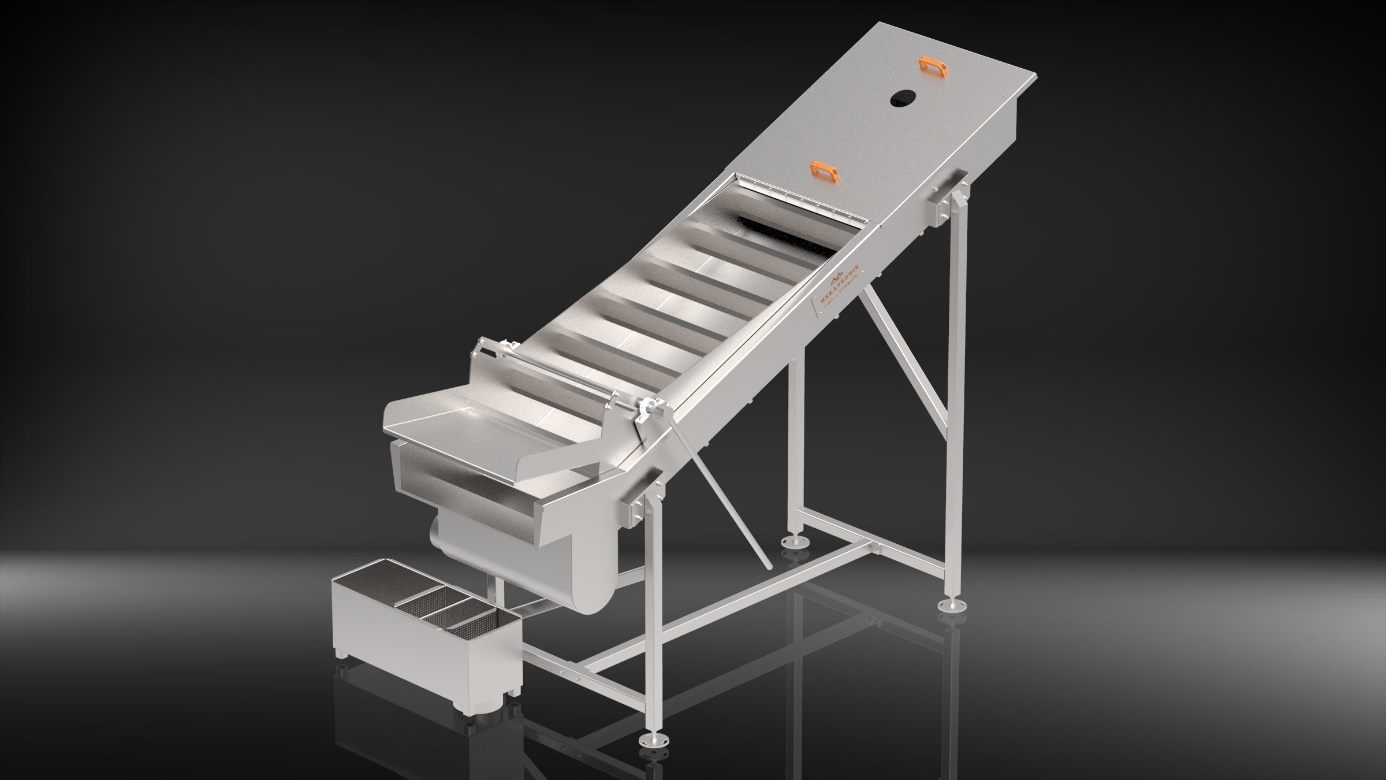
The moisture load entering the dryer is already decided upstream: how much surface water clings to the product coming out of washing affects how the drying stage needs to be run for that batch. Equipment in a washing and drying line is sized around the product's condition on arrival, and set points for time and temperature are established per project rather than fixed to a single figure, since fruit variety, incoming moisture and load density all change what the dryer needs to do. Product-contact surfaces are AISI 304 stainless steel, moving to AISI 316 where the process calls for it.
04
What does the cooling tunnel have to do with moisture gain?
A cooling tunnel brings product down to a stable temperature before it reaches packaging. Warm product sealed into a package while it is still cooling can create condensation inside that package as the temperature drops, and that condensation is a direct route to localized moisture gain and, over time, spoilage risk in exactly the spot it forms. Stabilizing temperature before sealing is as much a moisture control step as it is a temperature control step.
05
How is moisture actually checked along the line?
Sampling is taken at points along the line rather than only at the very end, so an operator can catch a drift before an entire batch is affected. Adjustments made from those checks feed back into how the drying and cooling stages are run for the remainder of that batch, which is why moisture control on a line is closer to an ongoing process than a single measurement taken at the finish.
Where moisture risk enters the line
| Stage | Moisture Risk | How It Is Addressed |
|---|---|---|
| Sizing | Uneven pieces dry unevenly | Calibration groups product by size before drying |
| Washing | Surface water carried into drying | Dewatering reduces the load reaching the dryer |
| Drying | Under- or over-drying relative to target | Time and temperature set per project and product |
| Cooling | Condensation forming inside sealed packaging | Product stabilized to a set temperature before packaging |
06
Next step
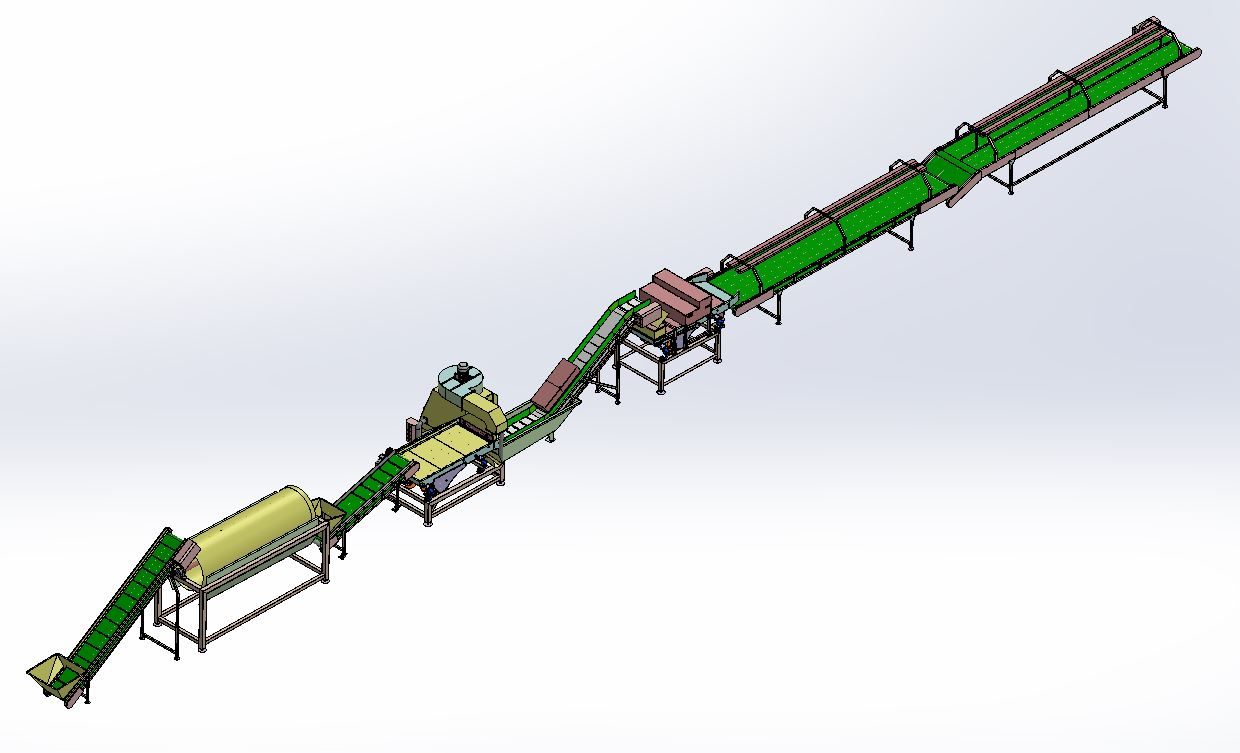
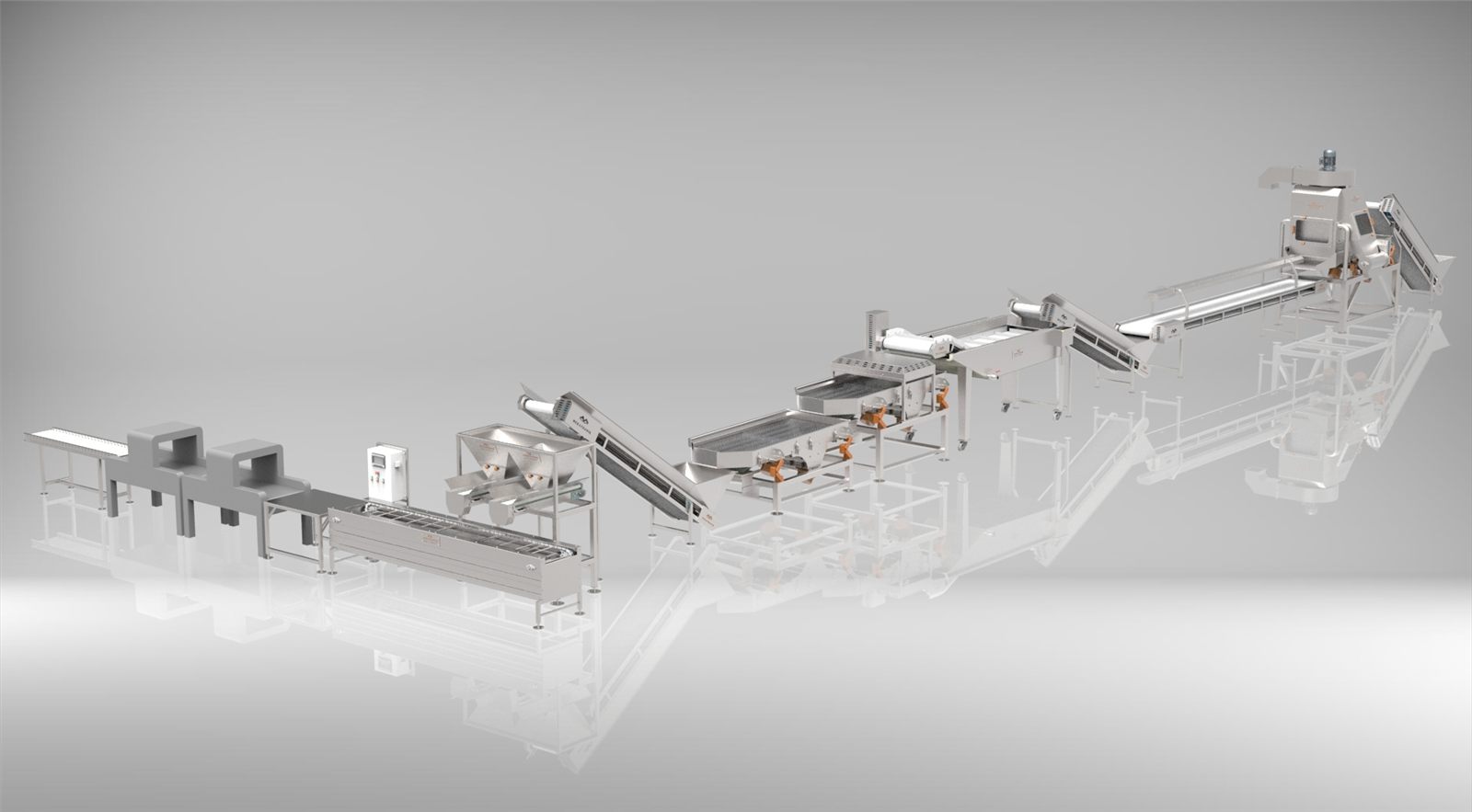
Sizing, washing and drying, and cooling are stages of the same dried apricot processing line, and how they are configured depends on the product and the moisture target for your market. Get in touch through our quote page to size a line around the moisture control your product needs.