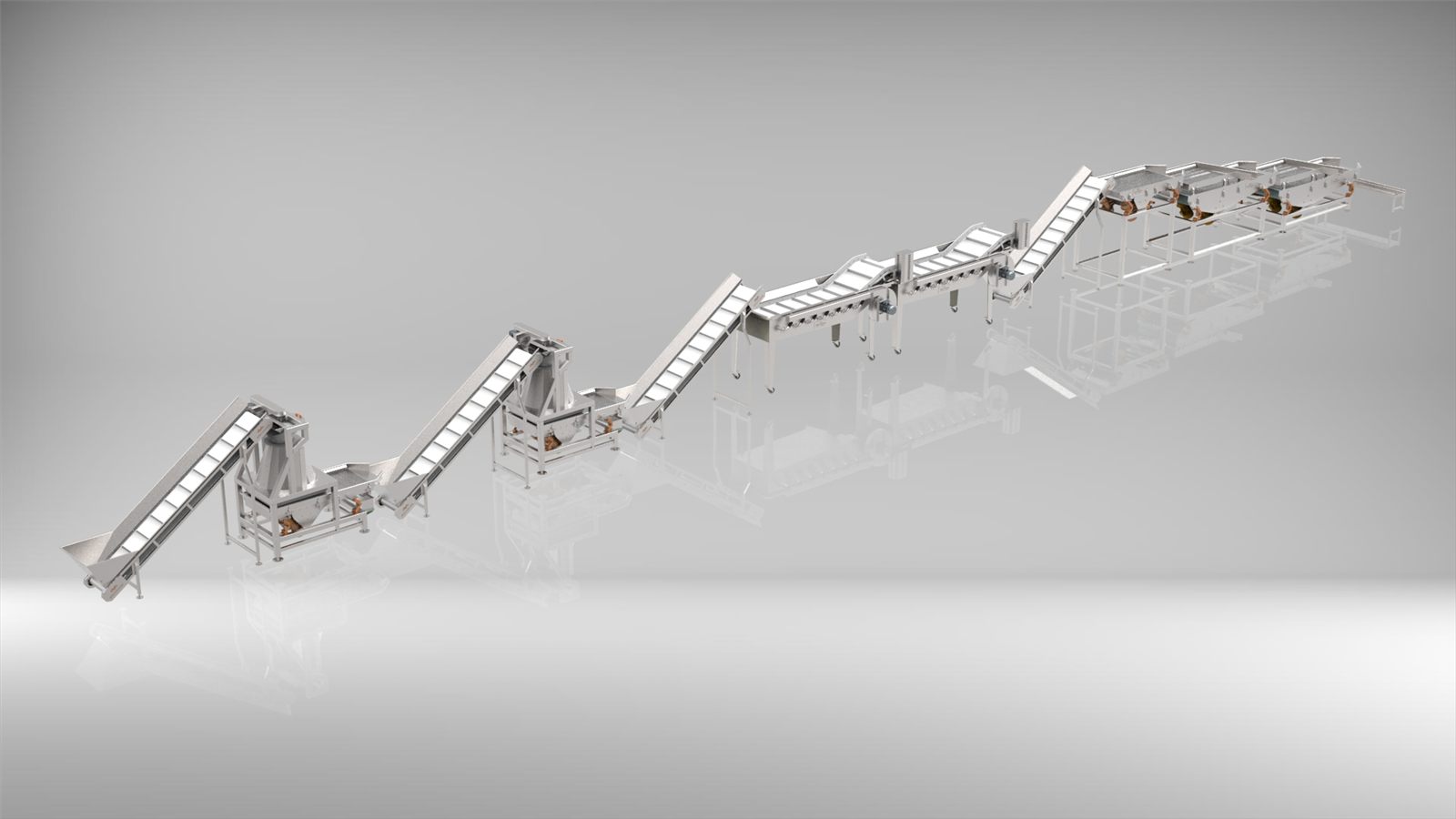
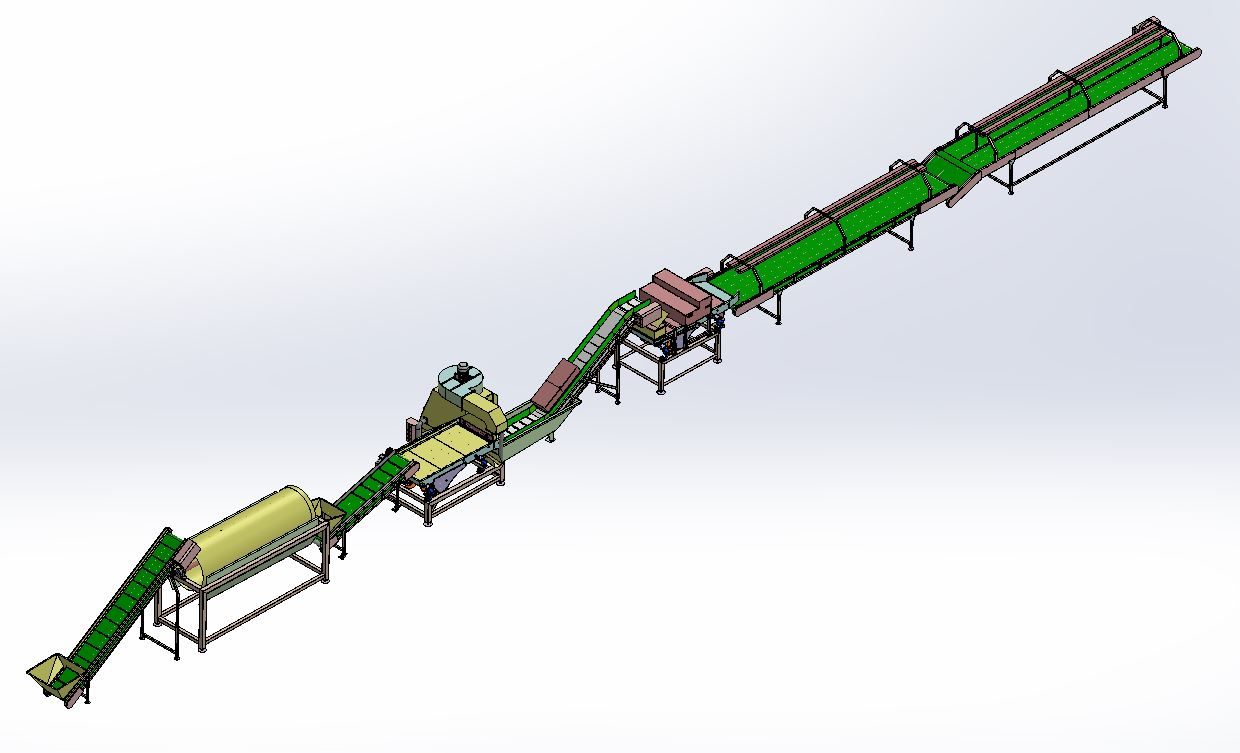
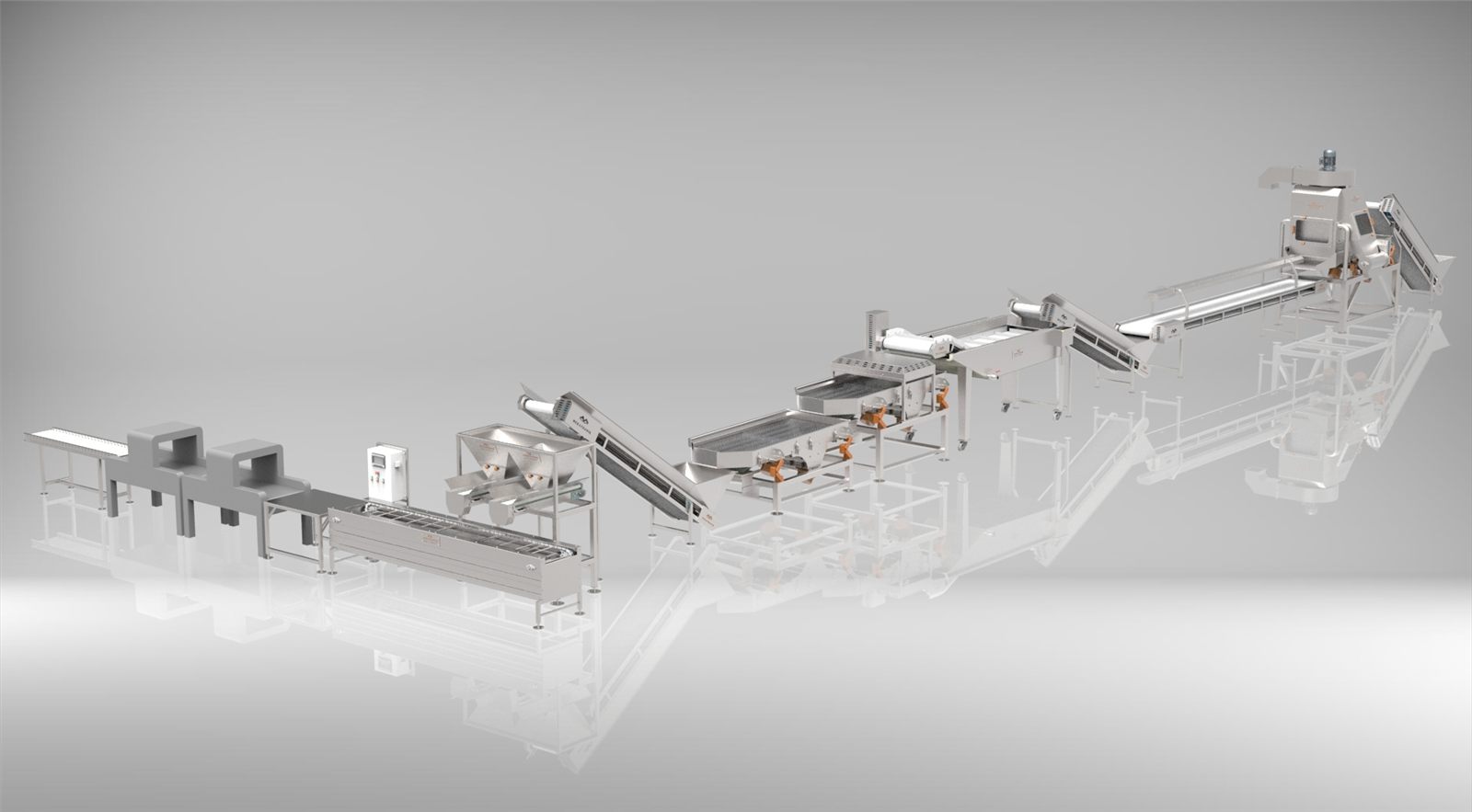
It is misleading to think of the journey from orchard to export ready pack as a single line. There are really two flows: sulphured (orange) apricots and natural, sun dried apricots. The early stages are similar, and the process splits at the sulphuring step.
Below we go through both flows in order. For the machine side of the factory steps, see the dried apricot processing line.
01
From the orchard to raw dried apricot
Harvest
The process starts with harvesting the fruit at the right ripeness. In Türkiye, and particularly in the Malatya region, harvest usually takes place in summer. Picking too early holds back sugar and aroma development, while over ripening raises the risk of crushing during transport, drying and later handling. The harvested fruit is carried to the drying area.
Sulphuring, only for sulphured apricots
If orange commercial dried apricots are to be produced, the fresh fruit is sulphured before drying. The apricots are placed in an enclosed sulphuring chamber and exposed to sulphur dioxide (SO2).
The main purposes of this step are:
- 01Preserving the orange and yellow colour
- 02Slowing down enzymatic browning
- 03Limiting microbial growth
- 04Improving storage stability
Sun dried production has no such stage. The fruit is dried naturally without sulphur, which is why the product gradually takes on a brown, darker colour.
First drying
The apricots are spread over drying yards or suitable drying surfaces and left in the sun. One detail is often missed here: the stone is not removed by cutting the fresh fruit in half straight away. In traditional production the fruit is first dried whole to a certain degree. Losing some water softens the fruit and makes the stone easier to separate from the flesh.
Destoning
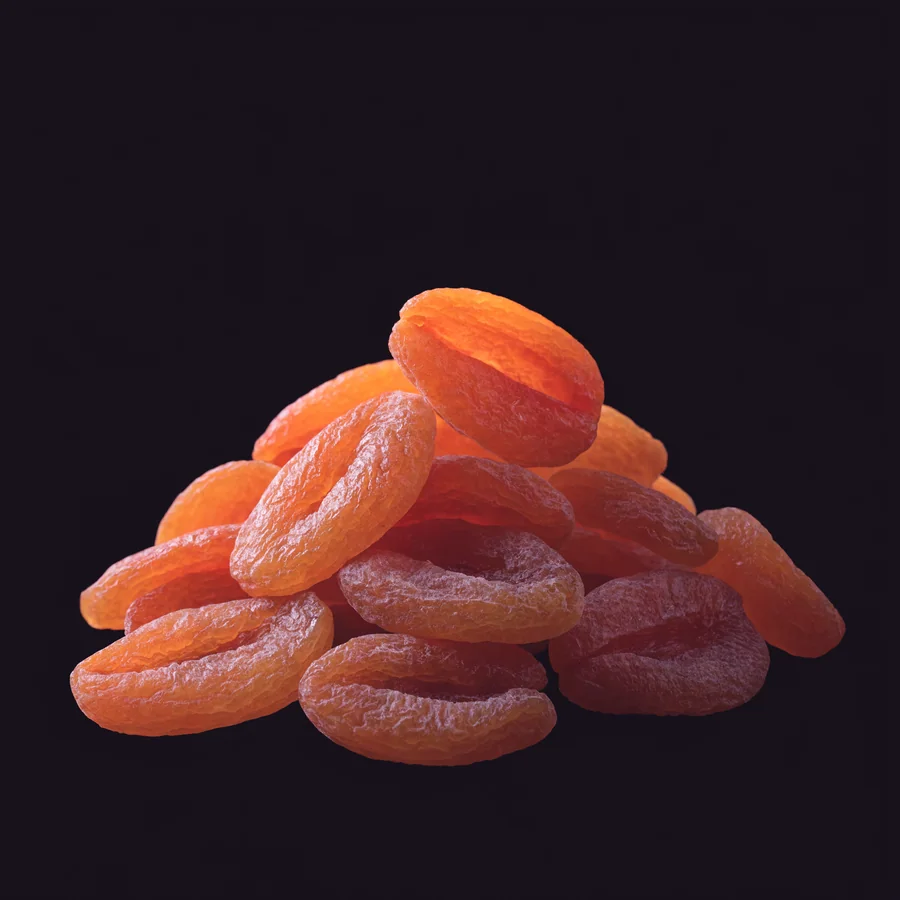
Once the fruit has reached sufficient pre dryness, the stone is removed. In Malatya this is commonly called pitlatma: the fruit is pressed by hand and the stone is pushed out. The apricot keeps its characteristic whole form instead of being cut into two halves. This matters commercially, because the typical shape of whole dried apricots on the world market is created by this step.
Second drying
The destoned fruit goes back into the sun and is dried until it reaches a moisture level suited to the intended storage and processing conditions. What we now have is raw dried apricot. Everything up to this point is essentially agricultural production and drying; what follows is the industrial processing line inside the factory.
02
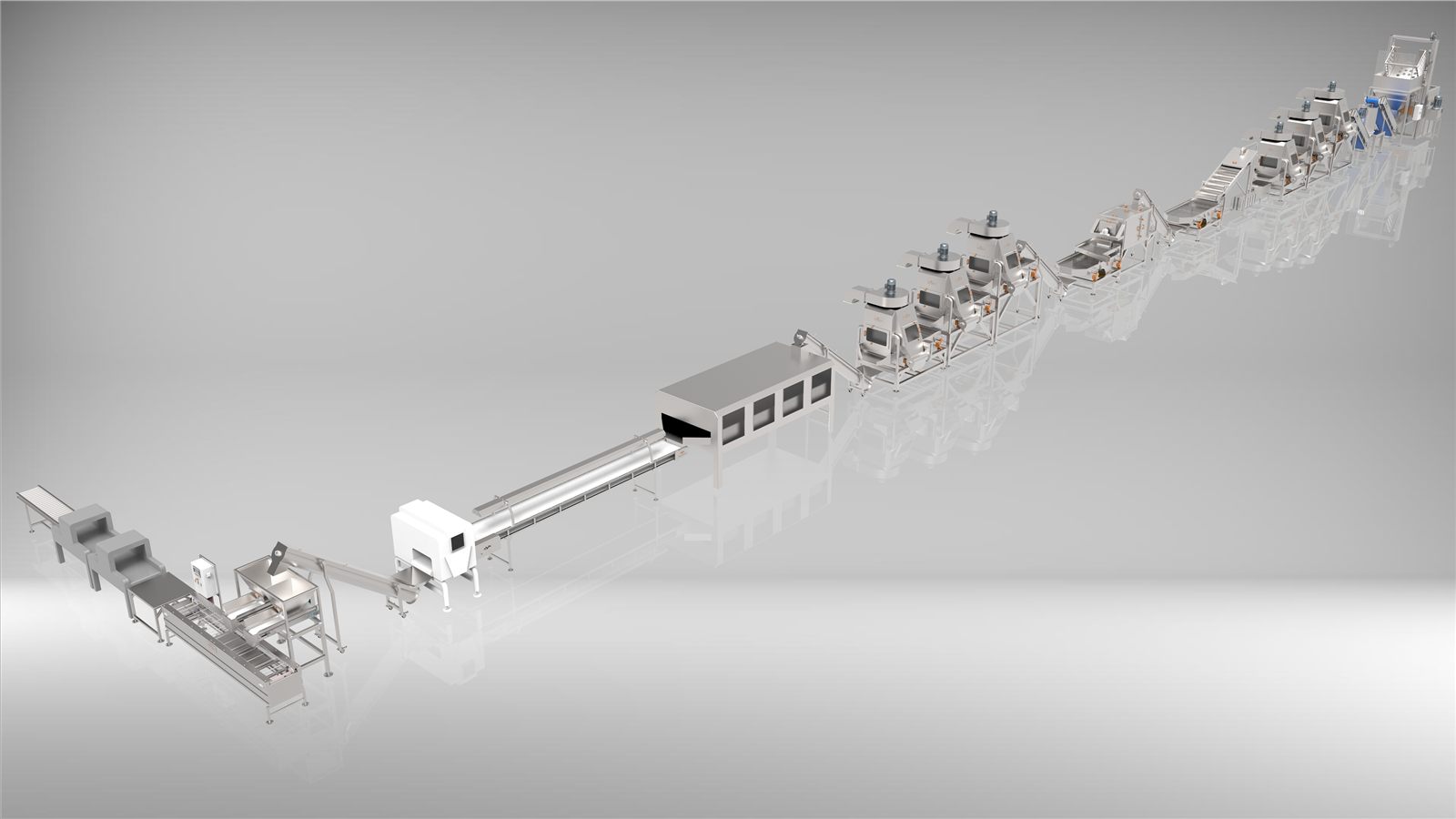
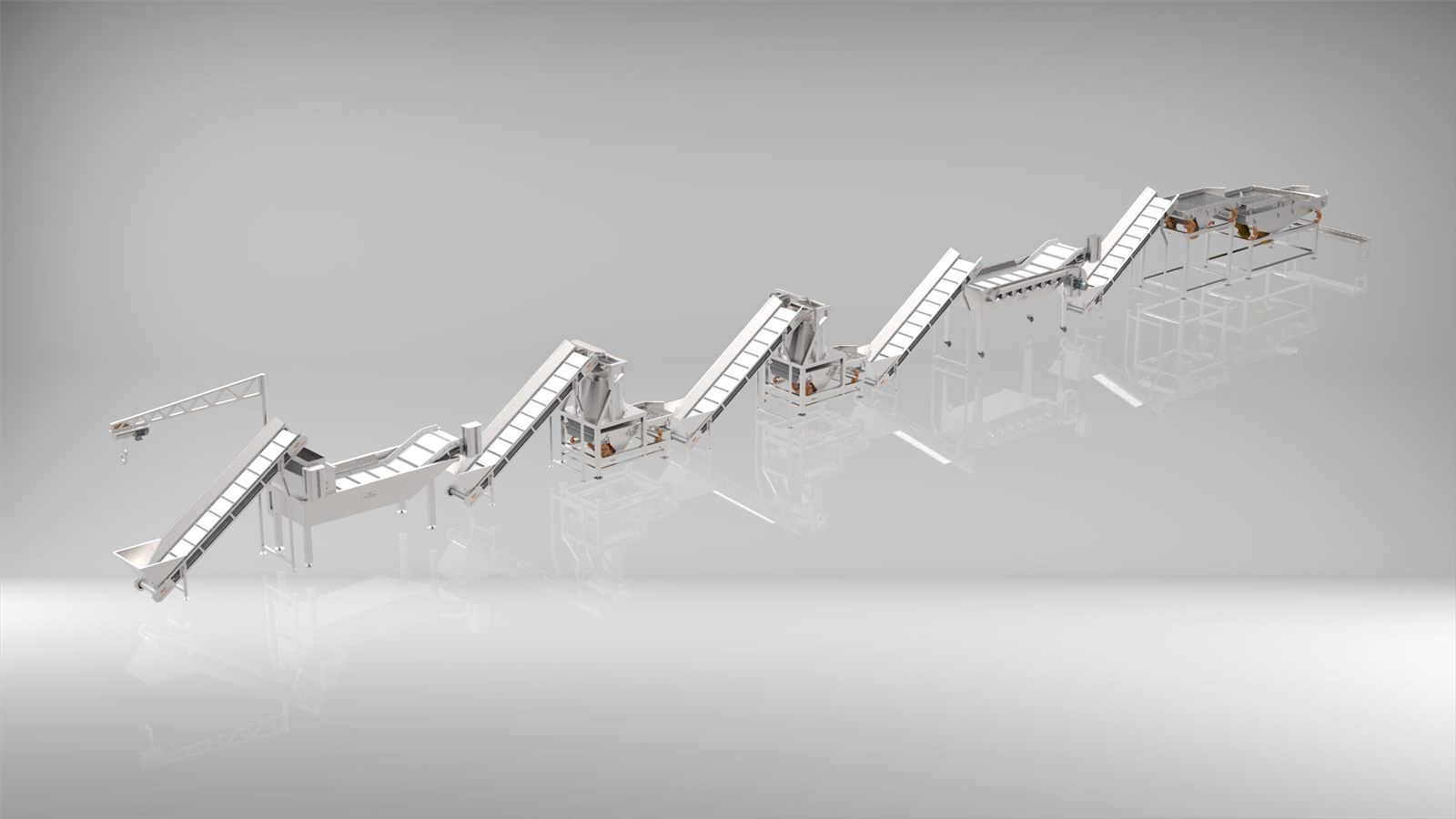
The processing line inside the factory
Intake
Dried apricots arriving from growers are taken into the factory. Lots are usually assessed by origin, variety, size, colour, moisture, defect ratio and sulphur level. Where needed, samples are taken and laboratory checks are carried out.
Pre cleaning and foreign body removal
Product coming from the field is not fed straight into the packing line. Foreign material is removed first:
- 01Stones, soil and sand
- 02Stems and leaves
- 03Kernels and kernel fragments
- 04Other foreign bodies
Screens, aspiration systems, destoners, magnets and various mechanical cleaning equipment may be used at this stage.
Washing
The product then enters an industrial washing line. Washing is not only about visible dirt; the aim is to remove dust, sand, adhered soil and agricultural surface residues. Depending on the product, spray washing, immersion, drum washing, vibratory washing or combinations of these may be used. A poorly designed washing system causes real problems here: if the fruit picks up more water than it should, the following process and the shelf life can both be affected.
Removing excess water
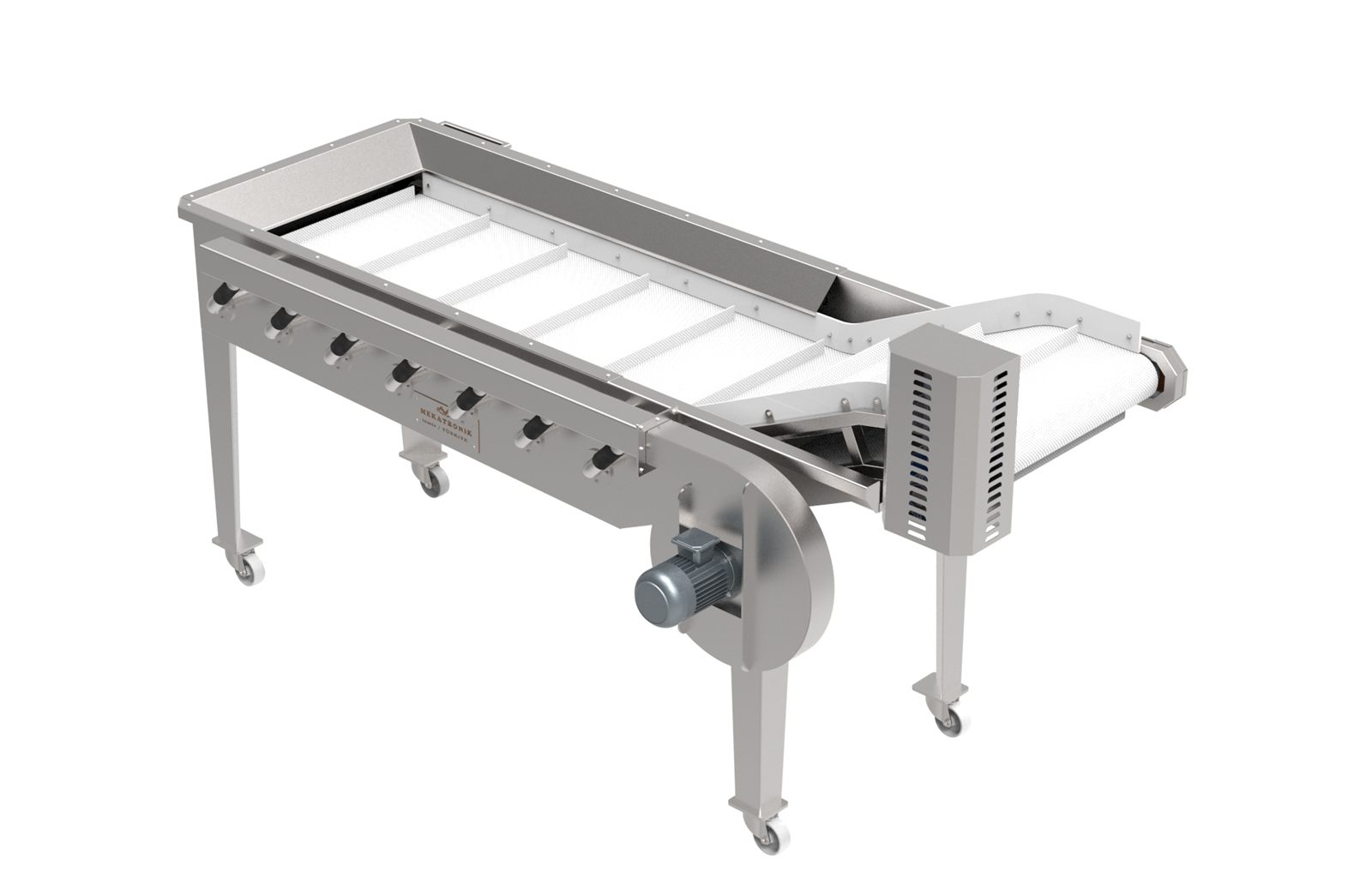
Fruit leaving the washer carries free water on its surface. This water is removed as far as possible through vibration, air knives and fan systems. The goal is not to dry the product again, but to take off the remaining surface water in a controlled way.
Resting and moisture balancing
This stage matters a great deal in dried fruit processing. After washing, and controlled rehydration where required, the fruit can be rested for a period so that moisture distributes more evenly through the product. Instead of a piece that is overly wet outside and hard inside, a more balanced structure is obtained. Softer or firmer product can be prepared depending on the target market.
Sizing
The apricots are then graded by size. Sizing matters for the standardisation of a commercial product: buyers expect pieces of similar size inside the same pack. It can be done with mechanical diameter and screen systems or with image processing technologies.
Quality sorting
Defective fruit is separated out of the graded product: overly dark pieces, stained pieces, broken pieces, rotten or mouldy fruit, misshapen fruit and foreign material are detected and removed. Traditionally this is done by operators working at lit inspection belts. Modern plants add camera and optical sorting systems. An optical sorter helps standardise, at higher capacity, the work the human eye does on colour and surface defects in particular.
Foreign body and food safety checks
Before packing, the product passes through critical control points. Depending on the plant and the customer standard, magnets, optical sorters, X-ray and metal detectors may be used. X-ray in particular can form an important final safety layer for stones, glass, metal and some foreign bodies with a density difference.
Final quality and laboratory control
For product going to export, various analyses can be run on a lot basis. The main checks are:
- 01Moisture content
- 02SO2 level
- 03Pesticide residues
- 04Microbiological criteria
- 05Mould and product defects
- 06Physical quality and foreign matter
The limits here vary with the destination country and the customer specification.
Weighing and packing
Approved product moves to the packing section. There are two basic sales formats: industrial or bulk packaging, meaning large cartons and bagged or boxed systems, and retail packaging, for example 200 g, 250 g, 500 g or 1 kg consumer packs. On automatic lines the process can run as product feeding, weighing, dosing, pack filling, sealing, weight check, metal check, labelling and case packing. The machines for the filling and packing step are chosen according to the pack format.
Case packing, palletising and shipment
Final packs are placed into cases. Cases are palletised, labelled and given lot and traceability information. This creates a system where the fruit can be traced from the production lot it came from through to the customer it was sent to.
03
The process in one sequence
Gathering the steps into a single order:
- 01Harvest
- 02Sulphuring (sulphured product only)
- 03Pre drying
- 04Destoning
- 05Final drying
- 06Factory intake
- 07Pre cleaning
- 08Washing
- 09Water removal
- 10Moisture balancing
- 11Sizing
- 12Manual and optical sorting
- 13Foreign body control
- 14Quality control
- 15Weighing and packing
- 16Metal and X-ray control
- 17Case packing, palletising and shipment
04
What the factory actually does
The critical point is this: a dried apricot factory does not have to be the place where the fruit is dried. In most cases the apricot arrives at the factory as an already dried agricultural raw material. The real work of the factory is turning that raw material into a clean, safe, homogeneous, graded commercial product that meets the customer specification.