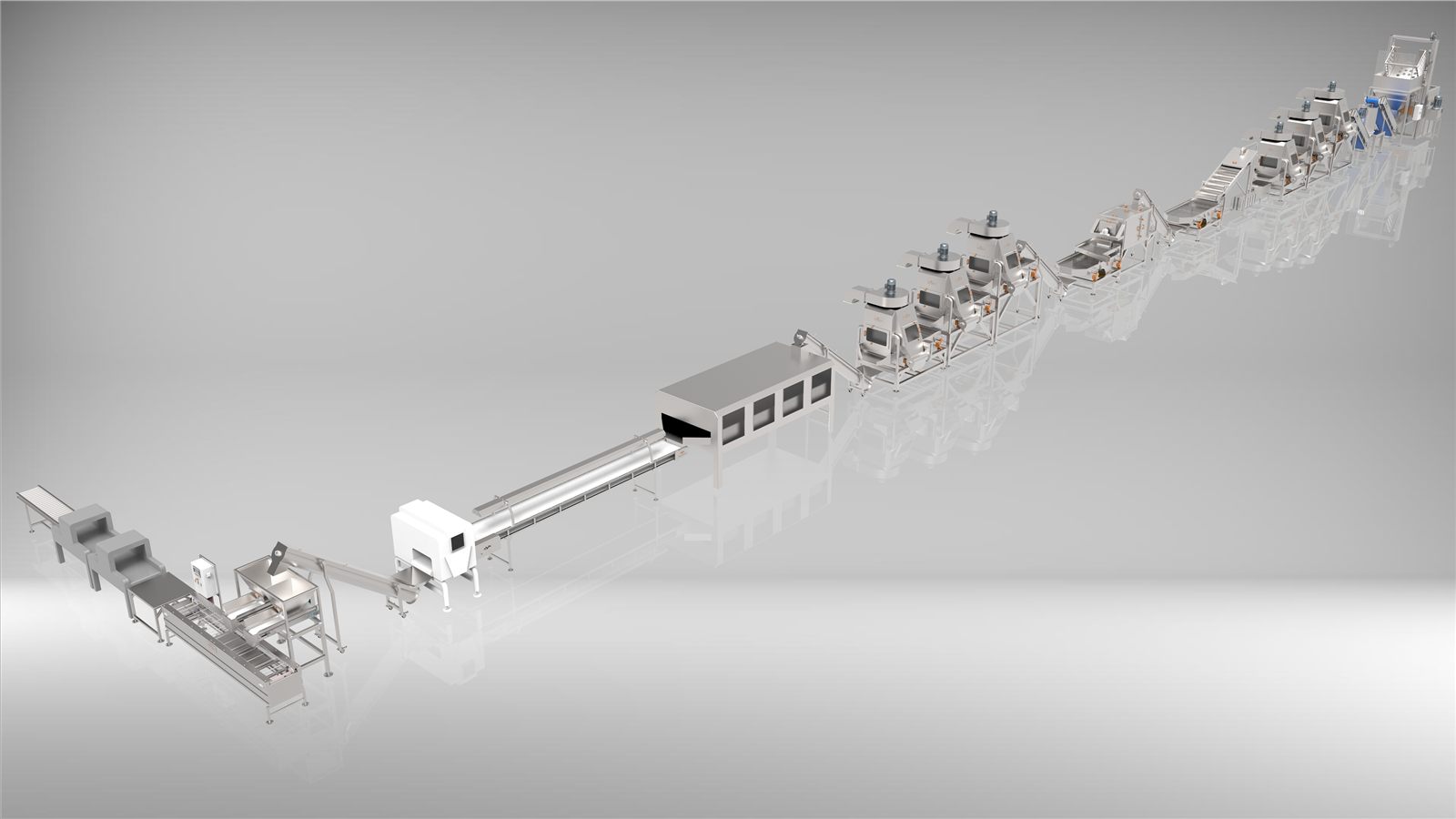
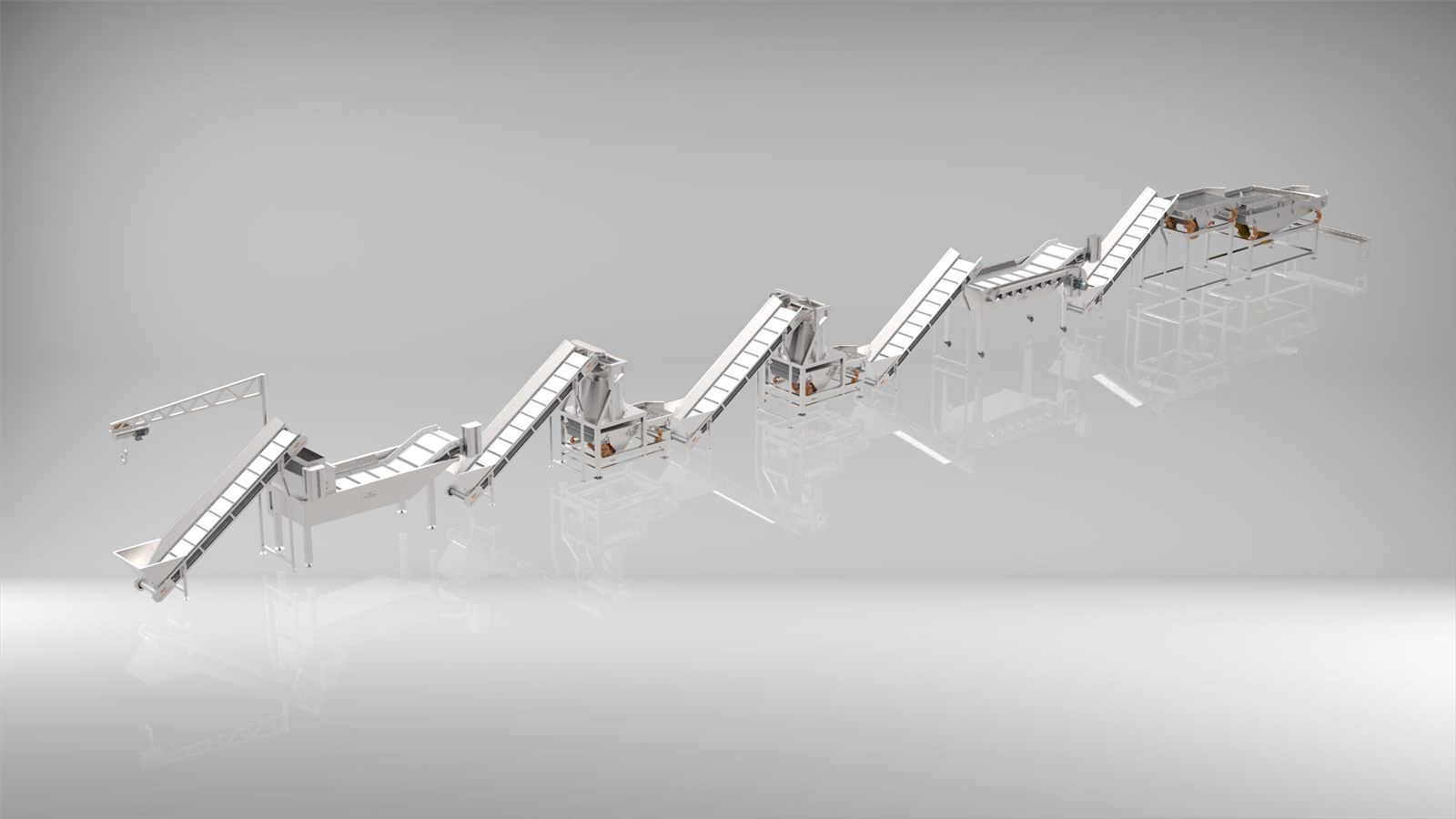
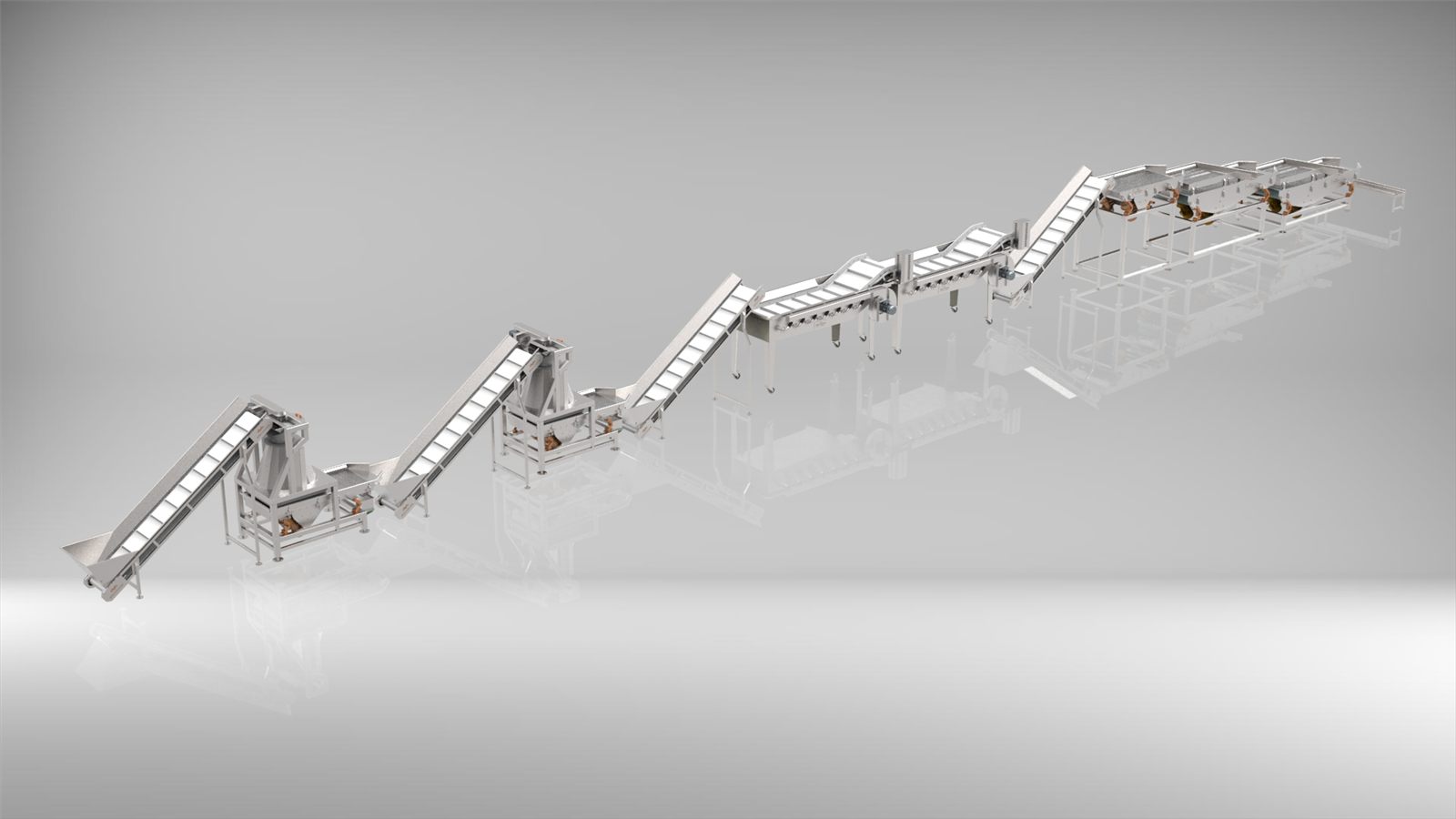
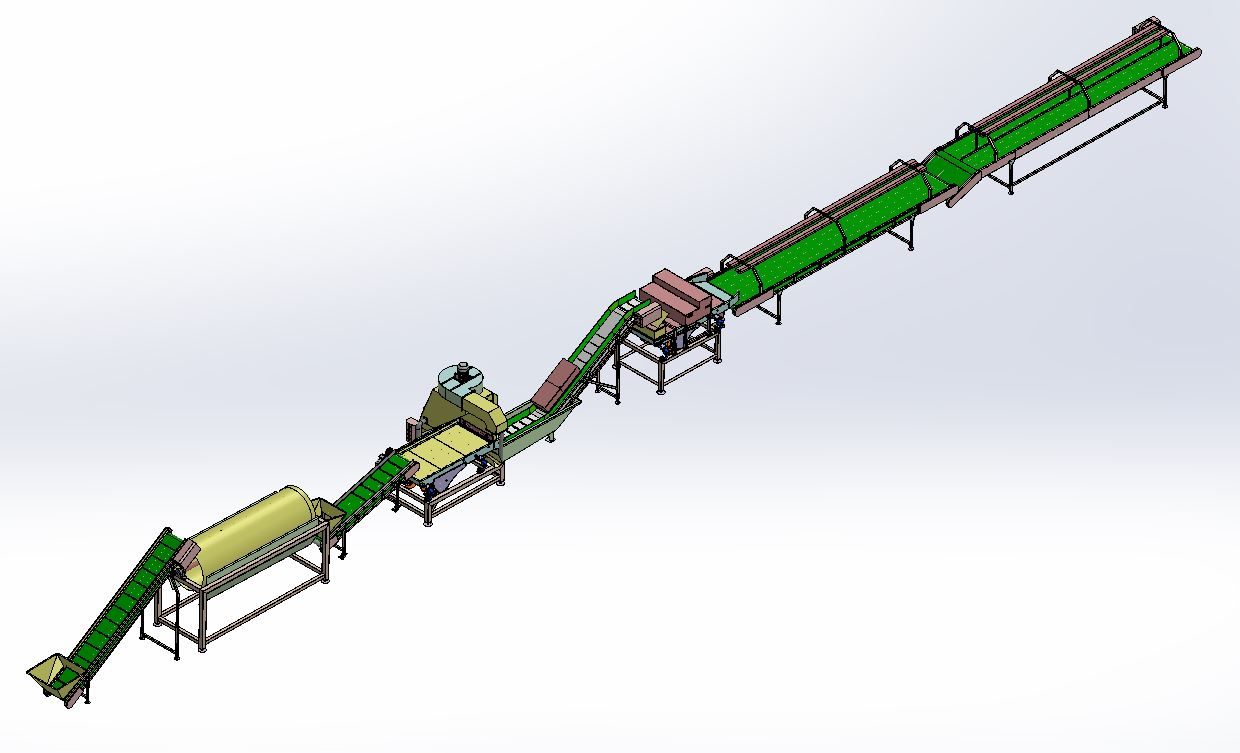
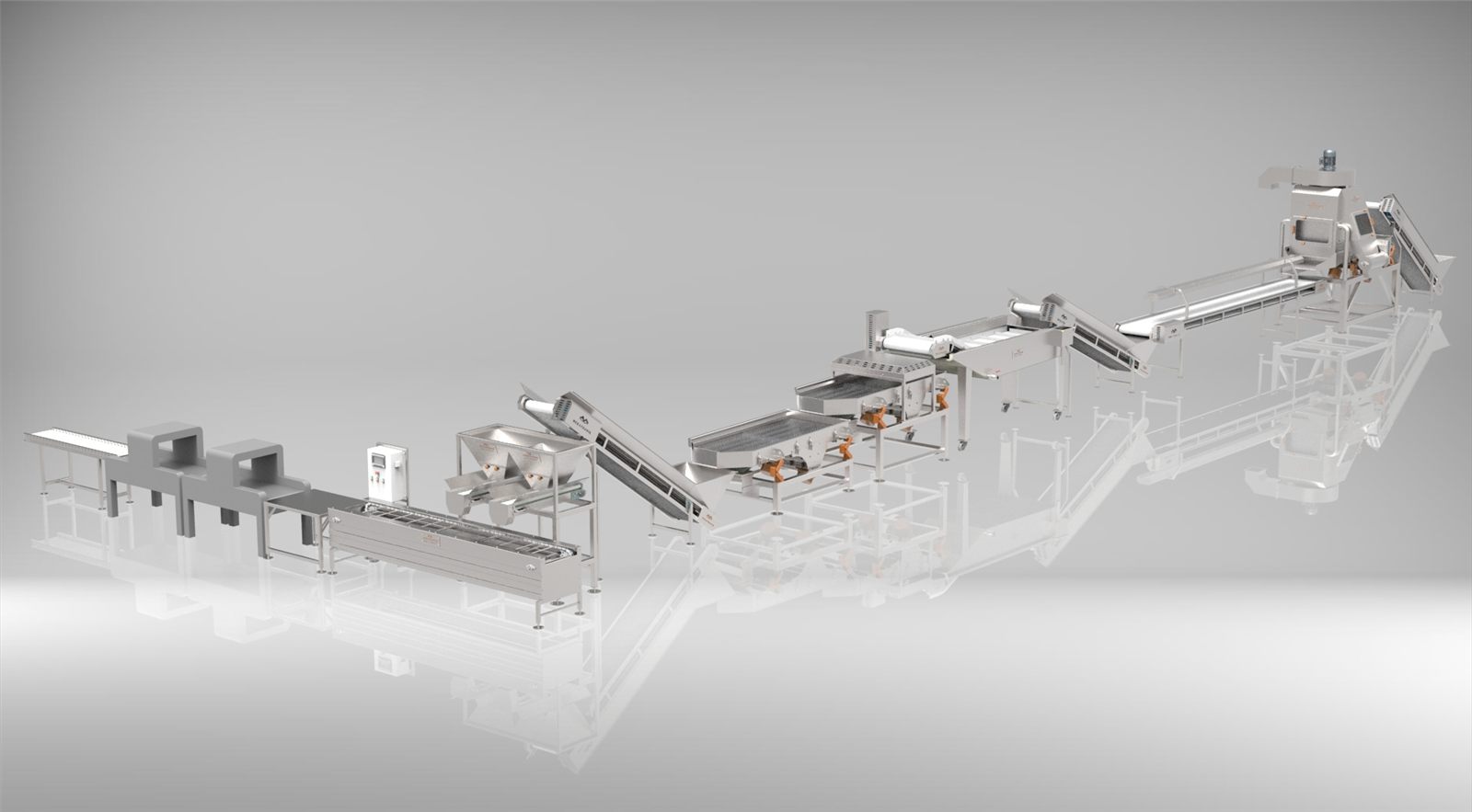
On a delicate product like raisins, the way a line is conveyed determines how much product is lost and how much cross-contamination risk is carried between stations. Feeding, light sorting and Z-type conveyors each do a different job on the same line, and in most layouts they complement rather than replace one another. This article covers where each sits, why the distinction matters, and how cleaning differs between the three.
01
Where does a feeding conveyor sit on the line?
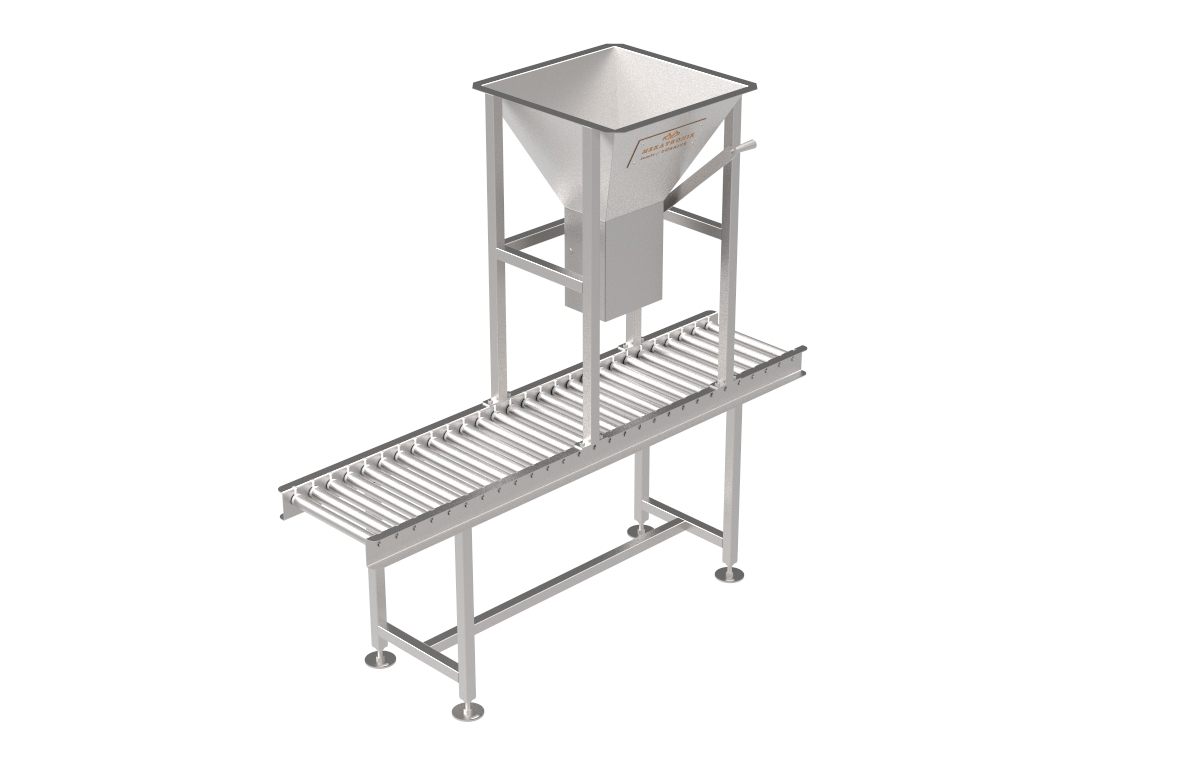
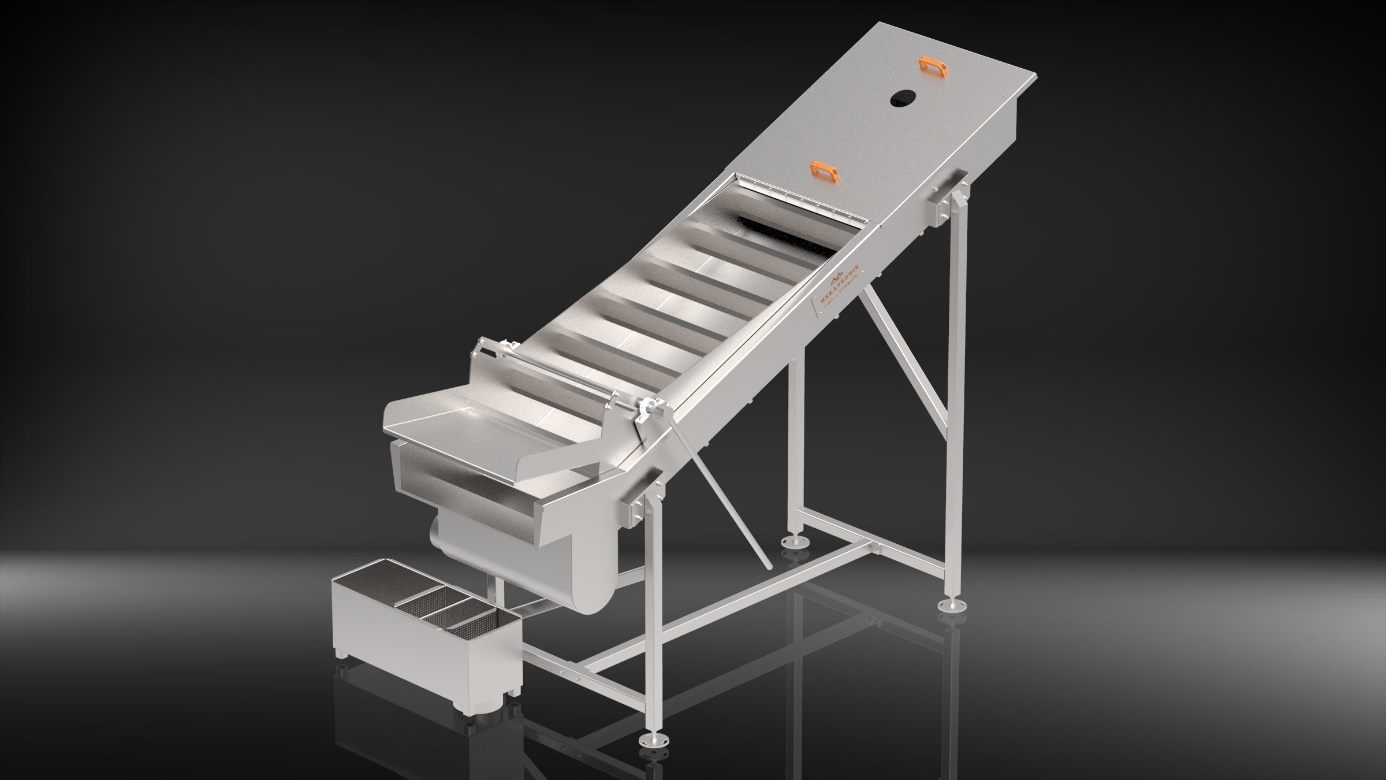
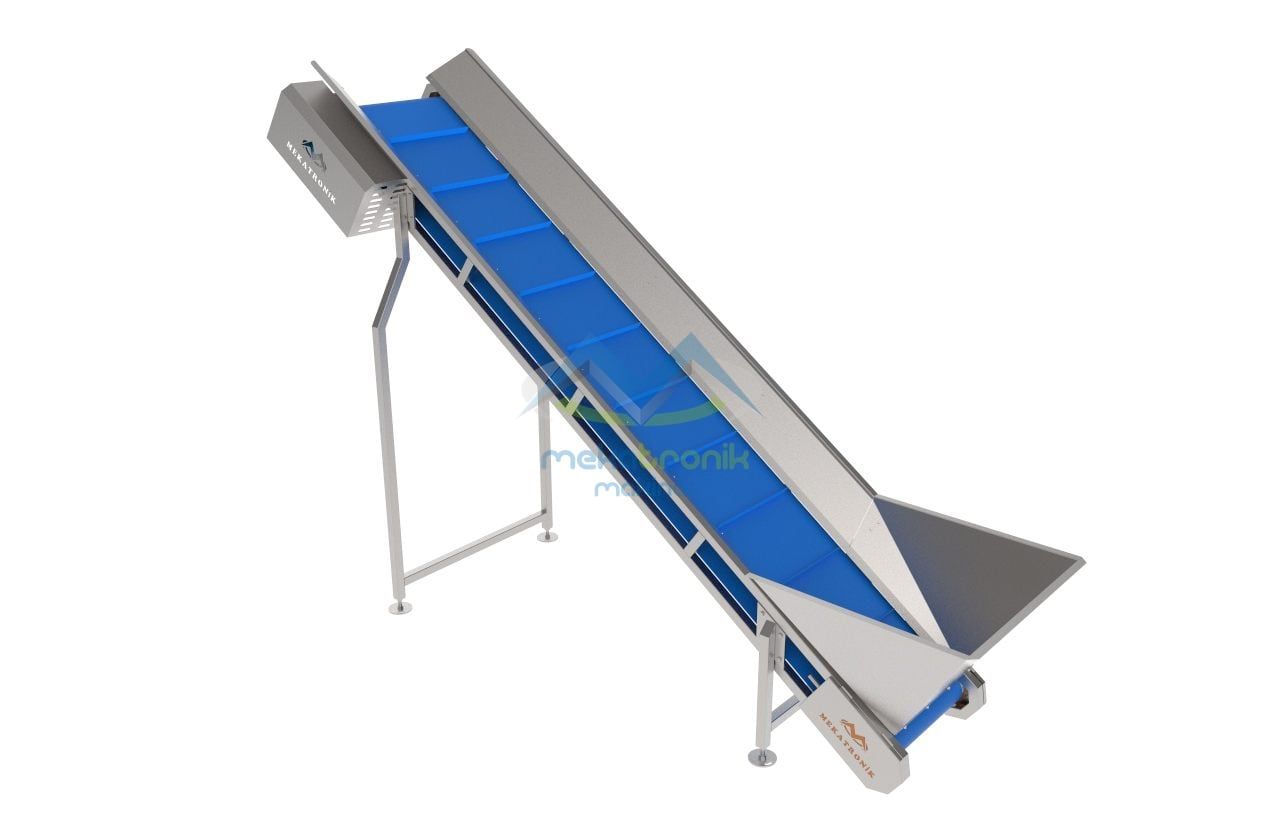
A feeding conveyor moves product from a crate-tipping point or a buffer bin into the first processing station, typically pre-cleaning or the washing inlet. Its job is transport, not sorting or sizing, so belt speed and incline angle are set to keep a steady flow without bruising the product. Every surface in contact with the product is AISI 304 stainless steel, and the belt is arranged so it stays reachable for daily wipe-down.
- 01Bridges the gap between crate tipping or a storage bin and the first processing station
- 02Incline angle is set to avoid product pile-up or slide-back
- 03Belt material is food-contact grade and easy to clean between shifts
- 04Can be built as a single run or in segments depending on line capacity
02
How does a light sorting conveyor work?
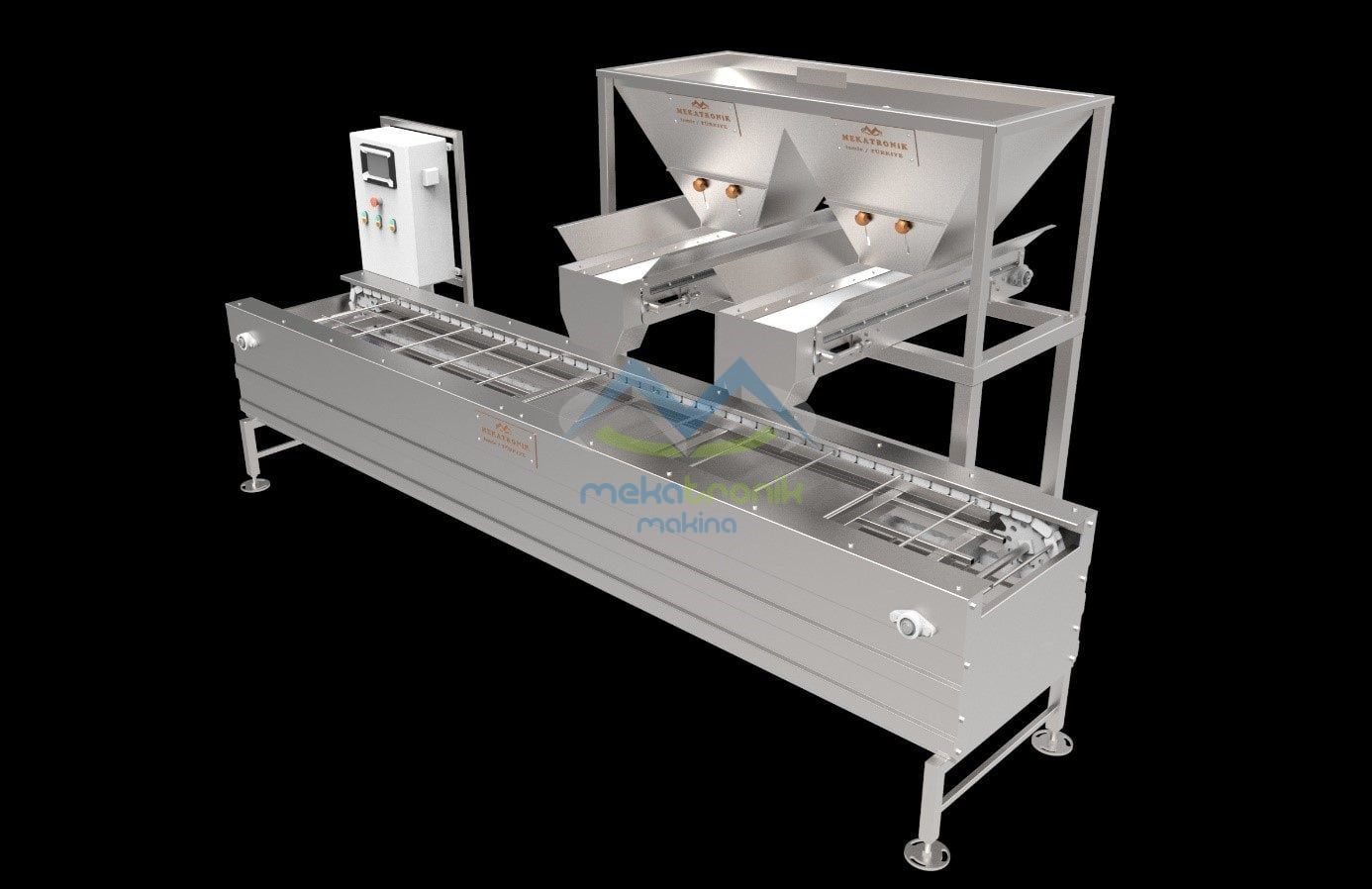
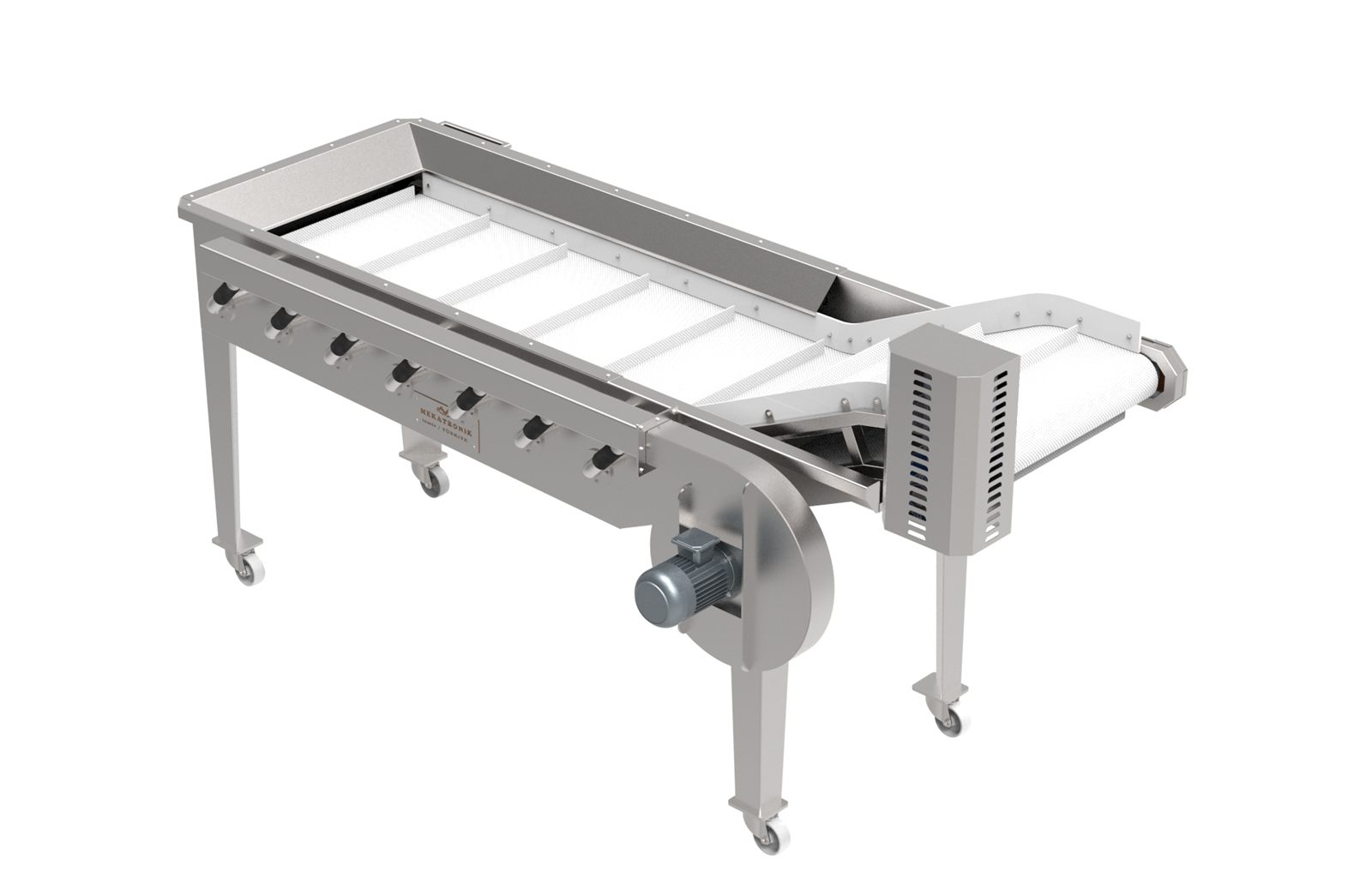
A light sorting conveyor illuminates the product as it passes so operators can spot foreign matter, discoloration or stem fragments and pull them by hand. Belt speed is kept lower than on fully automatic sorting lines because manual picking depends on human reaction time. Light angle and belt color are chosen to maximize contrast between the product and whatever needs to be removed; the wrong contrast means more defects slip past the operator unnoticed.
- 01Usually placed after pre-cleaning or washing, before packaging
- 02Number of operator stations is sized to the line's throughput and expected defect rate
- 03Belt width is set to keep product moving in a single, inspectable layer
- 04Lighting modules can be swapped or re-angled for a different product
03
What problem does a Z-type modular conveyor solve?
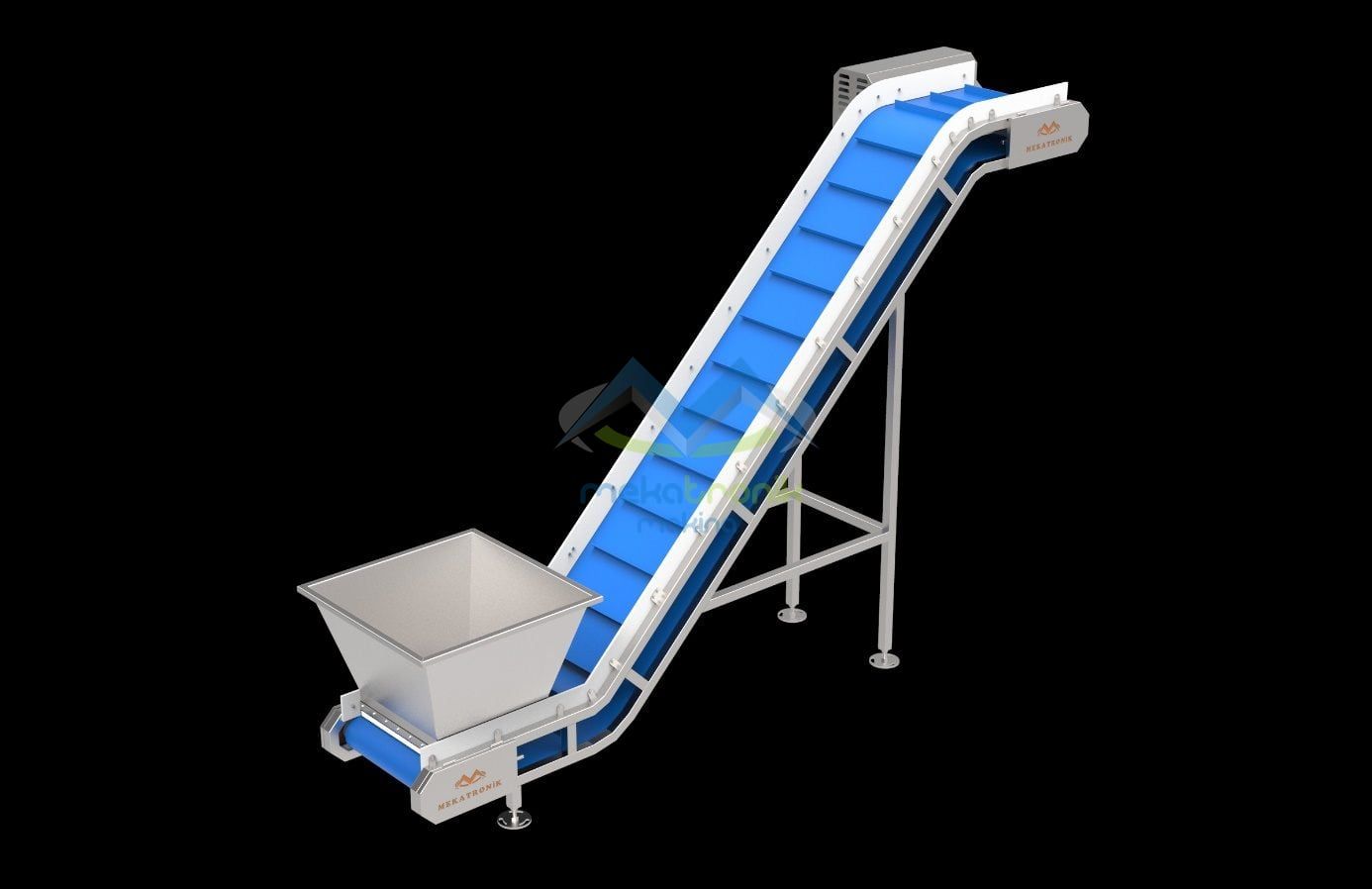
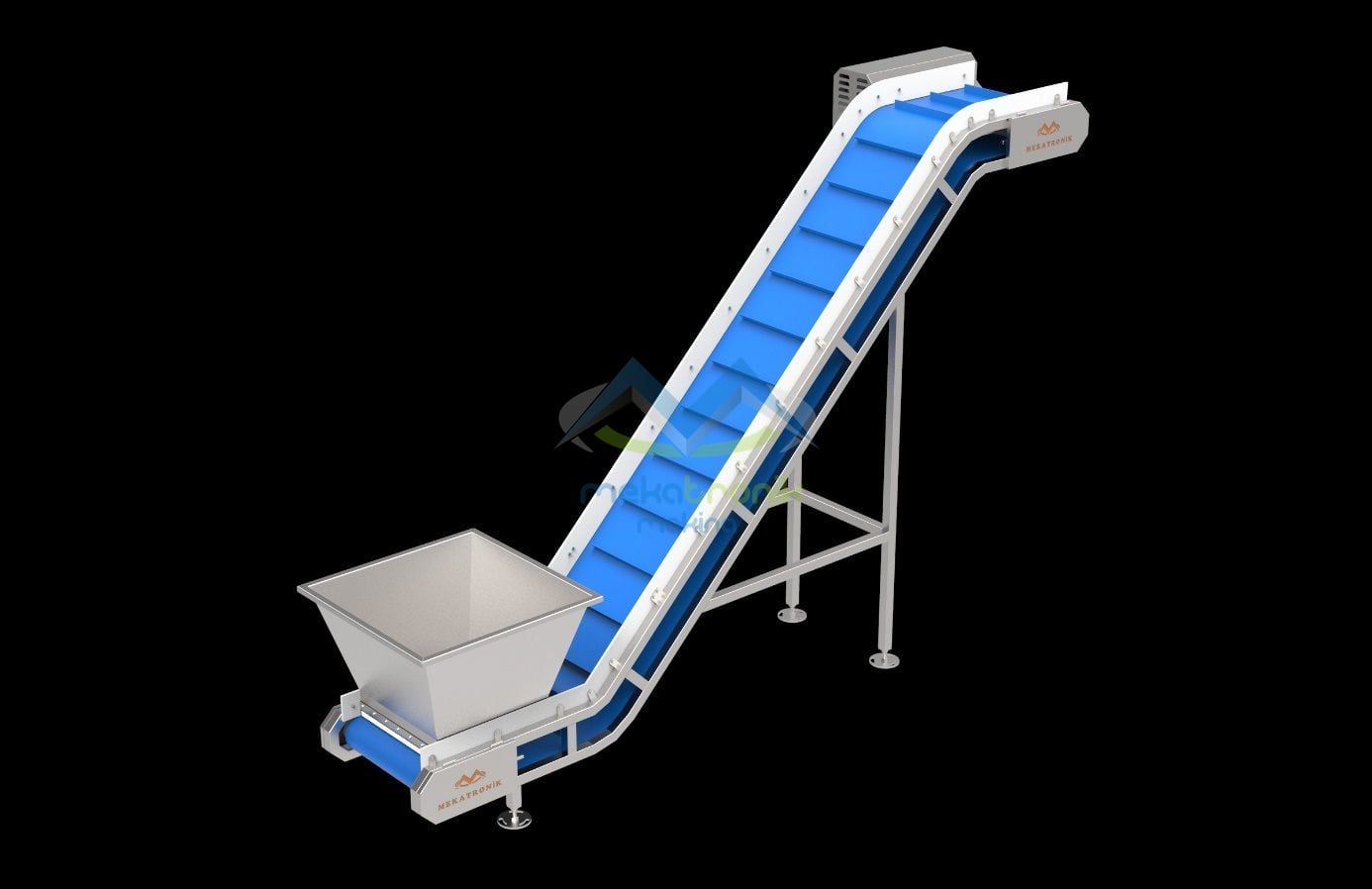
A Z-type modular conveyor carries product through a height change using a horizontal-incline-horizontal path in three segments. It is the usual answer when a tight floor plan needs vertical transport between one station and another sitting at a different level. Because the belt is made of modular plastic links, sections can be unclipped individually for cleaning and a single damaged link can be replaced without swapping the whole belt, which shortens both wash-down and repair time.
04
Choosing between AISI 304 and 316
The conveyor frame and support structure are built in AISI 304 stainless steel for most applications. Where the product is in constant contact with brine, acidic fruit juice or a washing chemical, AISI 316 may be specified instead; the choice depends on the product and the process, and the final material spec is confirmed at the quotation stage. The stainless claim applies to product-contact surfaces only, not necessarily to every support leg or fastener on the frame.
05
How does cleaning differ between the three?
A feeding conveyor generally needs only a daily surface wipe, while a light sorting conveyor also requires the lighting modules to be checked and kept free of dust so contrast stays consistent. A Z-type modular belt can be broken down into sections and cleaned even between shifts, which is useful on lines without a CIP system. If this difference is ignored when a maintenance schedule is drawn up, the station that actually needs the most frequent attention can quietly become the line's bottleneck.
Which conveyor fits which point on the line?
| Conveyor Type | Main Function | Typical Position |
|---|---|---|
| Feeding conveyor | Transfer from crate/bin into the line | Line inlet |
| Light sorting conveyor | Foreign matter and discoloration removal | After pre-processing, before packaging |
| Z-type modular conveyor | Height change, vertical transport in tight spaces | Transitions between stations |
06
Next step
These three conveyor types cover complementary jobs on a raisin processing line; which combination fits your facility depends on the existing layout and target throughput. Reach out through our quote page to work through the conveyor layout for your line.