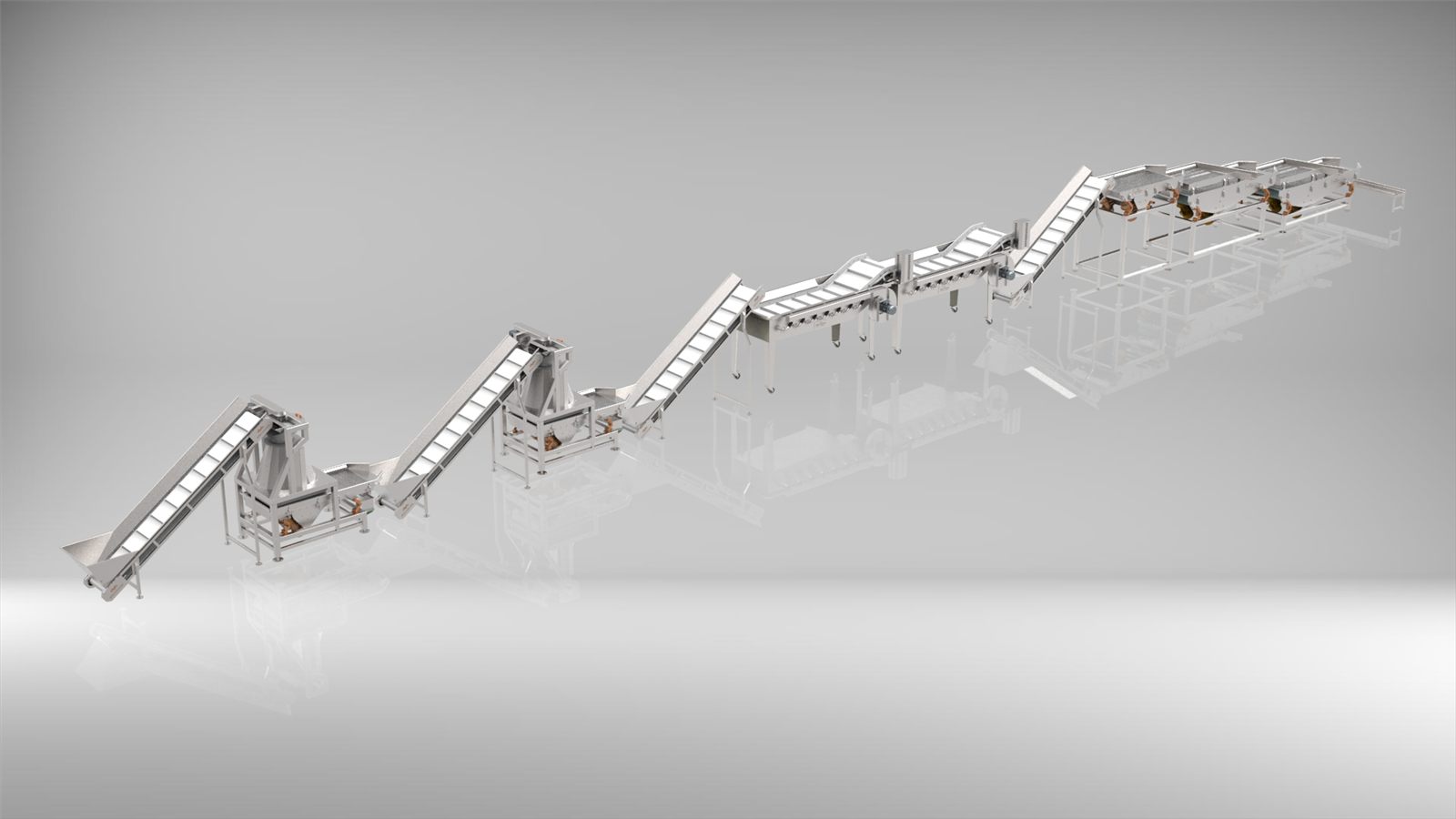
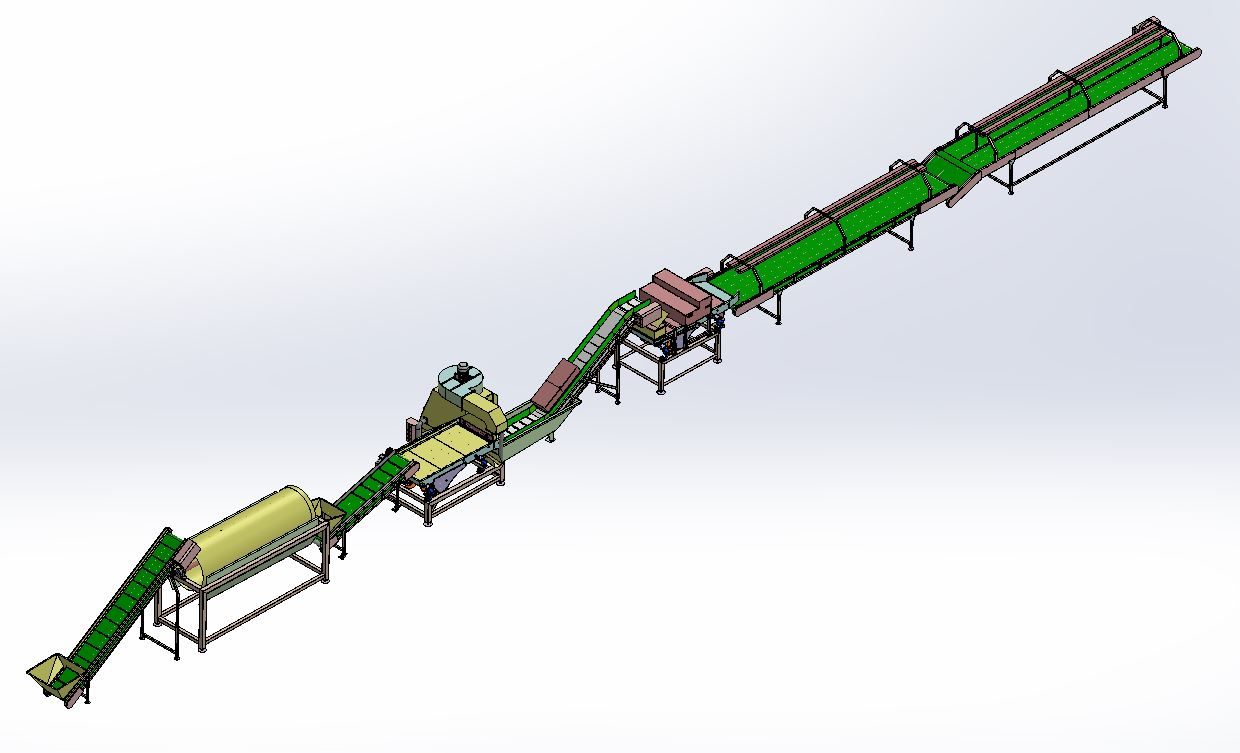
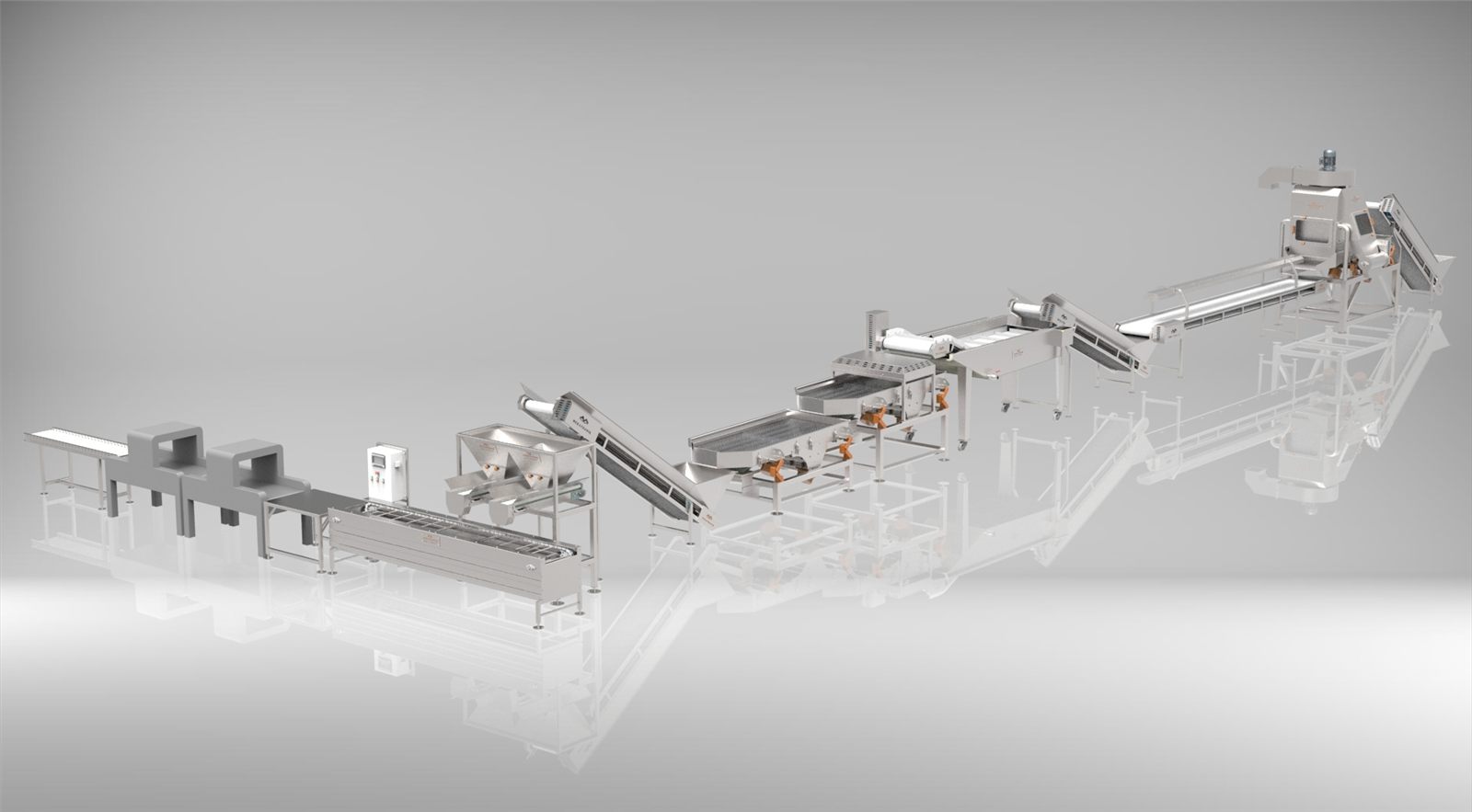
Moving product safely, under control and at the right speed has a direct effect on a plant's capacity, labour cost and product quality. In food, dried fruit, nut, pulse, packaging and general industrial lines, conveyor automation systems keep the production flow orderly and efficient.
At Mekatronik Makina we build stainless steel conveyors, food elevators, modular conveyors, belt conveyors and custom product handling solutions to suit different product types, capacities and plant layouts.
01
Stainless steel conveyors and belt types
Stainless steel conveyors
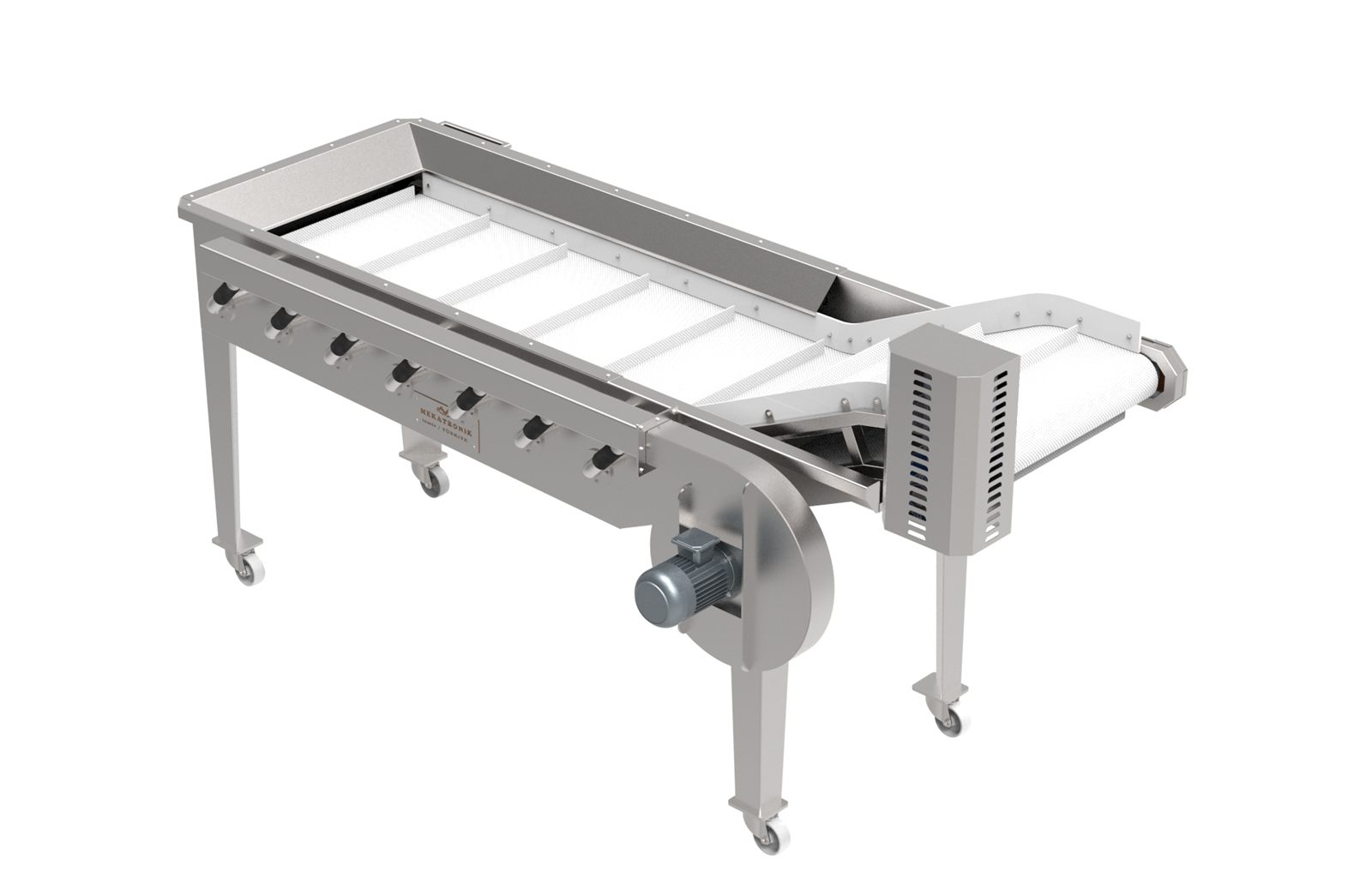
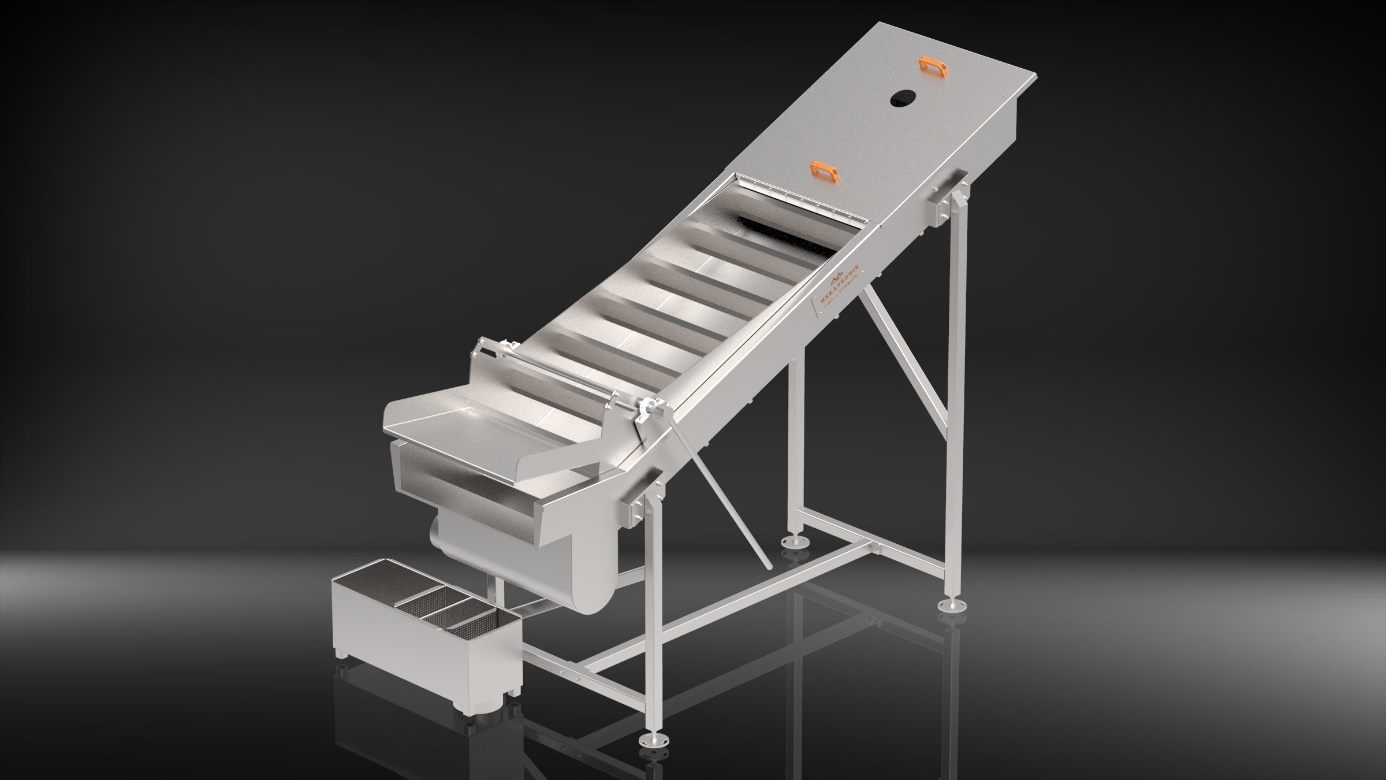
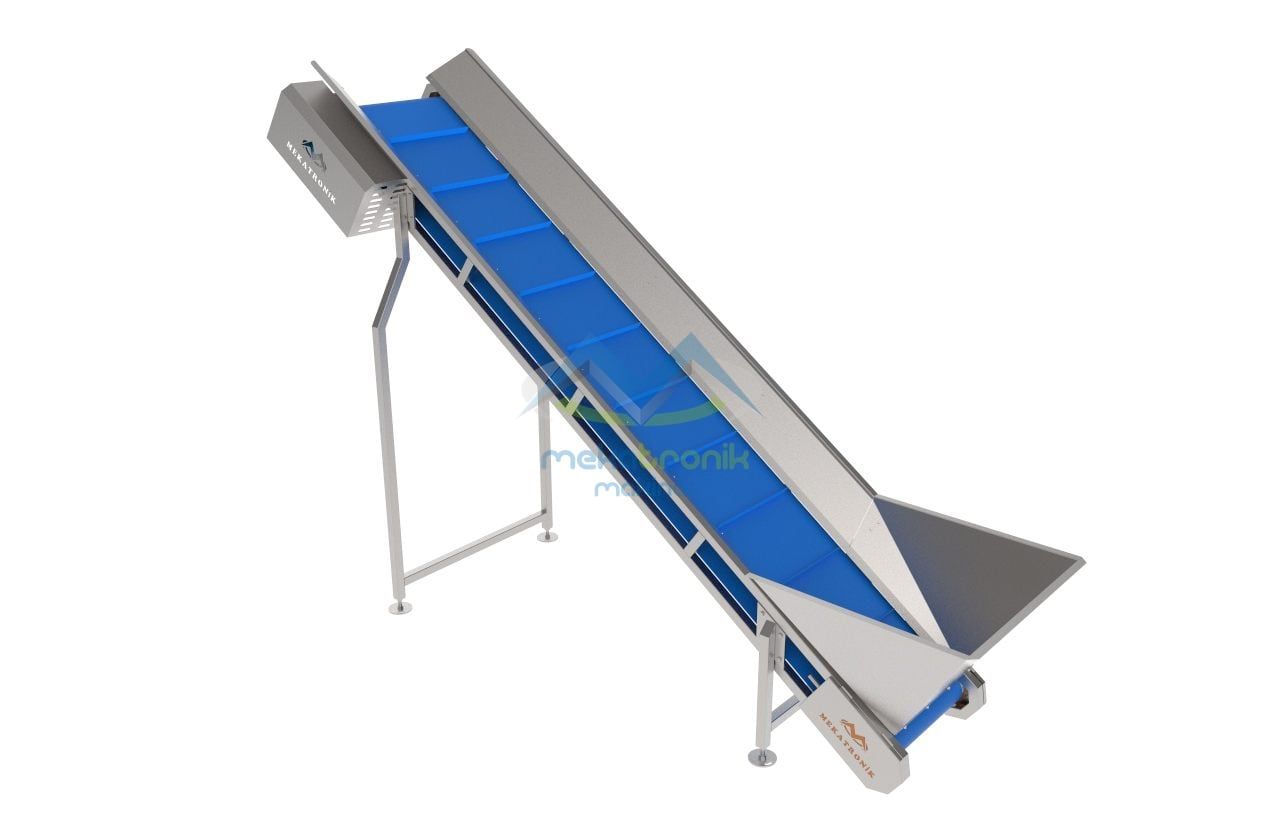
In food handling, hygiene, easy cleaning and long service life come first. That is why stainless steel conveyors are widely used in dried fruit, vegetable, nut, meat, dairy, bakery and packaged food plants. A stainless steel frame means the conveyor:
- 01is easy to clean,
- 02withstands heavy-duty operation,
- 03is suitable for food production areas,
- 04has a long service life,
- 05can be combined with different belt types.
Depending on the product and the process, a modular belt, polyurethane belt, rubber belt or wire mesh belt can be used.
Modular conveyor systems
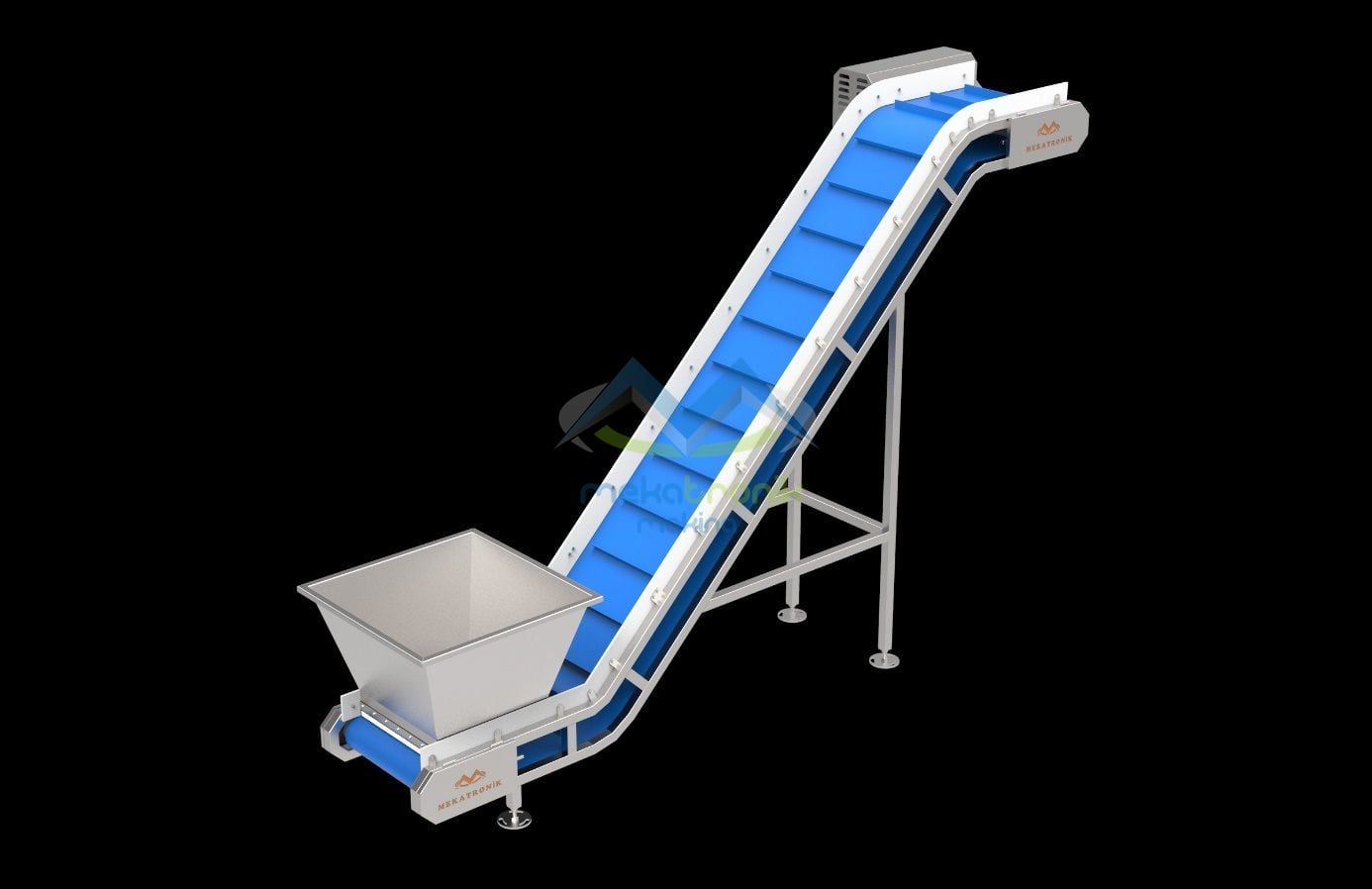
A modular conveyor gives flexibility on food and packaging lines. Its modular plastic belt can be built in different widths and lengths, and it works on straight runs as well as inclines, declines and curves. Typical uses are dried fruit processing plants, fruit and vegetable lines, packaging plants, box and carton handling, product feeding and links between line sections. With a stainless steel frame it becomes a robust, long-lasting solution where hygiene matters.
Polyurethane conveyor belt
Polyurethane (PU) conveyor belt is one of the belt types used in the food industry. Its hygienic, easy-to-clean surface and range of options make it a common choice for dried fruit, vegetables, fresh fruit, packaged products and bakery goods.
Rubber conveyor belt and rubber belt conveyors
A rubber conveyor belt is a strong option for heavier products or materials handled in harsh conditions. Its abrasion resistance makes it suitable for long-term use in industrial plants. The right rubber belt depends on the weight, temperature and structure of the product, the conveyor incline and the working environment.
Rubber belt conveyors are used for raw material handling, product transfer, package handling and general industrial material transport. The conveyor frame can be made of stainless steel or other construction materials depending on the application.
Wire mesh belt conveyor
A wire mesh belt conveyor is used where air needs to circulate around the product or where both the top and bottom of the product must stay open. Because air passes freely through the belt, it suits cooling, drying, washing, heating and surface water removal. With stainless steel mesh options it can also be used in food processing plants. The mesh opening is set according to product size and process conditions.
02
Modular Z elevator and food elevators
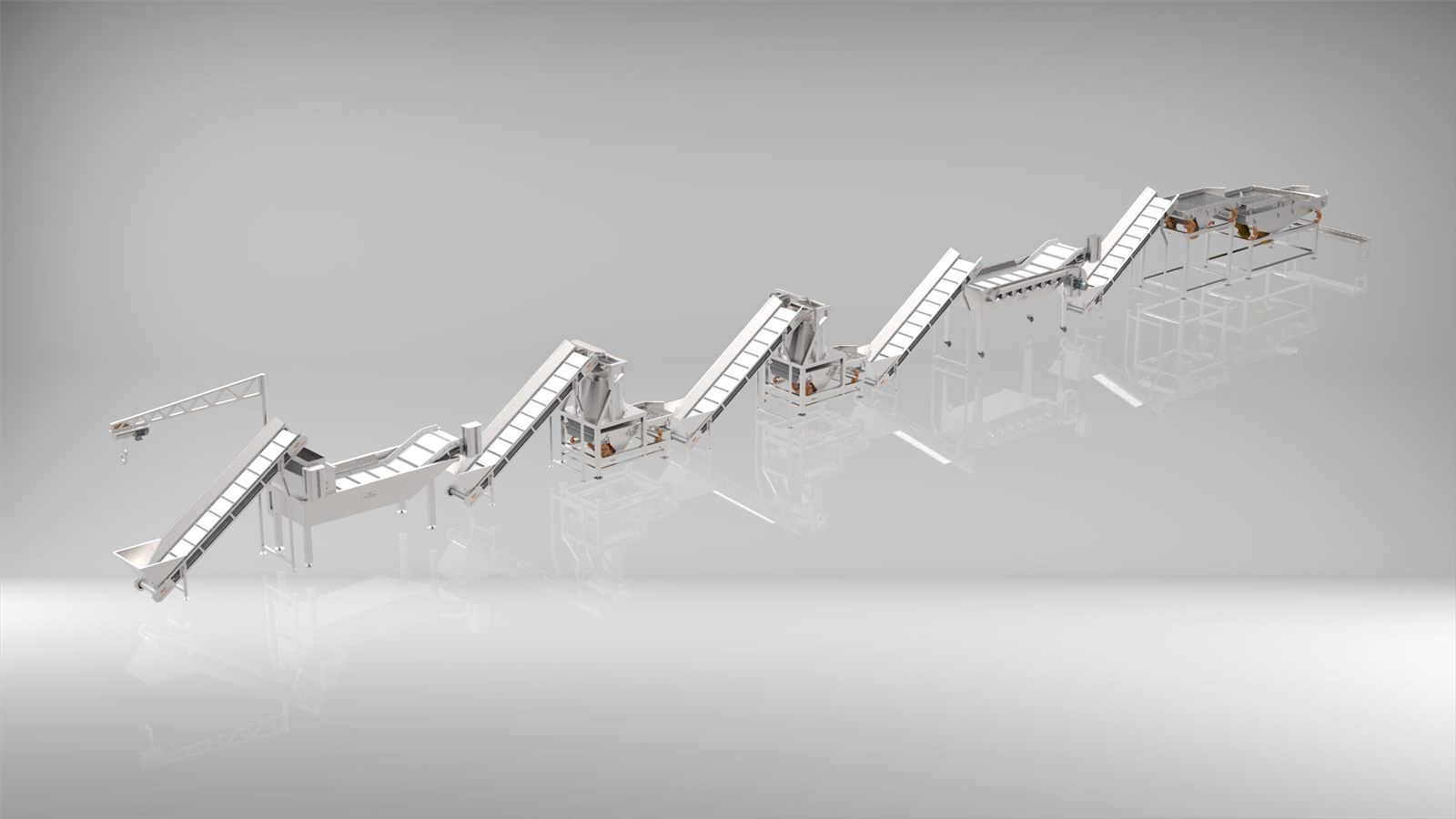
Modular Z elevator
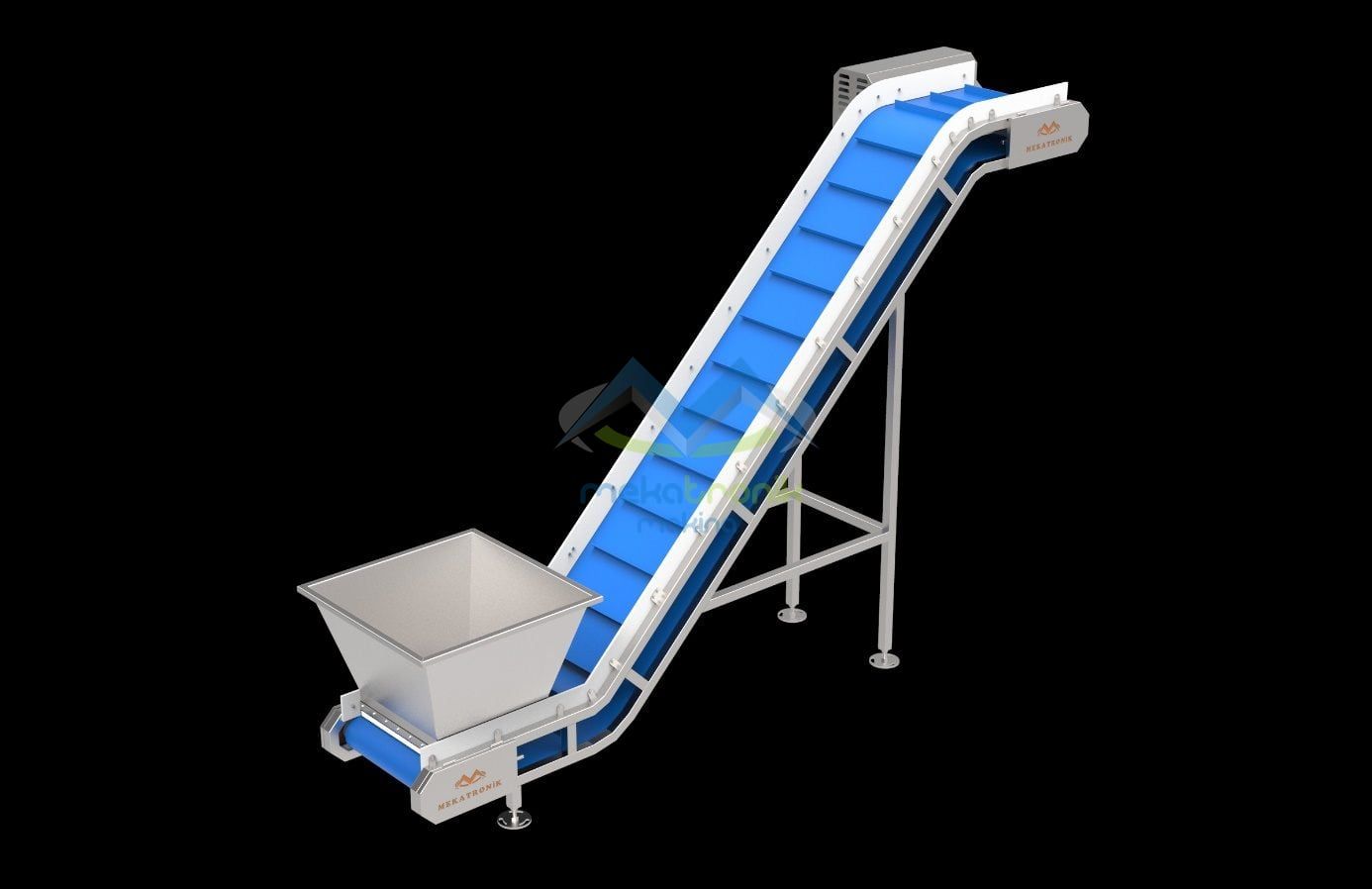
On lines with large height differences, a modular Z elevator (Z-type modular conveyor) takes product from a low level and lifts it to a higher point in a controlled way. Flights on the modular belt keep the product secure on steep or near-vertical sections. Typical uses:
- 01feeding packaging machines,
- 02conveying product to weighing systems,
- 03filling hoppers,
- 04handling dried fruit, nuts and pulses,
- 05moving product between floors of a line.
Food elevators and stainless steel elevators
Food elevators are designed to move product between levels without damaging it. They play an important part in handling raisins, dried apricots, figs, dates, prunes, nuts, pulses and similar products. Product contact areas must be hygienic, easy to clean and gentle on the product, which is why stainless steel elevators are preferred in food applications.
A stainless body with the right belt keeps the transfer under control. Stainless steel elevators are used in food plants, dried fruit factories, nut processing plants, packaging lines, fruit and vegetable processing and industrial kitchens.
Product handling elevators and elevator conveyors
Product handling elevators transfer product from one machine to the next or between production levels. They are built in different heights and belt widths to match the plant layout and capacity, and help keep product flowing without interruption on automated lines.
Where a flat conveyor is not enough, an elevator conveyor bridges the height difference and frees up floor space. It is widely used where packaging or dosing systems have to be fed from above.
03
Screw conveyors, feeding conveyors, 90 degree conveyors and rotary tables
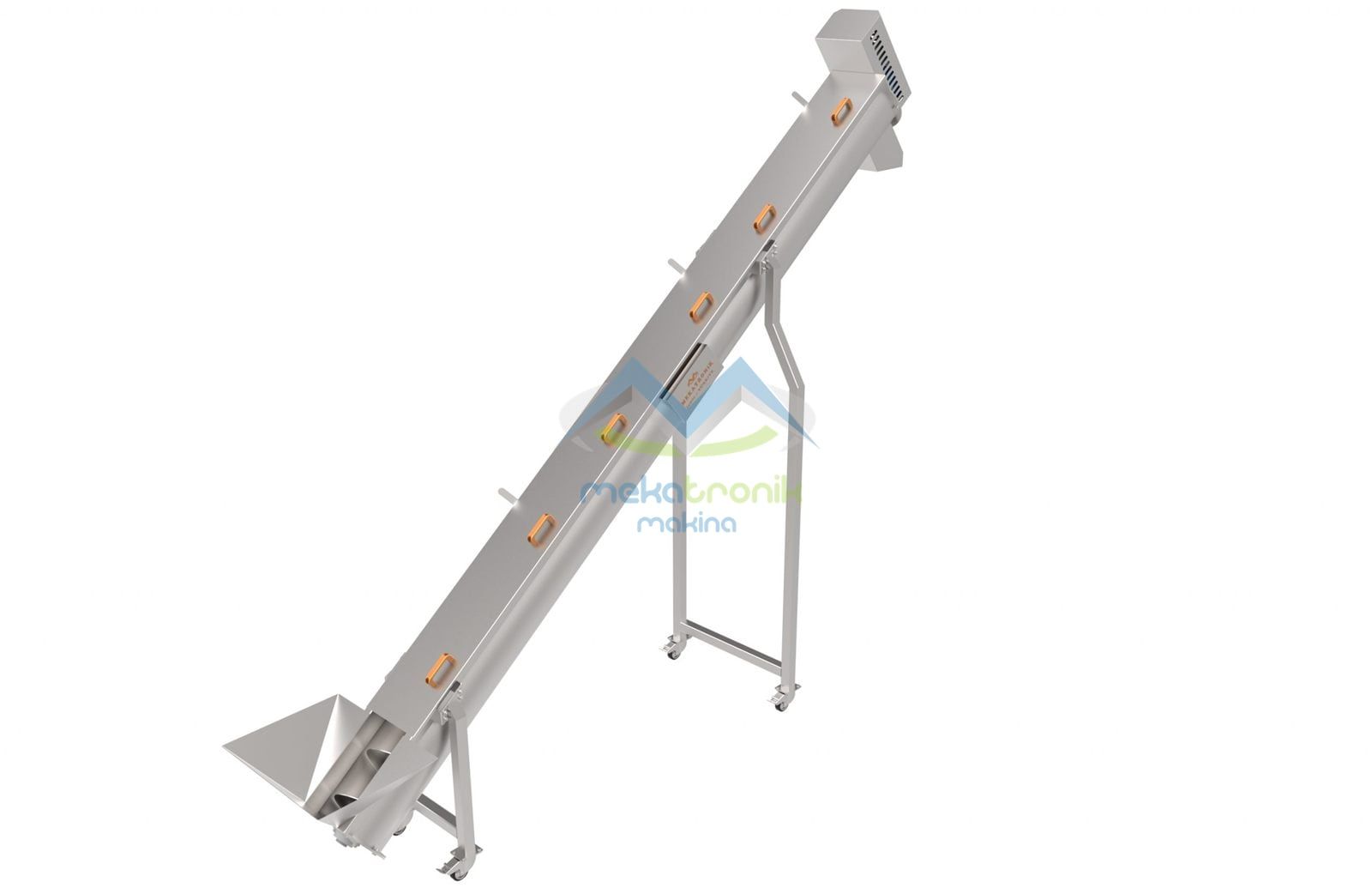
Screw conveyor
A screw conveyor is a compact way to move powder, granules or small particles. The rotating flight carries product horizontally or on an incline. It handles flour, spices, powders, kernels, crumbs, granules, rejects and production waste. In food applications a stainless steel screw conveyor is the usual choice.
Feeding conveyor
A feeding conveyor delivers product to the next machine in controlled amounts. It reduces product build-up and keeps the machines on the line evenly fed. It is placed before weighers, packaging machines, screening systems, washing machines, optical sorters and elevators, and its speed is adjusted to the needs of the line.
90 degree conveyor
Where floor space is tight, a 90 degree conveyor changes the direction of product flow. It allows the line to be laid out in an L shape or other geometries, so the space is used better and machines can be connected in a sensible order. A modular belt or another belt type is chosen according to the application.
Electric rotary table
Placed at the end of production and packaging lines, an electric rotary table collects products or packs in a controlled way. It is used at packaging line outfeeds, for carton collection, product accumulation and at operator feeding points. Table diameter and speed are designed around the production capacity.
04
Conveyor automation systems
On a modern line it is not enough to move the product; the flow itself has to be controlled. Conveyor automation makes conveyors and production machines work together. Depending on the application it can include:
- 01speed control,
- 02product detection,
- 03line synchronisation,
- 04start-stop control,
- 05diverting,
- 06sequence control.
A well designed automation system reduces unnecessary waiting and product build-up along the line.
05
How to choose the right conveyor system
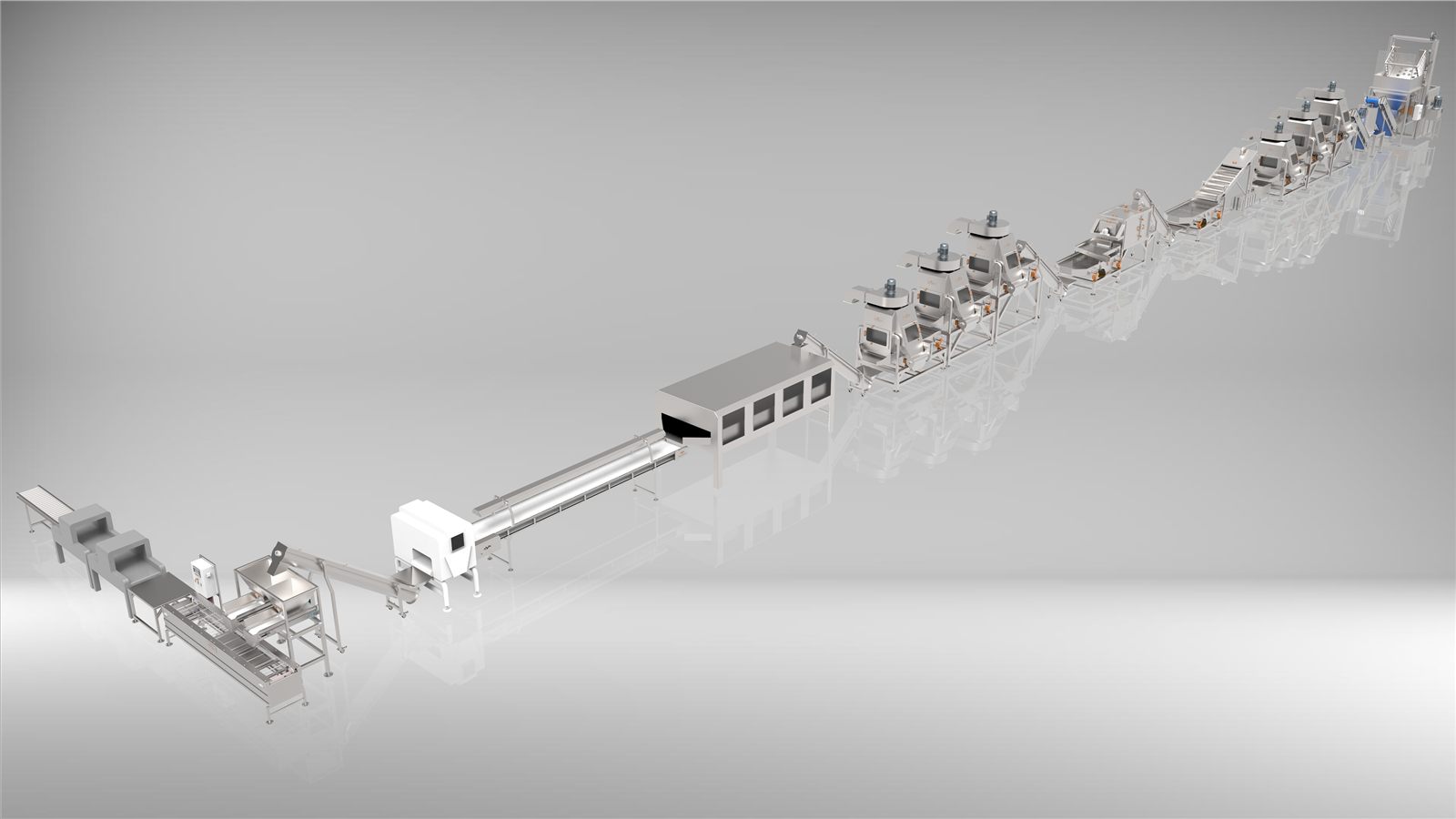
No single conveyor fits every line. Product type, product weight, product size, capacity, conveying distance, lift height, working environment, hygiene requirements and cleaning method all have to be considered together.
For example, dried fruit production typically uses stainless steel conveyors, food elevators, a modular Z elevator, feeding conveyors and polyurethane belts, while heavier industrial products may be better served by a rubber belt conveyor.
06
Mekatronik Makina conveyor systems
Mekatronik Makina designs and builds conveying systems around the needs of each production line. Our range includes screw conveyors, elevator conveyors, modular conveyors, the modular Z elevator, food elevators, product handling elevators, stainless steel elevators and conveyors, feeding conveyors, 90 degree conveyors, rubber belt conveyors, wire mesh belt conveyors, polyurethane and rubber conveyor belt systems, electric rotary tables and conveyor automation systems.
Each system is engineered for the product, the capacity and the plant layout, with the aim of an orderly and reliable product flow across the whole line. To discuss the right conveyor system for your product and line, contact us through our quotation page.