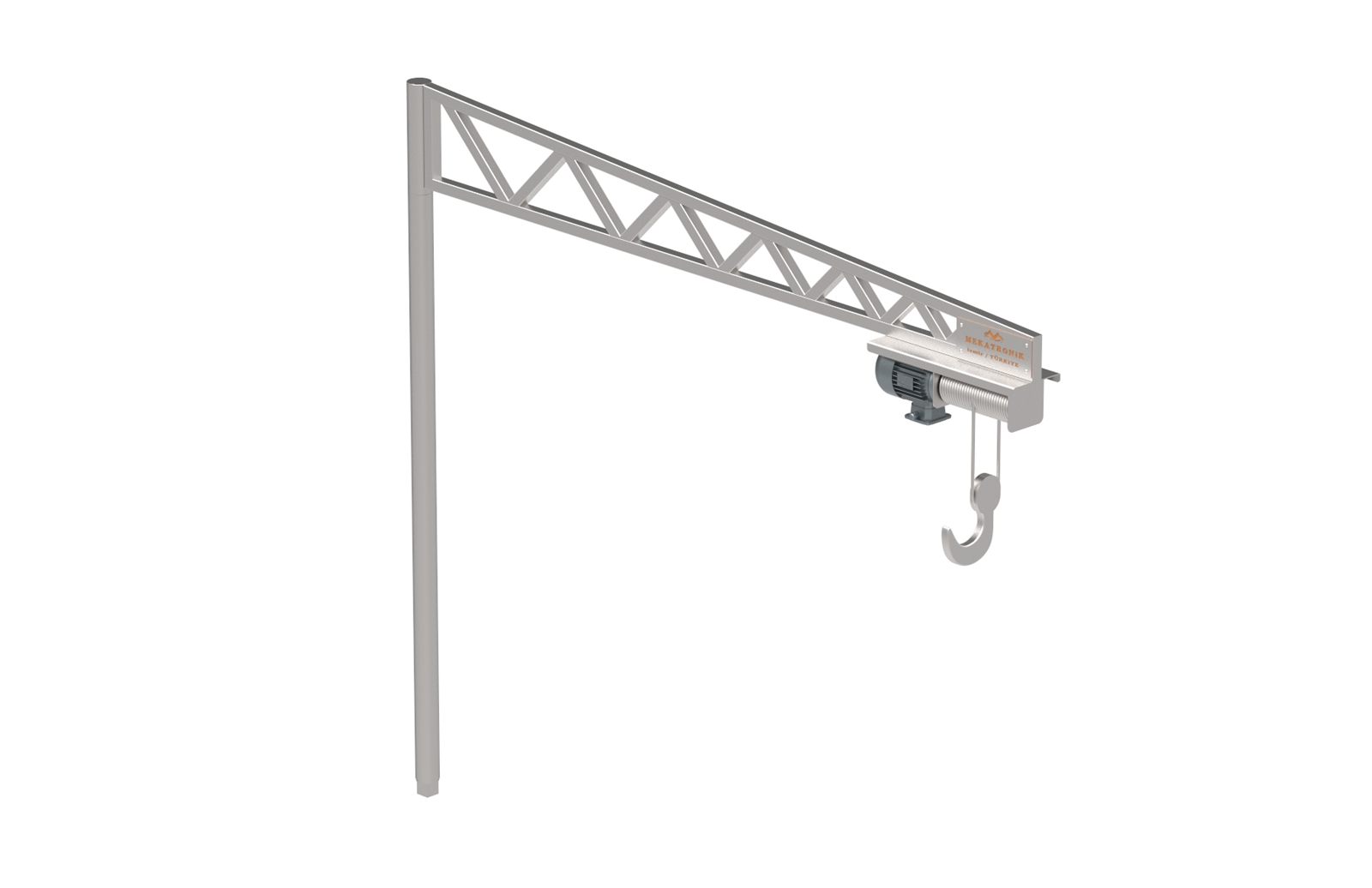
On a dried fruit line, the step that asks most from the body is emptying a full sack at the line inlet. A Sack Lifting Hoist takes that lift off the operator's back and gives it to the machine. The difference shows less in speed than in how the operator stands, where they look and how long they spend under the load.
01
What exactly goes wrong with manual sack emptying?
When a sack is emptied by hand, four things happen at once: the load is lifted, the trunk bends and twists, the arms reach up under load, and the operator stands very close to the product pouring out. None of these is extraordinary on its own. The problem is that the movement repeats many times across a shift. The repeat count differs from plant to plant, so we give no figure here; you would take it from your own shift records.
There is a second effect. The feeding rhythm becomes tied to one person's strength. As the operator tires, unloading slows or turns uneven, and the rest of the line receives uneven product.
02
How does a hoist change posture and position?
Because the hoist carries the load, the operator's task moves from carrying to directing. Control is by remote hand control, so the operator does not have to stand directly under the sack or at the foot of the discharge opening. The approach of the sack, the discharge point and the flow of product can be watched in one view.
- 01The lifting effort moves from person to machine; the operator manages the movement, not the weight.
- 02With a remote control, the standing position can be chosen away from the load and the falling product.
- 03Discharge is controlled, so product does not drop into the line inlet all at once.
- 04The same motion repeats on every sack, which makes unloading more predictable across a shift.
None of this makes a hoist a safety measure on its own. The risk assessment is the plant's responsibility, and the hoist is one item inside that assessment.
03
Which safety points should be raised at the quote stage?
On this machine, capacity and dimensions are set per project and exact values are finalised in the quote. Several safety topics belong in the same conversation. The list below is a set of questions; the answer to each depends on the project and on the plant's own risk assessment.
- 01The heaviest sack and the sack type: capacity follows from this and is not guessed.
- 02The height of the discharge point and the reach area: planned so the operator can stand outside it.
- 03How the remote control is used and where the operator can see the product.
- 04How the area under the load, where nobody should pass, is marked on the floor.
- 05Conformity with CE requirements and what the user manual covers. Details are covered on the quality page and in the quote discussion.
Legal duties and periodic inspection of lifting equipment differ by country. We give no regulation article or interval in this article; for the rules in force, consult the plant's safety officer and the local regulation.
04
How do hygiene and materials connect to safety?
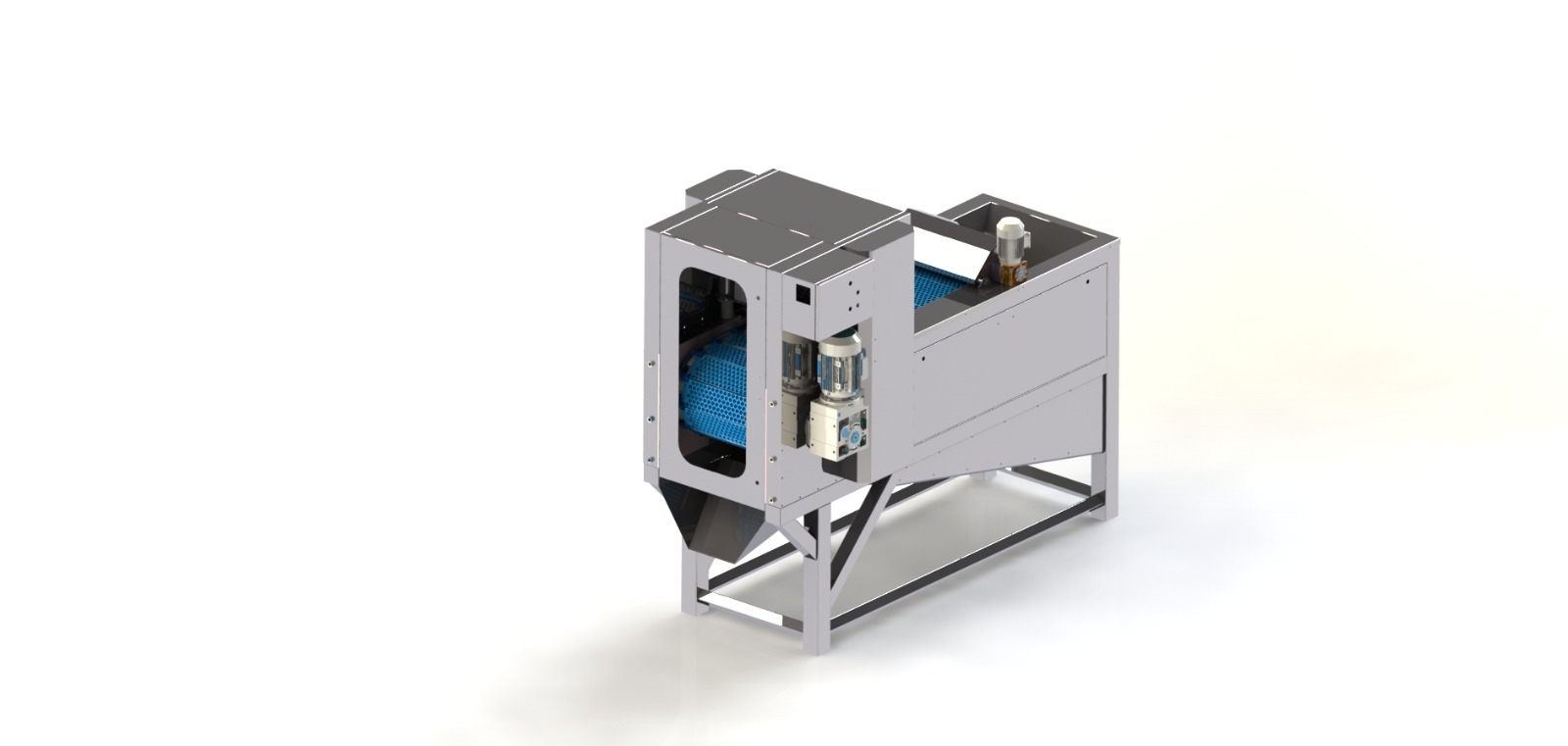
The body and the product-contact surfaces are made of AISI 304 stainless steel. The hoisting motor and control equipment are outside the stainless scope. That distinction matters for safety too, because the electrical parts must be protected from water and moisture while the line is washed. When planning the washing routine, treat the motor and control as a separate point.
05
When do you actually get the ergonomic gain?
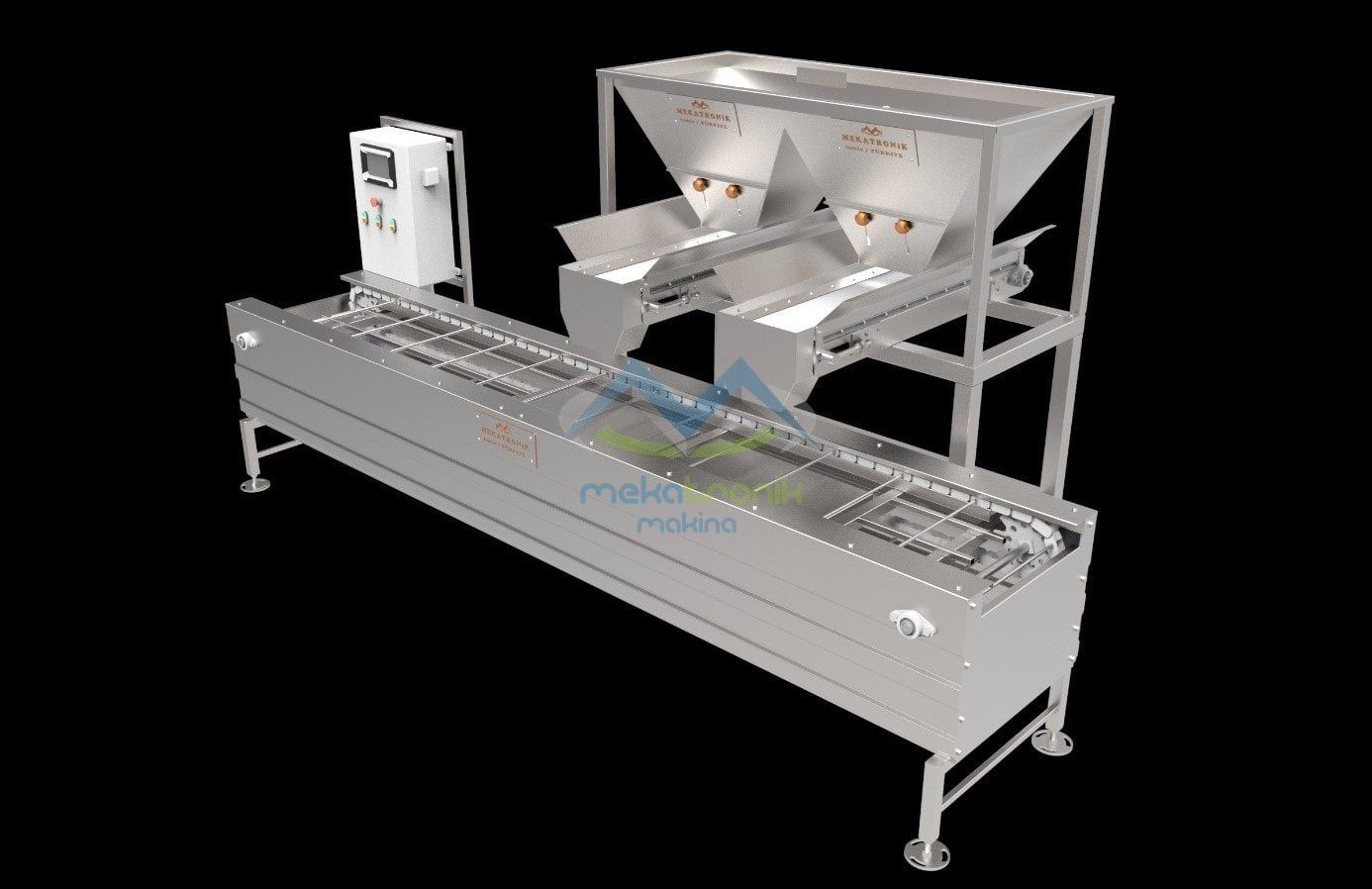
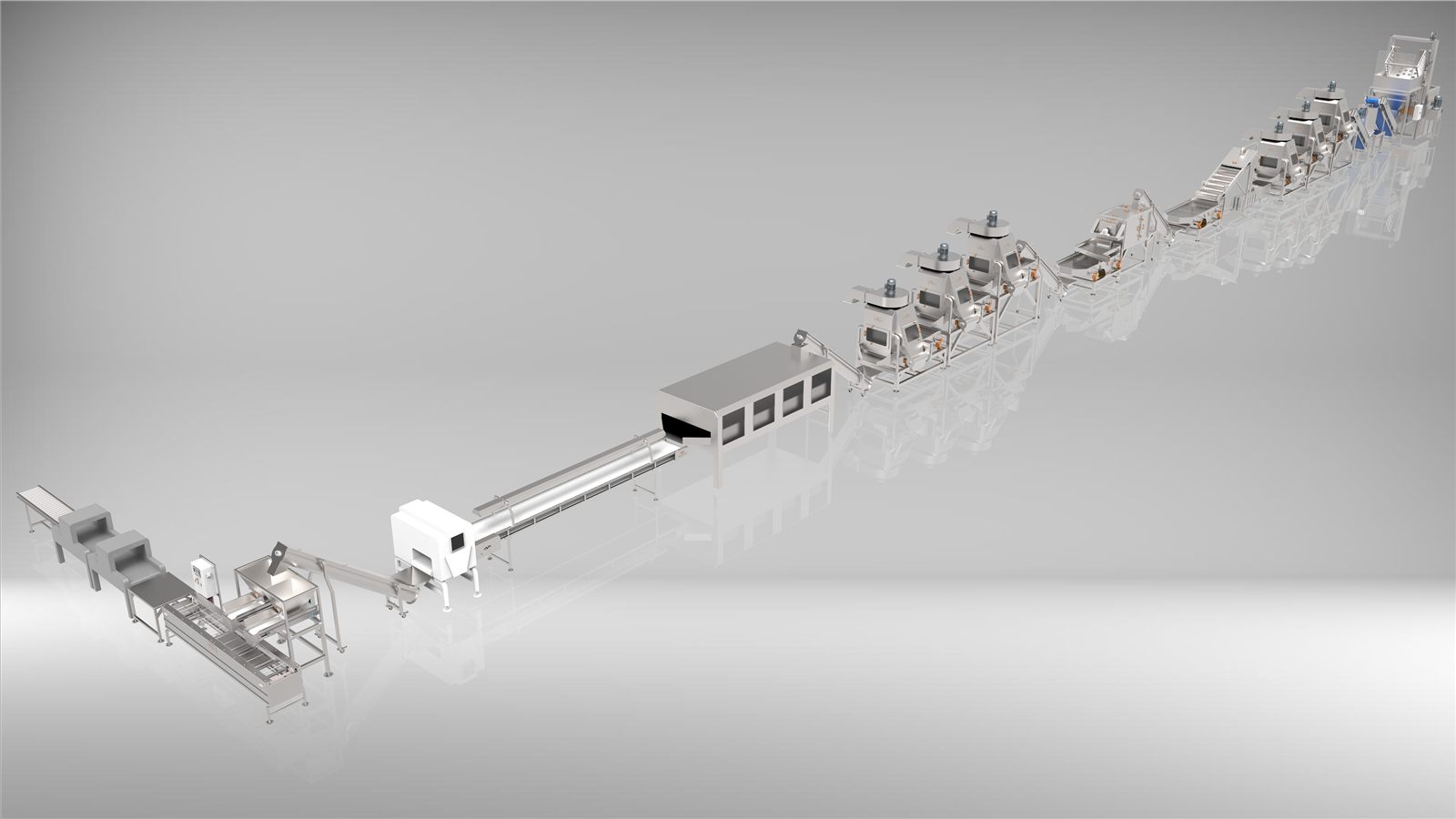
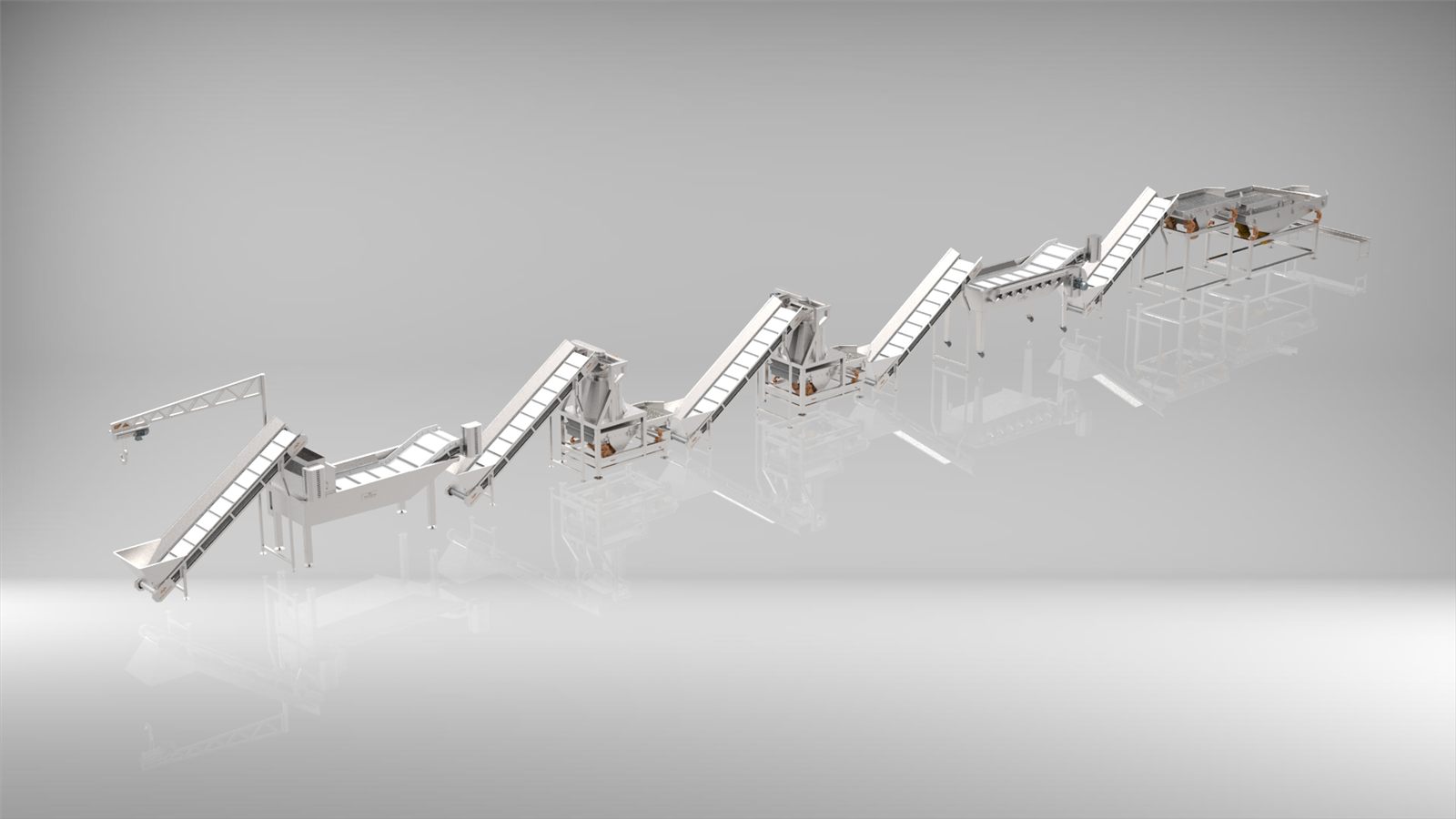
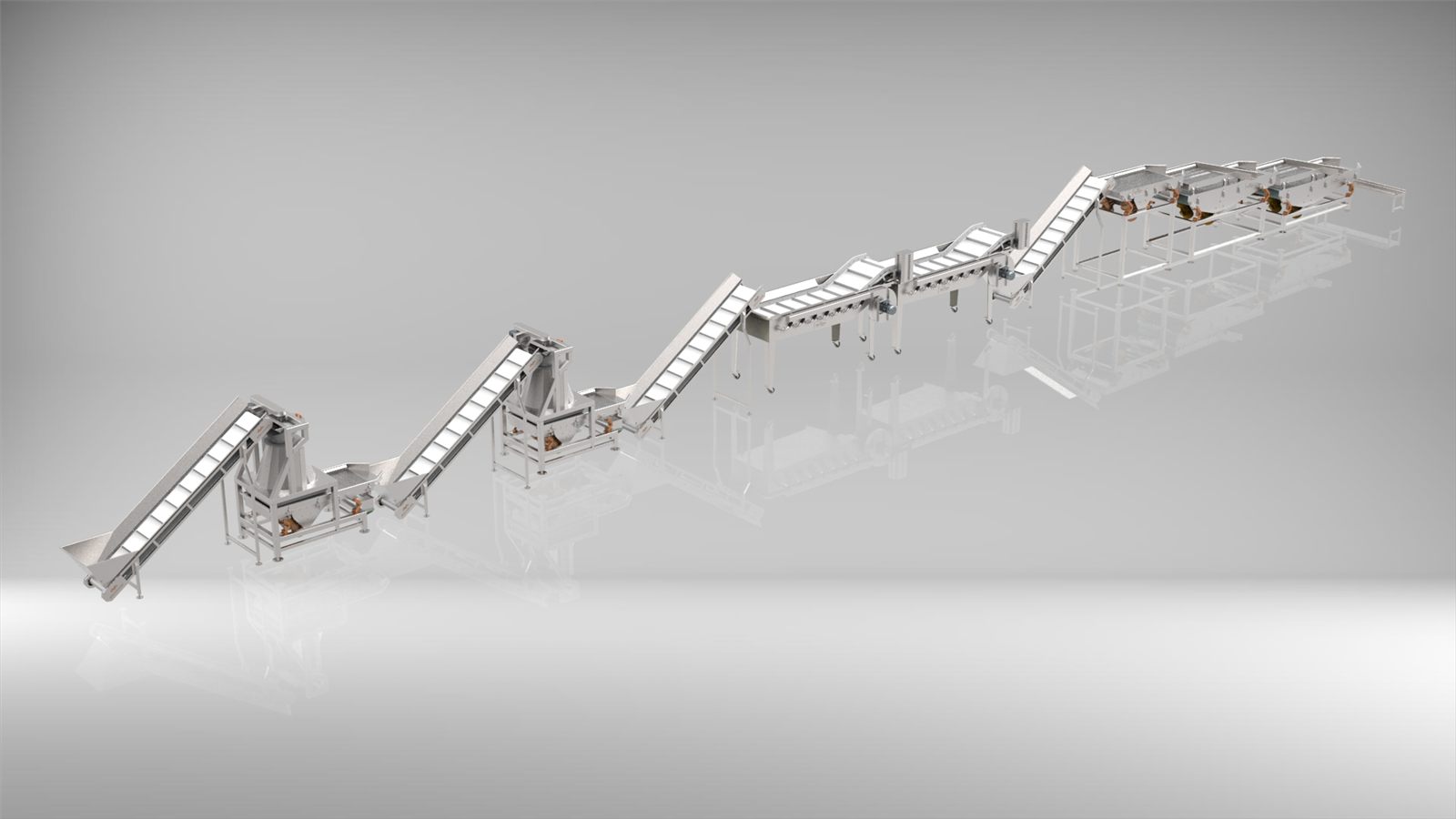
A hoist does not solve the problem if the discharge point is poorly placed; it only moves the lift. If the line inlet is far from where the sack arrives, or the reach area is narrow, the operator still has to bend and steer the sack by hand. That is why layout is discussed before capacity. If product arrives in sacks, a hoist is the natural answer; if it arrives in crates, a crate tipping machine may suit better. What happens after the hoist releases the product can be seen on the dried apricot line page.
06
What should you prepare for the quote?
- 01Product and sack type, and the heaviest sack
- 02Where the sack is picked up, where it is emptied, and the height difference between them
- 03Roughly how many sacks are emptied per shift
- 04Floor layout, electrical supply and washing routine
- 05Where the operator will stand and the walkways around it
Next step: send these details through the quote page. We will plan the station layout and the hoist's reach area with you, and finalise capacity and dimensions in the quote.