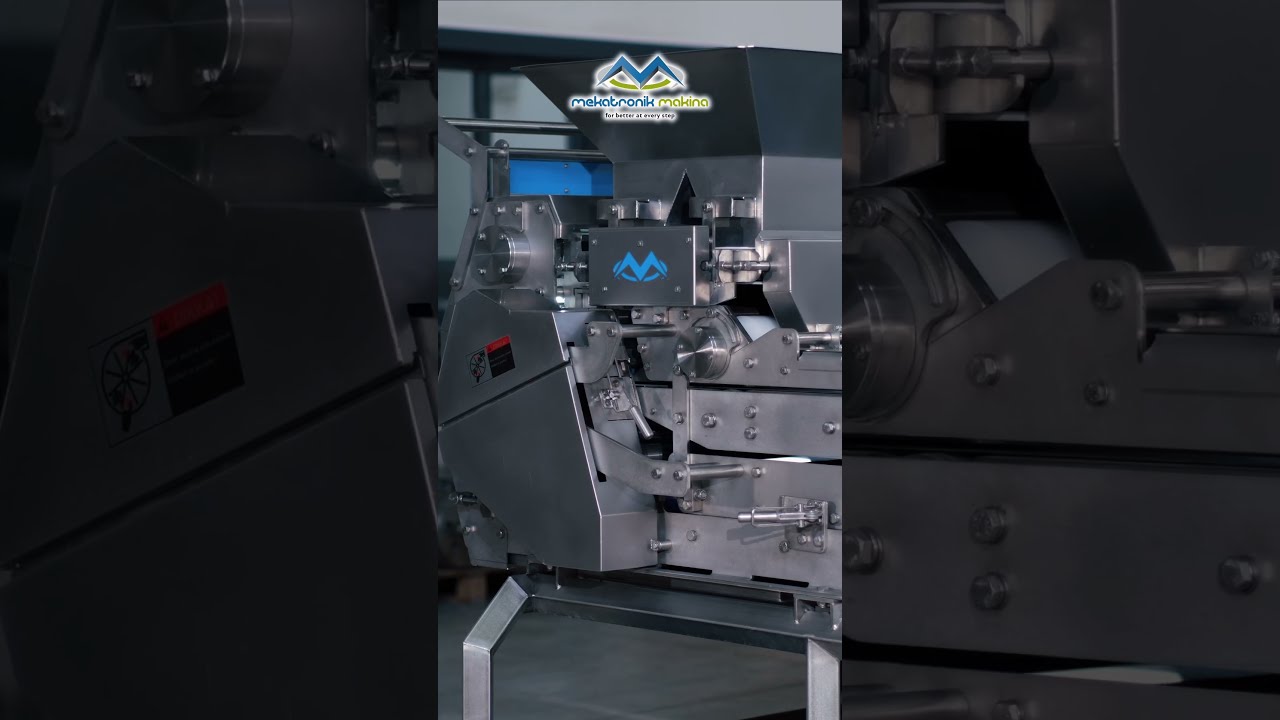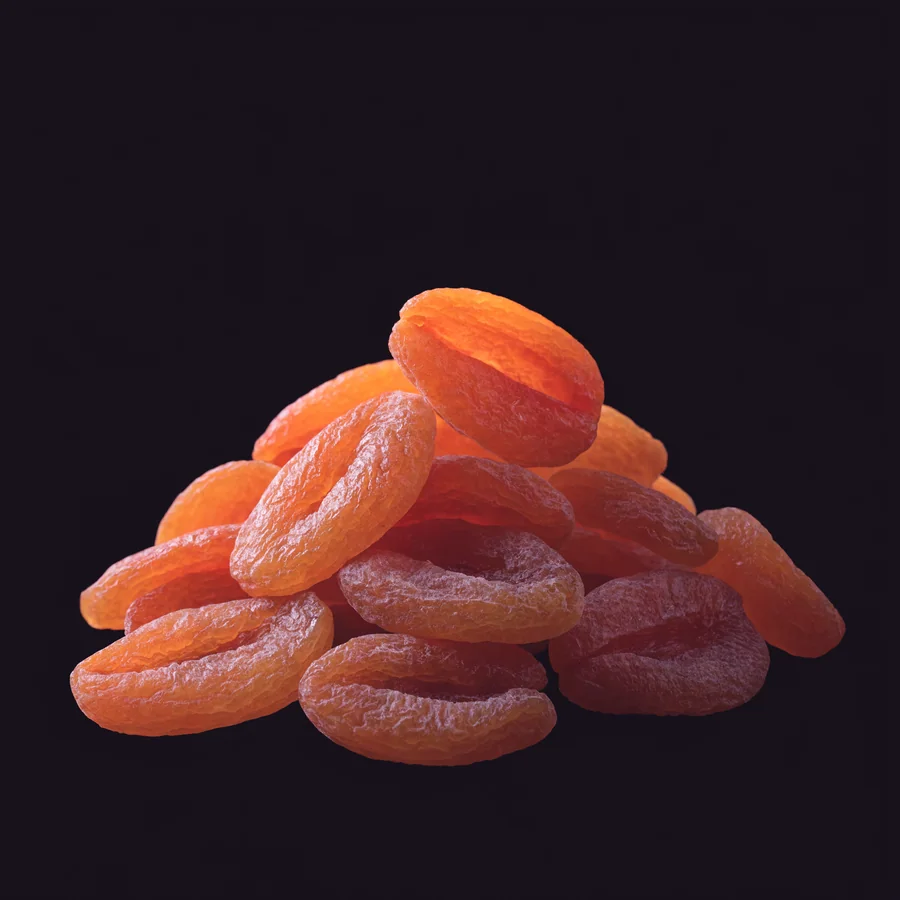
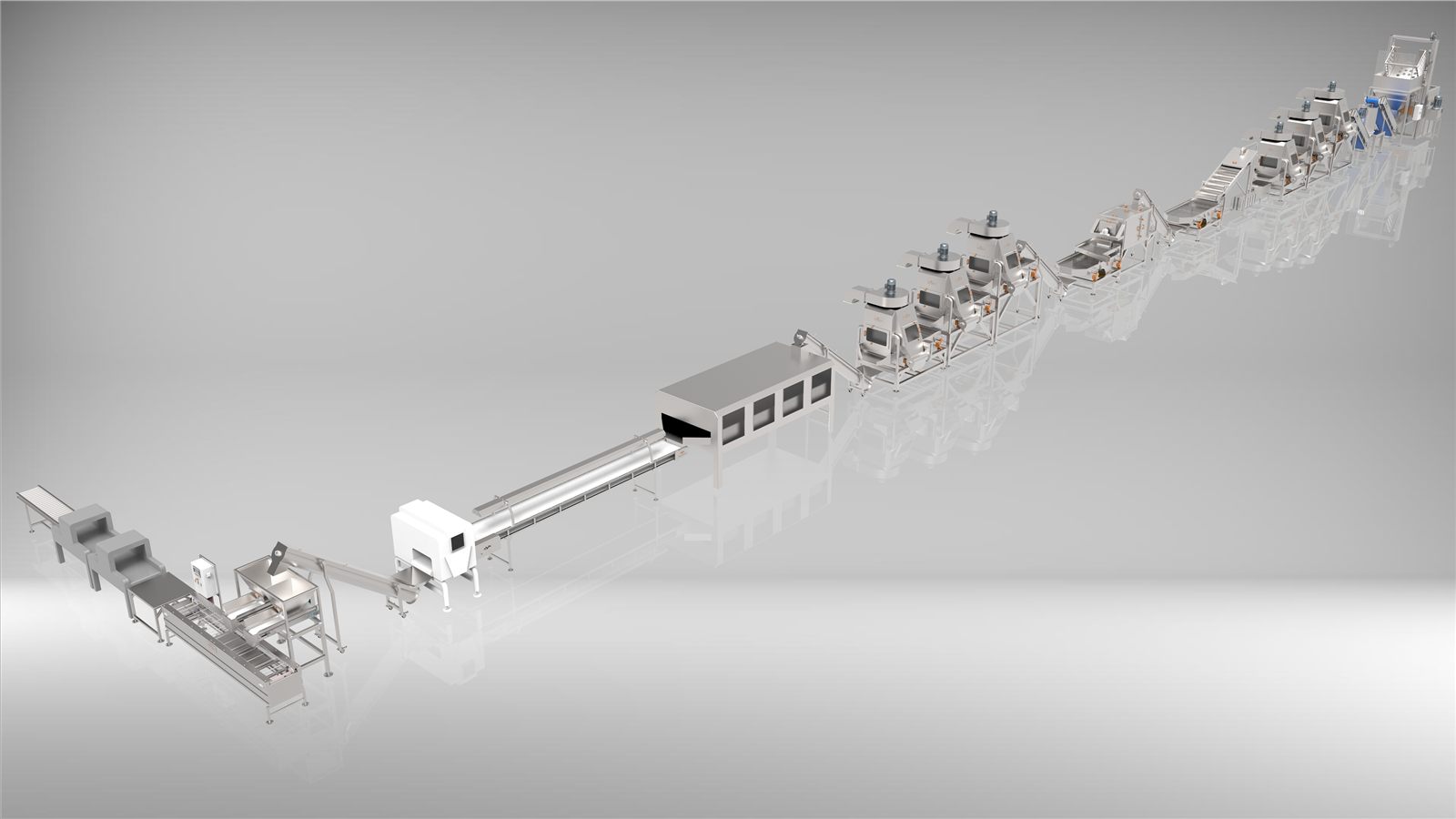
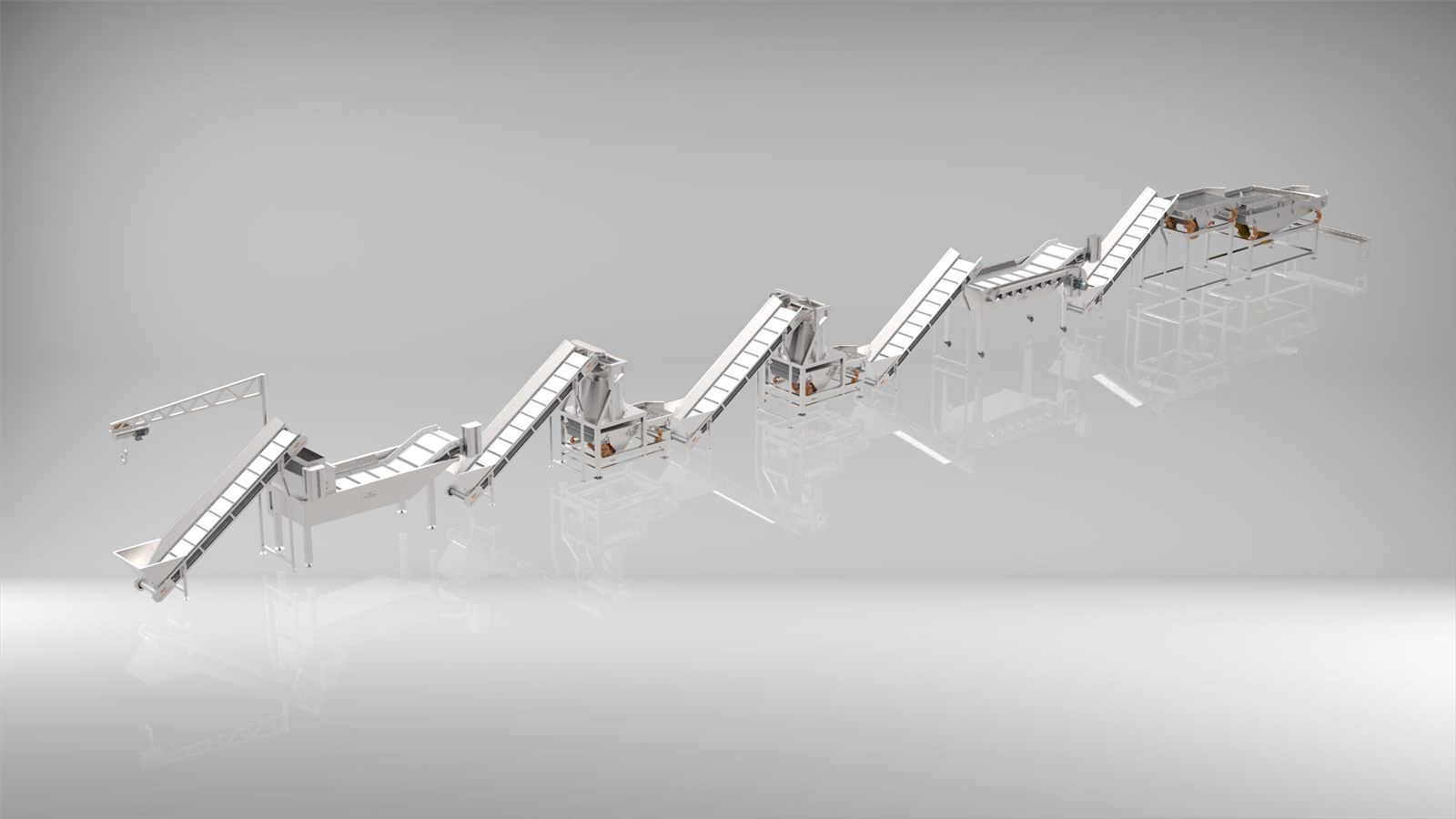
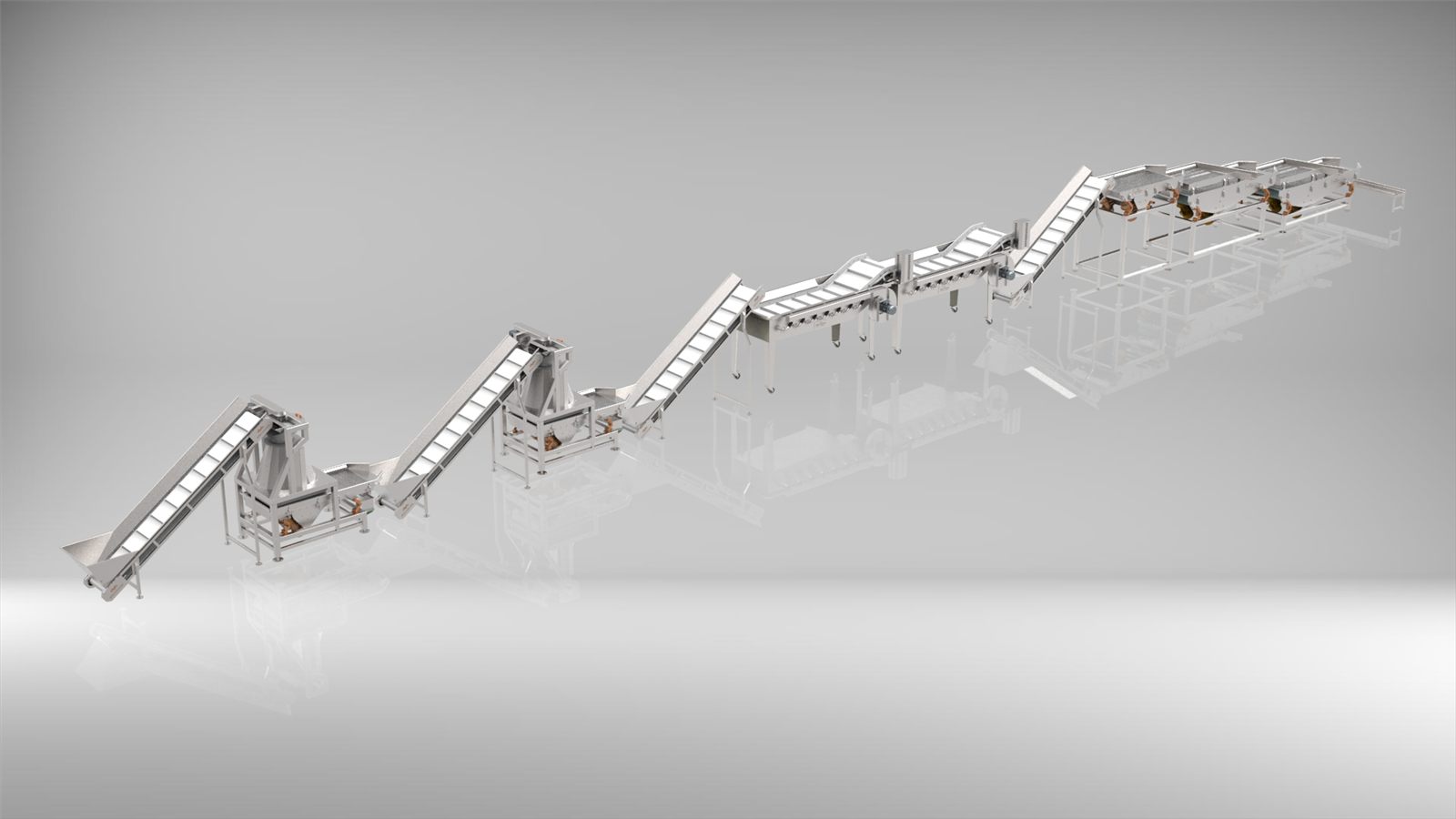
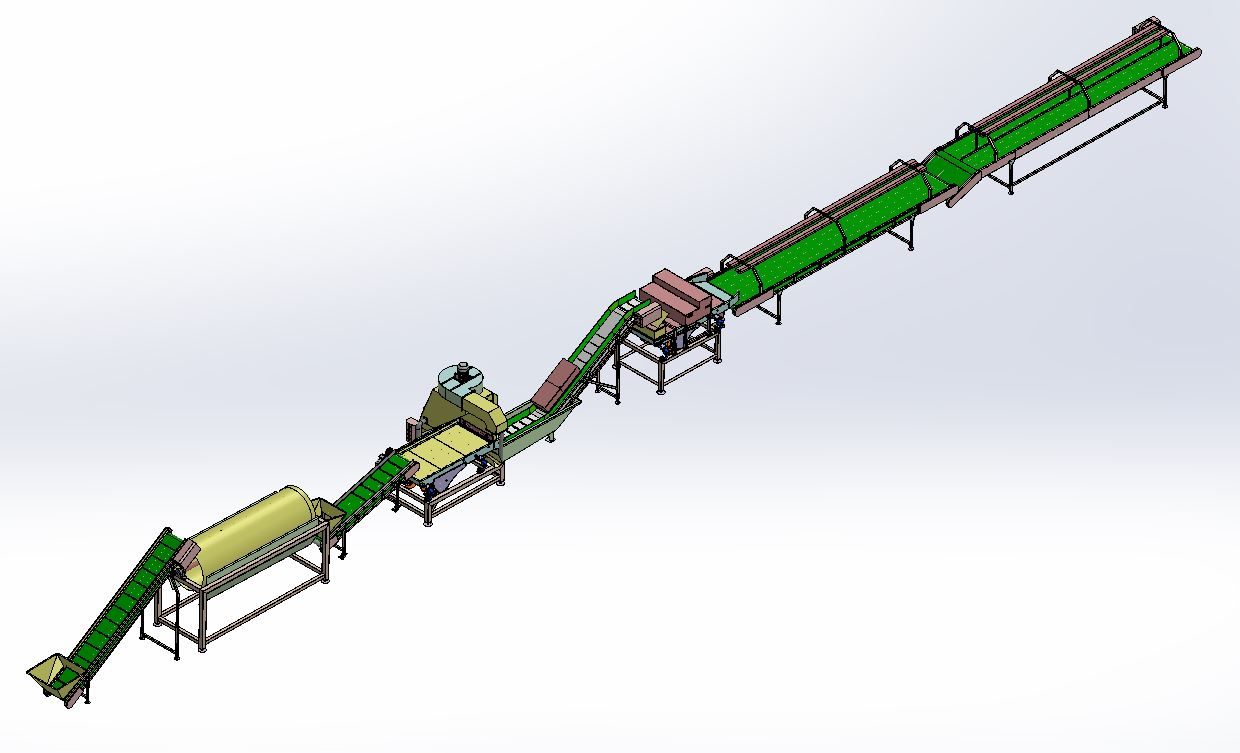
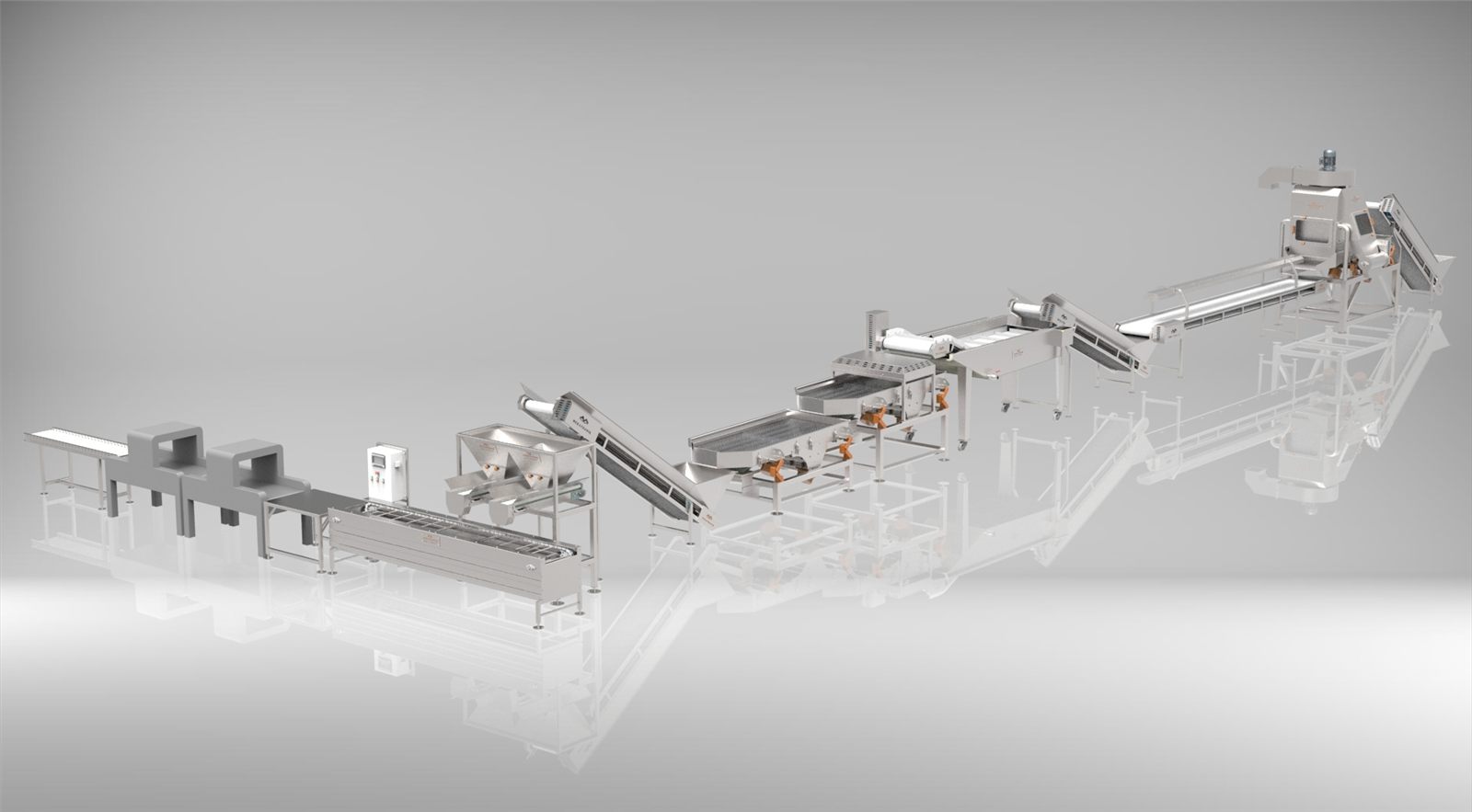
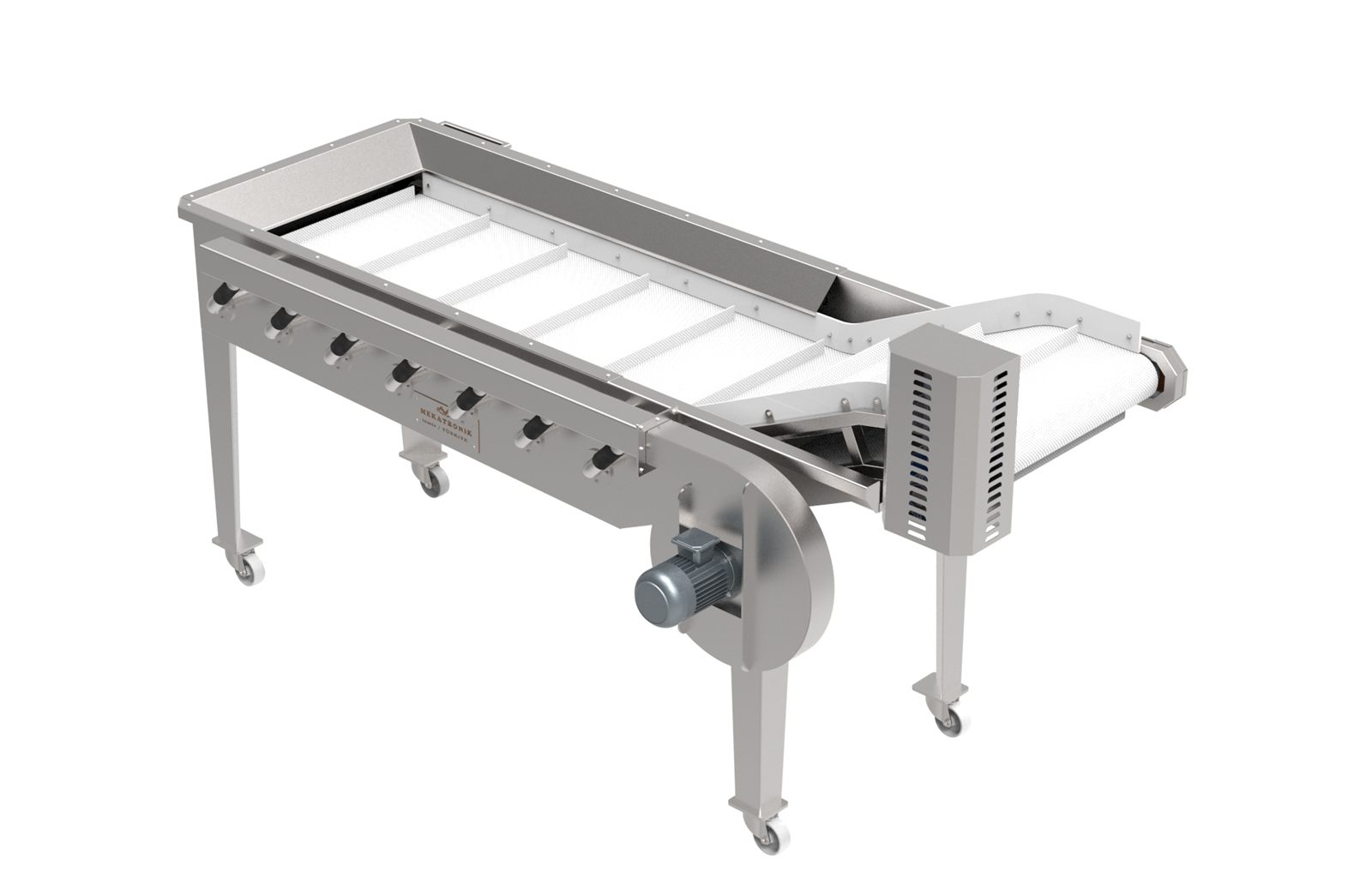
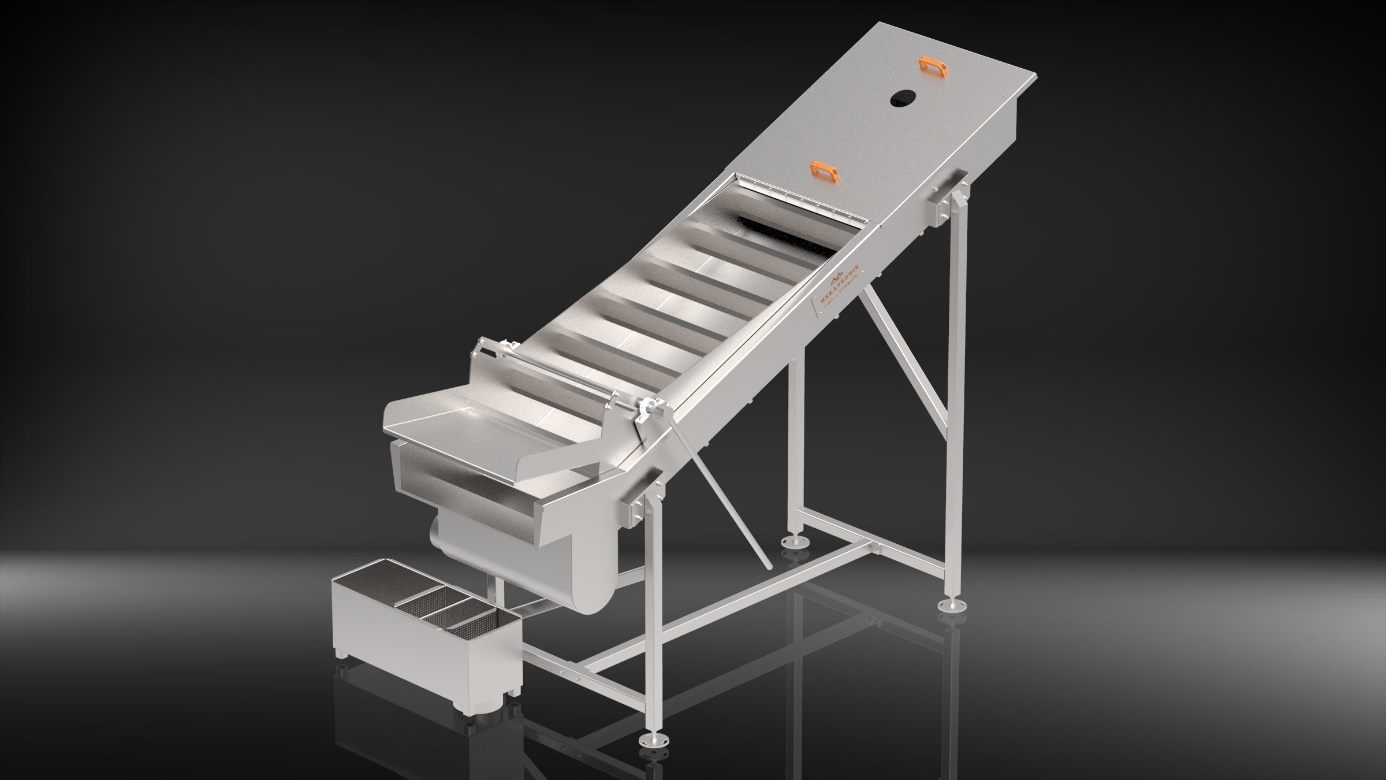
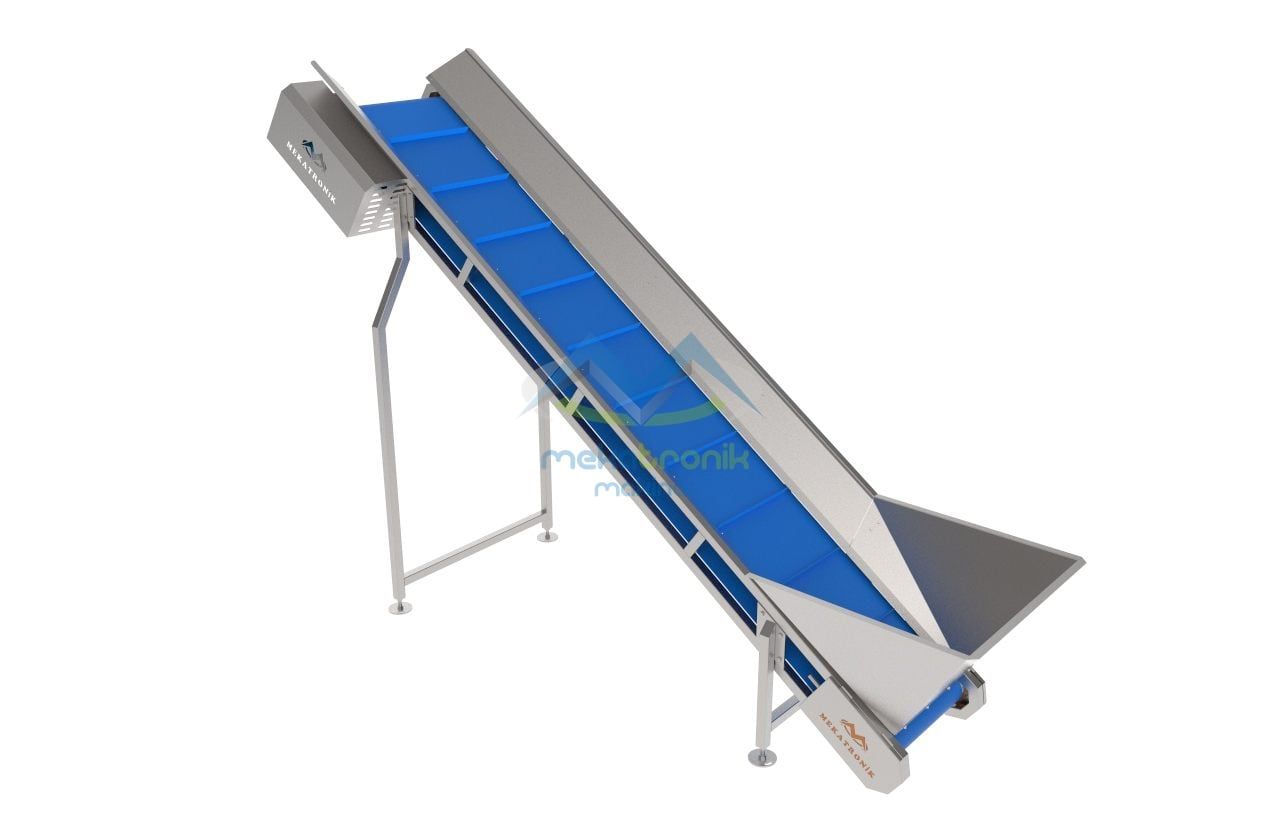
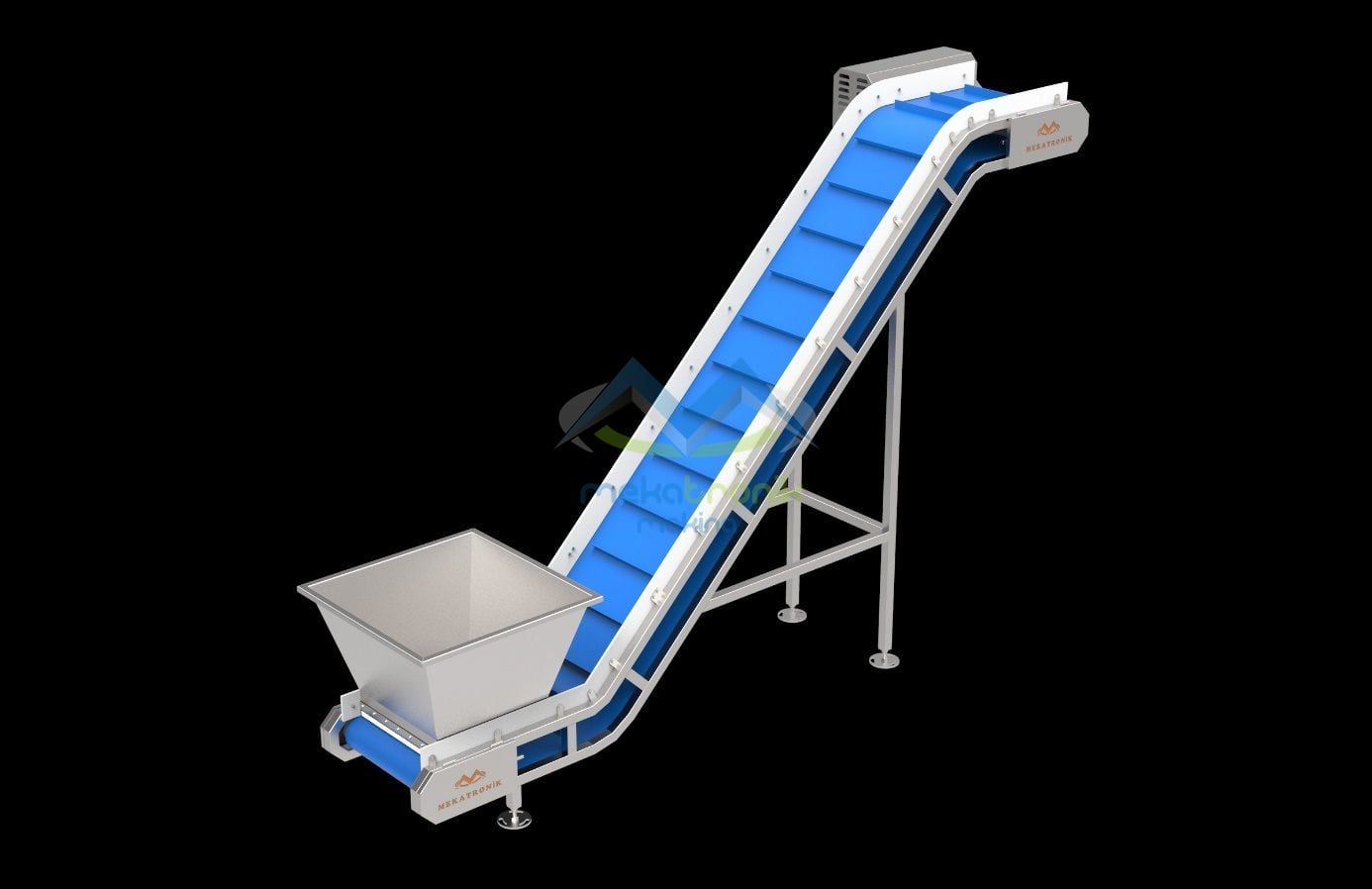
In many dried fruit plants the product arrives in sacks, and processing begins when a sack is emptied at the line entry. Done by hand, this step tires the operator and ties the feed rate of the whole line to one person. The Sack Lifting Hoist is an auxiliary machine built so that product-filled sacks can be lifted and emptied with ease.
01
Where does the hoist sit in the line?
It is the first station. In the dried apricot washing line it opens the sacked product and prepares it for washing, and in the dried apricot filling line it moves product lots onto the line before filling. In the dried fig washing line it does the same job: it lifts the full sacks and empties them at the feed point.
The position matters because every downstream station inherits the quality of the first discharge. If the sack is emptied unevenly, the conveyor and washer after it receive uneven product. A controlled discharge at the start calms the whole line.
02
Which parts are stainless steel?
The stainless claim on this machine has to be stated narrowly. The body and the product-contact surfaces are made of AISI 304 stainless steel; the lifting motor and the control equipment are not stainless. During a hygiene audit this distinction should be explainable without hesitation.
- 01Remote hand control system
- 02AISI 304 stainless body and product-contact surfaces
- 03Custom dimensions for the place and purpose of use (optional)
- 04Lifting motor and control equipment are outside the stainless scope
03
What does remote control change?
Because the machine is operated remotely, the operator does not have to stand directly under the sack to run the lift and discharge. The approach of the sack, its distance to the discharge point and the product flow can be watched at the same time. The core benefit is that heavy sacks are lifted and emptied safely, which moves human effort away from carrying product and toward supervising the line.
04
How are capacity and dimensions defined?
Capacity is not a fixed catalog figure; it is defined per project. Dimensions are likewise built for the place and purpose of use. During quotation, these questions are asked:
| Question | Why it matters |
|---|---|
| Where are the sacks picked up? | Lifting height and hoist placement depend on the floor layout. |
| Where is the discharge point? | The feeding conveyor or washer entry sets the reach of the hoist. |
| Which product is processed? | Sack format and flow behaviour differ between dried apricot and fig. |
| What is the shift pattern? | Discharge frequency affects the working rhythm and the layout. |
| What is the electrical supply? | Power and control connection are planned around the plant. |
Any capacity figure quoted without these answers would be a guess. Exact values are confirmed in the quotation.
05
Sacks or crates: which discharge solution fits?
If your product arrives in standard crates rather than sacks, the right machine is not a hoist but the crate tipping machine, which lifts the crate hydraulically and empties it into a dosing hopper in a controlled way. For sacked dried apricot and fig, the hoist is the natural choice. Plants that use both packaging formats can place the two at the same line entry.
06
What to check during maintenance?
The motor and control equipment sit outside the stainless scope, so they need protection from water and moisture during washdown. On the AISI 304 product-contact surfaces the goal is a layout where residue does not accumulate and cleaning is easy. We do not publish a fixed maintenance interval; it depends on how intensively the machine is used.
Next step: the fastest route is to talk to someone who knows your sack type and discharge point. Send your product and plant layout through the quotation page and capacity and dimensions will be defined together.