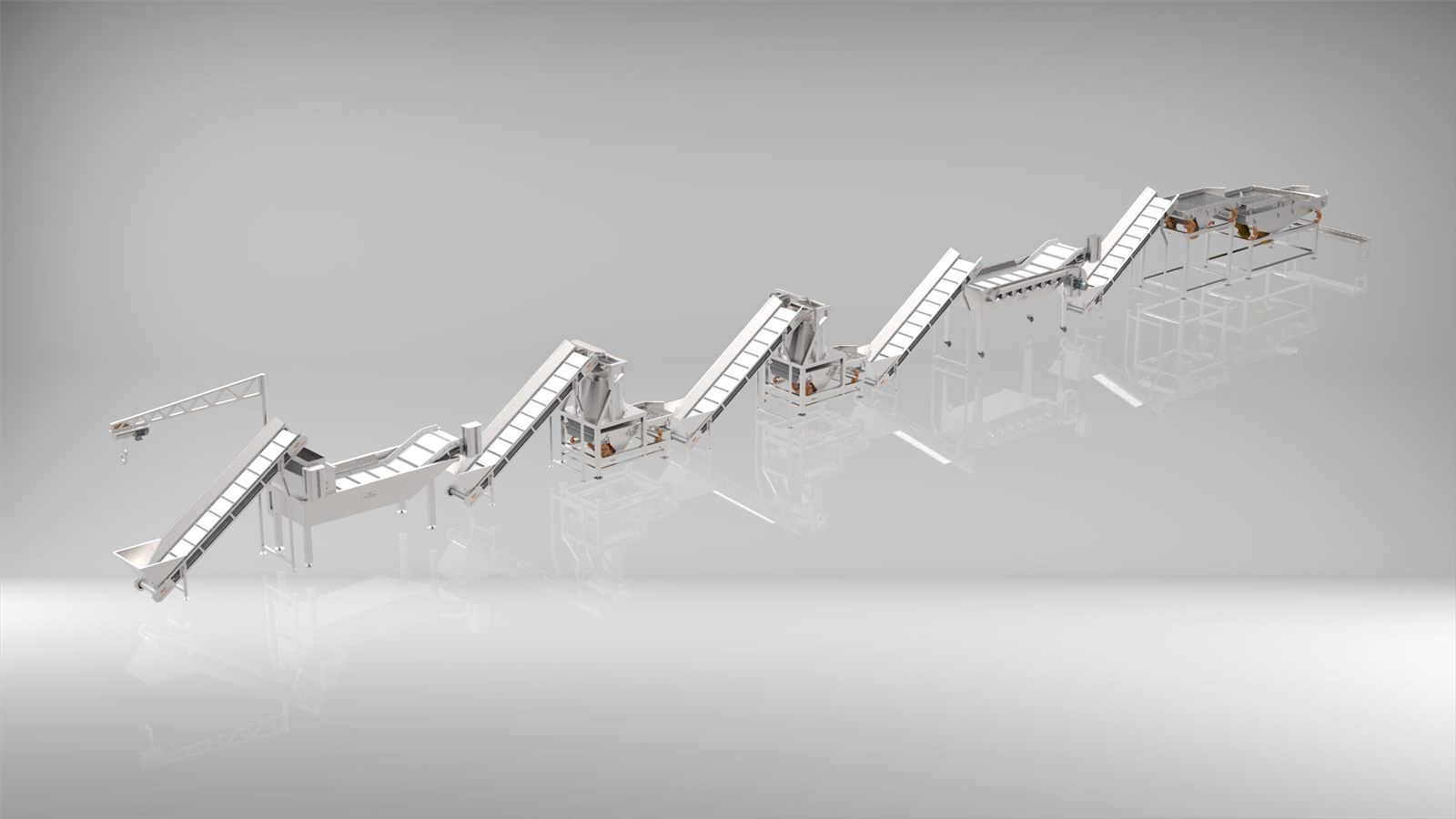
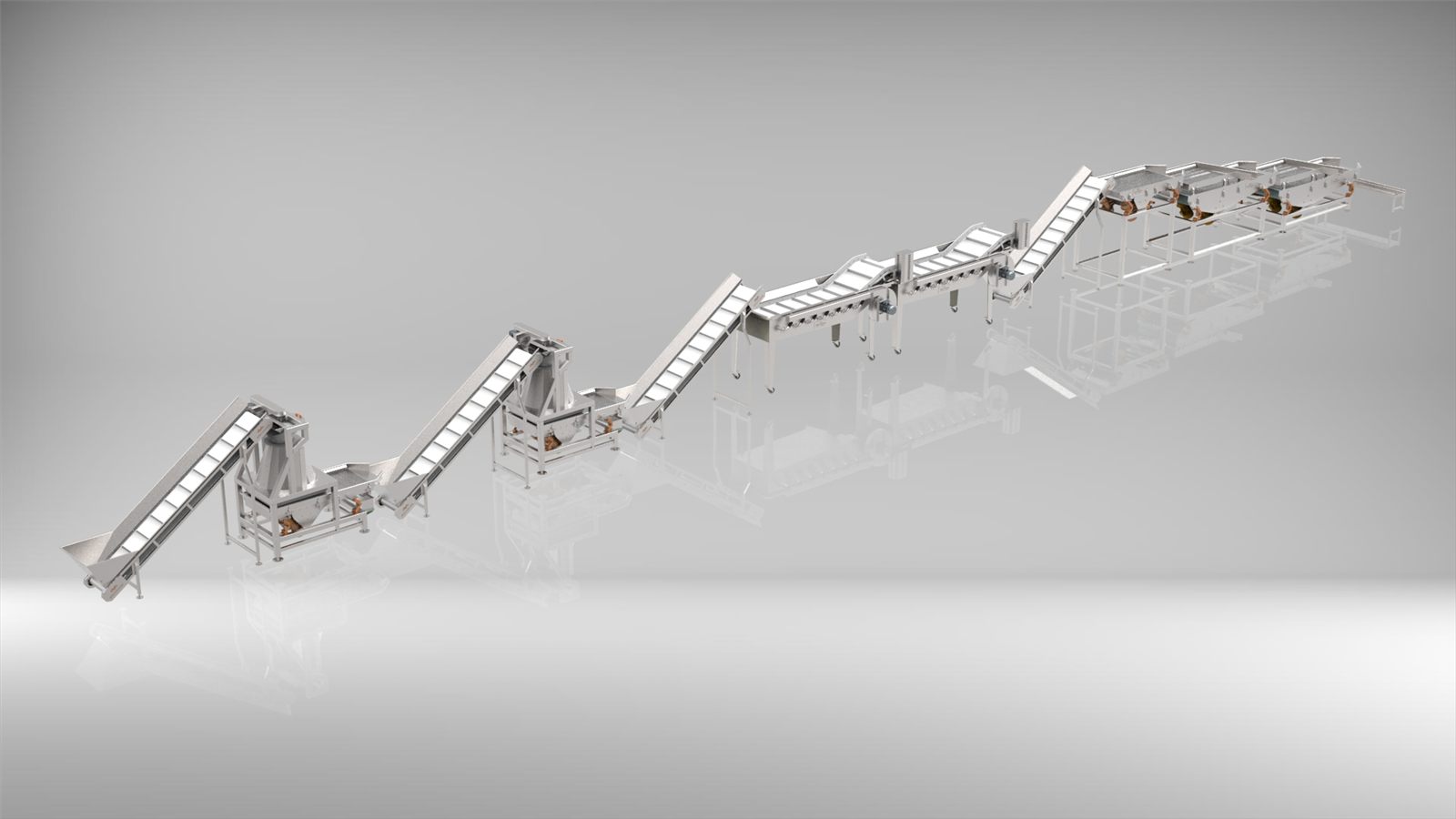
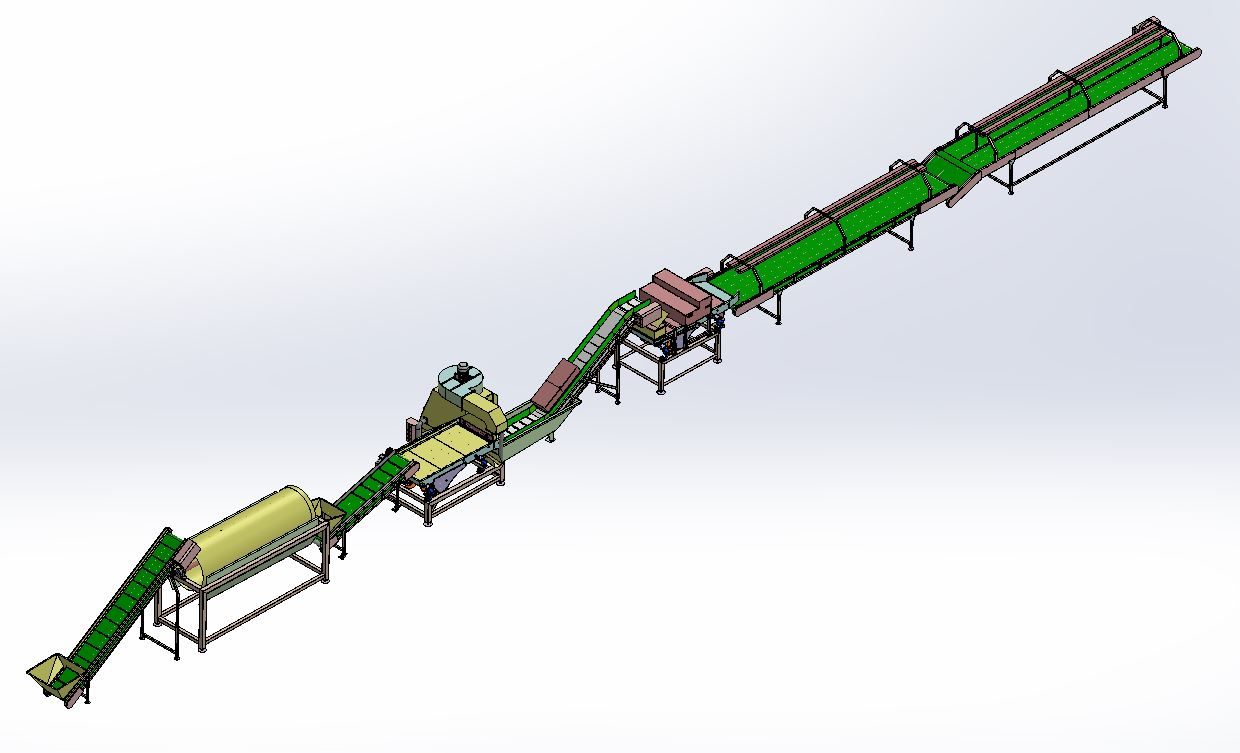
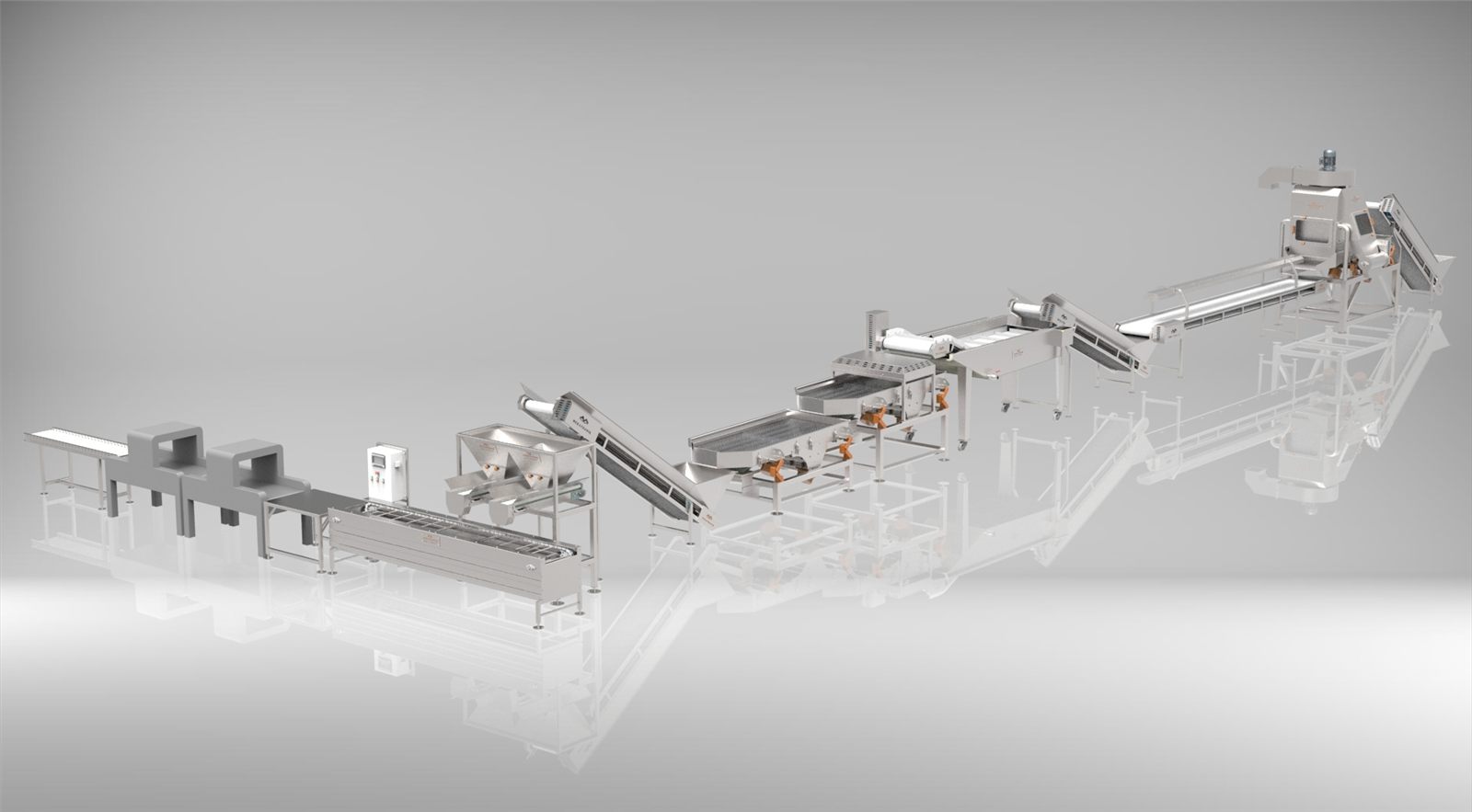
A screw conveyor is an enclosed, stainless steel transport unit used on dried fruit and other food lines to move product horizontally or at a slight incline. Compared with a belt conveyor, its smaller footprint and closed housing make it a common choice where dust or spillage control matters. This article covers where a screw conveyor typically fits on the line and how that choice compares with a belt conveyor.
01
When is a screw conveyor the right choice?
Where product includes dust, crumbs or fine particles, an enclosed housing limits spillage and simplifies cleanup compared with an open belt. A screw conveyor is also used for short runs that need a steeper incline than a belt conveyor can practically handle. In layouts where floor space is tight, the closed housing can also be an advantage: a screw conveyor doing the same job as a belt conveyor typically takes up less horizontal footprint along the line.
02
Where does a feed screw conveyor sit on the line?
A feed screw conveyor is typically used to move product out of a hopper or silo into the next process unit at a steady flow rate. In this position, the conveyor is not just transporting product; it is also evening out the flow, so an uneven discharge from the hopper reaches the next unit as a more consistent feed. The feed screw conveyor page shows which units it typically connects between.
03
Screw conveyor or belt conveyor?
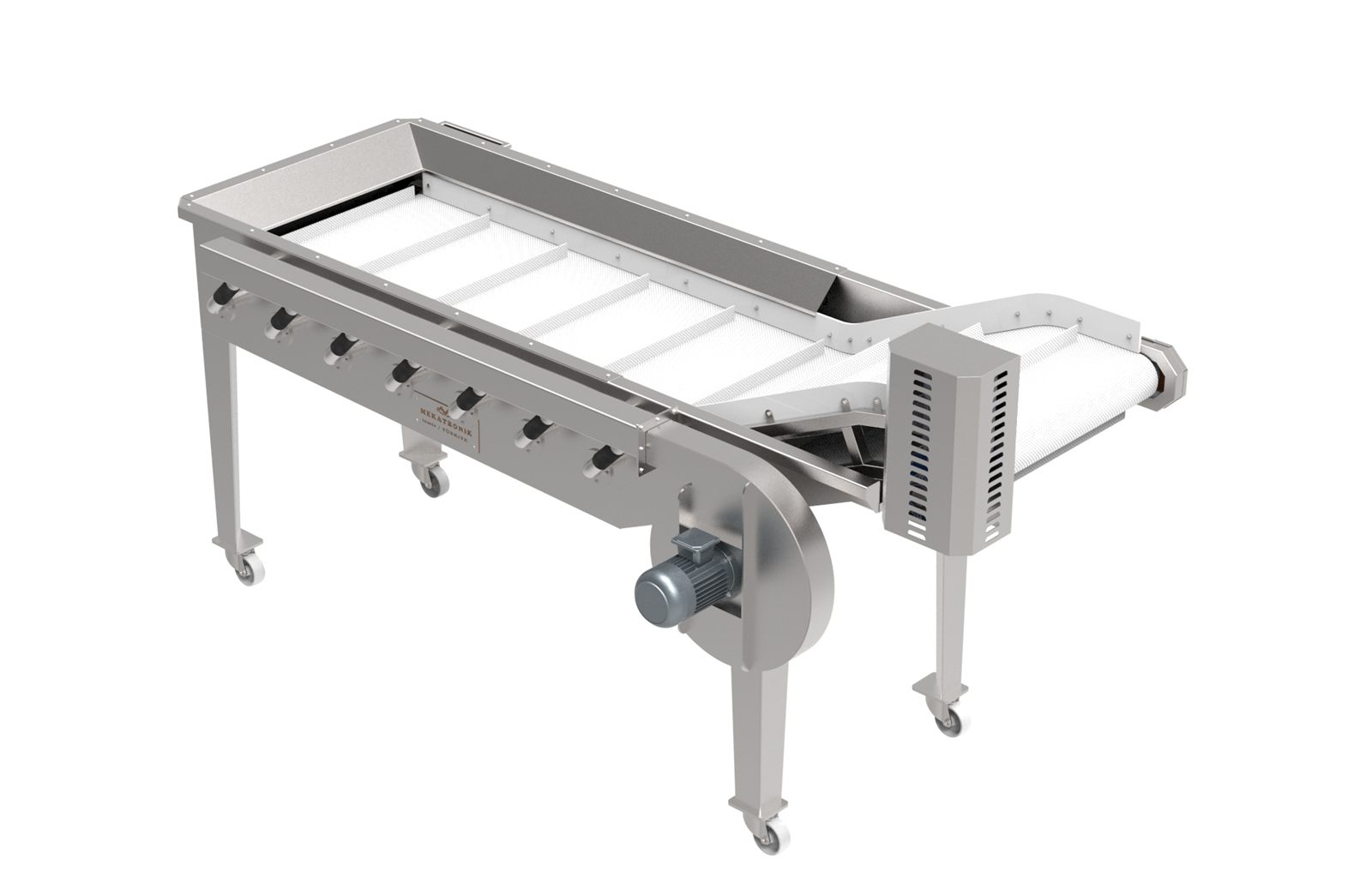
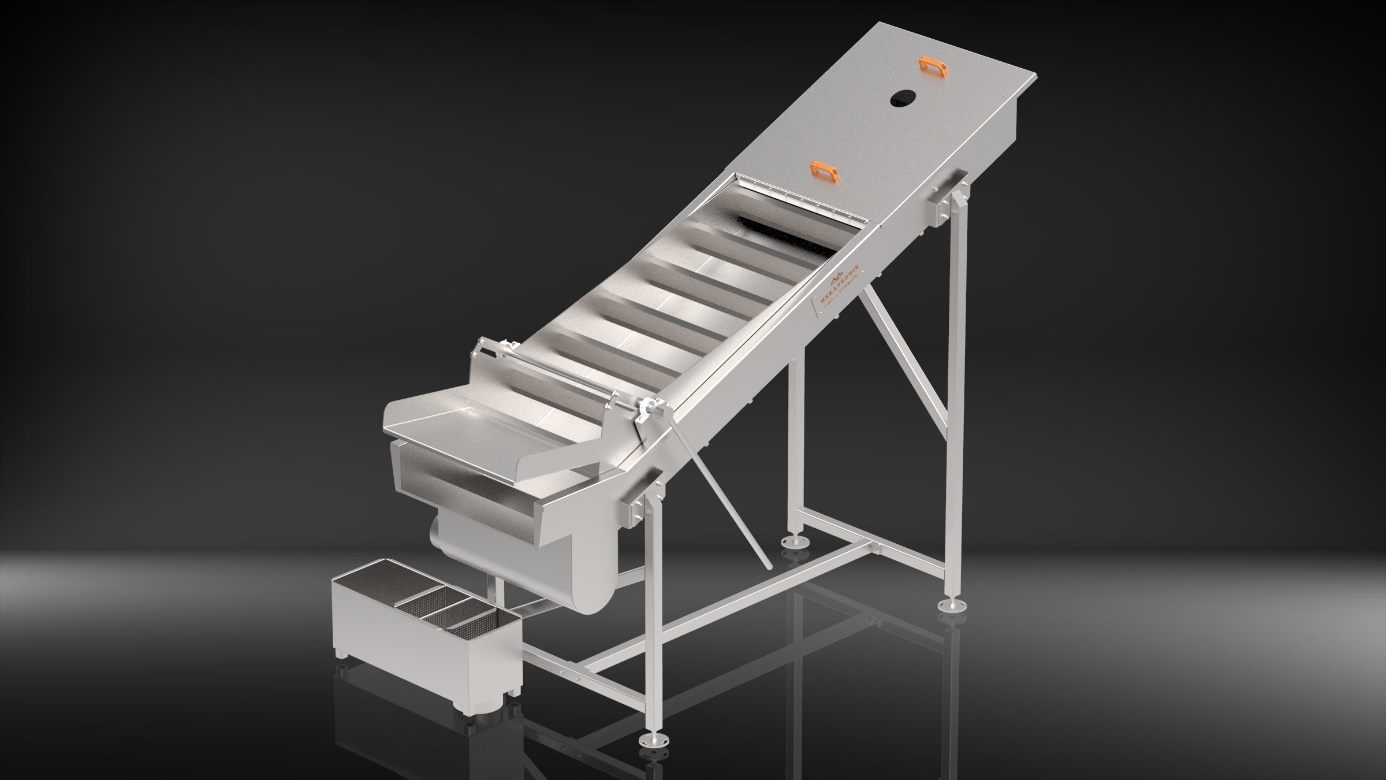
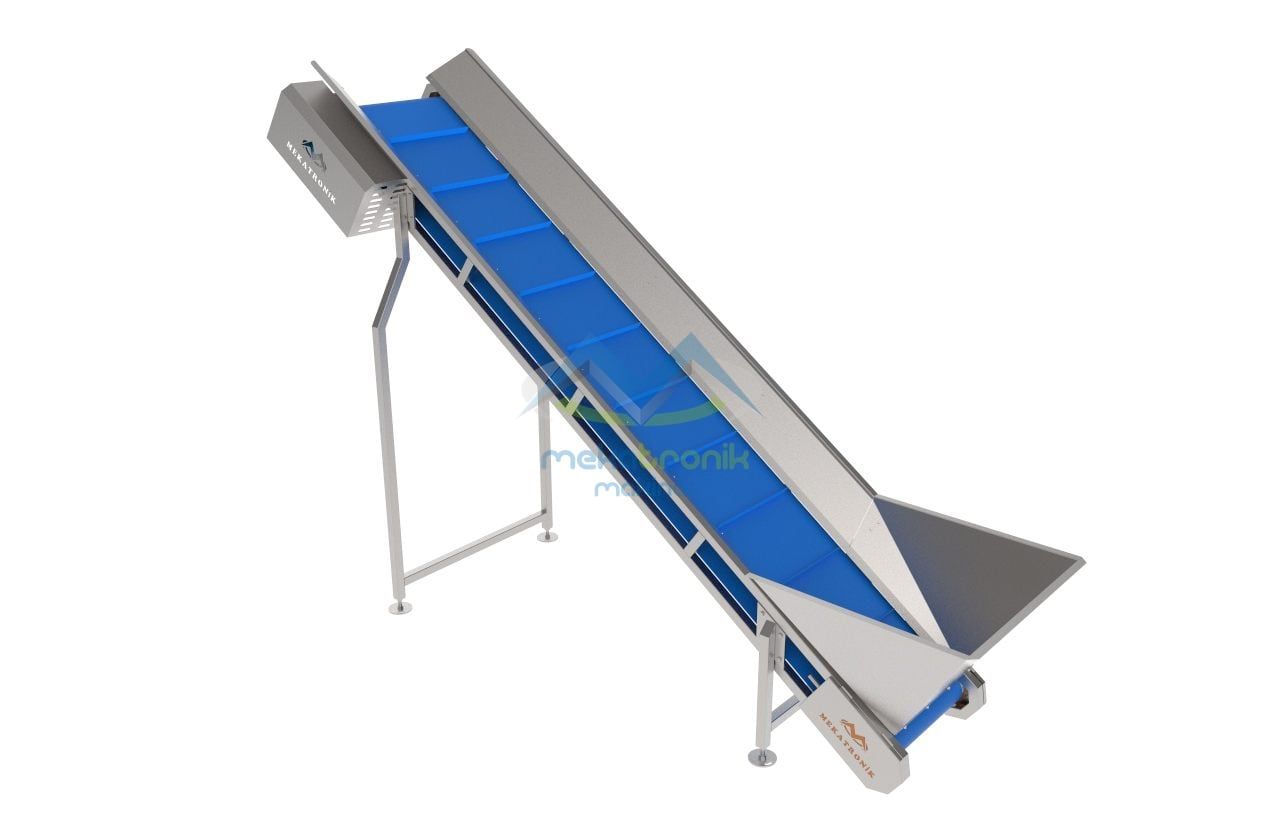
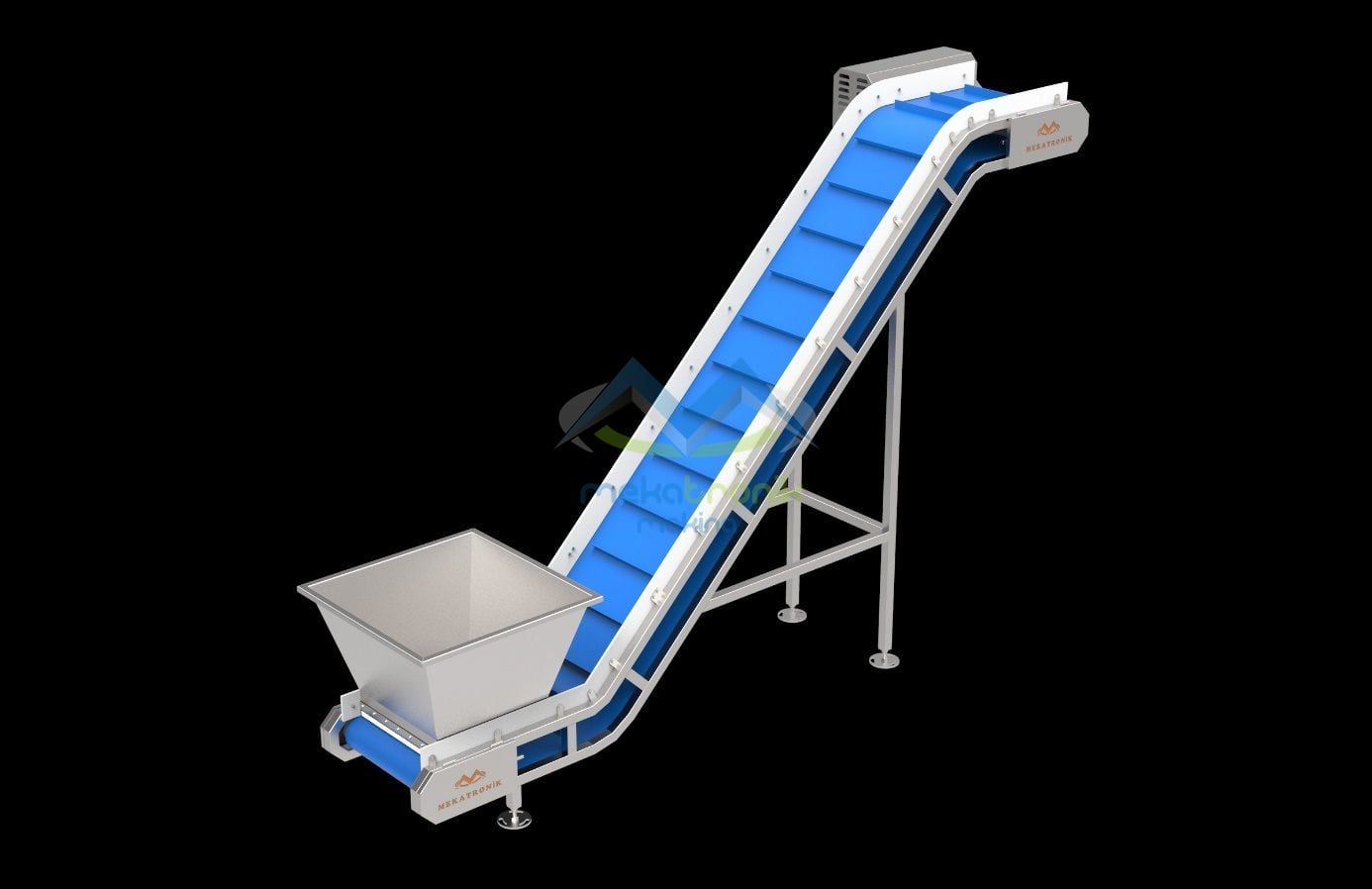
A belt feed conveyor keeps product visible in transit and allows manual sorting where needed; a screw conveyor's closed housing does not allow that kind of visual inspection. Which one is used at a given point depends on whether the product needs to be visible at that stage. Where manual inspection has already happened upstream and the unit is simply moving product forward, a screw conveyor is often the more practical choice.
04
Stainless steel grade and screw geometry
The shaft and housing surfaces in contact with product are built in AISI 304 stainless steel; AISI 316 is used on lines with extended contact with moist or acidic product. Screw pitch and diameter are set at the project stage according to the flow characteristics of the product being conveyed, not as a fixed default. On lines carrying delicate fruit, fill ratio and shaft speed are also adjusted so the product is not damaged in transit.
05
Cleaning access on an enclosed conveyor
Because the housing is closed, cleaning a screw conveyor takes a different approach than a belt: removable covers along the housing give access to the inside so residue on the shaft and trough can be cleaned out. How easily those access points open directly affects cleaning time at a product changeover or the end of a shift.
- 01Screw diameter and pitch are selected based on the flow behavior of the conveyed product
- 02The enclosed housing limits dust and spillage, with removable covers for cleaning access
- 03Incline angle is set at the project stage to avoid product slipping back
- 04Product-contact surfaces are specified in AISI 304 or AISI 316 stainless steel
- 05Fill ratio and shaft speed are adjusted for delicate product
06
Screw conveyor vs. belt conveyor at a glance
Both units move product; the choice usually comes down to whether the product needs to stay visible and how much footprint the line has available. The table below summarizes the main differences, but the final choice is confirmed against the actual product and layout at the project stage.
| Criterion | Screw conveyor | Belt conveyor |
|---|---|---|
| Housing | Enclosed | Open |
| Product visibility | None, no manual inspection in transit | Visible, suited to manual sorting |
| Footprint | Fits a narrower line cross-section | Needs more horizontal space |
| Dust and spillage | Contained by the enclosed housing | Higher spillage risk than an enclosed unit |
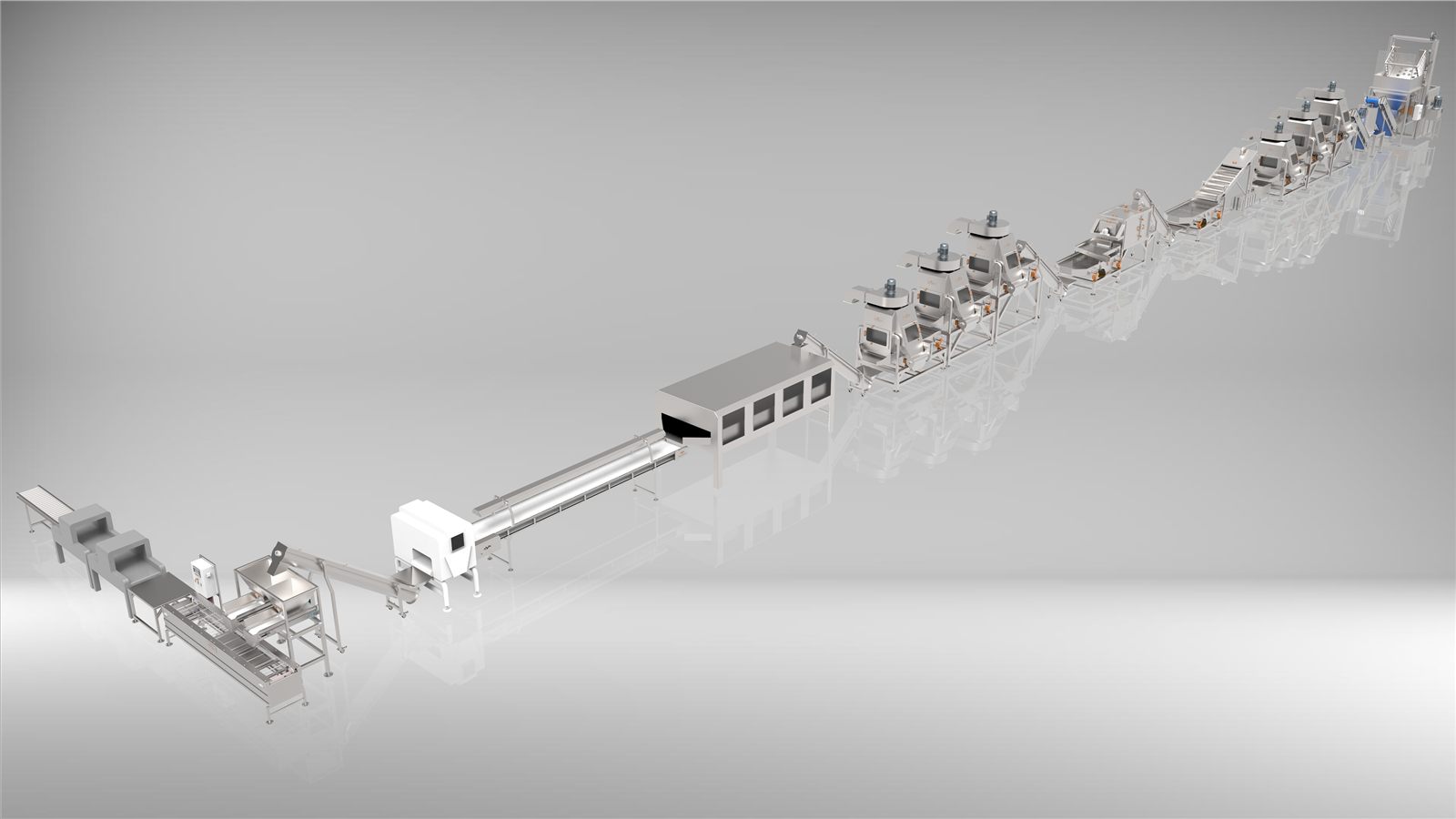
To see where a screw conveyor and a belt conveyor would sit together on your line, review the dried grape (raisin) line page or request a quote for a project-specific layout.