On dried fruit lines, shaker machines are often lumped together as one type of equipment, but debris removal, sizing and dewatering shakers each do a different job. This article explains where each type sits on the line and why the sequence matters.
01
Where does a shaker sit on the line?
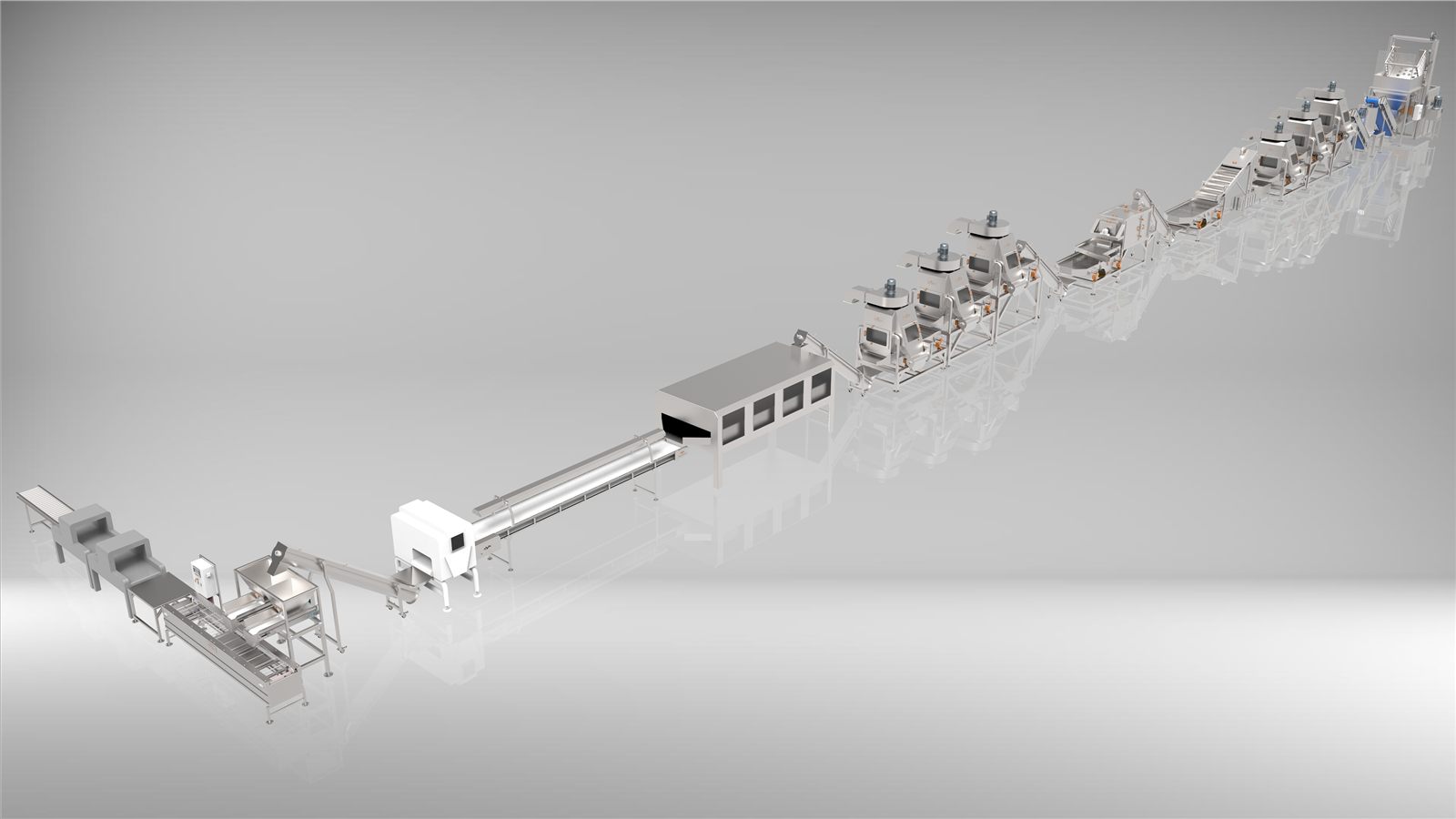
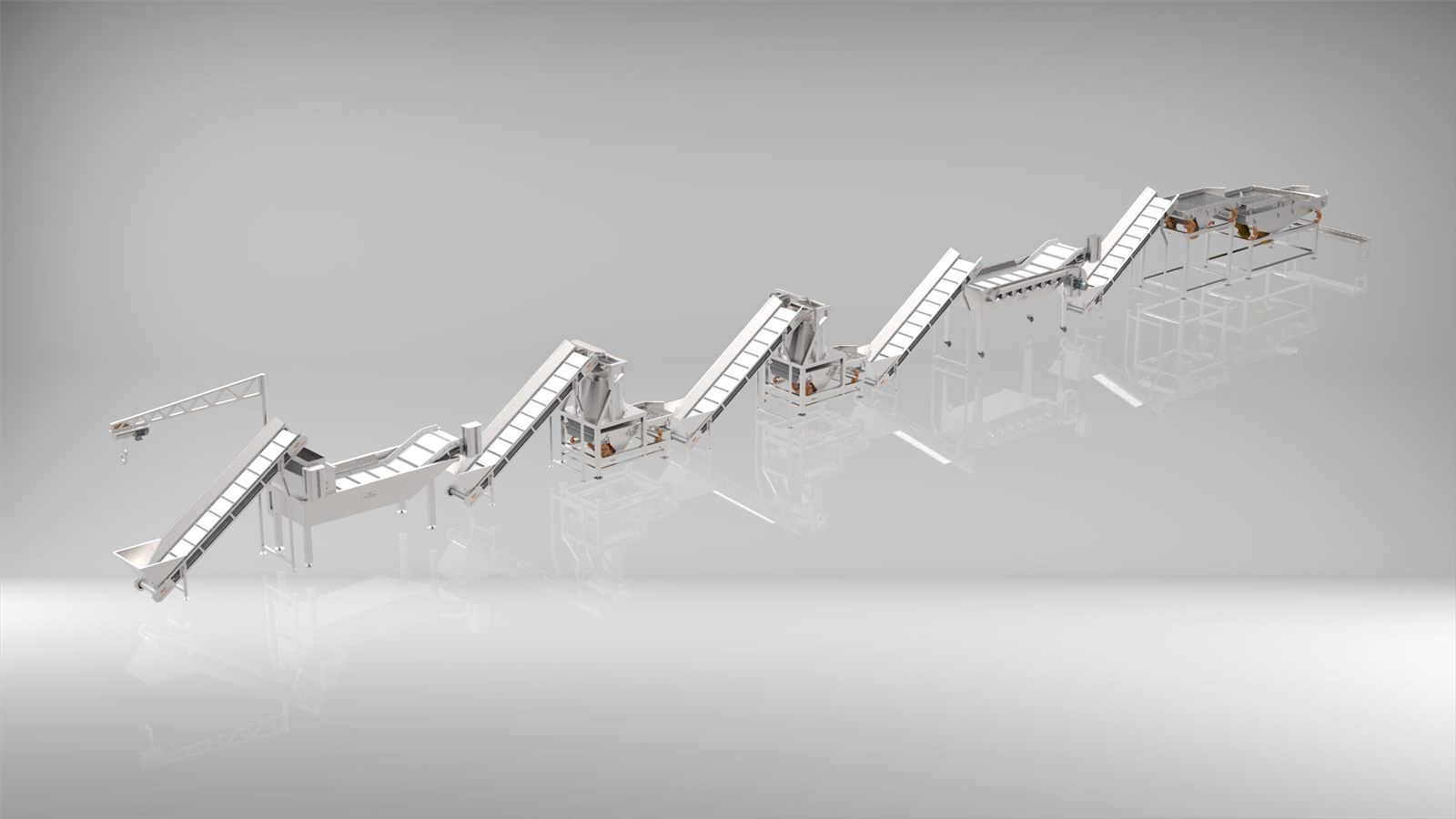
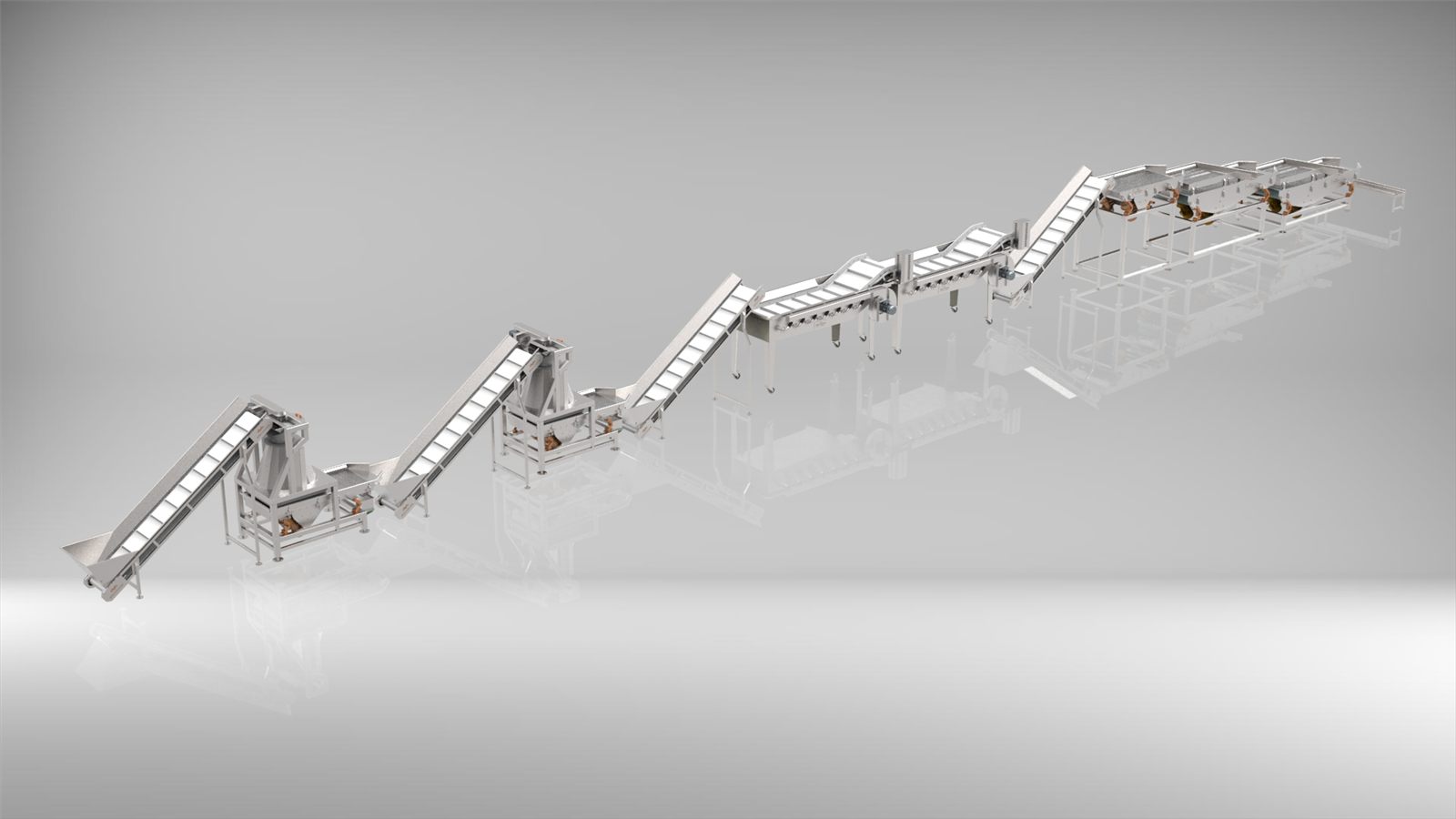
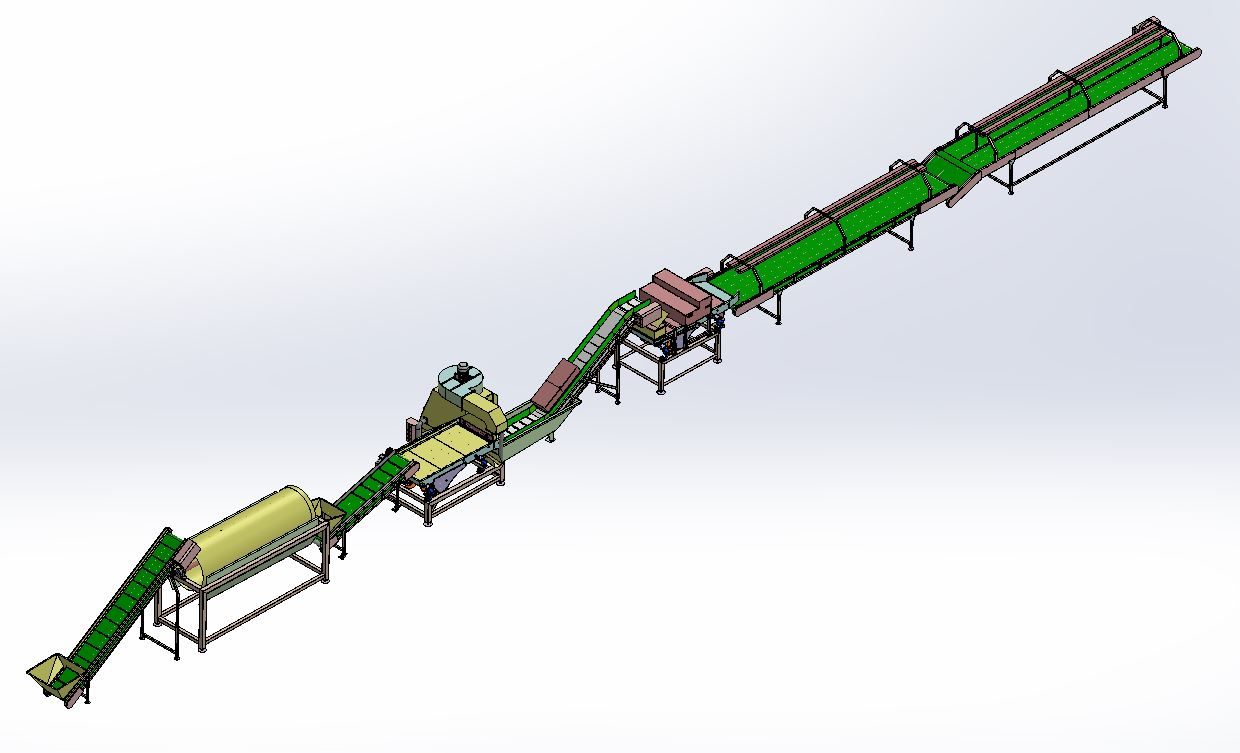
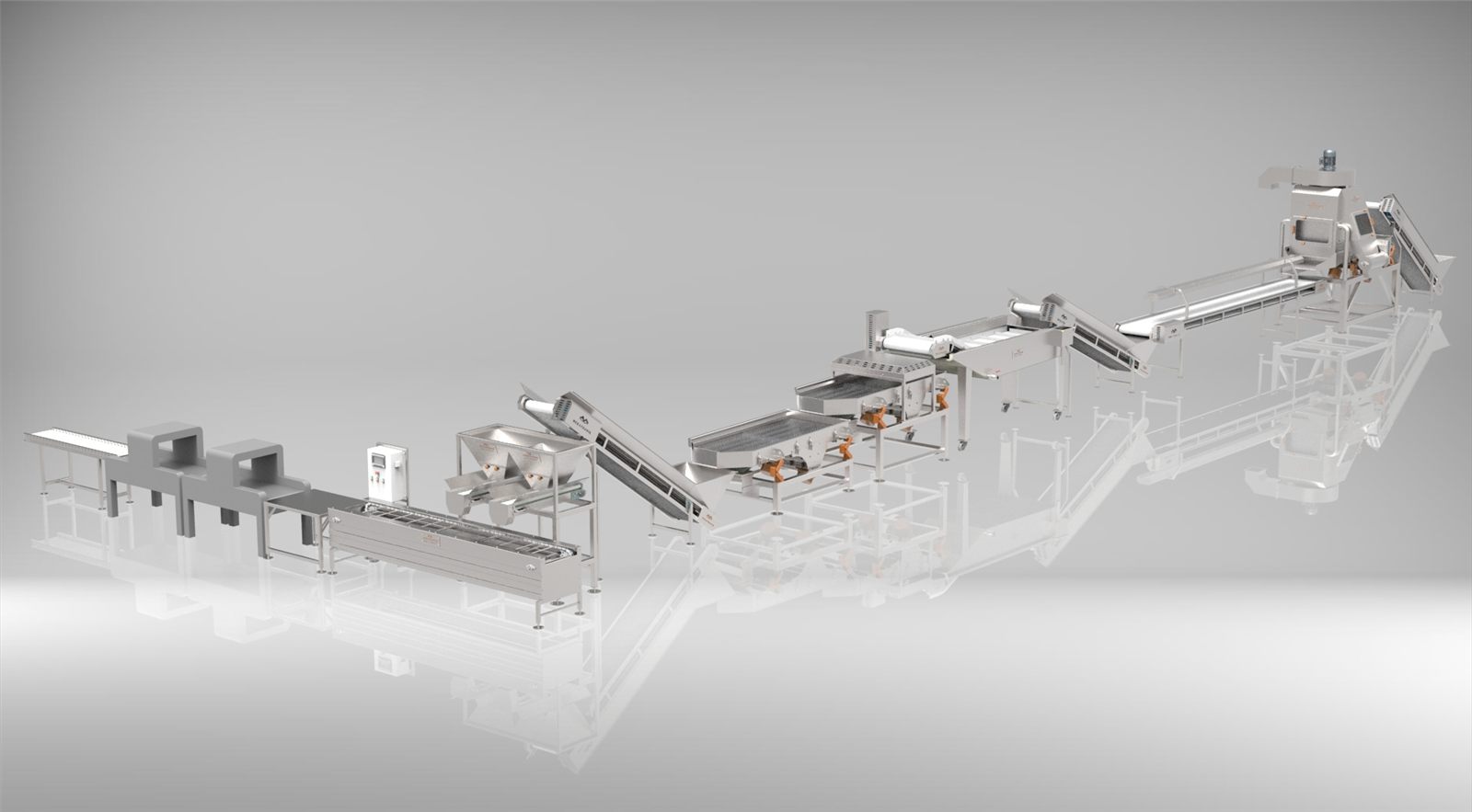
A shaker machine moves product across a vibrating stainless steel screen deck, separating it by size or by how easily it passes through the mesh. On lines such as raisins, several shakers typically run in sequence, each placed right before or after a specific processing step; the order depends on the foreign matter load and moisture content of the incoming product. The number and sequence of shakers on a given line is not fixed to a single template; it is set according to how clean or moist the fruit is when it arrives from the field.
02
What does a debris removal shaker do?
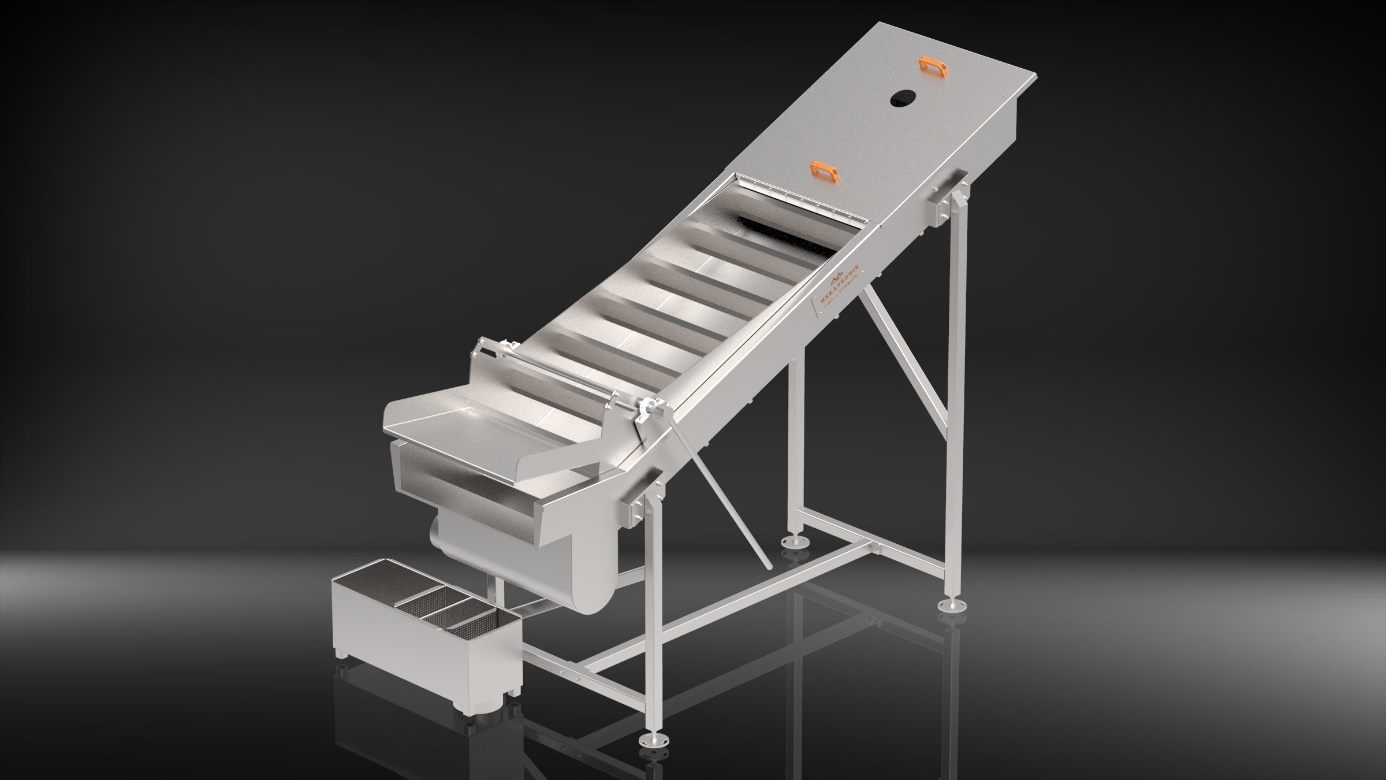
A debris removal shaker sits shortly after product enters the line and separates stems, leaves, fine dust and larger foreign matter from the product. Mesh opening is chosen based on the fruit being processed, and its purpose is to give the downstream washing and sizing equipment a cleaner feed. Skipping this first screening step pushes foreign matter into the washer and sizing decks, which increases how often those screens clog and how much manual sorting is needed later. The debris removal shaker page shows where the machine connects on the line.
03
How does a sizing shaker classify product?
A sizing shaker sorts cleaned product into size grades based on screen mesh opening. On raisins and other dried fruit, sizing affects both the visual consistency of the packed product and how evenly later drying or processing steps perform. The sizing shaker can be built as a single-deck or multi-deck screen, with the number of decks set by how many size grades are needed. More decks mean more separate collection points at the discharge end, which is why sizing is usually placed right before packing rather than earlier in the line.
04
Why is dewatering a separate step?
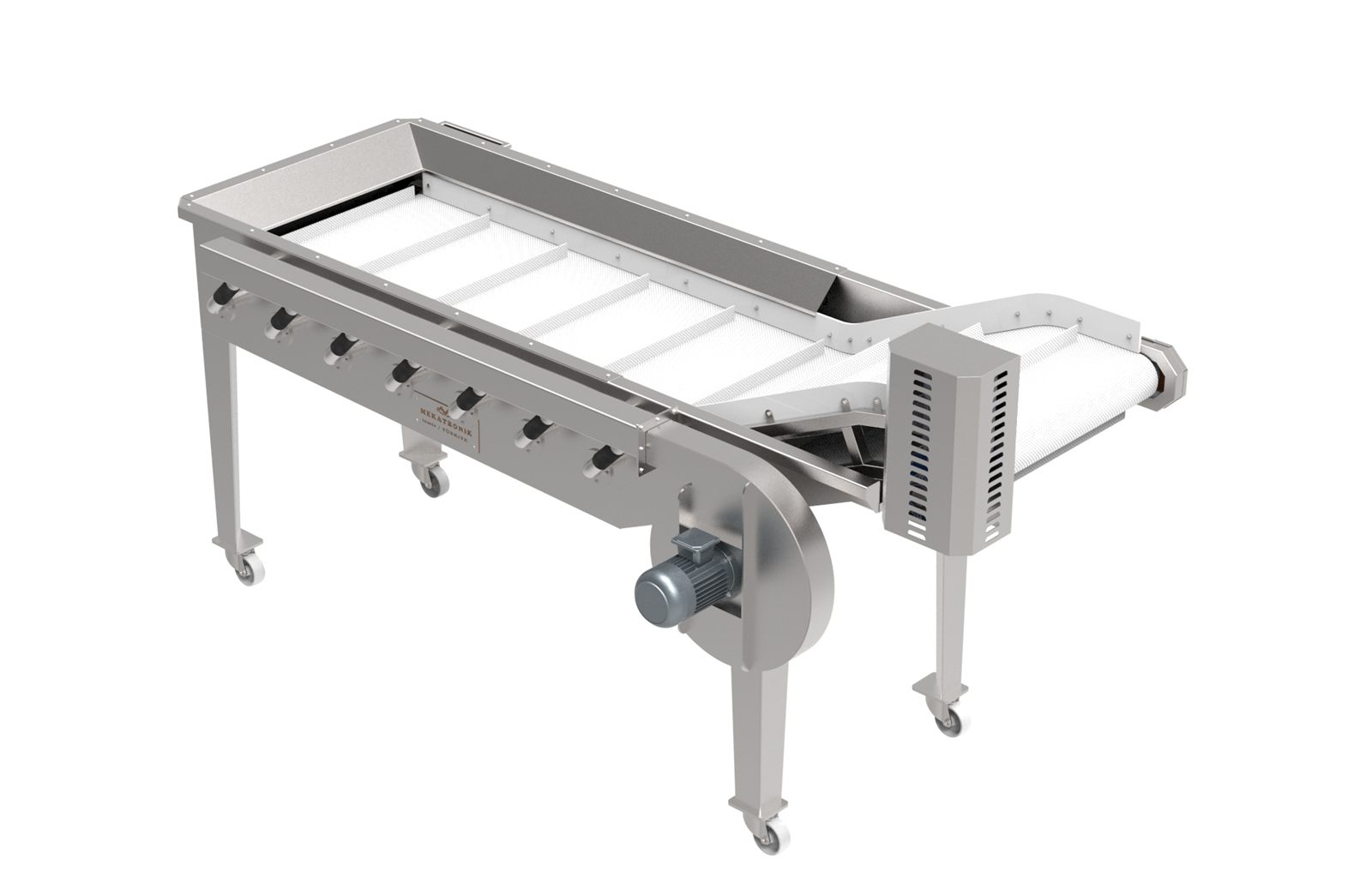
Product coming out of a washer carries surface water that can affect both weighing accuracy and drying time downstream. A dewatering shaker is placed right after the washer to remove most of the surface water before the product moves on. The dewatering shaker is set up with an adjustable vibration amplitude to suit the sensitivity of the product; delicate fruit typically runs at a lower amplitude, while sturdier product can run at a higher amplitude to shorten dewatering time. Some lines use a fan-assisted dewatering shaker, which adds an air stream on top of vibration.
05
Stainless steel surface selection
Product-contact surfaces on shaker decks are built in AISI 304 stainless steel; AISI 316 is used where the process involves extended contact with brine or acidic product. Which grade applies to which surface is confirmed at the project stage, based on the fruit and process step involved. The screen frame, deck body and support structure are designed to meet the applicable CE conformity requirements for the line as a whole.
Shaker machines are among the most frequently cleaned pieces of equipment on a food line; between product changeovers or at the end of a shift, the mesh and deck need to be removable for a fast wash-down. A removable screen frame shortens cleaning time and keeps residue from one run from carrying over into the next. Keeping the vibration motor and suspension components in an accessible position also makes routine maintenance easier.
- 01Mesh opening is selected based on the size distribution of the incoming product
- 02Deck slope and vibration amplitude are set according to the line position
- 03Cleaning access is provided through a removable screen frame
- 04Product-contact surfaces are specified in AISI 304 or AISI 316 stainless steel
- 05Fan-assisted dewatering shakers add an air stream on top of vibration
06
Which shaker fits which duty?
| Shaker type | Main duty | Typical line position |
|---|---|---|
| Debris removal shaker | Separates stems, leaves, dust and larger foreign matter | Close to line entry |
| Sizing shaker | Sorts product into size grades | After pre-cleaning, before packing |
| Dewatering shaker | Removes surface water after washing | Right after the washer |
You can review how these shakers are typically sequenced on the dried grape (raisin) line page, or reach out for a project-specific layout.