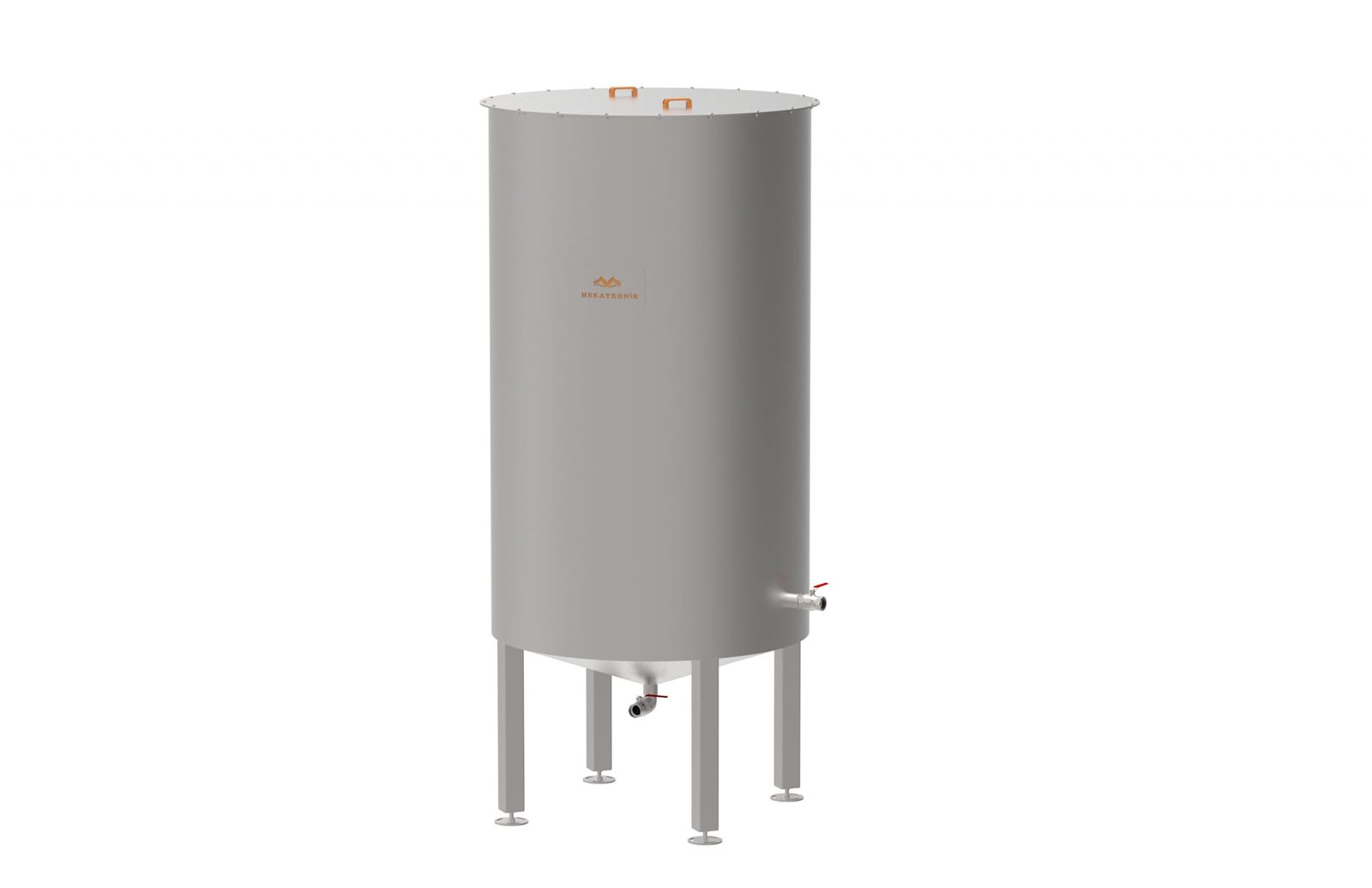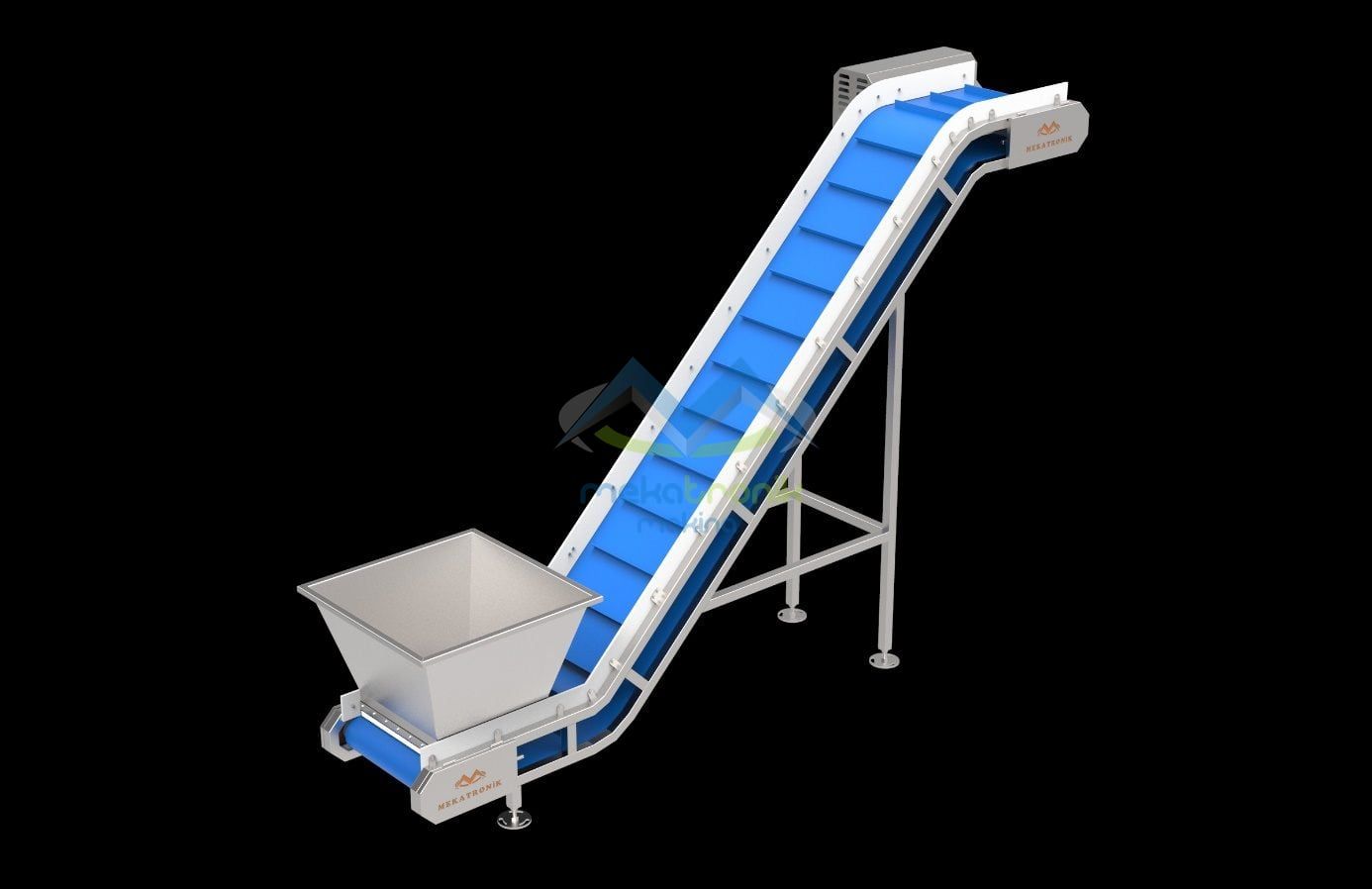
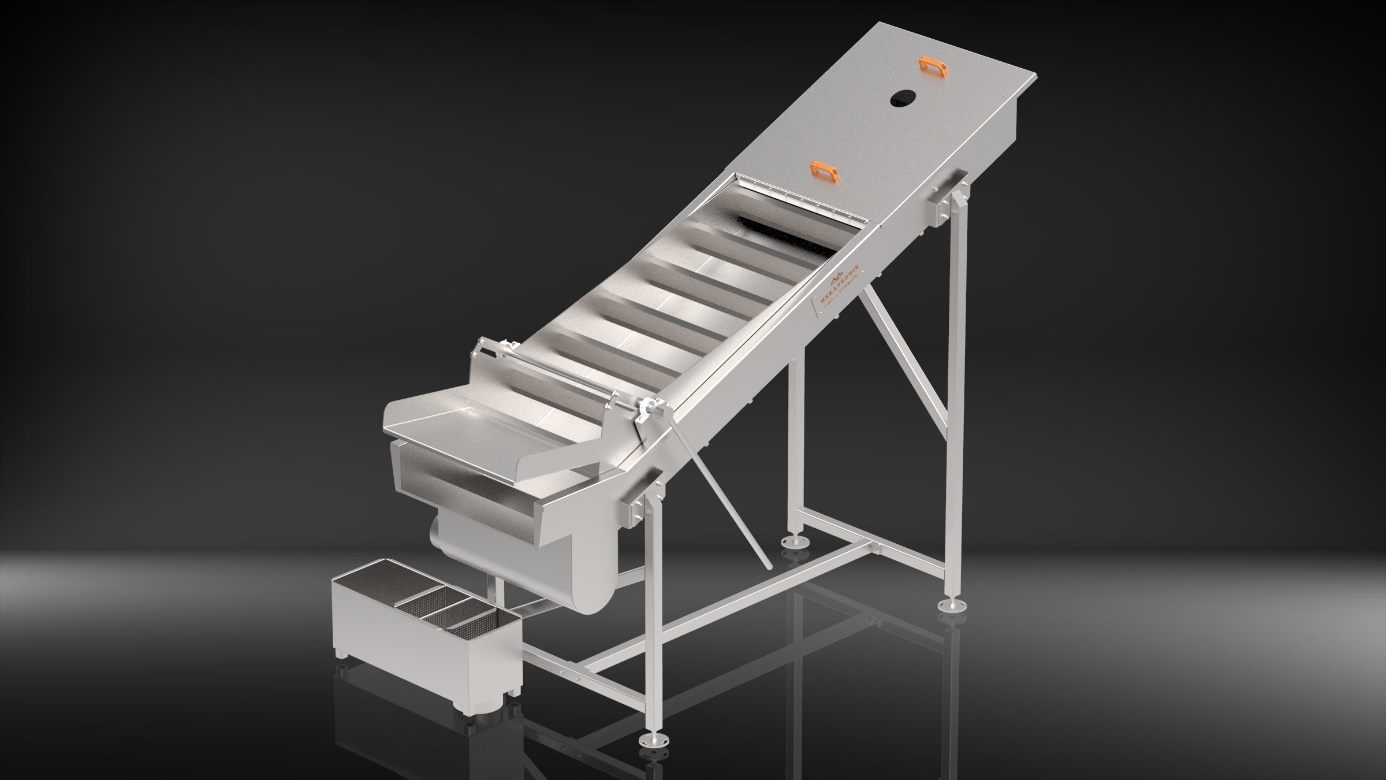
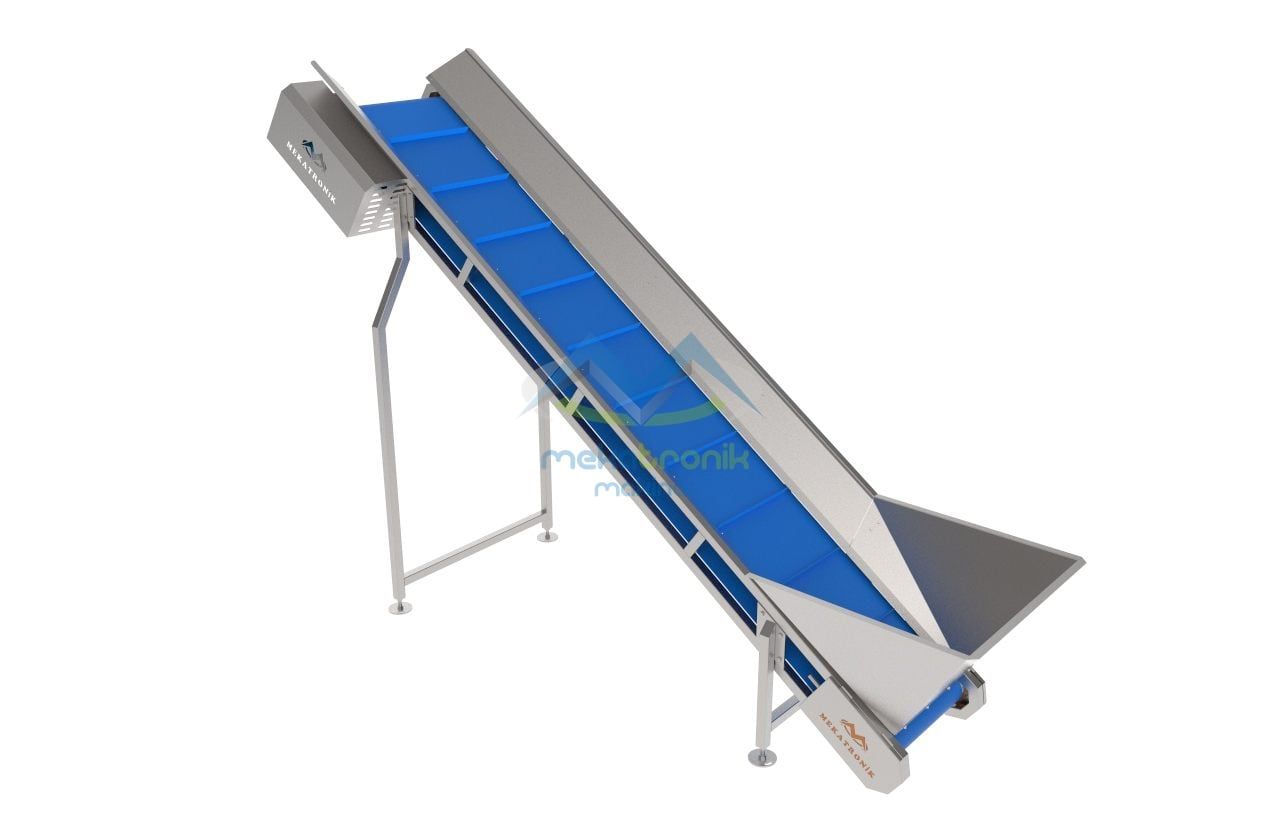
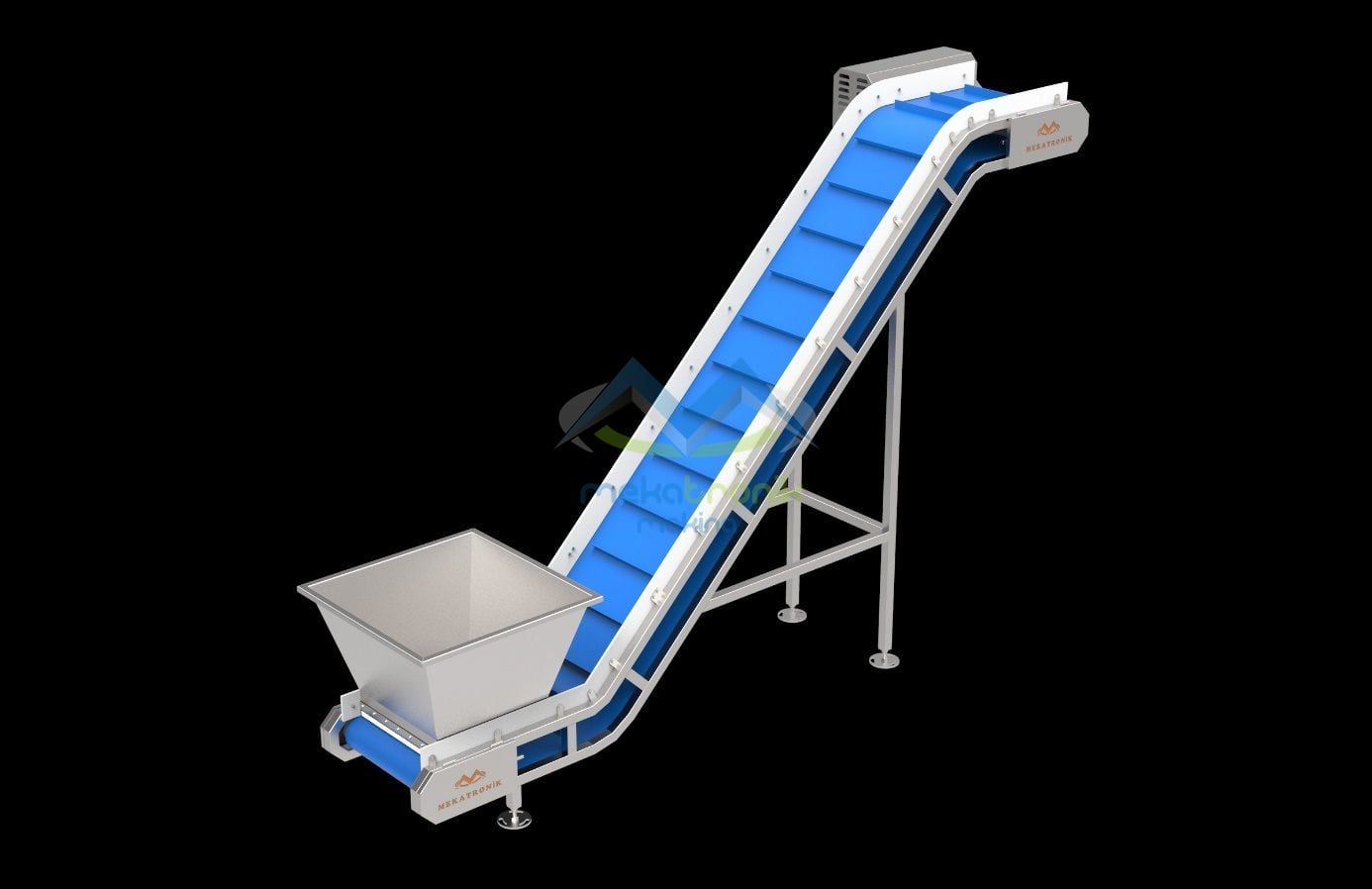
A manual box filling hopper takes finished product into a wide trough and drops it into an empty box when the operator pulls a lever on the side. It has no drive and no controls, so the question is not how the machine works but how the area around it is arranged. Product flow decides whether one operator at the hopper keeps pace with the line or becomes the place where product waits.
01
How does a manual box filling hopper actually work?
The principle is described in two steps in our machine data. First, the finished product is received into the large hopper trough. Second, the operator pulls the lever at the side and the product is filled into the empty box standing below. Nothing else happens inside the machine: there is no motor, no weighing and no counting.
Because the machine needs no drive, it works by hand with the lever alone. That keeps the construction simple and the cleaning easy. Body and product-contact surfaces are made of AISI 304 stainless steel, and the structure is designed to be easy to clean. If your process calls for a different grade, it can be reviewed together with the offer.
02
Where does it sit in a packing line?
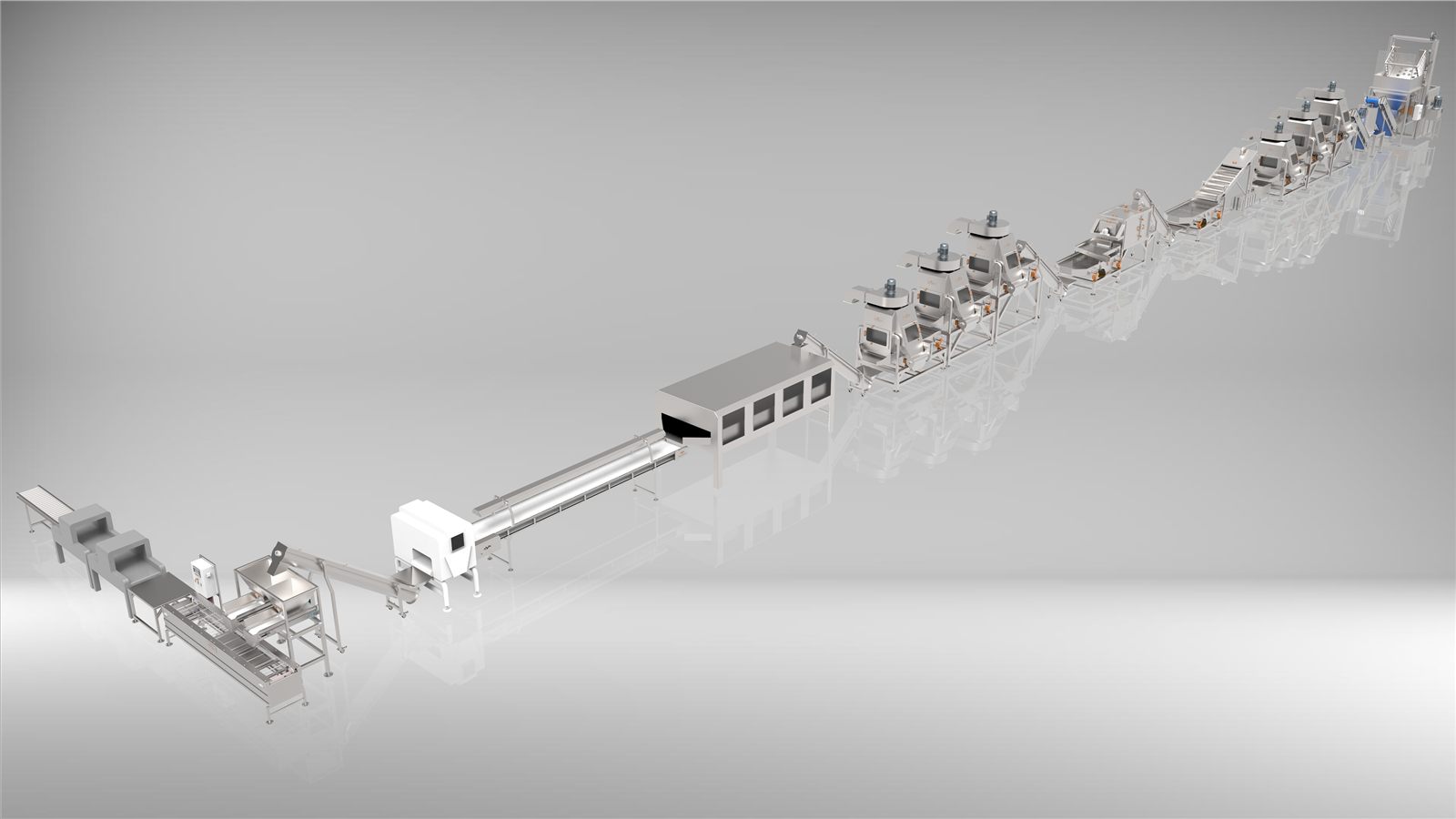
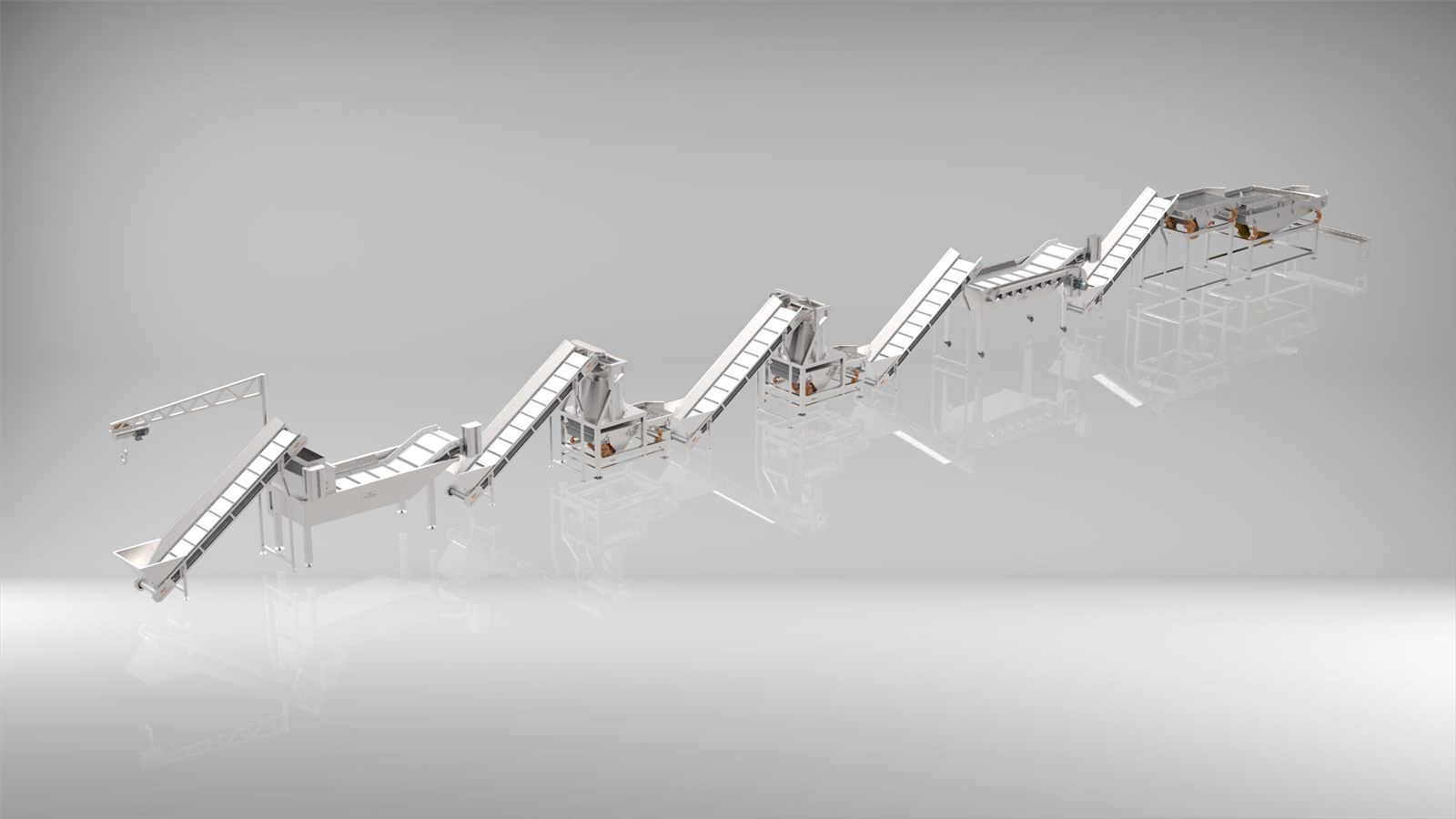
The hopper belongs at the very end of the line, after the product has been cleaned, sized or otherwise finished and before the boxes are closed. In a dried fruit or nut plant, for example, the product arrives from the last processing machine, is held in the trough, and is released box by box. For lines that need controlled dosing by weight, the semi-automatic box filling scale is the machine to compare, because it performs coarse and then fine filling under an electronic panel.
Filled boxes then move on to the closing step. If you have not yet planned that station, the box closing table is the matching piece: a stainless work table where the lids are closed before the boxes enter a box taping machine.
03
What makes the large trough useful?
The trough is the heart of the design. A larger trough lets the operator load more product at one time, so the interval between trough refills becomes longer. The size of the trough is not a fixed number: the volume is defined per project, and special dimensions can be built for the place and purpose of use.
- 01A larger trough means fewer interruptions to bring product to the hopper.
- 02The lever keeps each filling movement simple, which suits a short training time for new operators.
- 03The easy-to-clean structure supports a change of product between shifts.
- 04Custom dimensions allow the hopper to be matched to the height of your boxes and the layout of the table.
04
How should the area around the hopper be organized?
A manual station works well when three flows are kept apart: product coming in, empty boxes coming in, and full boxes going out. Mixing them at the same side of the hopper is the most common reason a simple station feels slow.
| Flow | Question to answer before installation |
|---|---|
| Product in | Does product arrive by conveyor, crate or trolley, and at what height is the trough loaded? |
| Empty boxes in | Where are empty boxes stacked, and can the operator reach them without leaving the lever? |
| Full boxes out | Where do full boxes go next, and is there a clear path to the closing table? |
| Cleaning | Can the trough be reached and rinsed without moving the boxes and pallets around it? |
These answers are about layout, not about the machine, and they are the reason we ask for the plant plan when preparing an offer. A hopper that is correct on paper can still lose time if the operator has to walk between the stacks.
05
When is manual filling not the right choice?
A lever hopper does not weigh. If every box must contain a defined weight, or if the product is sold by net content with tight tolerance, a weighing machine is the correct step and the hopper would only be a feeding aid. In the same way, when product must be filled into crates rather than boxes, the crate filling stand is the machine built for that job.
We do not quote a number of boxes per minute for the hopper, because the speed depends on the operator, the product and the layout. What the machine contributes is a simple movement and a trough large enough that the operator does not stop to reload often.
06
What should you send when requesting an offer?
- 01The product and its form: loose, in pieces, sticky or dry.
- 02The box type and its inside dimensions.
- 03Where the hopper will stand and which machine feeds it.
- 04Whether you need special trough dimensions for the available space.
- 05Whether a box closing table and a taping step will follow.
Since 1992 we have placed more than 2,000 machines at customers in 22 countries, and the same practical approach applies here: the station is sized around your product and your floor. Next step: describe your product and box through the offer page and we will suggest the hopper dimensions and the stations that should follow it.