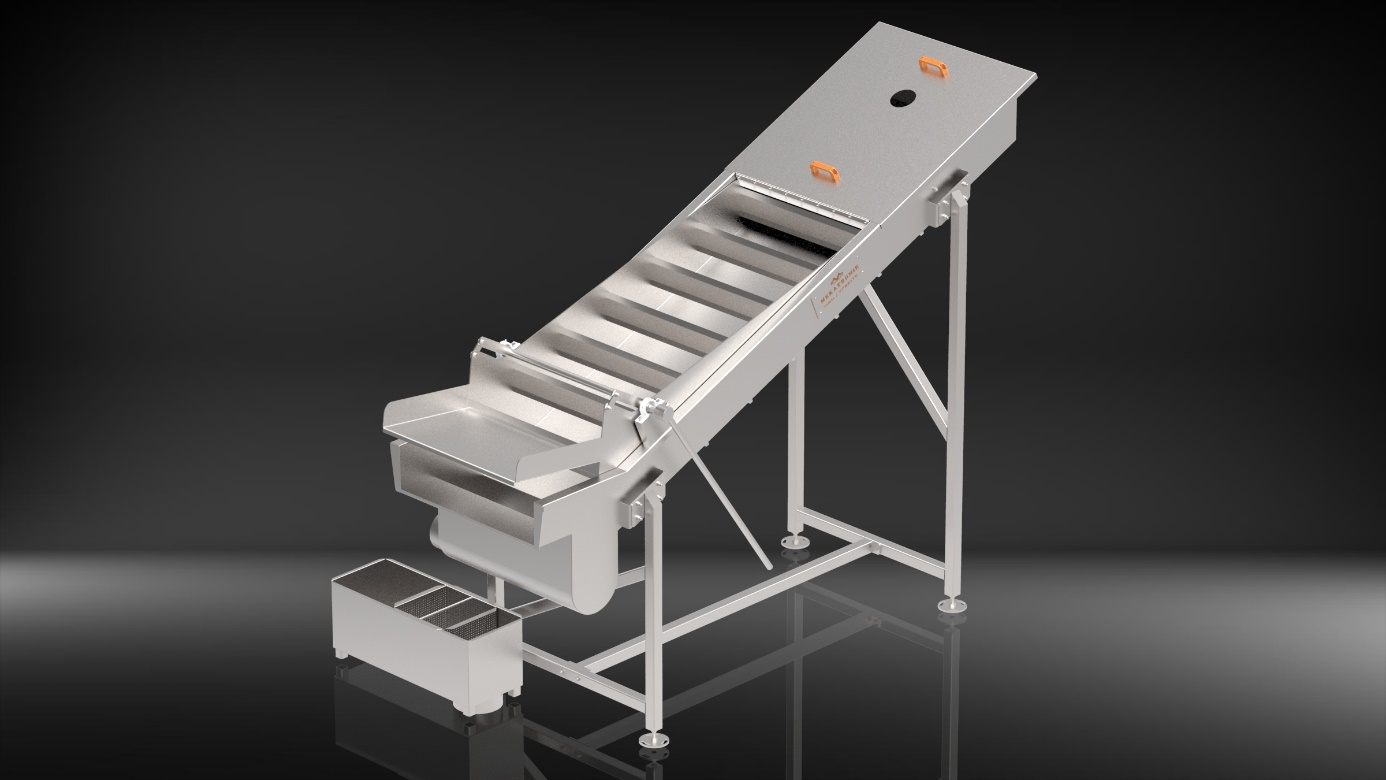
In a stone and sand separation cascade, water flow decides two things at once: how cleanly heavy material is removed and how much good fruit ends up on the waste side. Too much water carries product toward the drain, too little lets stones and sand travel along with the fruit. The stone and sand separation cascade works in the narrow band between those two errors, and this article explains how to read that balance and tune it.
01
Why is water flow the main control for product loss?
The cascade separates by moving water, not by mechanical force. Dried fruit is light enough to be carried by water, while stones and sand are clearly heavier. Water flow is the only tool that sorts these two groups, so changing it changes how both of them behave.
When flow rises, the carrying force of the stream rises with it. Small heavy particles can be swept along, and fruit can accelerate between the steps and be thrown toward the waste tank or the drain. When flow falls, fruit slows down and piles up on the steps, and stones and sand underneath get no chance to separate before the product bed moves on.
02
What happens when flow is too high?
The most visible sign is good fruit in the waste stream. The waste water tank is designed to catch large debris, so if product lands there, the flow has gone beyond its separating role. A second effect is shorter contact time: the washing effect drops and a dirtier product reaches the next machine.
Excess flow also inflates water use and effluent load. In a plant with limited water supply, treatment or drainage, that becomes a second cost on top of the lost product.
03
What happens when flow is too low?
With too little water, fruit builds up on the steps. As the layer thickens, stones and sand stay trapped under the product, out of reach of the water, and sediment can mix back into the flow. The problem is then not product loss but heavy material passing downstream, where a hard fragment can wear the screens and blades of later machines.
Fruit also stays in the water longer. Because dried fruit absorbs moisture, a longer dwell changes its moisture condition, which has to be accounted for in the next drying or packing step.
04
How is the right flow found?
There is no single correct figure. The suitable flow depends on the product, the foreign material load and the feed rate; exact values are set per project and confirmed in the quotation. On site, a controlled trial works best:
- 01Hold the feed rate constant and change only one setting at a time: the water flow.
- 02After each change, wait for the machine to settle, then inspect the contents of the waste water tank.
- 03If good product appears in the waste, reduce the flow; if stones or sand appear at the product outlet, check feed rate and step loading before raising the flow.
- 04Record the product type, feed rate and observation for every trial in a logbook.
- 05Re-verify the setting whenever the product changes, since a setting that suits one product may not suit another.
The feed side is part of the same picture. If the pump or transfer element delivering product to the cascade is uneven, even a constant water flow gives an uneven result. Removing stems and light debris upstream, for example with an aspirated shaker, reduces the load on the cascade and the risk of product slipping to the waste side.
05
What do the symptoms tell you?
| Observation | Likely cause | First check |
|---|---|---|
| Good product in the waste tank | Flow too high or a sudden feed surge | Fix the feed rate, reduce flow gradually |
| Stones or sand at the product outlet | Product buildup on the steps, low flow or high feed | Check step loading, reduce feed |
| Sediment fills quickly | High foreign material load | Shorten the cleaning interval, review pre-screening |
| Product reaches the next machine too wet | Long dwell time, low flow | Watch how fast product moves down the steps |
06
How do cleaning and materials interact with flow?
In a cascade with built-up sediment the flow path narrows, so the same setting behaves differently. Cleaning is therefore part of tuning: the cascade lift lever allows the machine to be cleaned when needed, and the cleaning interval is set by the plant according to the foreign material load of incoming product. The body and product-contact surfaces are AISI 304 stainless steel, with an AISI 316 option for product-contact surfaces depending on the process.
07
Next step
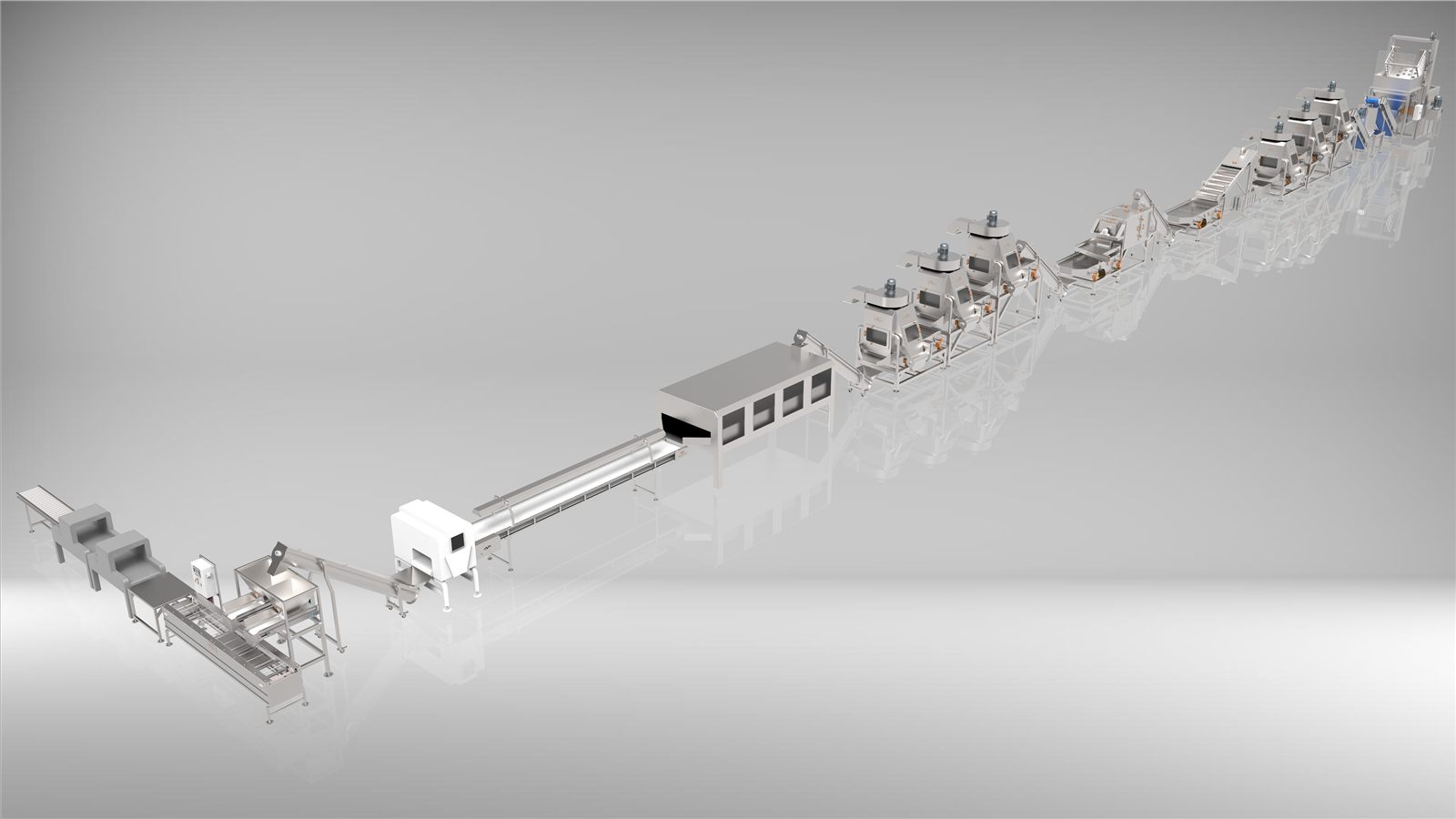
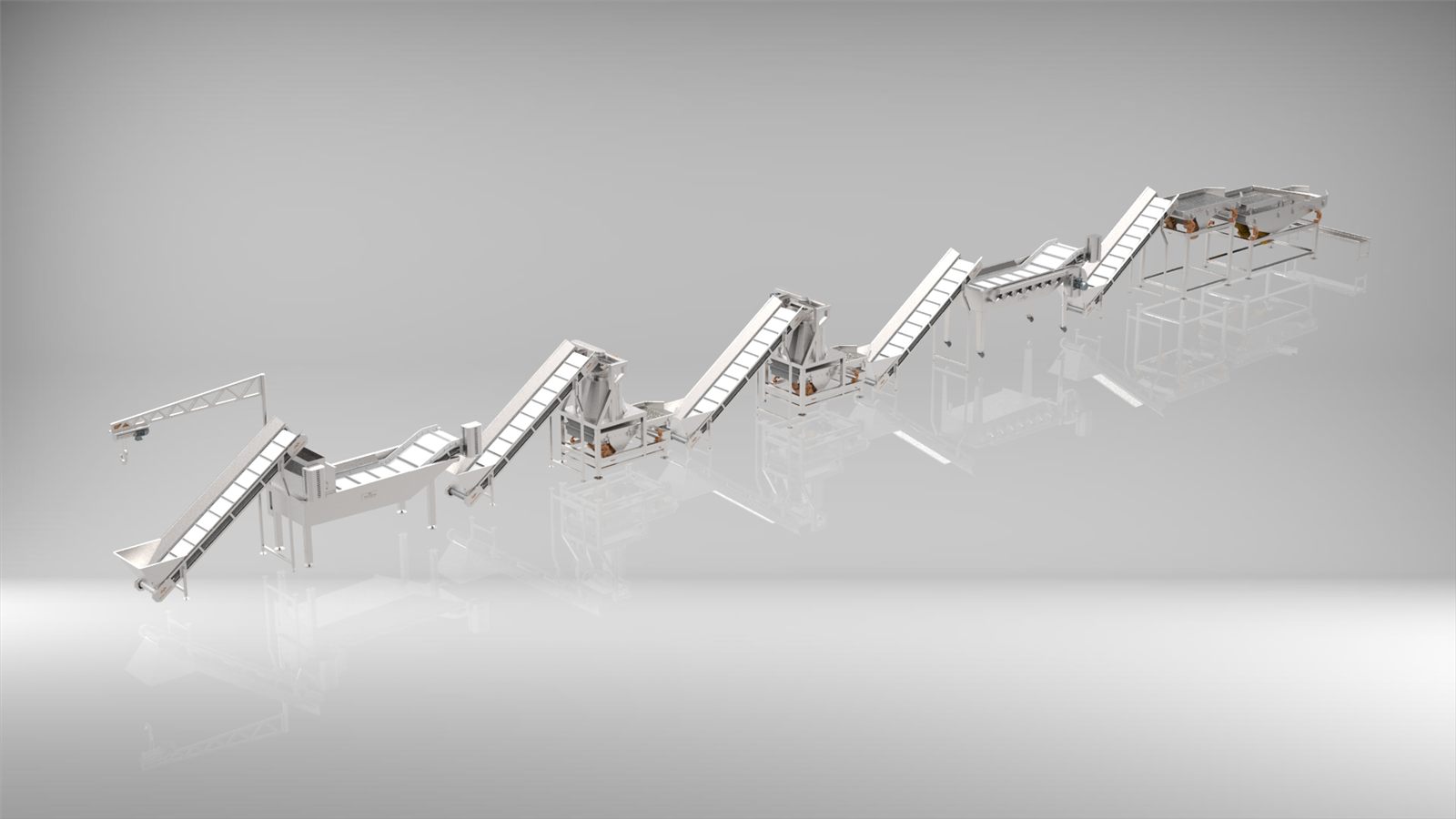
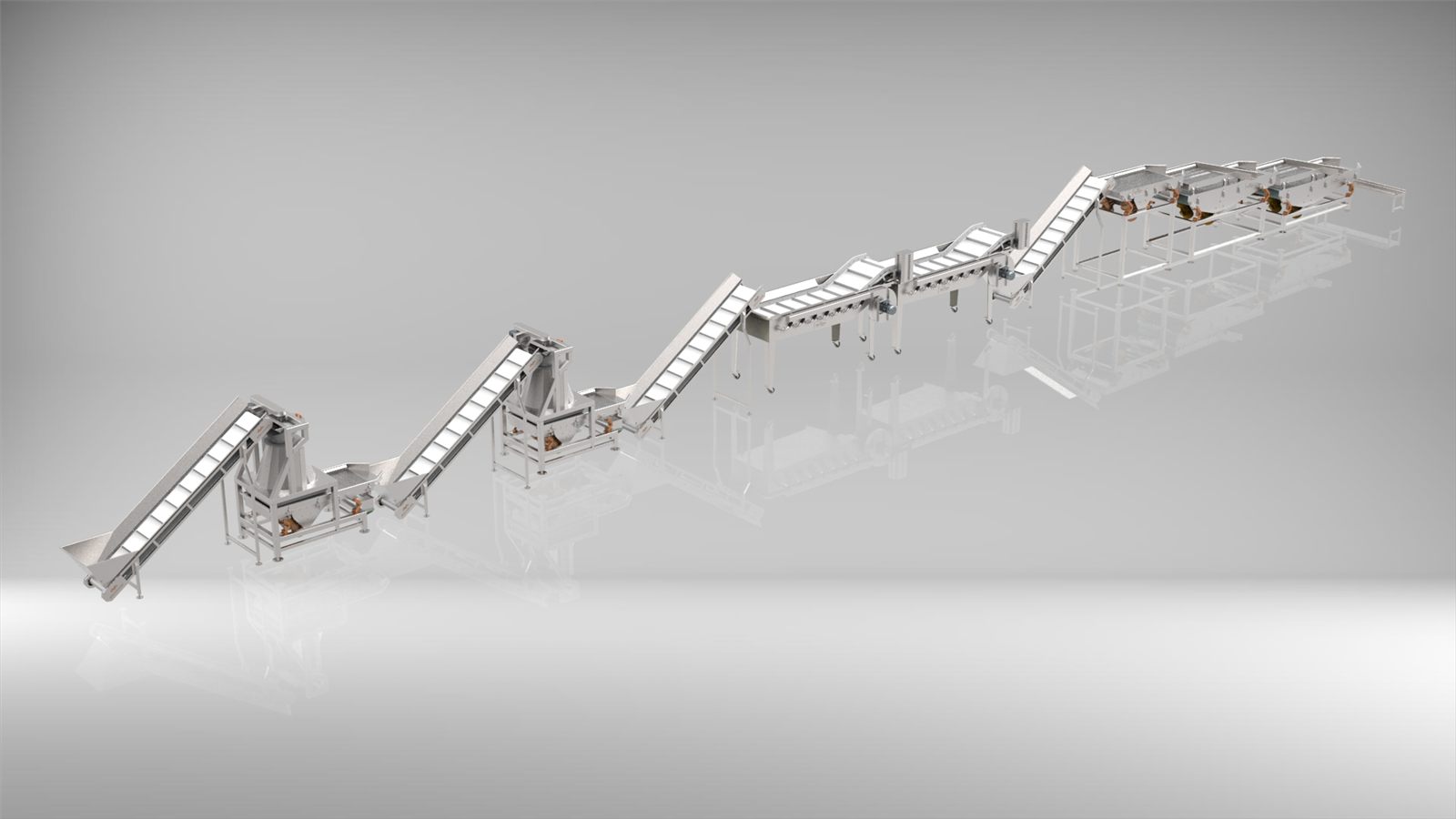
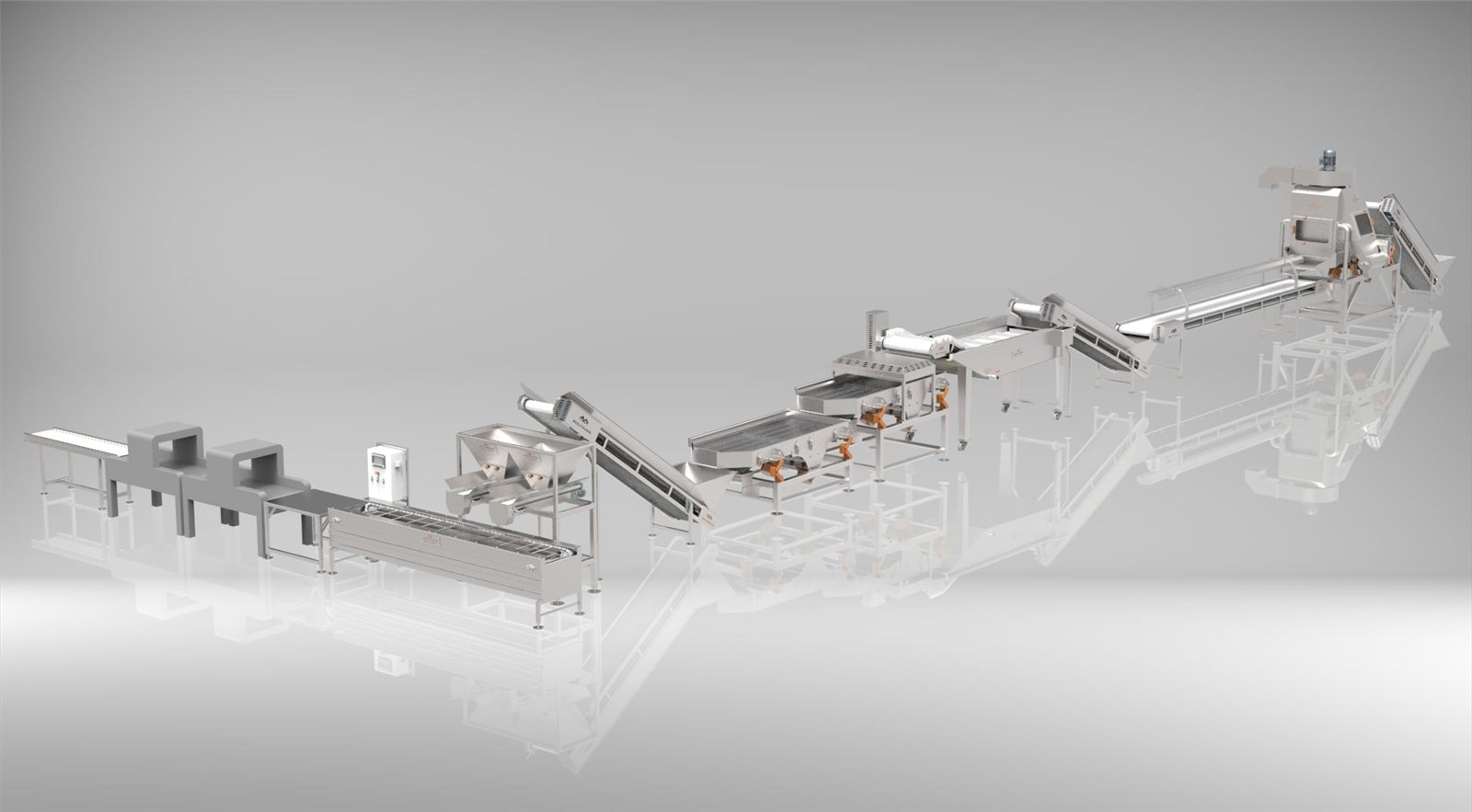
Once your product, hourly target and water infrastructure are clear, the position and water demand of the cascade can be planned together. See the full raisin washing and packing line for the layout, or reach us through the quotation page for pricing and capacity.