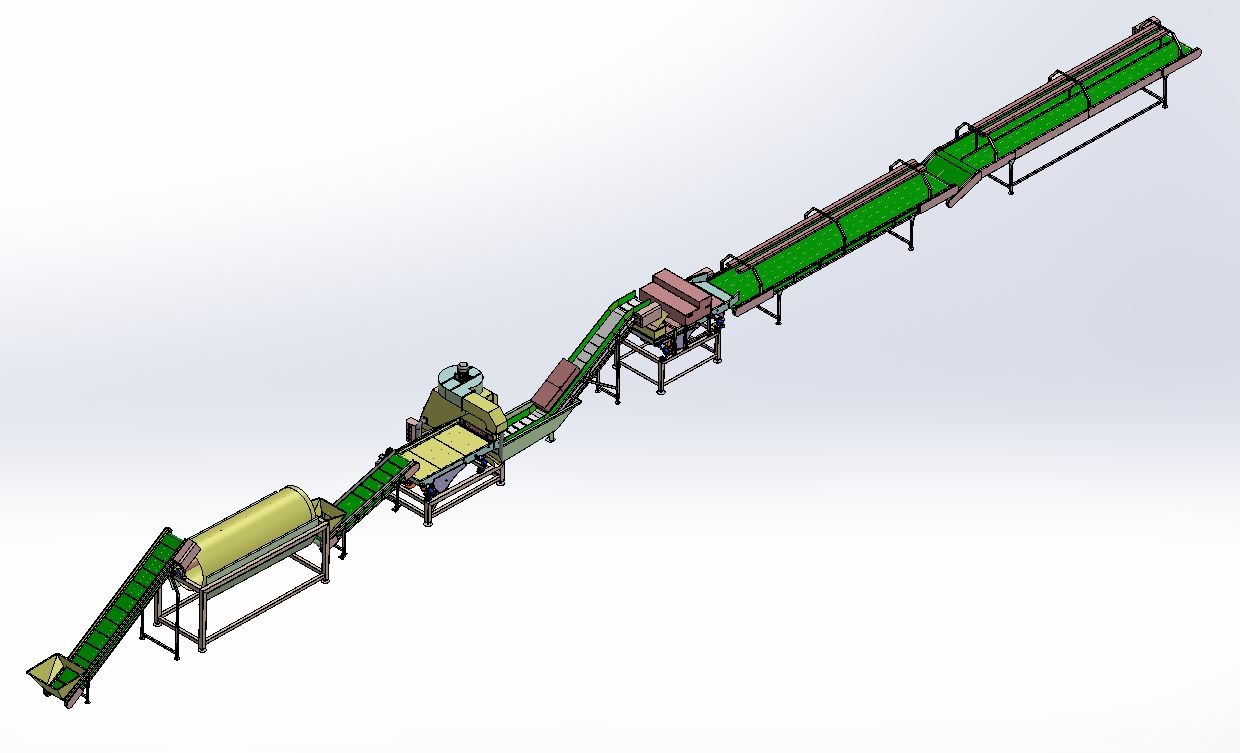
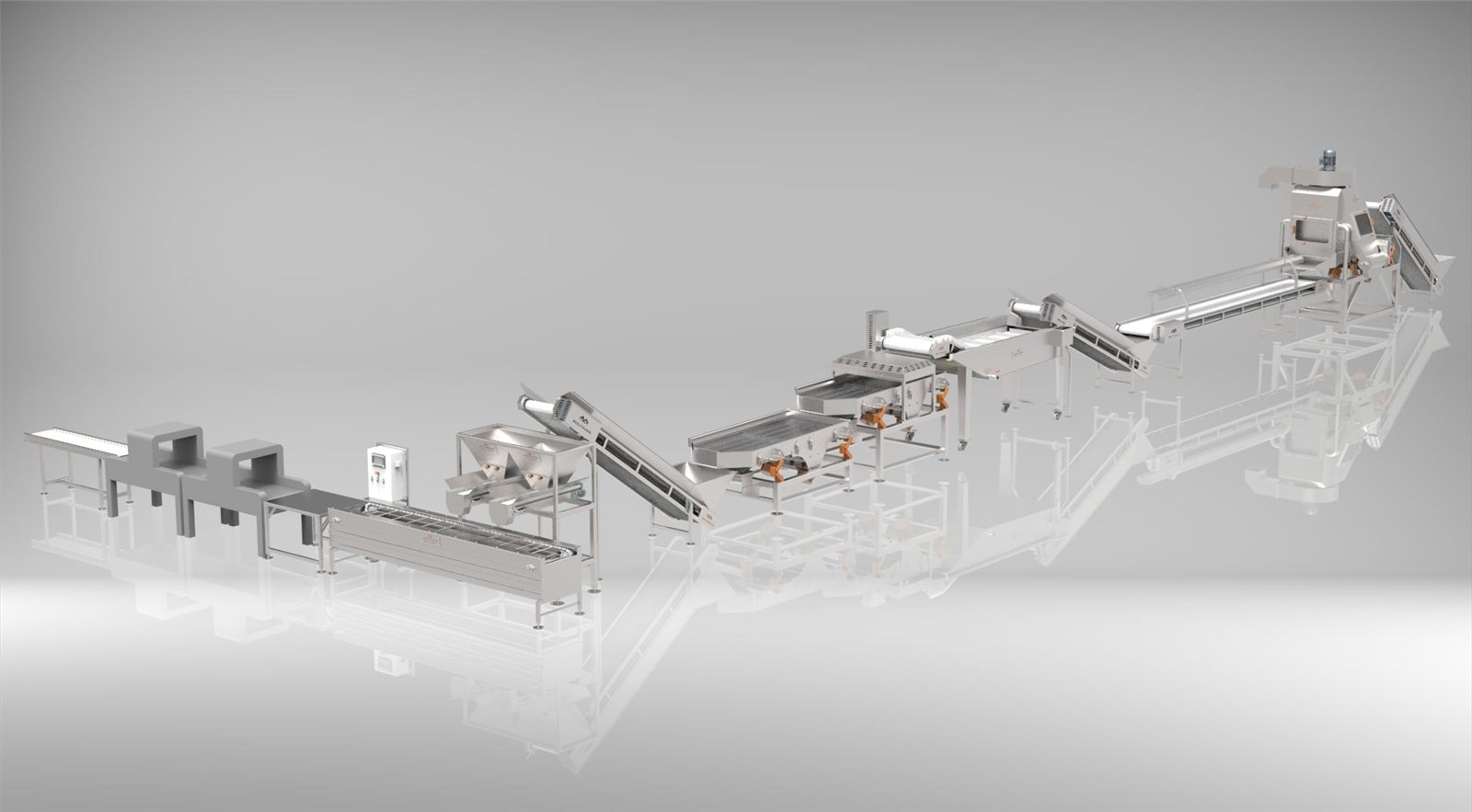
On a sun-dried tomato processing line, the product leaves the wash stage wet, and that water has to be dealt with before cutting and filling. This guide covers where dewatering and sorting sit in the line plan and which inputs shape them. The line discussed is the washing section of the sun-dried tomato processing line.
01
Which stations does the product pass after washing?
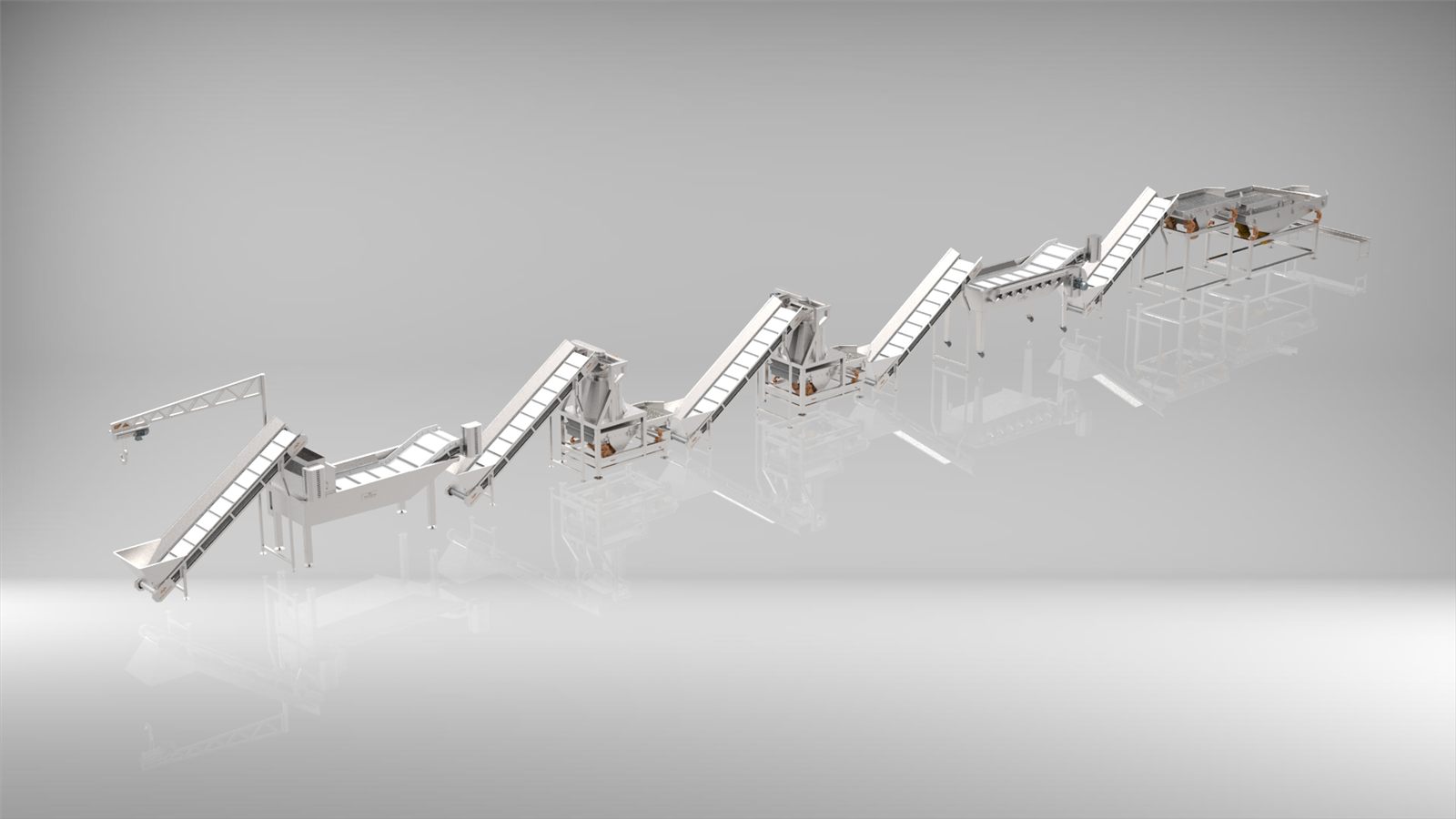
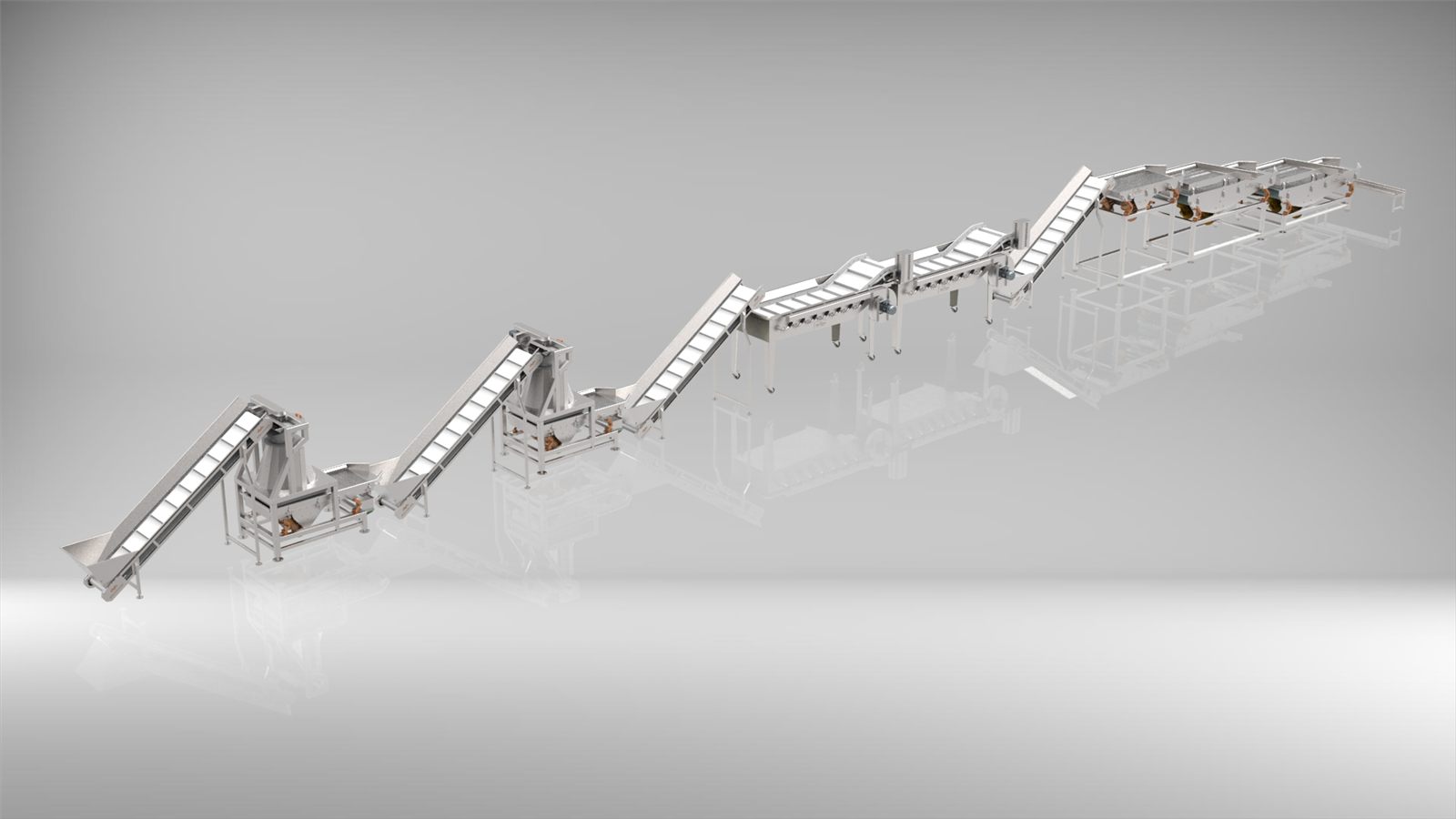
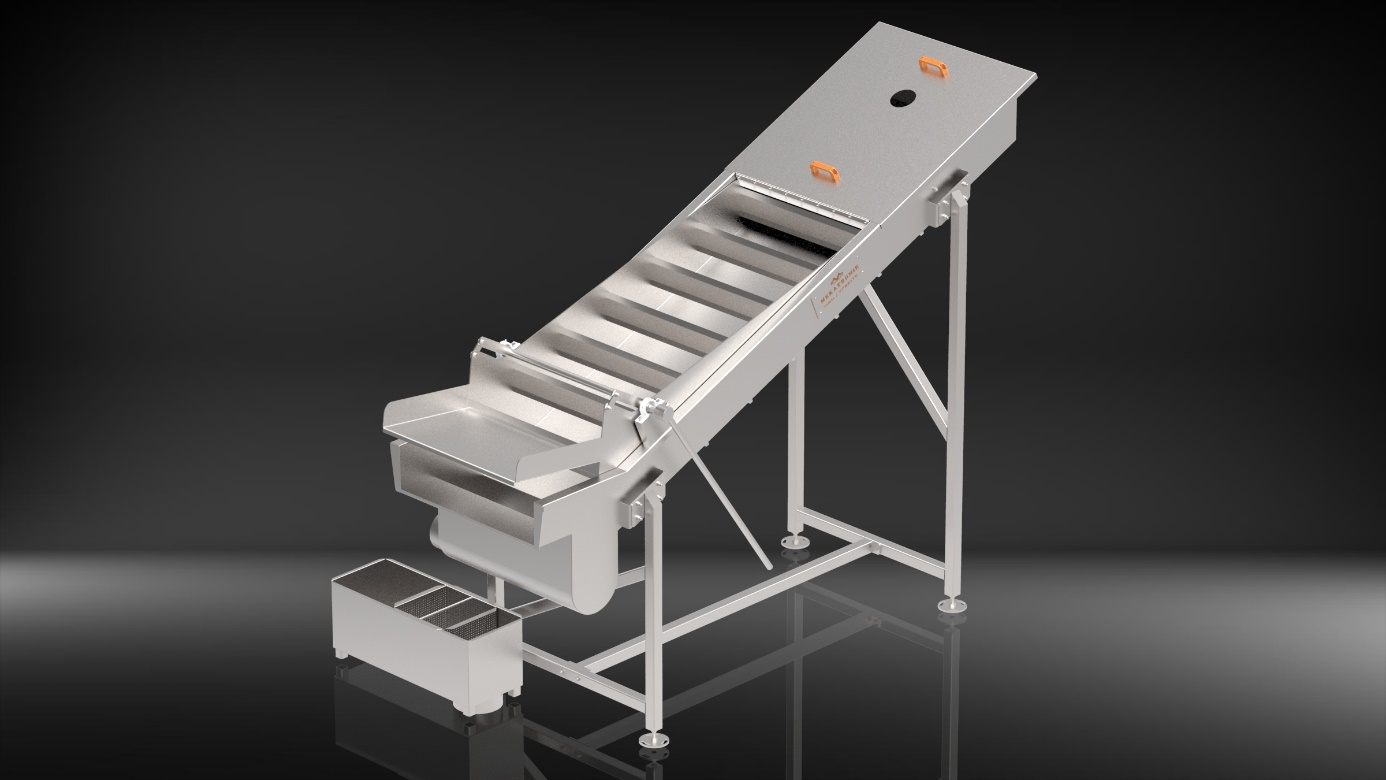
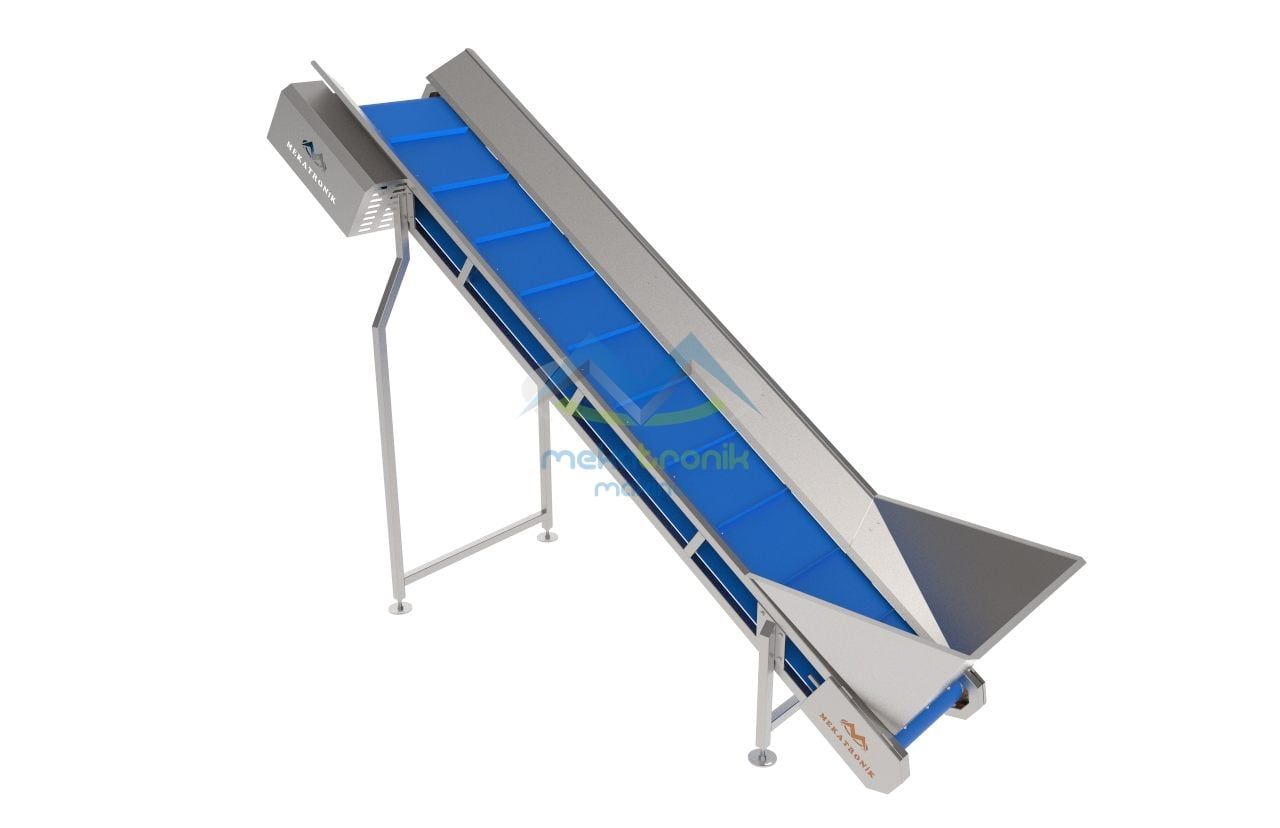
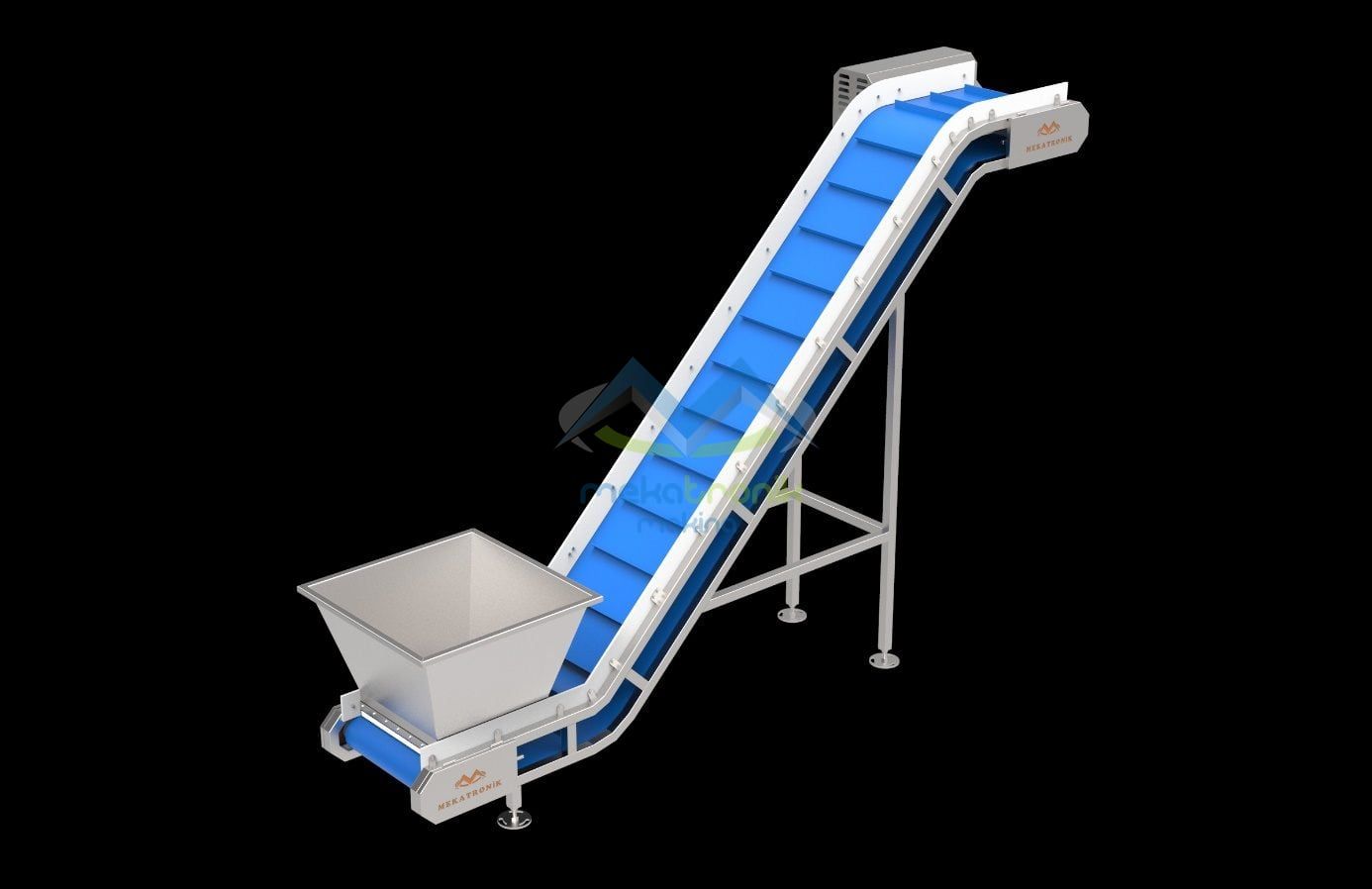
The washing section of the sun-dried tomato line has four stations: the product feeding conveyor, the jacuzzi, the brush washing machine and the dewatering shaker screen. The feeding conveyor carries screened product to the washing station. The jacuzzi washes the product in a bath of bubbling water and cleans residue off the surface. The brush washing machine uses rotating brushes to take dust and residue from the surface. The last link in the chain is the dewatering shaker screen.
The jacuzzi also adds moisture to the product while it washes, so the next station always receives wet fruit. That is why dewatering is not an optional extra but the closing station of the washing section.
02
Why is dewatering planned before cutting?
The washing line cleans screened product and takes off the surface water to prepare it for cutting and filling. The order follows from that: the dewatering shaker screen comes after washing and before the cutting line. The reasons come straight from the production flow:
- 01Product fed to the cutting station needs a balanced flow, and fruit carrying a lot of surface water can advance unevenly through the feeder.
- 02At filling, the weighing system fills to a target weight; water carried along with the product is counted in that weight and blurs how much of the target is actually product.
- 03Excess water collects on the conveyors and boxes downstream and adds to the cleaning workload.
None of these points depends on a specific water quantity. The acceptable level of surface moisture depends on the product form and the target packaging, and the values are settled at the quotation stage.
03
How does the dewatering shaker screen work and what sizes it?
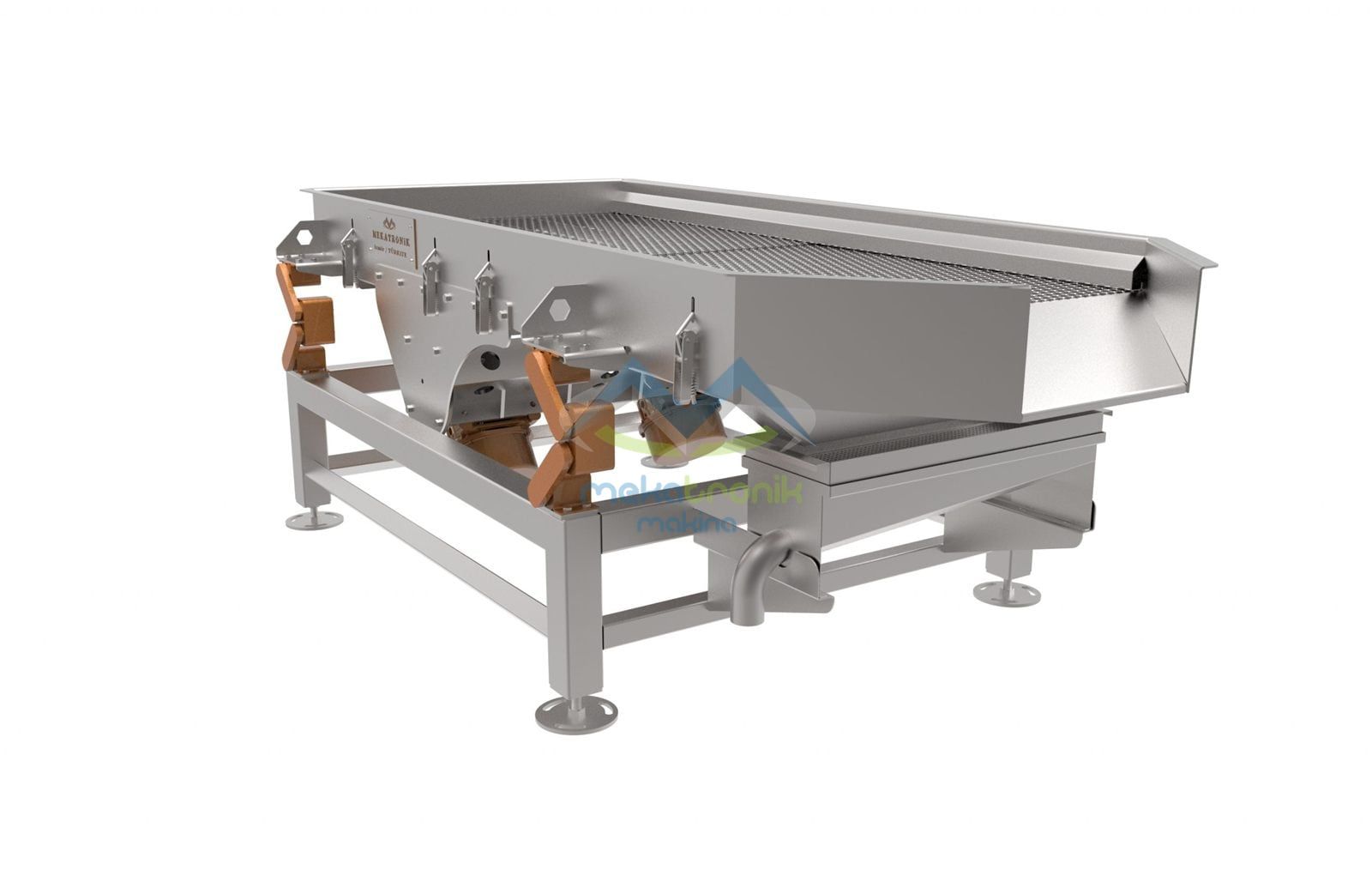
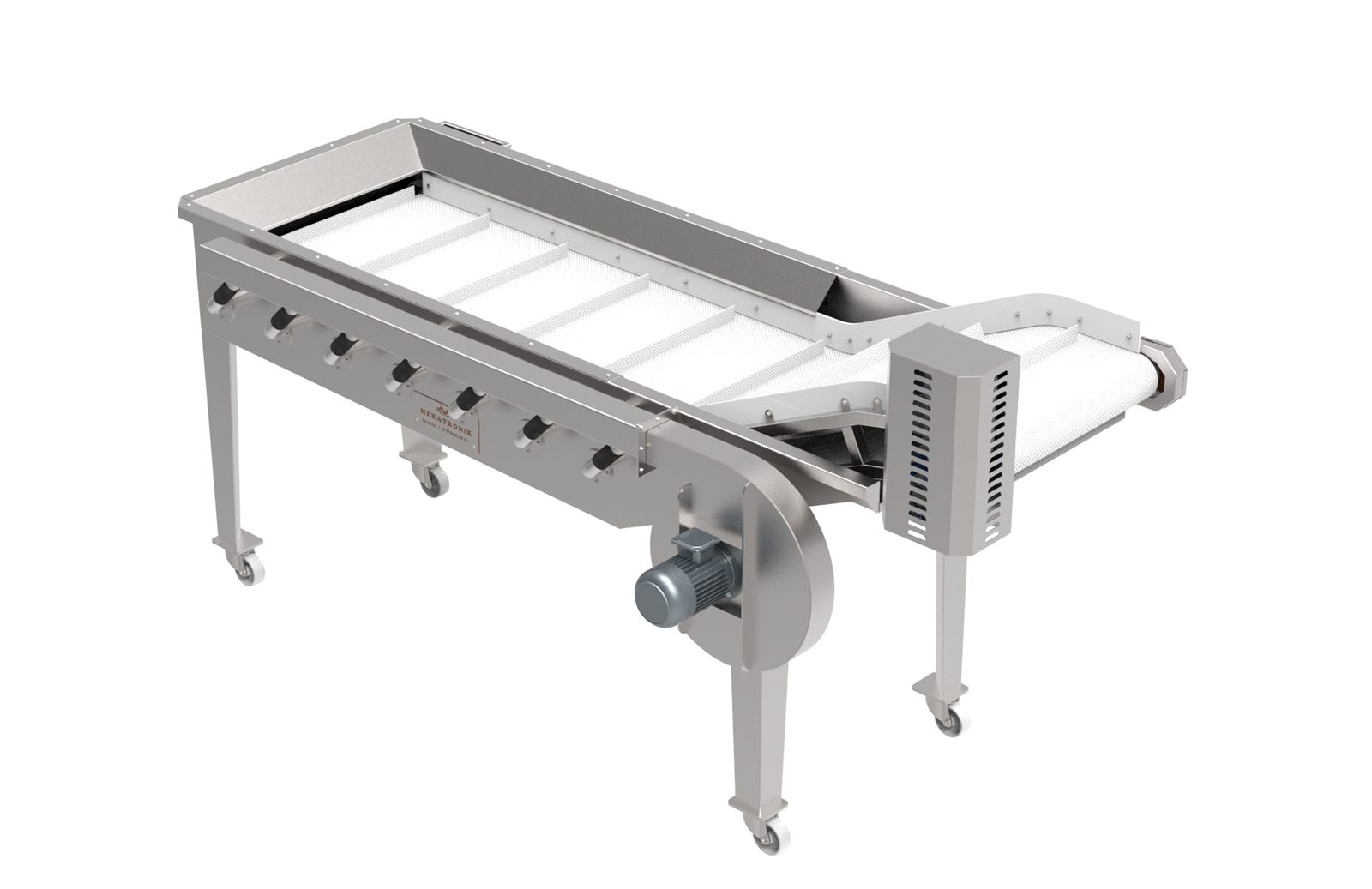
The dewatering vibrating screen separates the dense mix of water and product coming from washing on the shaker screen. The product travels over stainless screens towards the next stage. The waste water collects in a trough underneath, and the trough holds back large fruit and debris, which reduces the risk of drain blockage.
When a dewatering screen is planned, these inputs are weighed together:
- 01Product flow leaving the jacuzzi and brush washing machine: the screen must carry the flow the washing section delivers.
- 02Product form: whole, halved or sliced tomato behaves differently on a screen.
- 03Screen design: stainless screens are designed for the product group, and a stock screen does not suit every product.
- 04Waste water trough and drainage: the facility drain layout decides how the screen is placed.
- 05Place and purpose of use: dimensions can be built to order.
04
Where does the sorting step sit in the line plan?
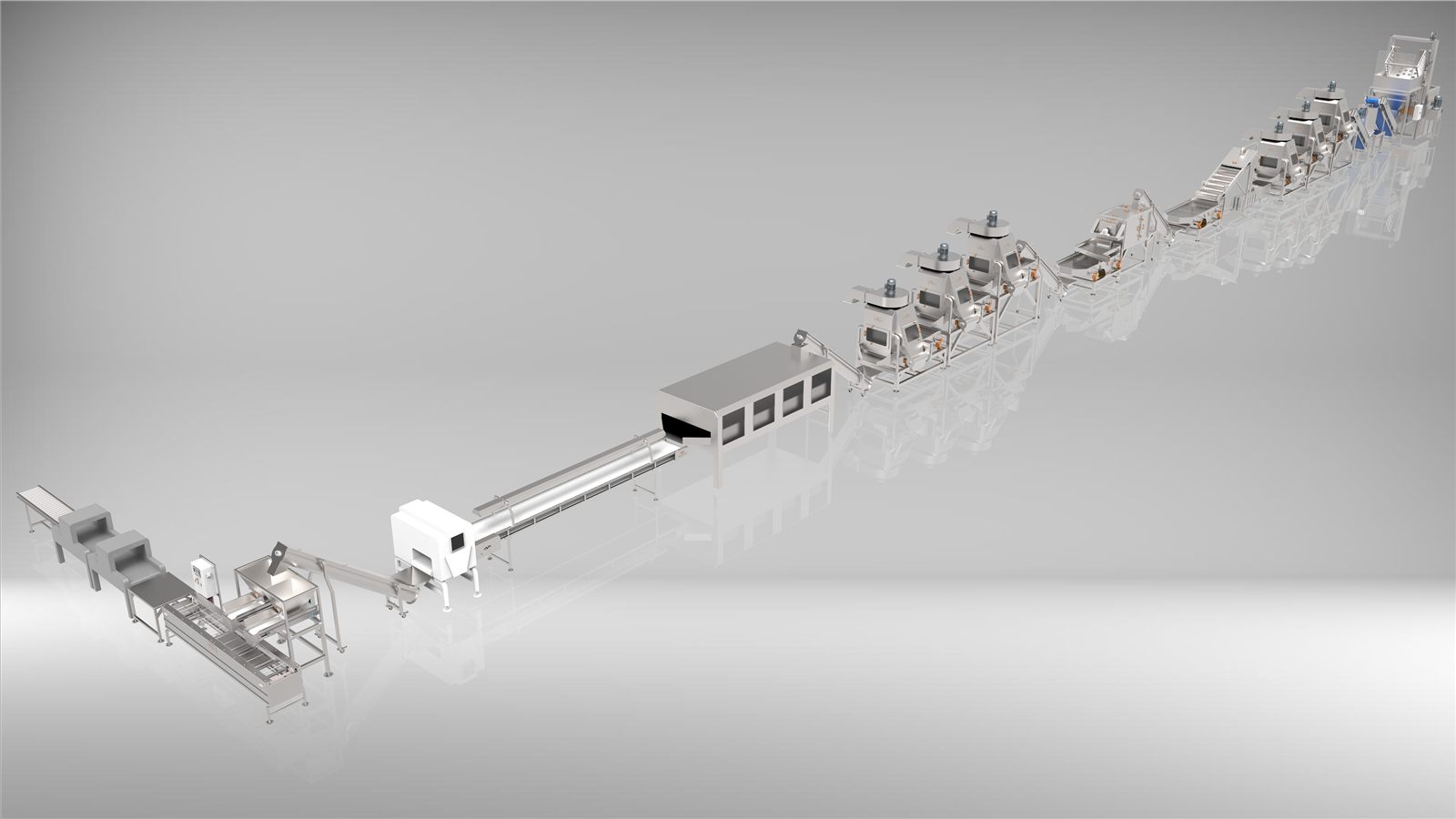
In the standard layout of the sun-dried tomato line, sorting sits before washing, in the pre-screening line. Product moves from the balanced product feed doser to the aspirated shaker screen and then to the illuminated sorting conveyor. The aspirated shaker screen draws off dust, stems and light foreign matter by suction; on the illuminated belt, defective product and foreign objects that become visible under LED lighting are picked out by hand.
The reasoning for sorting before washing is straightforward: defective fruit never enters the wash water. A second sorting point after washing is a separate design question. A plant that wants to catch defects revealed by washing, or foreign matter that stayed on the surface, before cutting can consider an additional picking point. It is not a ready-made station inside the standard layout; placement and staffing needs change from project to project, and the exact plan is set in the quotation.
05
The steps after washing at a glance
| Station | Task | What to check when planning |
|---|---|---|
| Product feeding conveyor | Carries screened product to washing | Match between feed flow and washing capacity |
| Jacuzzi | Washes in a bubbling water bath | Adds moisture, so the next station gets wet product |
| Brush washing machine | Removes dust and residue from the surface | Surface structure that depends on product form |
| Dewatering shaker screen | Takes off excess water after washing | Screen design, waste water trough, drainage |
| Sorting point | Separates defective product and foreign objects | Pre-screening in the standard layout, extra point by project |
06
How is the handover to cutting and filling arranged?
Product leaving the dewatering step goes to the cutting line. There, the balanced product feed doser sends product to the cutting station in a controlled flow, and the cube cutting machine processes it into cubes or strips at the required size. The cut size is set for the product by changing the knife set. In the filling line, the box filling scale then places the product into boxes with a coarse fill followed by a fine fill.
The handover depends on keeping the flow between stations at a matching pace. If the dewatering screen outlet runs much faster or slower than the feeding point to cutting, product either piles up or leaves gaps. For that reason the stations are balanced against capacity as a whole chain, not one by one.
07
What matters for materials and cleaning?
Product-contact surfaces use AISI 304 stainless steel, with 316 possible depending on the process. The stainless claim covers product-contact surfaces, not the whole machine. In a section that works with water, cleaning ease after washing comes down to access to the waste water trough under the screen and to the conveyor body. Machines are built to meet CE conformity requirements.
Next step: to see how the line could be arranged for your own product form and packaging target, review the sun-dried tomato processing line page and share your details through the quotation form. Capacity and layout values vary by project, and exact figures are settled in the quotation.