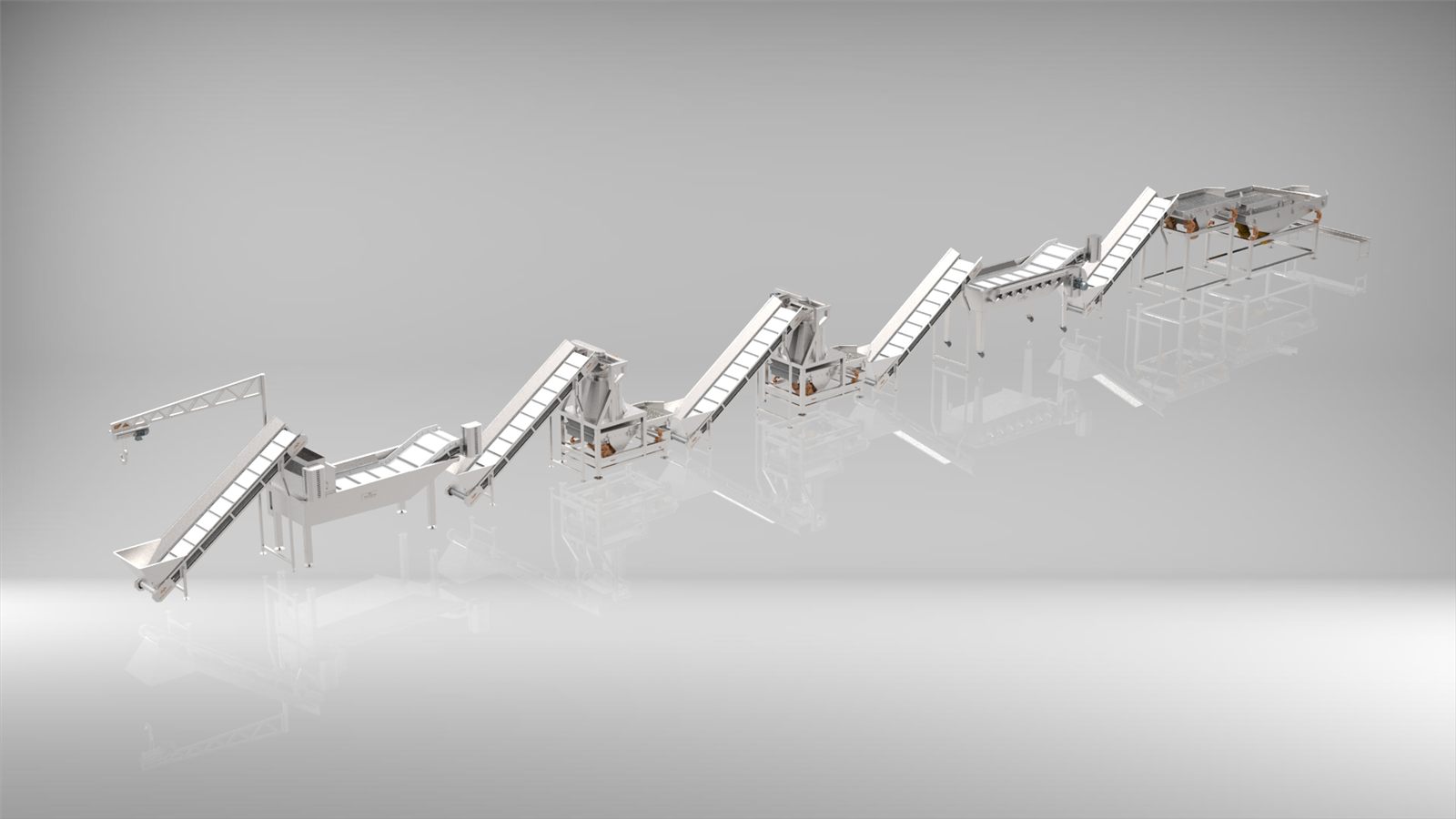
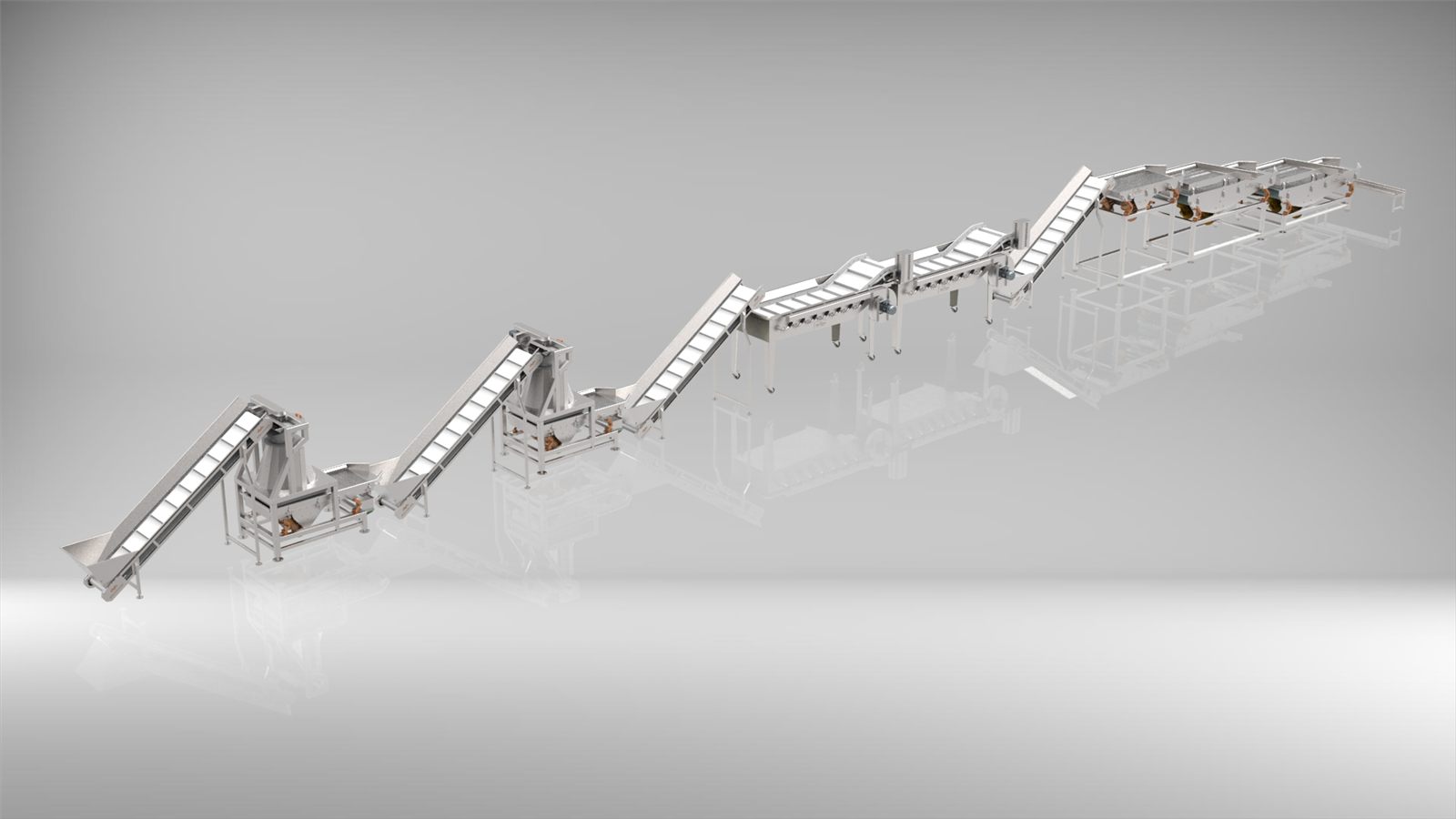
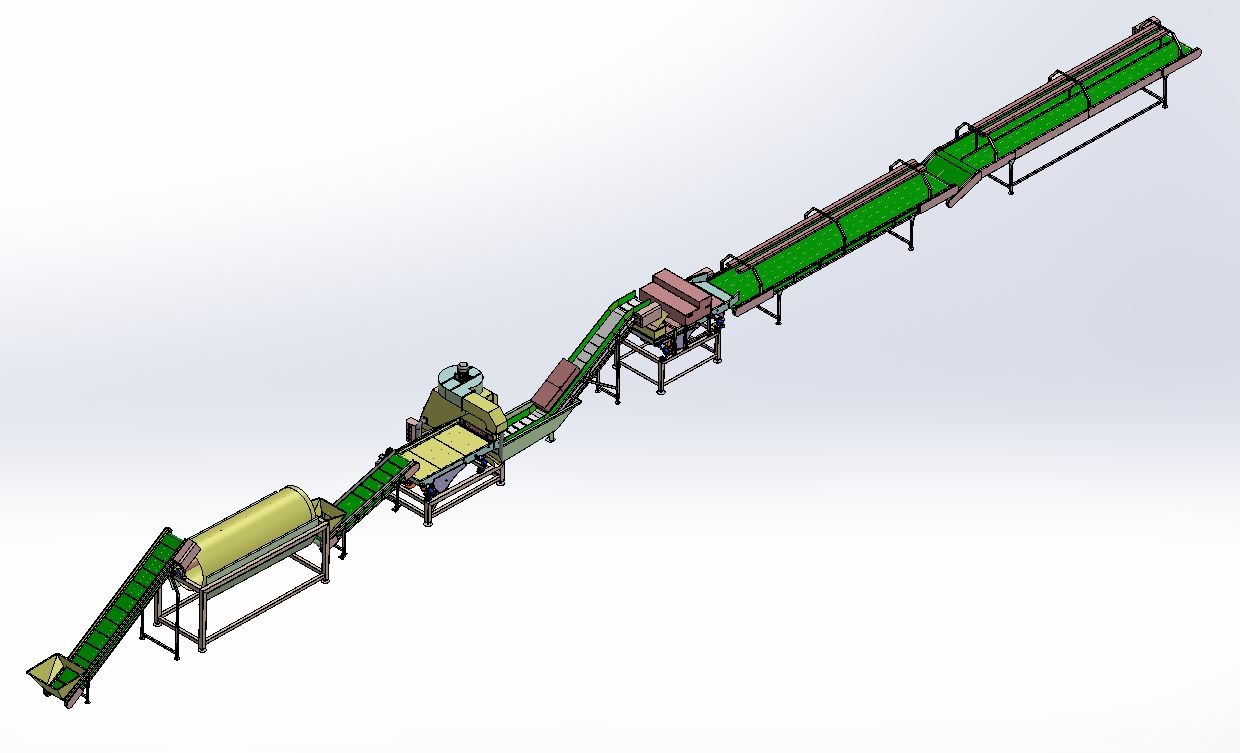
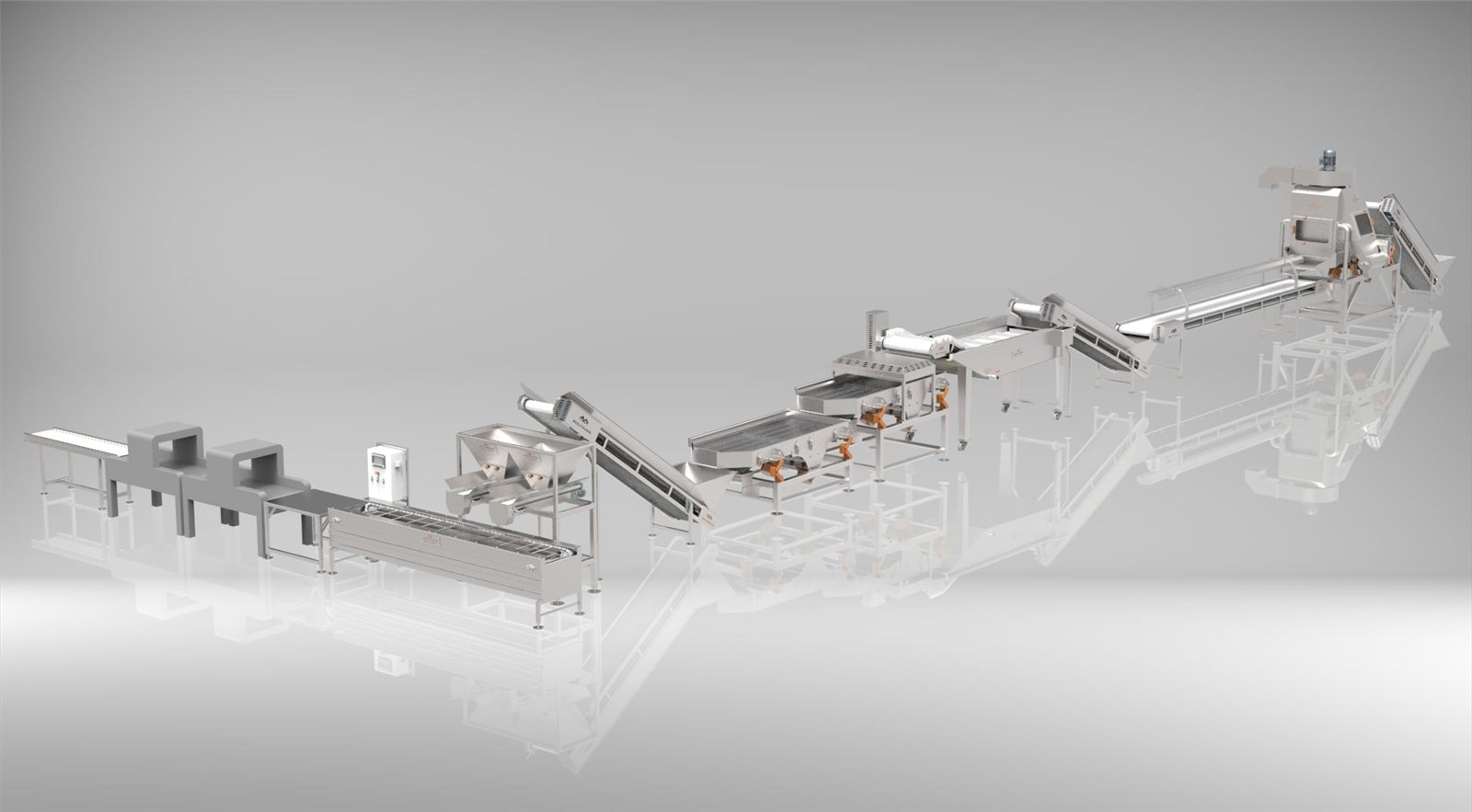
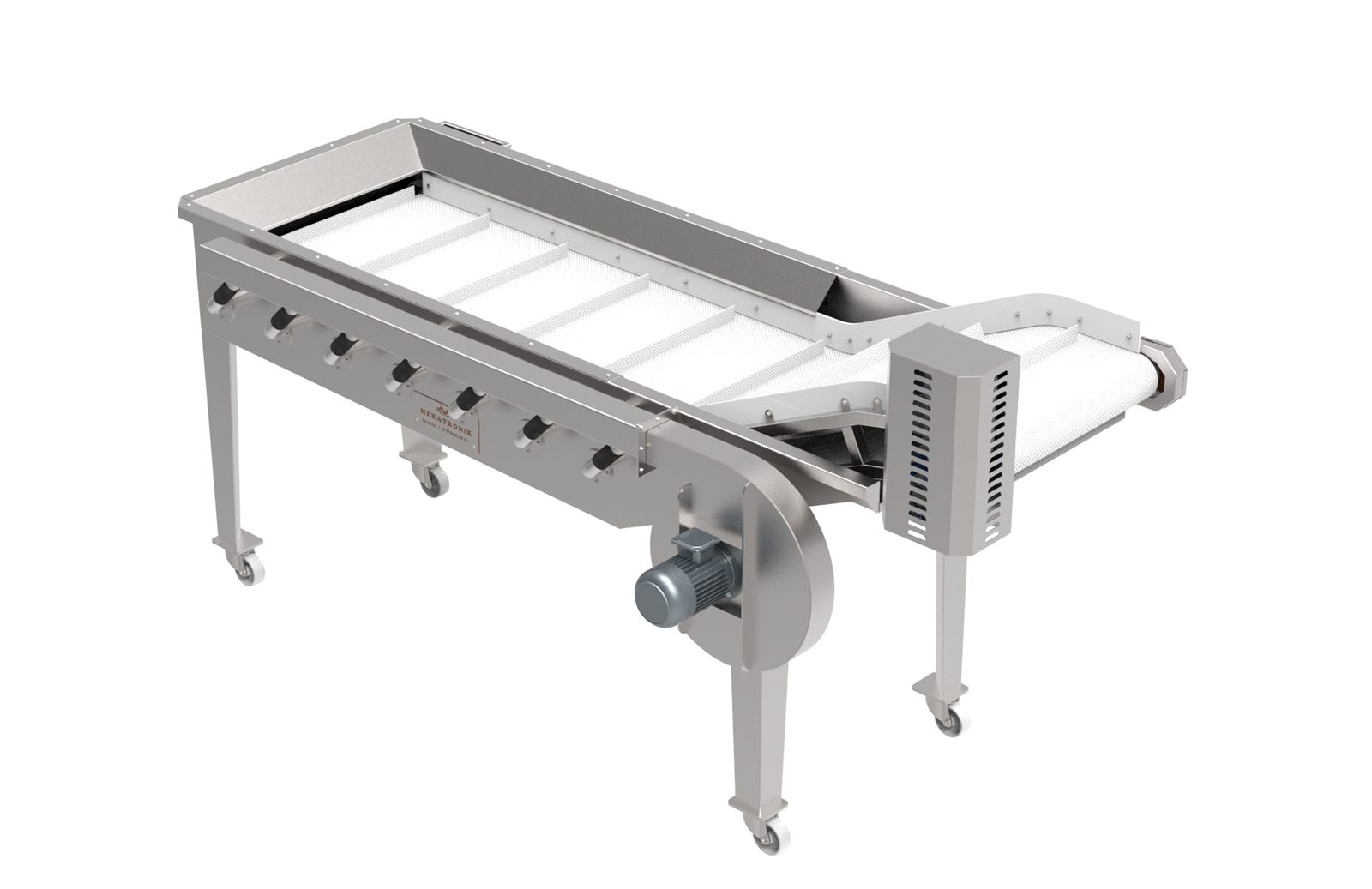
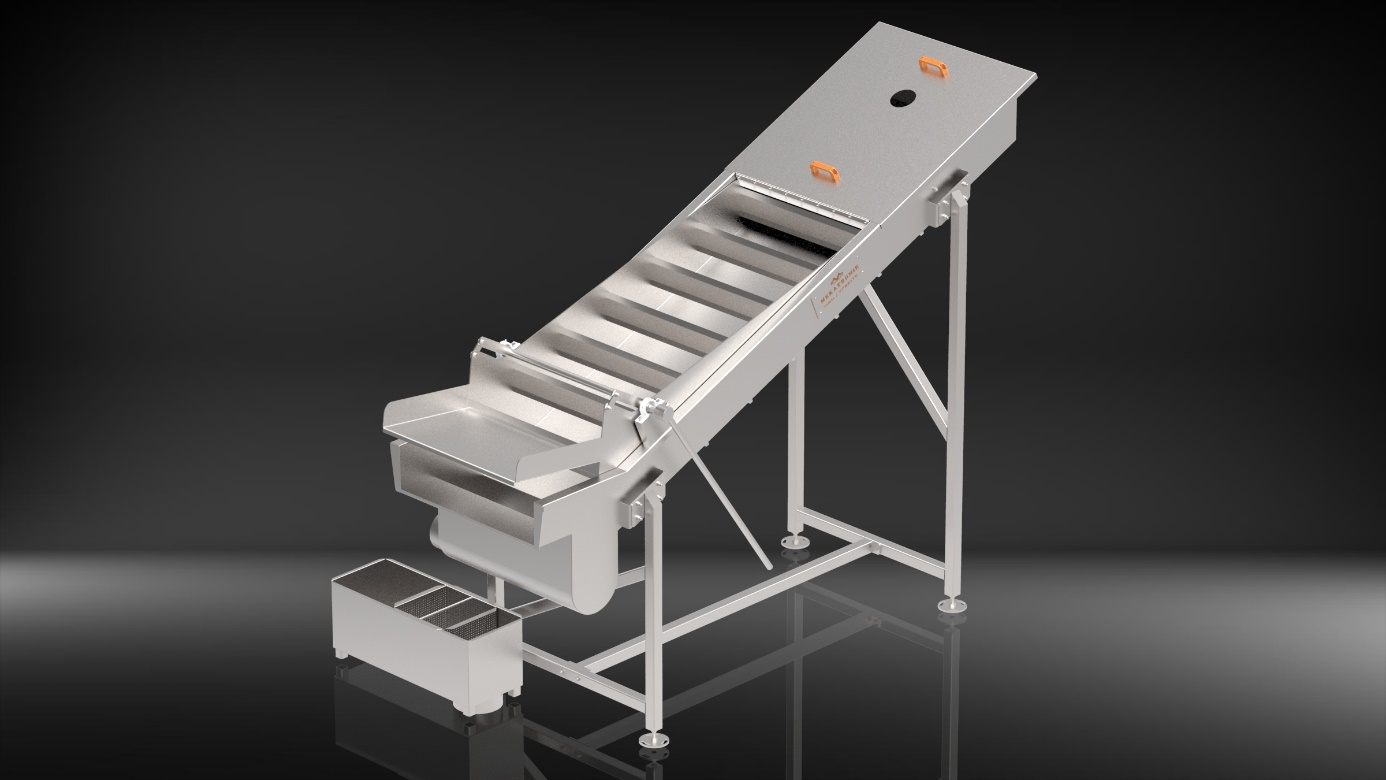
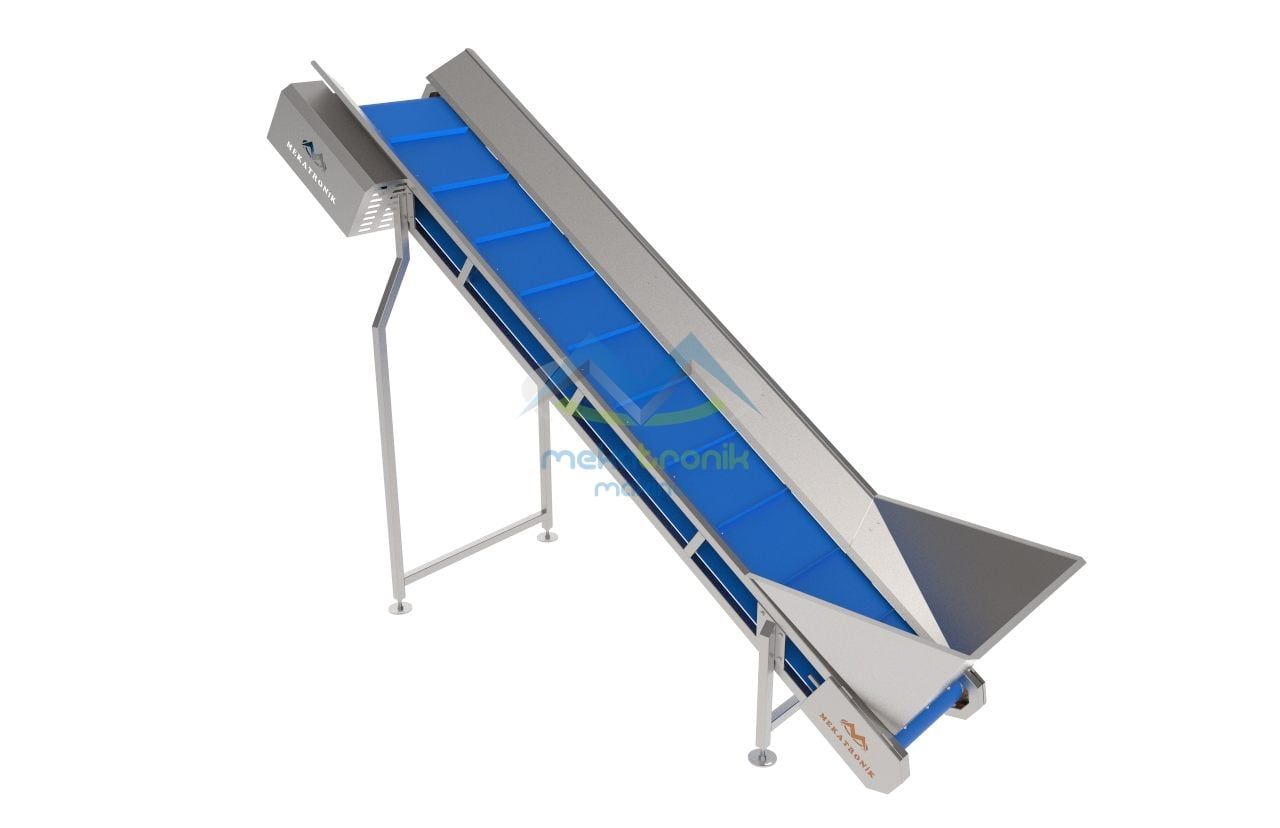
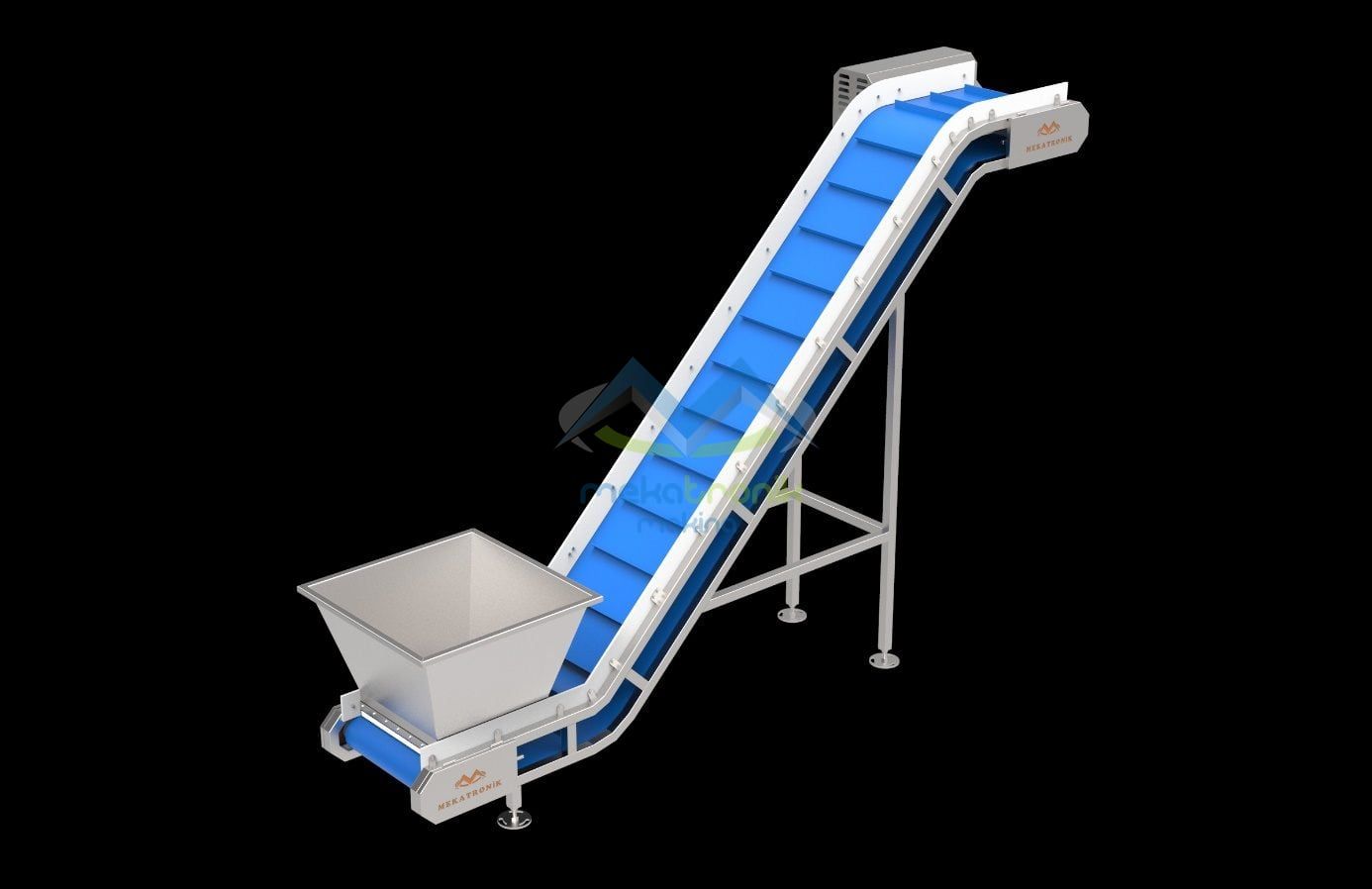
The washing machine is the part of the line people notice, but the product reaches it on a conveyor, and a badly chosen conveyor damages the product before it is even wet or feeds the washer unevenly. The Feeding Conveyor carries raw or processed product from one point to another. This article looks at where damage happens on the belt, how speed is set, and how the conveyor should be thought of together with the machine it feeds.
01
What is the feeding conveyor made of?
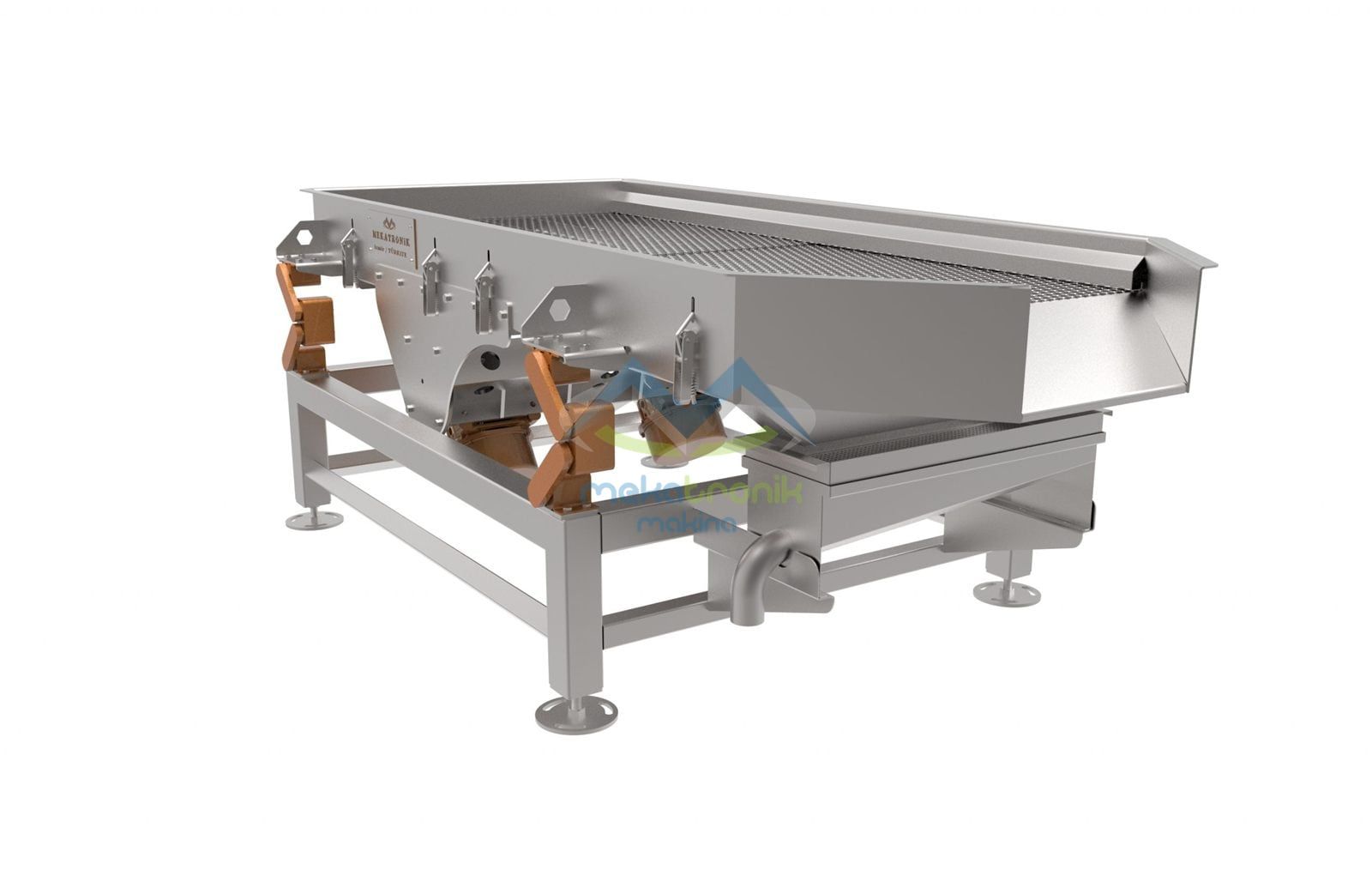
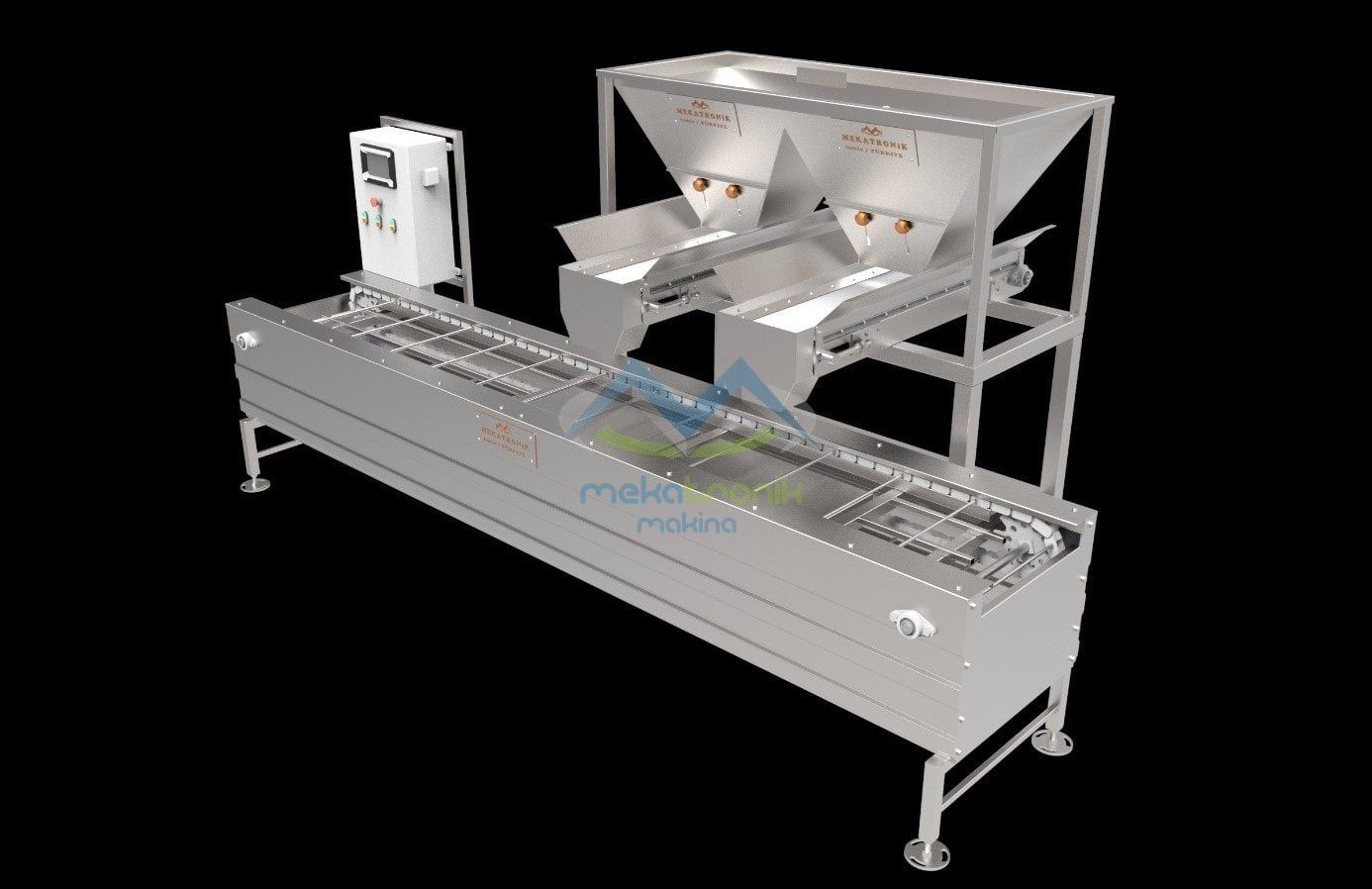
The chassis and the trough are AISI 304 stainless steel, and the surfaces that touch the product are AISI 304 as well. The part that actually carries the product is a PVC cleated belt. The machine is therefore not described as stainless throughout: the belt is PVC, the chassis and trough are steel, and that distinction matters when you explain to an auditor why each surface was chosen. The standard features are:
- 01A food-compatible PVC or PU belt for carrying the product.
- 02An AISI 304 stainless box-profile chassis.
- 03A large trough volume.
- 04Belt speed that can be adjusted to the product, and a structure that is easy to clean.
02
Where does product get damaged on a conveyor?
Damage usually comes less from the belt itself than from how the product lands on it and how it moves afterwards. Wet or soft product shows it most. Four places deserve attention:
- 01The drop point, where product is discharged onto the belt. A large height difference means an impact.
- 02Belt speed. If it does not suit the product, the product either piles up or is thrown about on the belt.
- 03Trough fill. Product heaped in the trough compresses the layer underneath.
- 04Transfer points, where the belt end hands over to the next machine and the product falls.
None of these can be settled by a number in a brochure. The catalogue prints no speed or capacity figure, and the right values come from the product and the line.
03
How is belt speed chosen?
On the standard feeding conveyor the belt speed is adjustable to the product, and a separate speed control is an option. For product that can stick together, a lower speed lets it travel as a thinner layer, while a higher speed can cause piling. The right setting depends on the moisture of the product, its grain structure and the flow the next machine can accept, and it is found by a trial on site with your own product. We do not give a value here; values are confirmed per project.
04
Why should raw and washed product not share a belt?
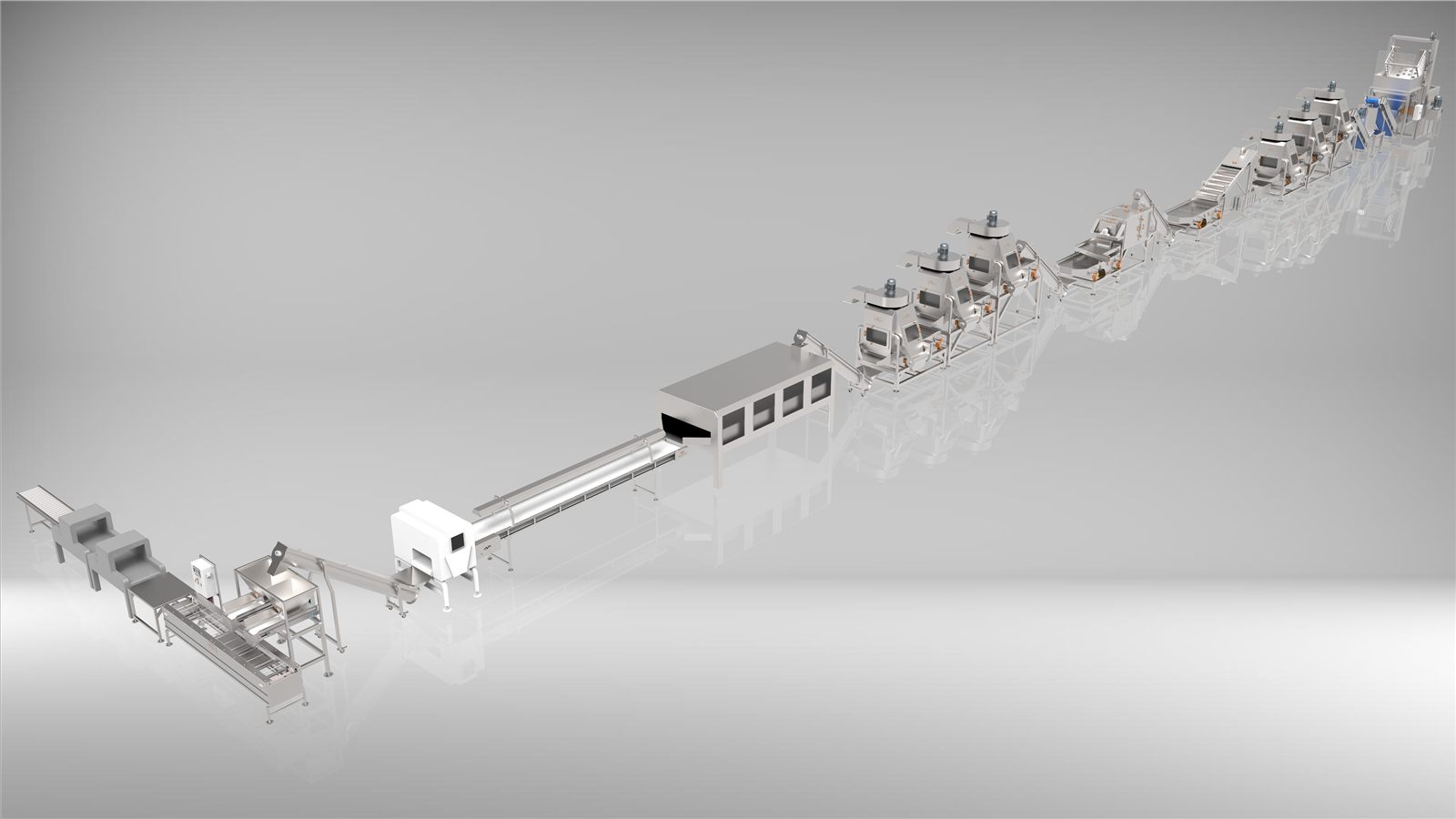
The feeding conveyor is defined for both raw and processed product, but using one belt for both is not good hygiene practice. To avoid cross contamination, the carrying before the wash and the carrying after the wash are set up on separate conveyors. On the line plan this means one conveyor on each side of the washer. The same conveyor type can serve in both places; what differs is which side it stands on and the order in which it is cleaned. The raw side is dirtier, so its cleaning is planned separately.
05
Where does it sit in the line?
The feeding conveyor usually stands where product enters the line. In a raisin line where product arrives in blocks, it first goes through the wet-process block opening conveyor, which separates it into single fruit, and then heads for washing. For the order of machines in a whole line, the raisin processing line page is a reference.
| Point in the line | Job of the conveyor |
|---|---|
| Product intake | Carry raw product to the first station |
| After block opening | Direct the separated product towards washing |
| Washer entry | Give the washer an even flow |
| Transfers between stations | Move product from one station to the next |
06
How should it be thought of together with the washer?
A washing machine can process only a limited flow. If the conveyor pushes more product than that, the washer overflows; if it pushes less, washing capacity is wasted. The speed of the conveyor should therefore be set against the flow of the washing machine it feeds. Control can be PLC or stand-alone, and with PLC control the belt speed can work in step with the rest of the line.
07
Cleaning and maintenance
The easy-to-clean structure matters because product residue should not build up between belt and trough. On lines that carry wet product, the underside of the belt and the trough corners are washed at the end of the shift. The belt drive is a geared motor, and service intervals are set according to operating conditions.
08
What to send for a quotation
- 01The product, and whether it is wet or dry.
- 02The height difference between where the belt starts and where it ends.
- 03The entry height and position of the washer.
- 04Whether you want speed control and a PLC connection.
- 05Electrical supply: the standard supply is 380 V / 50 Hz.
Because custom dimensions can be built for the place and purpose of use, the length and trough width follow from these answers. Mekatronik Makina has built lines since 1992, with more than 2,000 machines in the field across 22 countries. You can send the product, the expected flow and the machine the conveyor will feed through the quotation page.