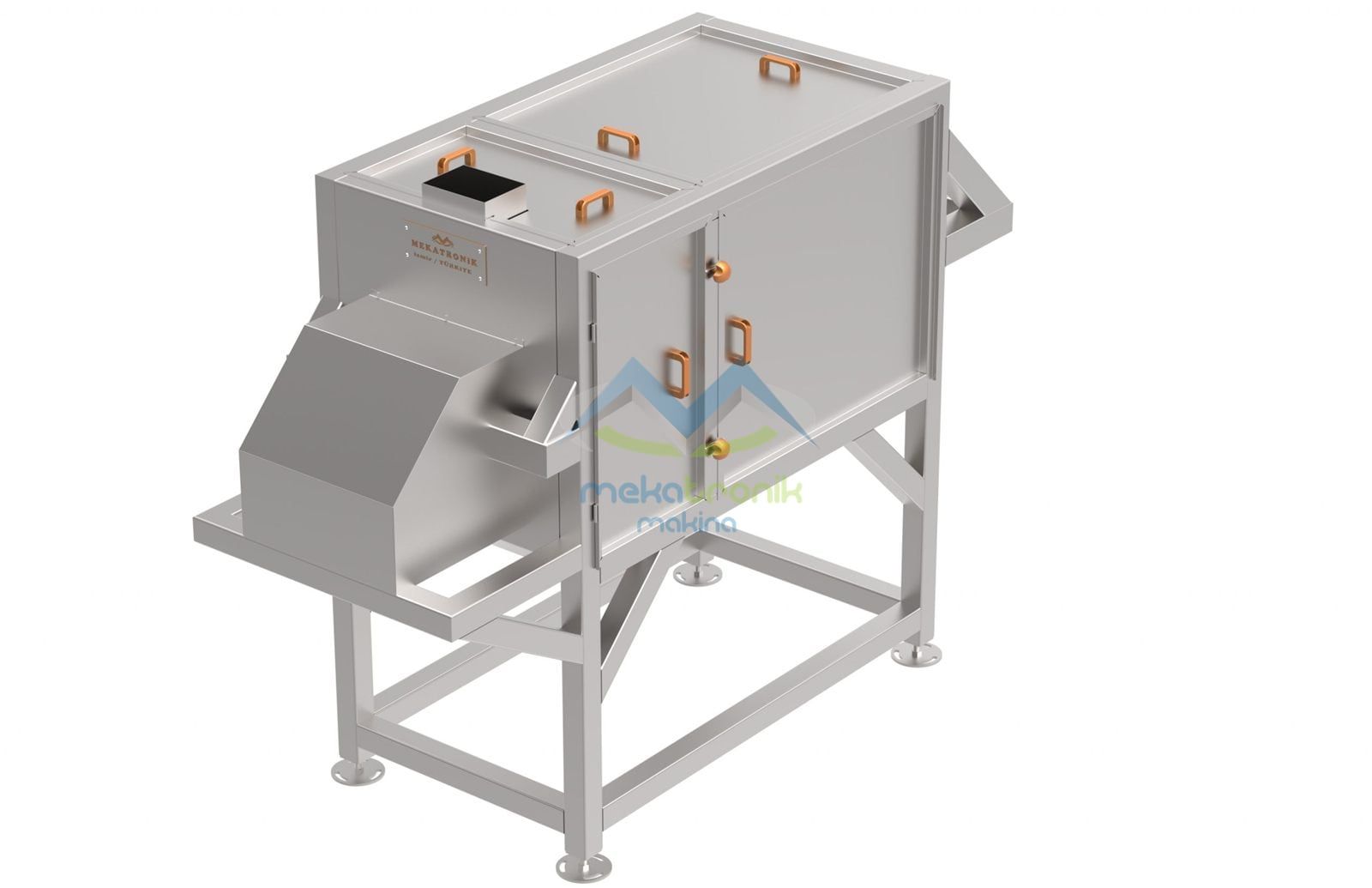
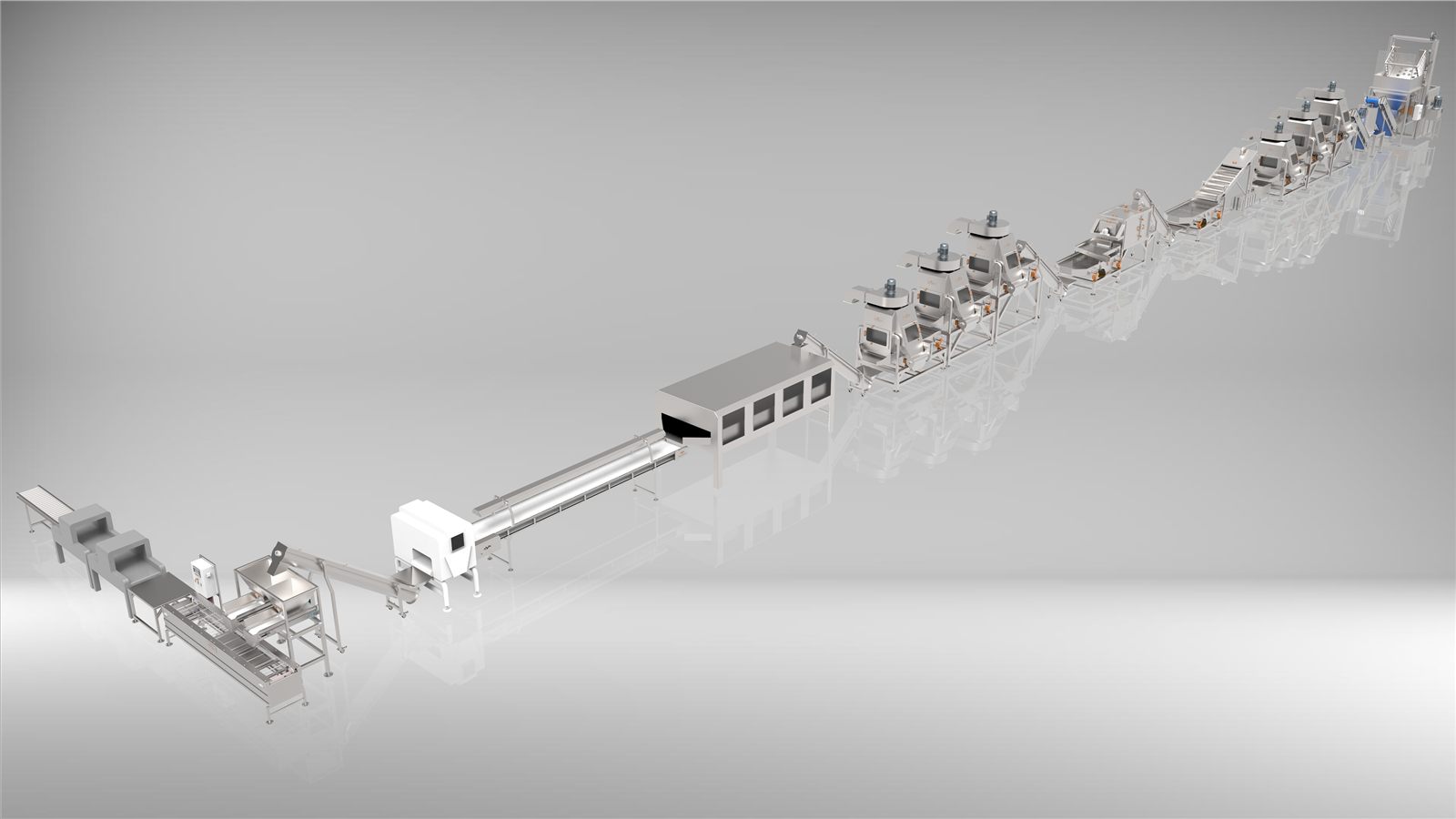
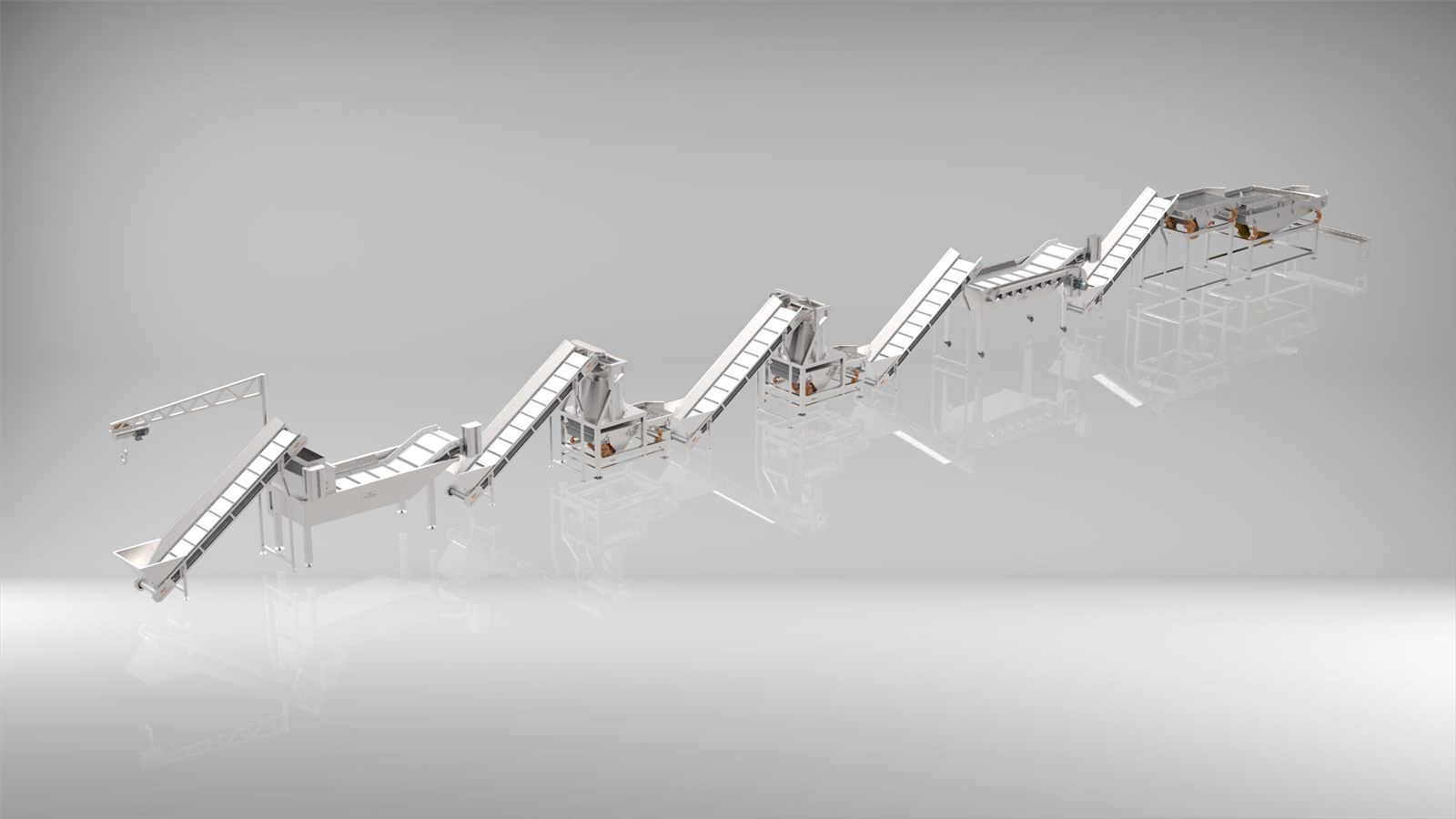
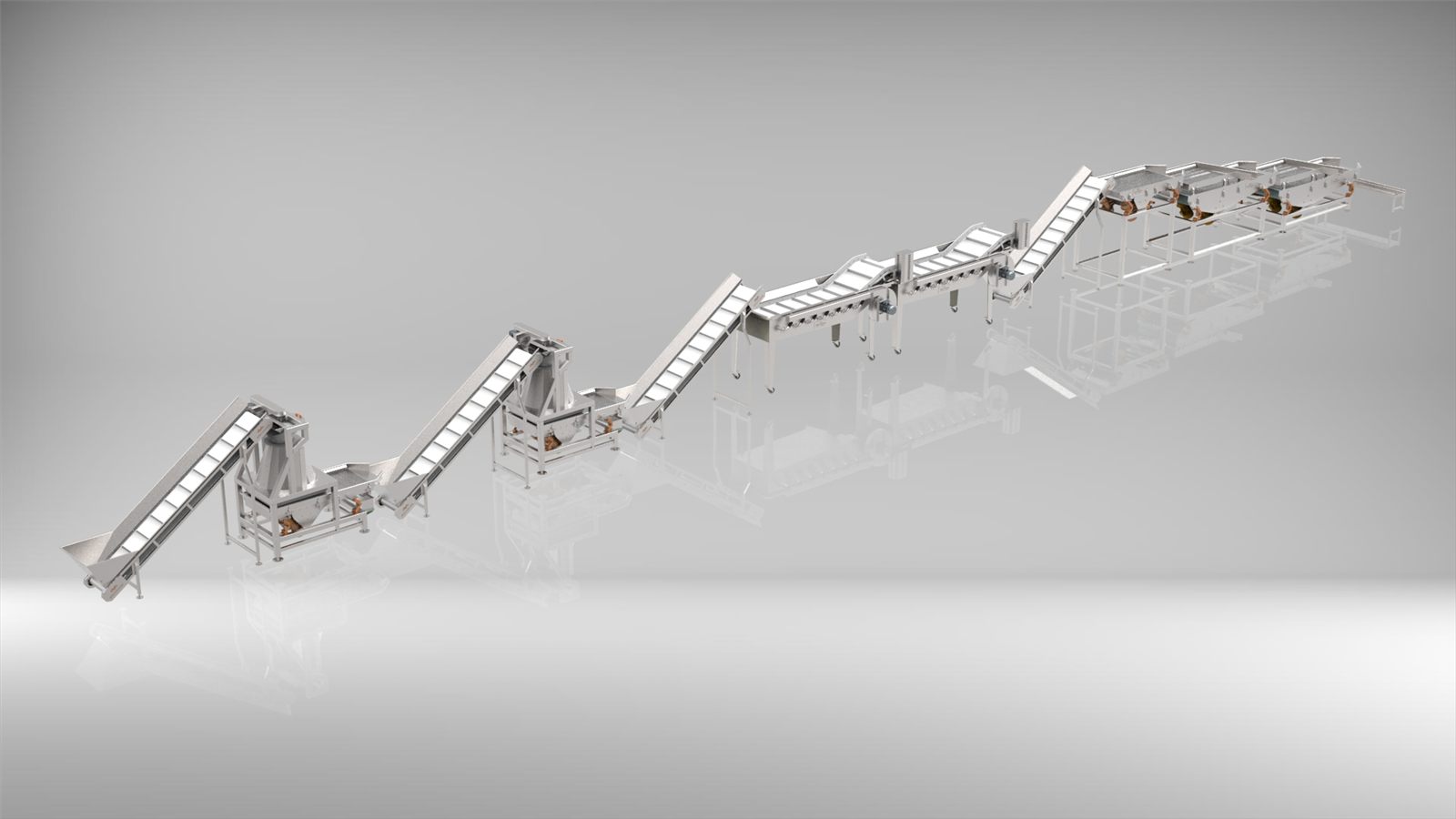
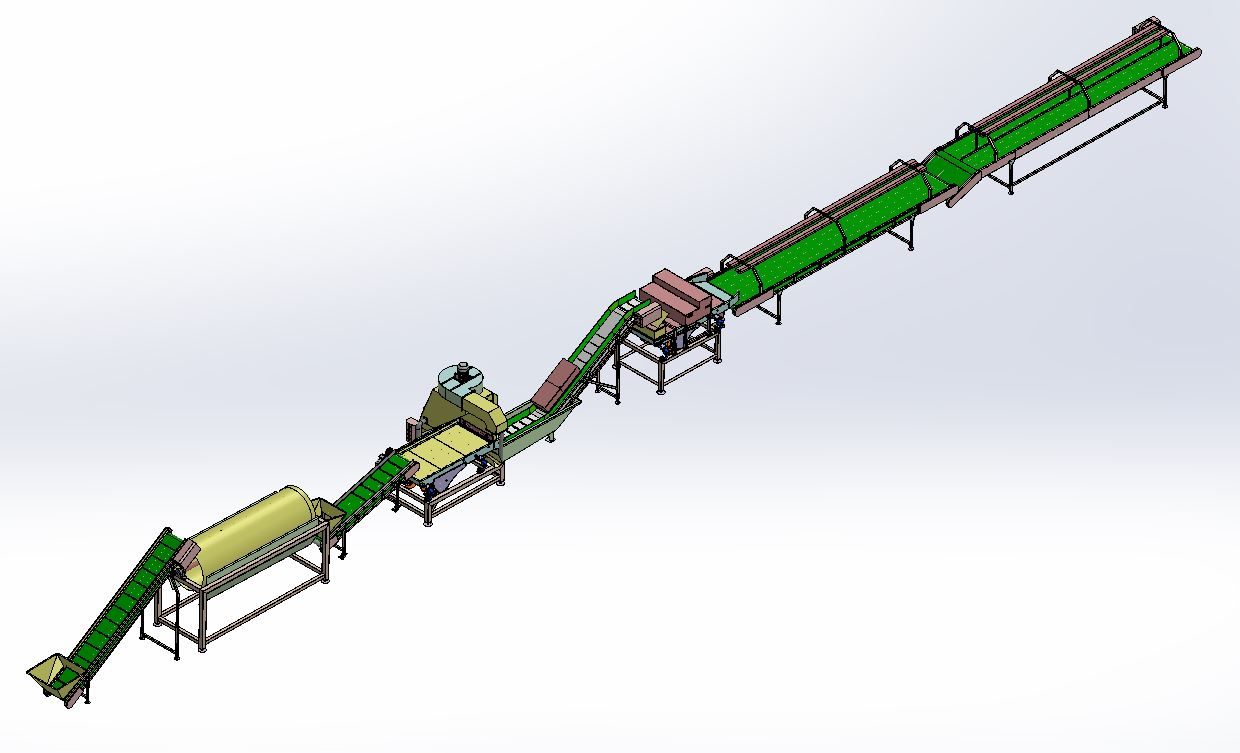
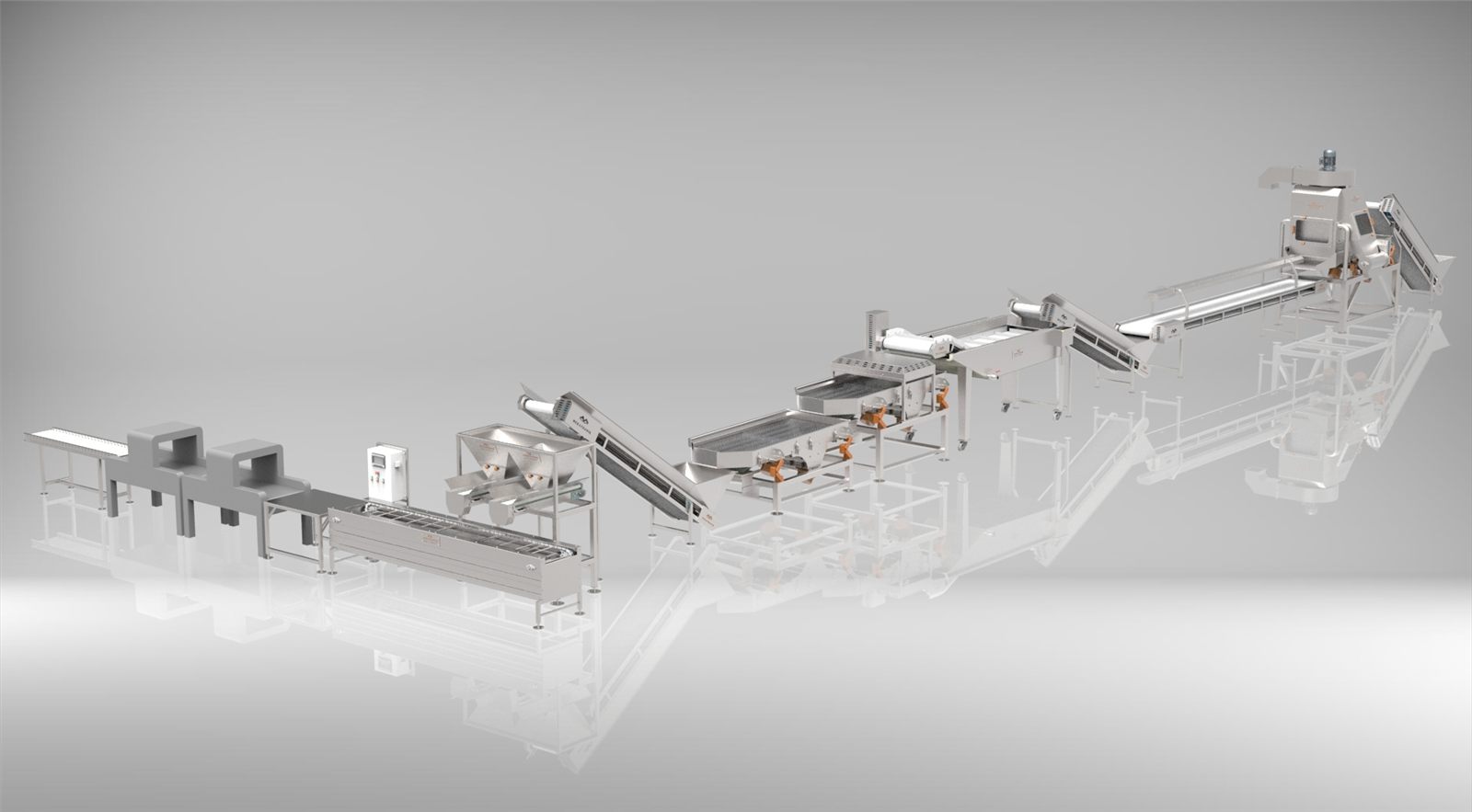
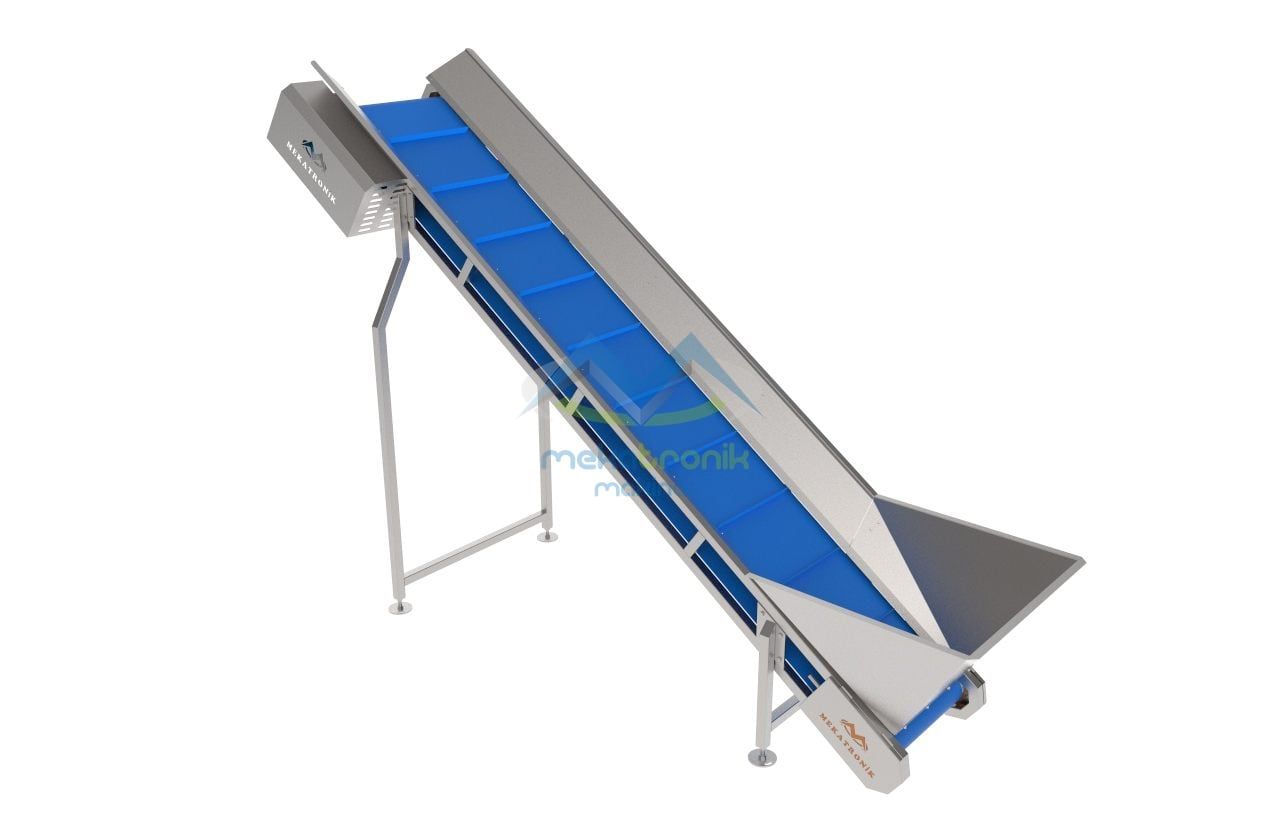
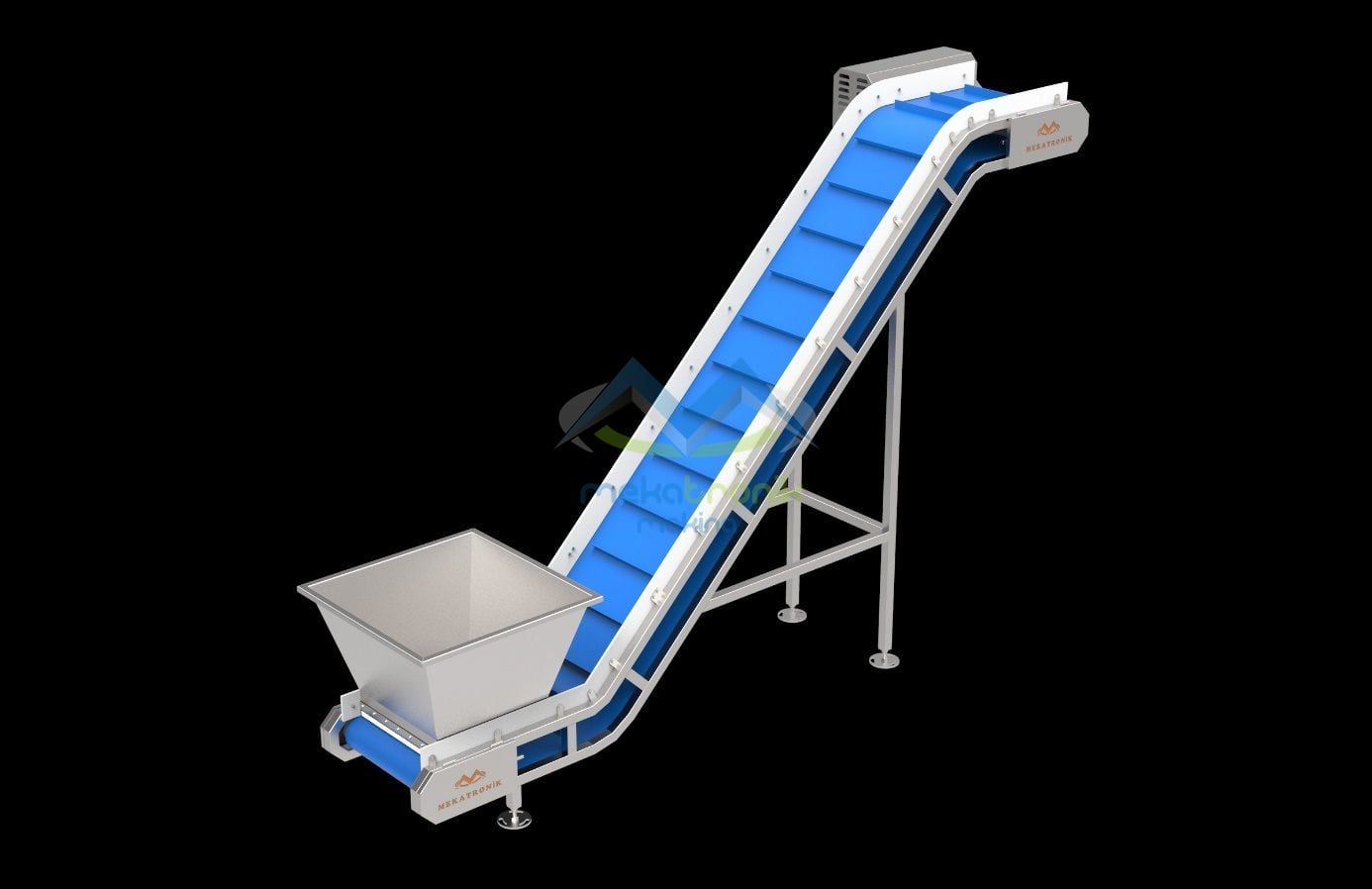
Raisins and dates are sometimes pressed into blocks at harvest for easier transport and storage, and a block cannot be washed the way loose product is. Before it reaches the washing line, a wet-process block opening conveyor breaks the block apart using water and motion rather than force. Here is how that station works and what changes from one batch to the next.
01
Why a pressed block cannot go straight into the washing line
A pressed block behaves as a single mass. Dropped onto a belt or into a wash tank as-is, the individual pieces stay clumped together and washing water cannot reach the interior of the mass. The block has to be separated into single pieces or small clusters first, otherwise the washing stage downstream never reaches the full batch evenly and some pieces pass through unwashed, which adds an extra sorting burden before packing and slows down the rest of the line.
02
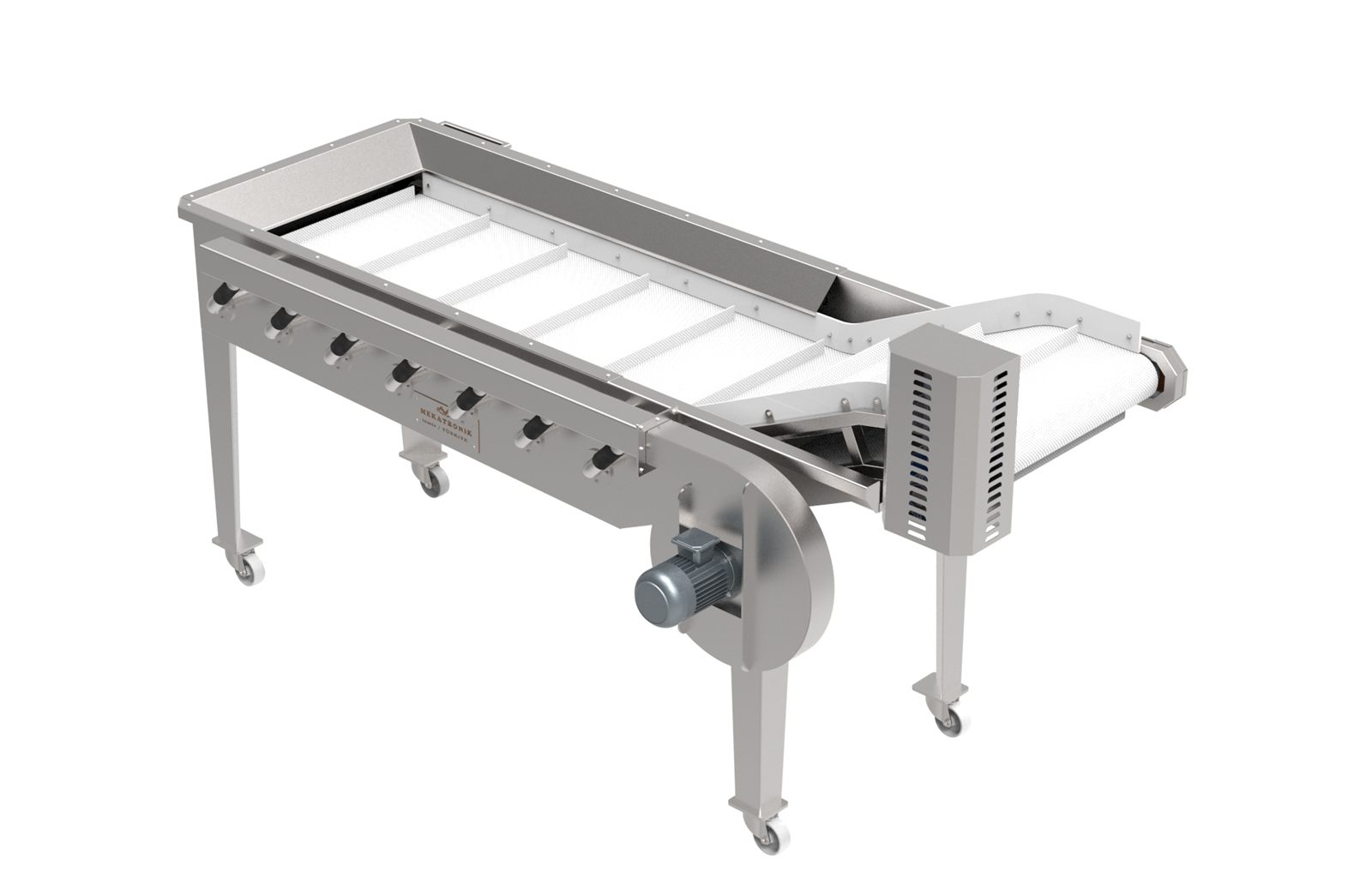
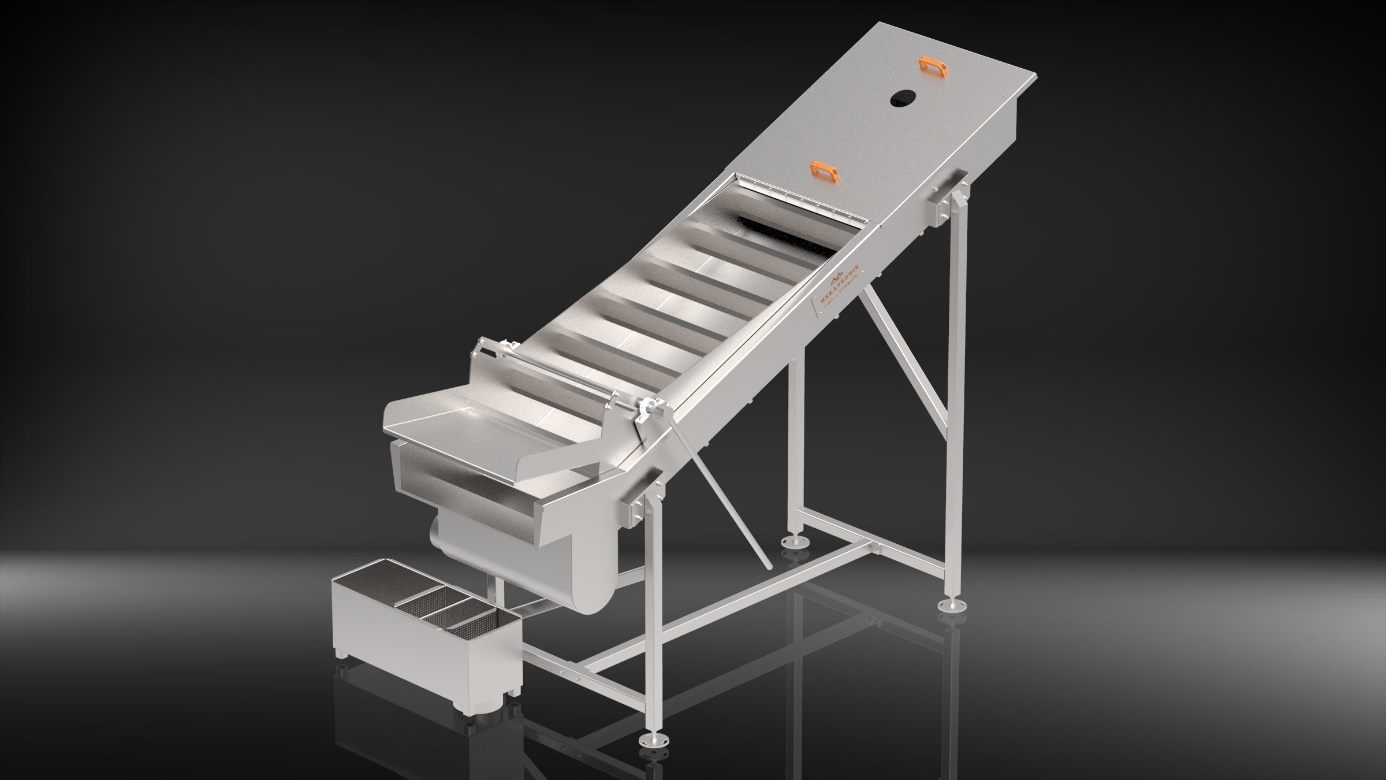
How the conveyor opens the block
The conveyor moves the block through a water-filled trough. The water softens the interlocking structure created by pressing, while the forward motion of the conveyor itself pulls the pieces apart. This happens with water at room temperature: the water undoes the physical bond left by pressing, it does not cook the product, so color and texture stay unchanged at this stage. A harder-pressed block needs more time in the trough, and that dwell time is not a fixed number; it is set batch by batch depending on how tightly the block was pressed and how long it sat before reaching the line.
03
What has to be watched during opening
- 01Water level has to cover the block completely, or the top layers pass through unopened.
- 02Conveyor speed is matched to how hard the block is pressed; running it too fast can damage individual pieces.
- 03The trough body is built from a material rated for continuous water contact.
- 04Opened product moves directly to the next station, typically a wet product transfer pump.
04
Trough water and the moisture the product picks up
As the block opens, stem fragments, dust and small shell pieces separate out into the water. Left to accumulate, that residue weakens the opening effect and carries over into the next batch, so trough water is filtered or exchanged at intervals and sediment is drawn off through a separate outlet; how often depends on batch frequency and how much debris the incoming product carries, not a fixed schedule. The product also absorbs some moisture during the pass, which is expected since washing right after is a wet step anyway. Product left in the trough longer than necessary absorbs more water than that, and that extra moisture adds to drying time later, so dwell time is kept to only what opening the block actually requires.
05
Which products go through this station
This conveyor is used mainly ahead of the raisin processing line and on date processing, since pressed block is a transport format specific to those two products. Dried apricots are usually fed individually instead of through a block opener, since apricot has a different tolerance for prolonged water contact and is not meant to sit soaking for extended periods; that line is built with a different intake station for that reason. In a facility running more than one product, the block opener is often set up as a shared intake step, with only water level and dwell time adjusted per product.
06
Stainless construction for continuous water contact
Surfaces in contact with the product are AISI 304 stainless steel, which is the baseline for a unit running in continuous water and moisture. The rest of the intake station follows the same CE compliance requirements as the rest of the line.
Block opening is one intake option among several, and the right one depends on which product and format arrives at your facility. To match an intake station to your batch sizes and product mix, request a quote and describe the products your line will handle.