Some product reaches the plant pressed into blocks, and it has to be separated into single fruit before it can be washed, sized or cut. That step happens in water, and the speed at which the product travels decides whether separation is complete or whether stuck pieces slip through to the next station.
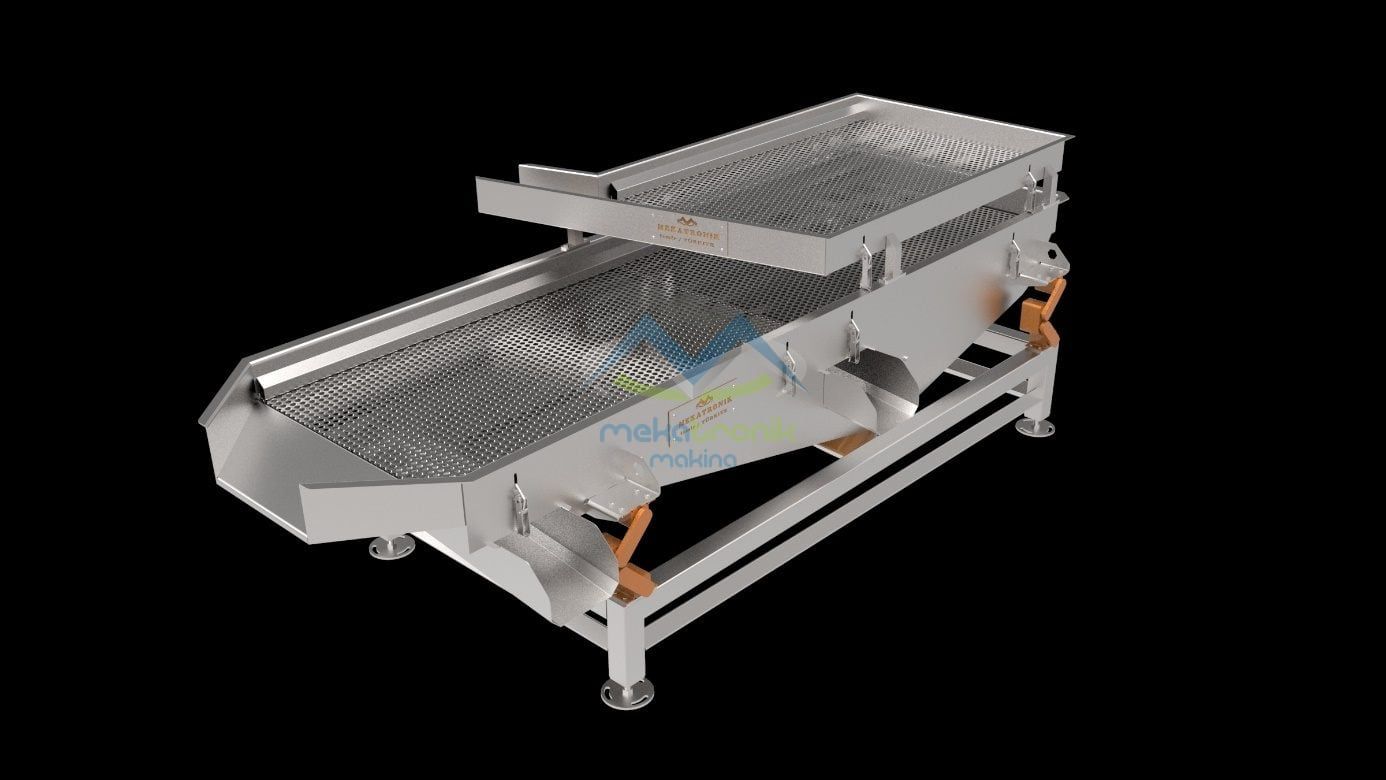
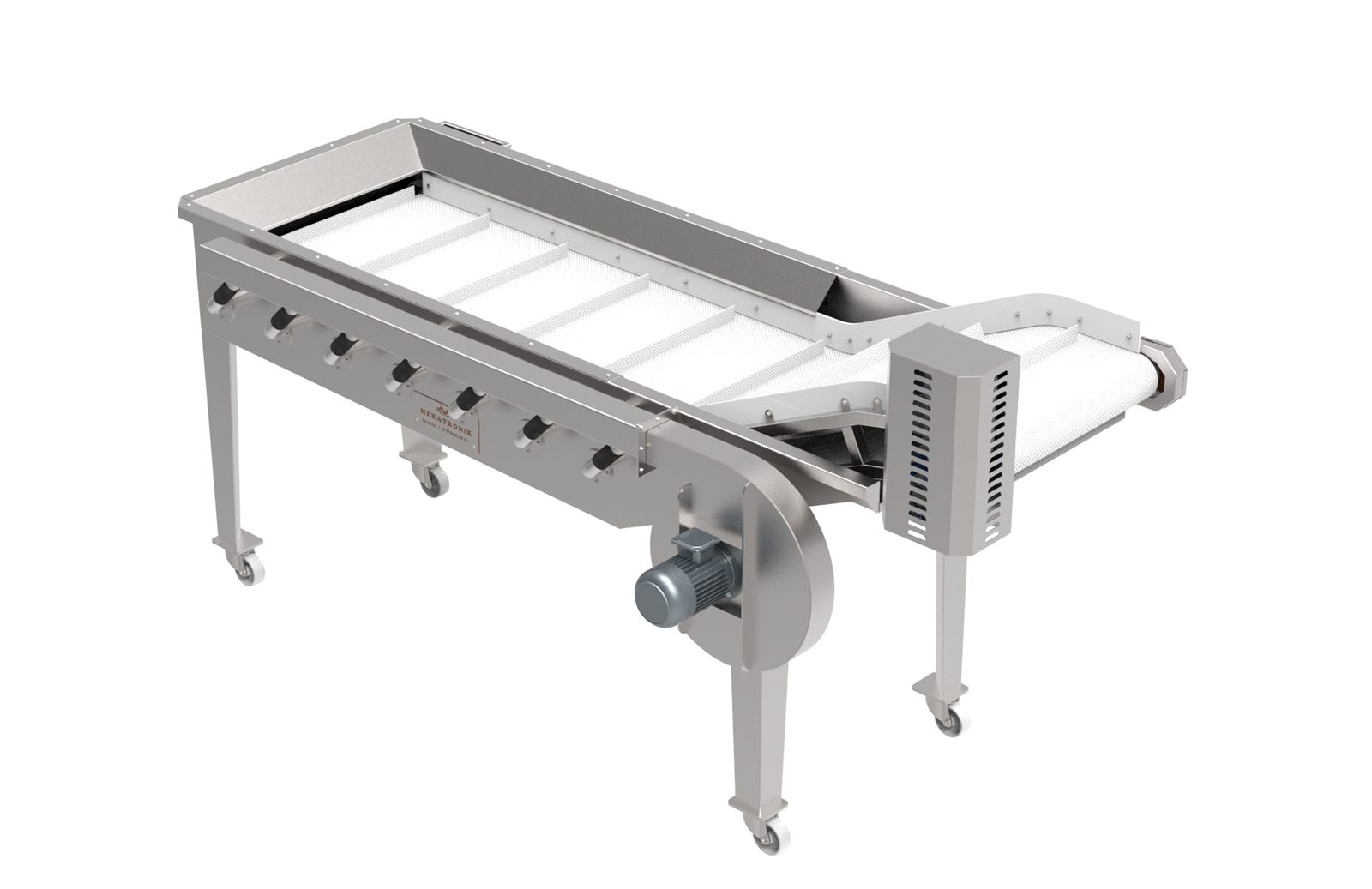
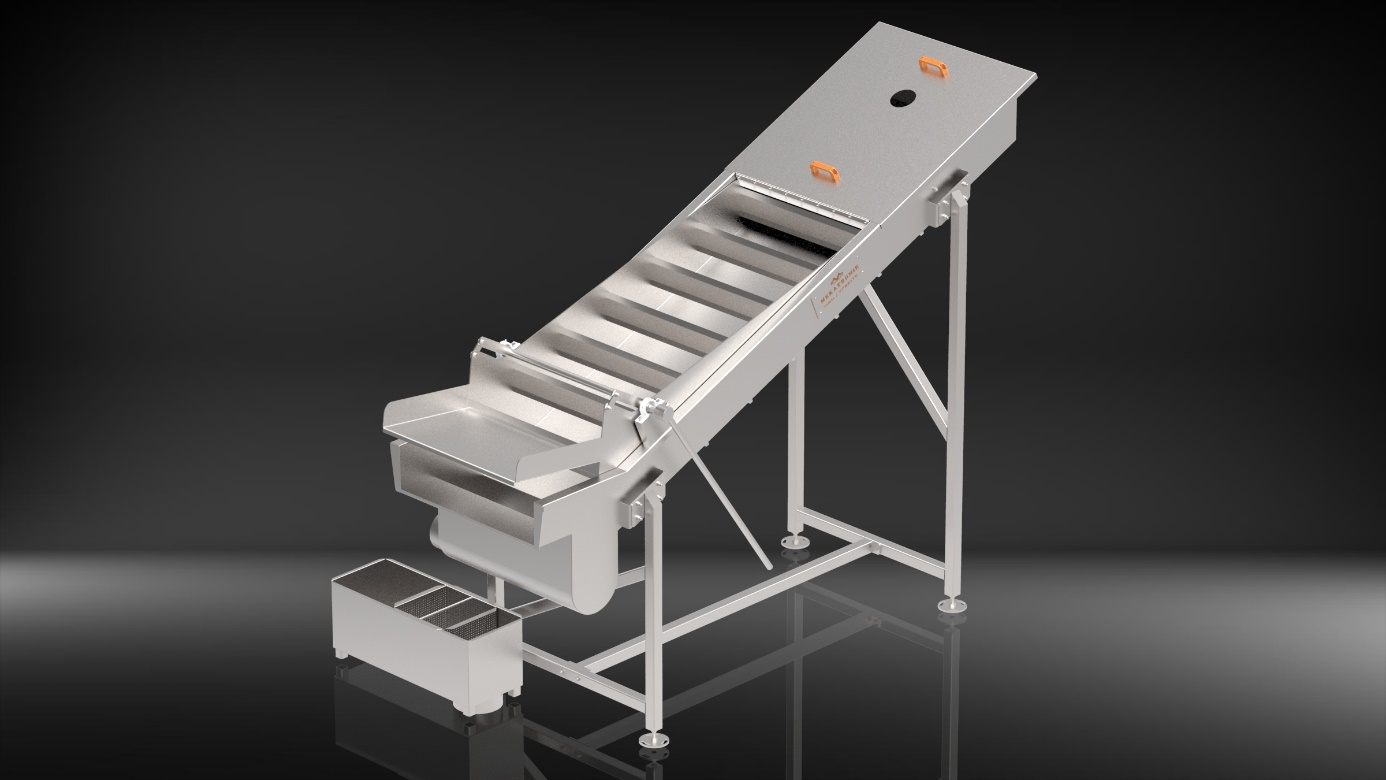
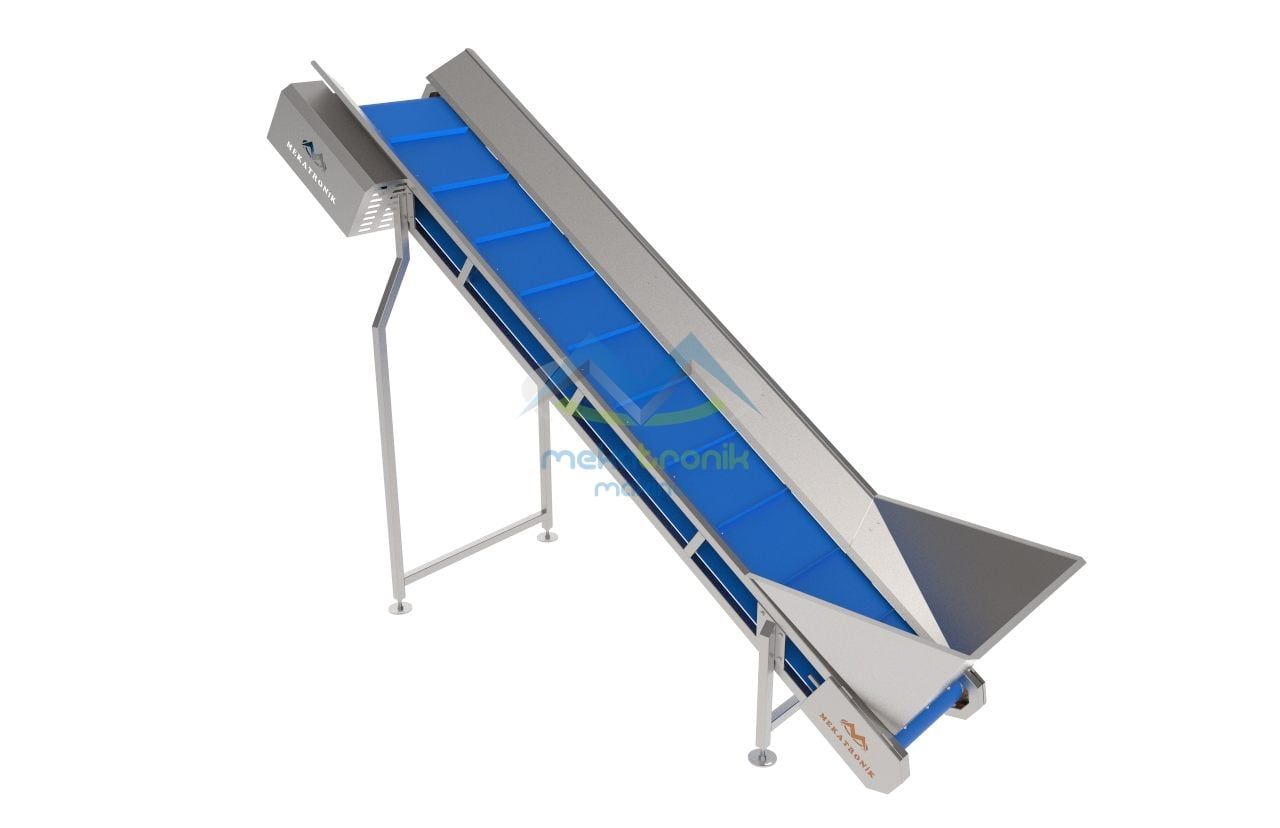
The Wet-Process Block Opening Conveyor separates product that has stuck together into blocks back into single fruit in a wet process. Its perforated modular belts do not hold water, withstand high temperatures and are easy to clean. Below are the decisions made when its path and speed are planned.
01
What does the water actually do in this step?
A block does not break by force. It opens through time and contact with water. While the product moves along the belt, the water loosens whatever holds the fruit together, and the movement of the belt helps the pieces come apart. That is why this conveyor is not an ordinary belt: it is built to work inside a water process.
02
Why a perforated modular belt?
The perforations let water pass through the belt instead of pooling on top of it. That matters for two reasons: the product does not sit in a puddle that carries dirt along with it, and the belt stays cleaner between one batch and the next.
- 01The perforated modular belt does not hold water
- 02The construction withstands high temperatures, so it suits processes where the water is hot
- 03Modules make cleaning and maintenance easier
- 04The body and product-contact surfaces are AISI 304 stainless steel, with AISI 316 optional depending on the process
03
What is decided when speed and path are set?
There is no single correct speed for every product. It depends on how firmly the block is stuck, on which fruit is being handled, and on the capacity the plant wants to reach. Final values are fixed in the quotation. What can be laid out is the logic of the decision:
| Variable | If too little | If too much |
|---|---|---|
| Water contact time | Pieces still stuck together come out | Product takes up more water than needed |
| Belt speed | Product builds up at the start | The water has no time to loosen the block |
| Load on the belt | Capacity is left unused | Blocks pile on each other and separate worse |
04
How does loading affect block opening?
A large block on a crowded belt opens worse than the same block on a belt with room around it. Feeding evenly often solves more than changing the speed. If product arrives in irregular batches, the opening varies from one moment to the next, and so does the result at the following station.
05
Where does it sit in the line?
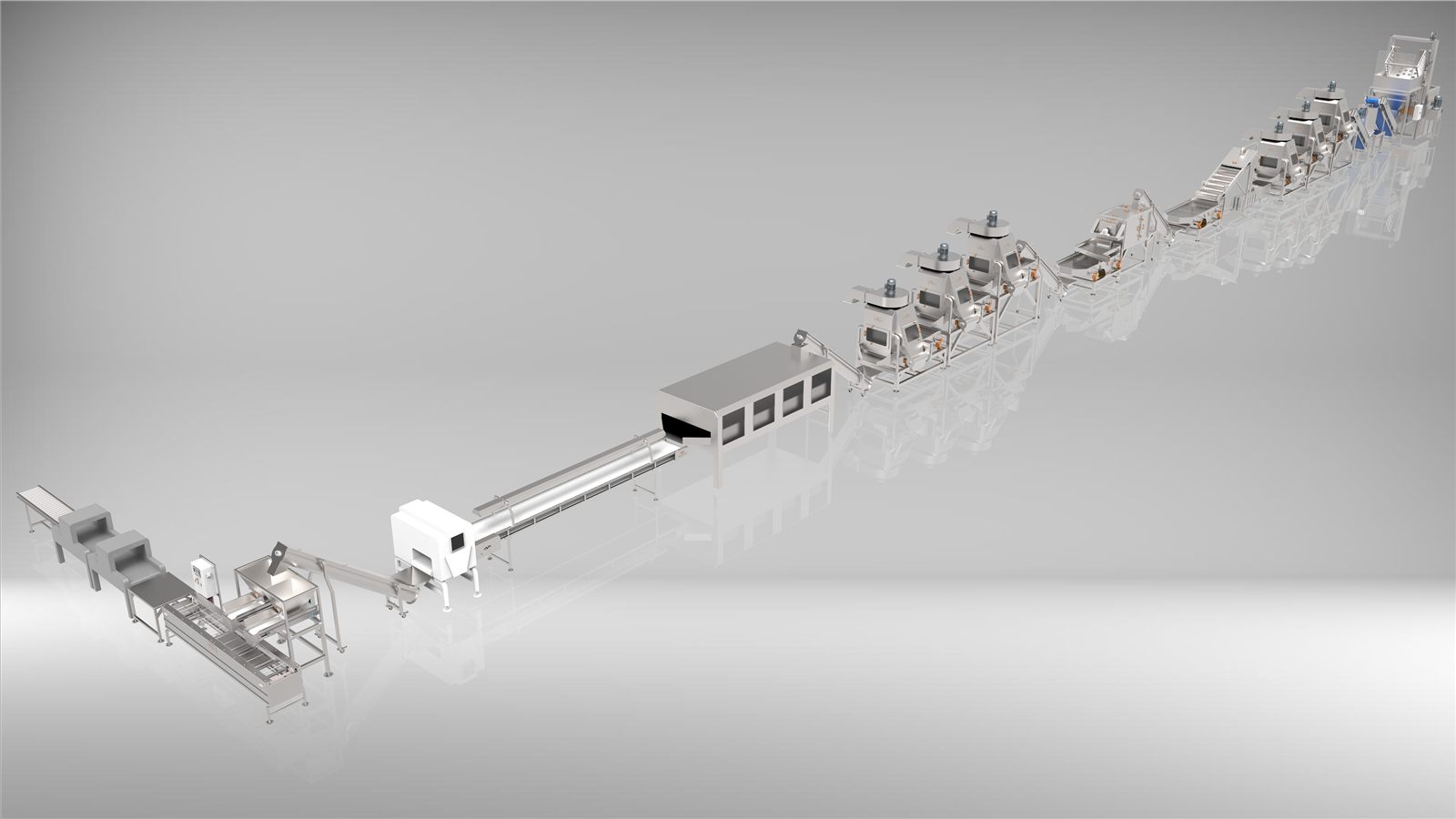
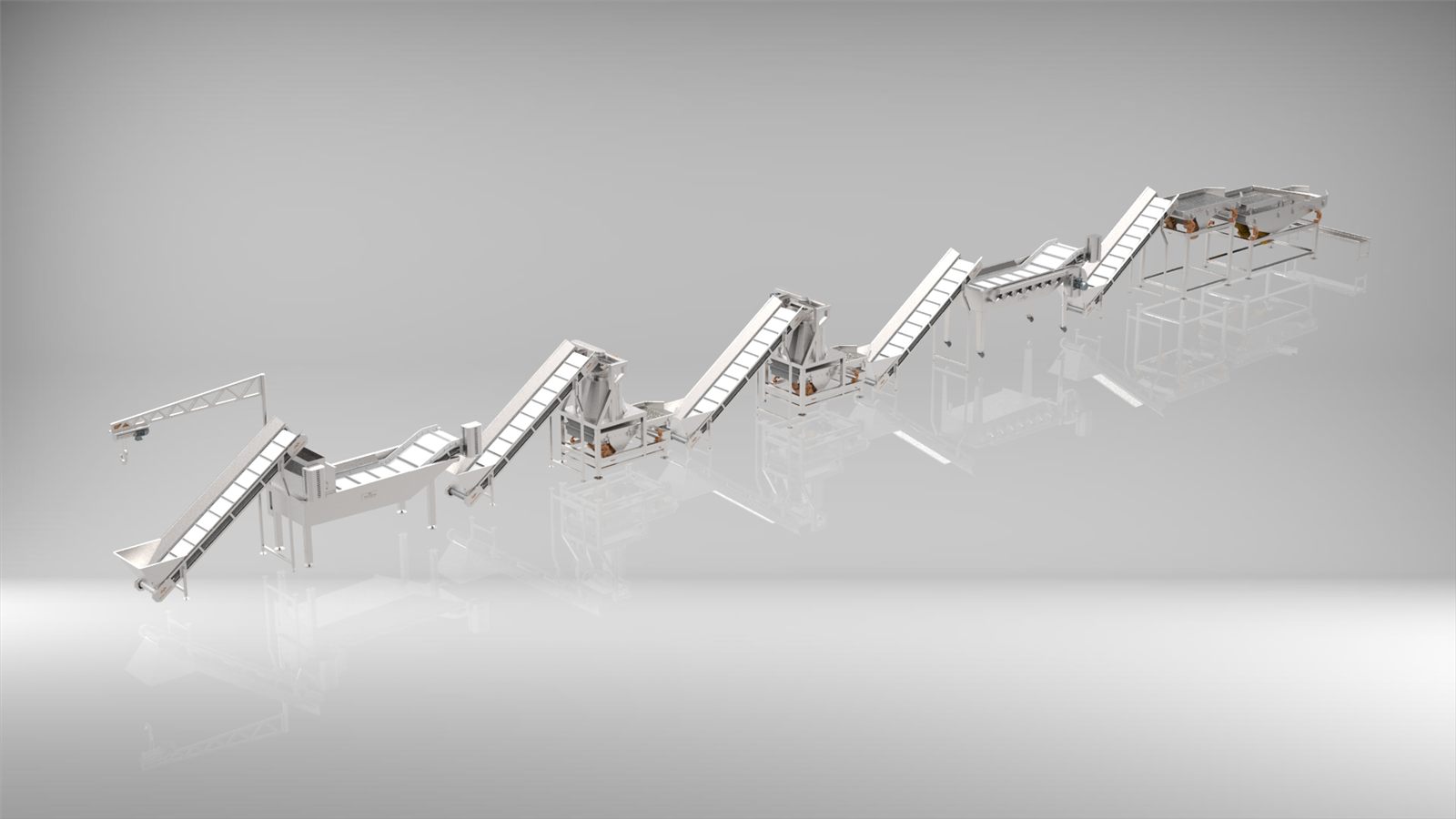
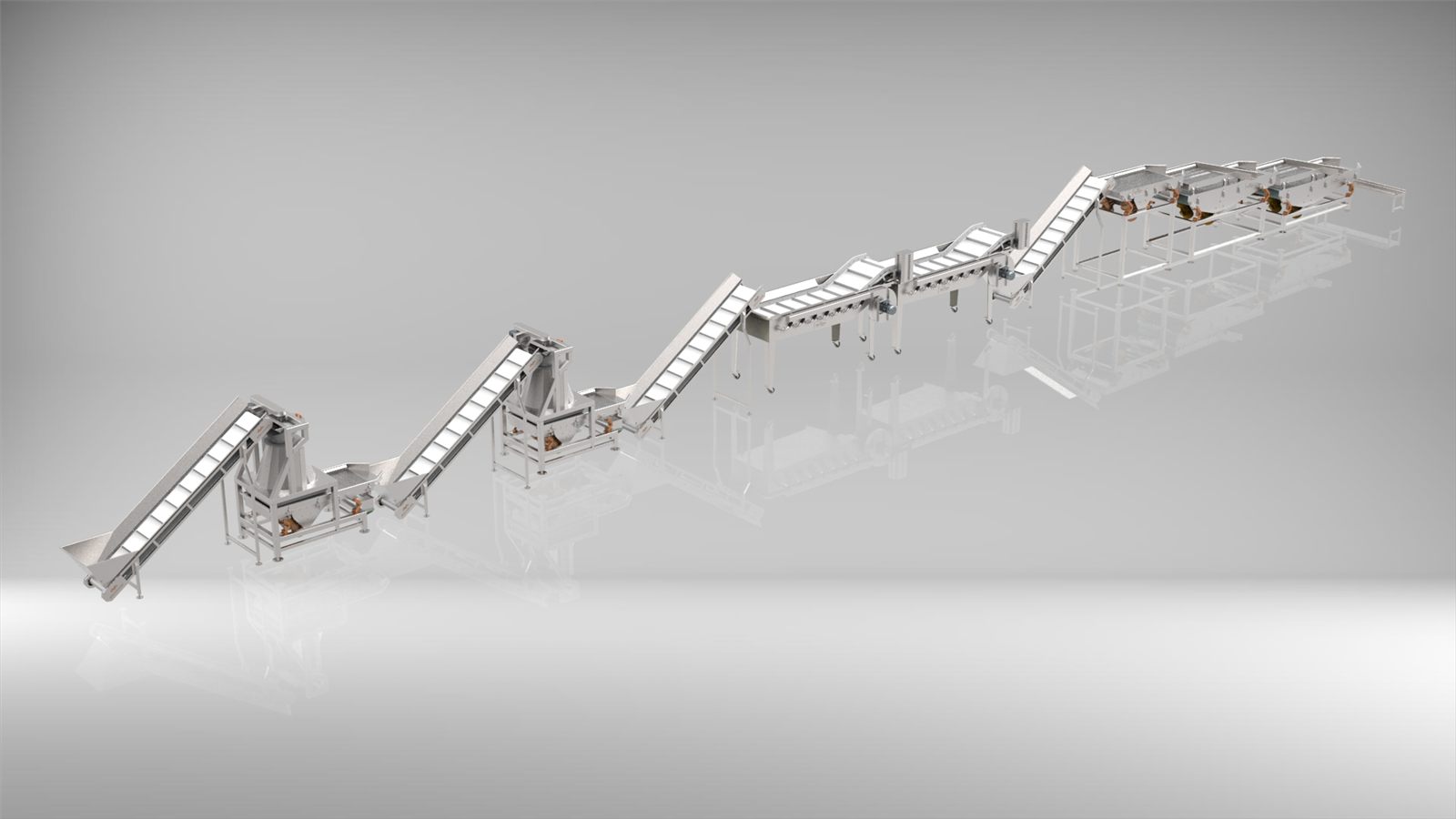
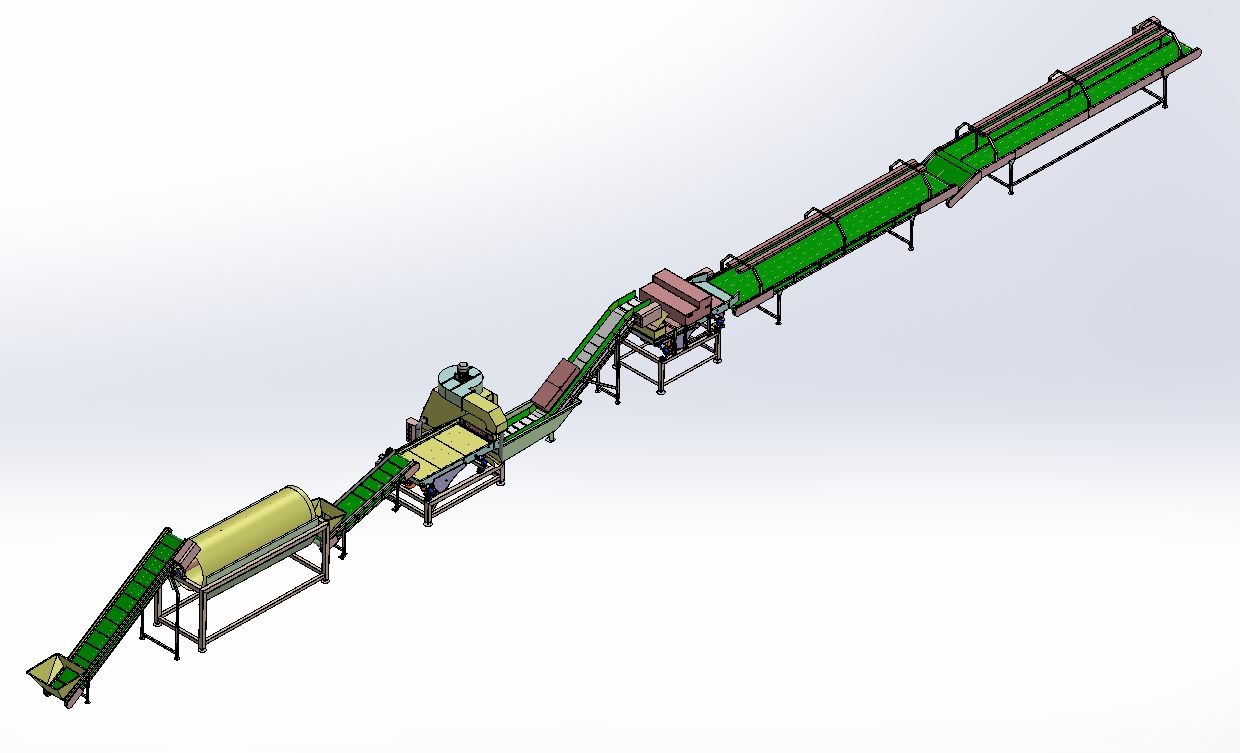
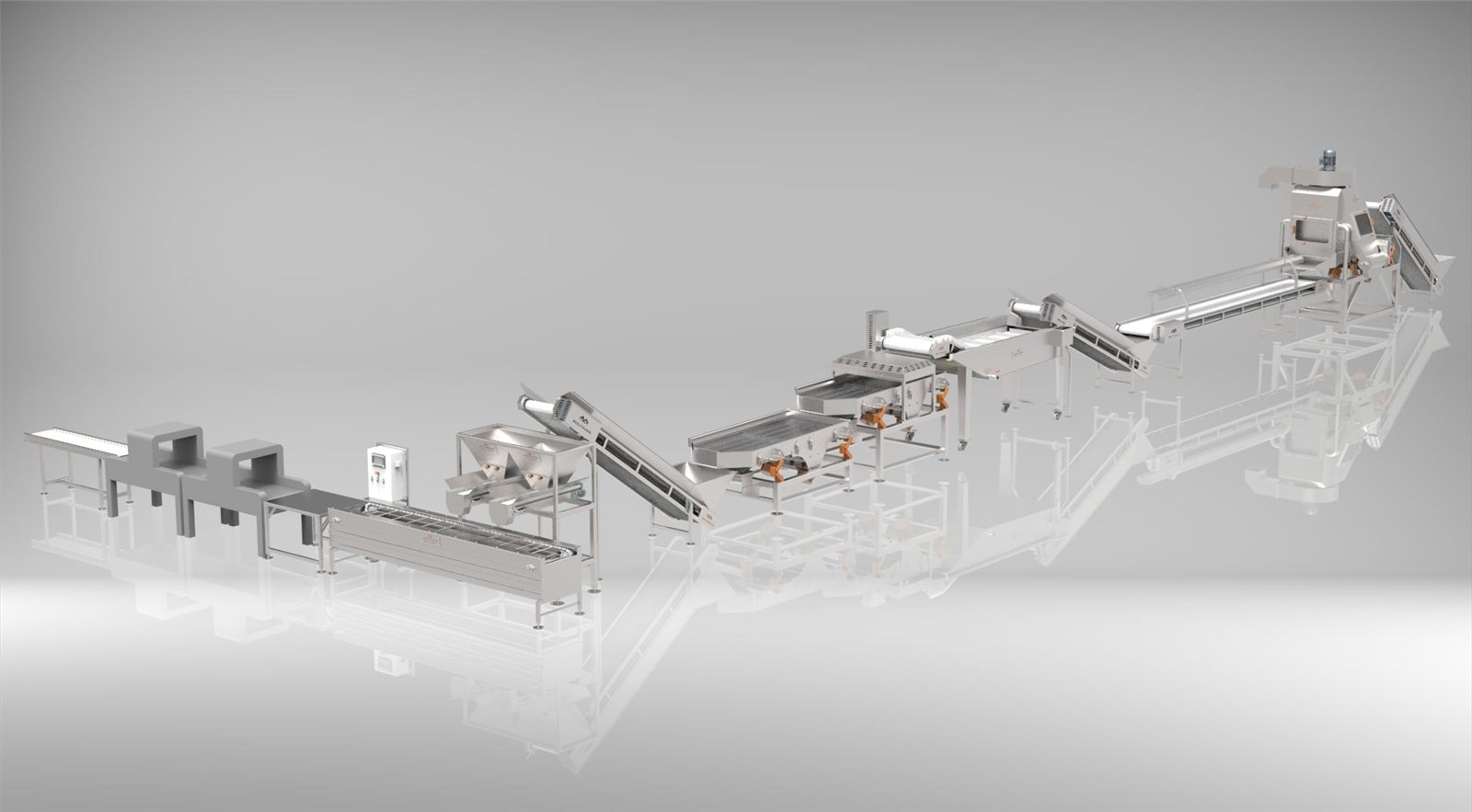
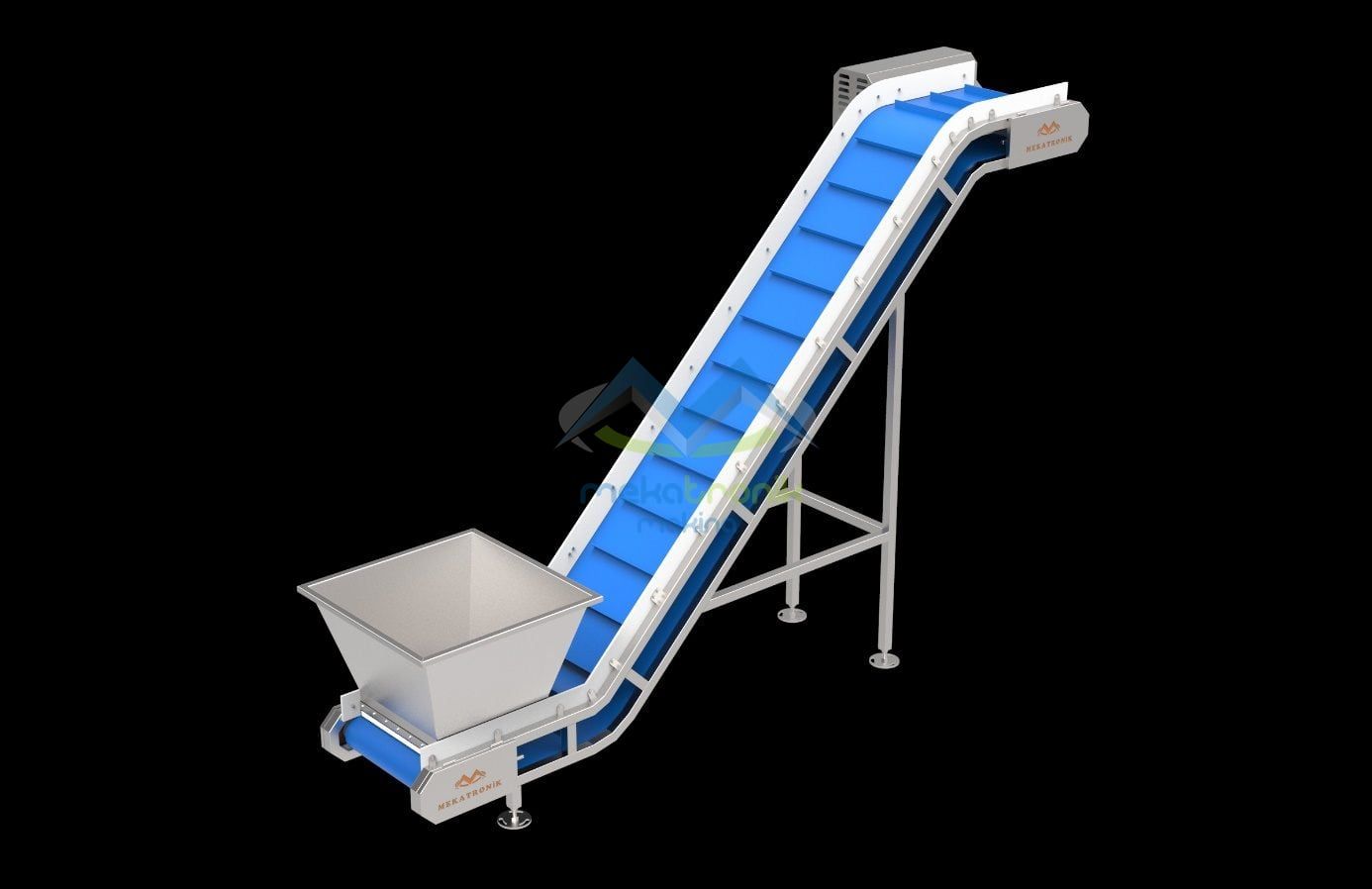
This machine works in the Dried Apricot Processing Line and in the Dried Fig Processing Line. In both, the separated product moves on to the next station, so it pays to think about the hand-over from the start. A Z-type modular conveyor can carry the loose product upward or on to the station that follows.
06
Why does the condition of the product matter?
Not all blocks are alike. Product that dried before storage, or that was pressed into packaging for a long time, sticks harder than freshly prepared product, and that changes the water contact time it needs. It is safer to plan the path around the hardest block expected in the season rather than the easiest, then ease the settings when blocks are lighter. If the source or the storage method of the product changes, review the settings instead of assuming they still fit.
07
What should be checked while the line runs?
- 01Watch whether fruit still stuck together comes out, and at which point on the belt it finally separates
- 02Check that feeding is even and does not arrive in bursts
- 03Check that the belt perforations are not clogged with residue
- 04Record the settings that worked best for each product, so the next changeover starts from a known point
- 05Clean the belt at the end of each batch according to the plant protocol
08
How is the drive arranged?
The machine runs on a gear motor and can work with PLC control or stand-alone. Electrical supply is 380 V / 50 Hz. It can also be built in special dimensions for the place and purpose of use.
Next step: send us your product, your target capacity and the dimensions of your plant through the quotation page, and we will reply with the station list, delivery time and price.