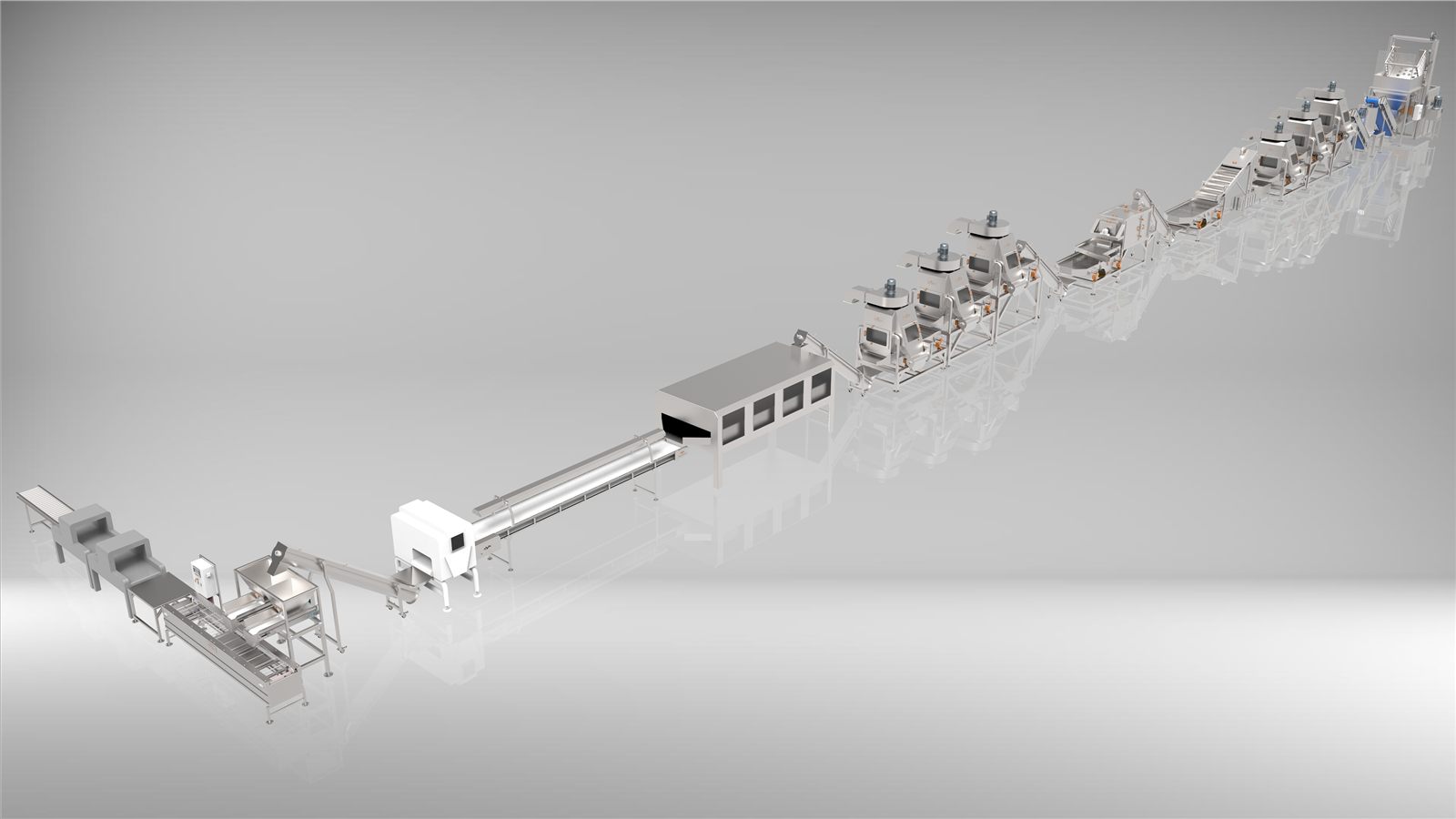
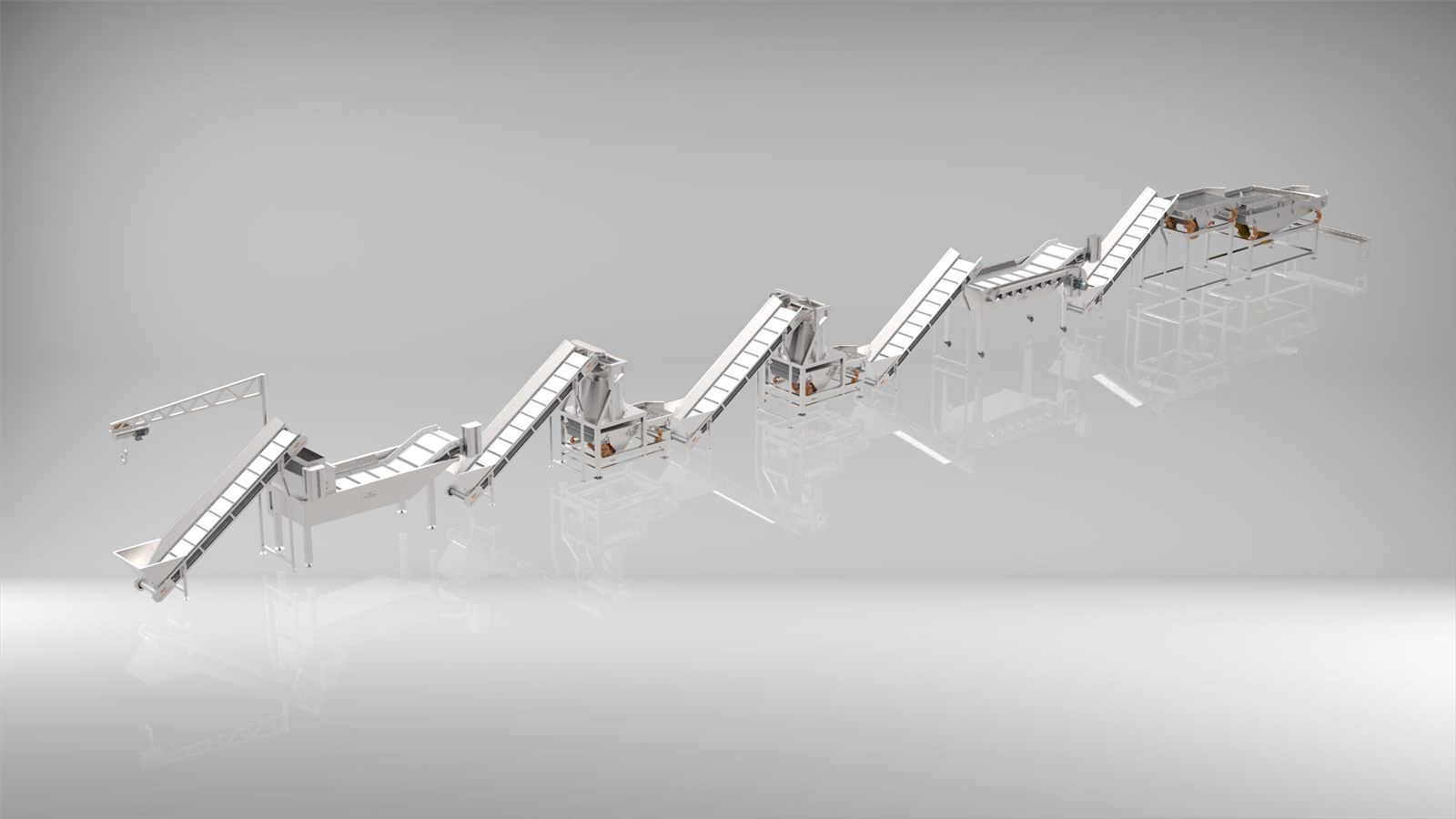
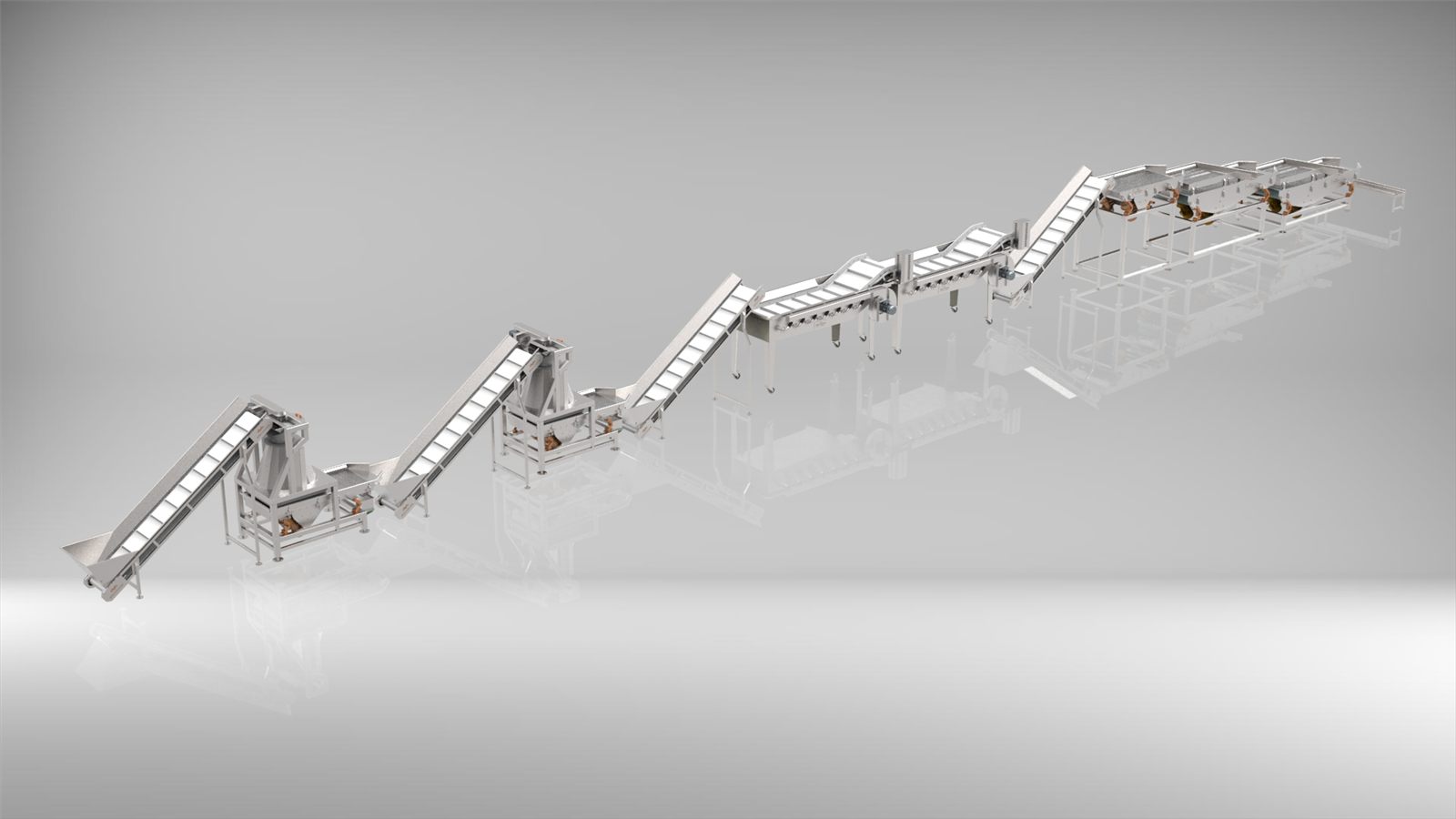
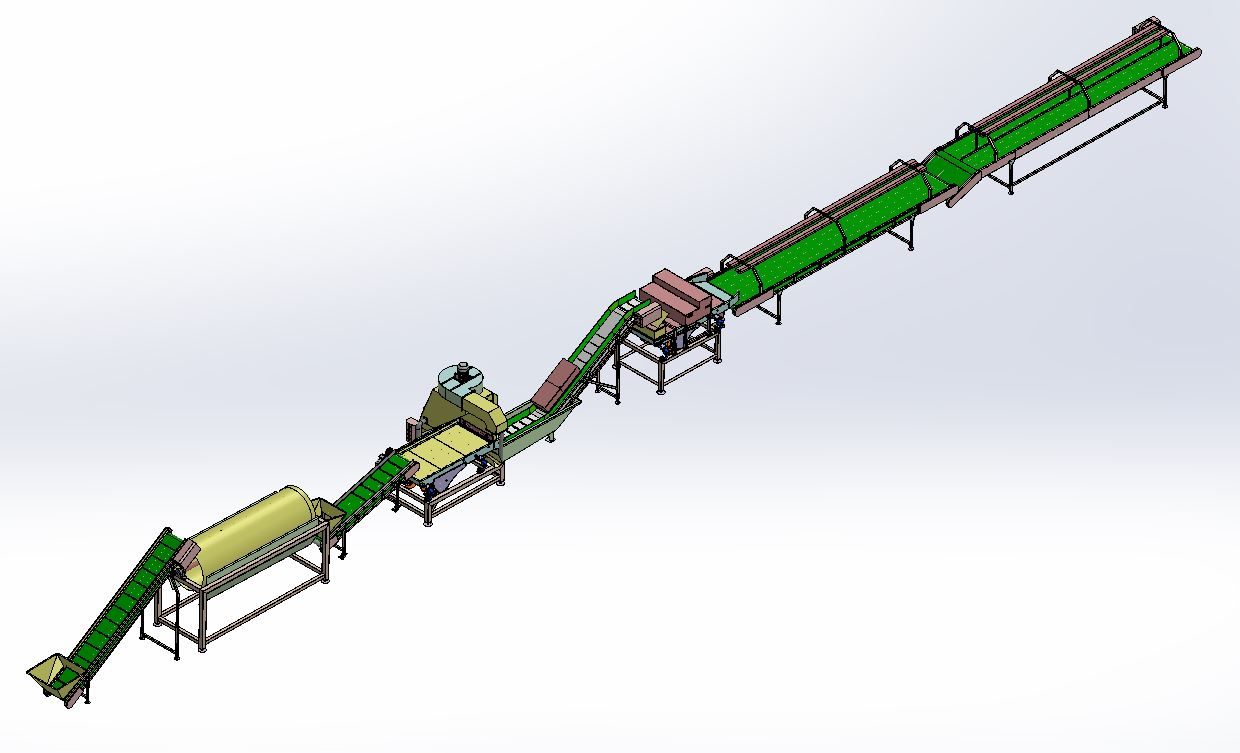
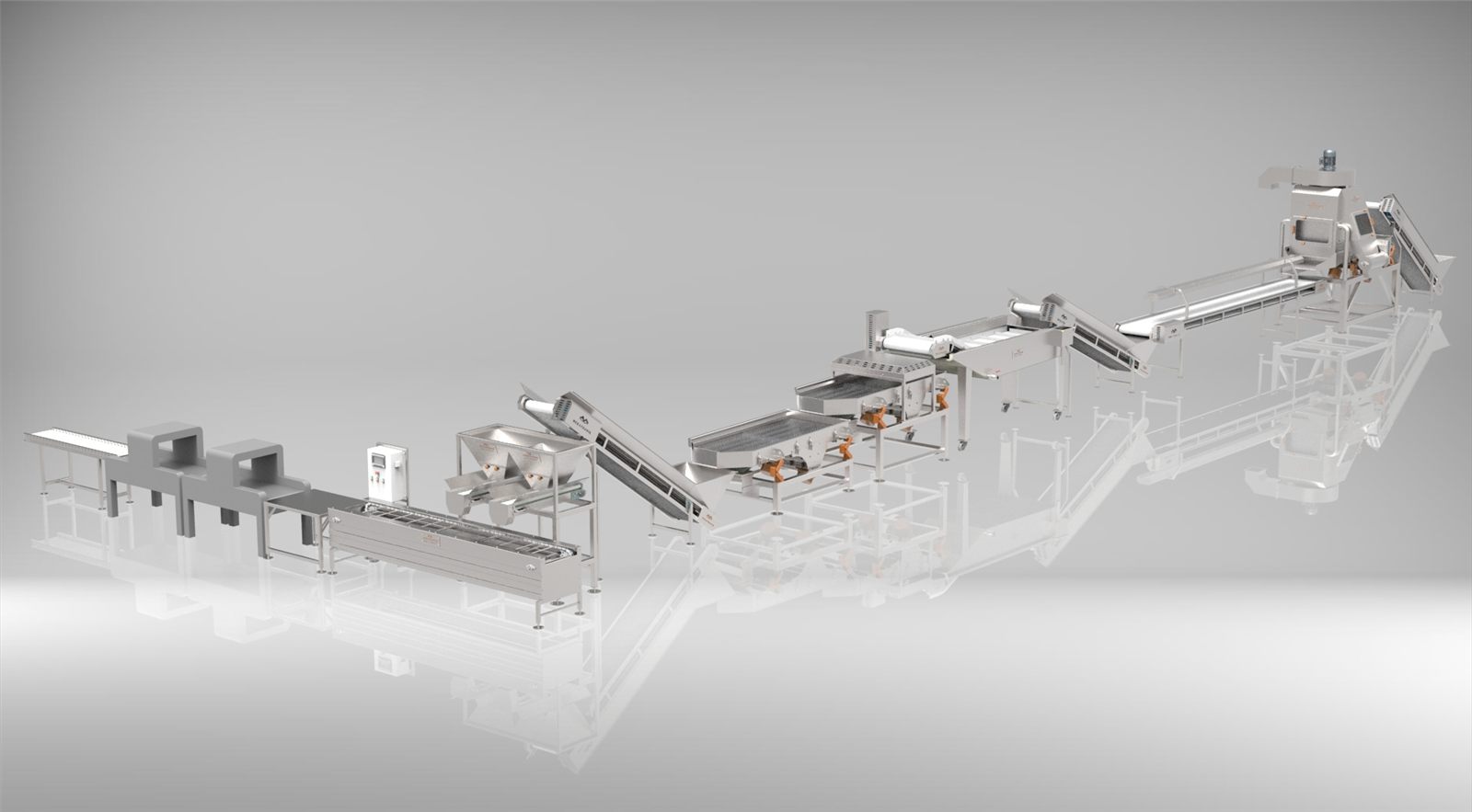
A dried fruit line is not a single machine but a sequence, and the sequence is the design. Put a stage in the wrong place and the loss shows up at the narrowest point of the line. This article walks through the stages and explains why each one sits where it does.
01
Feeding: how product enters the line
The line starts by taking product out of crates or sacks in a controlled way. A crate tipping machine empties at a fixed angle so the next machine receives a flow it can handle, rather than a sudden dump. Plants working with sacks use a sack lifting hoist for the same purpose.
Feed rate is set against the capacity of everything downstream. It is one of the most important parameters on the line and it is established during commissioning with the actual product; exact figures depend on the project.
02
Dry cleaning before water
Anything that can be removed dry is removed before washing. Two reasons: keeping wash water cleaner for longer, and getting rid of material that would stick to the fruit once wet.
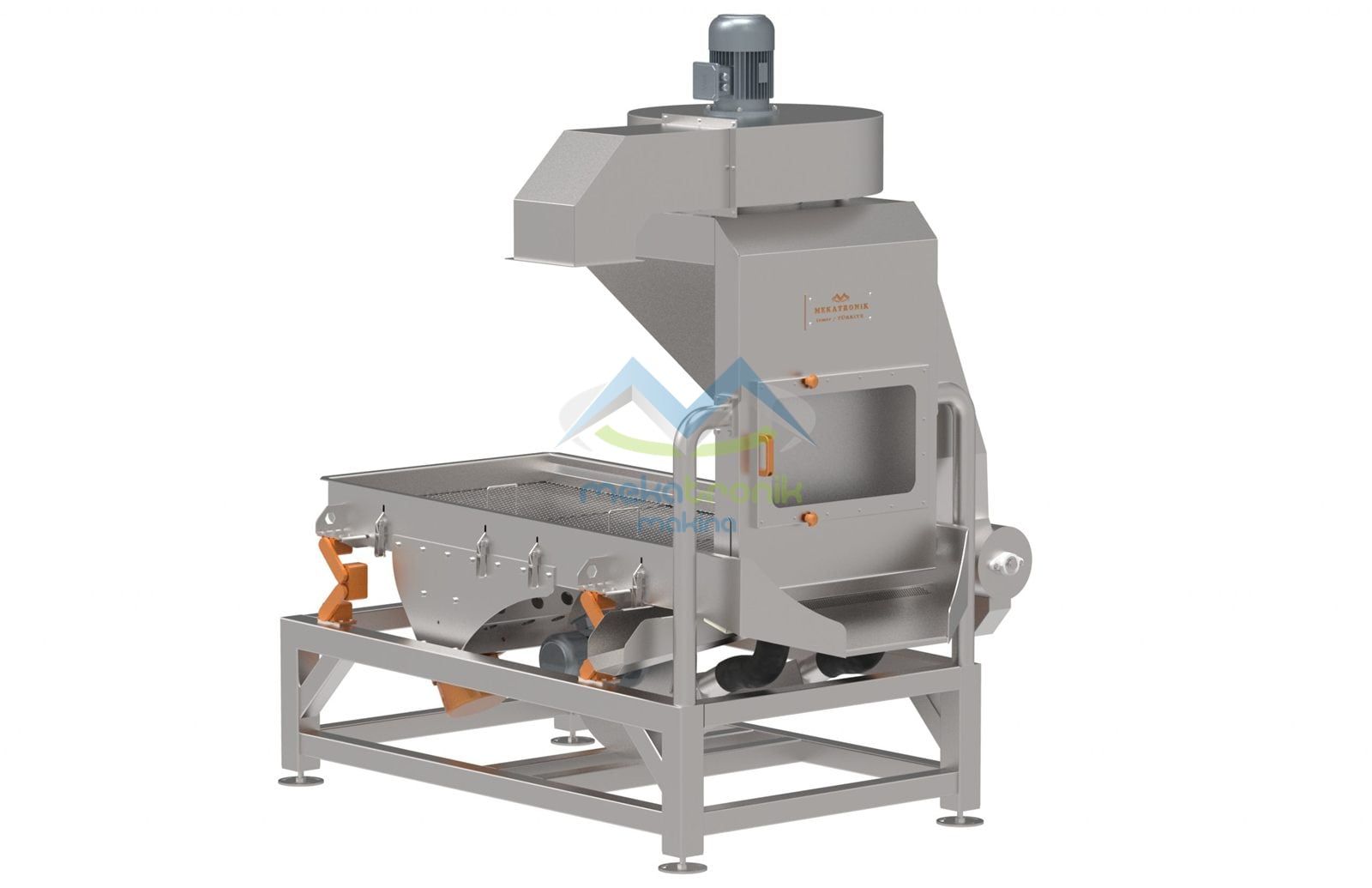
- 01Trash removal shaker: separates stems, leaves and light foreign material by vibration and air.
- 02Aspirated shaker: pulls light material off with suction; used for dust and skin fragments.
- 03Stem breaker: breaks residual stems so they release without damaging the fruit.
- 04Stone and sand separator: works on density difference, with stones settling while product travels on.
03
Washing
Washing is not only about surface dust; it has to loosen residue that has bonded to the fruit. In jacuzzi type washers air bubbles do that work: the product circulates in water while bubbles scrub the surface without bruising the fruit.
For more stubborn soiling a vertical brush washer is used. Brush pressure is set per product; on raisins it is kept low so the skin stays intact.
Food contact surfaces are AISI 304 stainless steel, or AISI 316 where the process requires it, and they are designed to be dismantled for cleaning.
04
Dewatering and drying
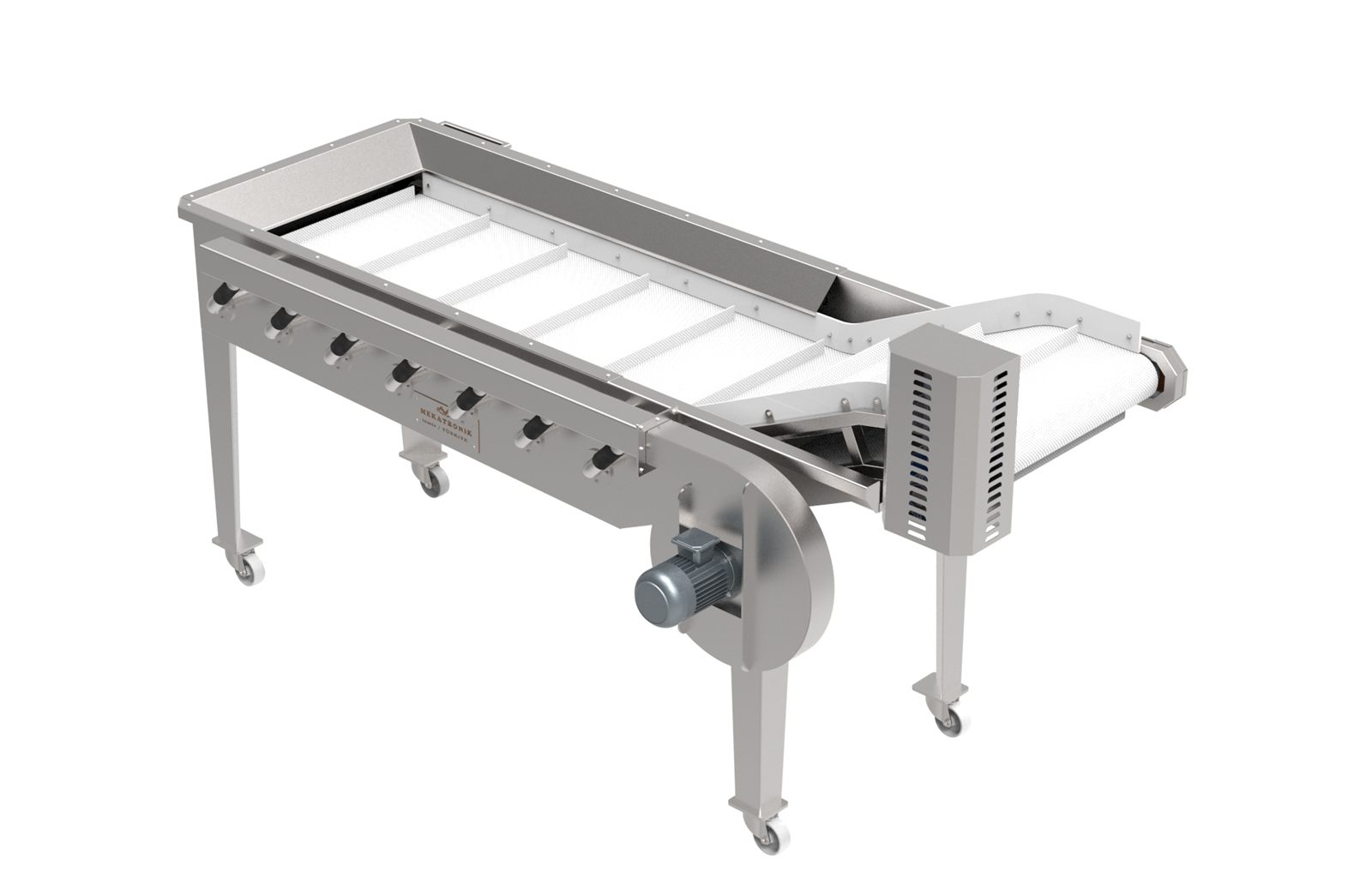
Product leaving the washer is wet and cannot be graded or packed in that state. A dewatering shaker removes most of the surface water by vibration; a fan assisted dewatering shaker adds an air stream to bring the remaining moisture down.
Drying temperature and dwell time follow from the incoming moisture and the target moisture. These values are measured during commissioning with the customer's own product and recorded.
05
Grading and sorting
A grading shaker separates fruit by screen aperture. Beyond appearance, uniform size improves filling accuracy, because product of one size flows more predictably.
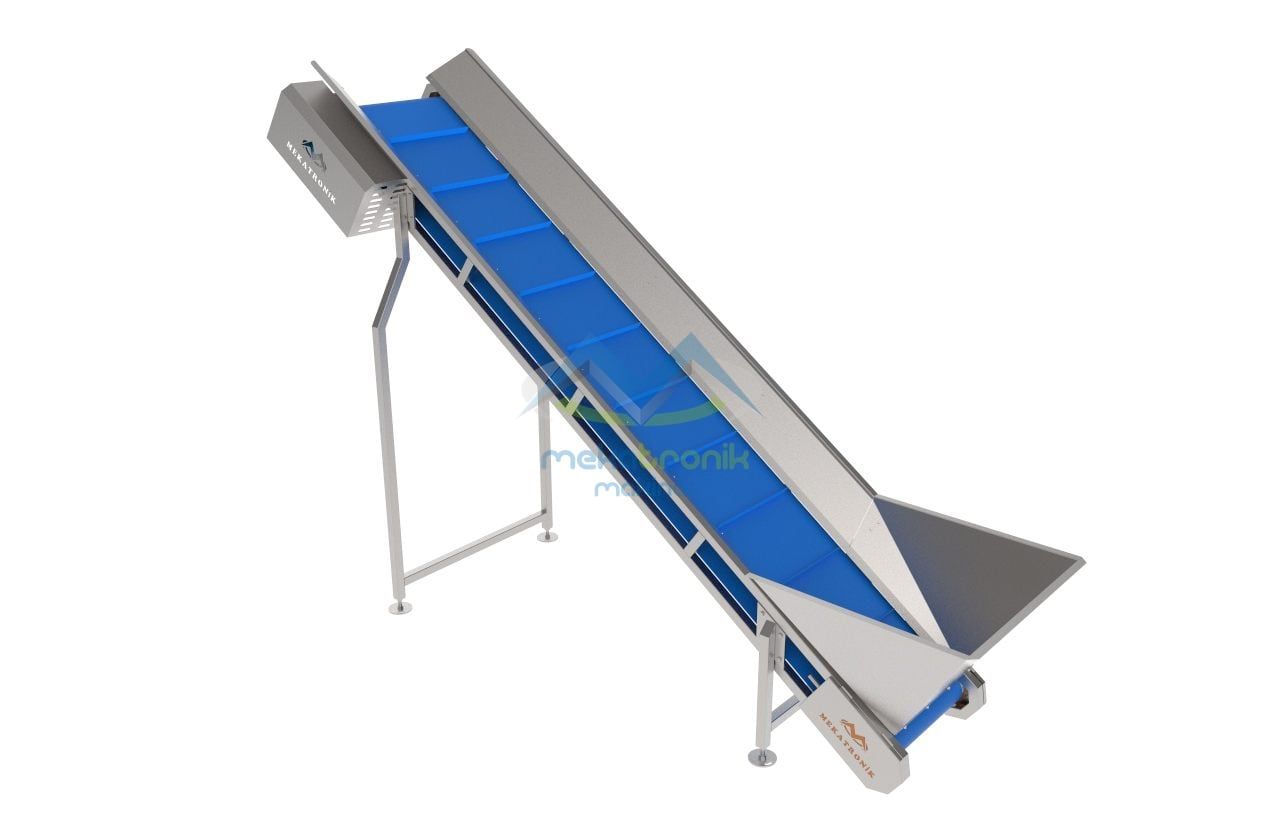
Final inspection happens on a lit sorting conveyor. Belt speed and width are chosen against operator count; a belt that runs too fast lowers sorting quality regardless of lighting.
06
Weighing, filling and storage
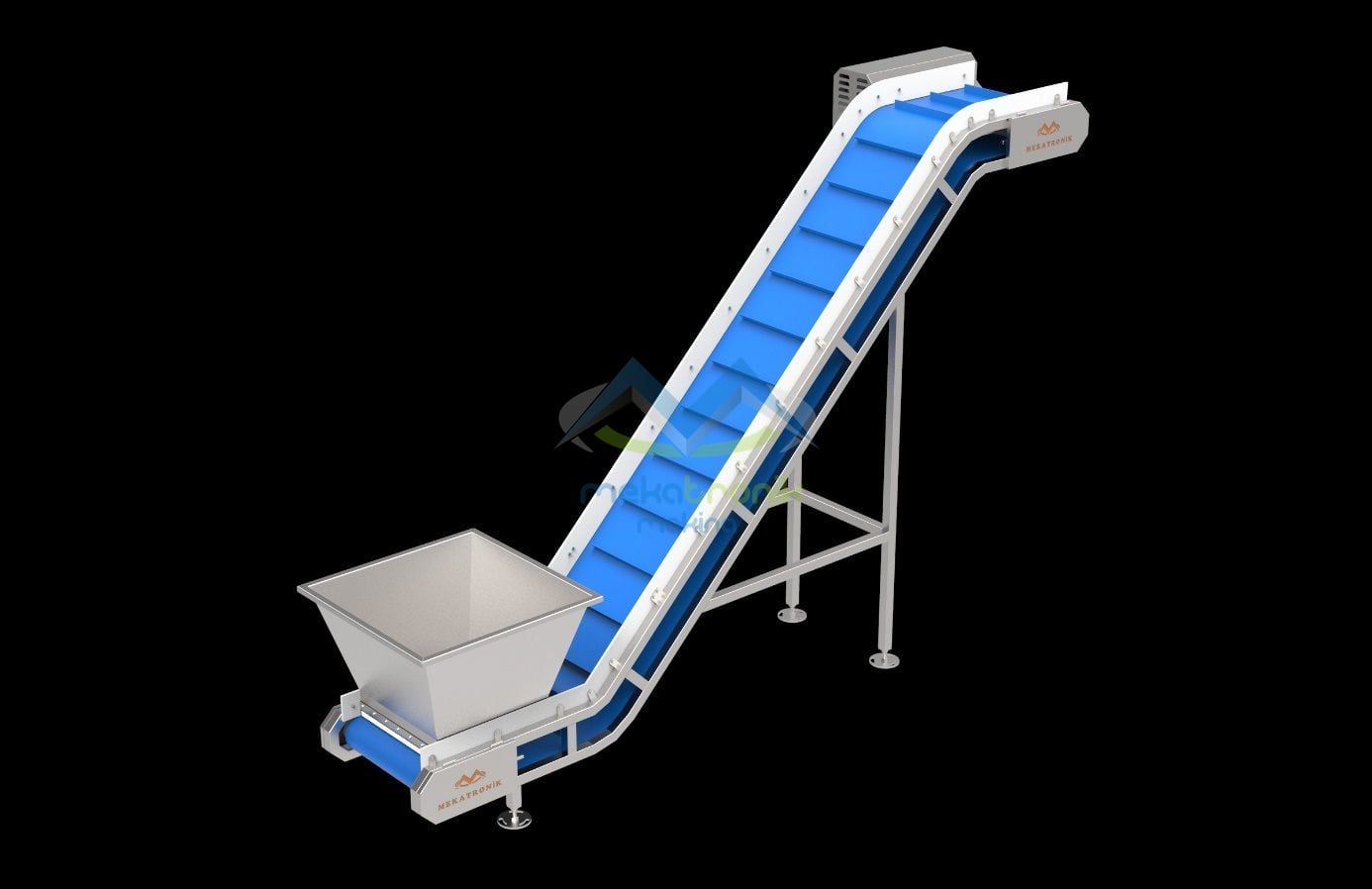
At the end of the line product is weighed and filled. A paddle dosing hopper feeds the filling unit at a steady rate, and without that steadiness weighing deviation increases.
Packaging type defines the tail of the line: cartons, sacks and vacuum packs need different filling solutions. The packaging decision belongs at the start of the project, because the end of the line is built around it.
07
Why this order
| Stage | Reason for its position |
|---|---|
| Feeding | Unlimited feed rate blocks every machine downstream |
| Dry cleaning | Wet trash is far harder to separate from fruit |
| Washing | Residue that dry cleaning cannot reach is released here |
| Dewatering | Wet product cannot be graded or packed |
| Grading | Uniform size improves filling accuracy |
| Sorting | Final inspection belongs immediately before packing |
| Filling | Product leaves the line in its packaging |
08
Next step
To see a full line station by station, look at the raisin processing line, or the washing and packing process for that section in detail. If you want the layout worked out for your own product and capacity, get in touch through the quotation form; capacities and dimensions are defined per project.
TOPICS