
On a raisin line, which machine comes before which matters as much as the machines themselves. If capstem removal and washing are put in the wrong order, the loss shows up at the narrowest point of the line: broken berries, wet product and stems left for hand sorting. This article follows the station order of the raisin washing and processing line and explains why each step sits where it does.
01
In what order do the steps run?
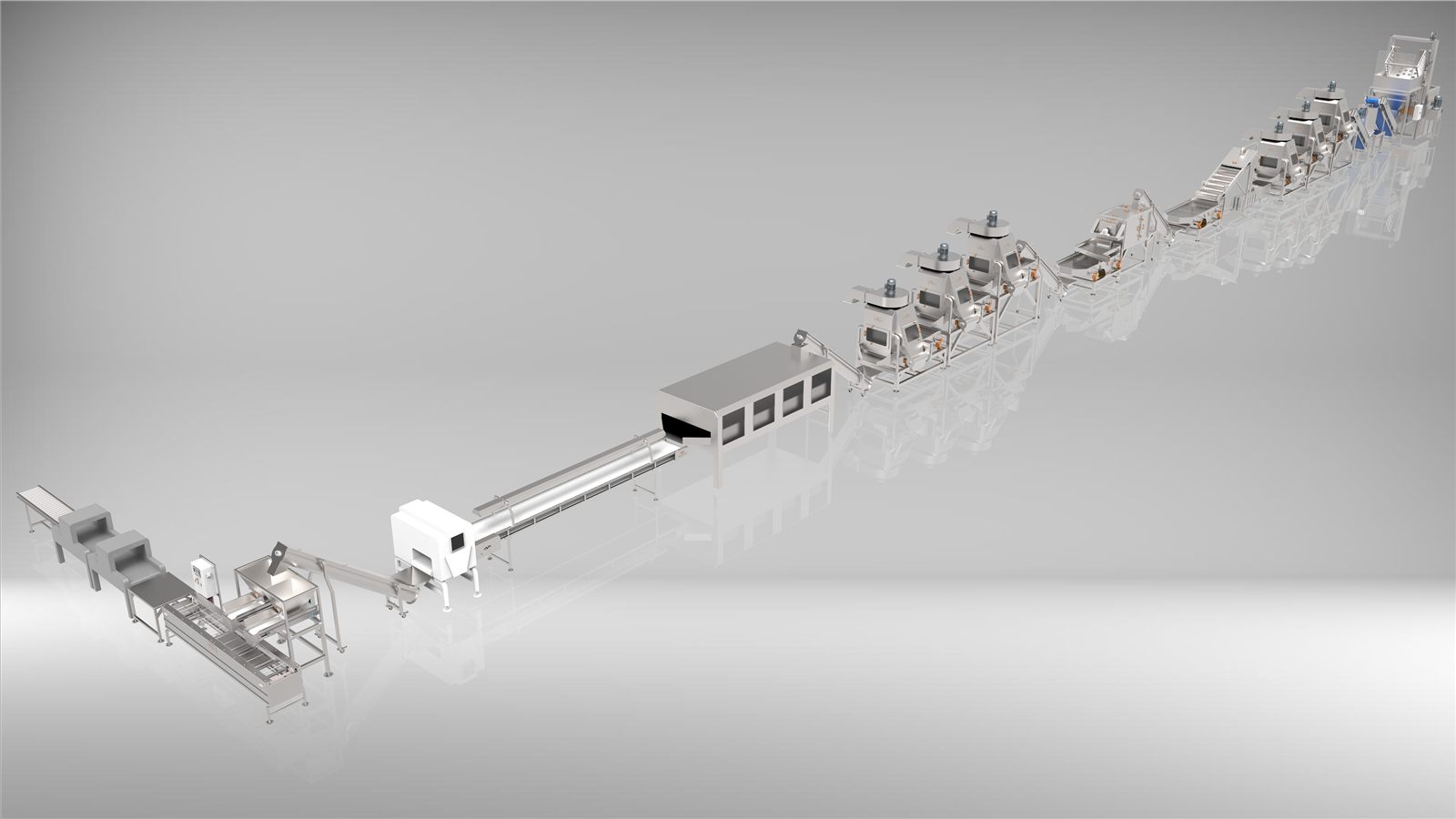
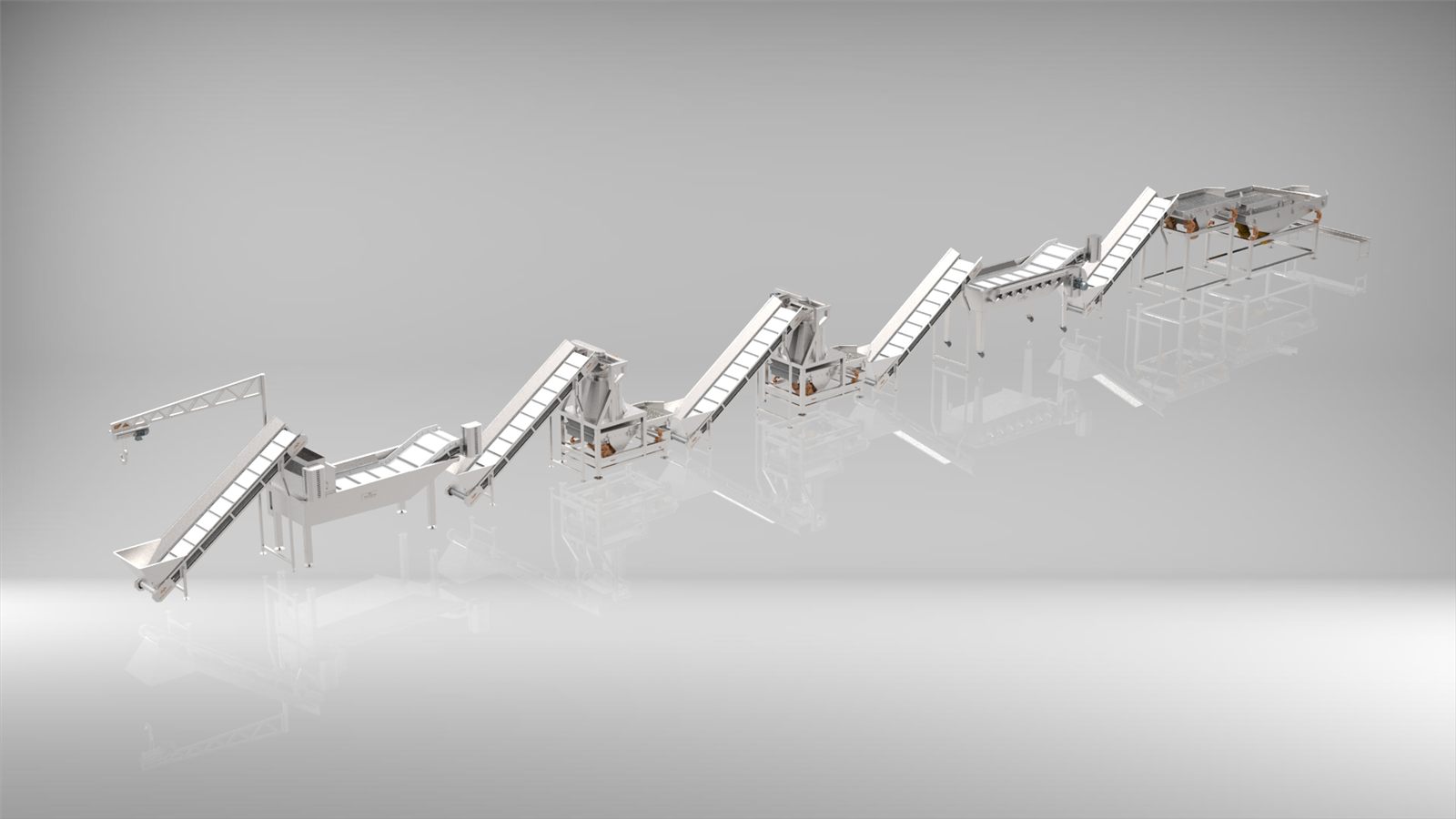
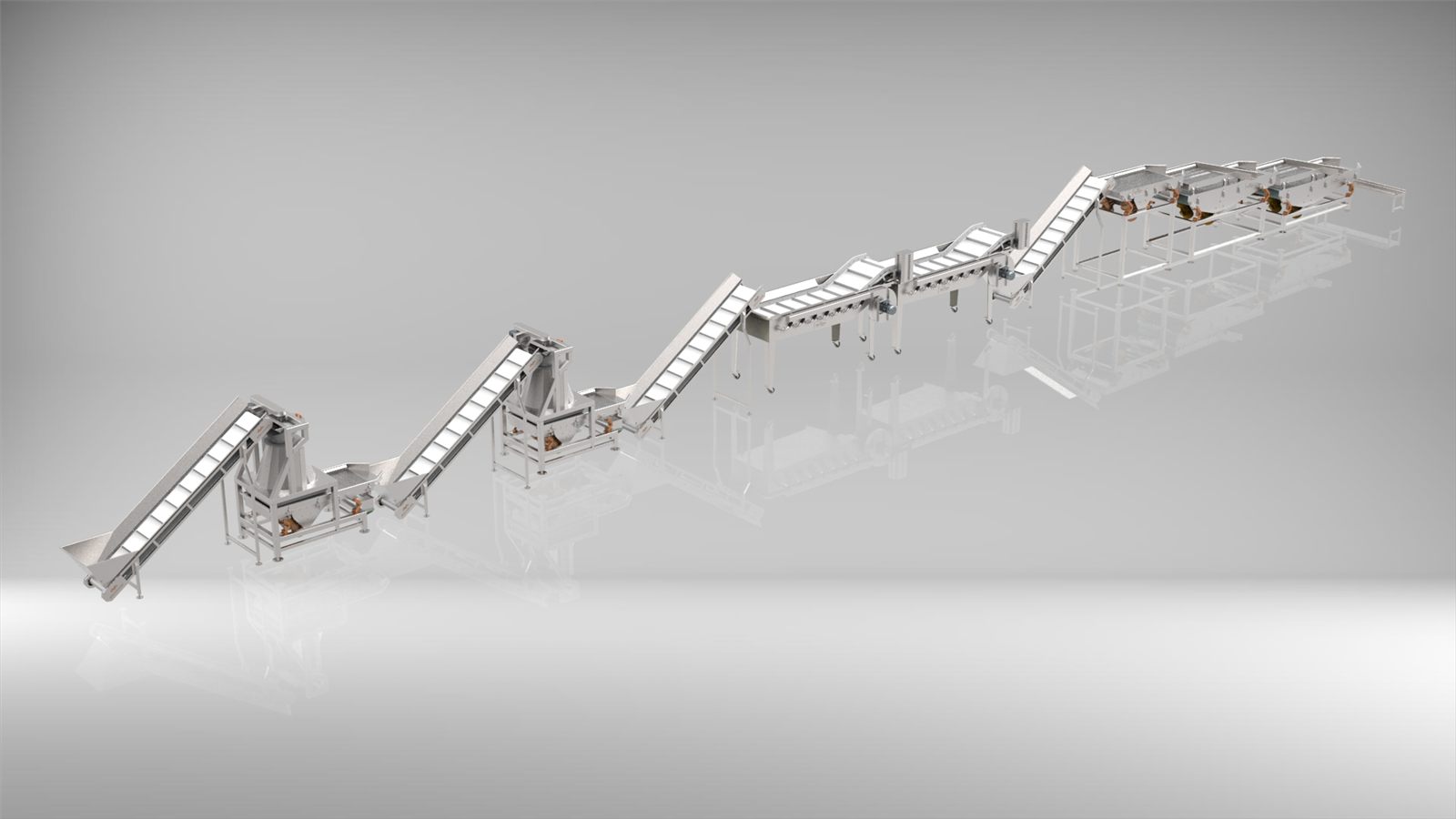
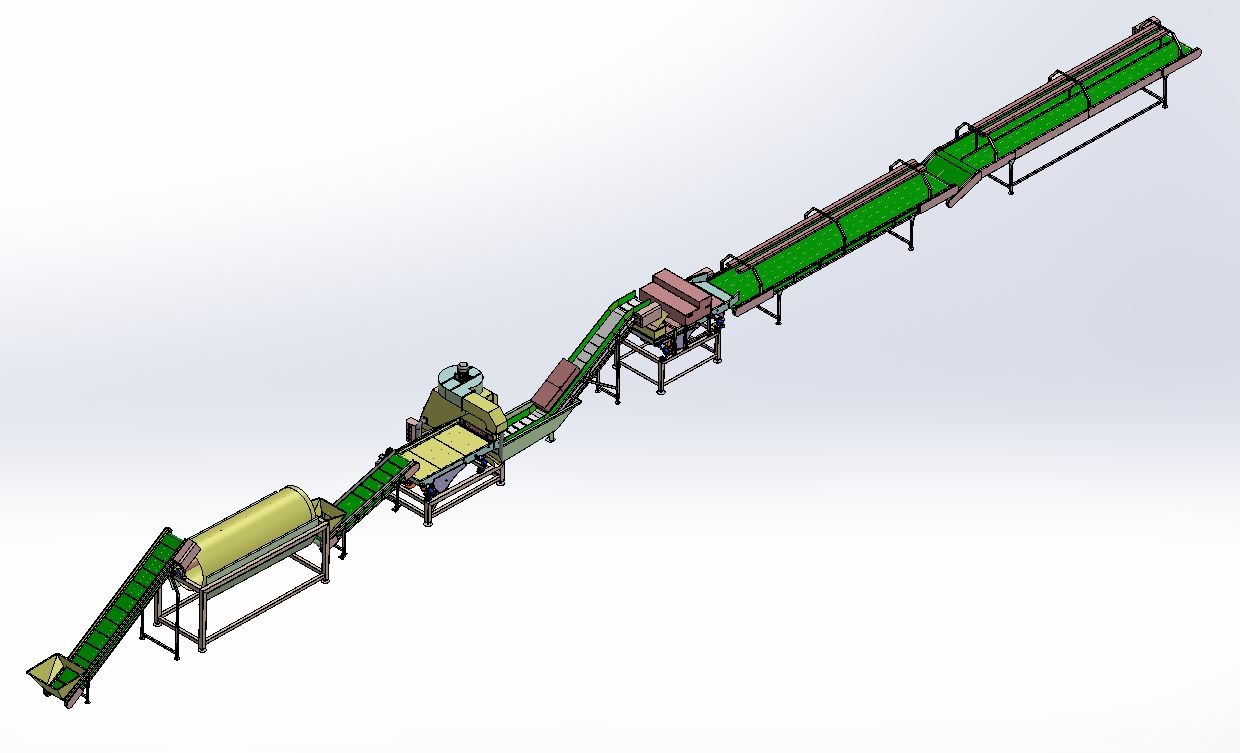
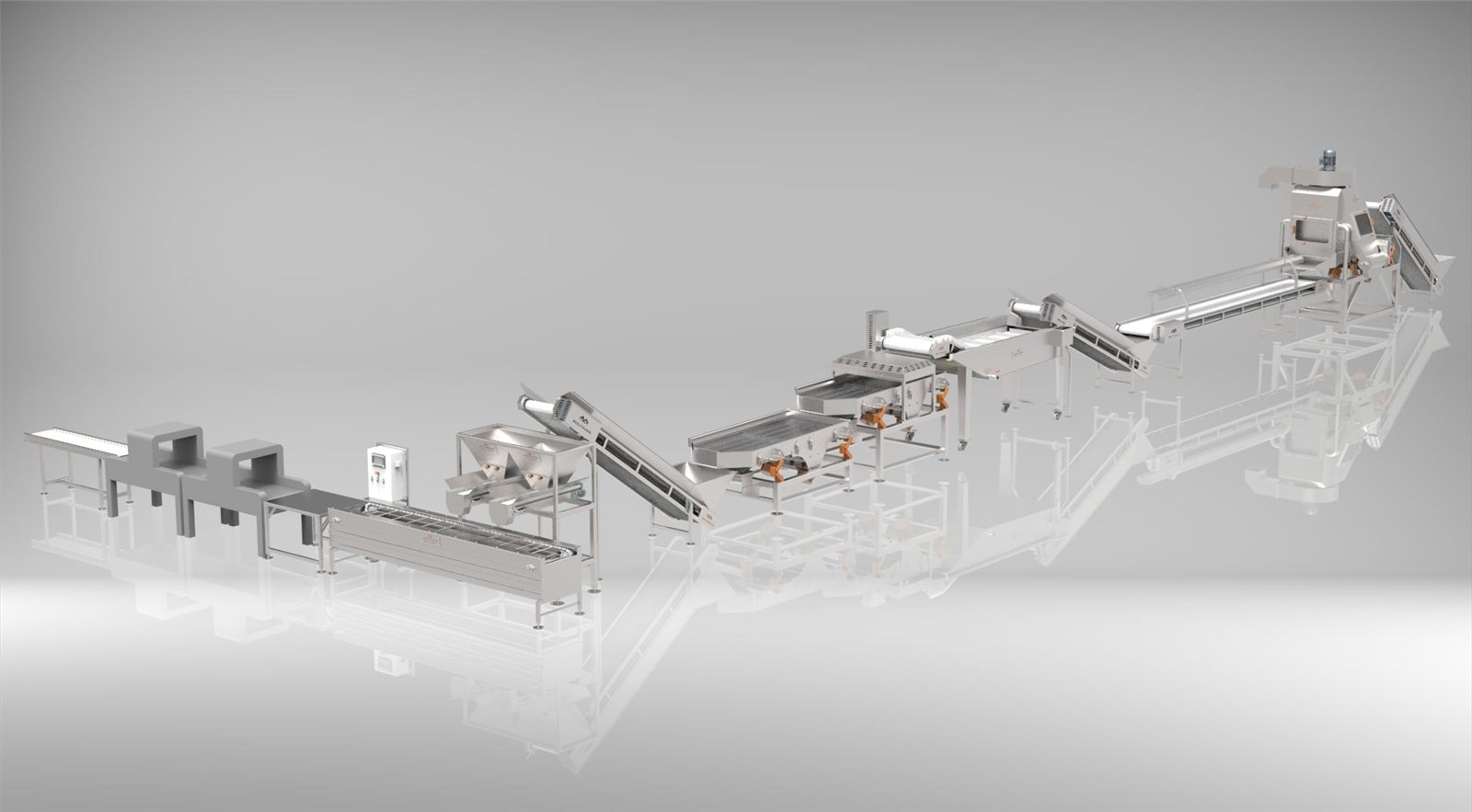
After the crate tipping machine, dosing and feeding conveyor, the product enters this cleaning and separation chain:
- 01Station 04, vertical block breaking machine: separates raisins that caked together in storage.
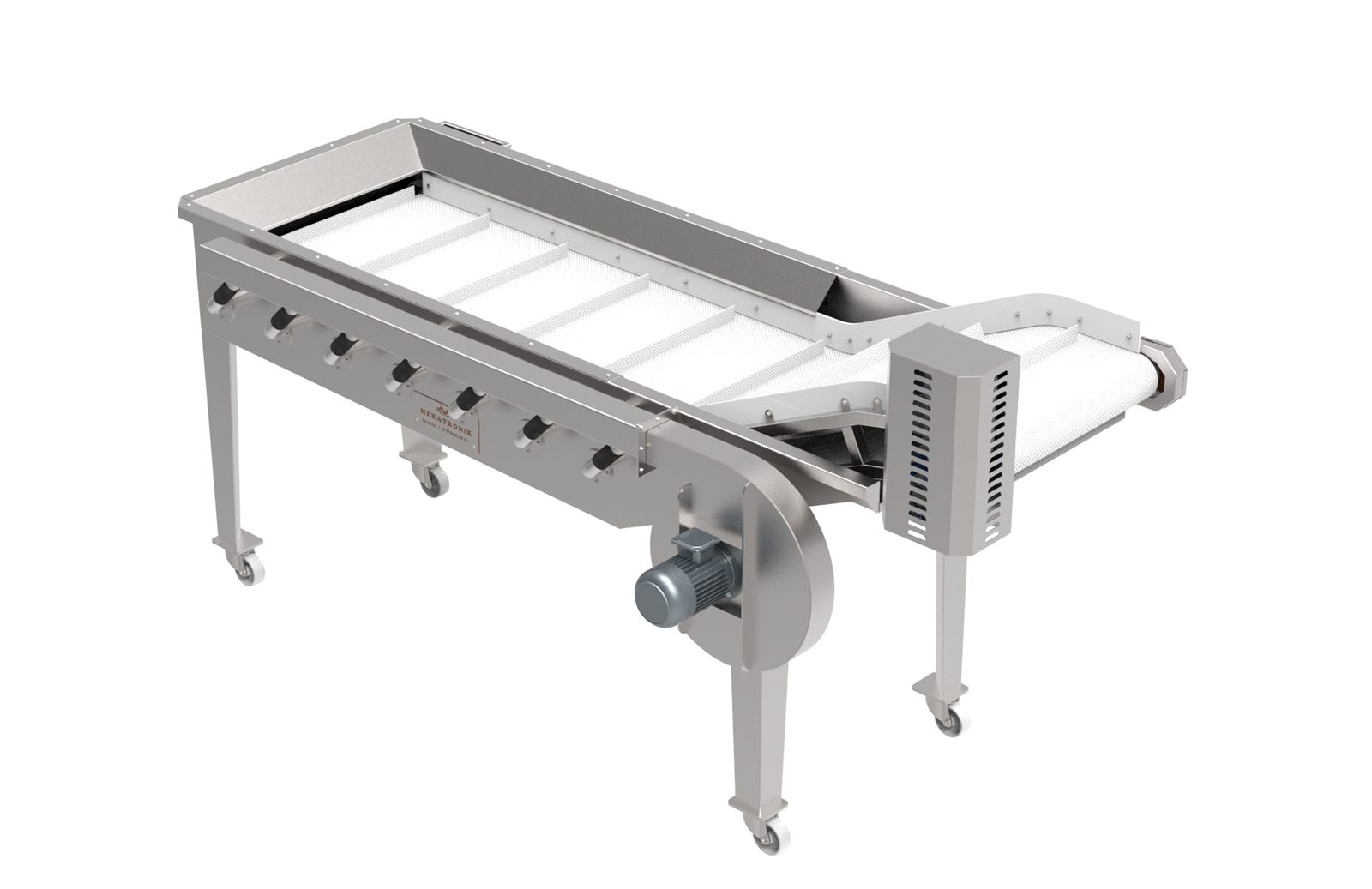
- 02Station 05, aspirated shaker screen: removes stems, dust and light foreign matter by air suction.
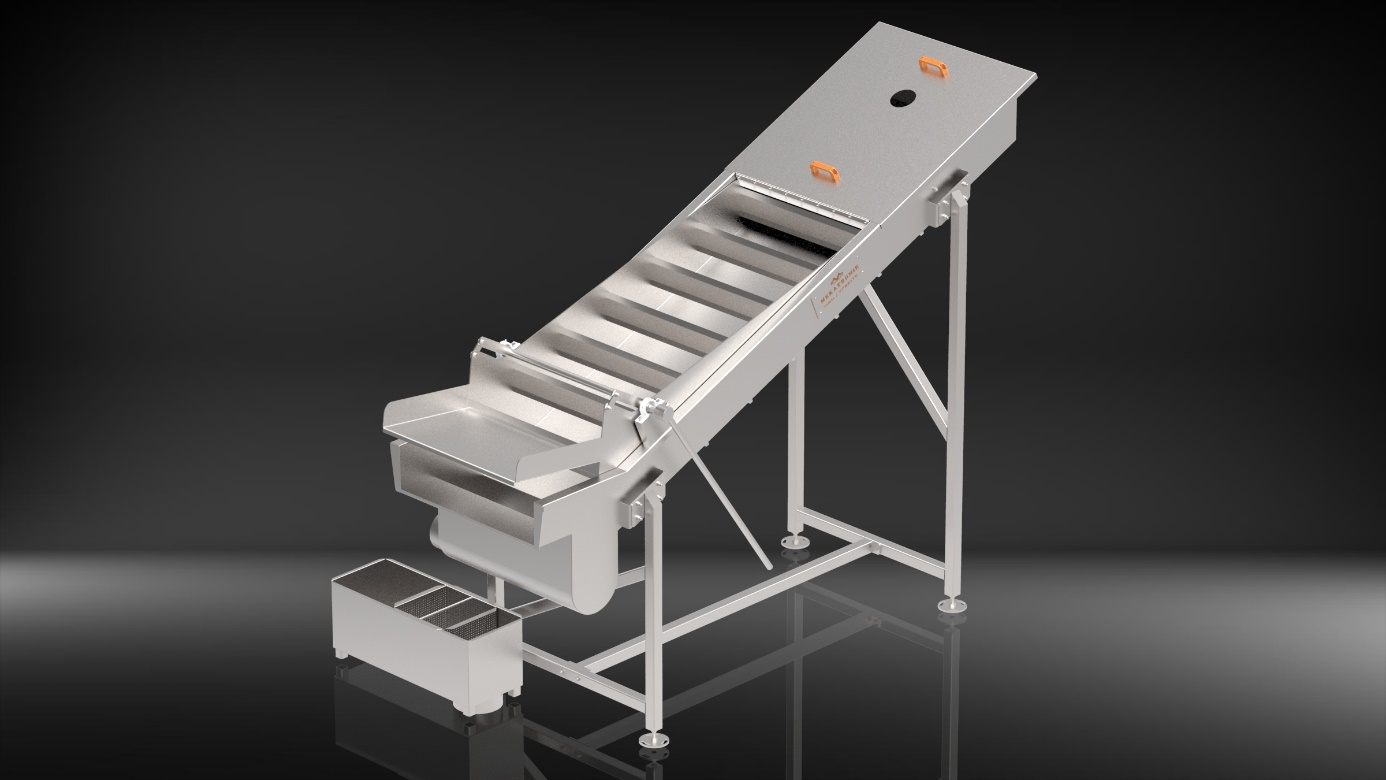
- 03Station 06, rotary screen and 7-stage cascade washing: settles out heavy matter such as stones and sand.
- 04Station 07, capstem removal machine: breaks off the capstems left on the berries.
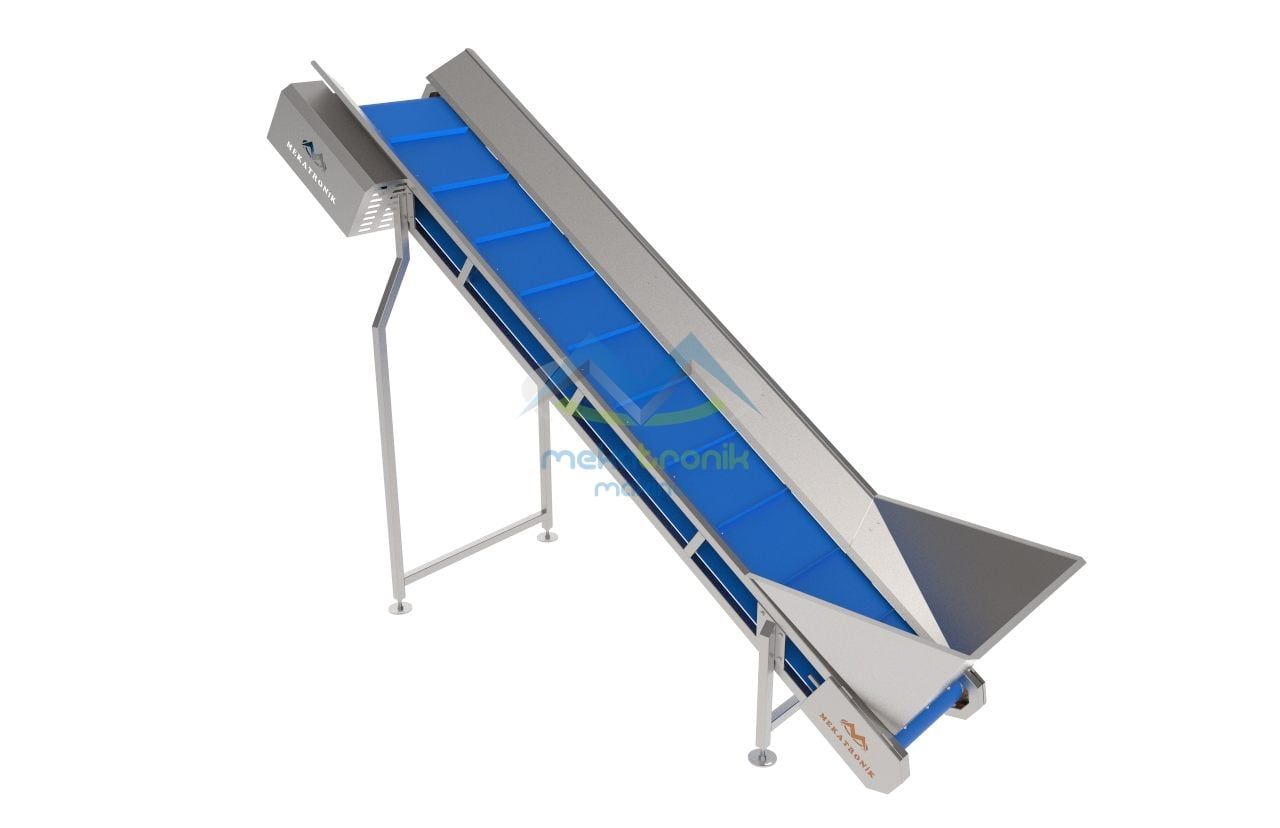
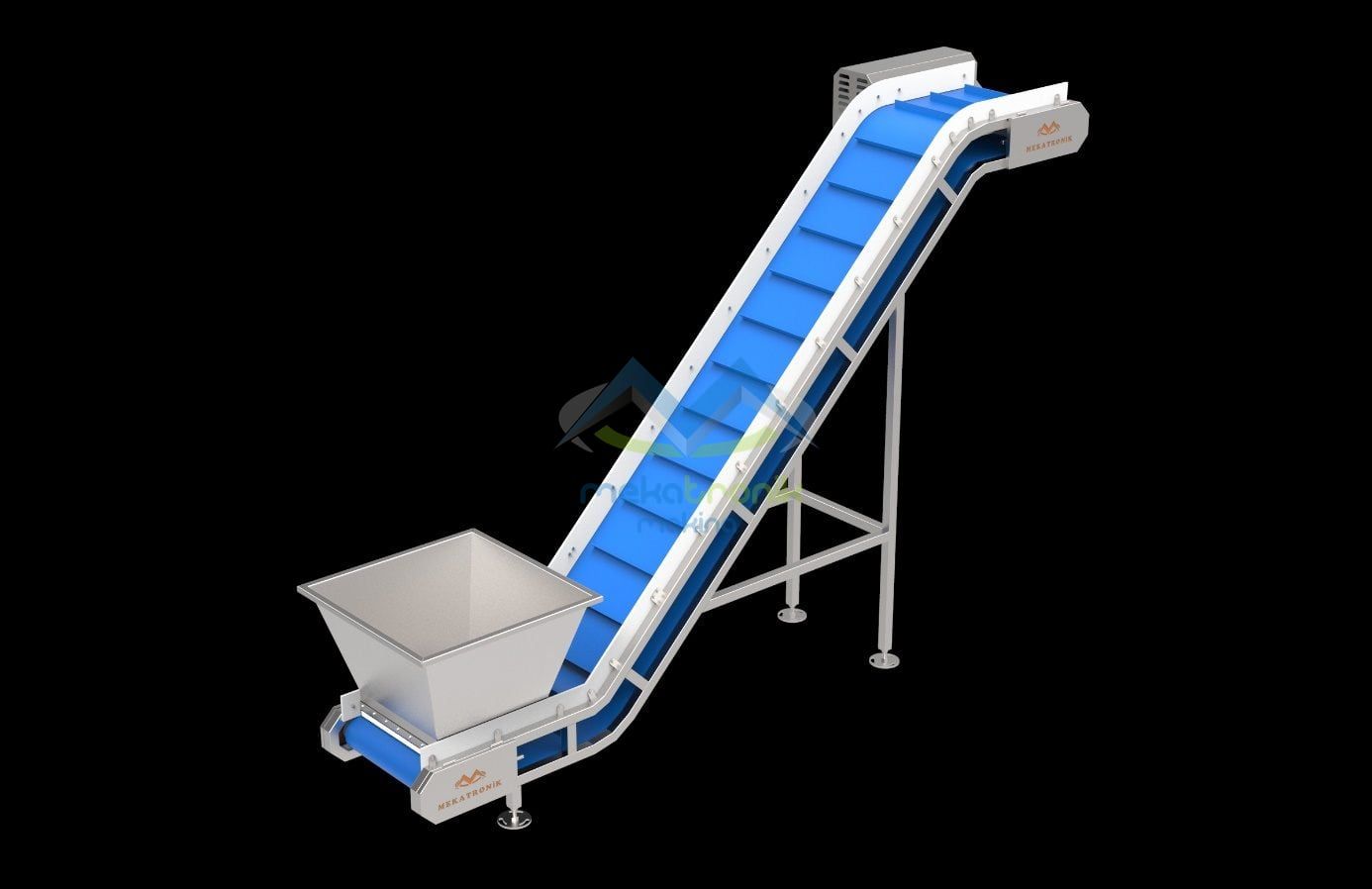
- 05Station 08, product transfer screw conveyor: moves the washed product on to sorting and filling.
The order is deliberate: whatever can leave dry leaves first, washing then takes the heavy matter, and capstem removal cleans what remains on the berries.
02
Why does dry cleaning come first?
Once dust and fine stem pieces touch water they cling to the fruit and the wash water fouls sooner. So before water, the aspirated shaker pulls light material out of the vibrating product by suction. Block breaking sits ahead of it for a reason: if caked clusters entered the shaker unbroken, the stems and dust inside them would pass through both the suction and the wash.
The block breaker has its own check: the berry breakage rate is measured jointly during commissioning. The settings at the first stations make the work of every later station easier or harder.
03
Why does capstem removal come after washing?
In the washing stage the stone and sand separation cascade washes the product in a stepped water flow while heavy matter settles to the bottom. That matter has left the line before it reaches the destemmer, so the axe-shaped blades and the screen system of the capstem removal machine do not deal with hard foreign matter. They concentrate on separating berry from stalk.
The second reason is the machine itself. On wet product it removes stalks and removes water at the same time. Product coming out of the wash therefore sheds both the stalk and excess water in this station, before it travels to sorting and filling.
04
What happens if the order changes?
The table gives no figures. Each row shows what you would see on site if the order were broken; values depend on the batch and the project.
| Order | Likely result | What to check |
|---|---|---|
| Capstem removal before washing | Stones and sand reach the blades, wear increases | Machine outlet and blade condition |
| Aspiration after washing | Dust and stems mix into the water, wash water fouls quickly | How often wash water is changed |
| No dewatering between destemming and filling | Product reaches the sorting belt and scale wet | Sticking on the belt, scale fluctuation |
| Block breaking skipped | Caked clusters carry stems and dust forward | Cluster presence at the shaker inlet |
05
How do you tell on site that the order is right?
- 01Stem residue at the destemmer outlet varies by batch, so the outlet is checked by eye at every batch change.
- 02The sediment outlet of the cascade is kept clear; if it fills, heavy matter is carried to the next station.
- 03Product flow on the destemmer is adjustable, and a hand-picked batch and a mechanically harvested batch call for different feed rates.
- 04The number of stem pieces picked out at the illuminated sorting conveyor shows how well the upstream stations are working.
Capacity and yield depend on batch moisture, stem structure and feed rate; exact figures are finalised in the quote.
06
Materials and compliance
Product-contact surfaces on the machines in the line are AISI 304 stainless steel, with AISI 316 selected where the process requires it. The machines are designed to meet CE conformity requirements.
Next step: send the product you process, your target capacity and your facility dimensions through the quote page, and we will come back with the station list, lead time and price.