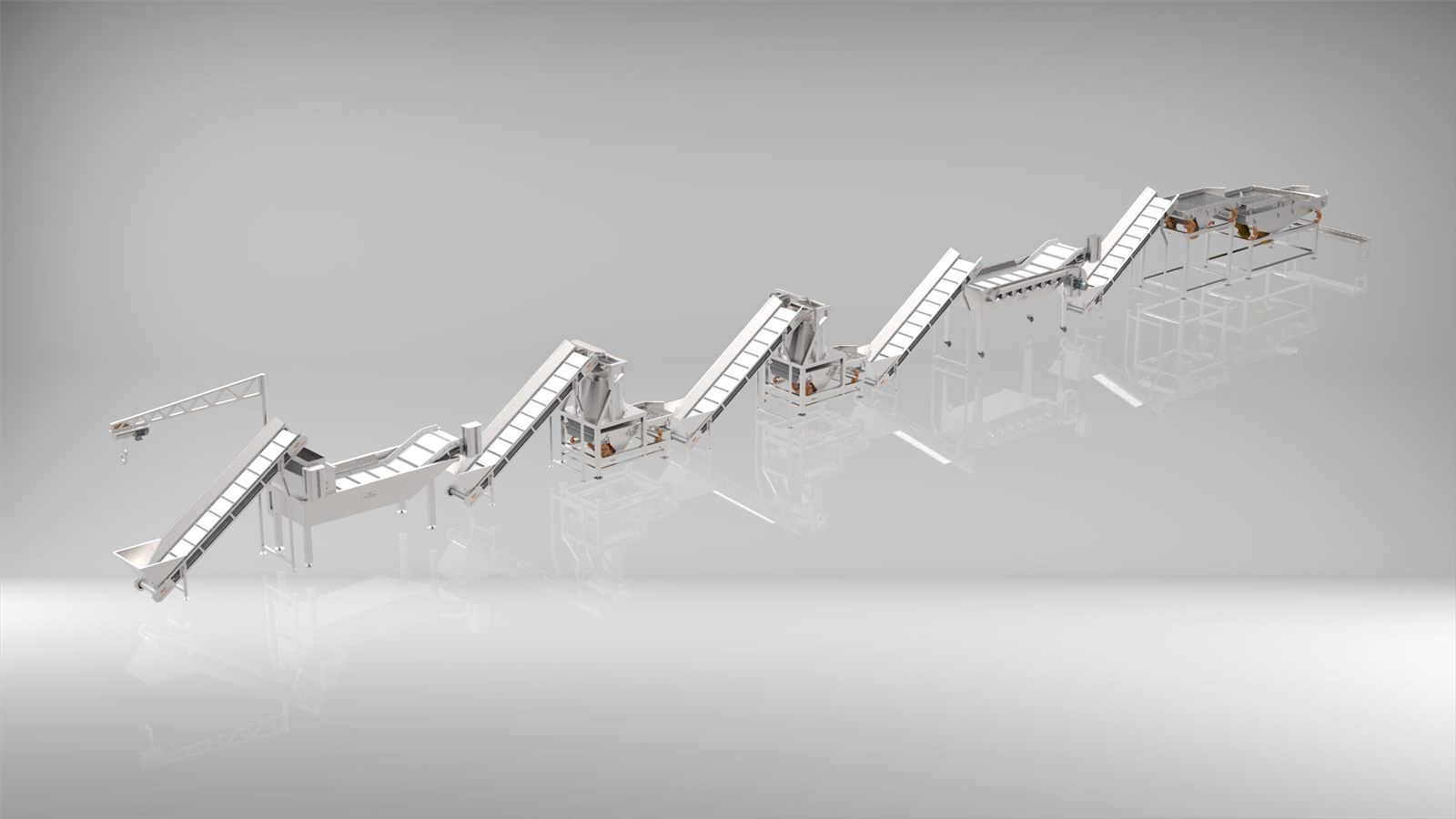
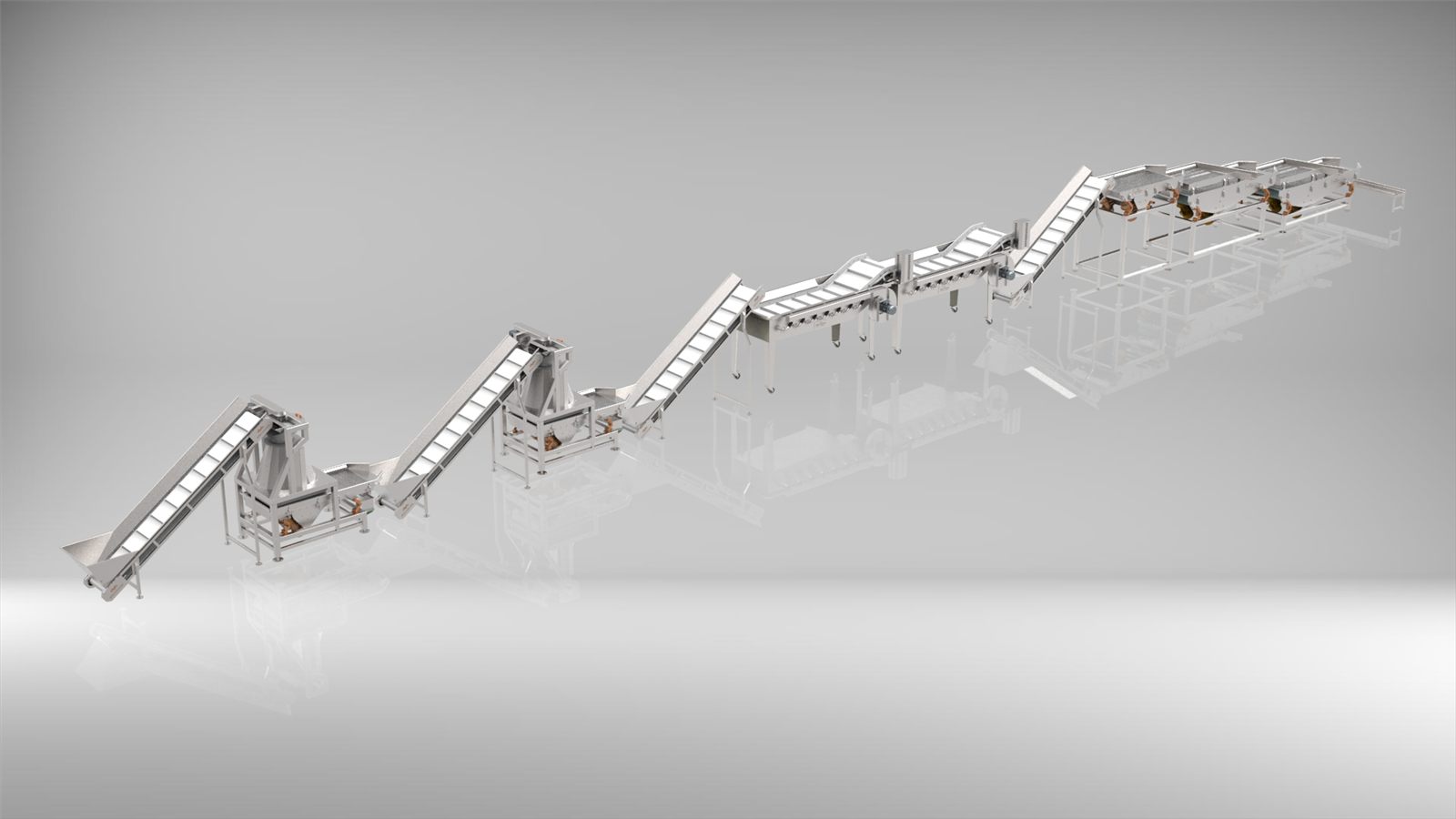
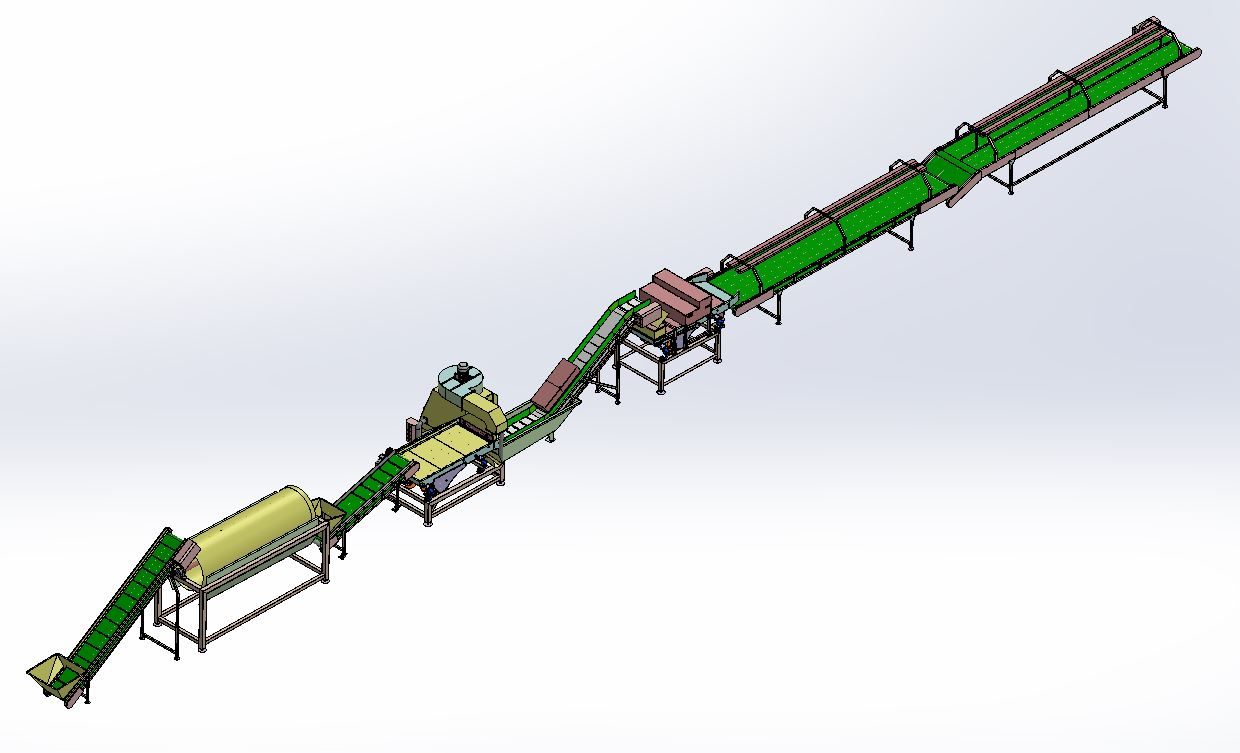
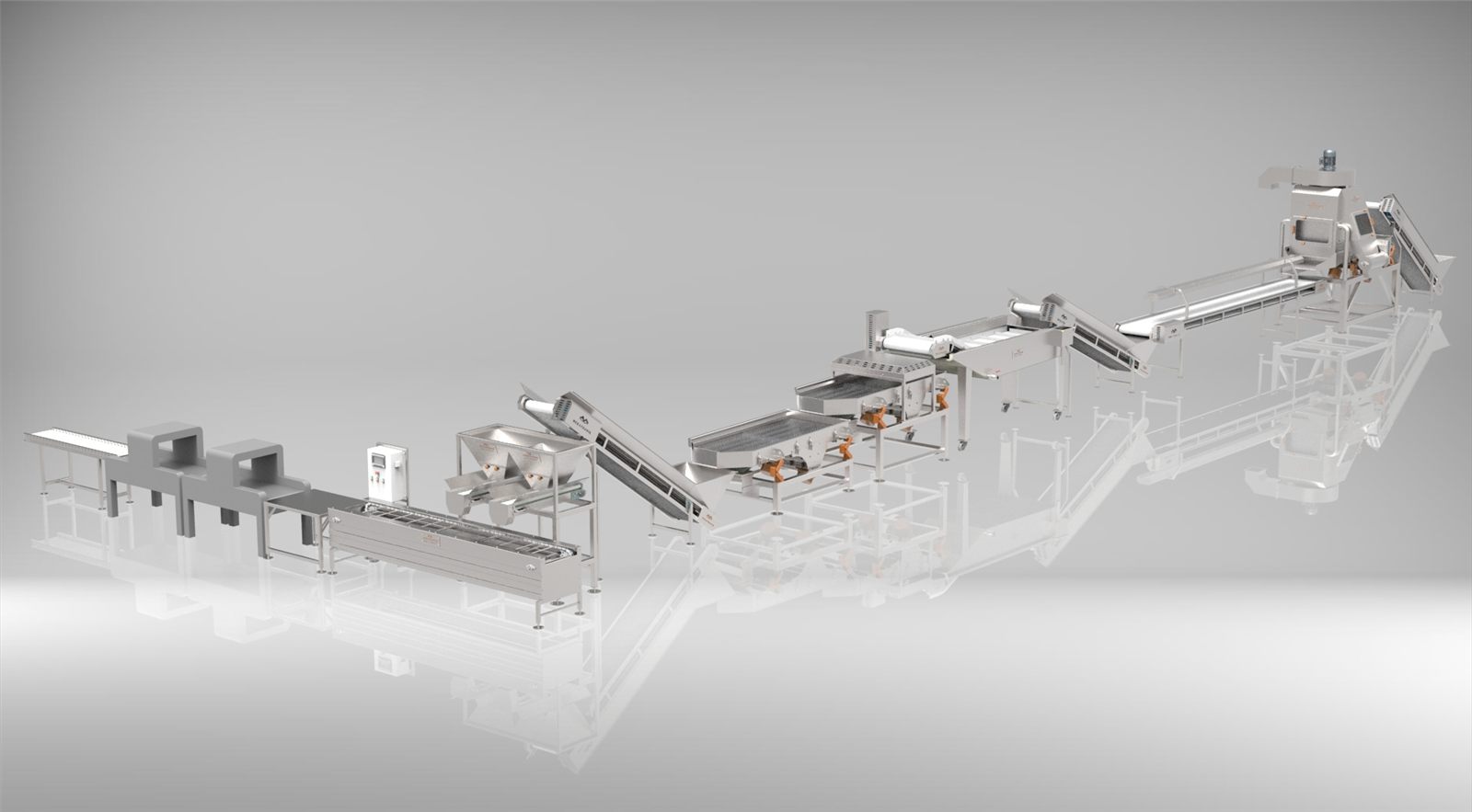
When two stations on a food processing line do not sit at the same height, deciding how the product bridges that gap is one of the first layout questions. The Z-type modular conveyor is a modular belt conveyor designed in a Z form for exactly this job. This article explains what the form does, what information is gathered before specifying one, and how the modular belt affects cleaning.
01
Why does a level difference need its own solution?
On a flat line, product moves from one machine to the next on a horizontal belt. When a washing outlet, a screening unit or a weighing station are installed at different heights, the difference has to be closed somewhere. According to the catalog entry, the Z-type modular conveyor was designed to carry product up to steep points that PVC belts cannot reach, so the problem is often geometry before it is belt type.
Changing the building to remove a level difference is expensive. In most projects the station positions are already fixed by equipment dimensions and the utility outlets in the floor, so it is more practical for the conveying element itself to take up the difference.
02
How does the Z form raise the product?
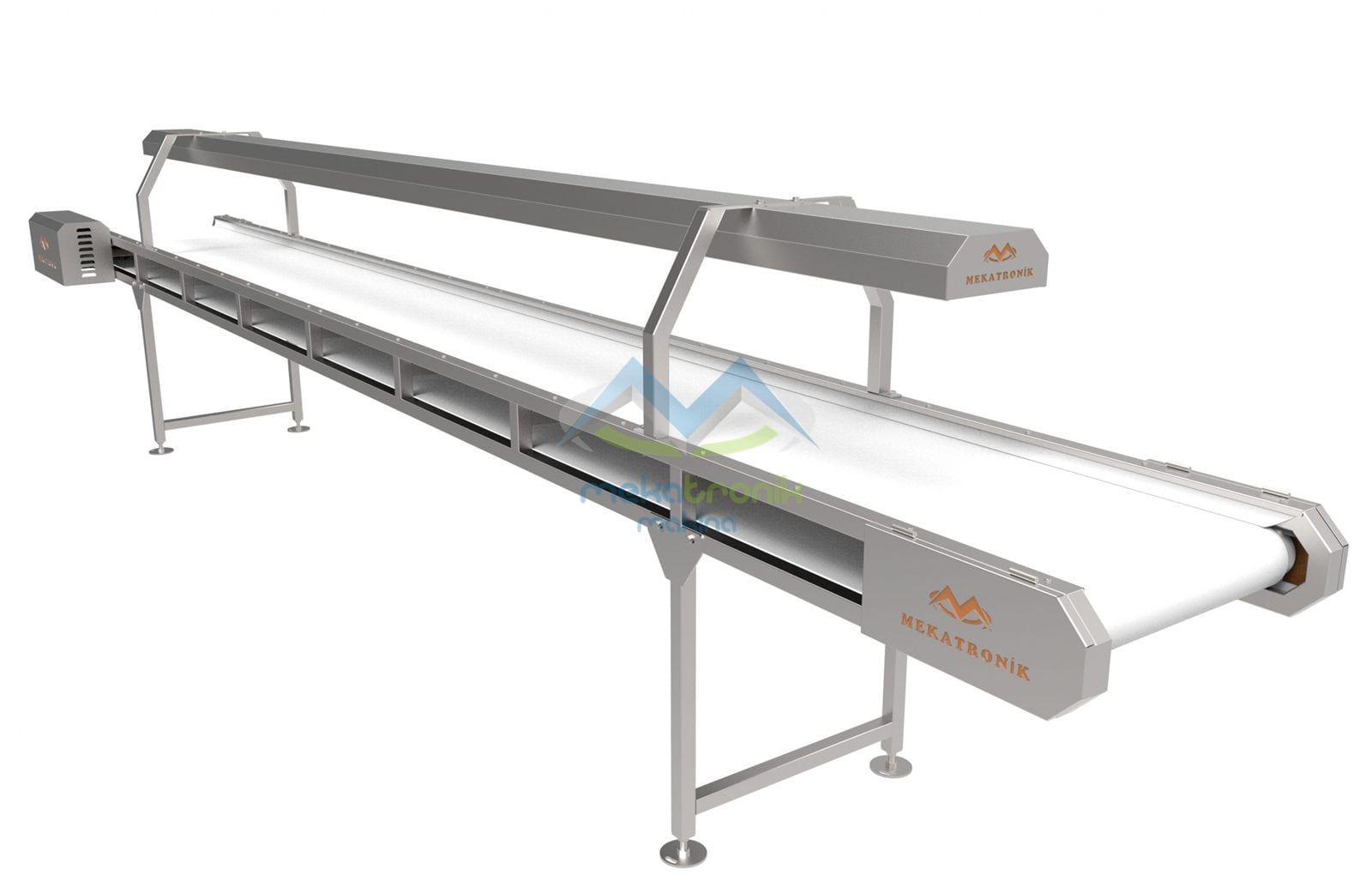
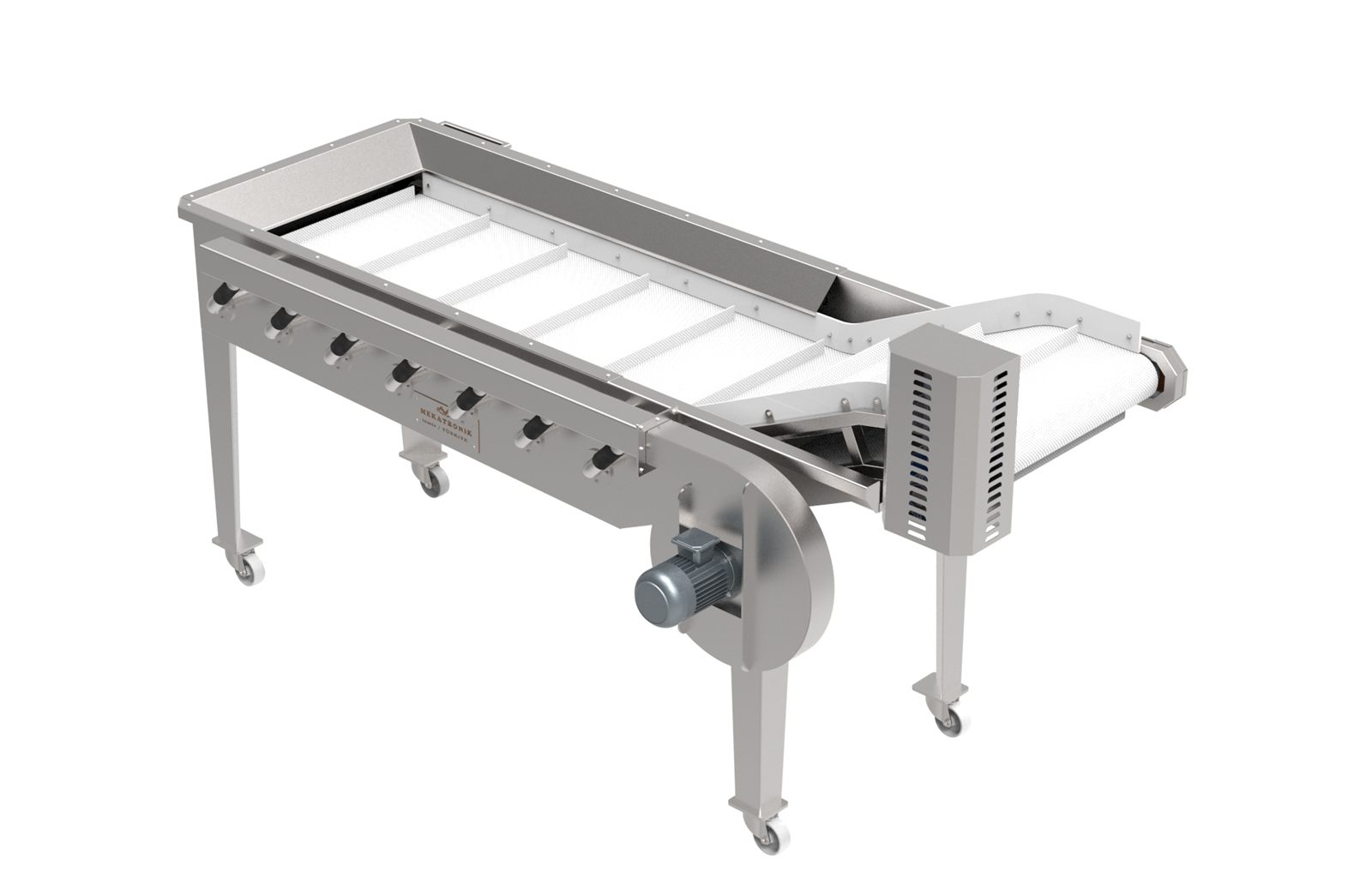
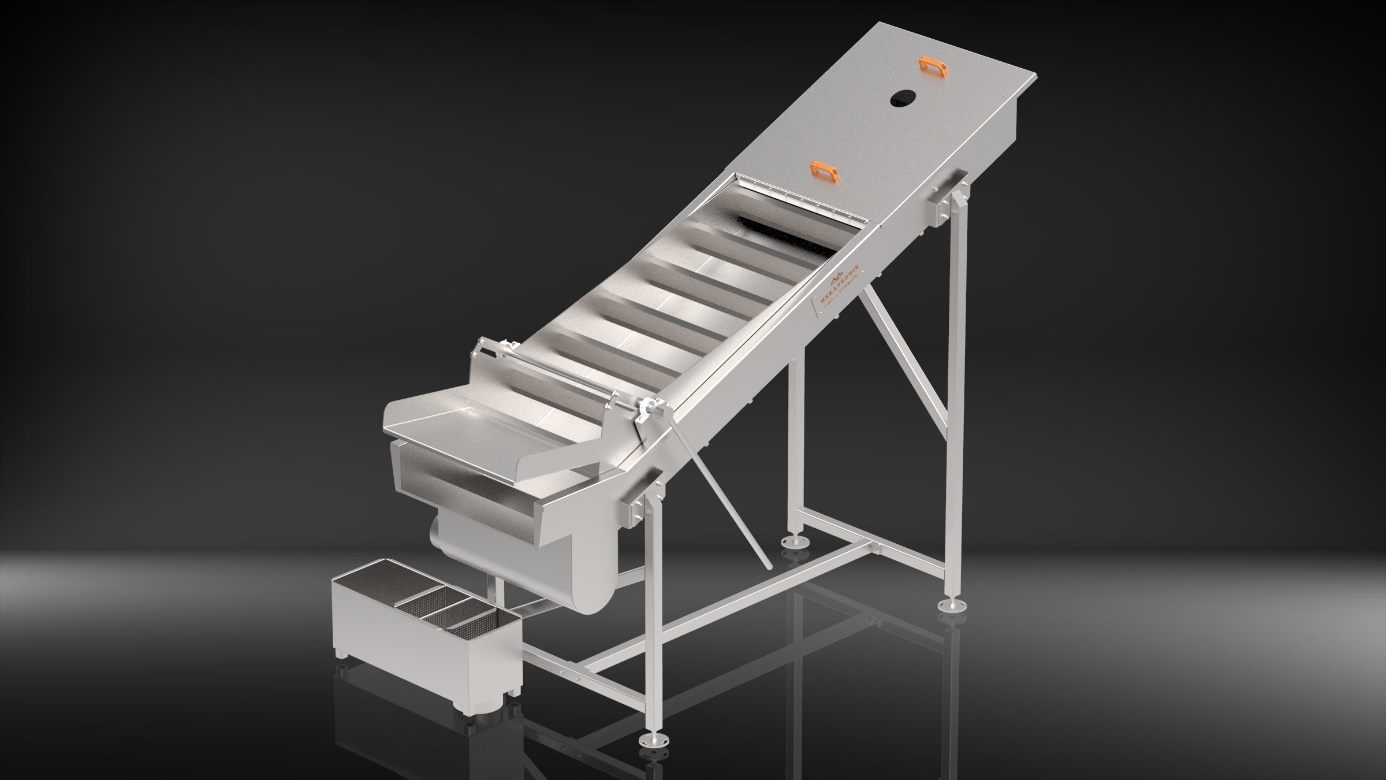
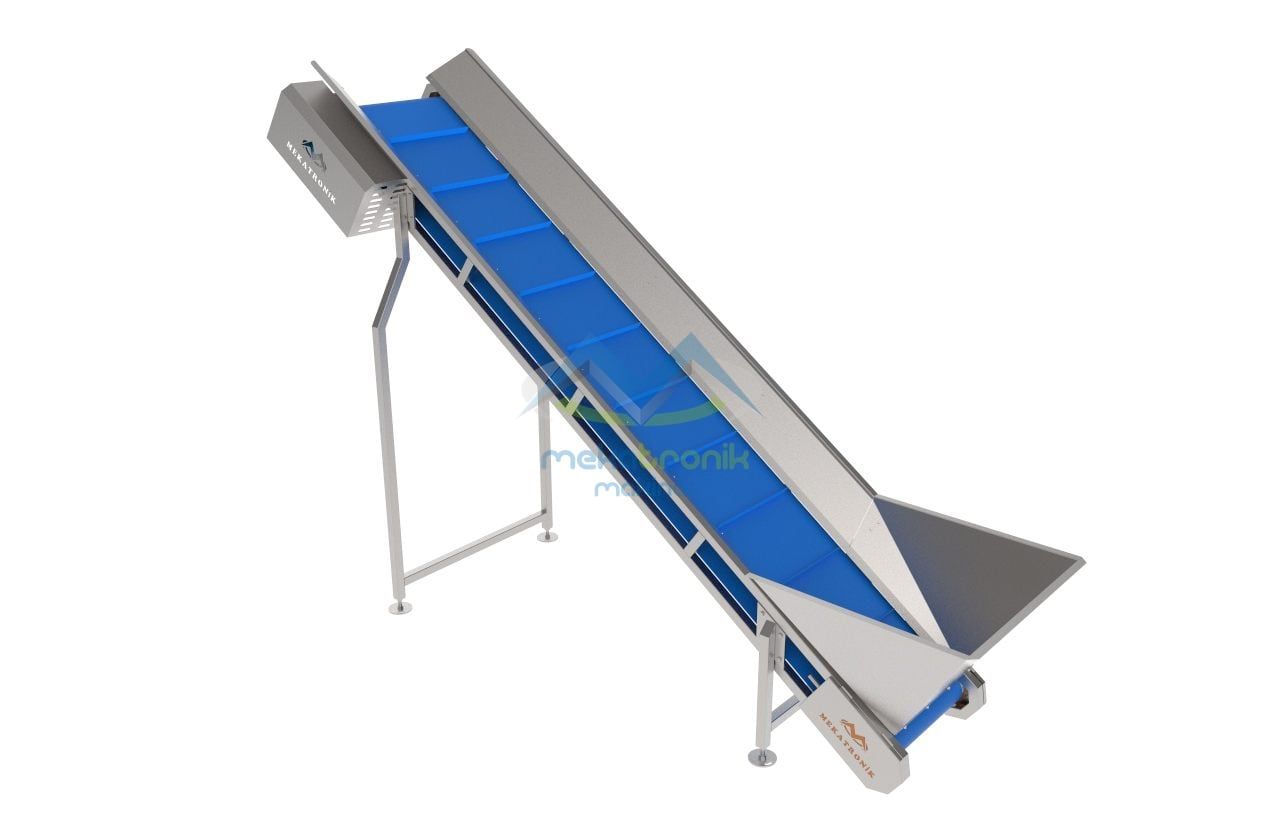
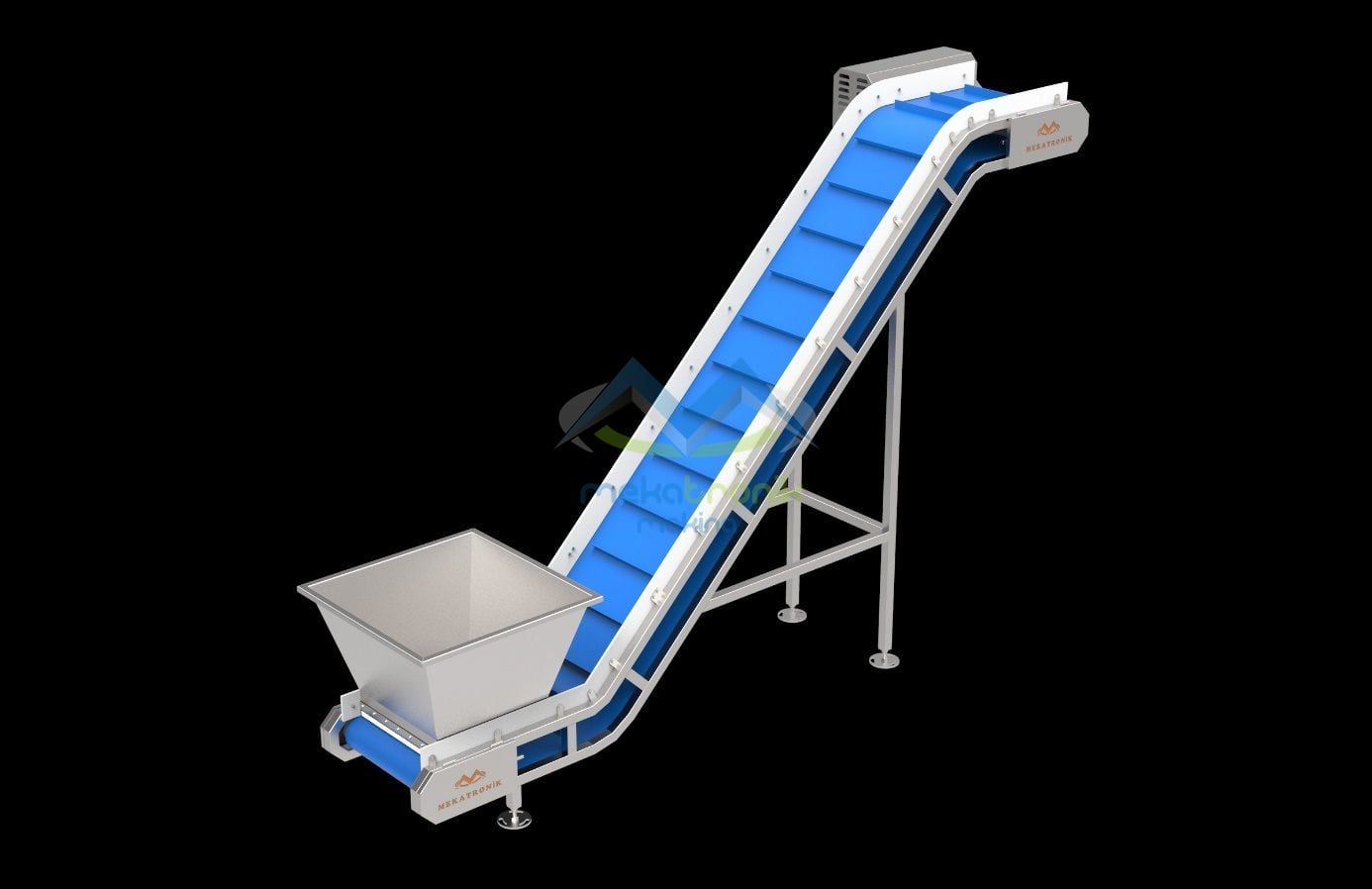
A Z shape means the product enters horizontally at the lower level, travels through an inclined section and leaves horizontally at the upper level. The carrying surface is a modular belt. Because it is built from interlocking modules, the same surface keeps carrying the product through the inclined section.
Since the inlet and the outlet stay horizontal, the conveyor hands product to the machines before and after it much as a flat conveyor would. The only difference is the level change in between. Incline and height values depend on the project, and exact dimensions are confirmed in the quotation.
03
What information is gathered before specifying one?
The dimensions of a Z-type conveyor are built for the place and purpose of use. To arrive at the right size, the following details are needed from site:
- 01The height difference between the outlet of the lower station and the inlet of the upper station.
- 02The floor area available for the conveyor and the access routes around it.
- 03The product to be carried: raisins, dried apricots, figs, dates or another product.
- 04Whether the area runs wet or dry, and the temperature conditions of the room.
- 05The line capacity and the flow rate of the machine upstream.
- 06How often the line is cleaned and how much time is available between shifts.
Capacity is determined per project. Instead of reading a ready-made figure from a table, the total flow of the line is worked out first and the conveyor is sized around it.
04
How does the modular belt affect cleaning and heat?
The catalog describes the belts of the Z-type modular conveyor as perforated, water-shedding and resistant to high temperatures. On lines that carry wet product after washing, water that does not collect on the belt matters for both product quality and hygiene.
The modular construction also makes maintenance easier. The body is AISI 304 stainless steel, the drive is a geared motor and the supply is 380 V / 50 Hz. Materials for product-contact surfaces are confirmed in the project according to the process.
05
Which conveyor does which job?
A line may contain several conveyors, each with a different task. The table below summarizes how three conveyors in the catalog divide the work.
| Conveyor | Task | When it is chosen |
|---|---|---|
| Feeding conveyor | Moves raw or processed product from one point to another on a PVC slat belt | Transfer between two points at the same level |
| Z-type modular conveyor | Carries product to steep points on a modular belt in a Z form | When there is a level difference between stations |
| Illuminated sorting conveyor | LED lighting makes foreign objects easier to pick out | At a foreign-matter sorting station |
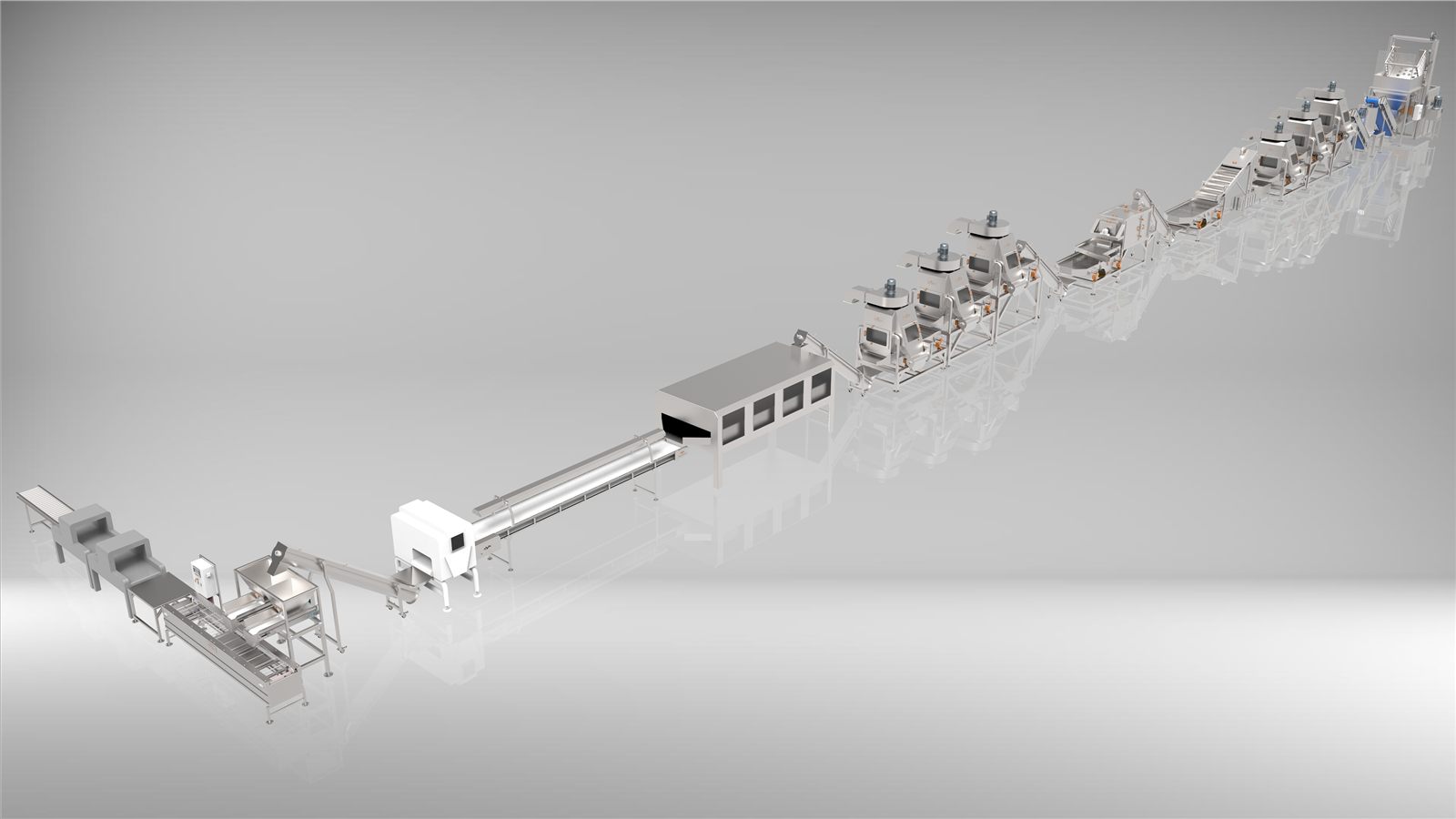
Where transfer is horizontal, a feeding conveyor is enough. When a height difference appears, the Z form comes in, and the two can be used together on the same line.
06
Next step
To discuss the level difference and product flow on your line, reach our team through the quotation page. Conveyor dimensions are settled per project from the height difference, floor area and product details, and you can also browse the conveyor category for other handling solutions.