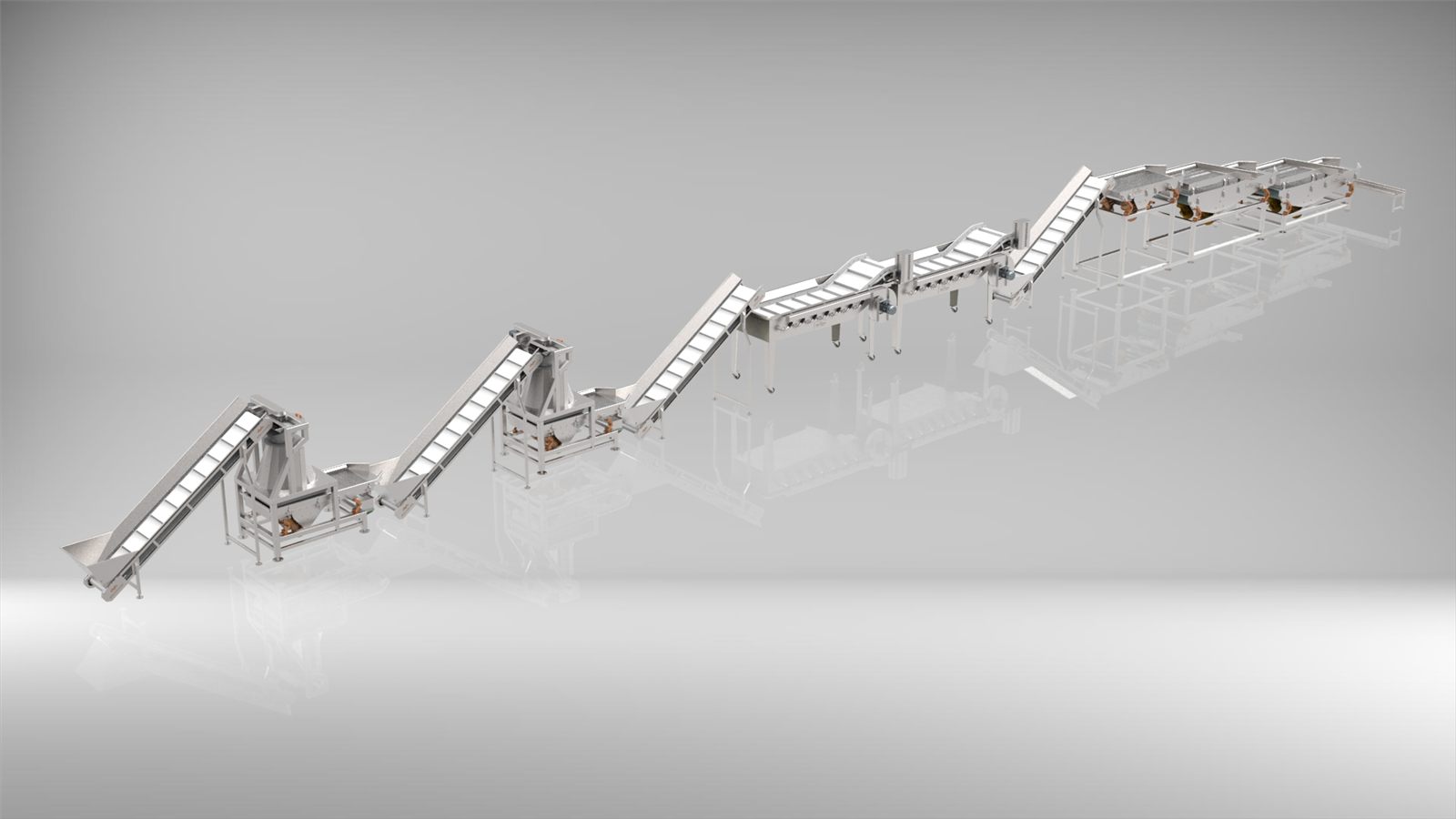
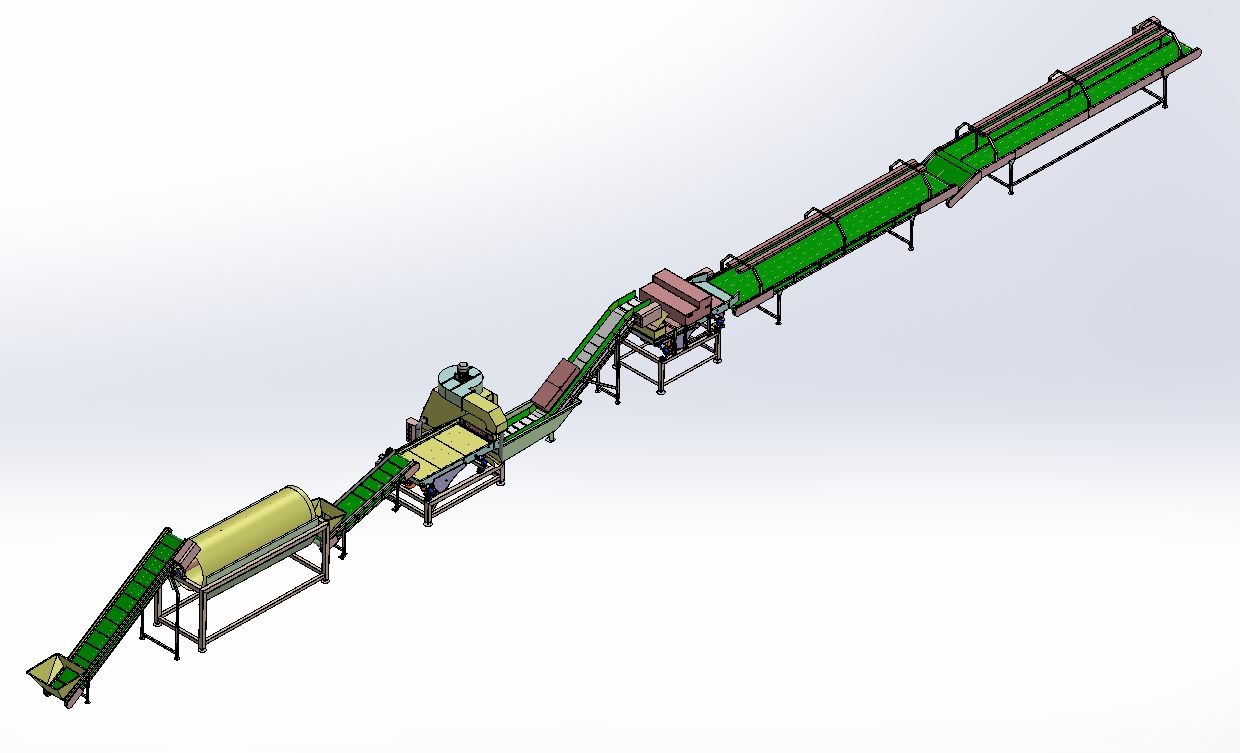
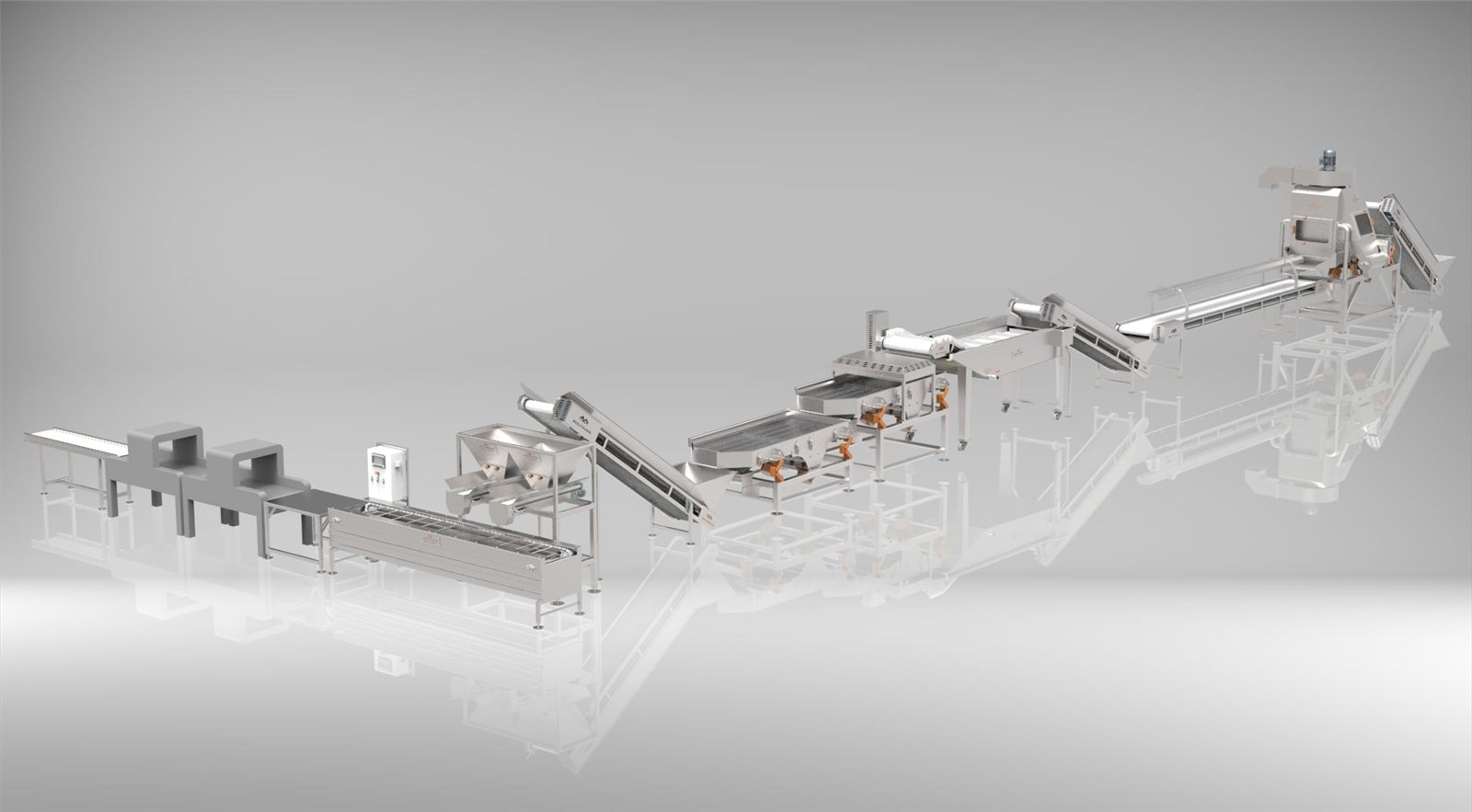
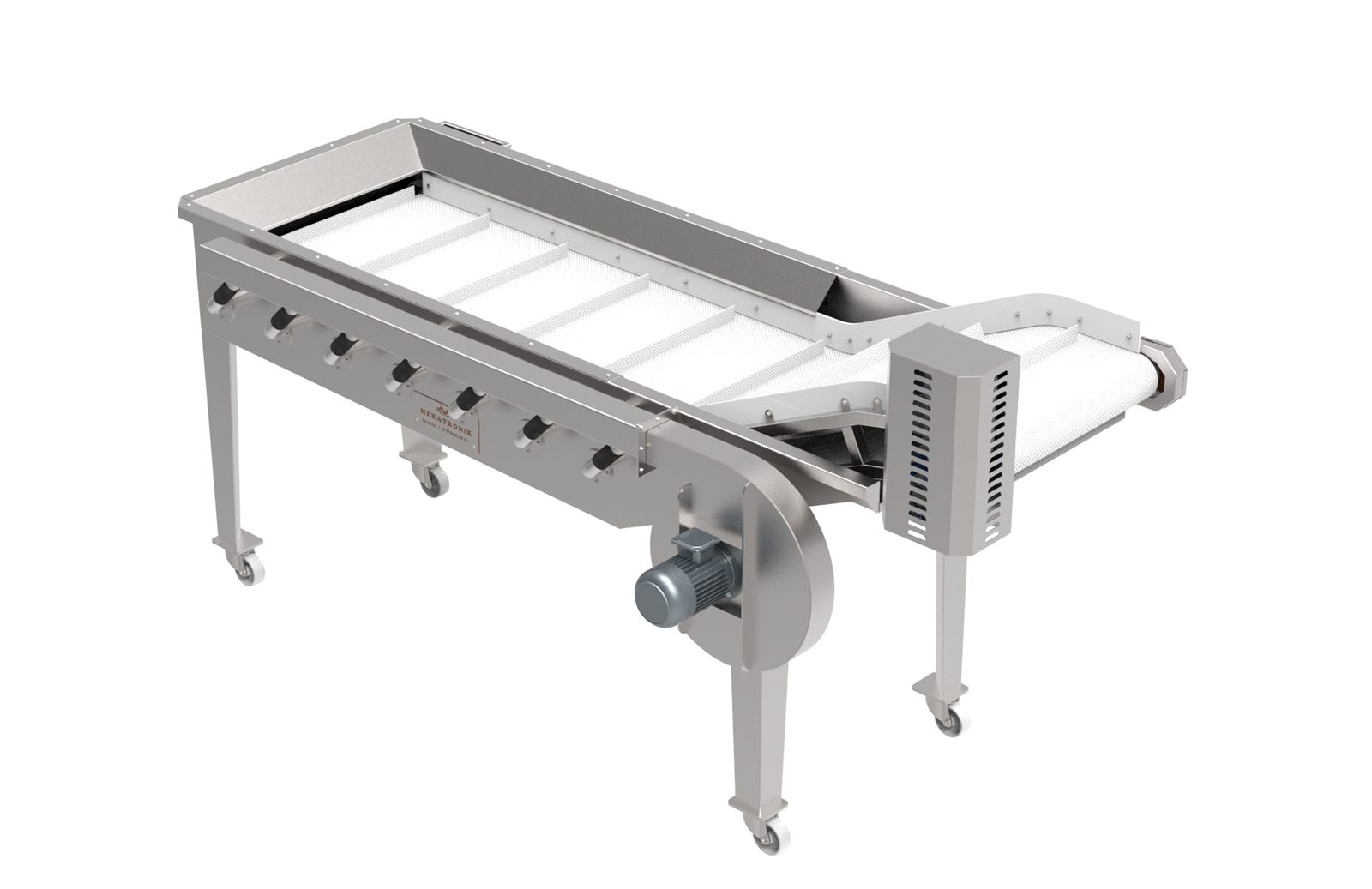
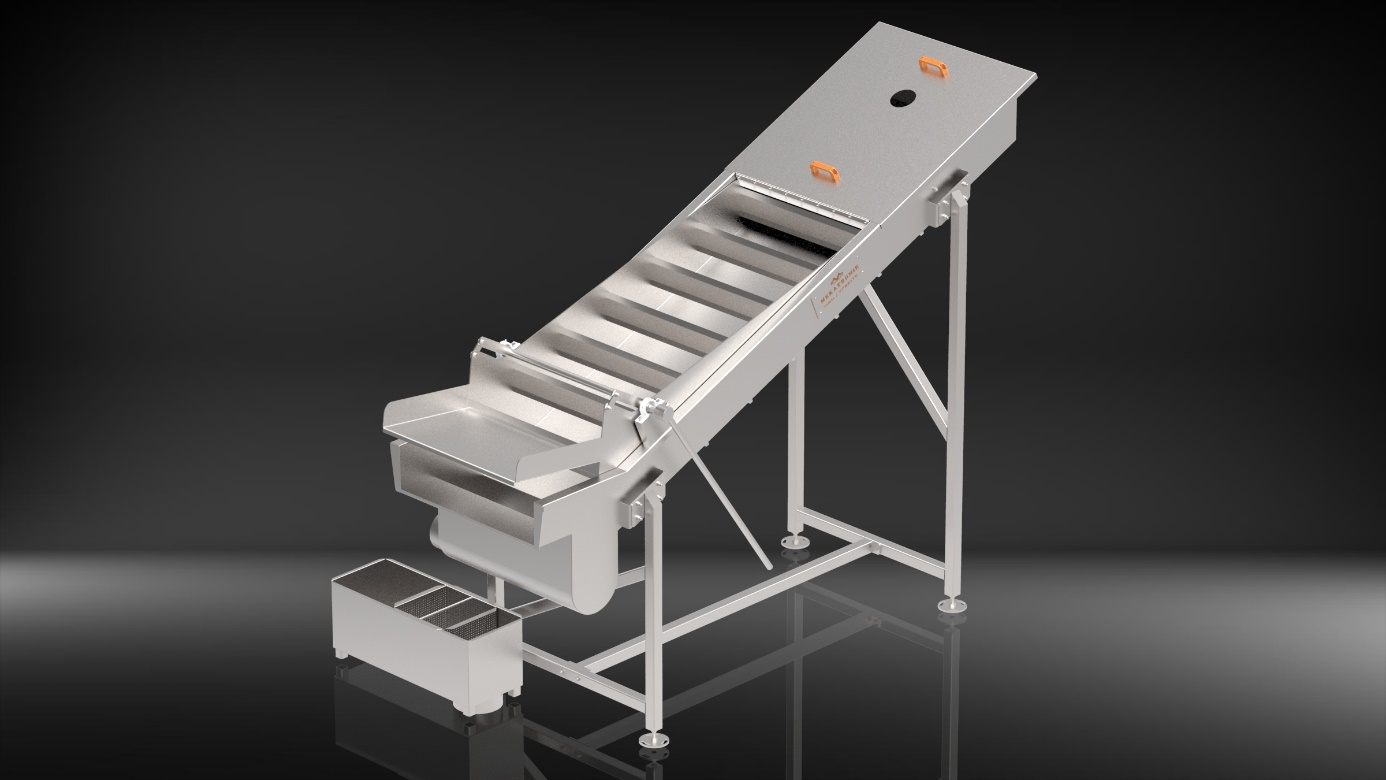
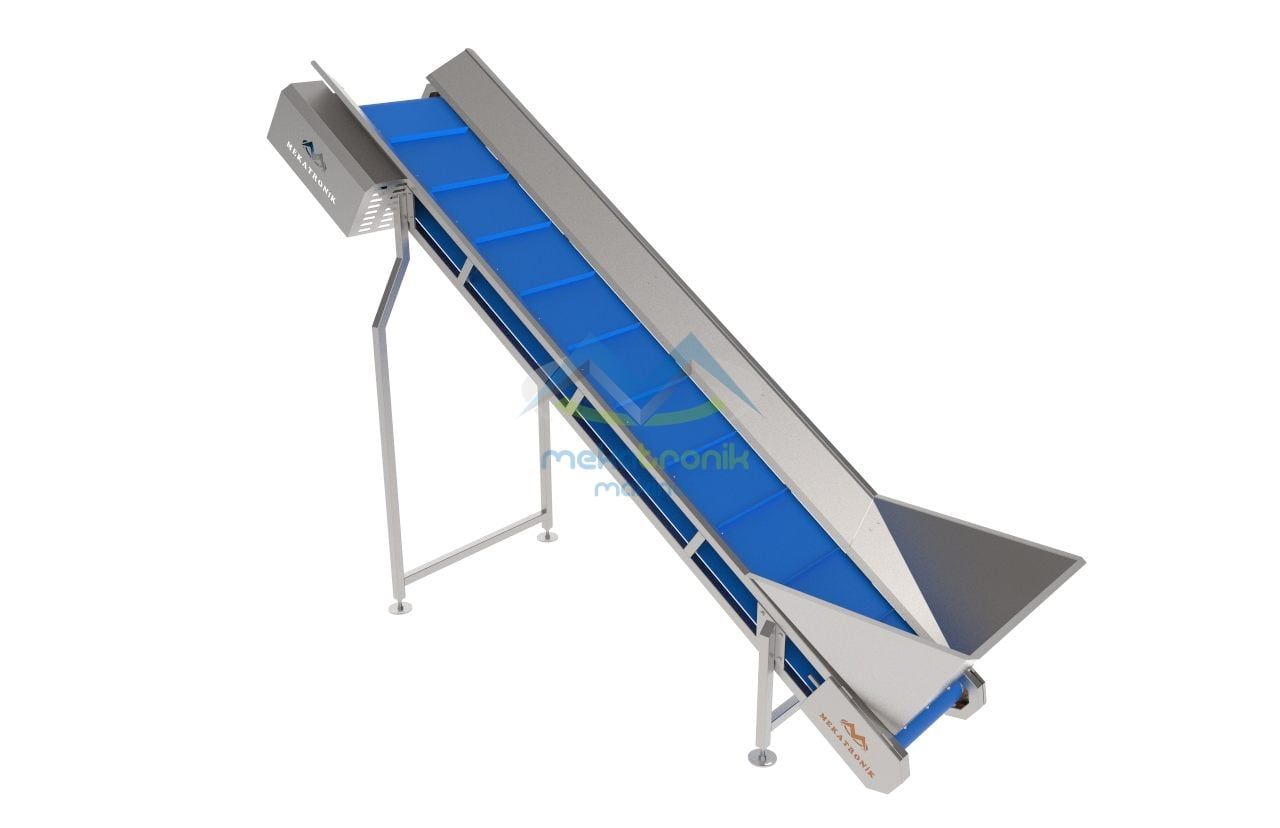
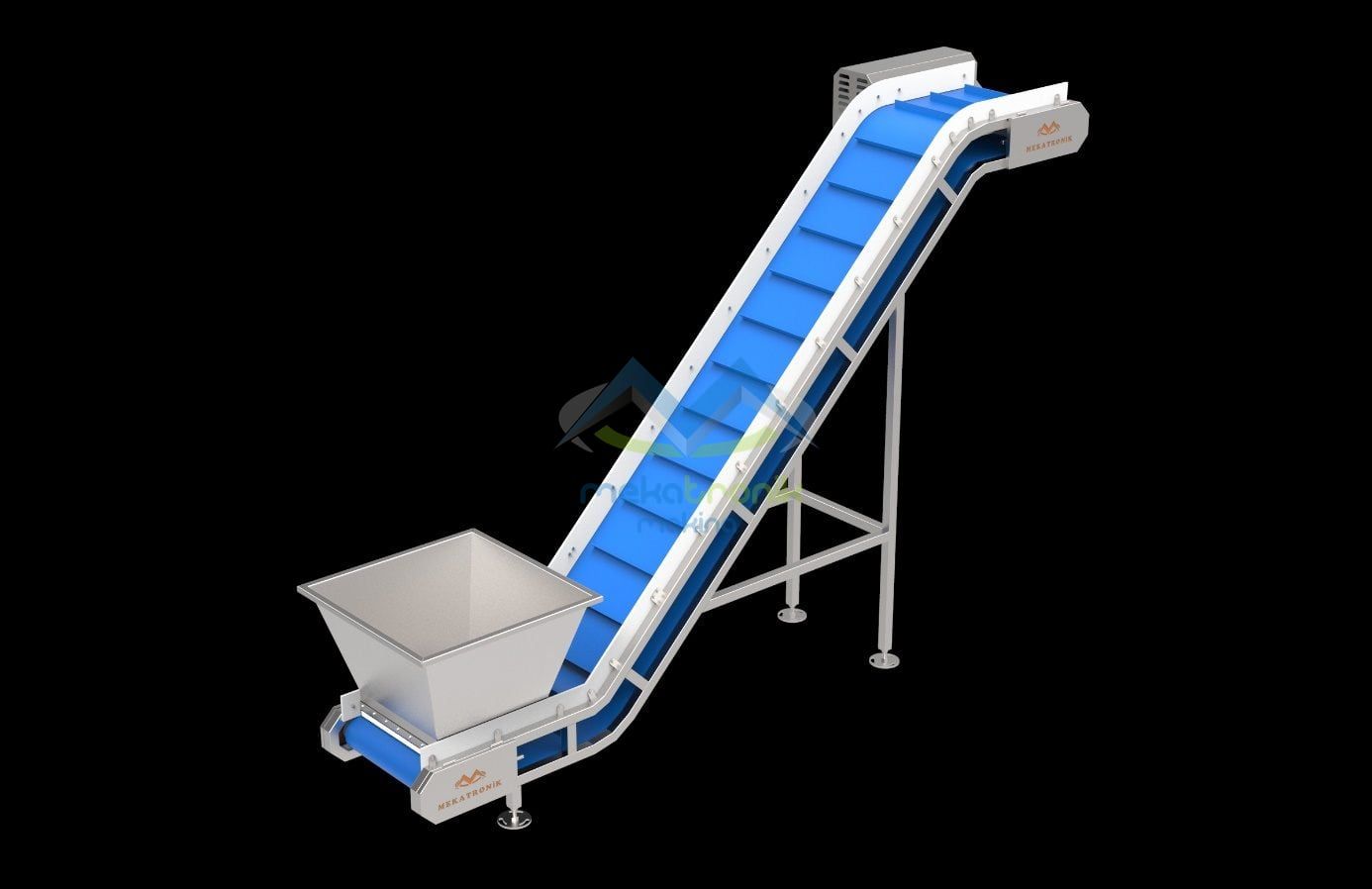
Product coming out of a heat step is hot, and filling hot product straight into a box is rarely a good idea. Our Cooling Tunnel is built to bring oven-baked hot product down to room temperature while it travels along a modular belt. This article explains why that stage deserves a question in any date or dried fruit packing project.
01
What does a cooling tunnel do?
The operating arrangement has two steps and is deliberately plain.
- 01The hot, oven-baked product is taken into the tunnel
- 02The product is cooled down to room temperature as it travels over the modular belt
No mechanism actively works the product here; the job is to give it controlled time on the belt through the tunnel. The value of the machine lies in making that passage steady, clean and with the cooling effect preserved.
02
Why does cooling come up before packing?
If hot product goes into a closed box or pack, heat and vapour build up inside; vapour that condenses as it cools, and product sitting in its own heat in the box, are quality problems nobody wants. This is a general engineering fact, and how much cooling is needed depends on the product, the packaging and the shelf life you aim for. That is why we do not print a temperature or a time; values are settled jointly during the project, and exact values are fixed in the quotation.
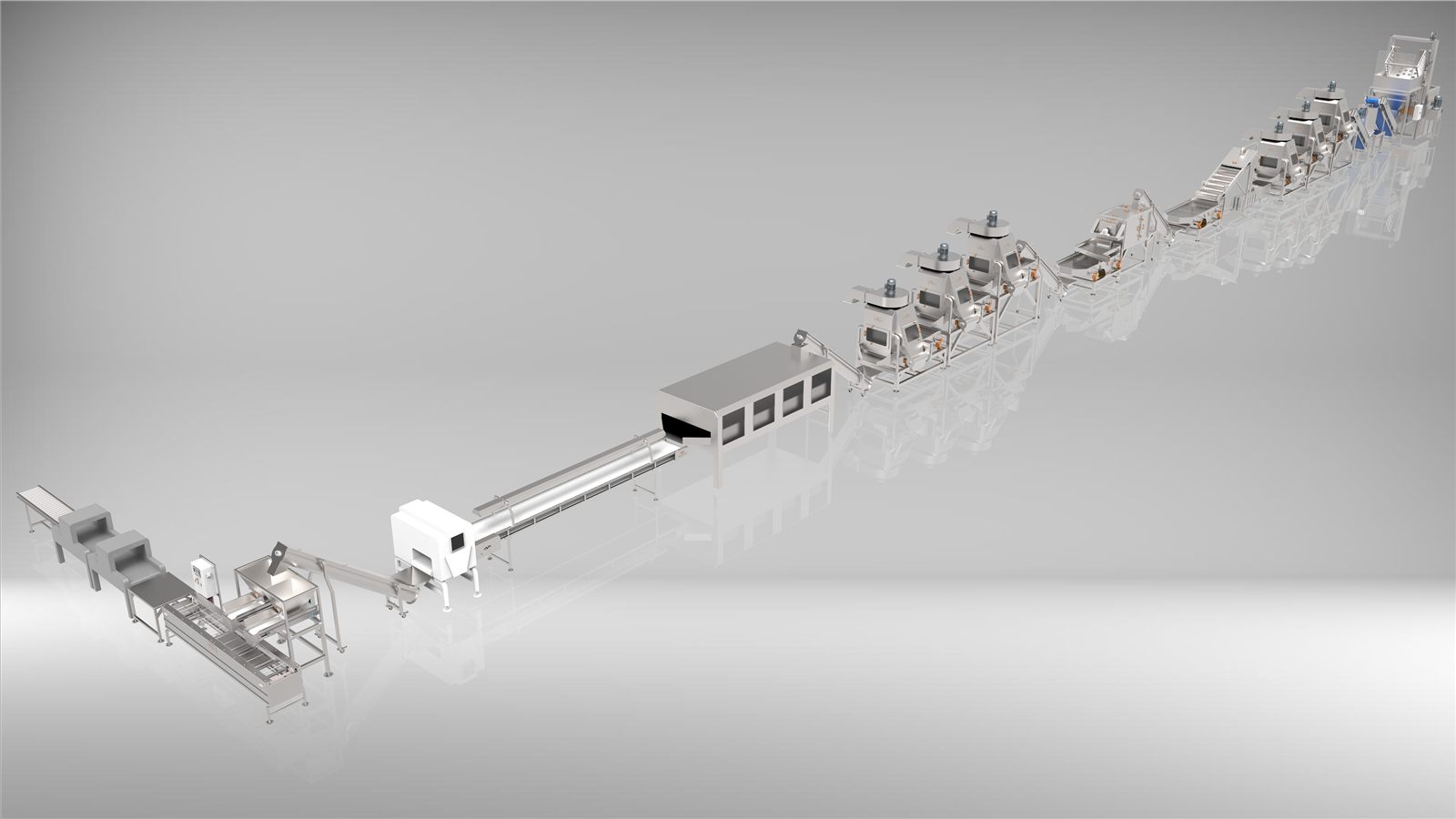
Whether a date line needs a cooling stage depends on which operations the product has been through. If your product leaves an oven or a similar heat step, the tunnel sits at the end of the line, before the packing stations. If there is no heat step, a tunnel may not be needed. We make that call by looking at your process flow, not by assumption. For the general layout of date processing, see the Date Processing Line.
03
What do the insulated covers and the perforated belt do?
The machine has two defining features, and each maps to a concrete job.
- 01Specially designed heat-insulated covers: they preserve cooling efficiency inside the tunnel
- 02Perforated modular belts that do not hold water: air can reach the underside of the product and water or moisture does not collect on the belt
- 03A belt construction that withstands high temperatures and cleans easily: the belt that meets hot product also copes with washdown
The perforated structure works in two ways: air reaches under the product, and water is not retained during cleaning. The covers separate the tunnel environment from the surroundings so that cooling is not wasted.
04
How are material, drive and control defined?
| Topic | Described build |
|---|---|
| Body material | AISI 304 stainless steel; AISI 316 optional depending on the process |
| Product-contact surface | Perforated modular belt; does not hold water, withstands high temperatures |
| Drive | Geared motor |
| Power supply | 380 V / 50 Hz |
| Control | PLC controlled or stand-alone operation |
| Capacity | Defined per project |
The tunnel can work with the other machines through a PLC, or be installed as a stand-alone unit. The choice depends on your existing packing arrangement.
05
What should you expect on cleaning and maintenance?
In a food line a machine is judged by how well it cleans. The tunnel belt is modular, has a perforated surface that does not hold water, and is easy to clean. If hot product is sugary or sticky it may leave marks on the belt, so cleaning frequency and washdown routine vary by product and are set up with the operator during commissioning. We also do not quote a maintenance interval for the geared motor drive; it depends on the plant operating pattern.
It also helps to be clear about limits: the tunnel does not heat, process or grade the product. It only brings hot product to a temperature suitable for packing. Expecting another function from this machine would leave a station missing in the line design.
06
How does the line continue after the tunnel?
Cooled product moves on to the filling stations. For controlled coarse and fine filling into boxes, the Semi-Automatic Box Filling Scale is used; filled boxes then go on to closing. The tunnel outlet height and belt speed are matched to the flow of these stations in the line design.
07
Next step
Tell us which operation your product comes from before packing, the type of packaging and the outlet arrangement you want. We can settle the tunnel position and size together on the quote page. Capacity and cooling time vary by project.