A crate tipping machine only does its job if the product leaves the crate undamaged and arrives at the next station at a pace that station can take. Both depend on three things you can check before ordering: the tipping motion, the rate at which product is released, and how well the machine fits the equipment that receives it. Here is how to look at each.
01
What actually damages product during crate emptying?
Soft, sticky or delicate dried fruit is hurt by drops and by pile-ups, not by the tipping itself. Product that falls a long way onto a hard edge bruises or splits. Product that is released all at once piles up at the receiving point and is crushed under its own weight and by the conveyor starting against a full load. Manual emptying has the same problems in a worse form, because the angle and speed change with every operator and every crate.
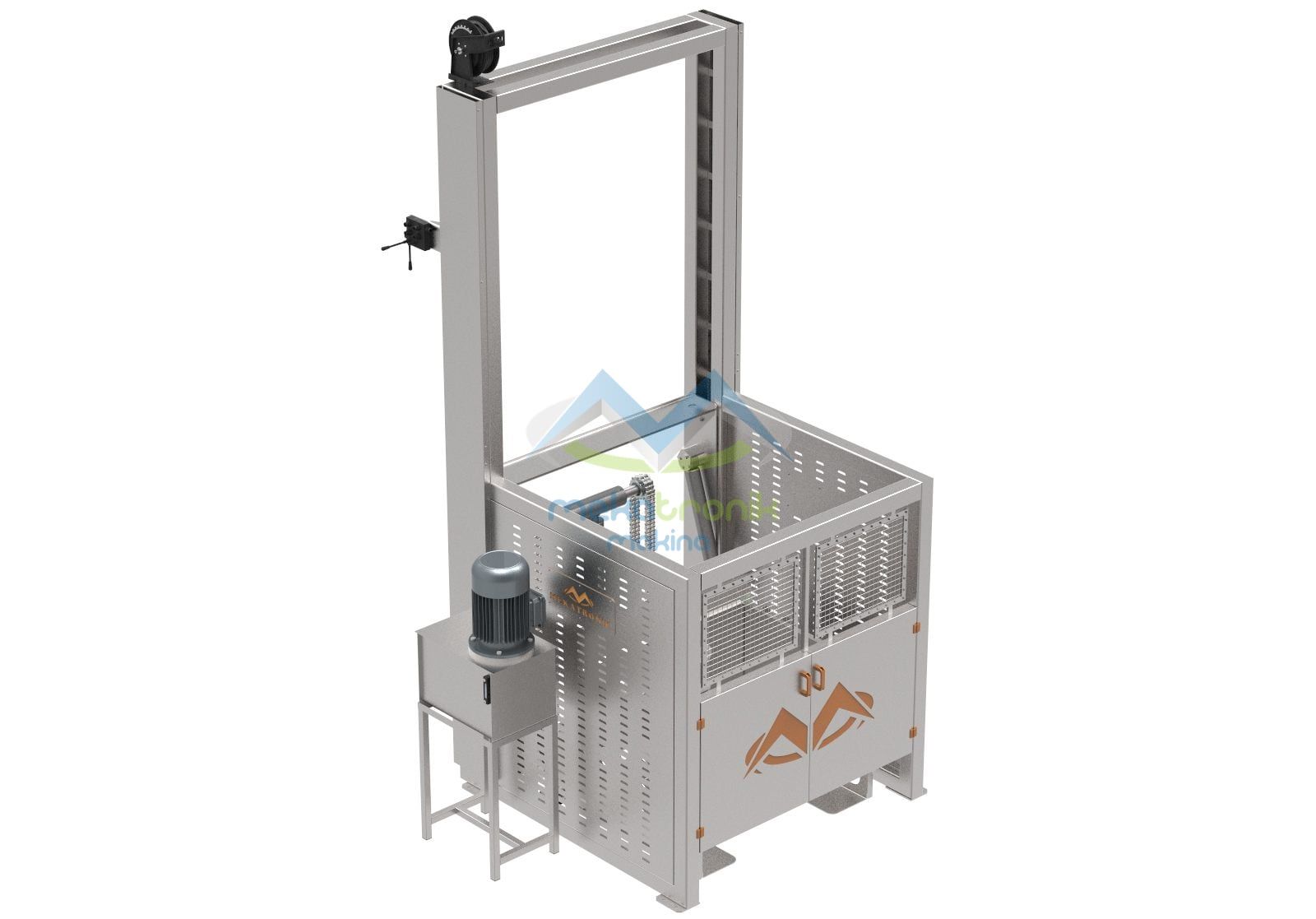
The Crate Tipping Machine is built around a controlled motion. The full crate sits on the platform, the hydraulic lifting system raises it, and the product empties when the set tipping angle is reached. The empty crate then returns to its starting position for the next cycle.
02
How does the tipping motion protect the product?
Hydraulic lifting gives a smooth, continuous movement instead of the jerk of manual lifting. The crate is carried up in a controlled motion, so the product slides toward the opening rather than being thrown out.
The tipping angle is adjustable according to the product. This matters more than it sounds. A free-flowing product needs less tilt to empty than one that clumps or clings to the crate walls, and a larger tilt than necessary only increases the speed at which product leaves. Set the angle for the product you actually run, and confirm it at commissioning with real crates.
The cycle runs in a fixed order, which is what keeps results repeatable:
- 01The full crate is placed on the platform by forklift or pallet truck.
- 02The operator starts the tipping cycle from the control panel.
- 03The hydraulic system raises the crate in a controlled motion.
- 04At the set angle, the product empties into the feed hopper or conveyor.
- 05The empty crate returns to its starting position.
03
How is the feed rate controlled?
A crate holds a lot of product, and the receiving station can usually accept only part of it at a time. So the useful question is not how fast the crate can be emptied, but how evenly the product reaches the line. Emptying into a dosing hopper smooths this out, because the hopper takes the batch and releases it to the conveyor at the pace the line sets.
The machine can be integrated with line automation as an option, which lets the tipping cycle follow the state of the equipment downstream instead of running on its own rhythm. Without that, the operator starts each cycle from the panel and judges the moment by eye. Both approaches work. Which one fits depends on how stable your line speed is.
Cycle time and throughput are not quoted as general figures here. They depend on the product, the crate and the line, and the cycle time is measured jointly during commissioning.
04
Does the machine fit the equipment that receives the product?
Fit is mostly about the hand-over point. The product empties into a feed hopper or onto a conveyor, so the opening, the height and the receiving surface have to match the crate and each other.
| Check | Why it matters |
|---|---|
| Crate type and dimensions | Plastic, wood or metal crates are handled; a platform for different crate dimensions is an option |
| Receiving point | Feed hopper or conveyor; the product should not have a long free fall onto it |
| Tipping angle | Adjustable to the product, set and confirmed at commissioning |
| Line connection | Manual start from the panel, or integration with line automation |
| Space for crate handling | Forklift or pallet truck access to the platform, and a place for the empty crate |
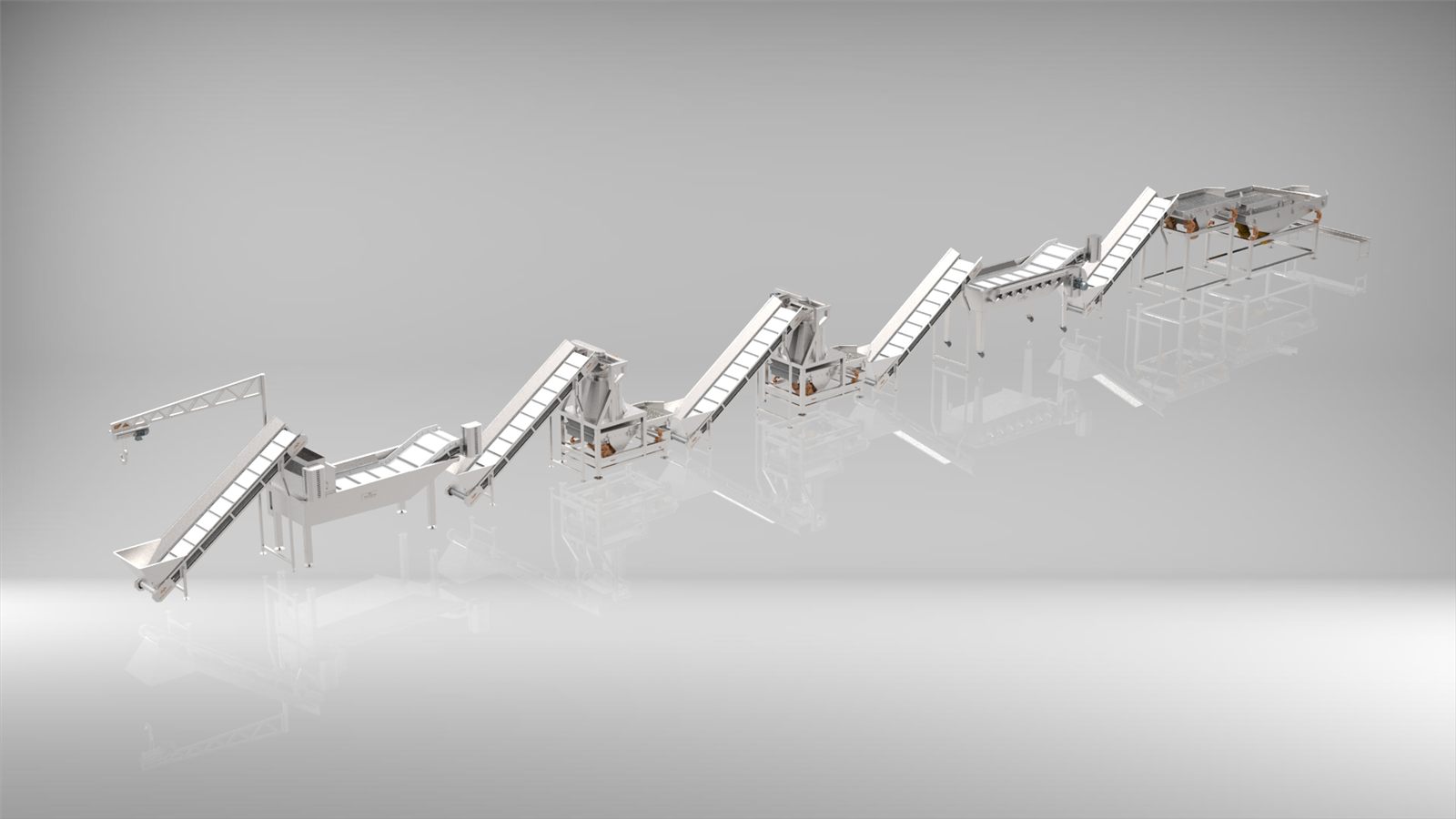
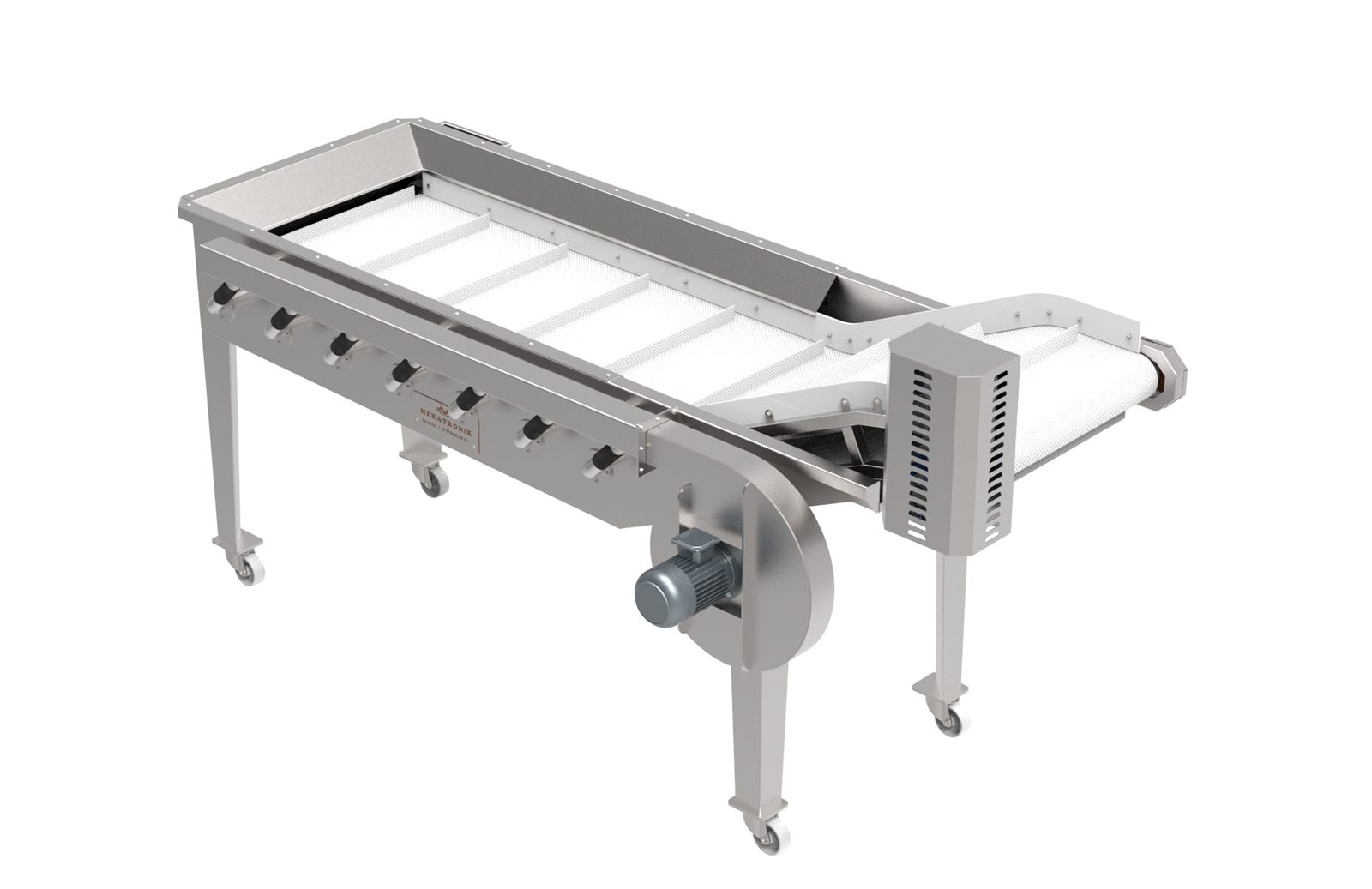
On a typical line, the product continues to a Feeding Conveyor, which carries it onward from the hopper, or to a Z-Type Modular Conveyor when it has to be lifted to a higher level. The tipping machine does not replace the conveyor's job. It hands product over cleanly so the conveyor can do its own.
05
What should be specified in the order?
- 01Crate type and dimensions you use today, and any you may add later.
- 02The product and how it behaves in the crate: loose, sticky, layered.
- 03What receives the product, and the height and shape of that opening.
- 04Whether the tipping cycle should be started by hand or tied into the line.
- 05Surfaces: product-contact parts are AISI 304, with AISI 316 optional depending on the process.
- 06Whether you want AISI 304 across the whole body; the hydraulic unit, sensors and electrical equipment are excluded from that.
Safety is part of the same specification. The machine has a safety interlock system, so the front covers disable it when opened, together with safety sensors and an emergency stop button. Maintenance points are accessible. Exact values vary by project and are finalised in the quote.
06
Next step
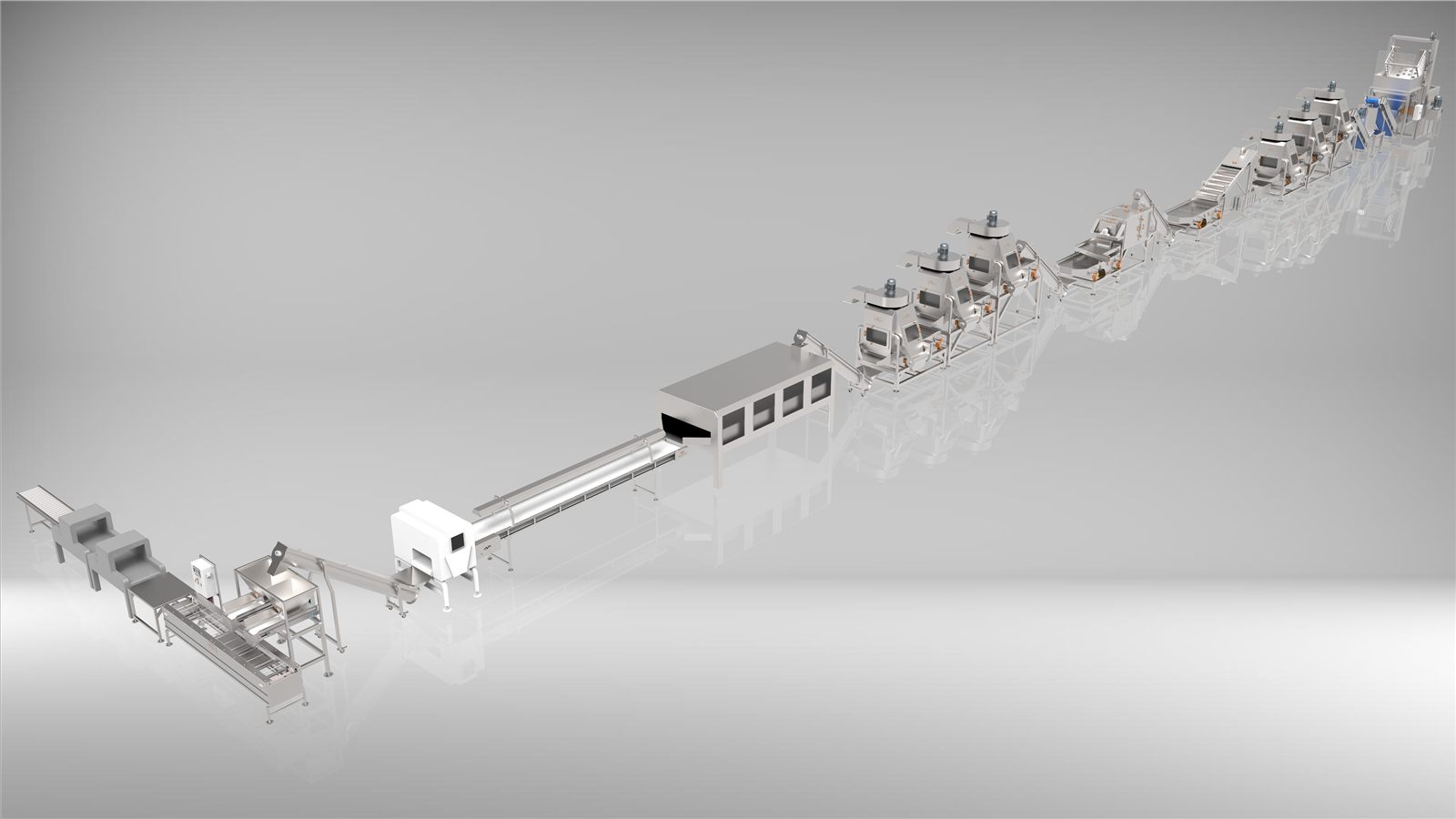
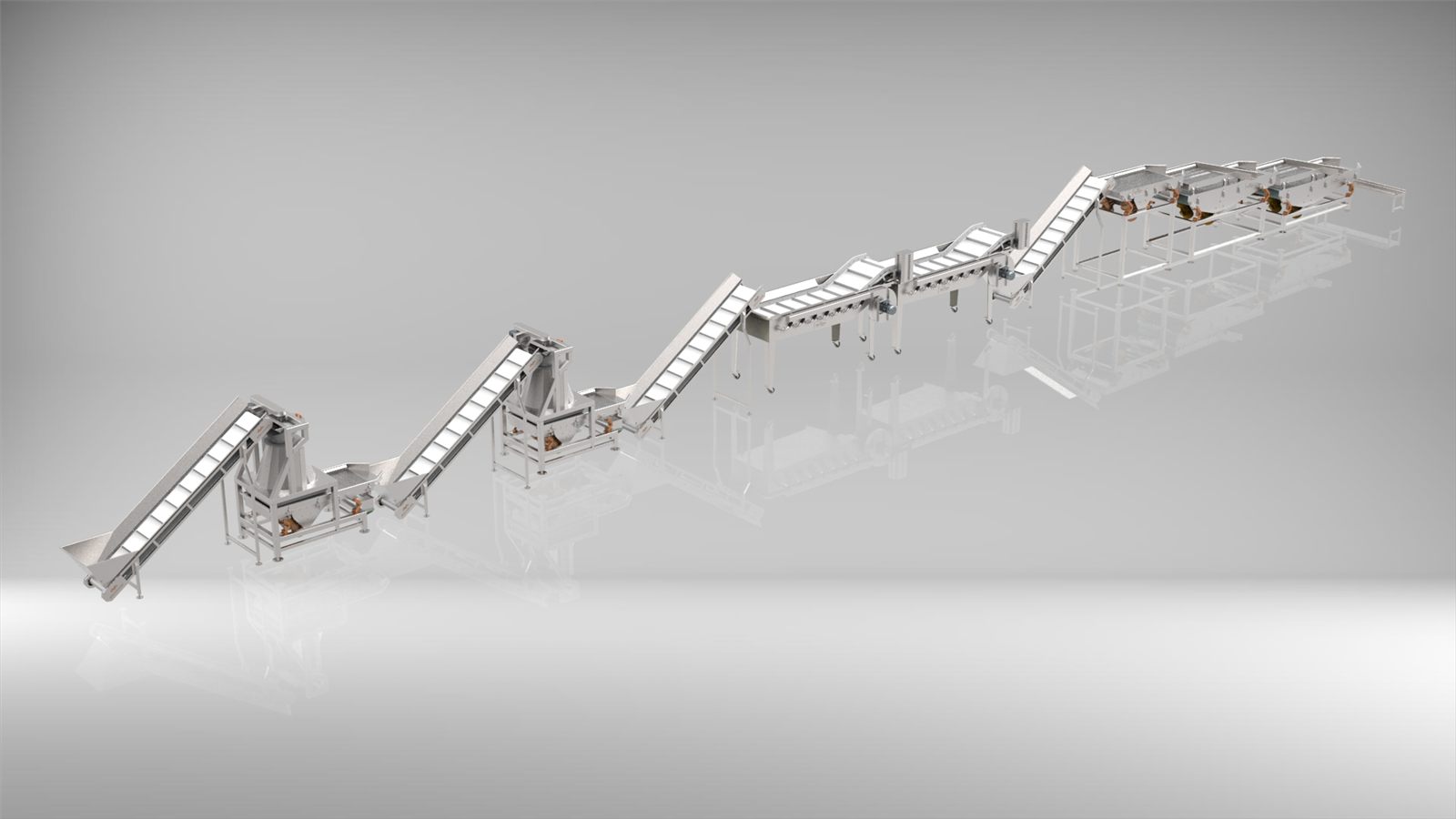
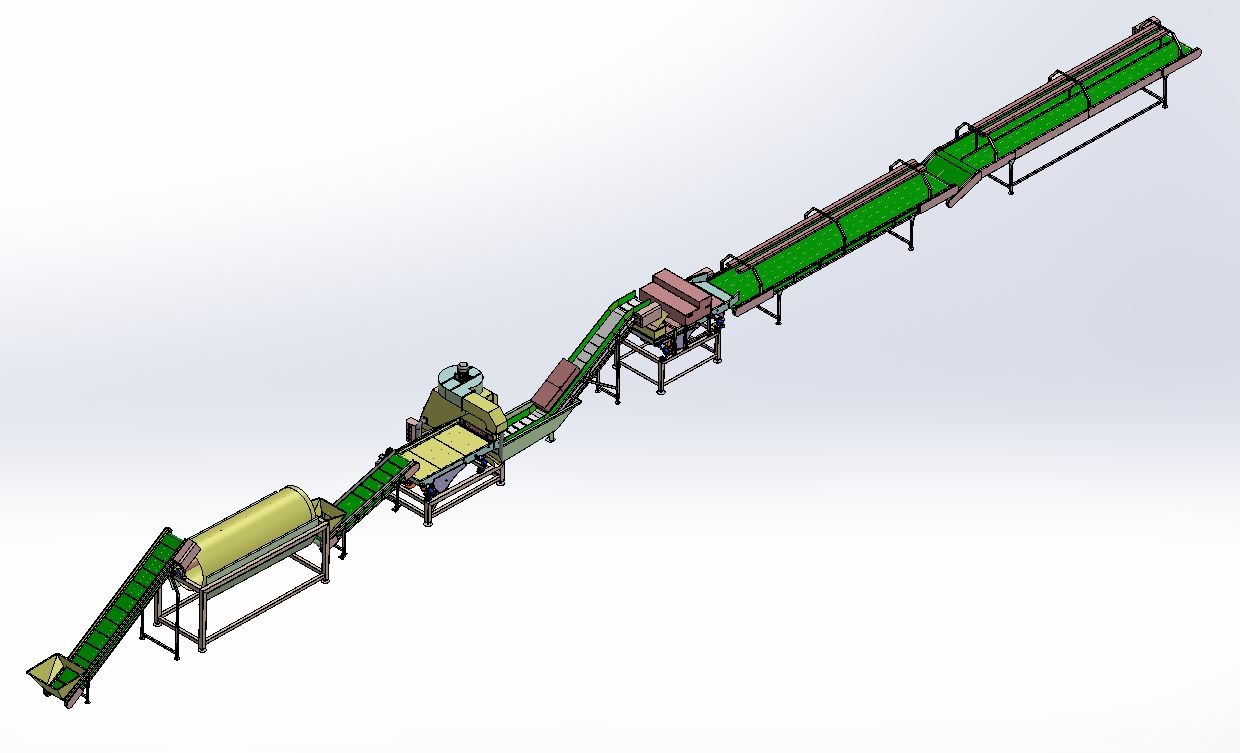
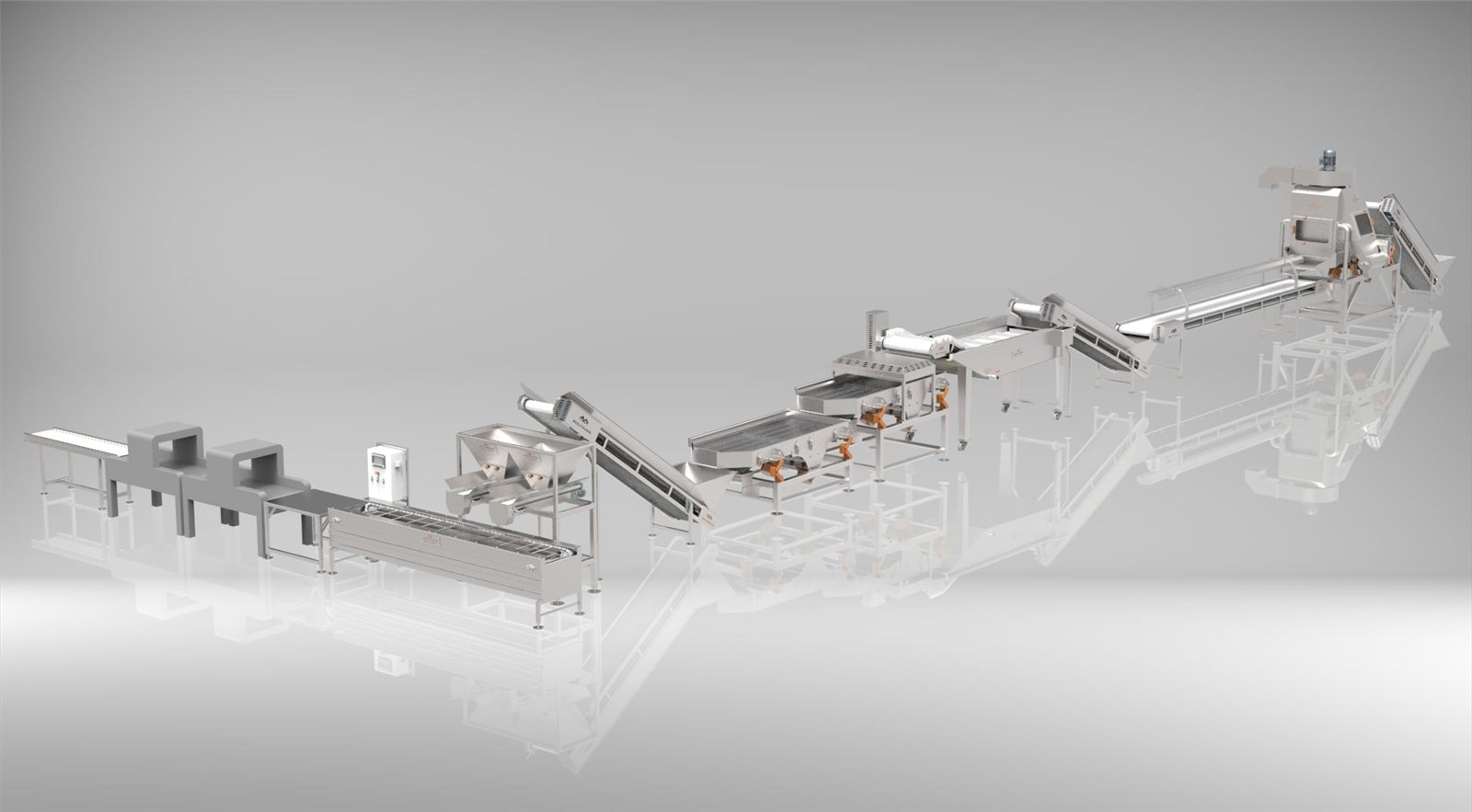
To size a crate tipping machine for your line, send us your product, the crate type, the target capacity and the receiving equipment on the quote page. For a full picture of where it sits among the other stations, see the Raisin Processing Line, where crate tipping is the first station at the head of the line.