In a dried fruit plant the product usually arrives in crates, and the efficiency of the line starts with how those crates are emptied. Our Crate Tipping Machine tips crates of standard dimensions in a controlled hydraulic motion and passes the product to the next station. Because it sits at the head of the line, it sets the pattern of flow for everything behind it.
01
What does a crate tipping machine do and how does the cycle run?
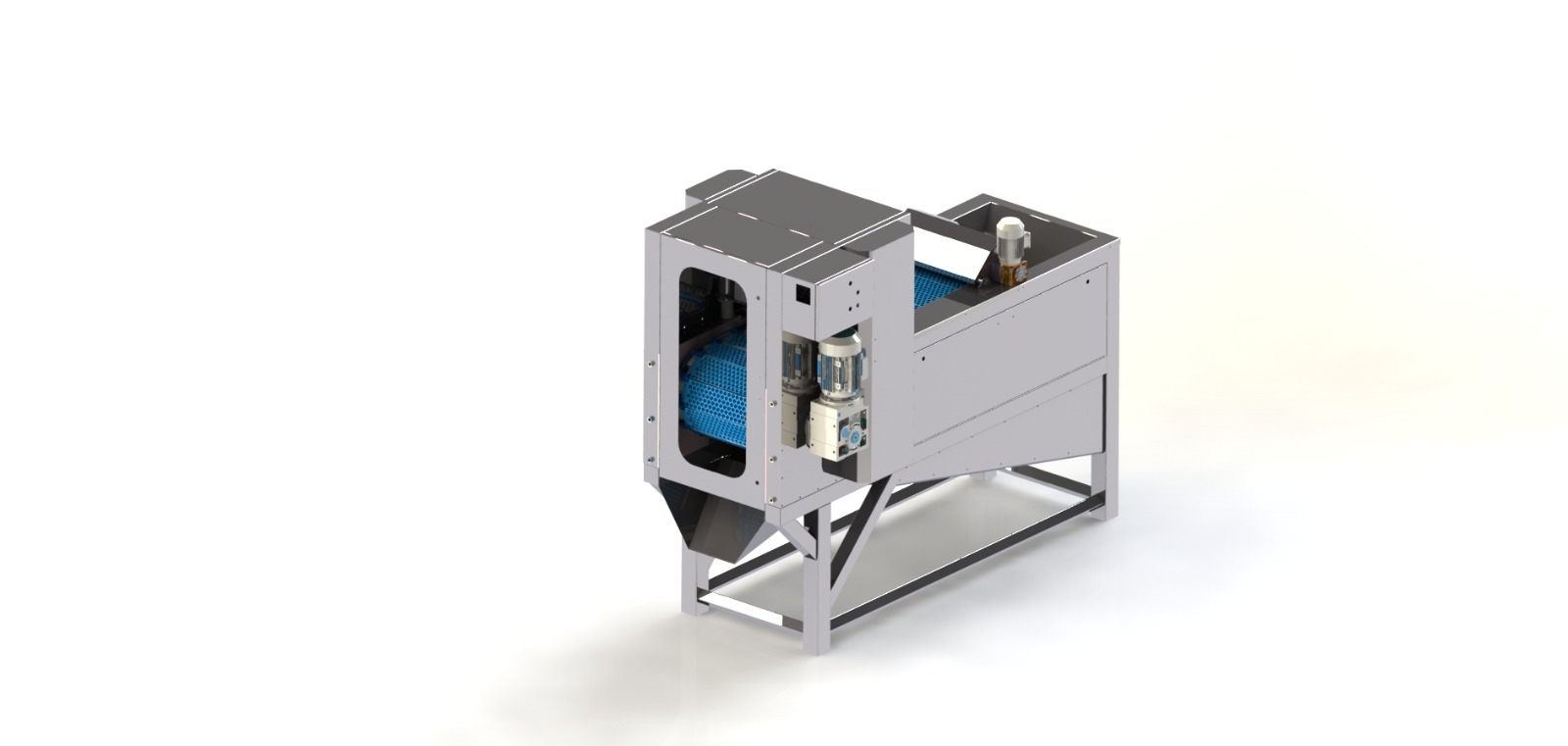
The job is simple to state: empty a full crate into the feed hopper or conveyor without manual transfer. The cycle runs as follows.
- 01The full crate is placed on the machine platform by forklift or pallet truck
- 02The operator starts the tipping cycle from the control panel
- 03The hydraulic lifting system raises the crate in a controlled motion
- 04When the set tipping angle is reached, the product empties into the feed hopper or conveyor
- 05The empty crate returns to its starting position, ready for the next cycle
The tipping angle is adjustable to the product, up to roughly 135 degrees. Adjustability matters because a free-flowing product and a sticky, lumpy one do not discharge at the same speed or angle.
02
Why does the first station shape the whole line?
The first station decides what every later station sees. If crates are emptied by hand or irregularly, product reaches the line in bursts and piles; washing, screening or cutting stations then have to absorb that irregularity. Hydraulic lifting speeds up crate emptying compared with manual transfer. We do not quote a cycle time, because it depends on the crate type and the product; it is measured jointly during commissioning.
Product leaving the crate often comes out in lumps, which is why the Agitated Dosing Hopper normally follows the tipping machine. Its agitators break the lumps into smaller pieces so the product transfers smoothly onto the conveyor belt. The two machines complement each other and are best specified together.
03
Which crates does it handle?
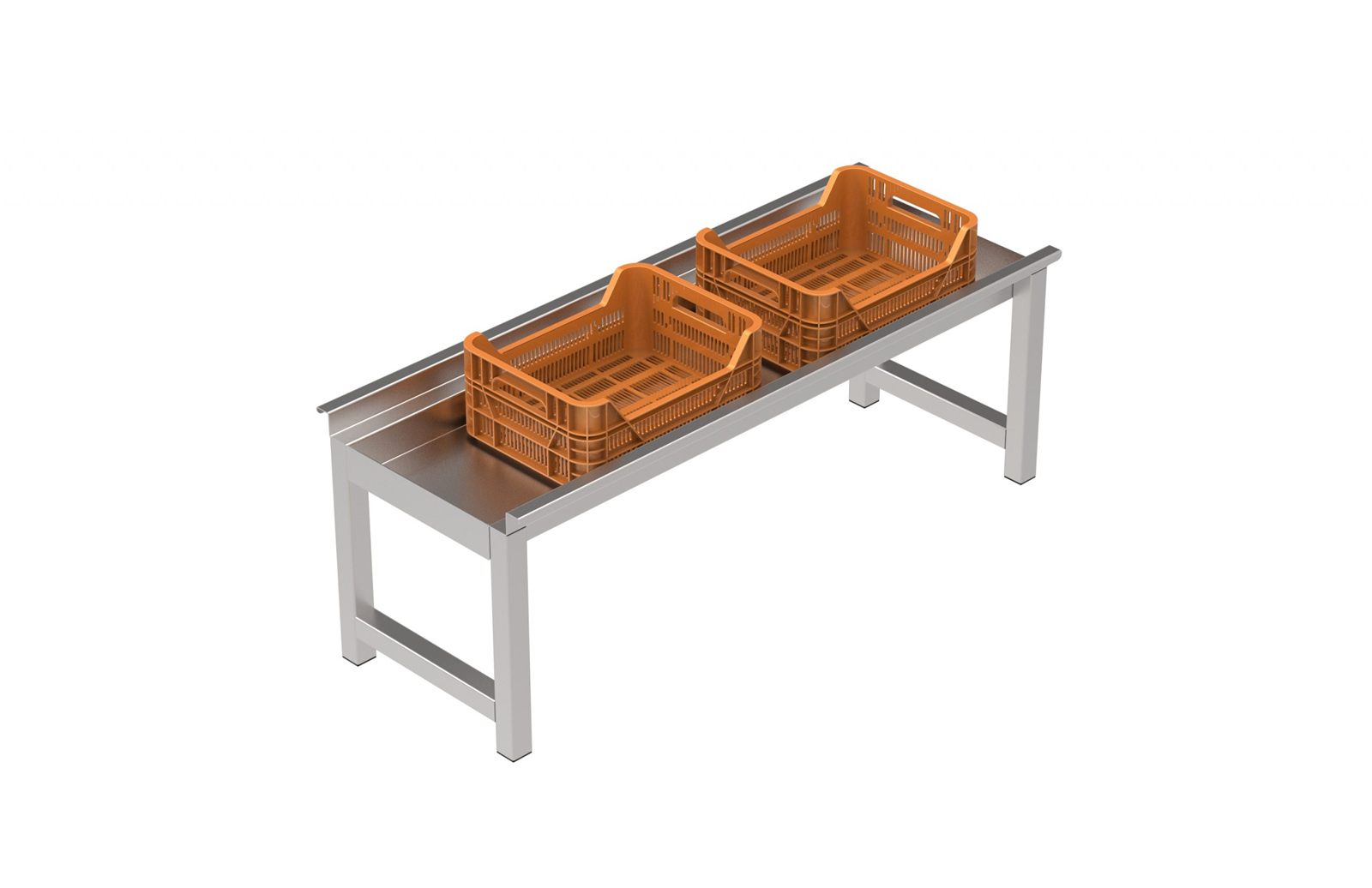
The machine is specified for plastic, wooden or metal crates. If a plant uses more than one crate size, a platform suited to different crate dimensions is available as an option. This is one of the first project questions: until crate dimensions and material are settled, the platform cannot be finalised.
| Project question | What it decides |
|---|---|
| Crate type and size | Platform structure, additional platform if needed |
| Product flow behaviour | Tipping angle and discharge arrangement |
| Discharge target (hopper or conveyor) | Position of the machine in the line |
| Control preference | PLC controlled or manual operation |
| Line automation | Need for line automation integration |
04
How are materials, safety and maintenance handled?
The chassis is AISI 304 stainless box profile and product-contact surfaces are AISI 304 stainless steel, with AISI 316 optional depending on the process. The stainless claim does not cover the entire machine: the hydraulic power unit, sensors and electrical equipment sit outside the stainless body. If AISI 304 across the whole body is wanted, that is offered as an option, again excluding the hydraulic unit, sensors and electrical equipment.
- 01Safety interlock system and safety sensors
- 02Front covers that disable the system when opened, keeping the operator away from moving parts
- 03Emergency stop button
- 04Accessible maintenance points and an easy-to-clean structure
Safety details are settled per project within the framework of compliance with CE conformity requirements. With a hydraulic unit, the maintenance plan is also discussed at project stage; accessible maintenance points are part of the design, not an afterthought.
05
Which lines include the crate tipping machine?
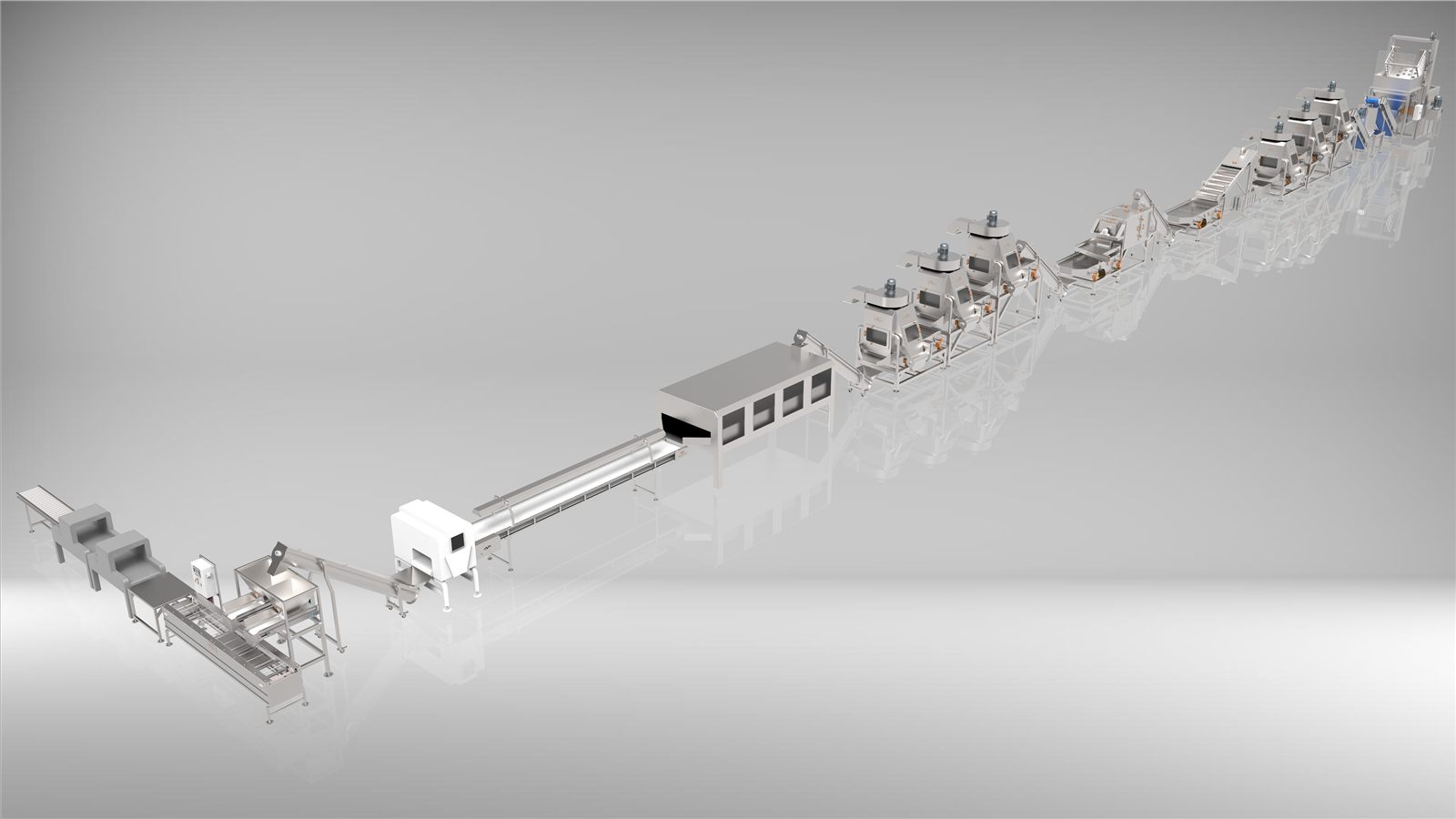
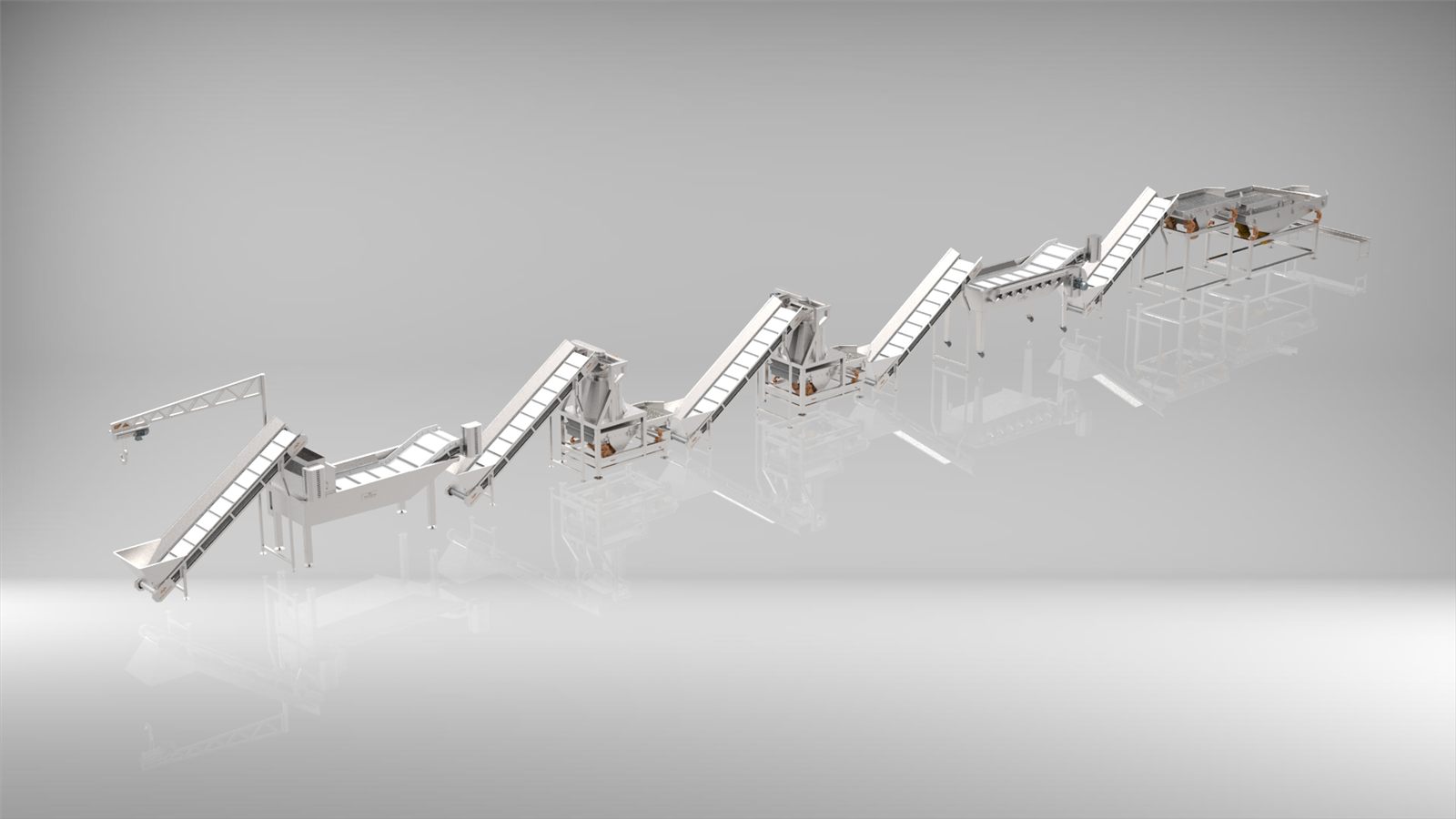
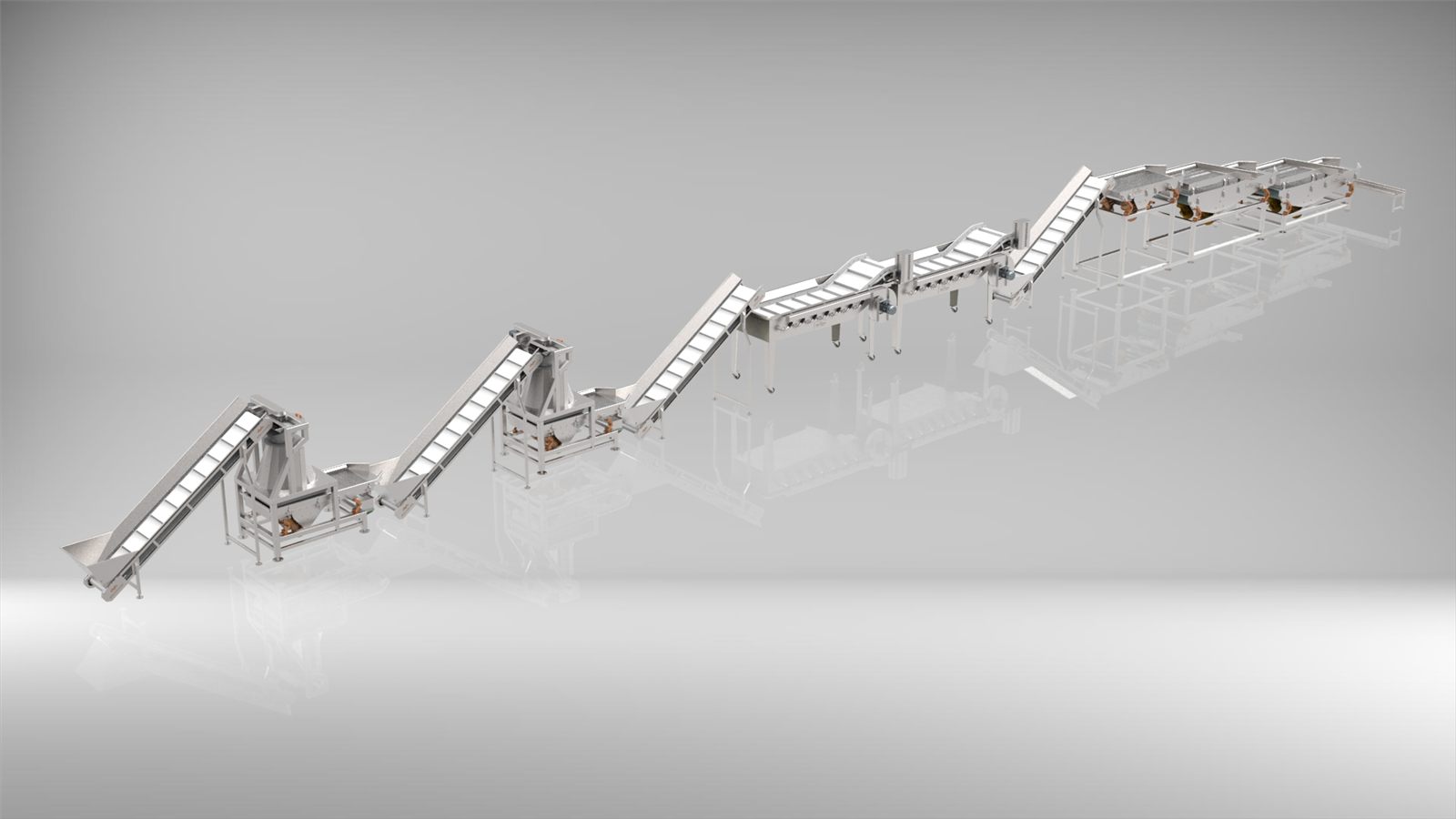
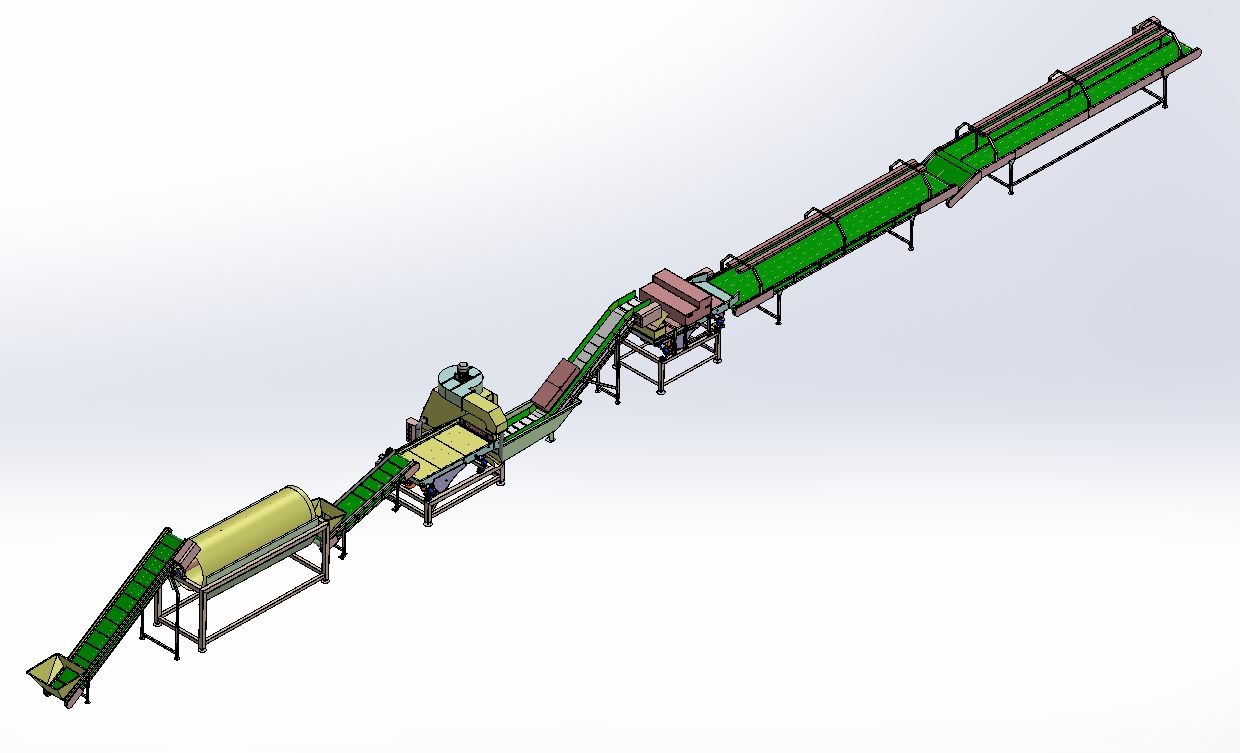
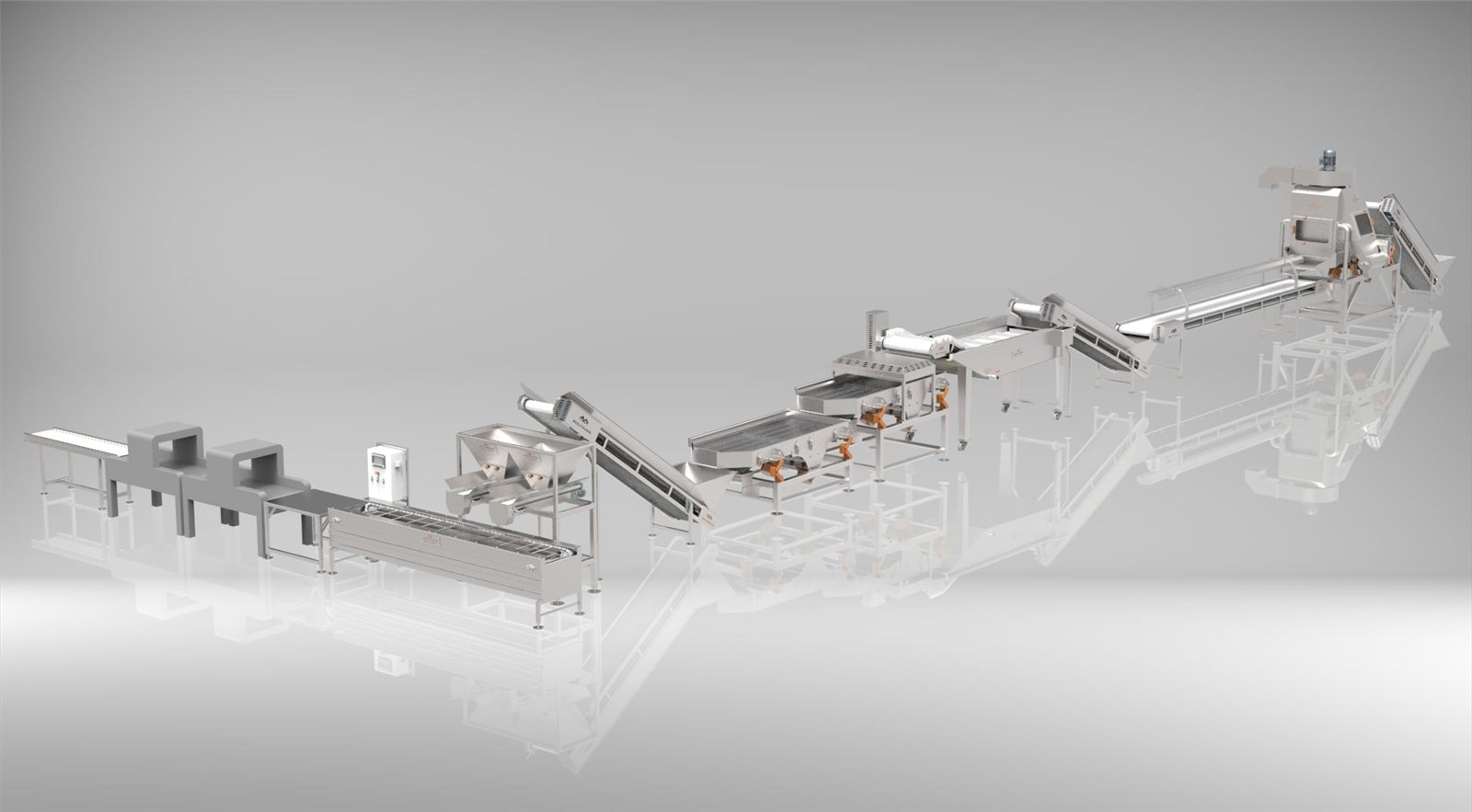
The machine is presented within the Raisin Processing Line. Raisins arrive in crates and are processed in bulk, so controlled feeding at the head of the line supports steady operation of the washing and packing stations. It can also be specified as a stand-alone machine for another product; such decisions depend on the product and the plant layout.
06
Next step
Note your crate dimensions, daily crate count and where the product goes next (hopper or conveyor), and send them to us. We can settle the options and the machine position in the line together on the quote page. Capacity and cycle time vary by project, and exact values are fixed in the quotation.