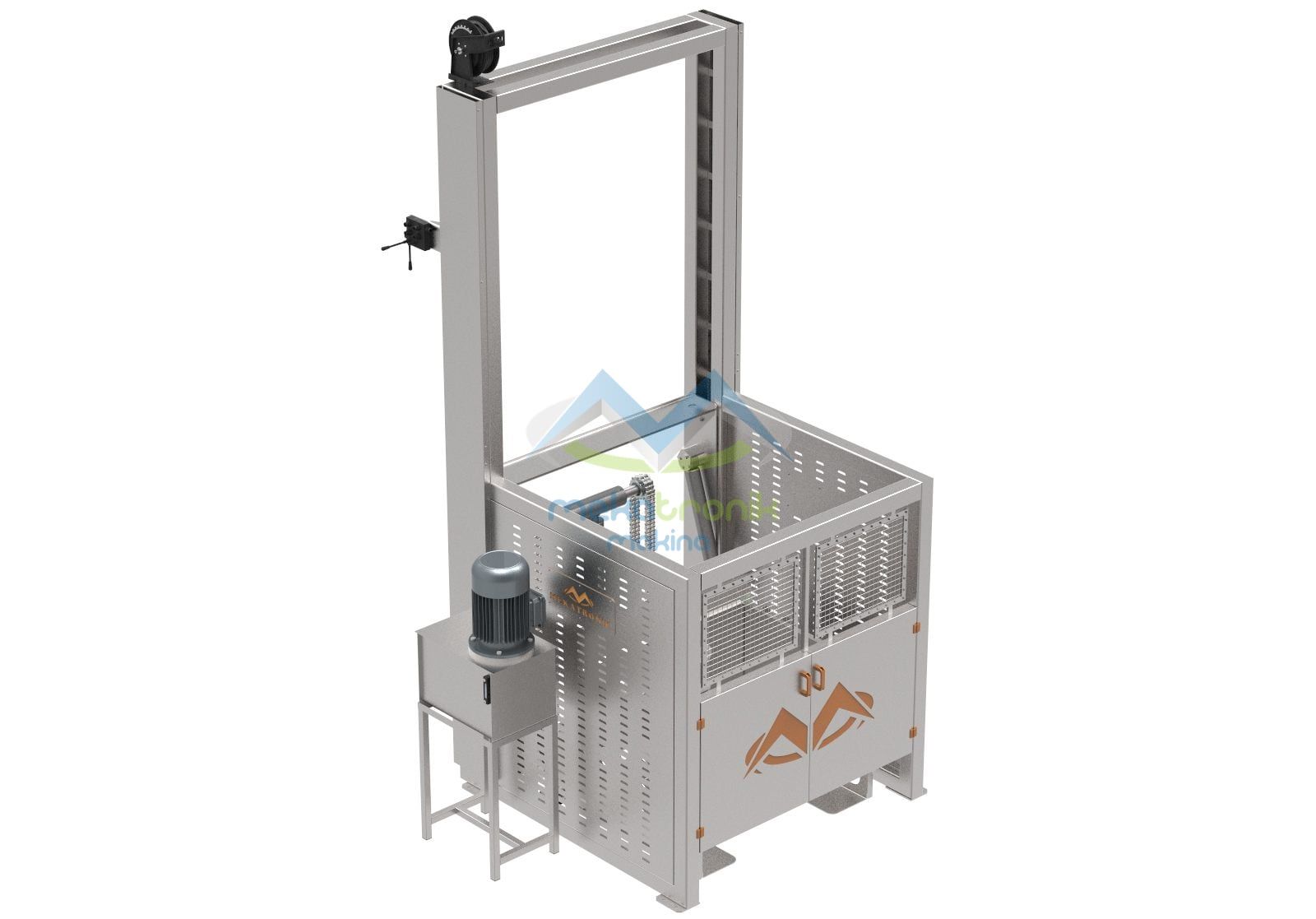
A crate tipping machine empties the full crate, but the job does not end there: the empty crate has to leave the head of the line. If that flow is not planned, empty crates pile up around the platform and tipping becomes the slowest station on the line. Space and staffing for a Crate Tipping Machine depend on the route of the empty crate as much as on the machine itself.
01
Where does the crate go after it is emptied?
At the end of the cycle the empty crate returns to its starting position on the machine, ready for the next cycle. Someone then has to take it off the platform and someone else has to place the next full crate. If the destination of the empty crate is not settled, those two movements wait for each other.
The empty crate follows a different route in each plant: it may be sent back to the grower or supplier, washed and reused, or kept at the end of the line to receive the finished product. The route chosen decides how much floor the empty crates occupy at the head of the line.
02
How is floor space set aside?
A layout drawing that only shows the footprint of the machine is incomplete. Around the platform, each of the following areas needs its own space.
- 01Full crate waiting area: where crates brought by forklift or pallet truck wait their turn
- 02Forklift or pallet truck manoeuvring lane: room to turn and back out when placing a full crate on the platform
- 03The machine platform and the clearance needed for the tipping motion
- 04Empty crate collection area: where crates taken off the platform are stacked
- 05Exit route for empty crates: arranged so that it does not cross the full crate route
The most common layout mistake is letting full and empty crate traffic cross in the same aisle. If one forklift both brings full crates and removes empty ones, the two jobs wait for each other. Where possible the two flows are given separate directions; where not, the order of work is fixed as a written rule from the start.
03
How is the work divided between people?
The machine tips by hydraulic lifting and the operator starts the cycle from the control panel, yet there is more than one task at the head of the line. Separating the tasks early shows who is waiting for whom.
| Task | What it involves | Question to ask when planning |
|---|---|---|
| Full crate carrier | Brings the full crate to the platform by forklift or pallet truck | How far is the waiting area from the platform, and is the route free of other traffic? |
| Tipping operator | Starts the cycle from the control panel and watches the discharge | Can the operator see both the panel and the discharge point? |
| Empty crate handler | Takes the emptied crate, stacks it or sends it to washing | Is the collection area close to the platform and the exit route clear? |
| Line-head observer | Watches that the product flows steadily into the hopper or onto the conveyor | Who steps in when the product lumps or blocks? |
In a small plant these tasks may be combined in one person; what matters is that each task is defined. If the same person drives the forklift and watches the panel, carrying of full crates stops during tipping. The number of people needed depends on the daily crate count and the layout, so we do not quote a fixed headcount.
04
How does empty crate flow affect the pace of the line?
The job of the tipping machine is to give the stations behind it a steady flow; it does not need to be the fastest station on the line. When empty crates build up, that steadiness is lost: the next full crate cannot be placed because the platform is not clear, and product reaches the line in bursts.
We do not quote a cycle time because it varies with crate type and product; it is measured jointly during commissioning. For planning, it helps to observe empty crate removal in the same trial. If the tipping cycle is short and removal is slow, the bottleneck is the empty crate flow, not the machine.
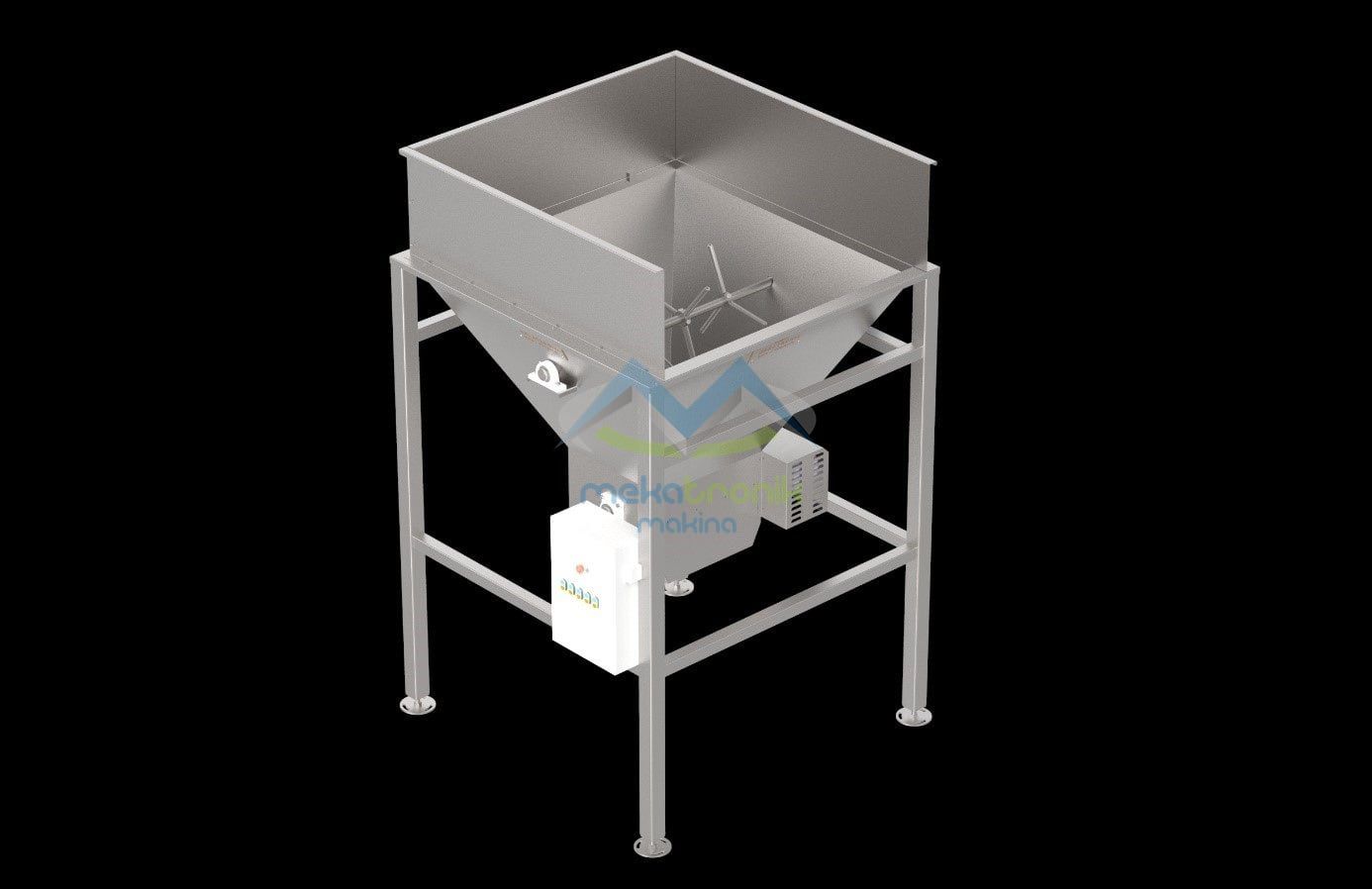
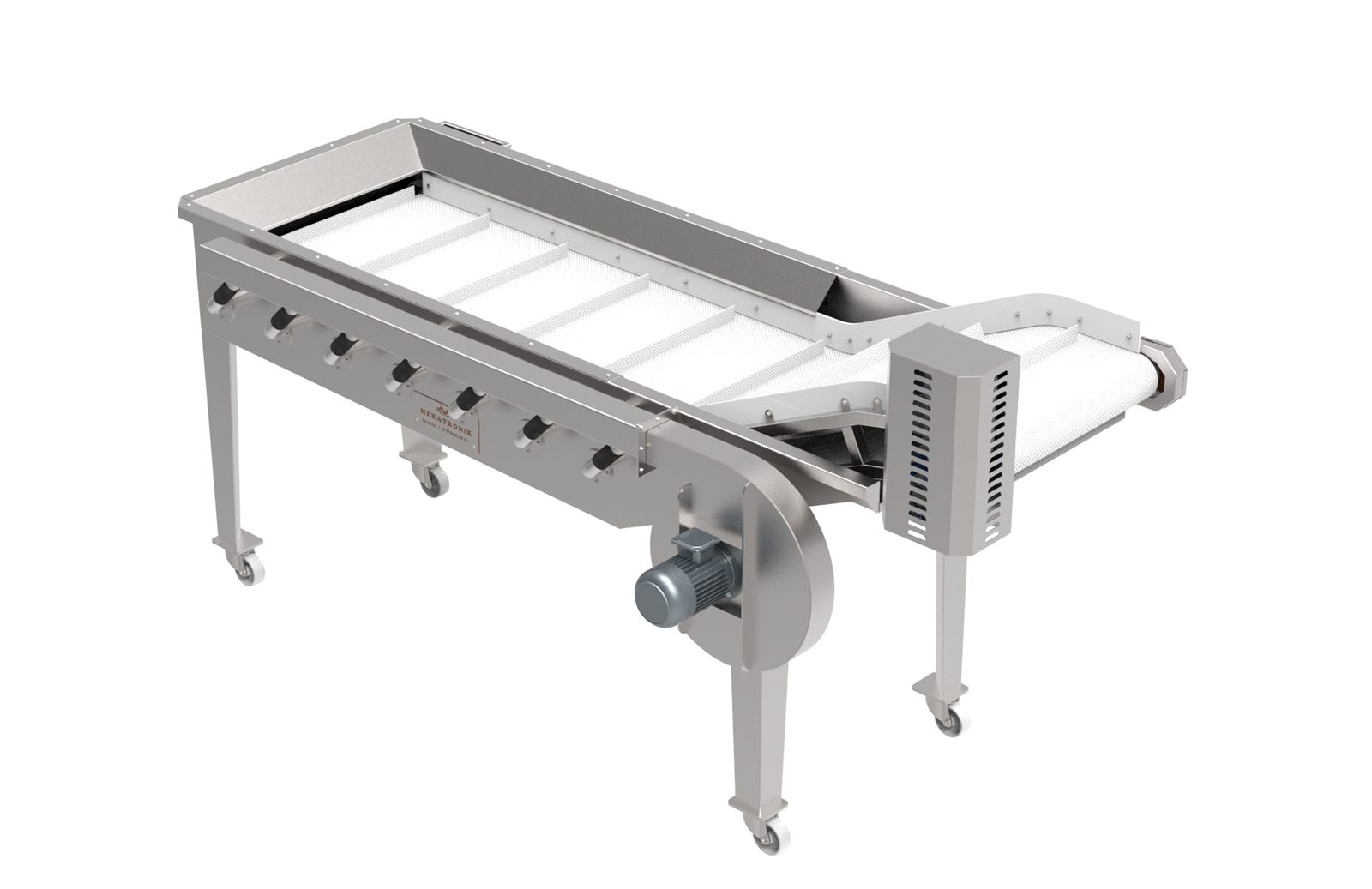
Product leaving the crate often comes out in lumps, so the machine is usually considered together with the Agitated Dosing Hopper, whose agitators break lumps apart and feed the conveyor evenly. The position of the hopper relative to the tipping platform should be chosen so that it does not clash with the empty crate route.
05
How does the crate material change the empty crate area?
The machine is specified for plastic, wooden or metal crates. The three materials do not stack, carry or clean in the same way, so the size and arrangement of the empty crate area is considered separately for each. If a plant uses more than one crate size, a platform suited to different crate dimensions is available as an option, and the empty crate area has to cope with that variety too.
On the safety side, the machine has a safety interlock system, safety sensors and front covers that disable the system when opened. Beyond these, a work rule should state when the empty crate handler may step onto the platform. Details are settled per project within the framework of compliance with CE conformity requirements.
06
On which line is this planning done?
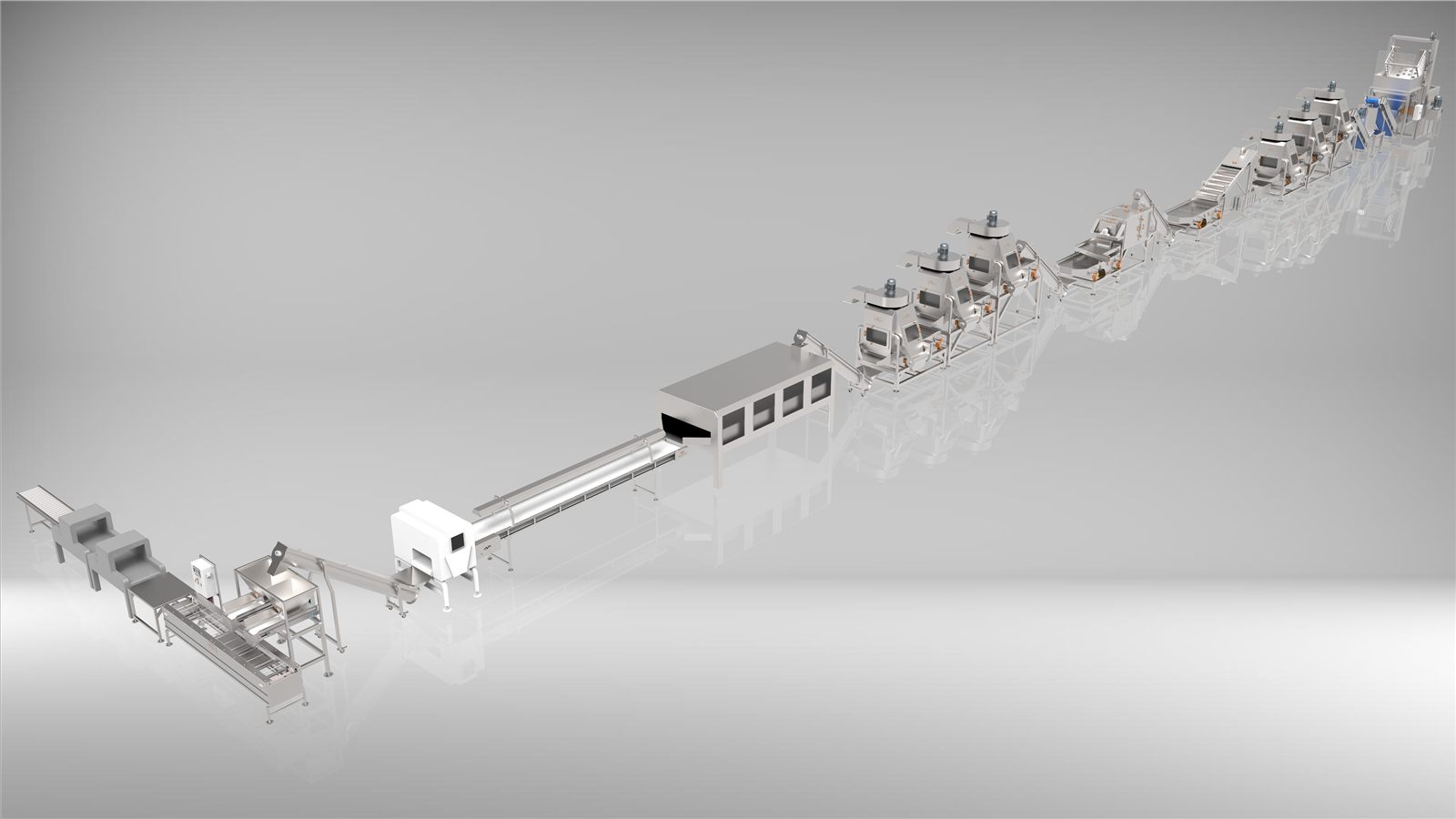
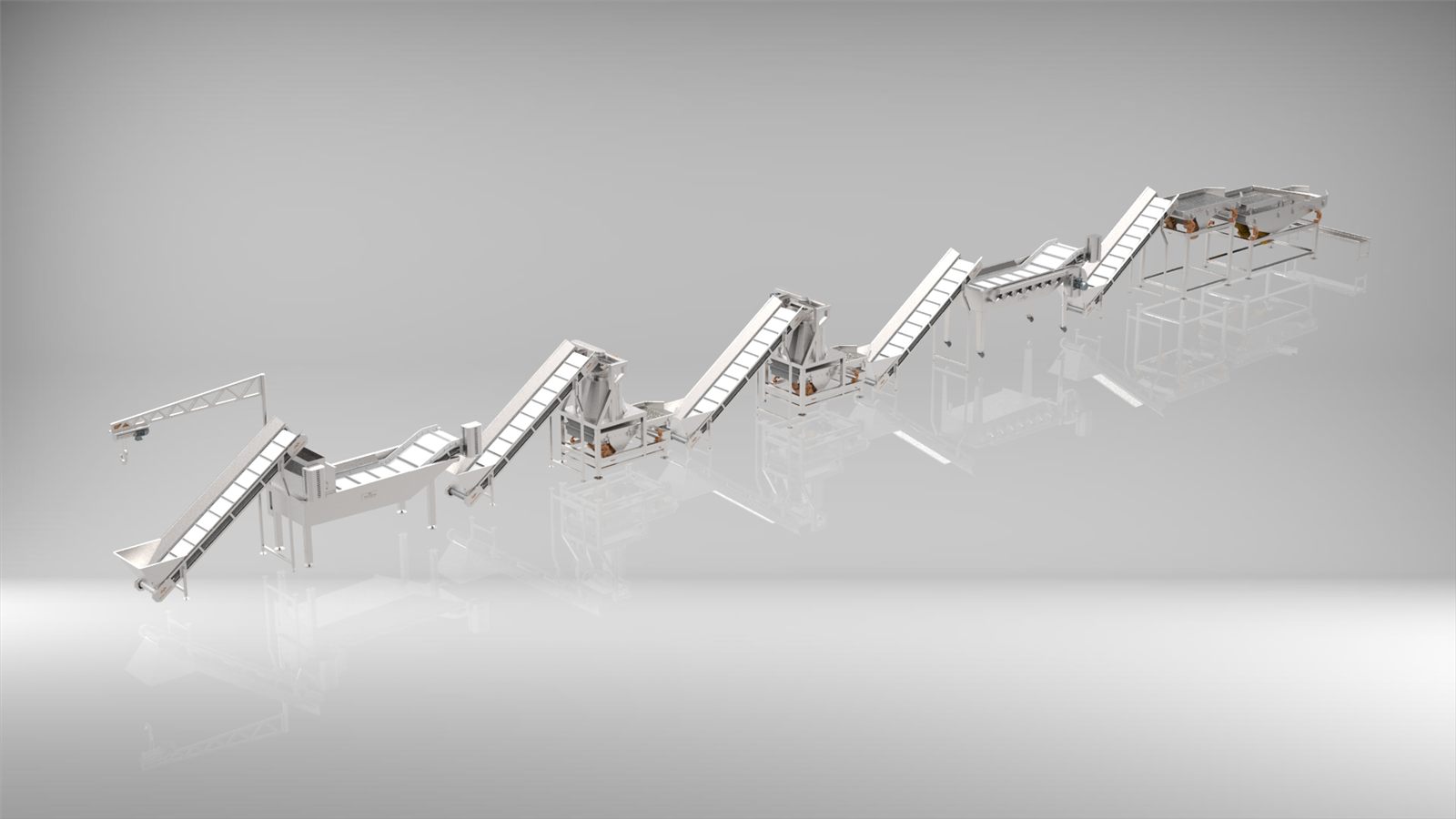
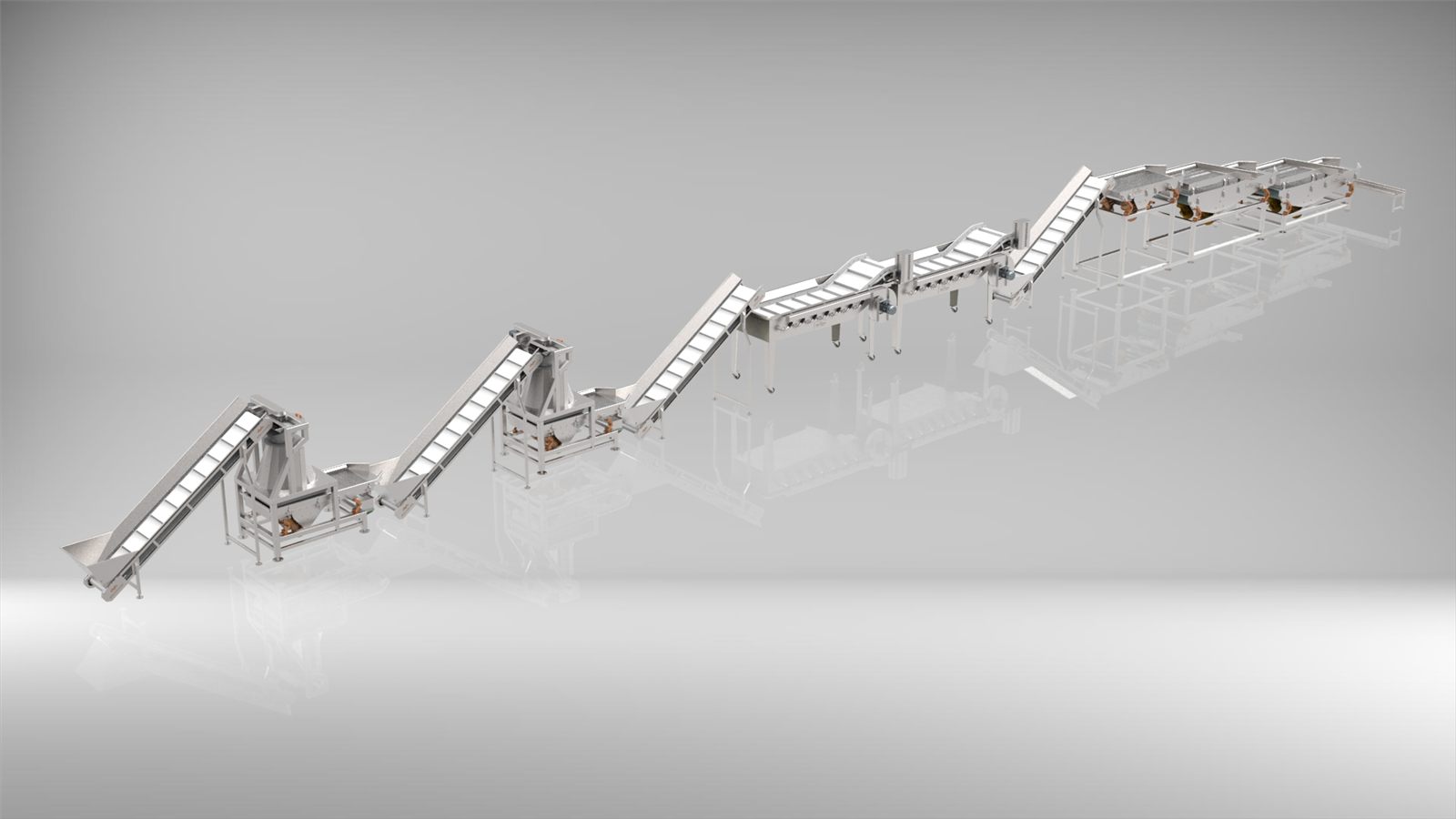
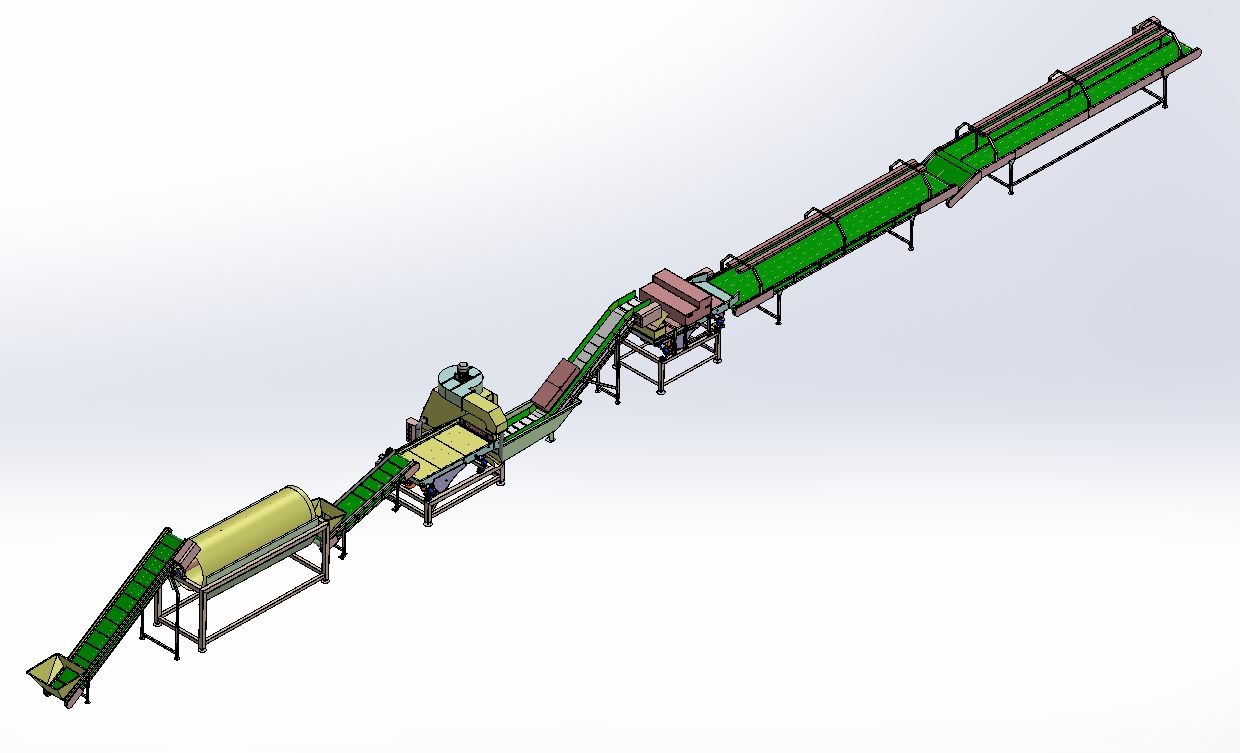
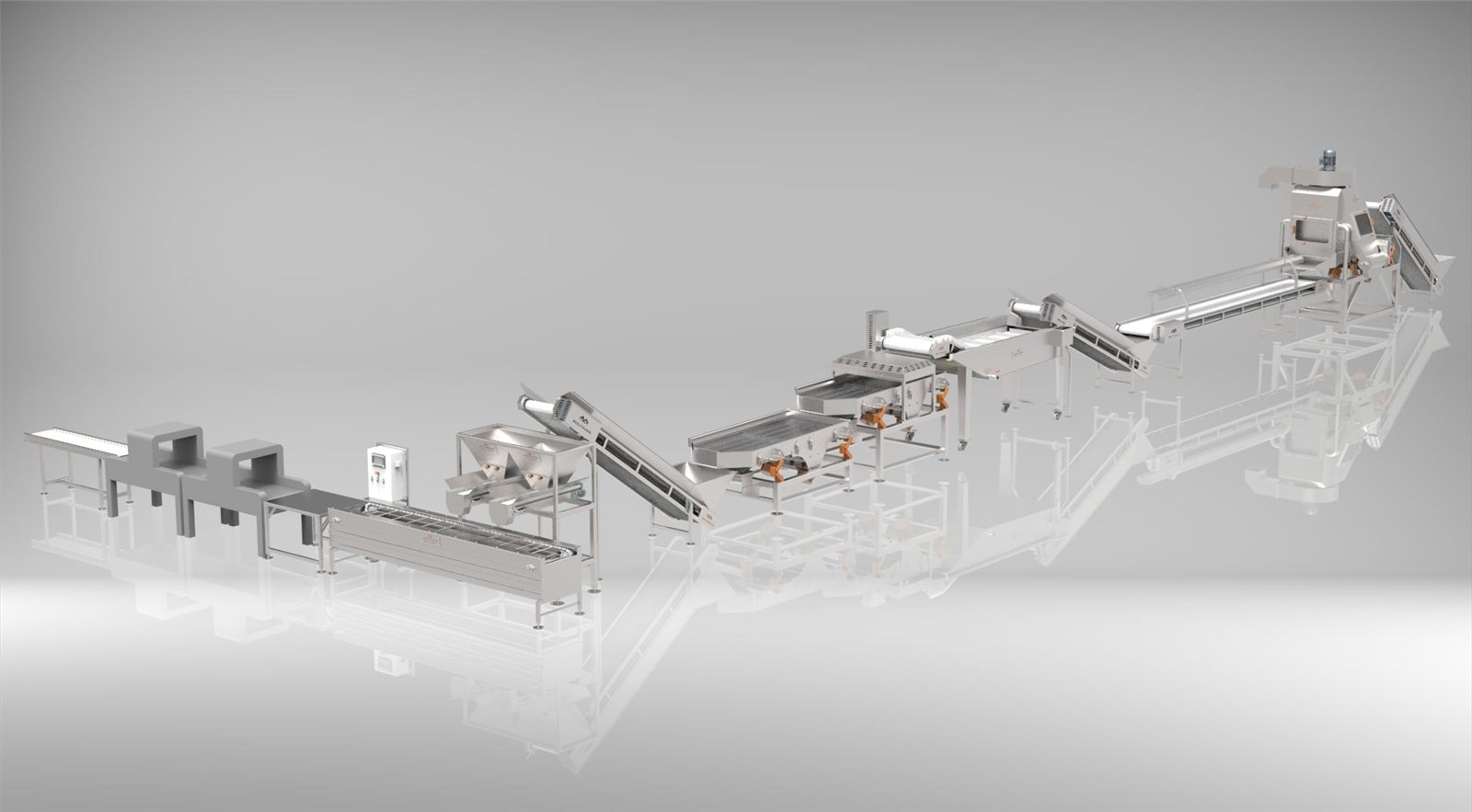
The crate tipping machine is presented within the Raisin Processing Line. Product arrives in crates and is processed in bulk, so the empty crate flow starts right at the head of that line. It can also be specified as a stand-alone machine for other products; such decisions depend on the product and the plant layout.
07
Next step
Note the crate material and dimensions, the daily crate count, where empty crates will go (return, washing or refilling) and the floor area you can set aside for the head of the line, and send them through the quote page. We can settle the layout and staff flow with that information. Capacity and cycle time vary by project, and exact values are fixed in the quotation.