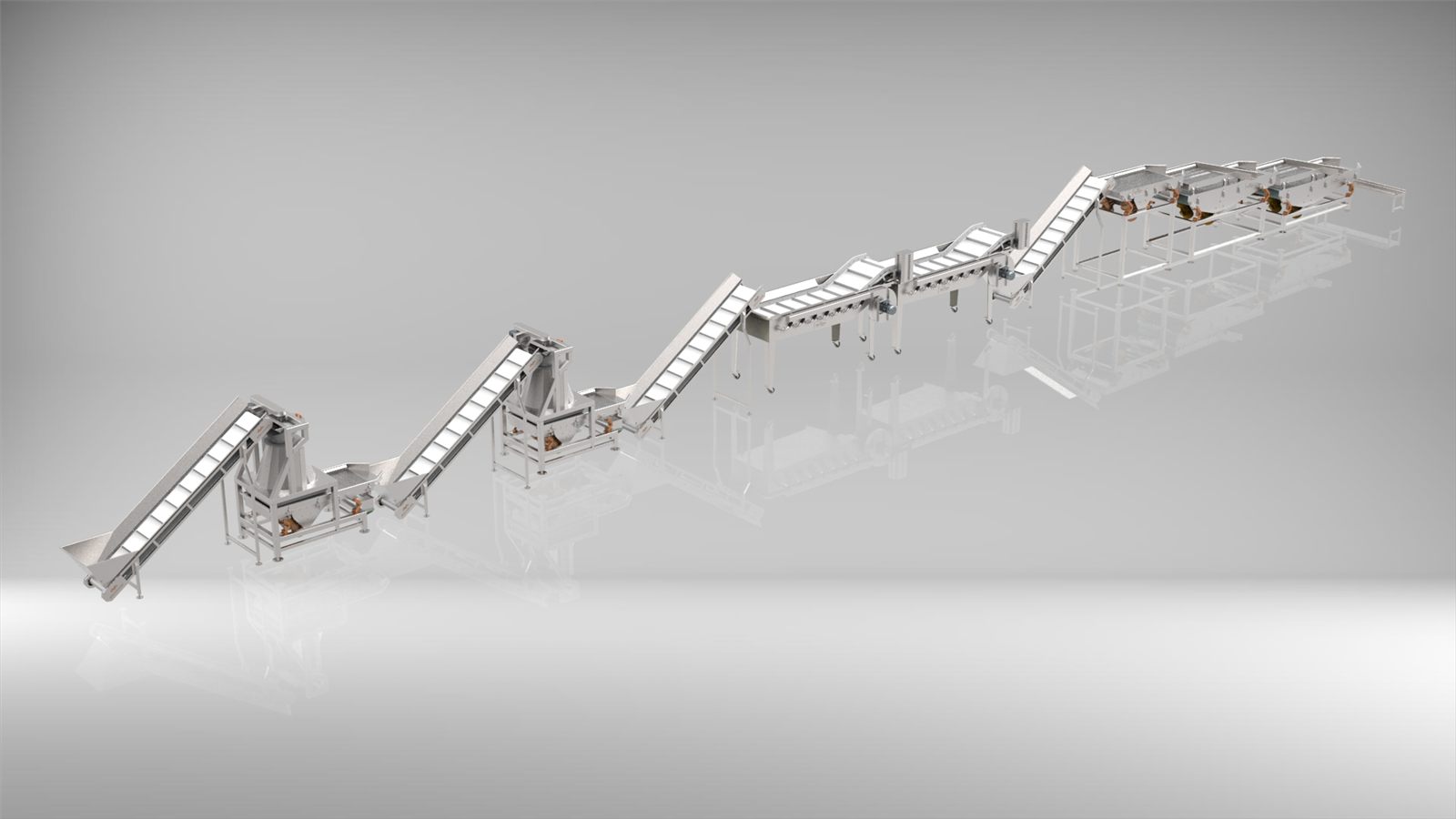
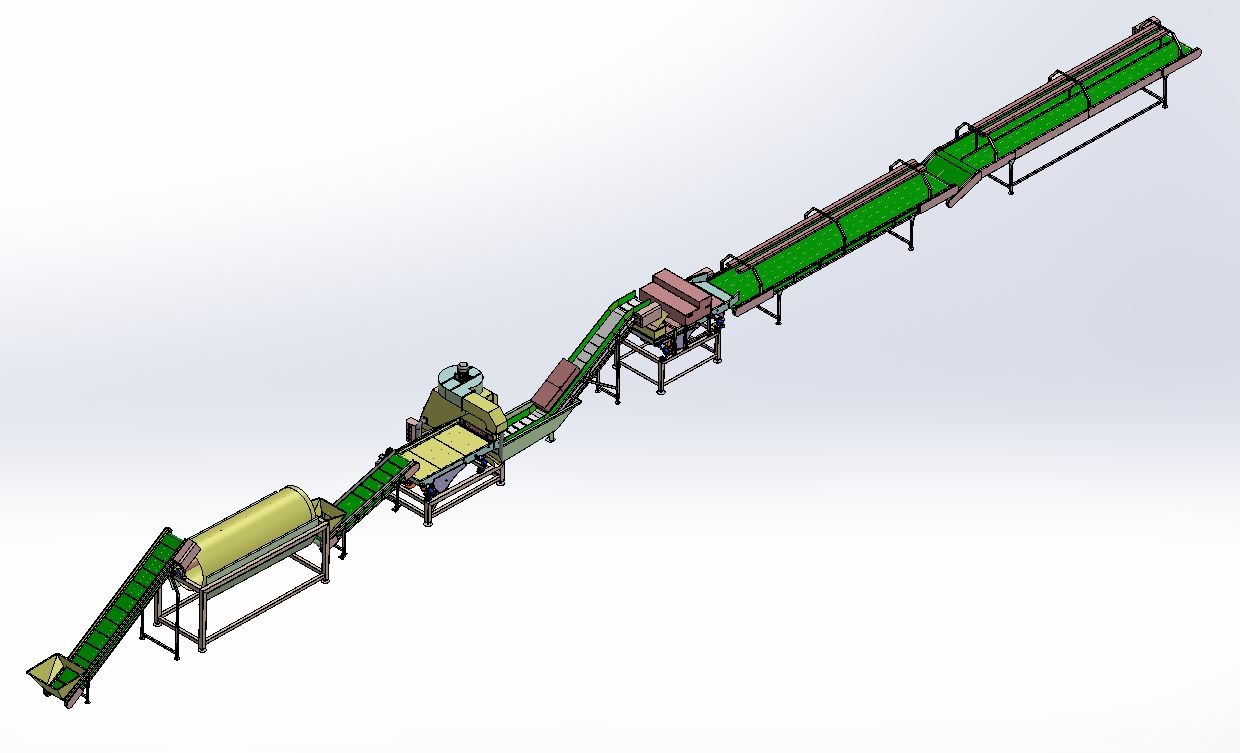
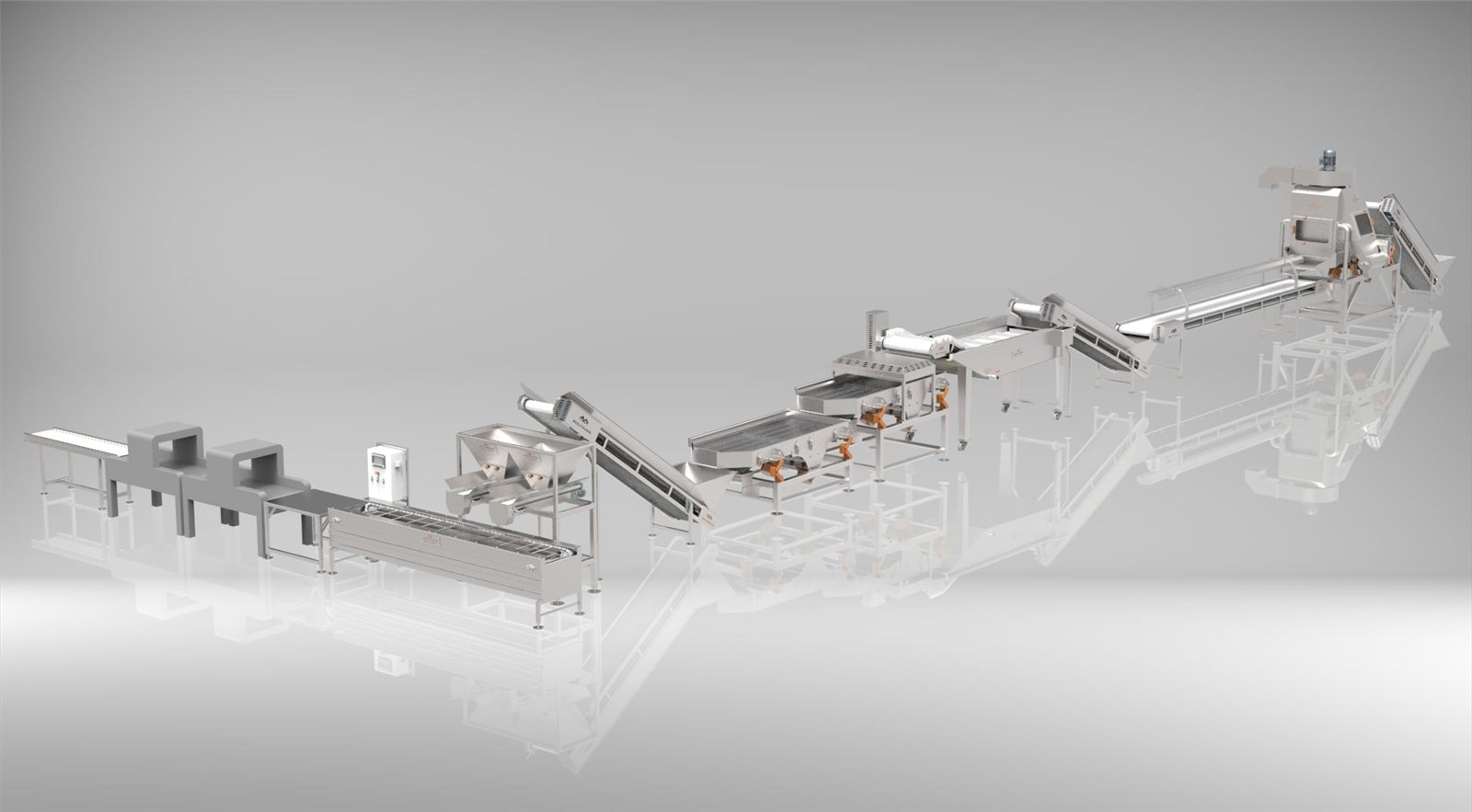
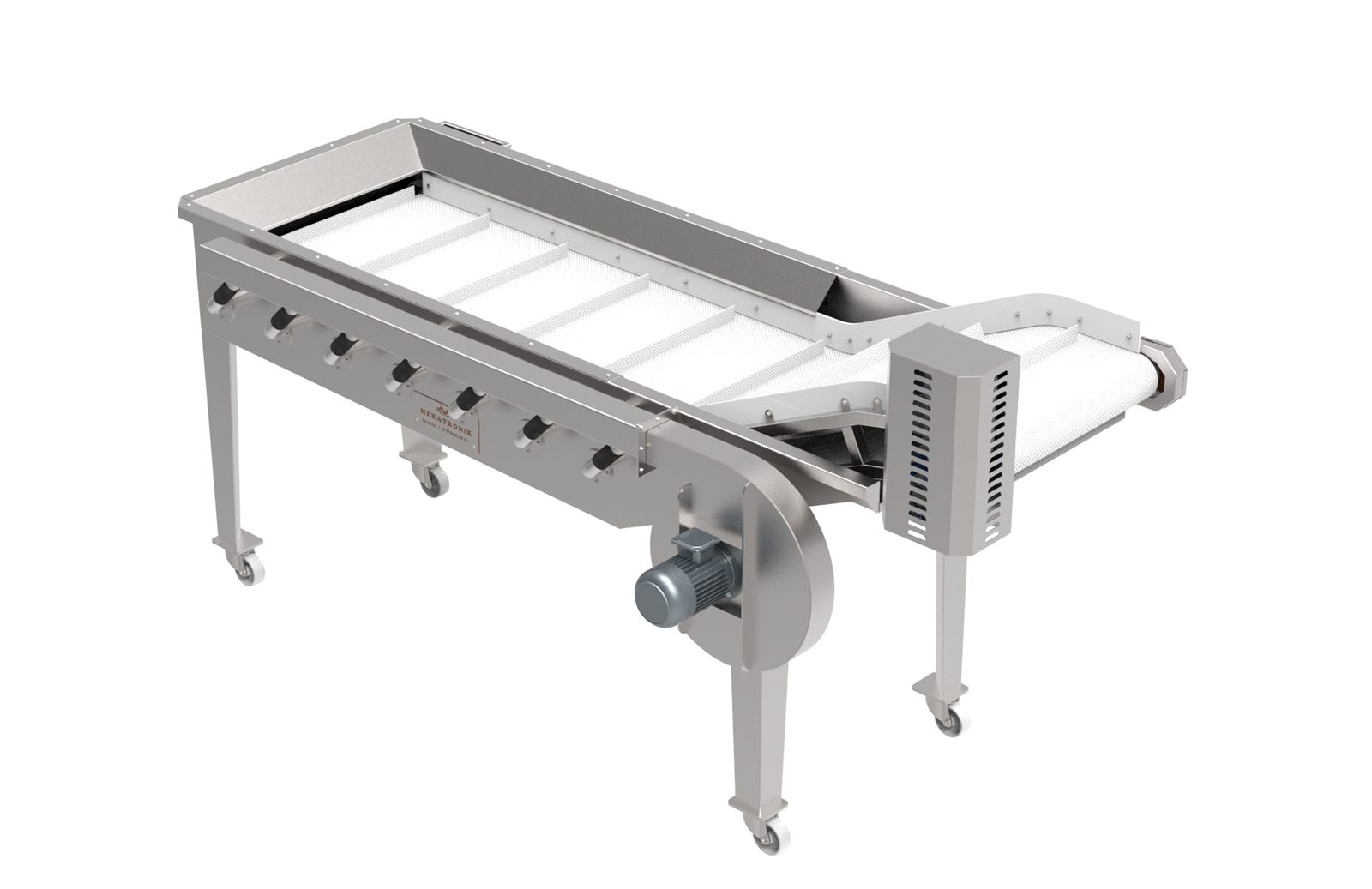
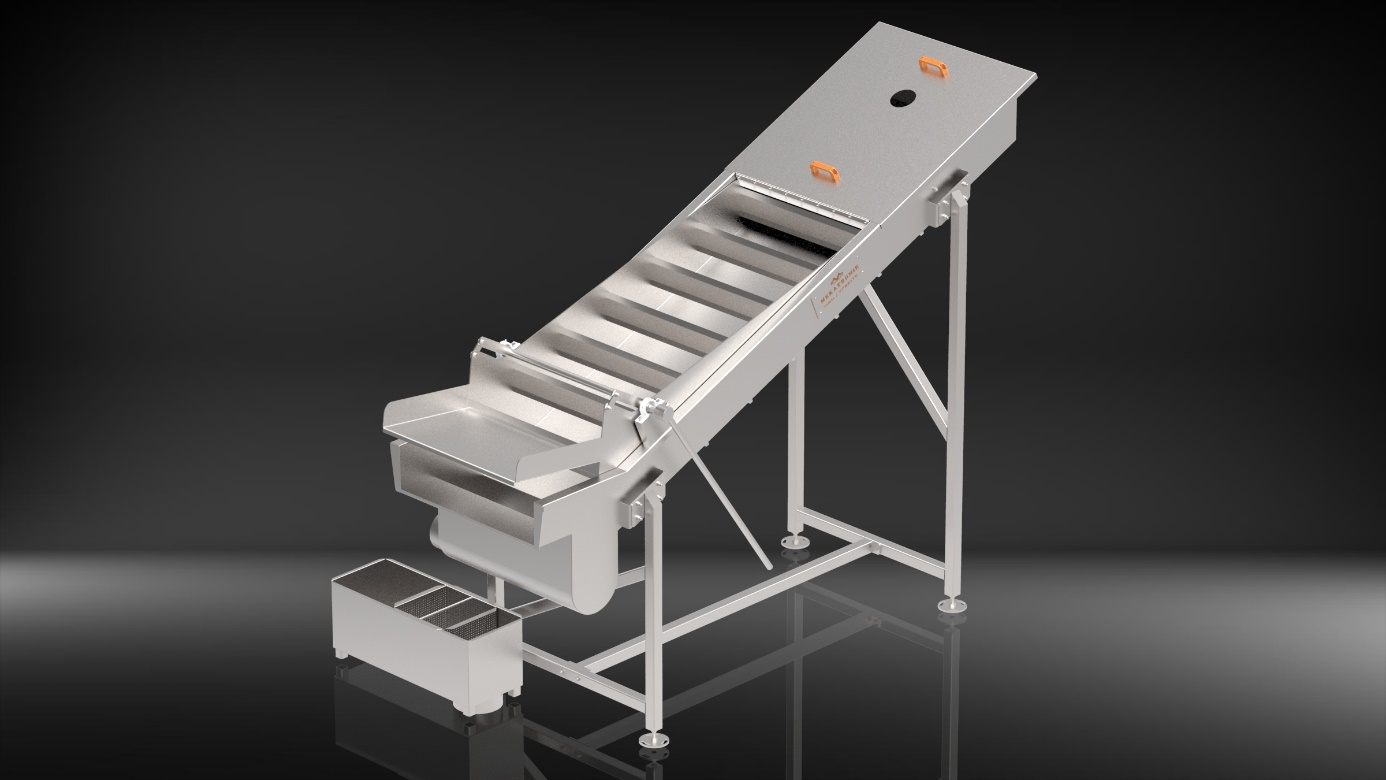
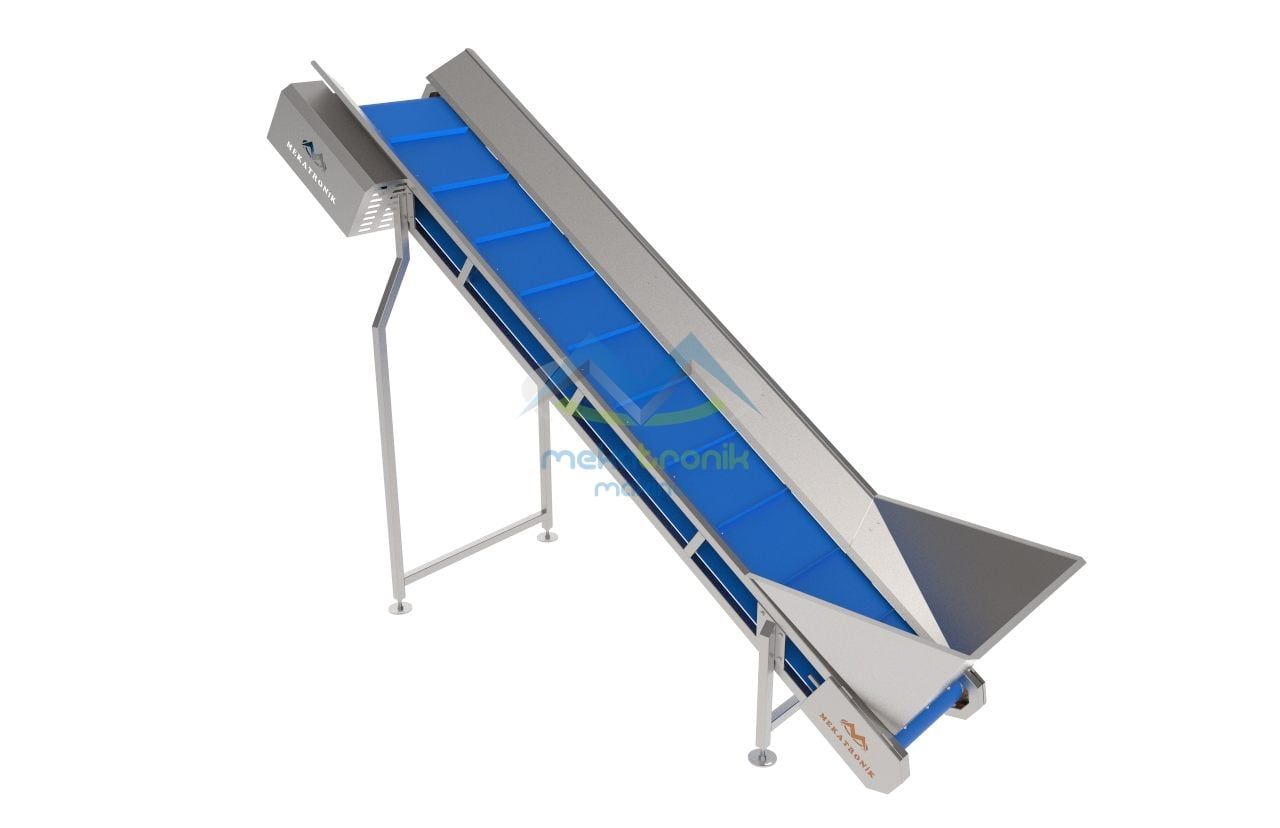
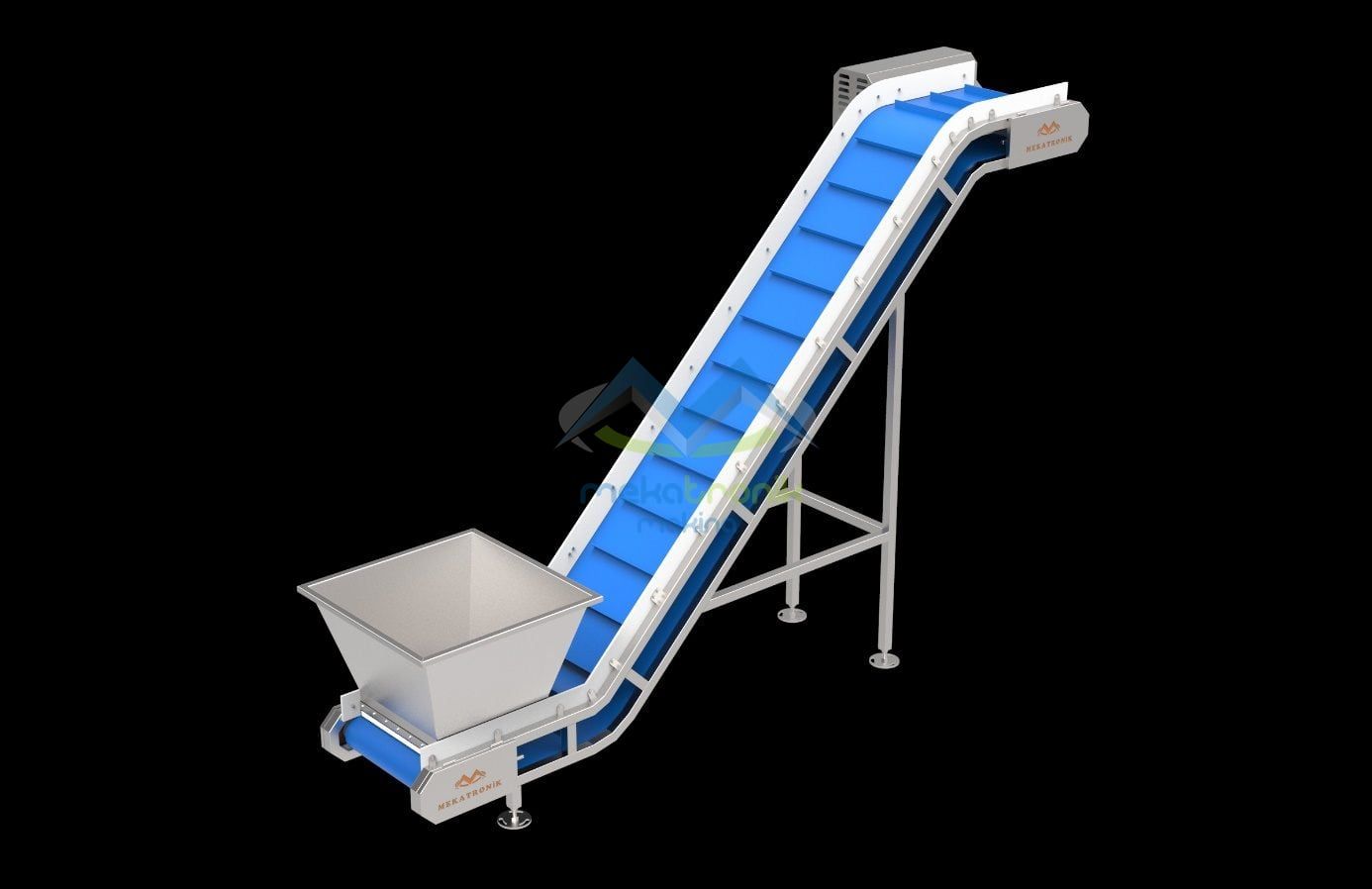
A cyclone is auxiliary line equipment that carries product from one point to another with the help of air, and feeds it in a balanced way while doing so. It differs from a conveyor in that the product travels on an air stream rather than on a belt or a screw.
This article covers what a cyclone does on the line, how its air lock supports balanced feeding, and why it appears on the dried fig line.
01
What does a cyclone do on the line?
The Cyclone is designed specifically for its place of use. Product is moved by an air stream from one point to another and delivered to the next station in a controlled way. No two lines need exactly the same cyclone: the location, the product being moved and the station it connects to decide the design.
The cyclone described here is not a dust-separating filter. On this machine the job is defined as product transport and feeding; dust control is a separate piece of equipment. The two are often mixed up in line planning, so it is worth stating which one you need when ordering.
02
How does the air lock give balanced feeding?
The hard part of air conveying is releasing the product at a steady rate. If the air stream brings it in suddenly and in bulk, the next station either runs empty or piles up. On a cyclone the air lock mechanism handles this: it separates the product from the air stream and feeds it in a controlled way.
With the air lock, feeding no longer depends on the conveying speed. However fast the product arrives at the cyclone, it is passed to the next station in a balanced flow. All the figures involved, meaning how much product is released and at what interval, depend on the project and the product and are finalised in the quote.
03
Why is a cyclone used on the dried fig line?
On the dried fig line the cyclone works as the flour dusting station. When figs are processed into cubes, the cut cubes are sticky and can cling to one another. To prevent this the product is dusted with flour, and the flour is fed in a controlled amount through the cyclone. On the line page this station is listed as the Flour Dusting Cyclone.
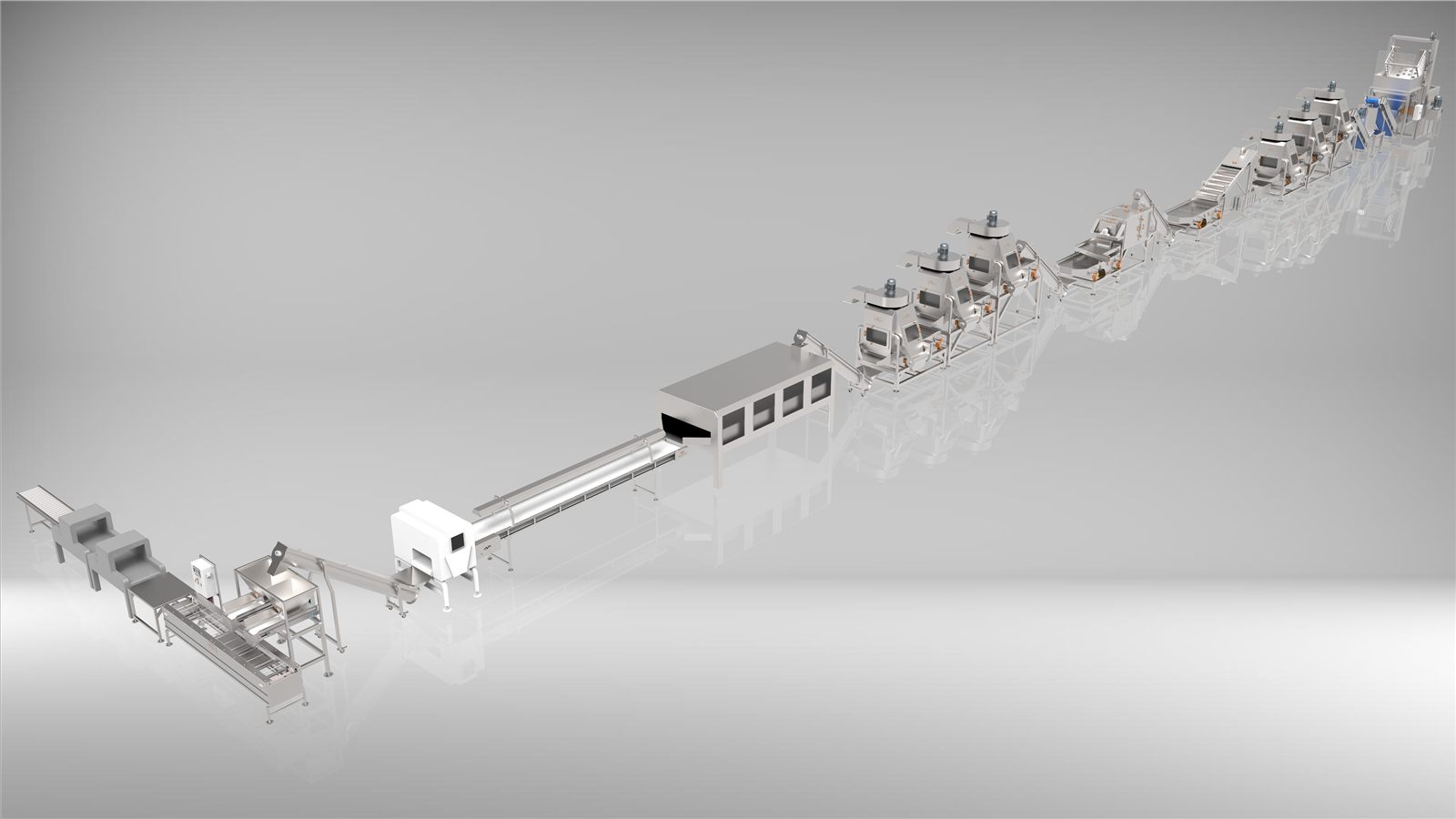
The order is simple. First the Dried Fruit Cutting and Chopping Machine turns the product into cubes of the required size, then the flour dusting cyclone coats the cubes so they do not stick. The two machines work together on lines where figs are processed as cubes. You can see the full flow station by station on the Dried Fig Cutting Line page.
Flour dusting looks specific to figs, but the logic holds for other sticky products: once a cut surface is exposed, product tends to bond, and the problem shows up most between cutting and filling.
04
Why do inspection hatches matter?
The cyclone comes with inspection hatches. They allow direct intervention on the line while it runs. In a closed system working on air, being able to see inside and step in when needed helps you avoid stopping the line for long if product blocks or builds up.
In normal operation the hatches keep product and flour inside. How often to clean and service the cyclone depends on the product and the shift pattern, so a fixed interval would not be honest advice here.
05
The cyclone at a glance
| Feature | What it provides |
|---|---|
| Pneumatic product conveying | Product moves from one point to another on an air stream |
| Air lock mechanism | Balanced product feeding |
| Inspection hatches | Direct intervention during operation |
| Colour options | Optional colours for the body finish |
| Capacity and dimensions | Set specifically for the project and place of use |
06
What should be specified when ordering?
Because the cyclone is built to order, correct sizing rests on the following information:
- 01Where on the line the cyclone will be installed, and the receiving station.
- 02The product to be conveyed or fed: dried fig cubes, flour or something else.
- 03The purpose of the feeding task: simple transport, or dosed feeding for a step such as flour dusting.
- 04Target production capacity and how it fits with the rest of the line.
- 05Colour preference for the body finish.
- 06The material of the product-contact surfaces, confirmed at the quote stage.
Exact values vary by project and are finalised in the quote, so we assess each case individually instead of publishing a ready-made capacity table.
07
Next step
To specify a cyclone for your line, send us your product, target capacity and the point where the cyclone will be installed through the quote page. If you are planning a fig cubing line, we can go through the station order together on the cutting line page above.