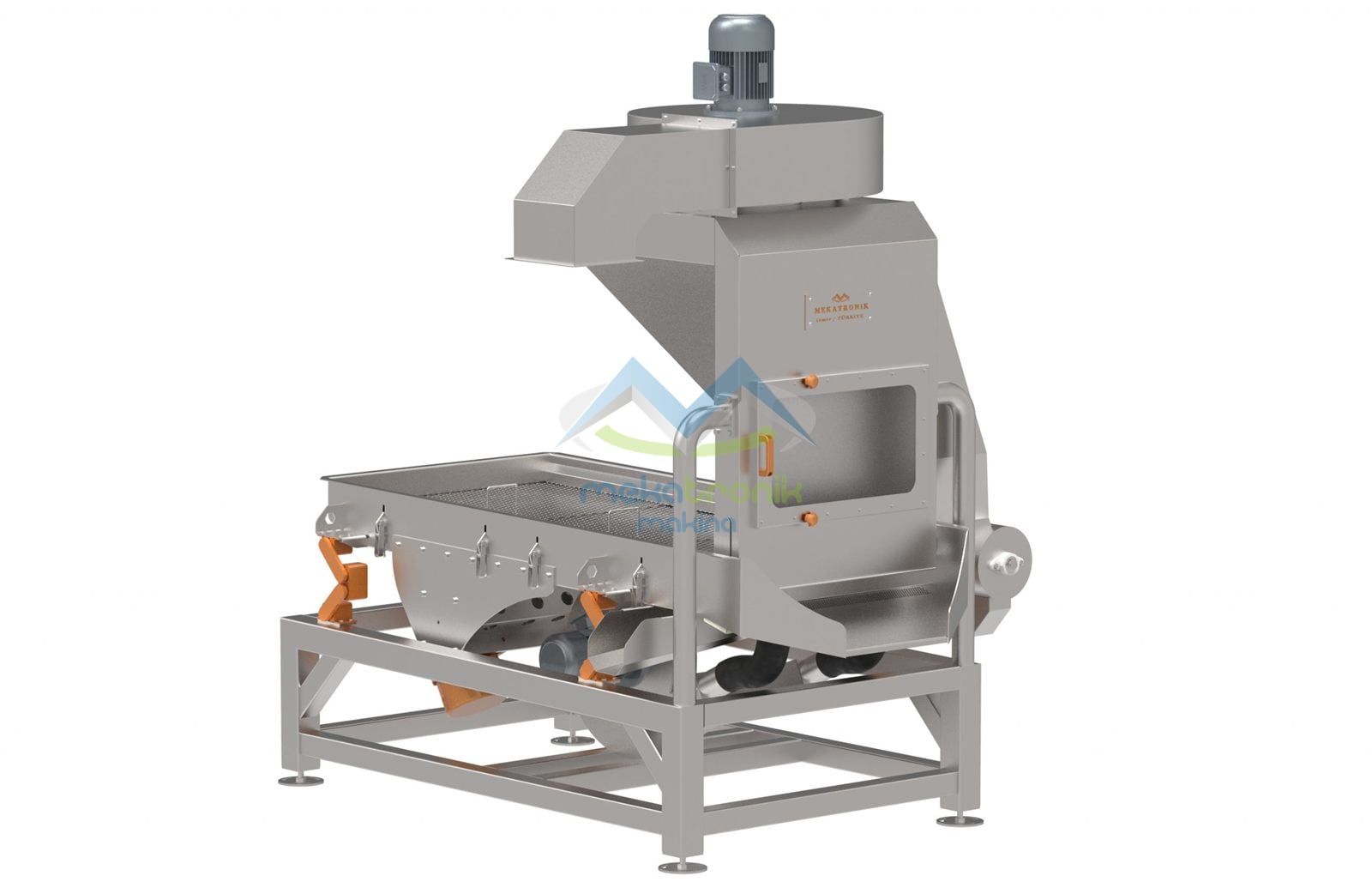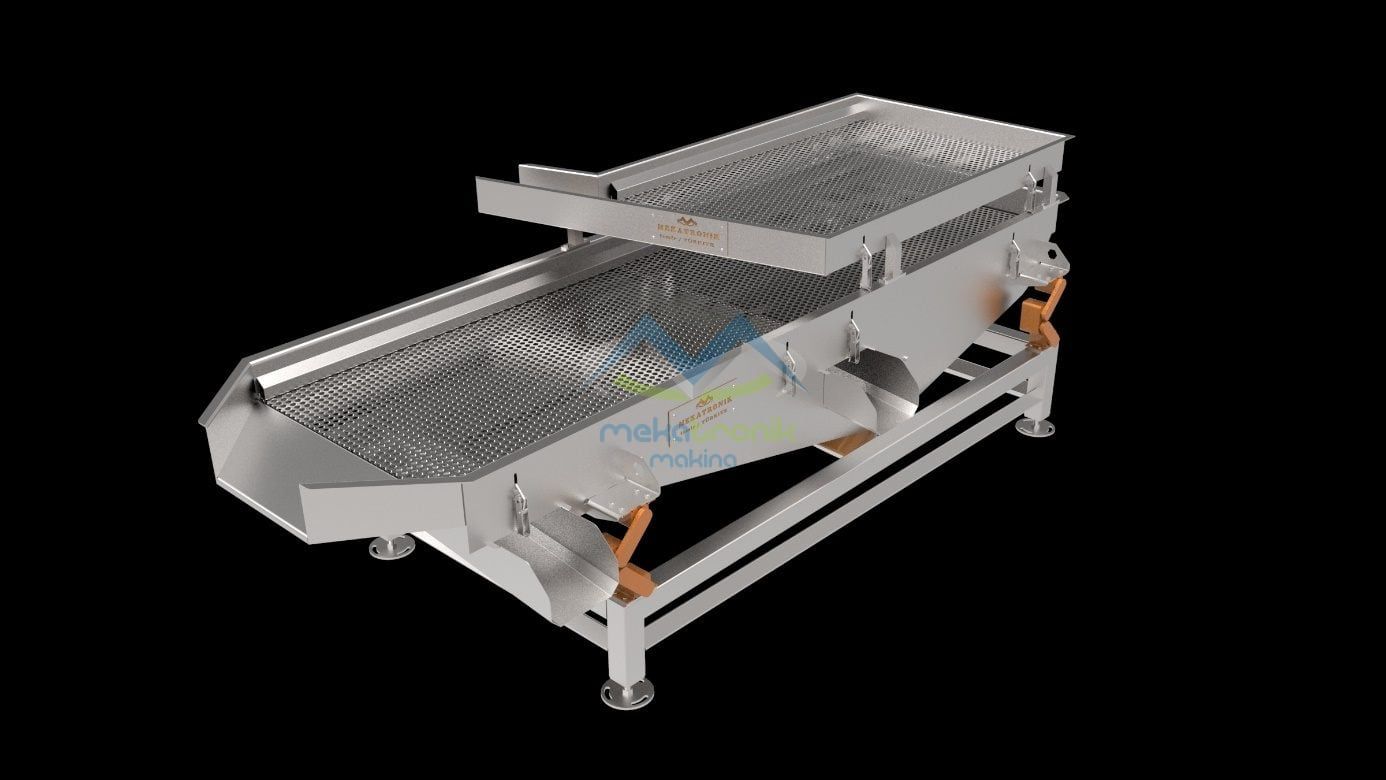
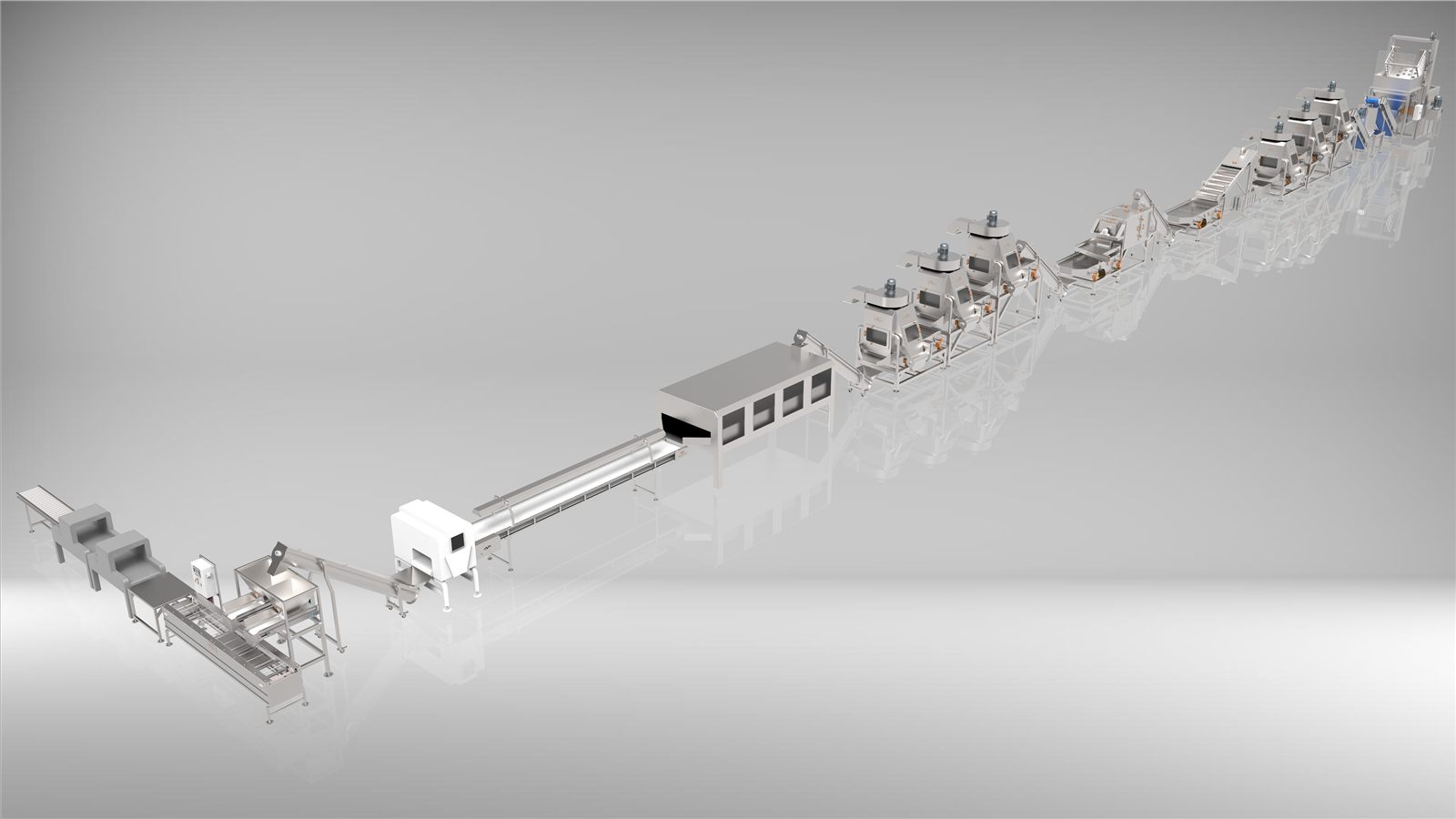
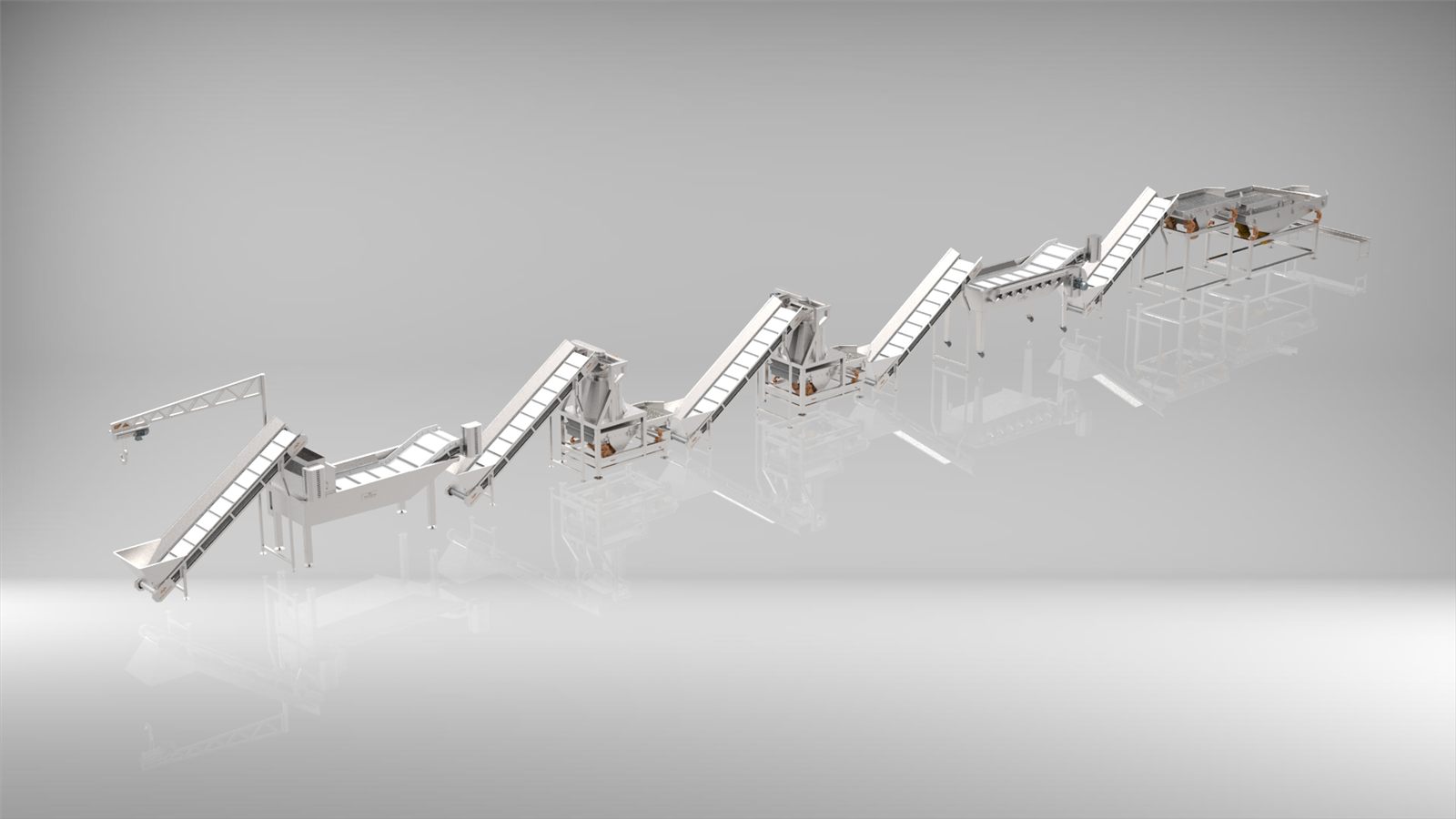
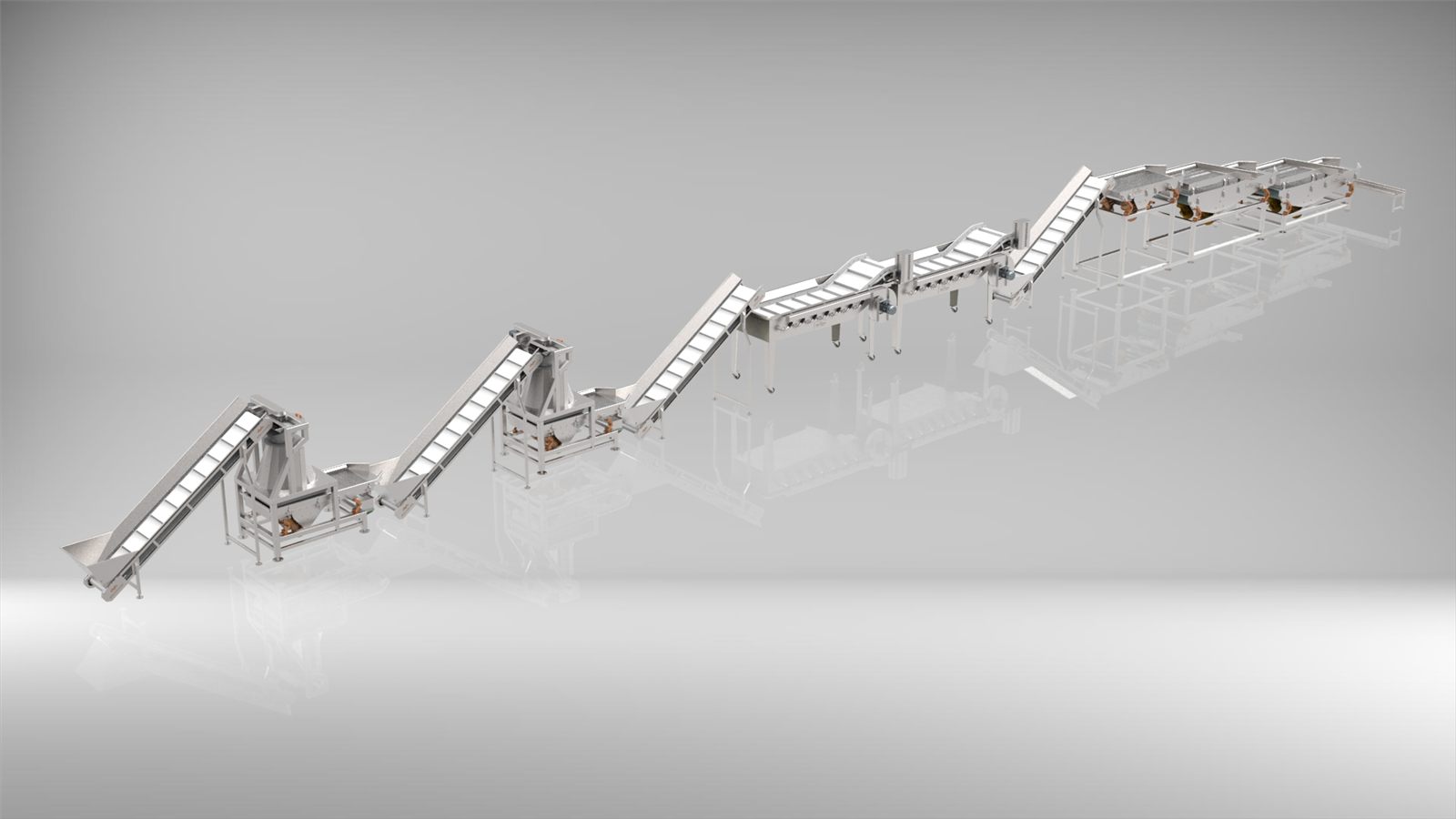
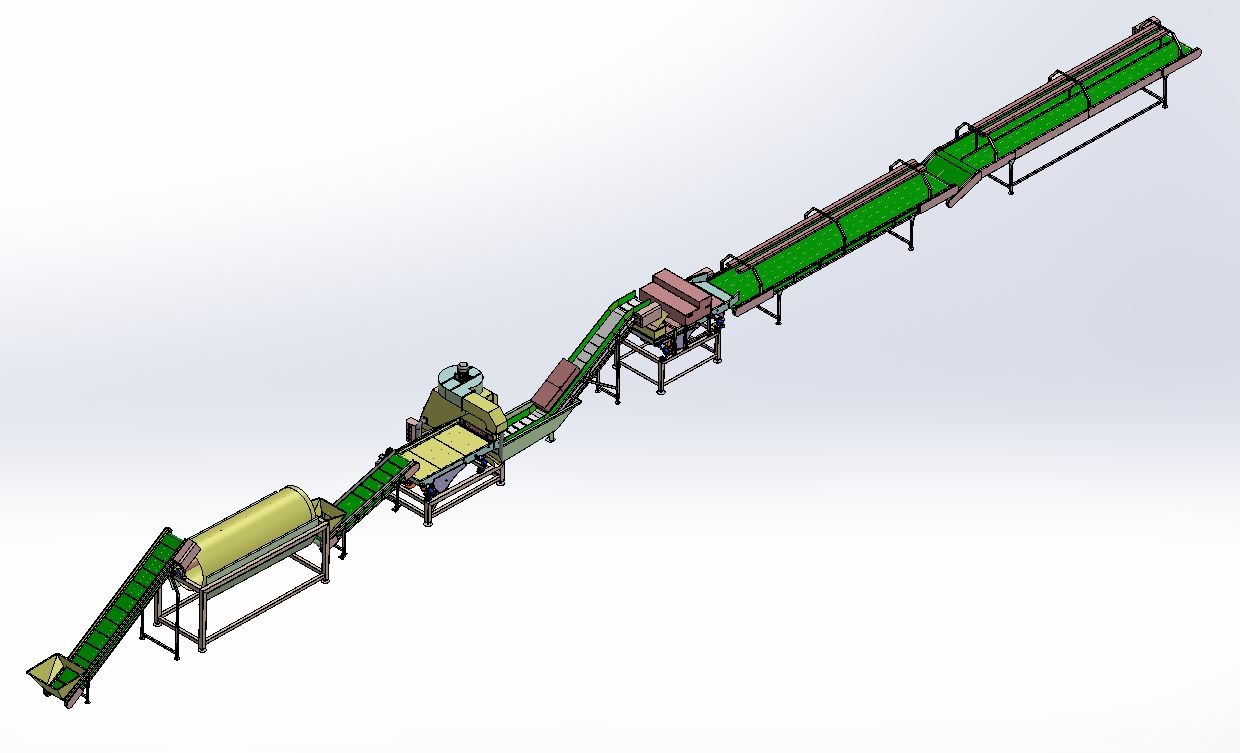
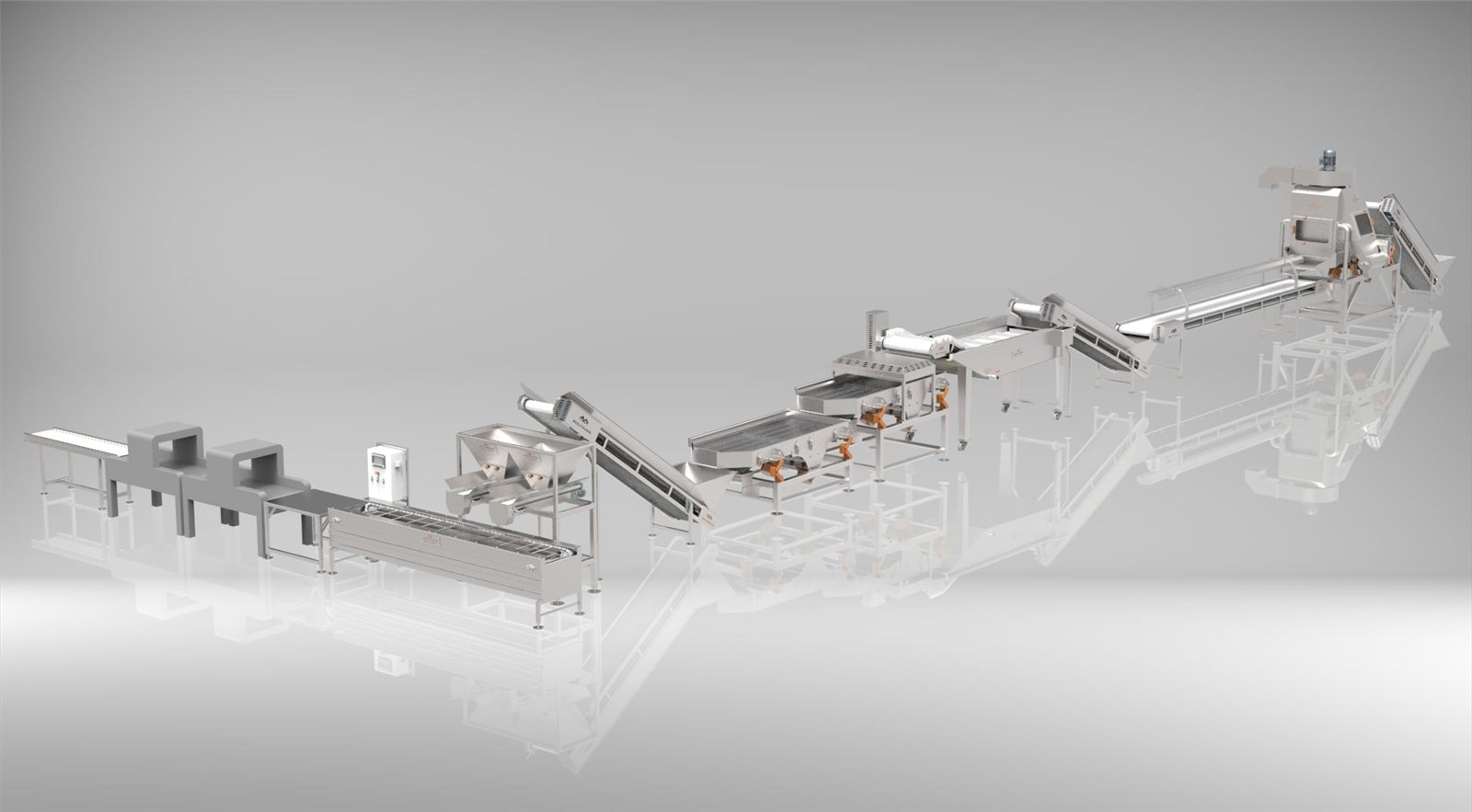
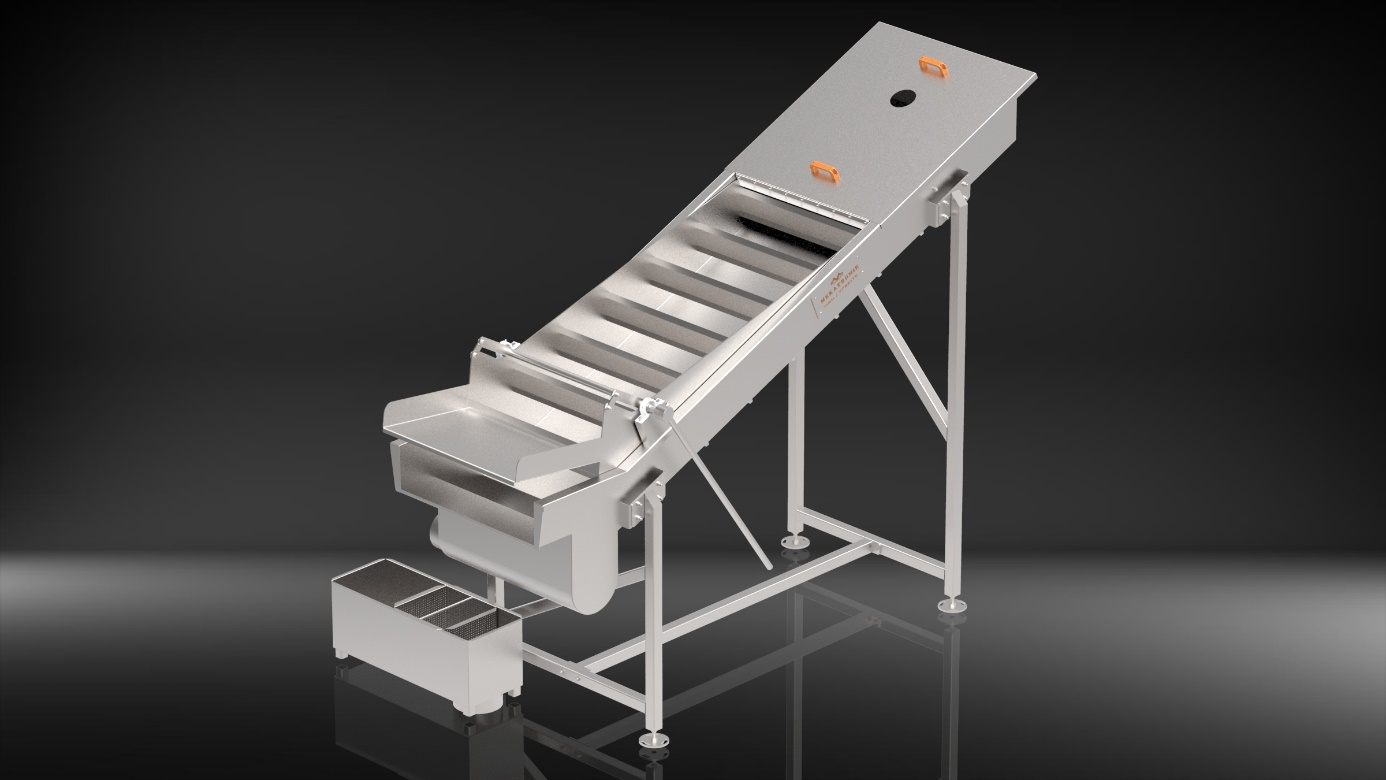
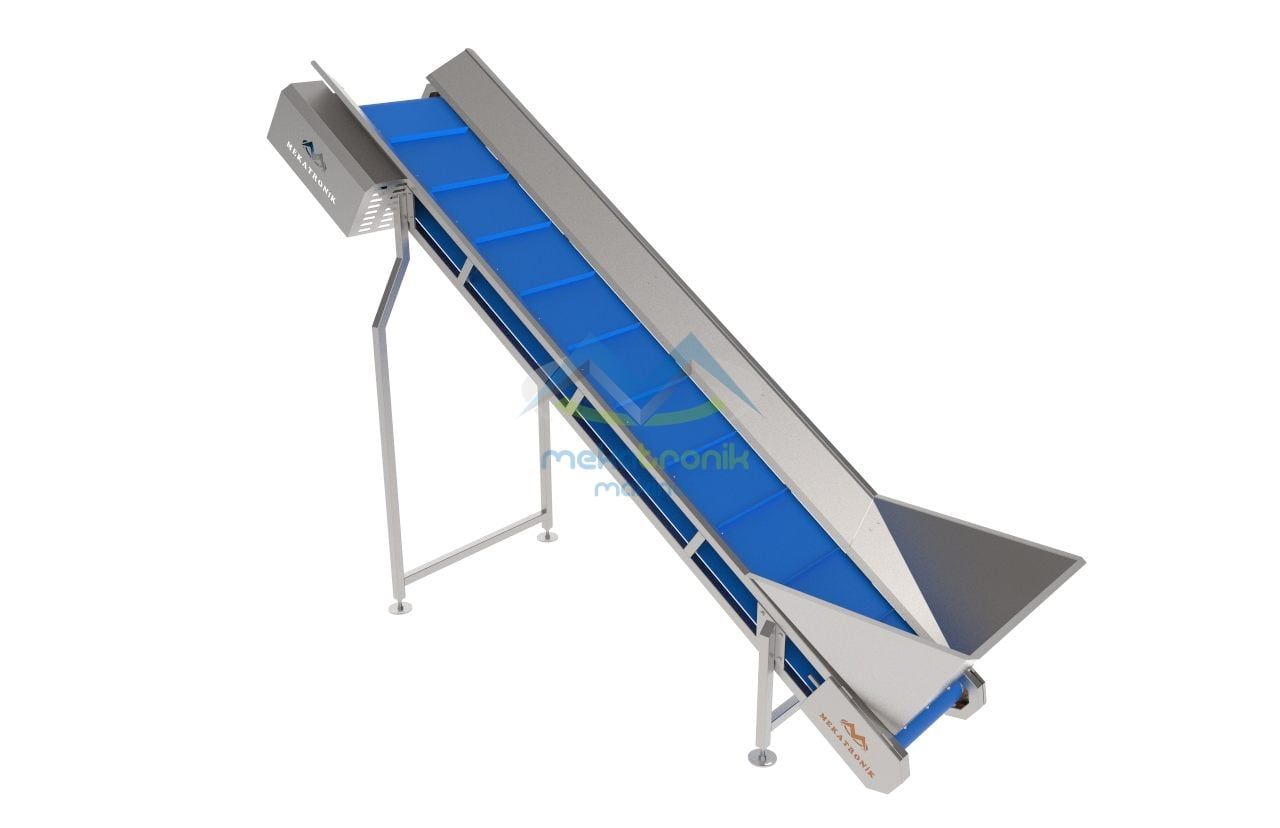
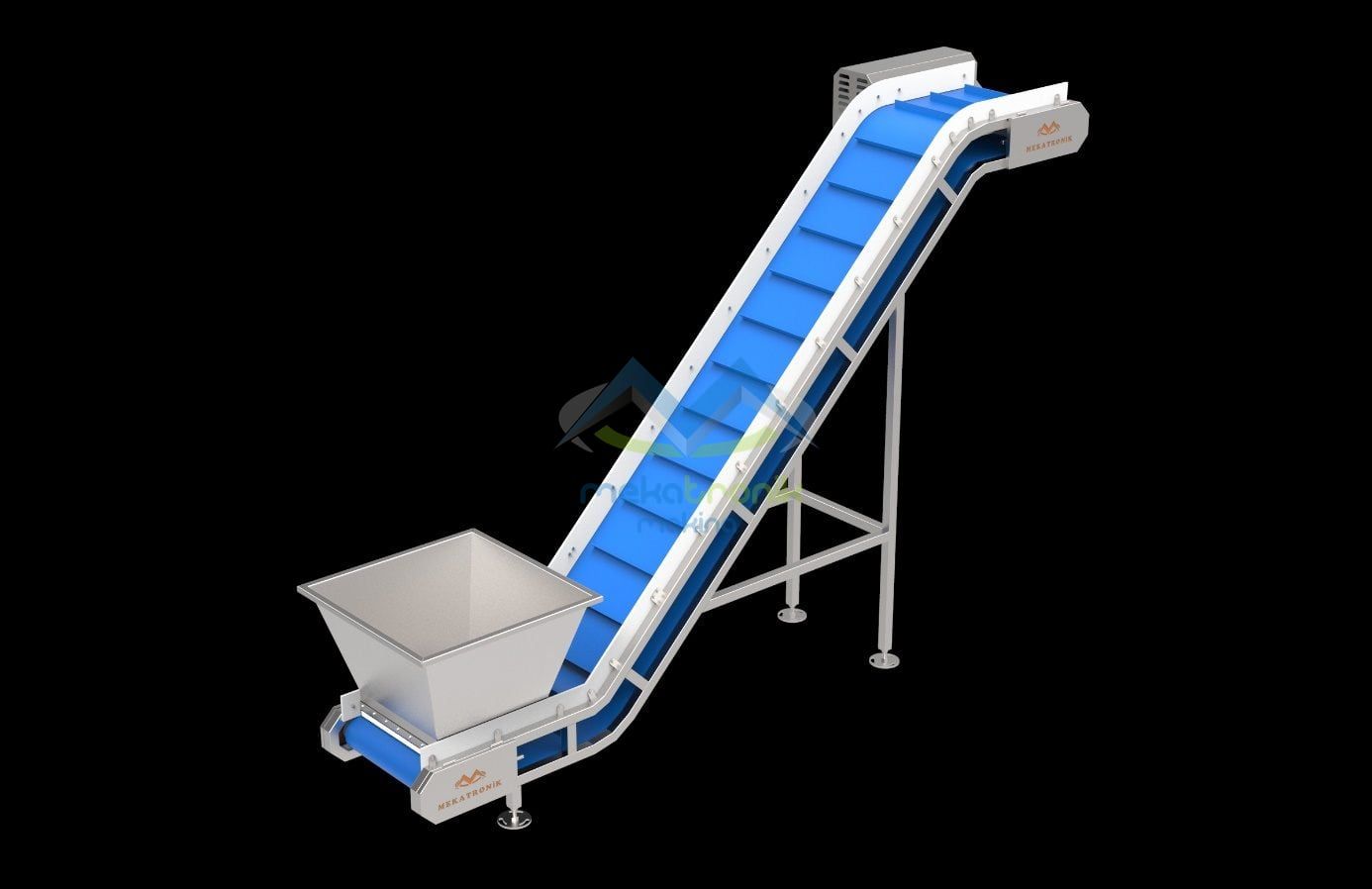
The route fruit takes through a date line is not a fixed template. Which stations join the line depends on how the product reaches the plant, whether the fine surface hair is removed, the target product form and whether a heat treatment is involved. This article follows the flow of a date processing line from the first station to the last, with the condition that brings each one in.
01
Where does the product enter the line?
When fruit arrives in crates, a crate tipping machine works at the head of the line. A full crate is placed on the platform by forklift or pallet truck, a hydraulic system lifts and tips it, the product drops into the feed hopper or onto a conveyor, and the empty crate returns to its start position. The tipping angle is adjusted to the product, and plastic, wooden or metal crates can be used.
If the product arrives as pressed blocks, the first station is the block breaking trough instead. Entering by crate or by block is an entry decision made from how the plant receives its fruit, and it also shapes how many stations the rest of the line needs.
02
Which sub-lines make up the line?
A date line is not one piece. It is built from sub-lines that can be linked together. Each process can be installed separately or all of them combined in a single flow, according to the date variety and the target product form.
| Sub-line | Stations | What it does |
|---|---|---|
| Hair singeing line (optional) | 3 | Feeding conveyor, transfer shaker and singeing unit remove fine surface hair with a controlled flame |
| Pitting line | 6 | Breaks the block, separates the fruit, draws off light foreign matter, removes the pit, sorts on the illuminated conveyor |
| Cutting line | 3 | Feeds the pitted fruit evenly, cuts it into cubes, checks it on the illuminated conveyor |
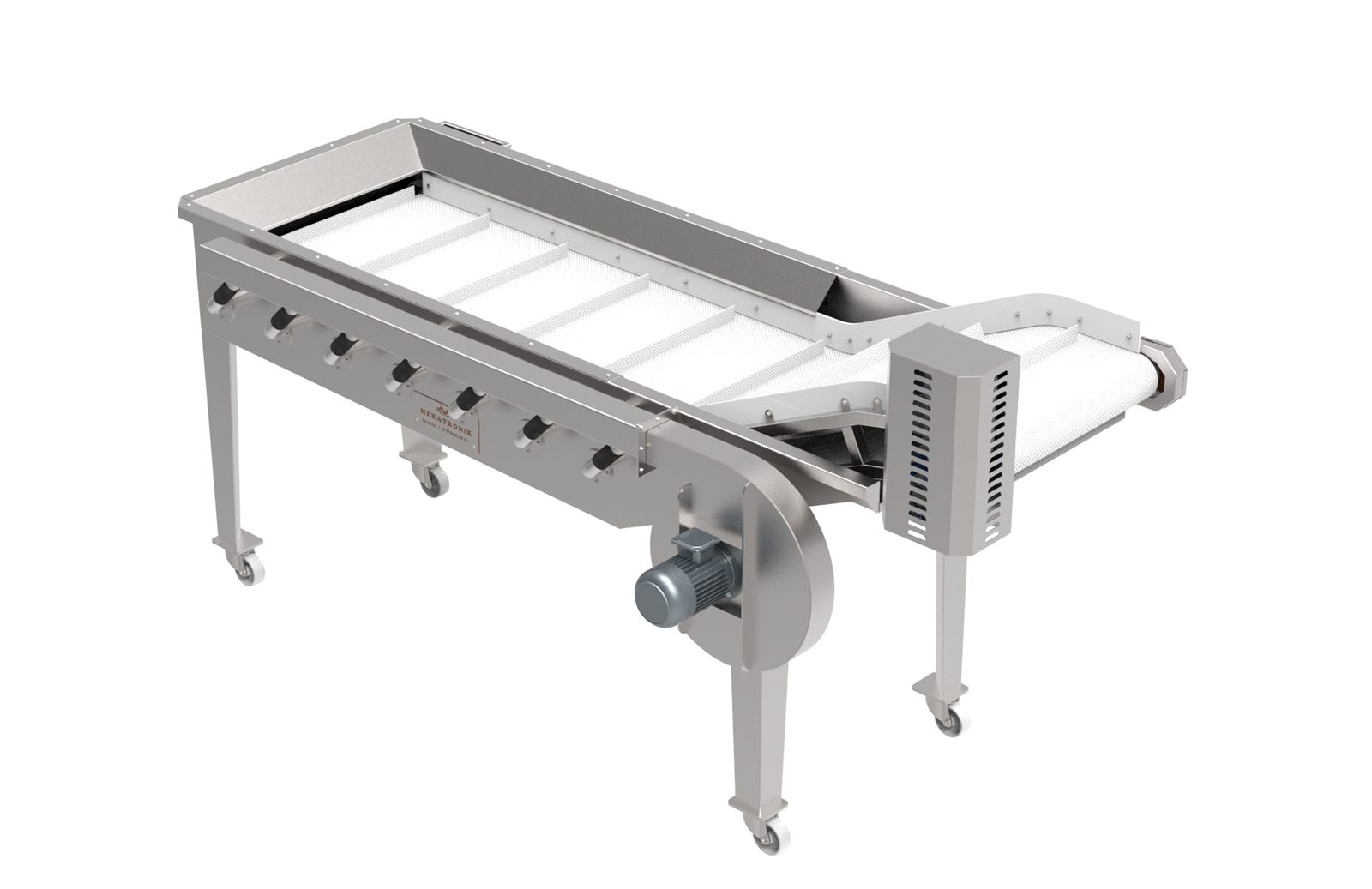
| Washing line | 3 | Feeds evenly, washes in the jacuzzi, removes surface water on the fan-assisted shaker |
03
Which stations does the product form decide?
Whether a station joins the line follows from the finished product you want. These pairings are usually among the first questions in a project discussion:
- 01If the fine surface hair must be removed, the singeing line is placed ahead of pitting.
- 02If pitted fruit is wanted, a pitting line is installed; the machine is designed to remove the pit without tearing the flesh.
- 03If a diced form is wanted, pitted dates move on to the cutting line; the cut size is adapted to the product by changing the knife set.
- 04If only washing and removal of surface water are needed, the washing line can be installed on its own.
04
How is the flow balanced between stations?
The most critical points of the line are the transfers between stations. For that reason the balanced product feed doser is used at several places: before the crushing, before cutting and before washing. Each station receives the output of the previous one as an even, controlled flow, so no machine stands idle or overflows.
Visual checking follows the same logic at two points. After pitting, pit remnants and defective fruit are picked off by hand on the illuminated sorting conveyor; after cutting, a second illuminated conveyor gives the final visual check. High-efficiency LED lighting makes defects easier for the sorting operator to see.
05
Are sub-lines installed separately or as one flow?
Both are possible and the choice follows the investment plan. The pitting line can be installed first, with cutting and washing added later, or every station can be combined into a single flow from the start. In a separate installation each sub-line has its own feed and discharge; in a combined installation the sub-lines are connected by conveyors. The decision is taken after seeing the plant layout and the range of products.
06
When does a cooling tunnel become part of the line?
A cooling tunnel is not a mandatory station on every date line. The cooling tunnel brings hot product from baking or another heat treatment down to room temperature while it moves on a perforated modular belt, and its heat-insulated covers protect cooling efficiency. If your product leaves a heat treatment, the tunnel sits at the end of the line, before the packing stations. Without a heat treatment the tunnel may not be needed.
We do not give a fixed temperature or waiting time. These depend on the product, the packaging and the intended shelf life, are set together during the project, and exact values are confirmed in the quotation.
07
What is settled before the line is designed?
Before a flow diagram is drawn, the following need to be clear:
- 01The date variety and whether it is soft or hard
- 02Whether the fruit reaches the plant in crates or as blocks
- 03Whether hair removal is needed
- 04The target product form: with pit, pitted or diced
- 05Whether there is a heat treatment
- 06The target capacity and the plant layout dimensions
Product-contact surfaces are made of AISI 304 stainless steel, with AISI 316 offered depending on the process. Lines are engineered in line with CE conformity requirements. Capacity varies by project; exact values are fixed at quotation stage together with product samples.
Next step: tell us the date variety you process, how the fruit reaches your plant and the product form you want, and we will settle together which stations belong in the line. You can reach us through the quotation page.