
Chopping dried apricot is not like cutting a dry, firm product. The fruit is soft, the surface is sticky, and if it does not enter the blade set squarely the cut size varies within a single batch. Buyers usually ask one question about it: is the dice the same size in every shipment?
01
What actually sets the cut size
Machine speed does not set the size; the blade set does. The dried fruit cutting and chopping machine first separates the product into slices, then into dice of the required size, and that size follows the geometry of the blade set. Product cut with the same set is repeatable because it passes through the same opening every time.
When an order calls for a different size, the blade set is changed rather than the machine re-tuned. That is also why dried apricot, dried fig and dates can run through the same body: the product group changes the set, not the frame.
02
Why feeding matters more on sticky fruit
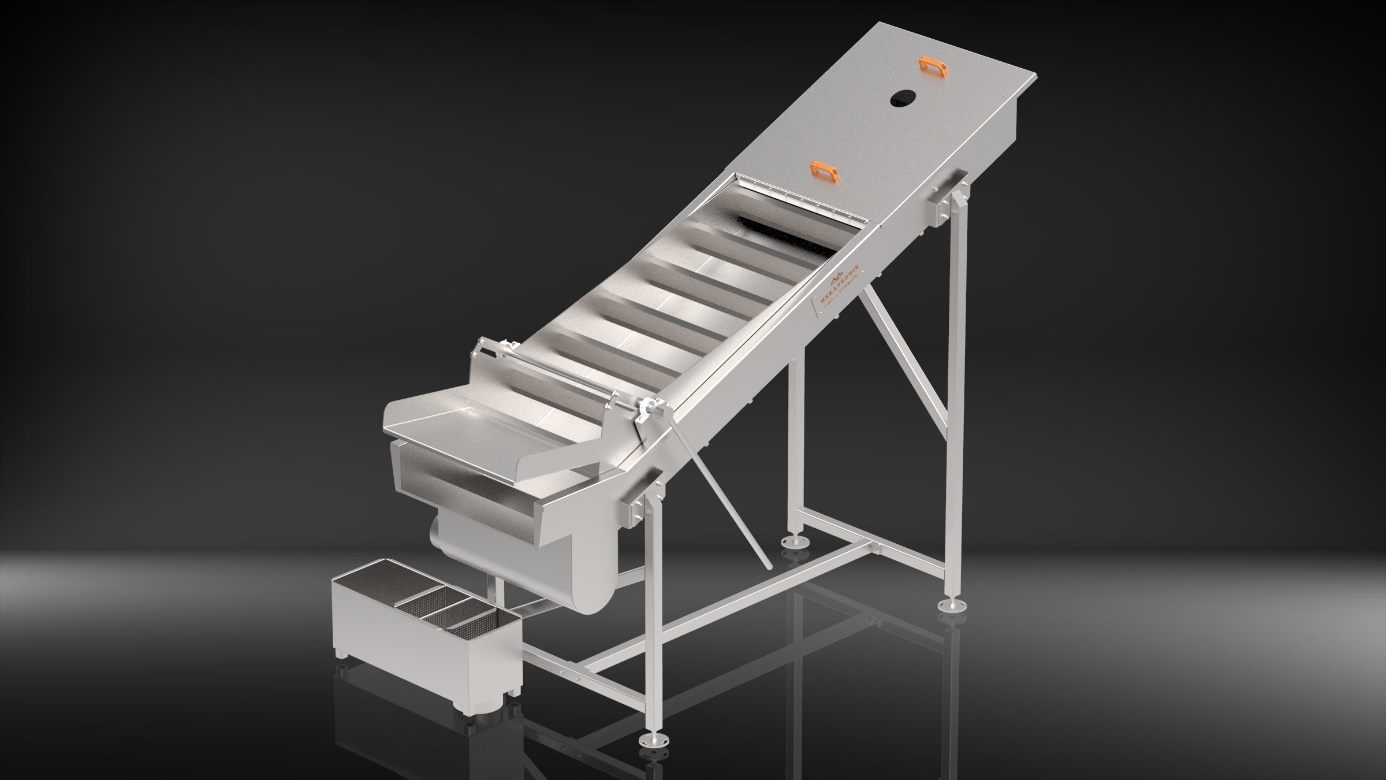
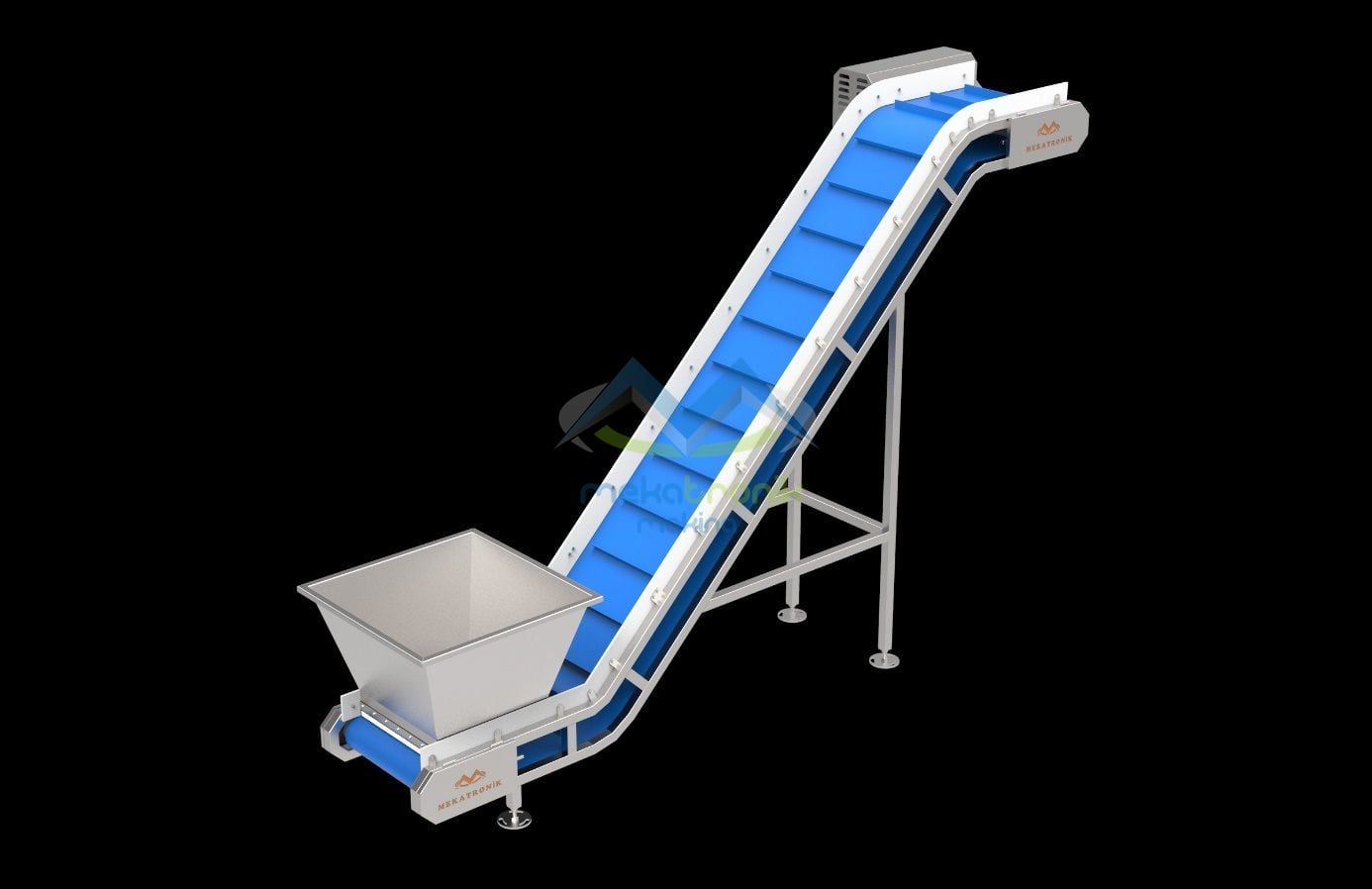
Product is loaded into the feed hopper and moved into the cutting section in a controlled way. There is an alignment step in between, where the fruit is guided so that it enters the blade set squarely. Skip that step and soft apricot meets the blade sideways: it is crushed rather than cut, and the piece that comes off has no defined size.
Uneven feeding does not stop at size. Product piles up around the blade area, the machine works harder, and the cleaning interval gets shorter. This is why the stations ahead of the cutter, the ones that feed the line evenly, are part of cut quality rather than a separate concern.
03
Cleaning intervals and size drift
Sugar from dried fruit builds up on blade surfaces. As it builds, the effective cutting gap narrows and the same blade set starts producing smaller, less even pieces. Size loss on a line is therefore more often a cleaning interval problem than a blade wear problem.
The machine has covers that open for maintenance and cleaning, and product contact surfaces are AISI 304 stainless steel, with AISI 316 where the process calls for it. Covers that open without tools make a short clean between shifts realistic, which is what keeps size consistent in practice.
04
Where it sits on the line
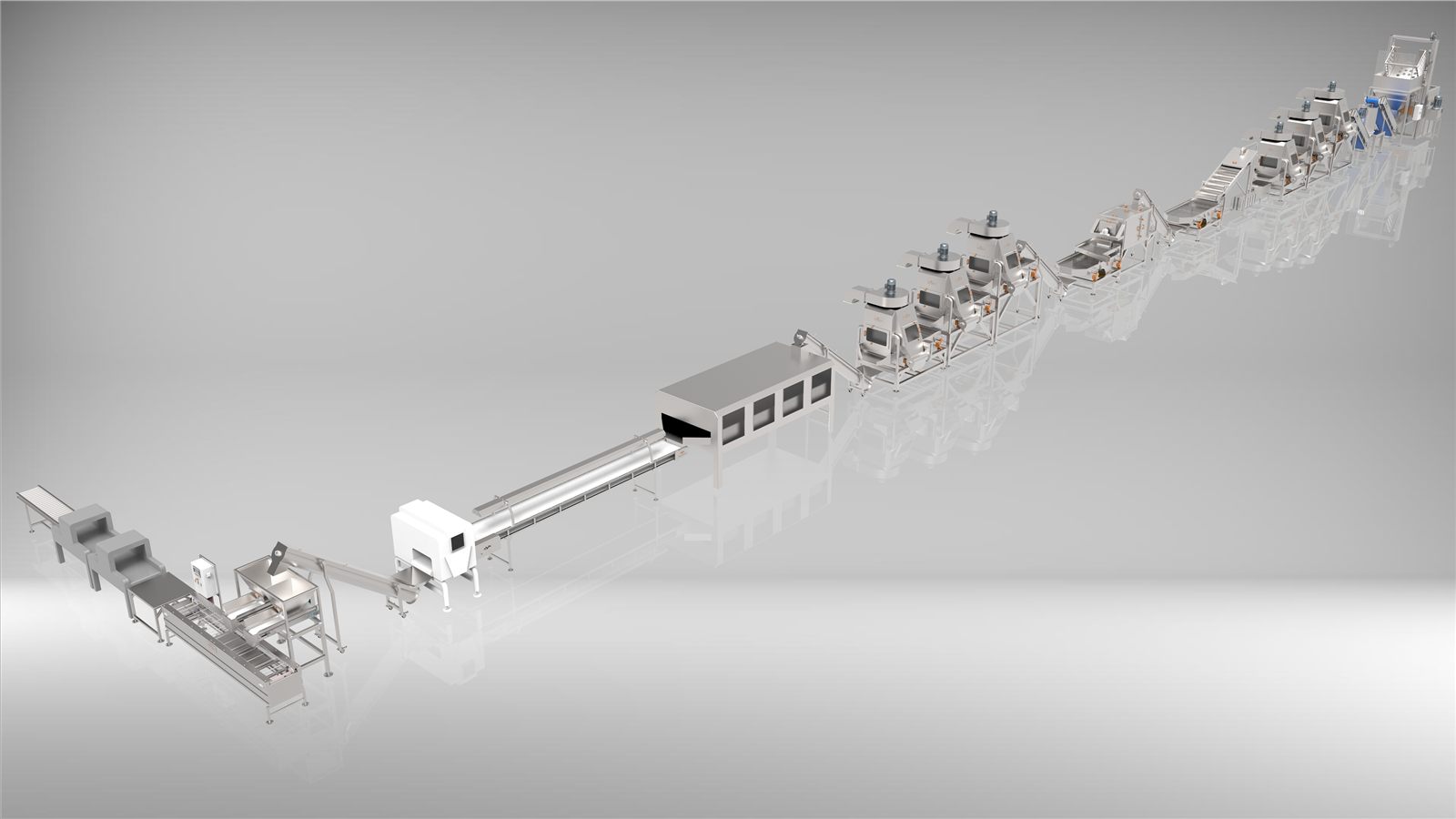
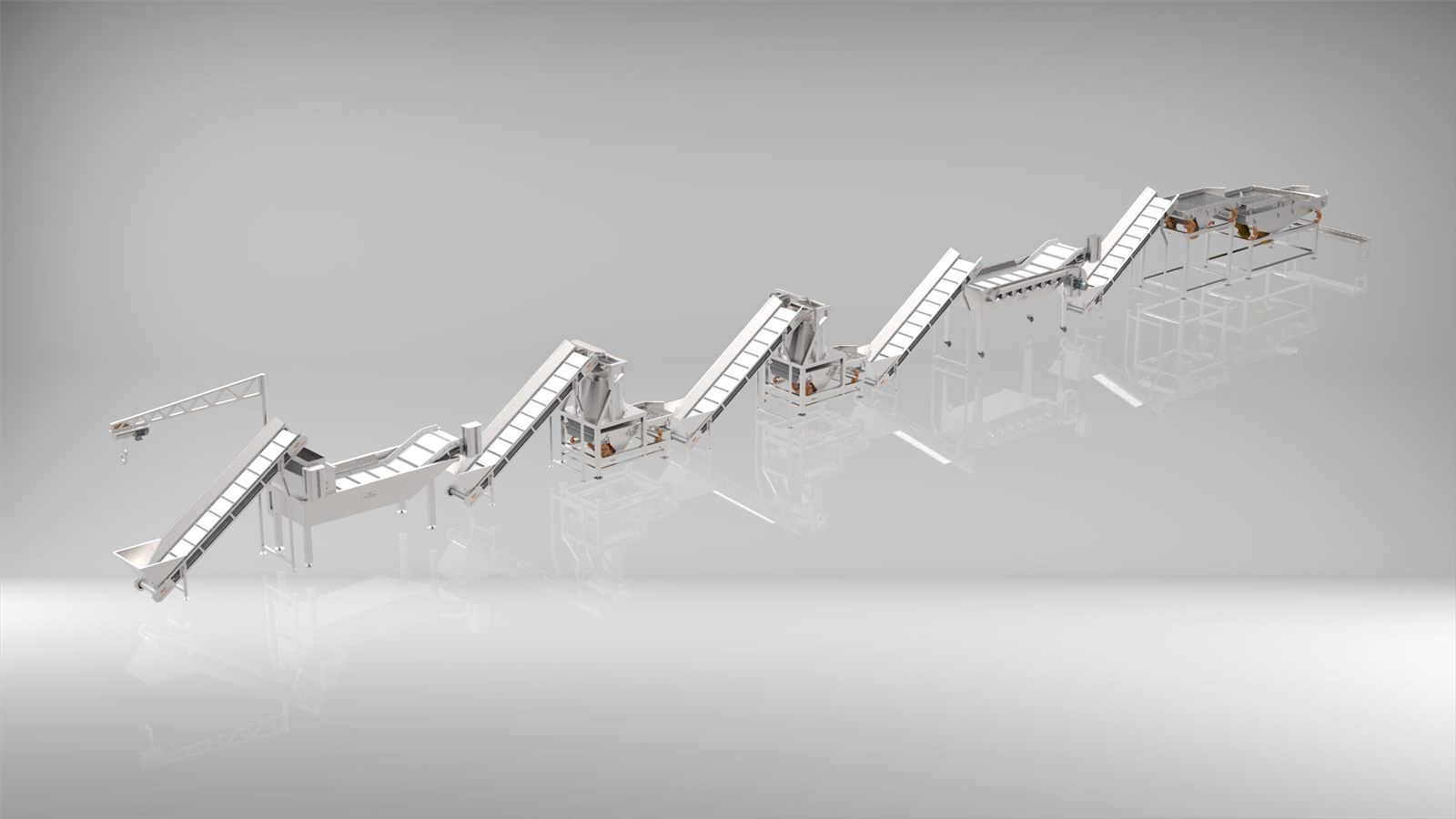
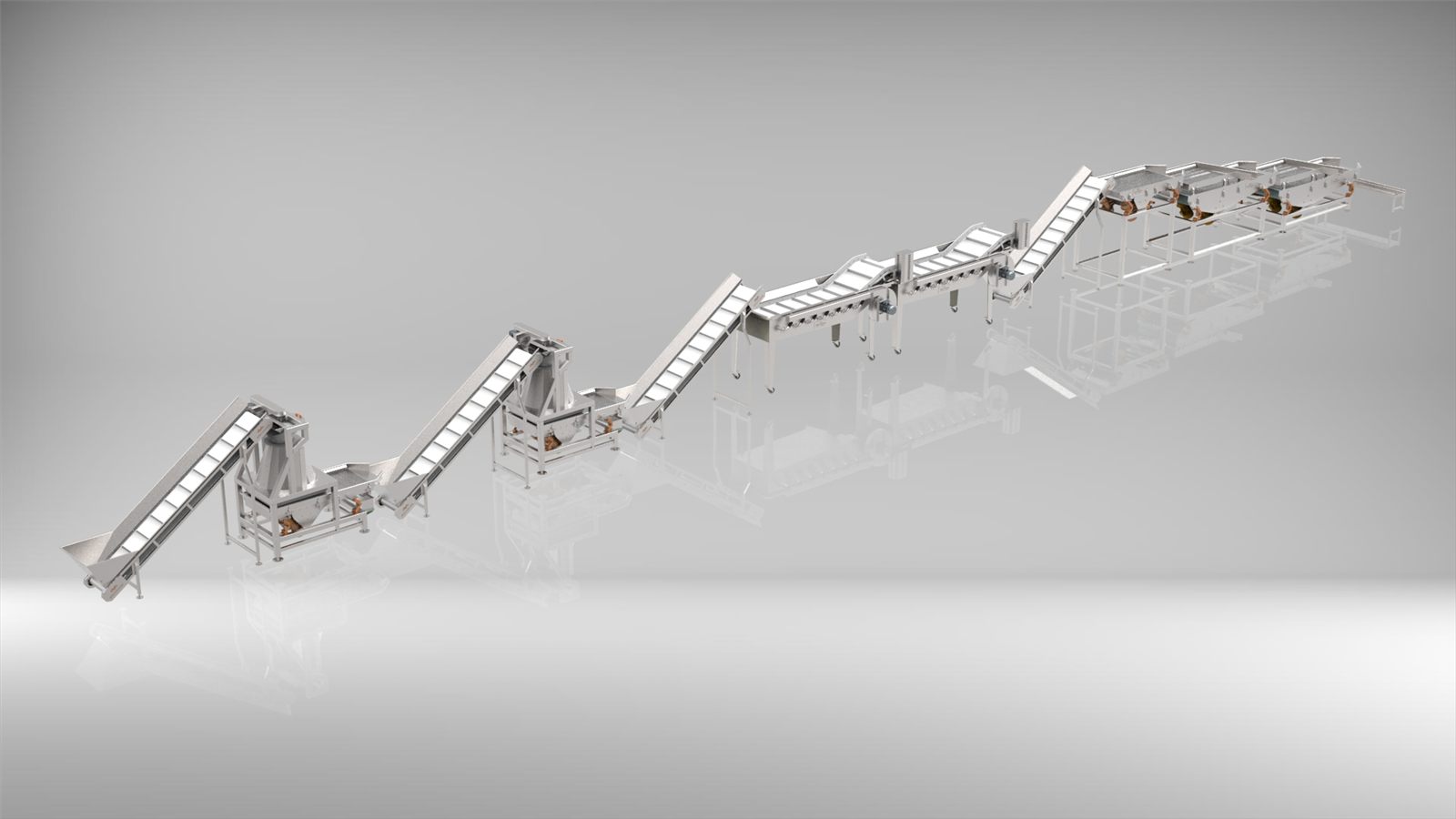
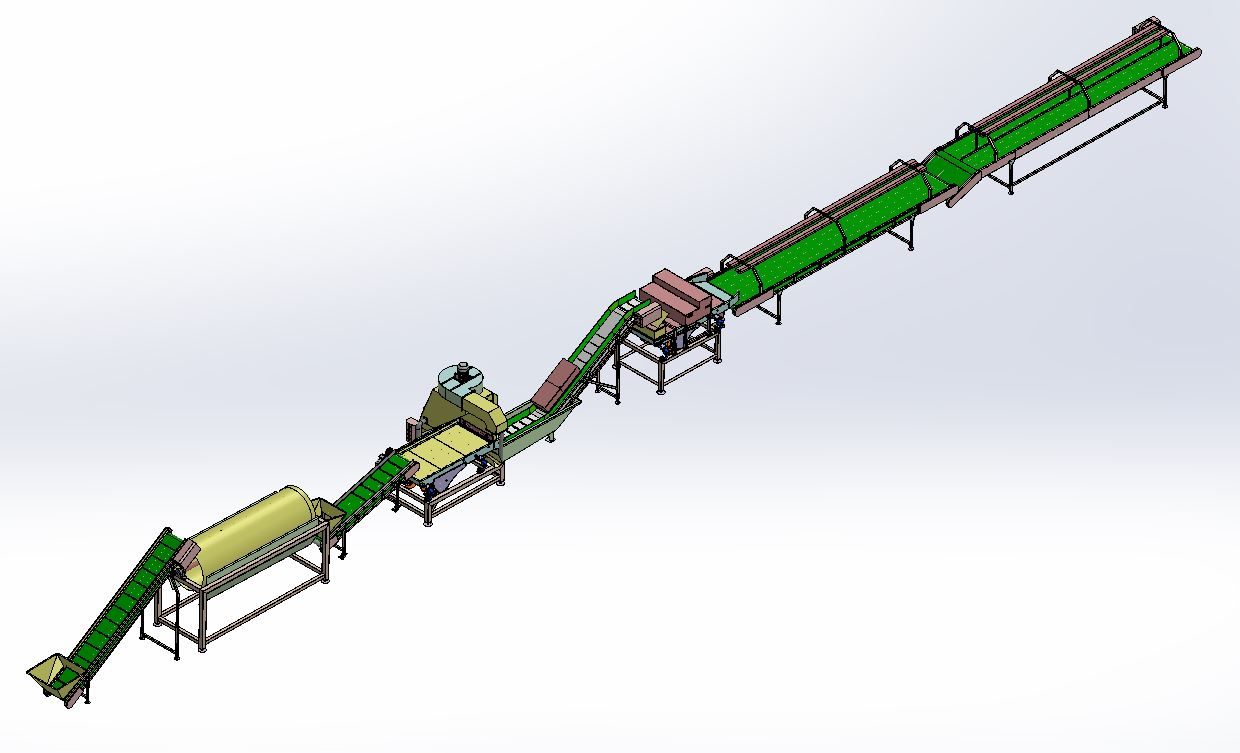
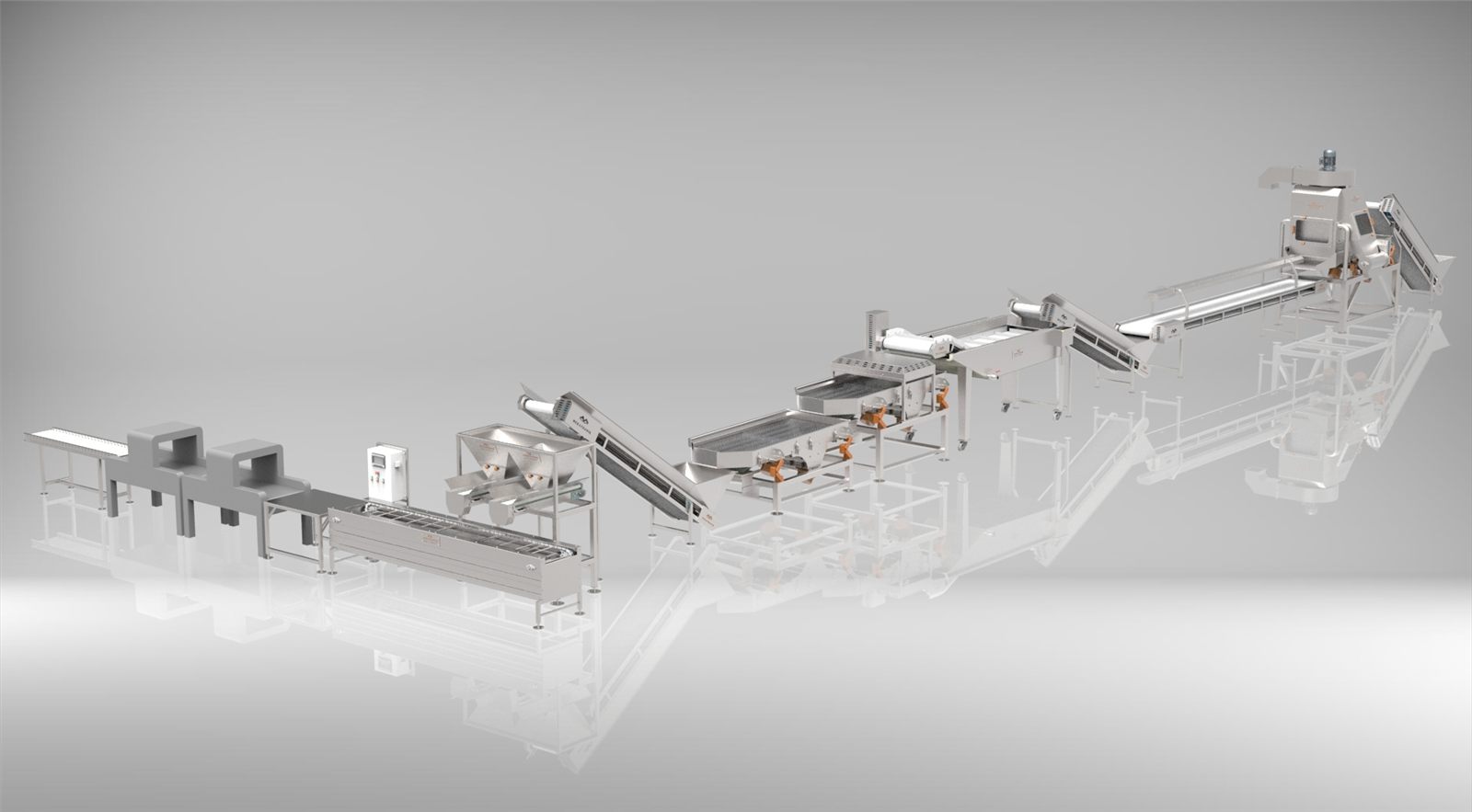
Cutting comes after the product has been cleaned and sized. The order runs roughly like this:
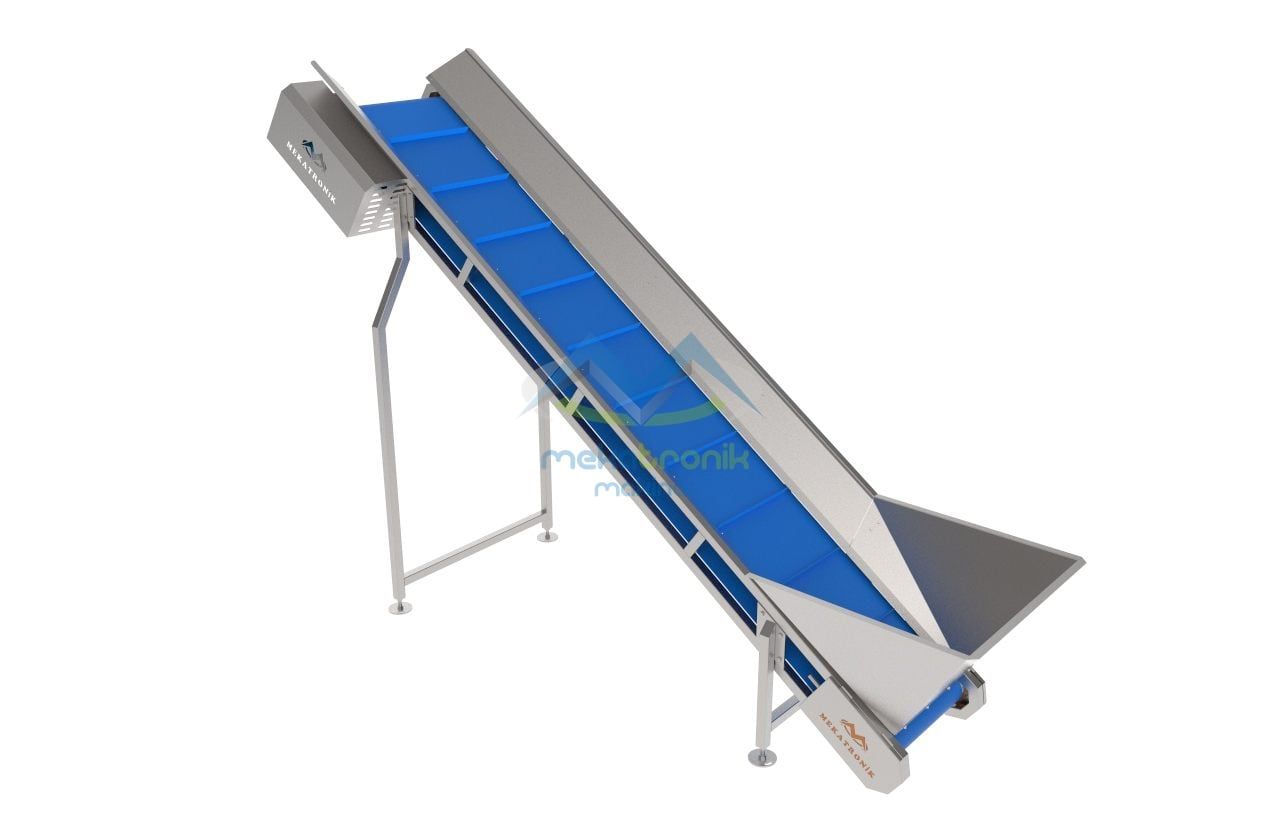
- 01Crate tipping and even feeding to bring product onto the line
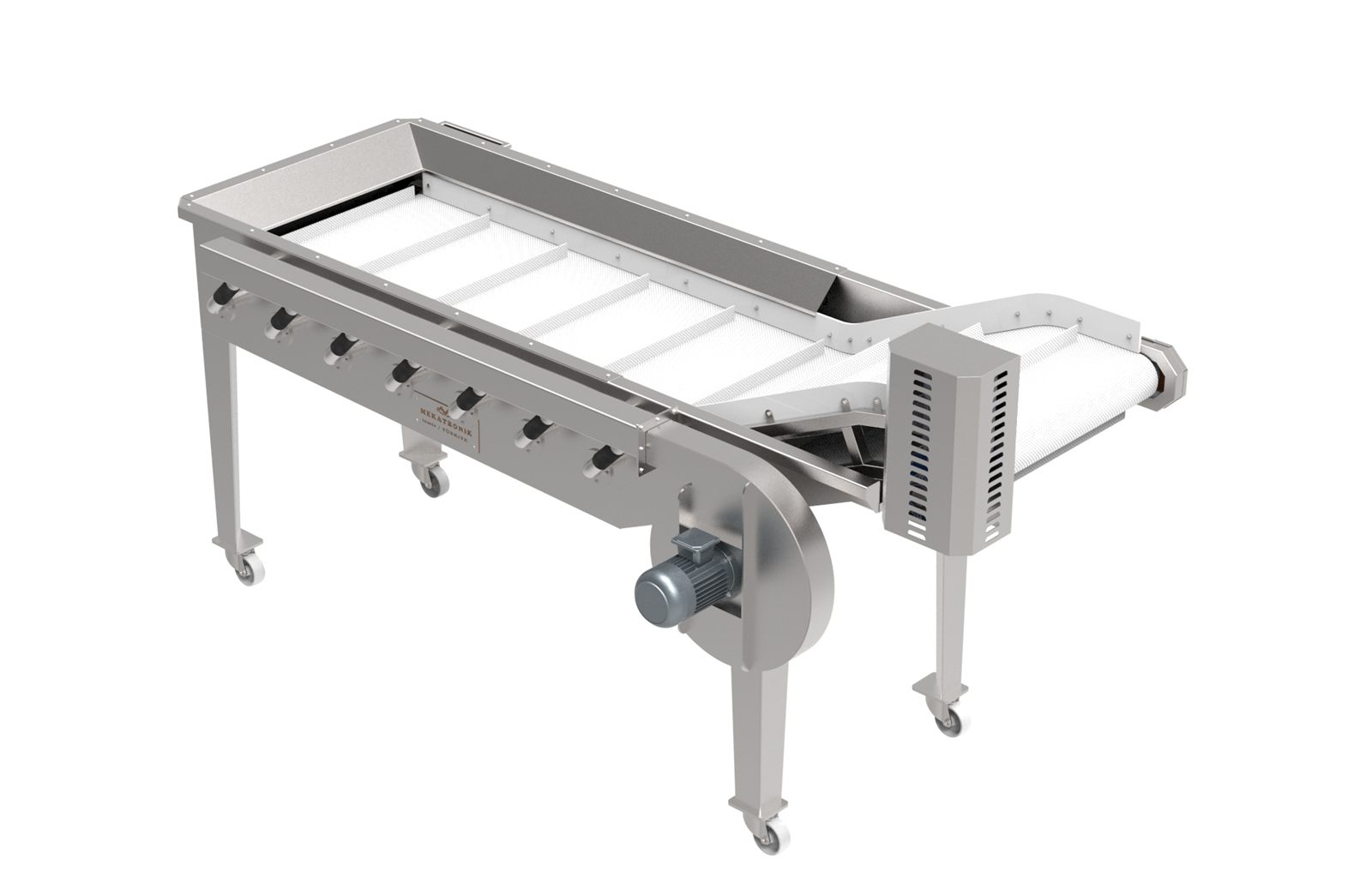
- 02Foreign material separation and screening
- 03Washing and dewatering where the product needs it
- 04Sizing, so pieces are separated by dimension
- 05Cutting into slices or dice
- 06Weighing and box filling
Sizing before cutting has a simple reason: fruit of similar dimension enters the blade more squarely. The full sequence is laid out on the dried apricot processing line page.
05
What to check when specifying one
| Item | What to look at |
|---|---|
| Cut size | Follows the blade set, defined per project |
| Product group | Whether extra blade sets adapt it to other fruit |
| Material | Body and contact surfaces AISI 304, AISI 316 where the process requires |
| Speed | Adjustable speed through a frequency inverter as an option |
| Cleaning | Covers that open, washable construction |
| Safety | Interlock system, emergency stop button |
Capacity figures are set per project: the daily target of the line, the moisture condition of the fruit and the requested cut size are considered together. If the machine is to be tied into line automation, that is agreed at the start, since cutting speed has to match the stations before it.
06
How the moisture of the fruit affects cutting
The second thing that upsets cut size is the fruit itself. Apricot that has dried too far breaks under the blade instead of being cut and yields small fragments, while fruit that is too moist sticks to the blade and soils the cutting surface faster. The same blade set gives two different results.
That is why a cutting station is never assessed on its own. Moisture is balanced at the appropriate point of the line before the fruit reaches the cutter, which is the job the jacuzzi unit takes on when moisture has to be brought back into dried fruit. On lines where cutting is the complaint, the fix often sits one step earlier.
07
Blade set changes and the maintenance window
Changing the set is planned work. The machine has an interlock system, so operation is blocked while covers are open and that section of the line stops during the change. Product changeovers are therefore grouped around the shift plan wherever possible.
The first batch after a change is checked for size. If the set has not seated correctly it shows up in that first check rather than several hundred kilos later. Adjustable feet mean the level of the machine relative to the line can be reviewed at the same time.
- 01Extra blade set for different cut sizes, optional
- 02AISI 316 stainless steel body where the process calls for it, optional
- 03Frequency inverter for adjustable speed
- 04Line automation integration for speed matching with earlier stations
- 05Project specific capacity and dimensions
Send us your cut size and daily target and we can work through the blade set and layout that fit. The quotation page is the quickest way to reach us.
TOPICS