
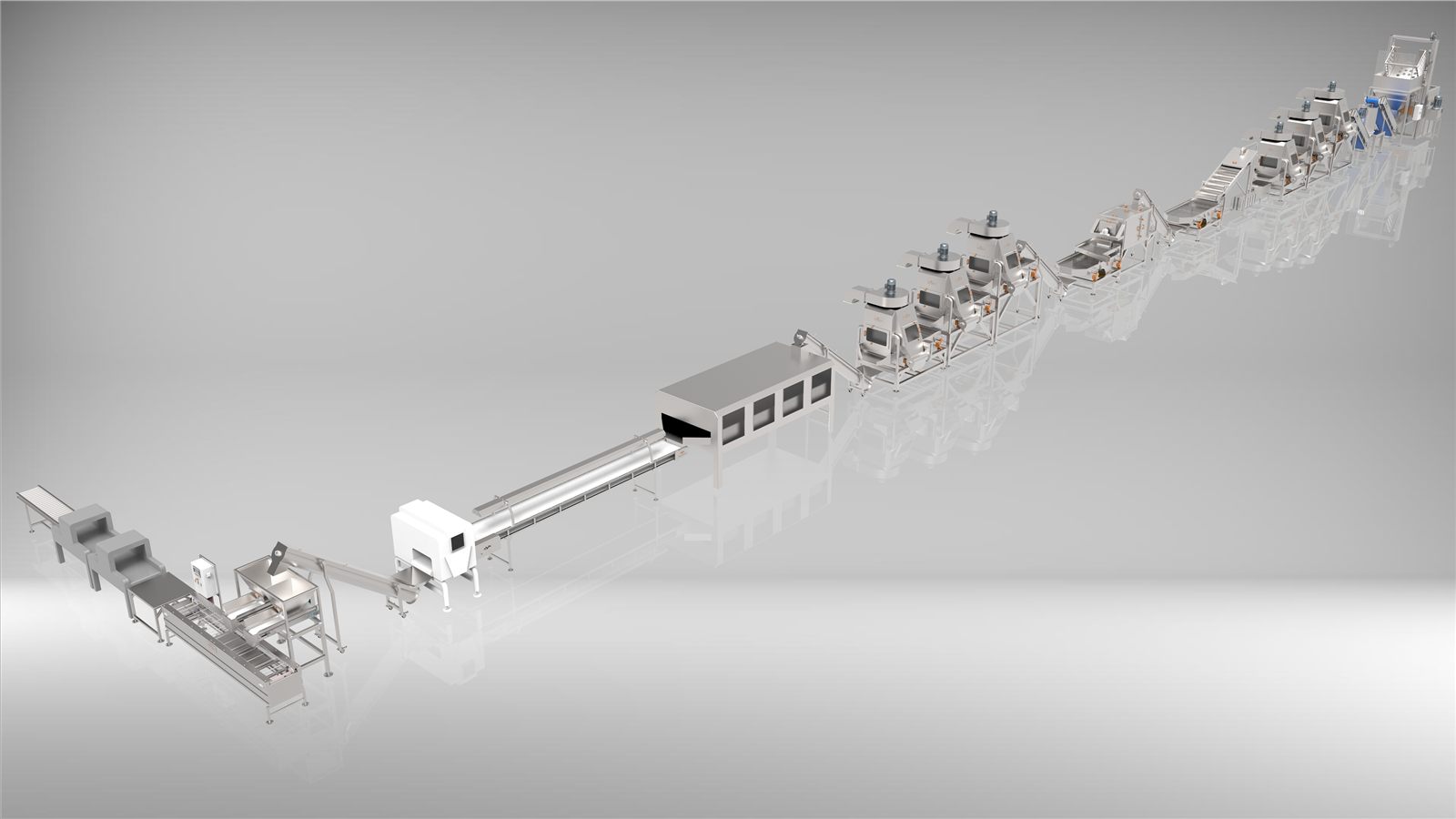
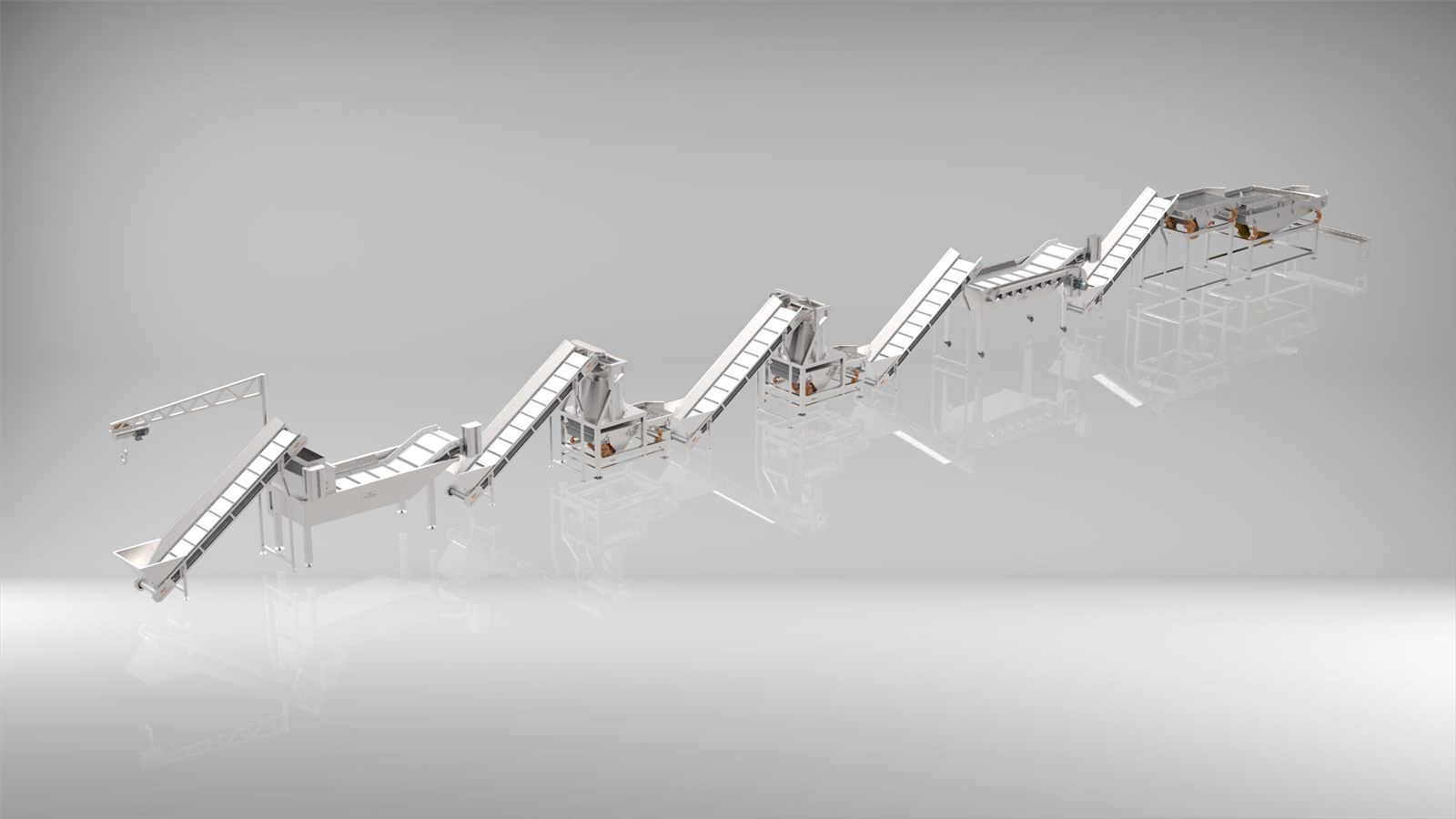
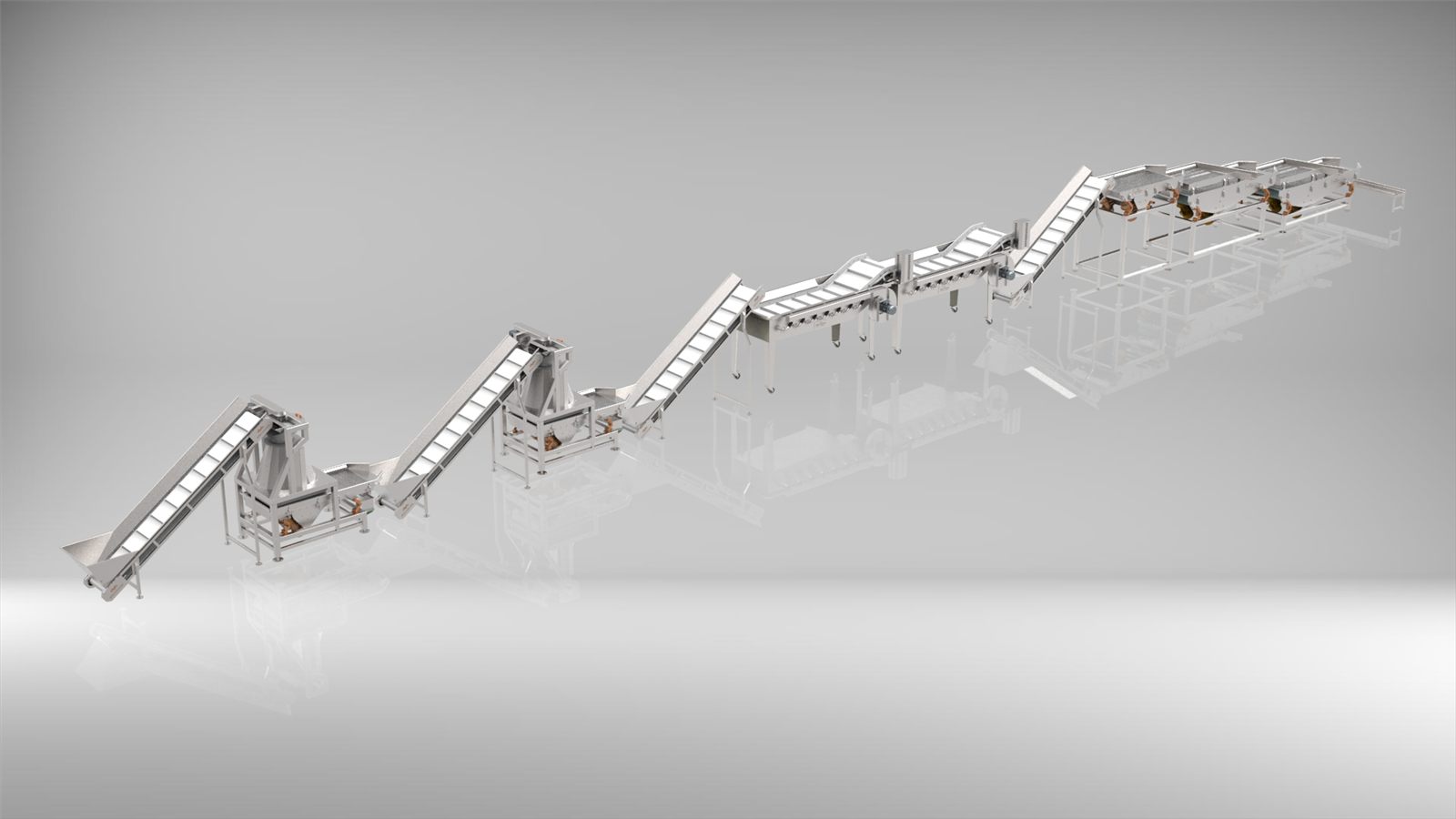
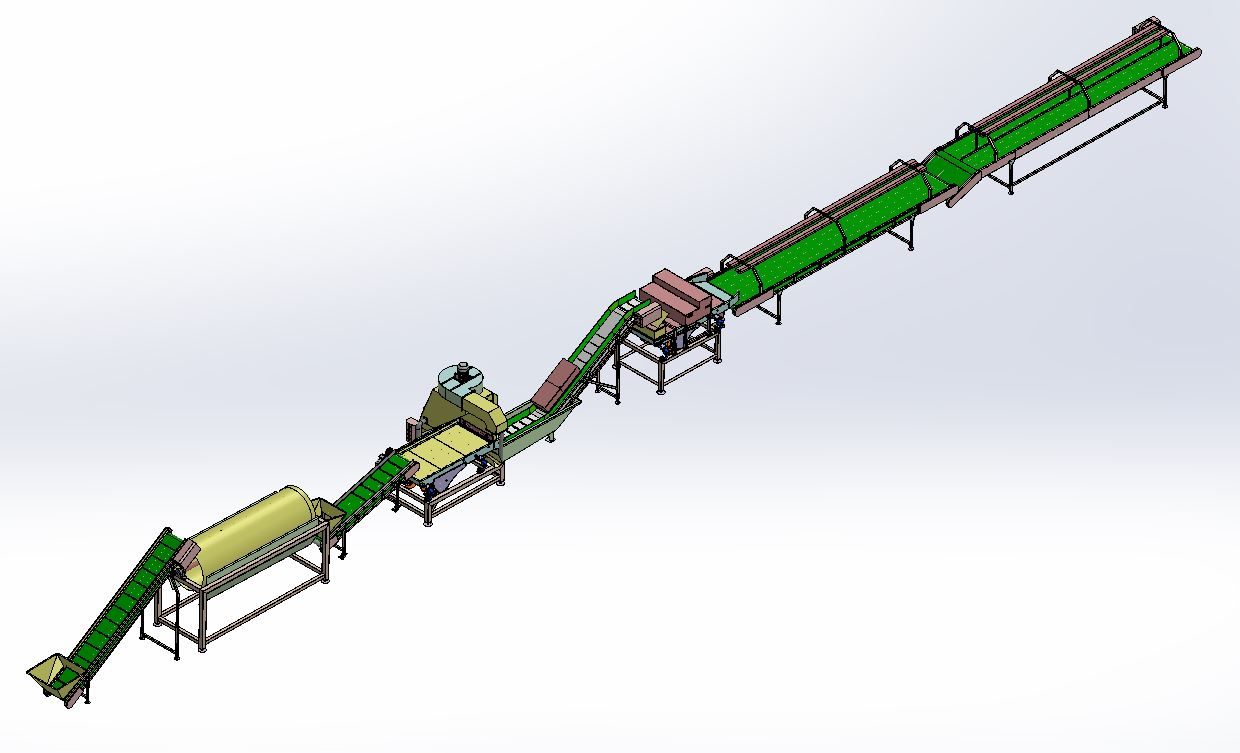
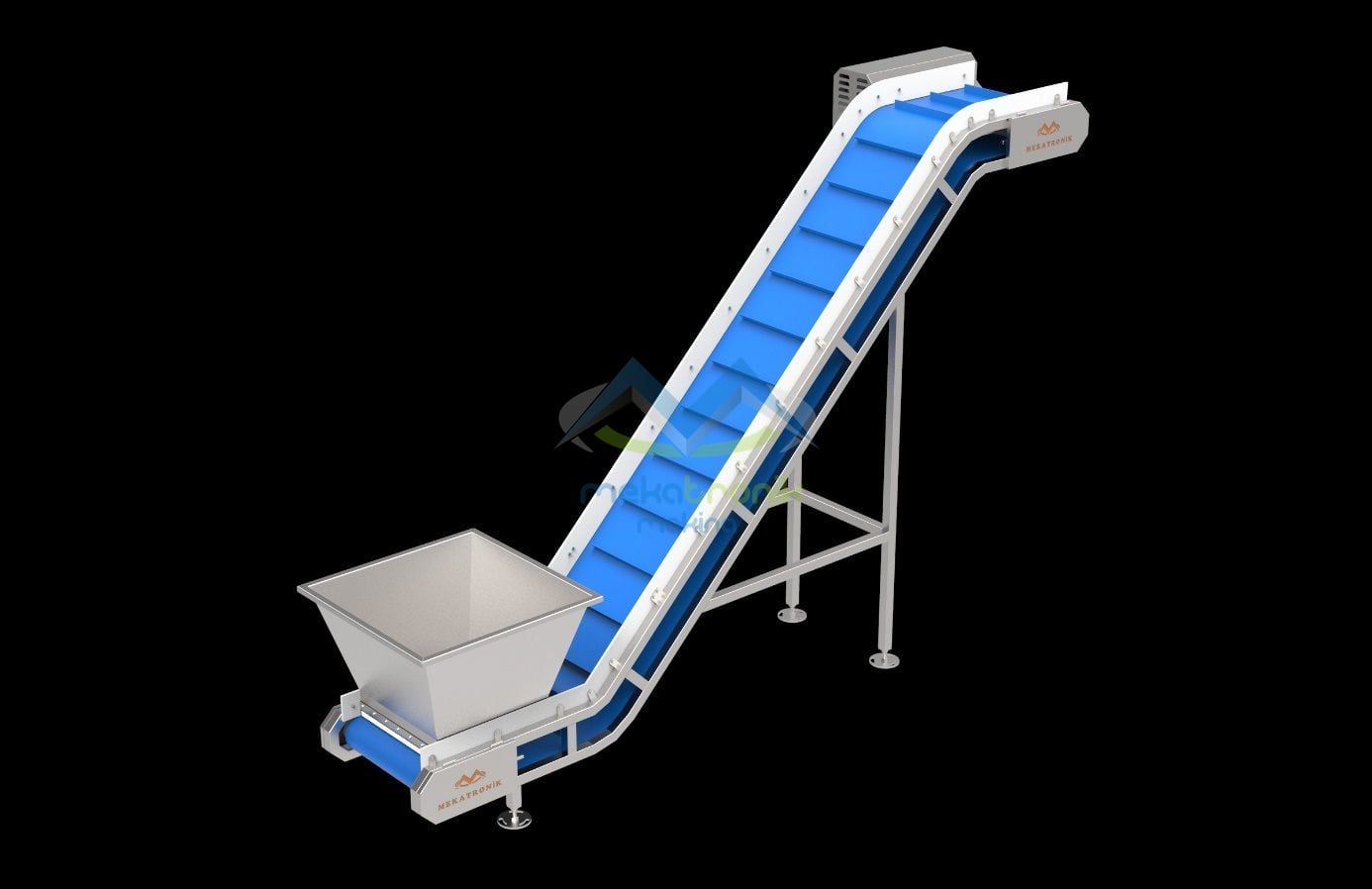
In dried fruit production, final product quality does not depend on raw material alone. The equipment used between intake and packing decides product quality, hygiene, throughput and how efficiently the plant runs. Since 1992 Mekatronik Makina has been building machines and complete processing lines for raisins, dried apricots, dried figs, dates, prunes and dried tomatoes.
01
How is a dried fruit processing line put together?
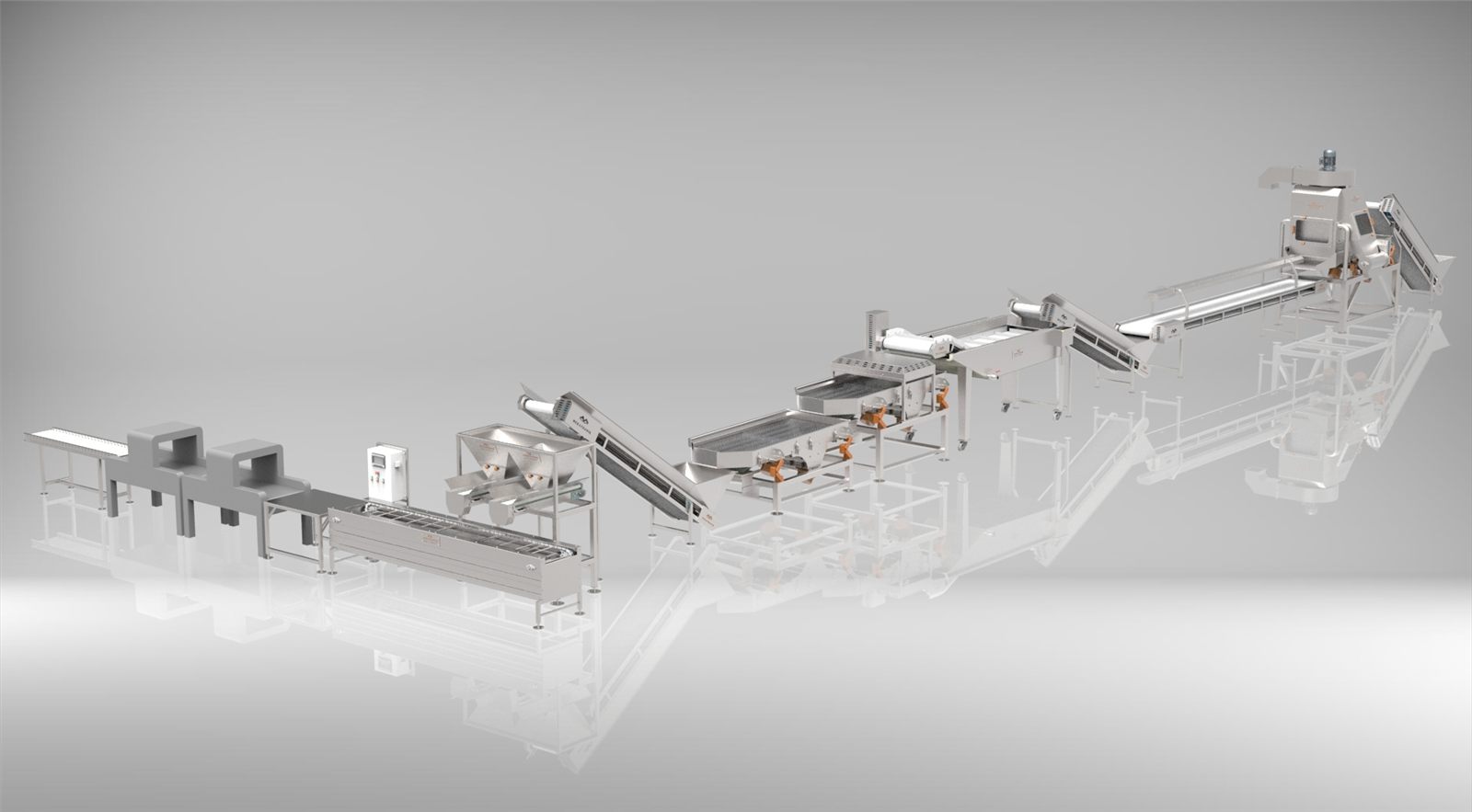
Every dried fruit has its own physical properties and processing requirements. A correct line is therefore not a fixed set of machines but a sequence of process stages chosen from the product and the intended final quality. In Mekatronik Makina systems the flow is generally built from these steps:
- 01Raw material intake and pre-cleaning
- 02Foreign matter separation
- 03Washing
- 04Surface water removal
- 05Stem and unwanted fraction removal
- 06Sizing and calibration
- 07Inspection and hand sorting
- 08Weighing, filling and packing
Depending on the product and the way the plant already works, these stages can be reordered, extended with additional machines, or designed from scratch for a specific facility.
02
Pre-cleaning and foreign matter separation
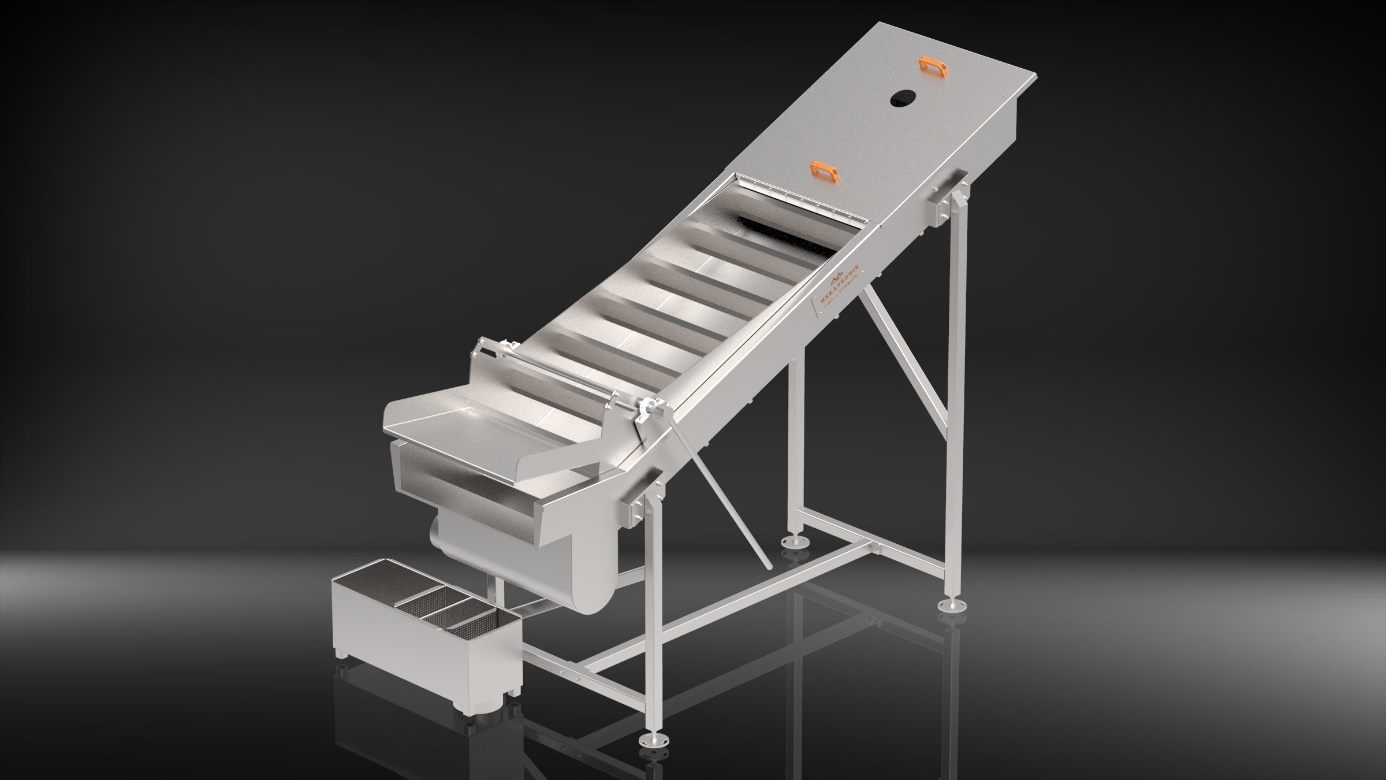
When dried fruit arrives at the plant it can carry leaves, stems, light foreign matter, stones and sand. One of the first objectives of the line is to separate these with as little damage to the product as possible. Depending on the product and the process, aspiration systems and a multi stage stone and sand separation cascade can work together; the cascade uses the difference in physical properties between the product and the heavy foreign matter.
Getting this stage right lets the downstream processes run under better control and reduces the amount of foreign matter carried into the washing system.
03
Washing and surface water removal
Washing is not simply bringing the product into contact with water. Surface soil and material released during the process have to be removed while the physical structure of the fruit is preserved as far as possible. Controlled water use and water recirculation can be applied according to the process. In washing tanks and sections in heavy contact with water, AISI 316 stainless steel is preferred depending on the application; other food contact surfaces are built in AISI 304.
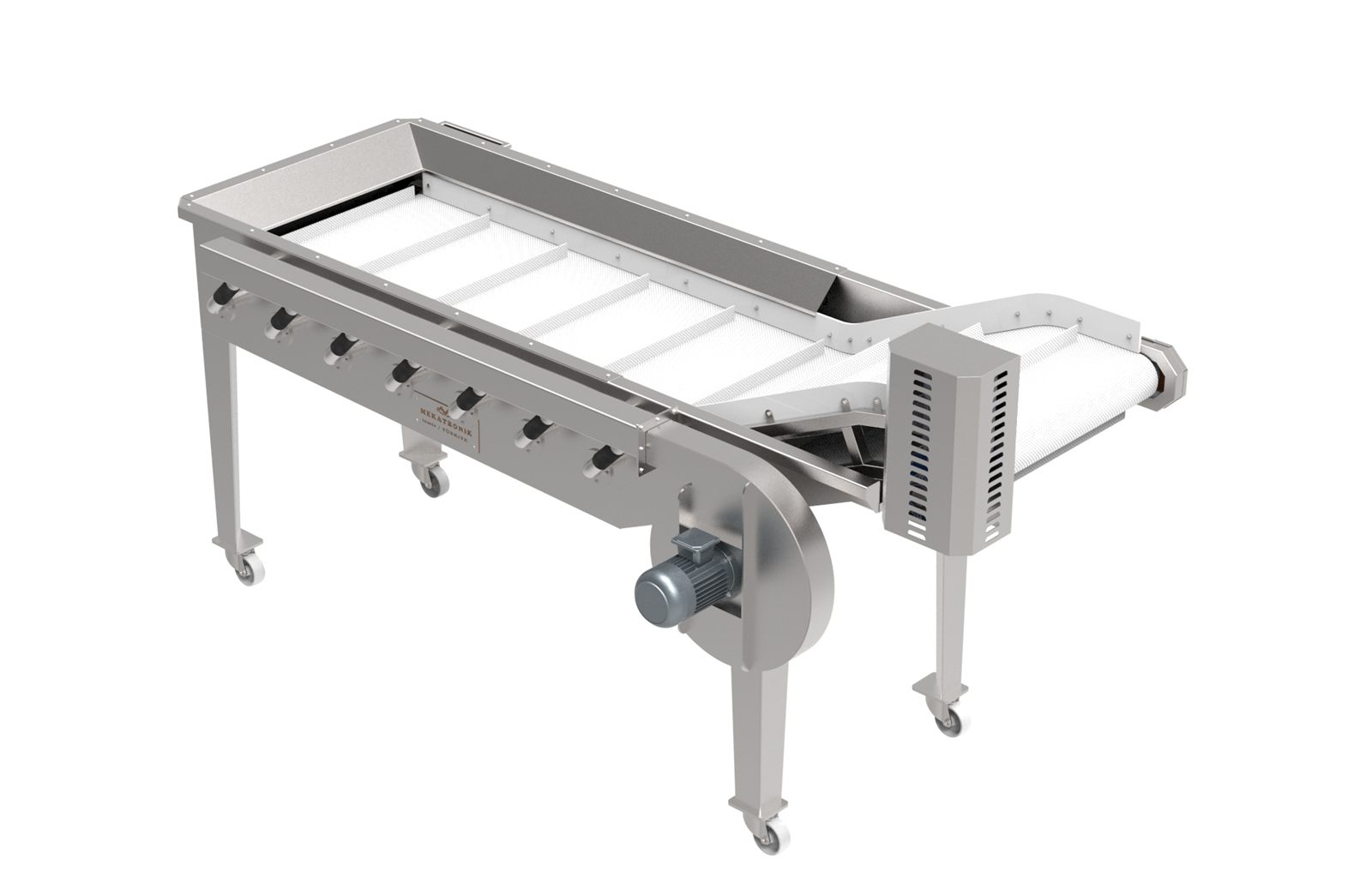
Water left on the surface after washing can disturb the following processes. This is why fan assisted dewatering shakers, which combine vibration with a controlled air flow, sit right after the washer; longer fan tunnels can be integrated when the process calls for it. One distinction matters here: re-drying the product and removing only the free surface water are two different processes.
04
Sizing, quality control and packing
Grading dried fruit by size matters both for commercial quality and for the packing process that follows. Sizing systems separate the product into defined size ranges, which helps build standard grades for export production. Different calibration and sizing systems are used depending on the fruit.
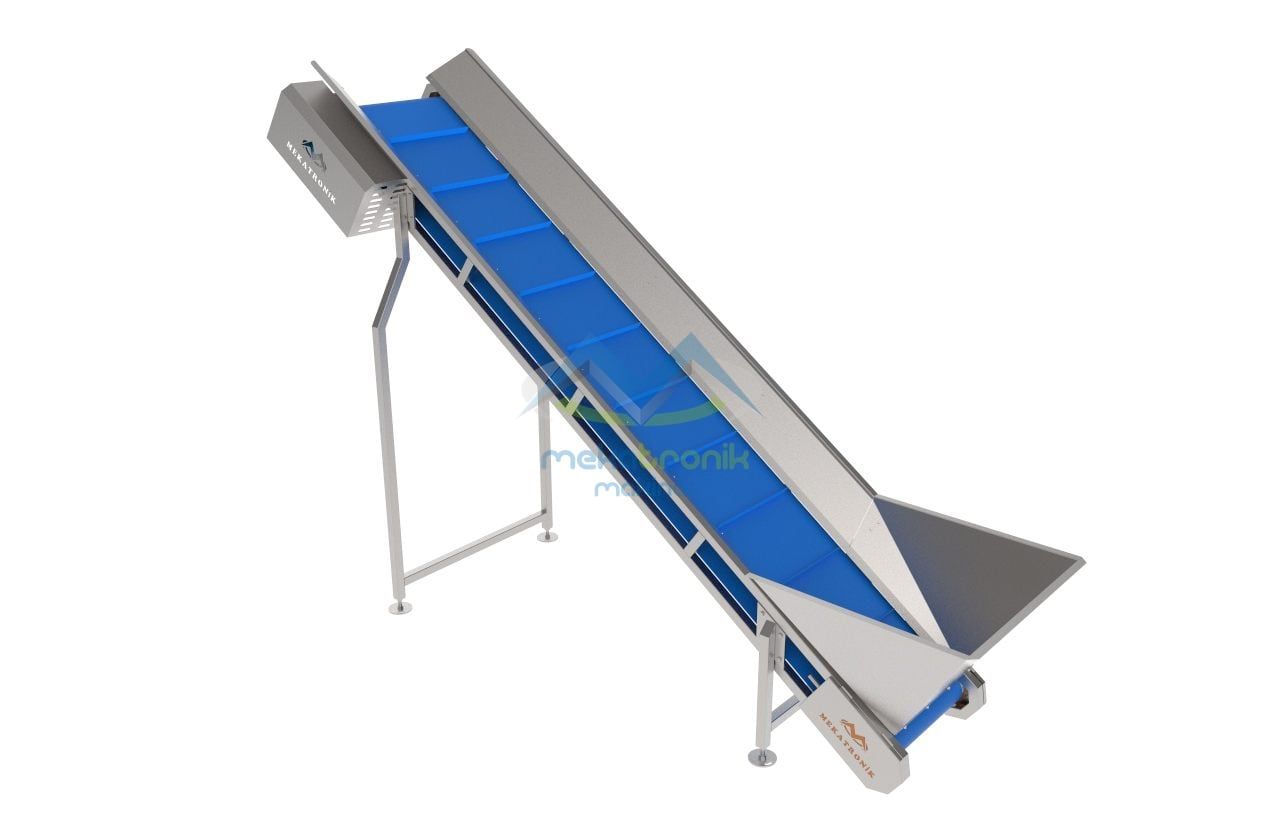
After the mechanical cleaning steps the product can be inspected by operators on illuminated sorting conveyors, where colour, physical deformation and visible defects are taken out. Plants that want a higher level of automation can integrate optical sorters, laser separators, X-ray units and metal detectors into the line. The cleaned, washed, sized and inspected product is then finished with weighing, box filling, packing, metal checking and product handling equipment. The aim is not a set of individual machines but an uninterrupted flow from raw material to packed product.
05
Does every product use the same line?
No. The process designed for raisins is not the process used for dried apricots, figs or dates. The main variables that drive machine selection are:
- 01Moisture content and stickiness of the product
- 02Particle size and mechanical strength
- 03Amount of foreign matter in the raw material
- 04How much washing the product actually needs
- 05Target properties of the final product
- 06The production method already in use at the plant
A common mistake when choosing a line is to focus only on the tons per hour question. Real production performance depends on the fruit, its incoming moisture, the share of foreign matter, the cleaning level required, the number of operators and how well the machines are balanced against each other. A machine that can run at a high rate on its own does not mean the whole line will deliver the same quality at that rate. The sound engineering approach is to balance the line rather than to enlarge each machine separately.
06
Why hygienic design decides so much
In food processing machinery, cleanability counts as much as performance. Areas where product residue can collect have to be reduced, operators need access to the cleaning points, and the sections working with water need the right material. Mekatronik Makina uses AISI 304 and AISI 316 stainless steel according to the application, with TIG and laser welding in stainless fabrication. Good hygienic design does more than shorten cleaning time: it supports production continuity and makes food safety requirements easier to apply consistently.
In complete line design the result comes from machines working in the right order and in balance with each other, not from buying more of them. If you need new machines integrated into an existing factory or a line designed for a new facility, share the product, the raw material characteristics and the target capacity and request a quotation; exact figures are settled during the project evaluation.