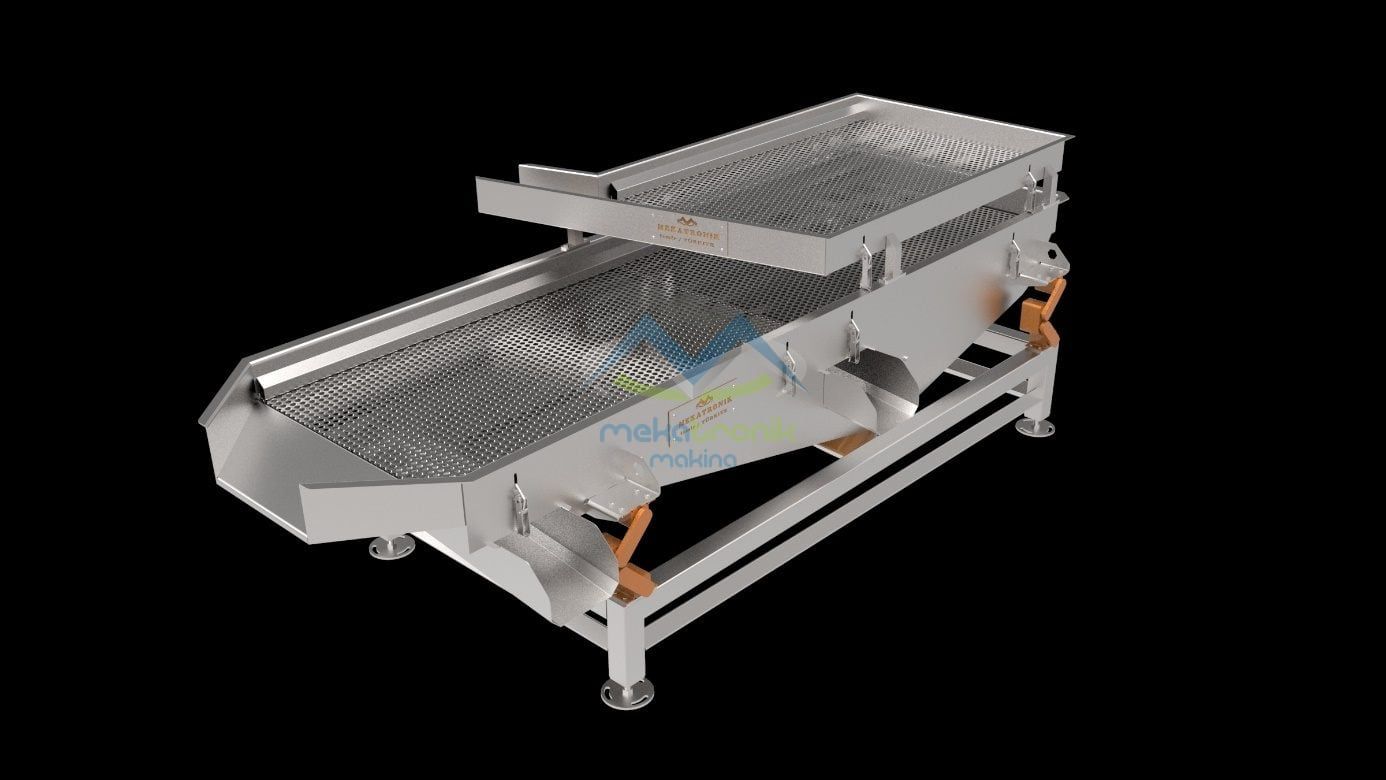
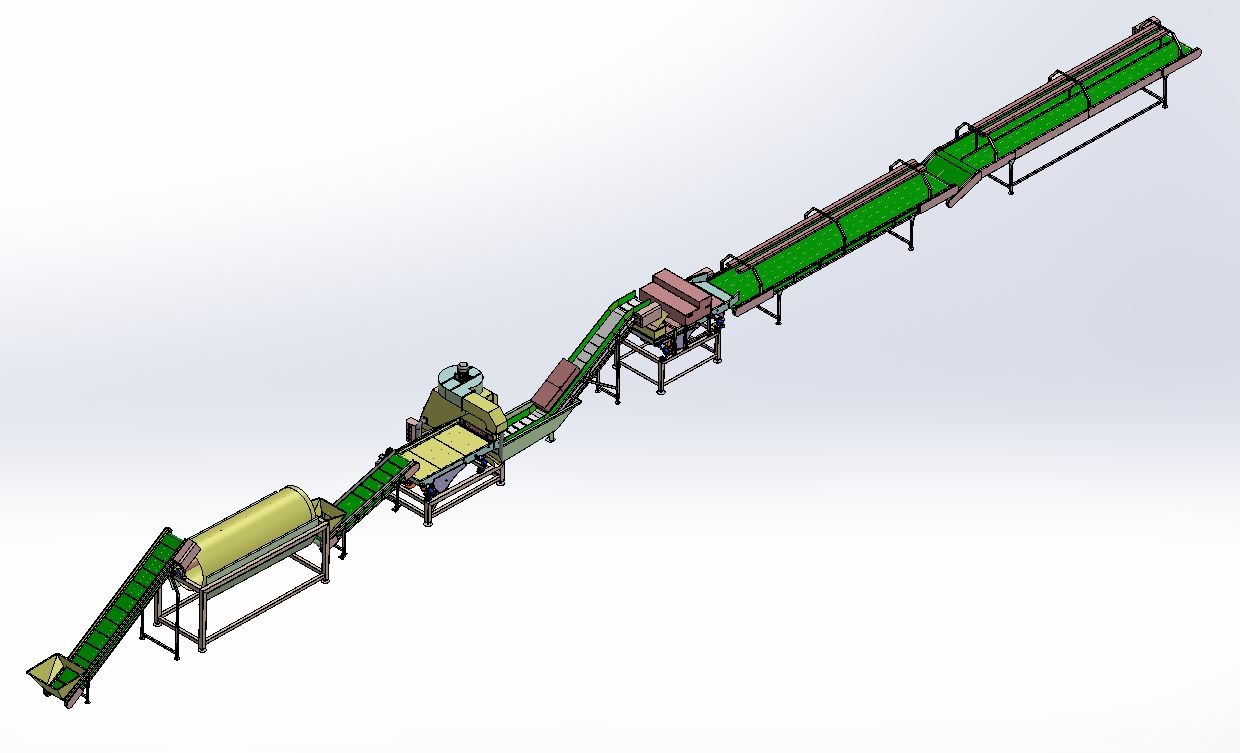
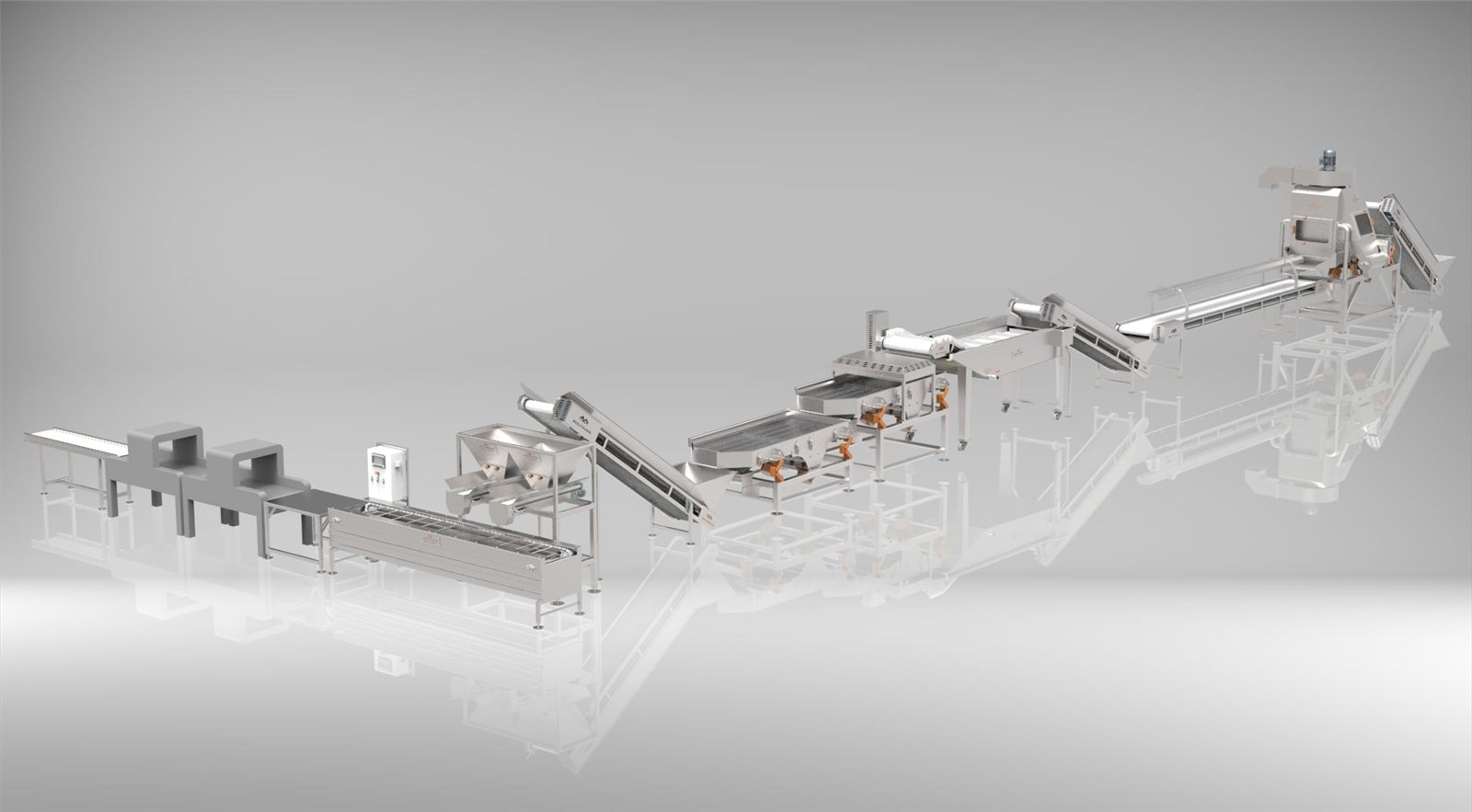
In a dried fruit vibrating screen, the main element that sorts product into grades is the screen aperture: fruit larger than the aperture stays on the screen, smaller fruit passes through. But grading does not depend on the screen alone; the feed pattern and the vibration also shape the result. That is why the dried fruit vibrating screen (sizing) is engineered as a whole.
01
How does the aperture size set the grade?
As the product travels across the screen under vibration, fruit smaller than the aperture drops through and larger fruit stays on the surface and keeps moving. Each fraction is taken off through its own outlet. The aperture size therefore directly decides which size range goes to which outlet.
Dried fruit is not perfectly round. Apricots, figs and dates can be long or flat, and a piece may meet the screen lengthwise or sideways. For this reason the aperture is chosen for the product group: the stainless screens of this machine are designed specifically for the product group. A generic screen set does not give the same separation quality on every product.
02
What does the double-deck screen system do?
The machine works with a double-deck screen system. While the product travels across the decks, coarse debris is separated from it, so sizing and coarse debris separation happen at the same time. Combining two jobs in one machine, instead of two machines with a transfer between them, shortens the line and reduces the chance of damage at transfer points.
- 01Screens: separate coarse debris and classify by size
- 02Double-deck structure: sizing and coarse debris separation in one machine
- 03Wide outlets: each size fraction taken off separately and comfortably
03
What else affects grading besides the aperture?
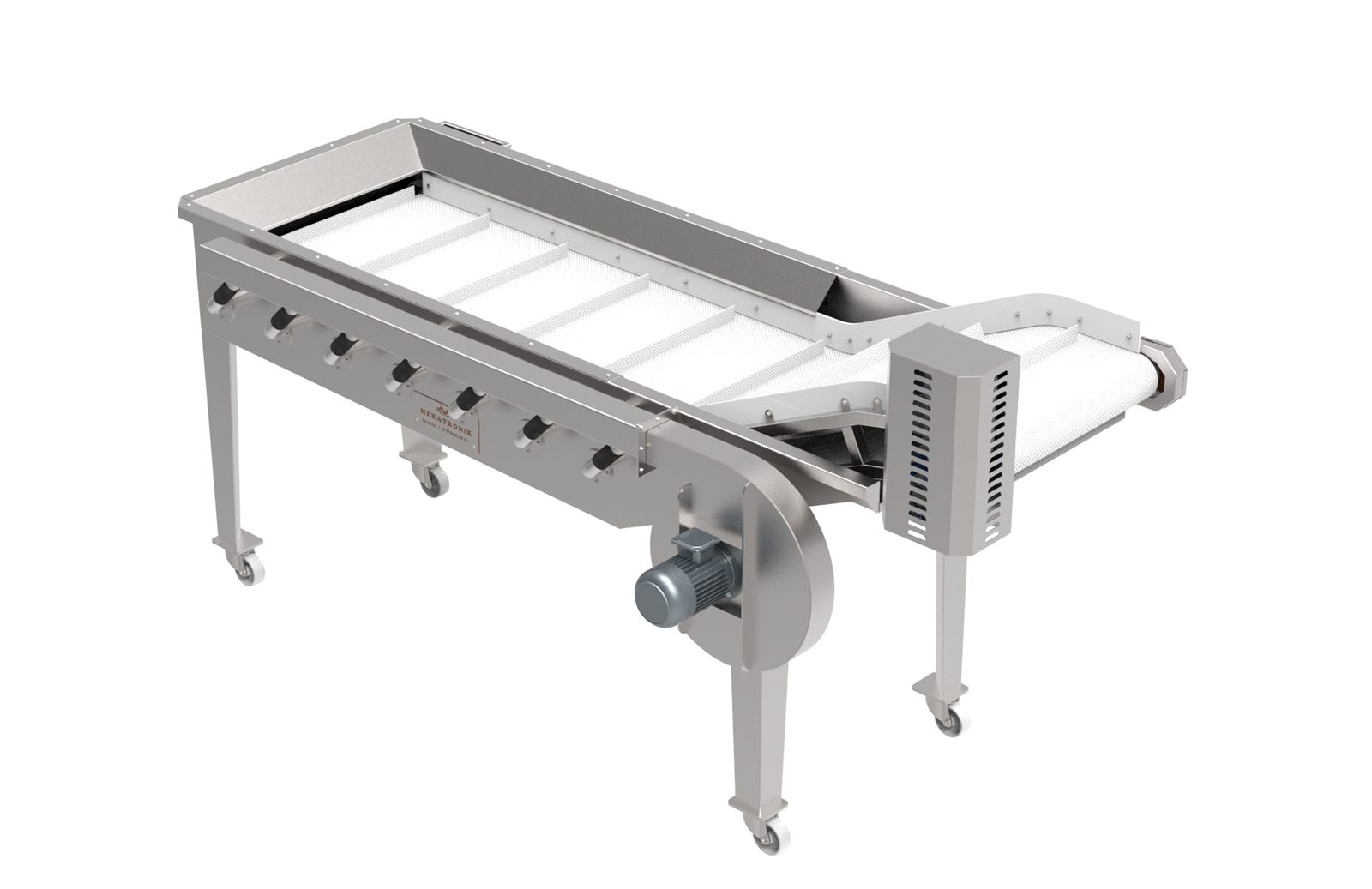
Size alone is not enough. If the product reaches the screen as an uneven pile, fruit underneath cannot reach the apertures and ends up in the larger fraction. That is why a balanced product feed doser sits before the sizing station and spreads the product over the screen in a single layer.
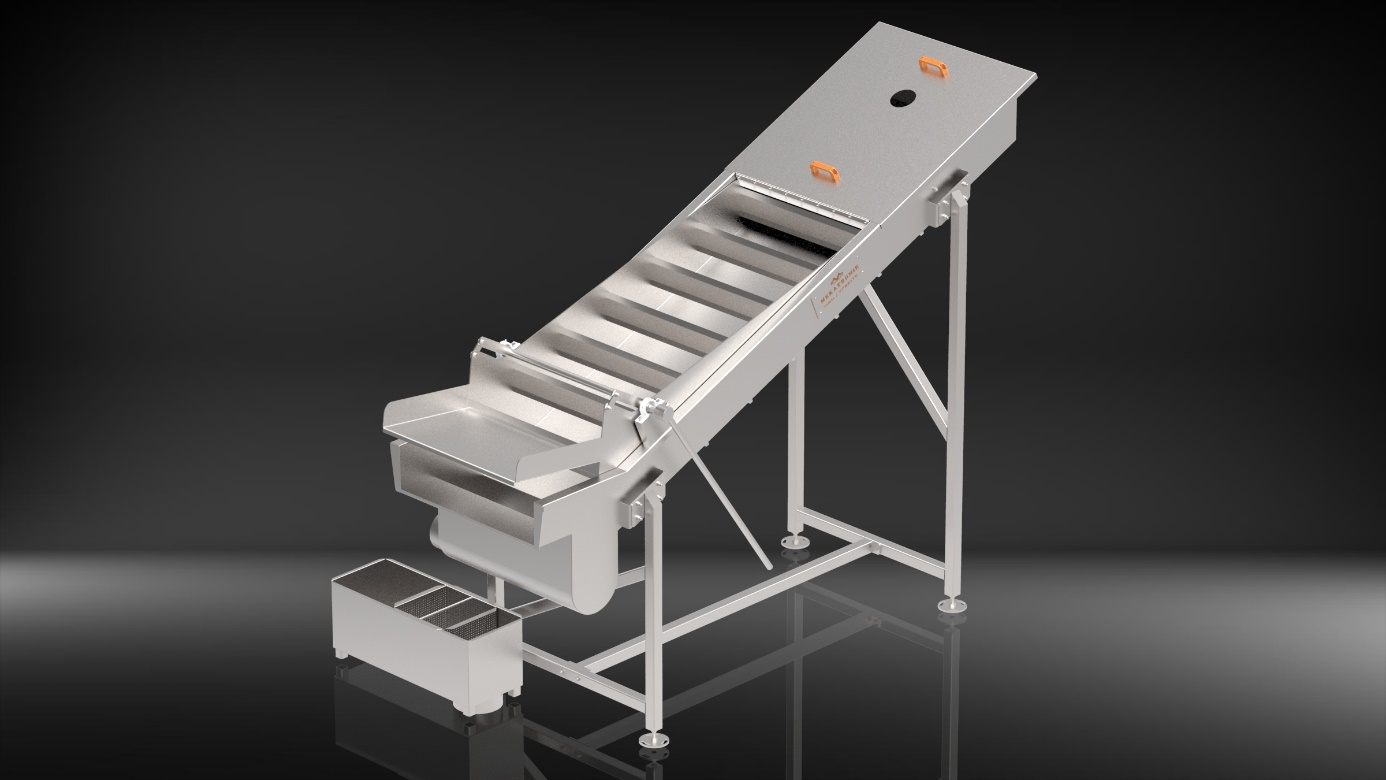
Moisture and surface condition matter too. Wet product coming out of washing can clog the apertures, and sticky fruit can cling together and fall into the wrong fraction. For this reason, in apricot and fig lines, sizing follows the dewatering shaker screen.
| Factor | Effect on grading |
|---|---|
| Screen aperture | Decides which fruit goes to which outlet |
| Feed pattern | Without a single layer, small fruit ends up in the larger fraction |
| Vibration | Moves the product across the screen and drives the separation |
| Product moisture | Wet or sticky product clogs the apertures |
| Screen material | Product-contact surface is AISI 304 stainless steel |
04
Which products is it used for?
The machine is used for dried fruit sizing and takes its place as the sizing station in apricot and fig lines. The same logic applies to other products such as raisins and dates, but the aperture sizes are set again for each product. Capacity is determined per project; hourly figures are confirmed at the quote stage.
05
Where does the product go after sizing?
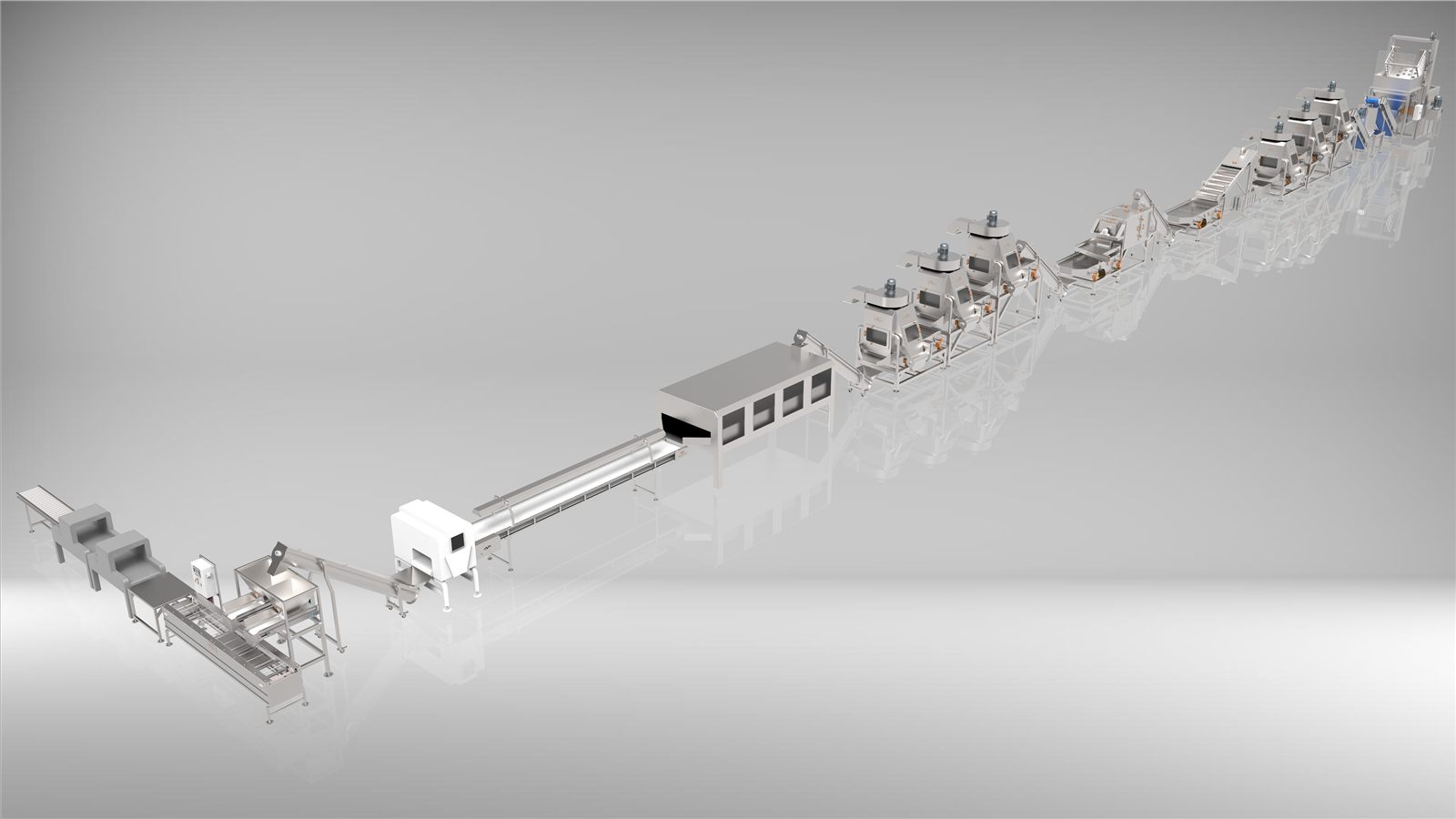
In apricot and fig lines, sized product goes on to the crate filling station, and in figs also to the illuminated sorting belt. Defects are picked out by eye on the sorting belt, while the crate filling stand fills the crates with a shortened drop height. The cleaner the sizing, the more uniform the product the next stations work with.
06
How is the screen handled when the product changes?
Because the screens are designed for the product group, moving from apricots to figs or dates raises the question of whether the same screen set is adequate. For plants running several products this is one of the first topics to settle when ordering the machine: which products, which size ranges and how many fractions are wanted.
Vibration comes from a vibro motor system. Because the screens are stainless steel parts that can be separated from the machine, cleaning and, where needed, screen replacement can be done without touching the rest of the machine.
| Feature | Detail |
|---|---|
| Body and product-contact surface | AISI 304 stainless steel (AISI 316 optional depending on the process) |
| Operating system | Vibrating screening, double-deck screen |
| Drive | Vibro motor vibration system |
| Product outlet | Wide outlets for different sizes |
| Capacity | Determined per project |
07
Next step
To define the screen structure and number of outlets for your product, send the product type, target size ranges and layout dimensions through the quote page. Custom dimensions can be built for the place and purpose of use.