Prunes are used in diced or julienne form in bakery and pastry production, breakfast products, muesli and granola blends, fruit bars and industrial food manufacturing. Cutting them on an industrial scale, however, is not simply a matter of passing the product through a blade system: the high moisture content, the soft texture and the sticky surface that comes with natural sugar all affect cut quality, capacity and how the product moves inside the machine. In a professional line, product preparation, controlled feeding, stickiness control, cutting and post cut screening are therefore assessed together.
01
Why is cutting prunes a process of its own?
Prunes are a natural agricultural product, and even within the same batch the following can differ:
- 01Size and flesh thickness
- 02Moisture content and softness
- 03Sugar content
- 04Pit cavity
- 05Surface stickiness
These variables decide how the prune behaves when it meets the blades. In soft, high moisture product especially, the fruit can change shape under mechanical pressure just before it is cut. The target in industrial cutting is therefore not high capacity alone; capacity, a controlled cut, low deformation and a consistent size distribution are pursued together.
02
What is the difference between dicing and julienne cutting?
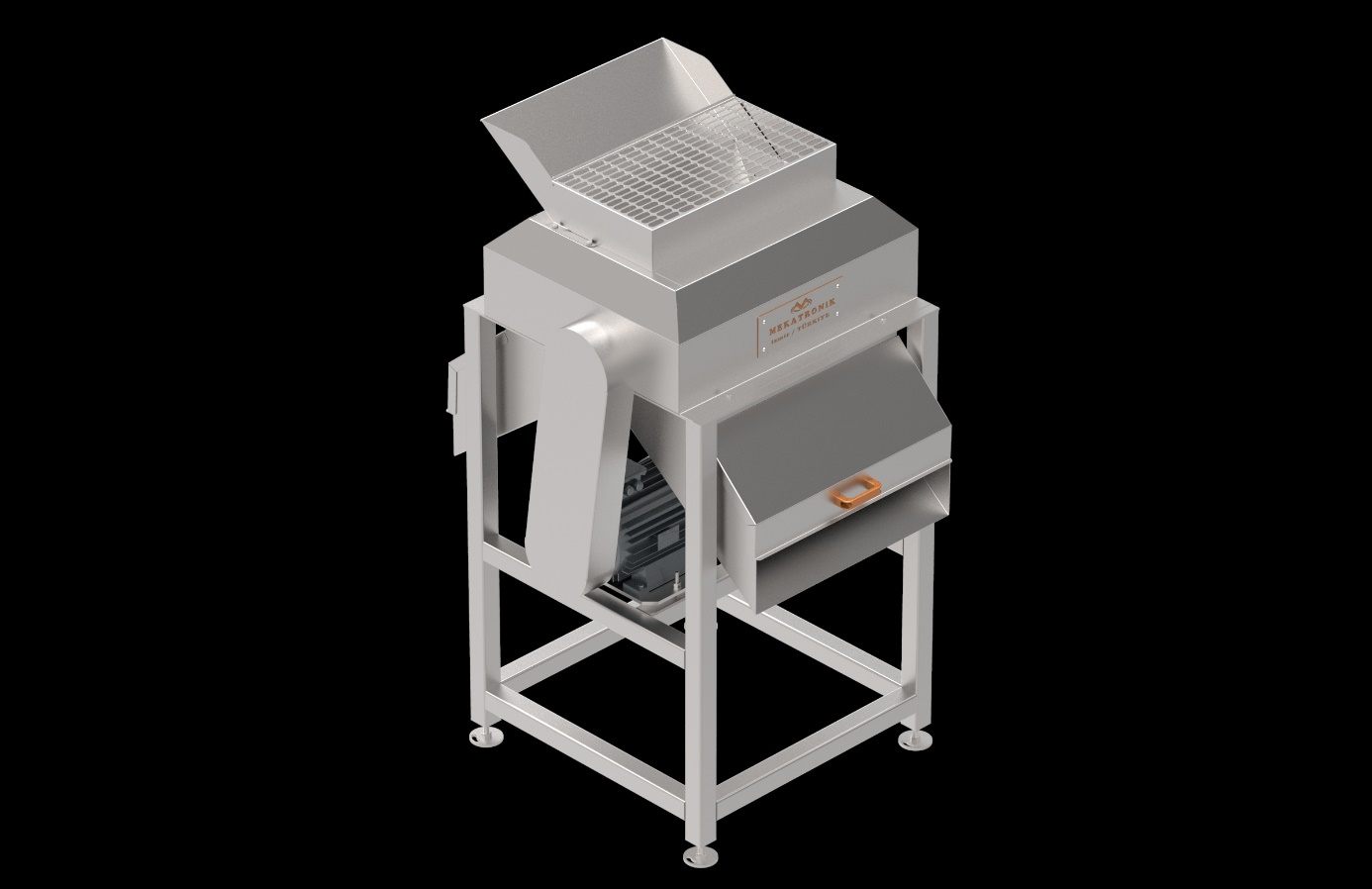
Prunes can be cut into different geometries depending on the final application. In dicing, the aim is to reduce the product to small pieces at a defined nominal dimension; in the Mekatronik Makina dicing machine, blade sets such as 5 mm, 8 mm and 10 mm can be used according to the application. When an 8x8 mm cut is requested, the blade system is configured for that nominal size. Diced prune is used in fruit blends, bakery products, granola and muesli, snacks, fruit bars and industrial food recipes.
In julienne cutting the product is cut into longer strips, which gives a different visual character and a different use from the diced product. Which method is preferred is decided by the customer's final product specification.
03
How do pitting and moisture affect the cut?
The product has to be pitted before dicing or julienne cutting. A pit is not only a physical obstacle in the cutting system; it also carries a risk of damage to the blades and to mechanical components. Checking the product for pits or pit fragments before cutting is therefore important. In a pitted prune a natural cavity is left in the centre of the fruit and its mechanical stability drops; if a soft prune is exposed to excessive pressure before it reaches the cutting system, it can flatten or change shape. Pitting and cutting should not be considered independently of each other.
Moisture is one of the most decisive variables. As moisture rises the product generally becomes softer and stickier, and it can deform on contact with the blades before being cut. An overly dry product brings the opposite problem: it behaves harder and produces more fines during cutting. The aim is not to dry the product as far as possible but to bring it to the cutting process in a condition that suits it and is as homogeneous as possible.
04
Stickiness and the flouring system
Prunes are sticky because of their natural sugar content. When the product is cut the inner surfaces are exposed and the sticky surface area increases considerably. Product then sticks to itself, builds up on machine surfaces, changes the working conditions of the blades and disturbs the flow; in the end it is not only capacity that suffers but cut quality as well. Controlling stickiness is therefore a process step in its own right in industrial prune cutting.
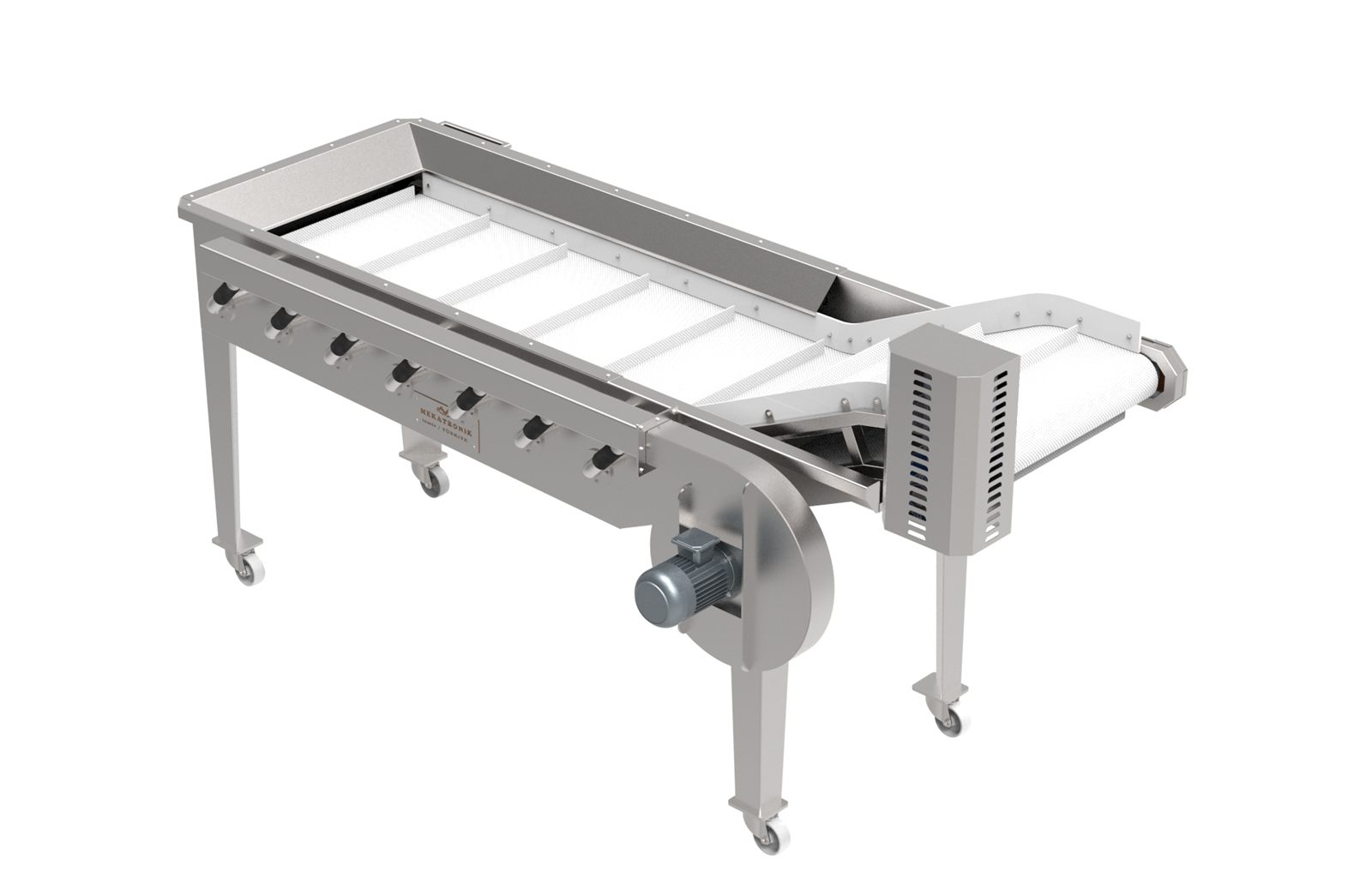
Depending on the application and the customer's own recipe, rice flour or another food component suited to the process can be used in the line. The purpose of the flouring system is to reduce how much the product sticks to itself and to machine surfaces, not to coat it heavily in flour. The correct approach is a controlled amount of flour, an even distribution and recovery of the excess. In Mekatronik Makina cutting systems, flouring and flour recovery systems can be integrated into the line according to the project.
05
Balanced feeding and the blade system
Feeding the cutting machine with more product than it can take at once makes the pieces overlap and jam. This matters even more with soft prunes: when the machine is overfed, the product presses against itself instead of reaching the blades under control. A balance therefore has to be struck between machine capacity and the amount fed. Balanced product feeding gives a regular flow, a regular flow gives a controlled cut, and a controlled cut gives a more homogeneous final product; this chain is one of the basic principles of process design.
The nominal cut size is set by the blade set in use: with an 8x8 mm blade system the target nominal cut is 8x8 mm. But the blade spacing is fixed while the geometry of the prune is not. Prunes differ in diameter, thickness and pit cavity, so using an 8x8 mm blade does not mean that every piece leaving the machine will measure exactly 8x8 mm under a caliper.
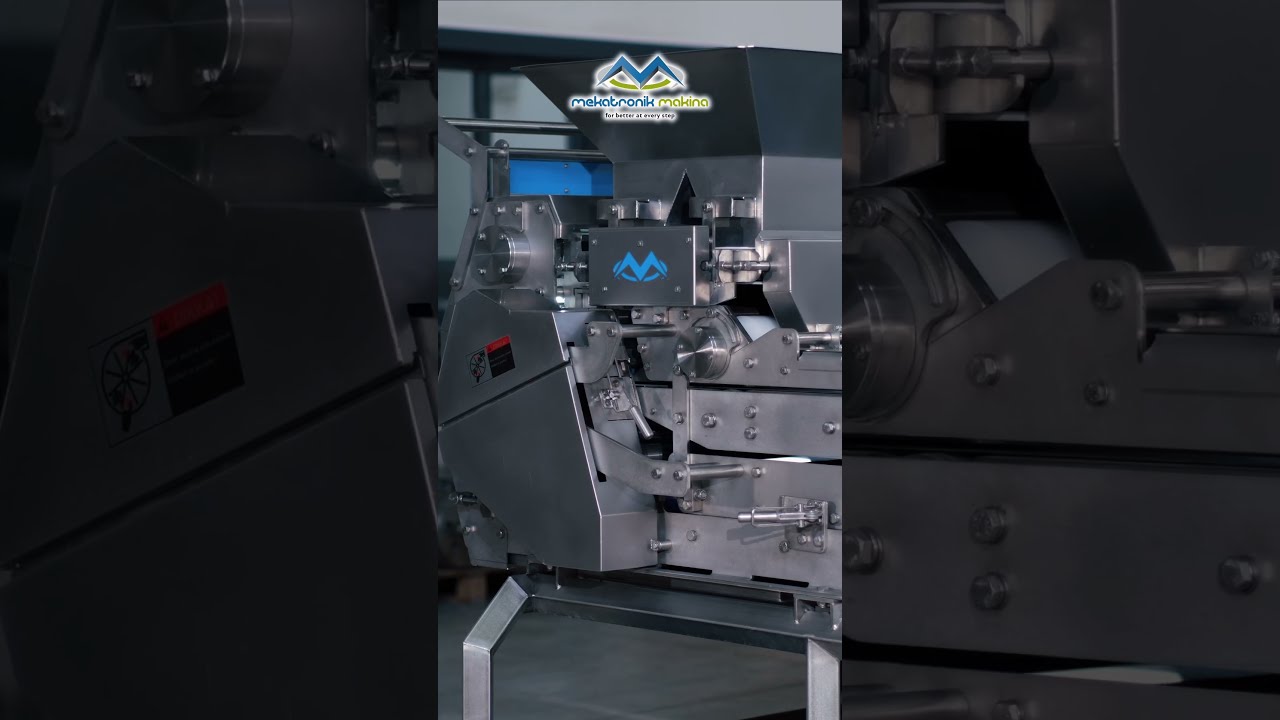
Blade sharpness weighs as much as blade size. A sharp blade cuts the product with as little deformation as possible; a blunt blade starts compressing it before cutting. In soft prunes this shows up as crushing, flattening, ragged edges, more fines and product building up around the blade. Regular inspection, cleaning and, where needed, maintenance or replacement of the blades is what keeps cutting performance sustainable.
06
Why is no piece the same size, and what does screening do?
In the industrial cutting of natural products, the nominal cut size and the final size distribution are not the same thing. A piece taken from the centre of a prune and one taken from its outer edge will naturally have different geometry, and the products themselves differ in thickness, moisture and pit cavity. In professional production the aim is therefore not to make every piece identical but to bring the highest possible share of the product into the target specification.
This is where post cut screening and calibration comes in. After cutting, fines, product at the target size and oversize pieces are present together; the screening system separates these fractions. The size distribution of the product going to packing or to the next process then becomes far more controlled. In industrial applications where the specification is set with tight tolerances, assessing cutting and screening together gives a clear advantage.
07
Flour recovery and real capacity
In processes that use flour, more flour than needed can remain on the product after cutting. A screening and flour recovery system can therefore be used in the line according to the application; its purpose is to separate the excess flour from the product and recover the part that can be reused within the process design. Flouring, cutting, screening, separation of the excess flour and flour recovery then form a controlled loop. This helps both to control how much flour stays on the product and to improve process efficiency.
The capacity of a prune dicing machine is not set by motor power or machine speed alone. Real production capacity emerges from product size, moisture, softness, stickiness, the target cut dimension, the amount fed and the final quality required, all assessed together. The same machine can show a different effective capacity on two different batches of prunes, which is why trials with a real product sample give a significant advantage when deciding the machine configuration for a new project.
08
How the complete line is put together
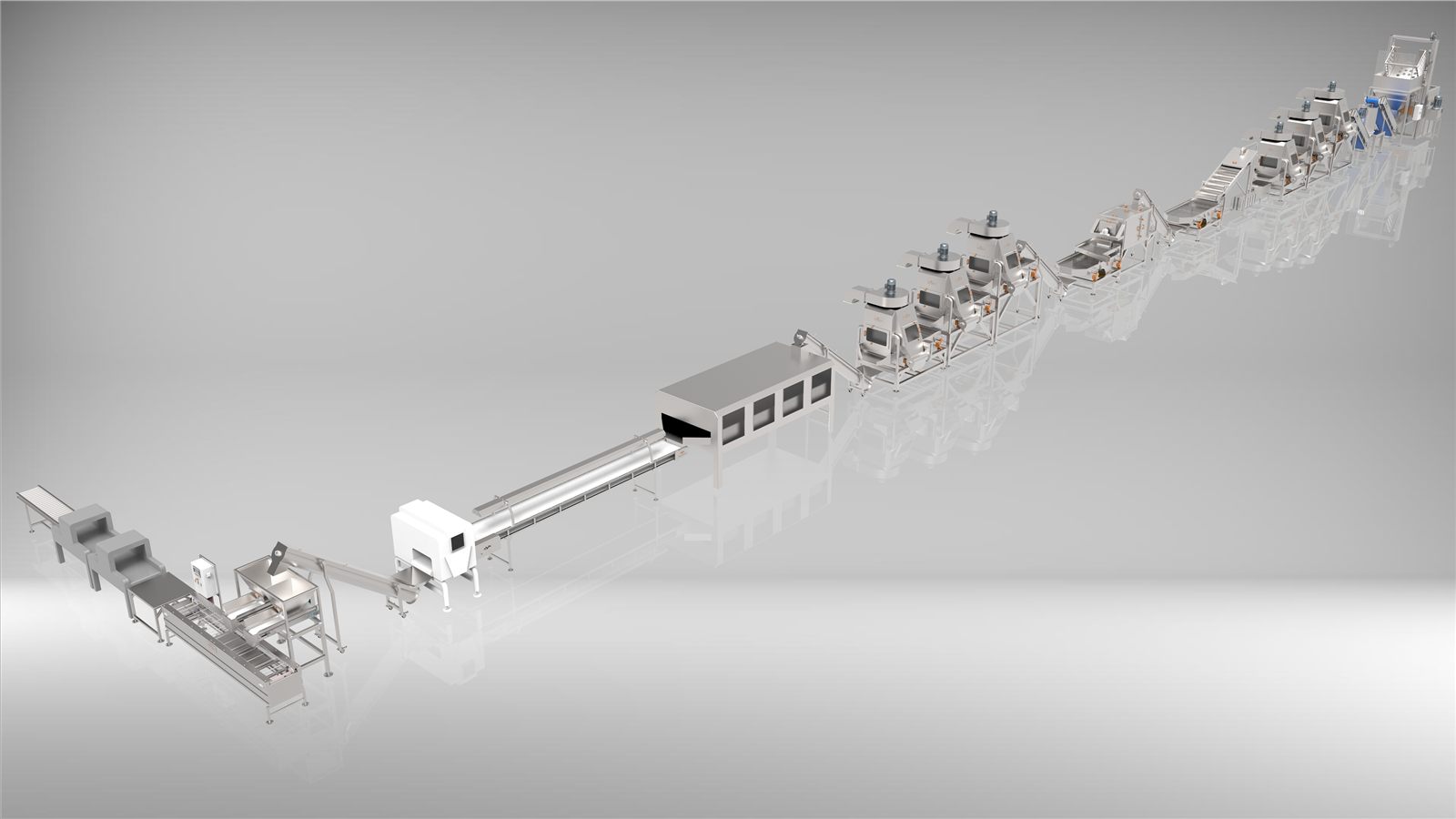
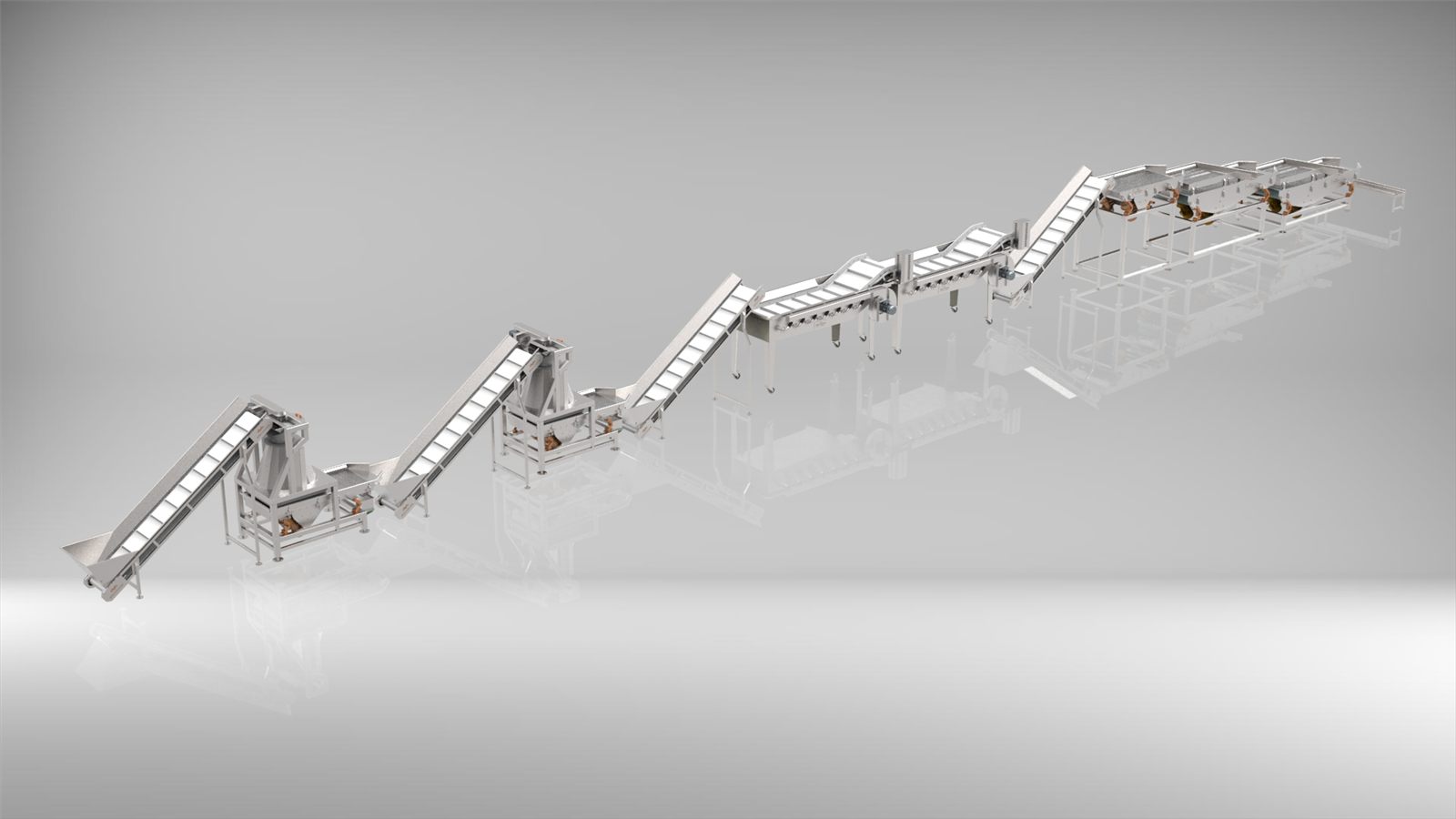
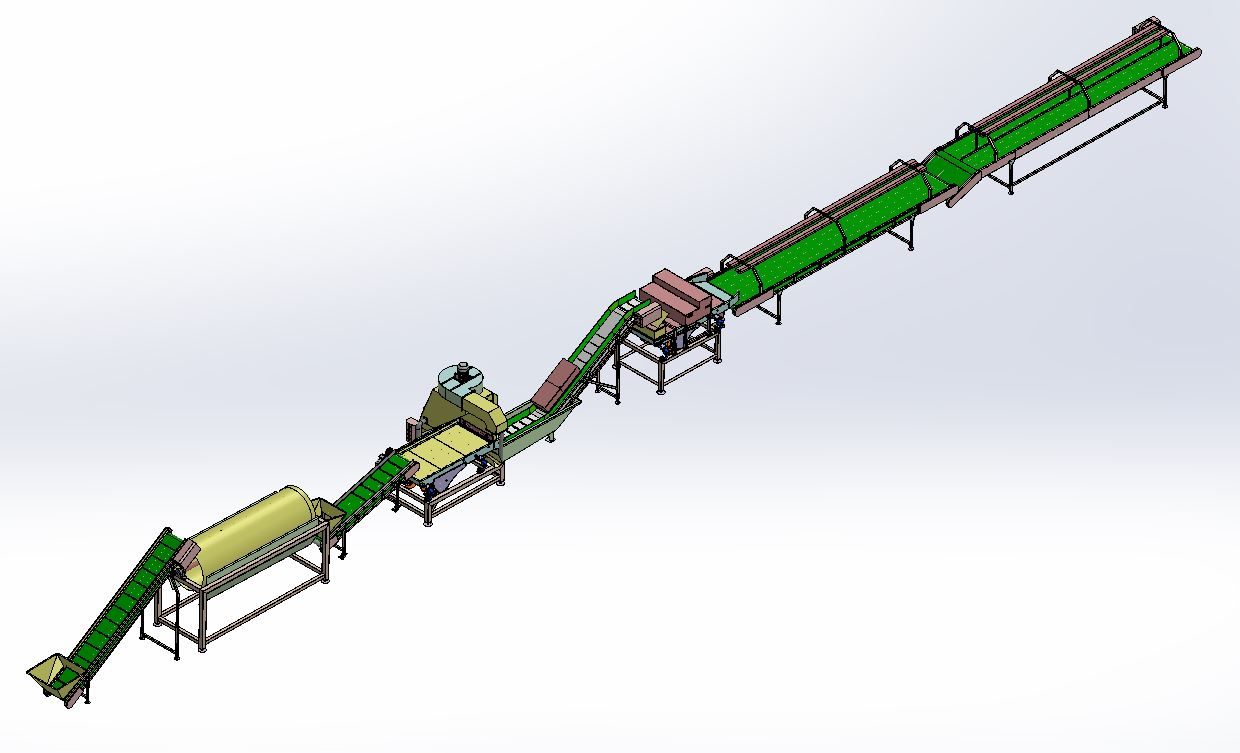
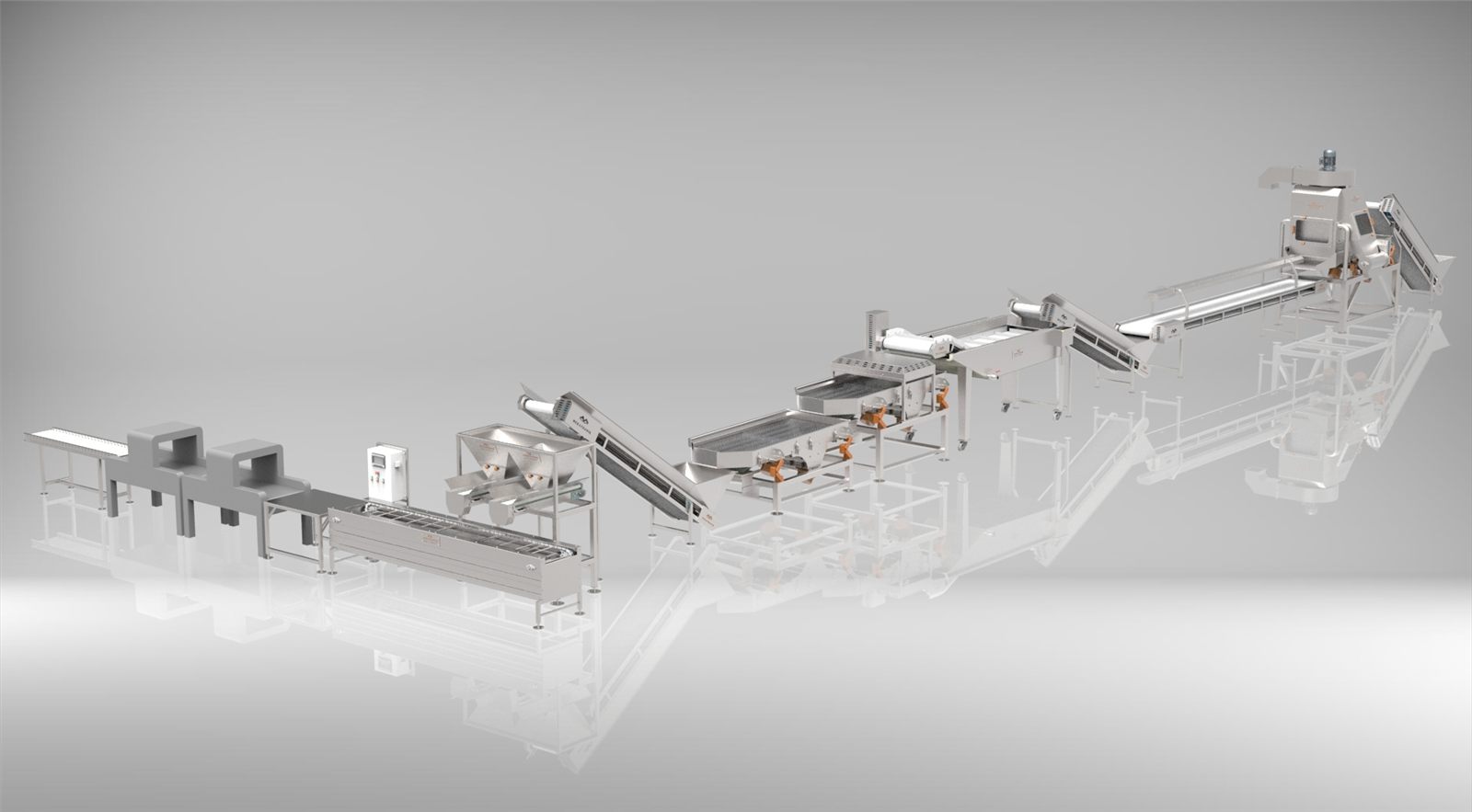
Depending on production needs, the complete process can be designed in this order:
- 01Prune intake and product inspection
- 02Pit check
- 03Balanced feeding
- 04Checking the condition of the product
- 05Controlled flouring
- 06Dicing or julienne cutting
- 07Screening and calibration
- 08Flour recovery
- 09Final inspection, weighing and filling
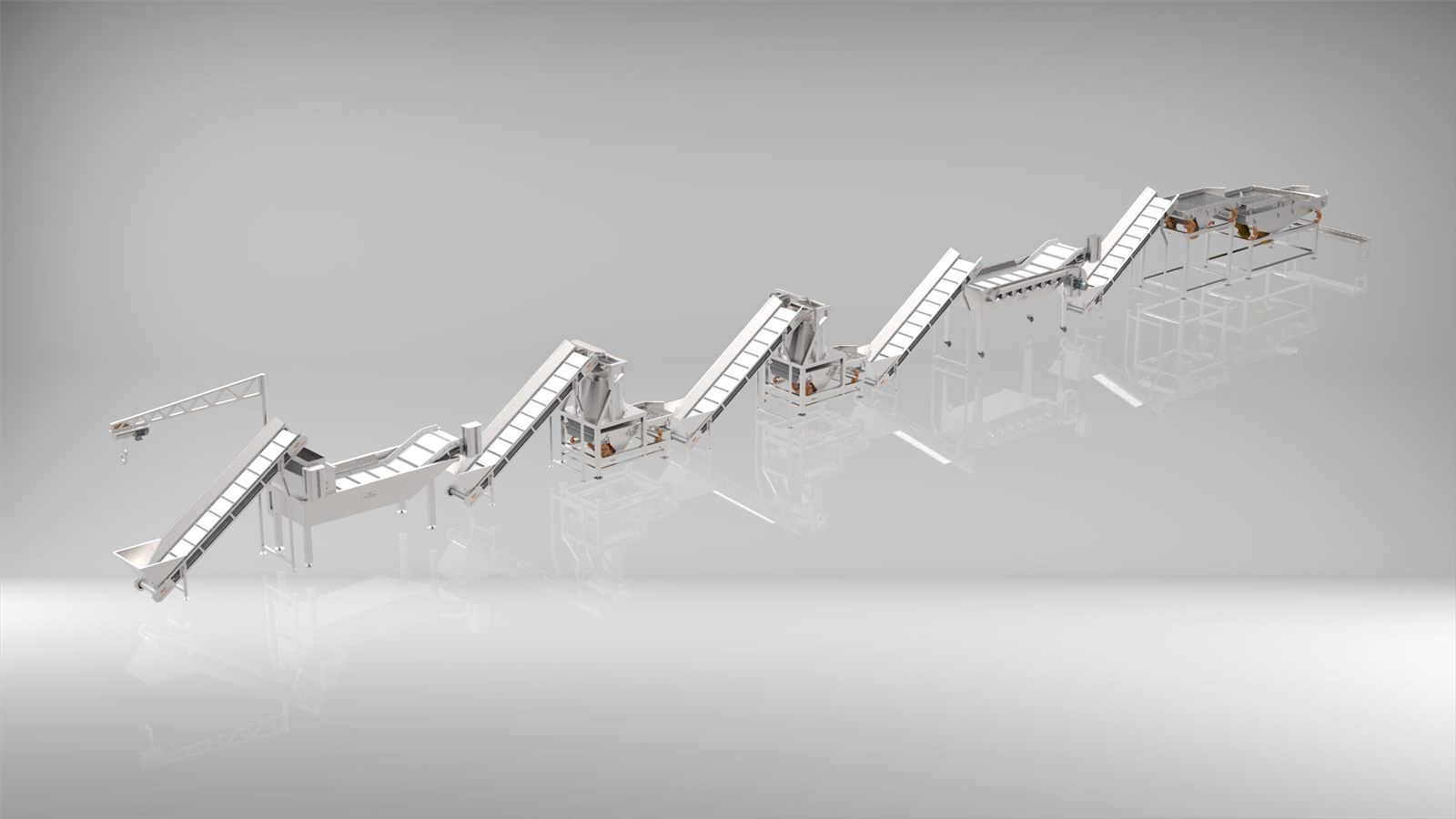
What matters here is not that each machine performs well on its own but that the whole line works in balance. Even if the cutting machine is rated at 600 kg per hour, the real capacity of the line will not be 600 kg per hour if the feeding, flouring or screening system cannot keep up. Complete line design therefore calls for a bottleneck analysis and for every piece of equipment to be selected against a shared capacity target.
Five elements have to be controlled together for quality and repeatable production:
- 01Product condition: moisture and softness suited to cutting
- 02Balanced feeding: a controlled flow of product into the machine
- 03Stickiness control: controlled flouring where it is needed
- 04The right, sharp blade system: blades matched to the target nominal size
- 05Calibration after cutting: separating fines, target size and oversize pieces
Changing even one of these parameters can change the quality of the final product.
Dicing and julienne cutting of prunes looks like a mechanical chopping operation at first sight, but it really calls for product characteristics and machine parameters to be managed together. When product condition, feeding, flouring, the blade system, cutting and screening are handled as one whole, the result is a more controlled cut geometry, less product deformation, a steadier flow and a more consistent final product. Mekatronik Makina designs dicing and julienne cutting systems, controlled flouring, flour recovery, screening, calibration, weighing and packing equipment as integrated line solutions for prunes, dried apricots, dates and dried figs. To arrange trials with your own product and a line design, share the product characteristics and the target cut size and request a quotation.