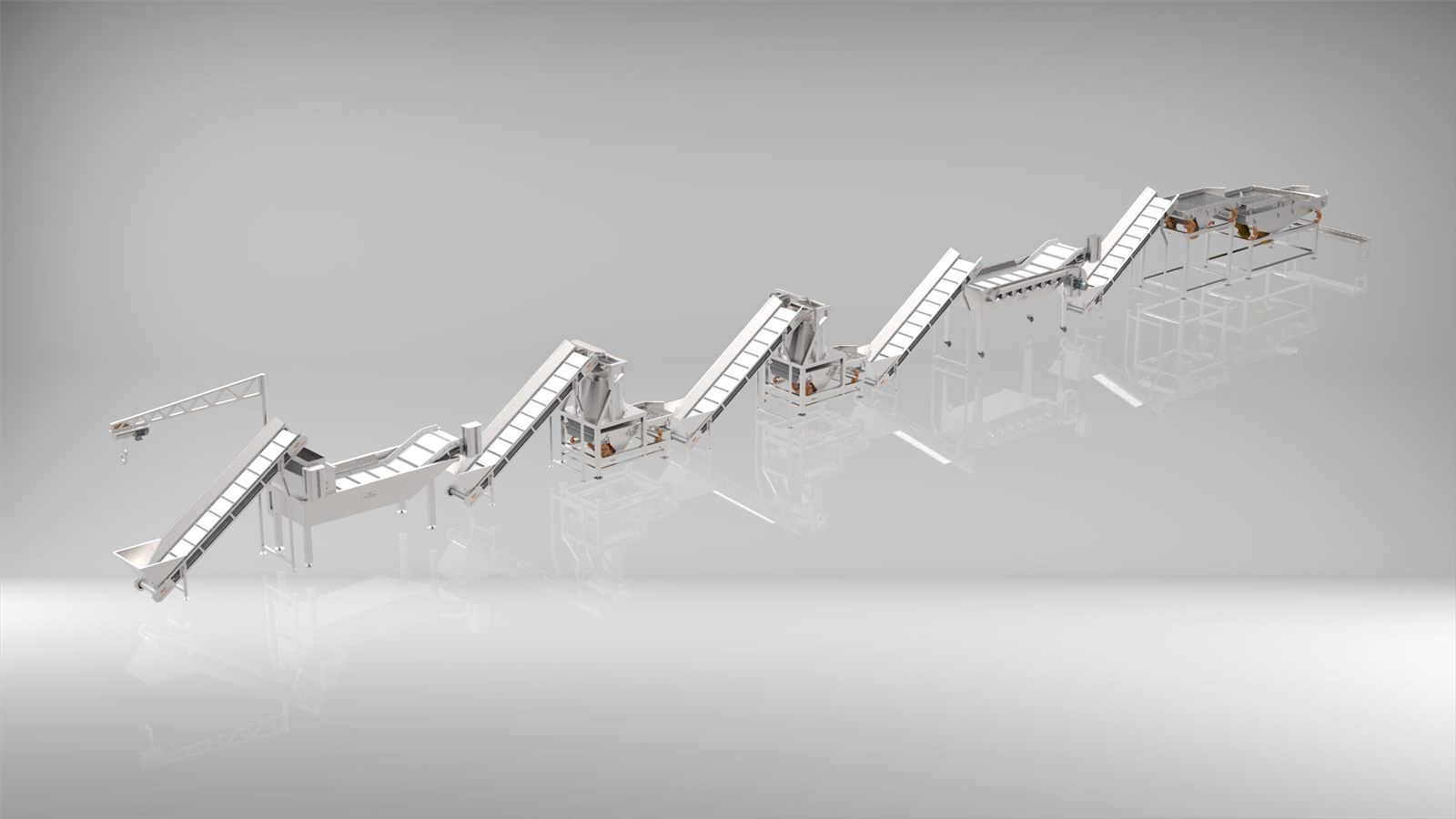
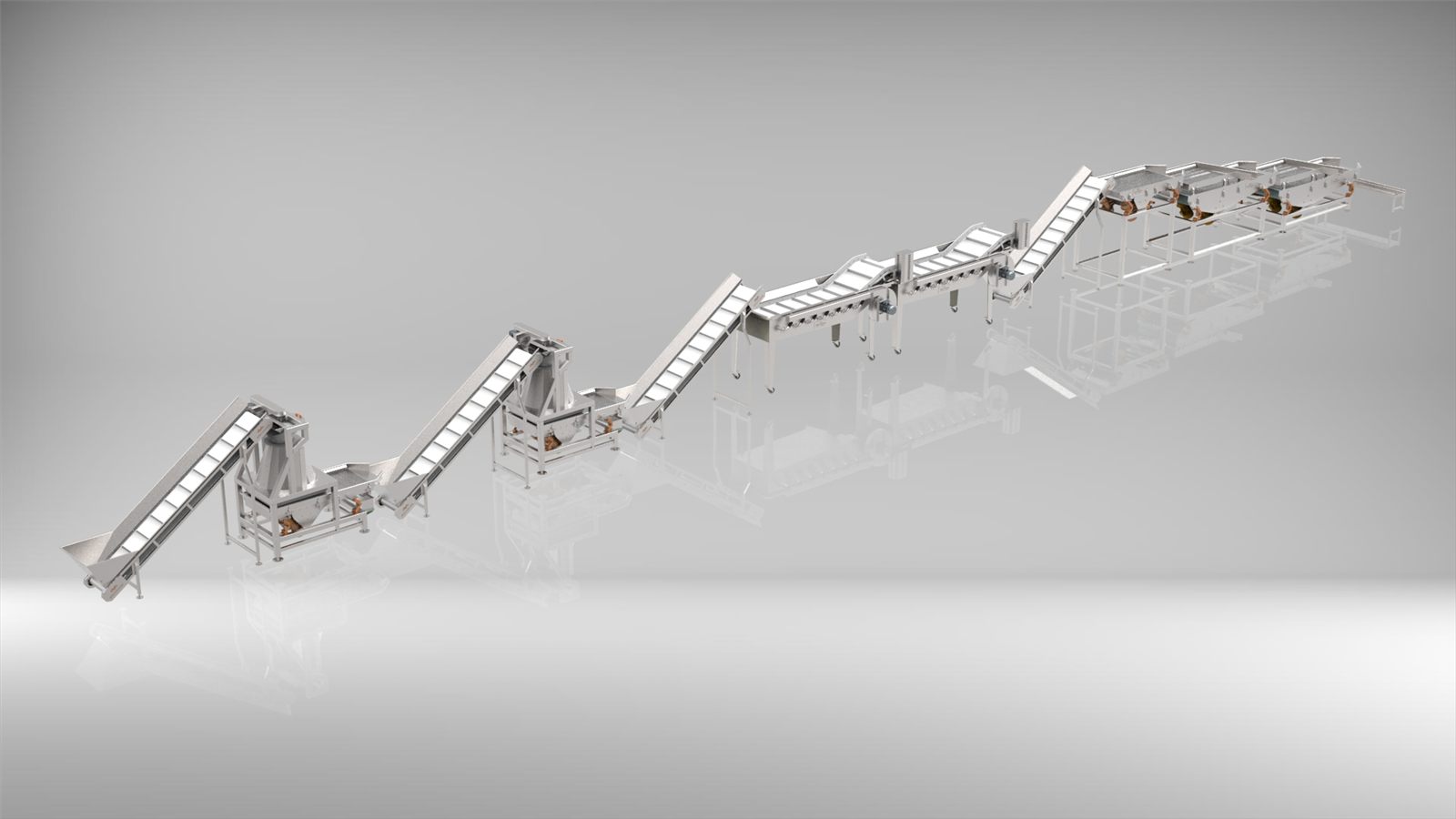
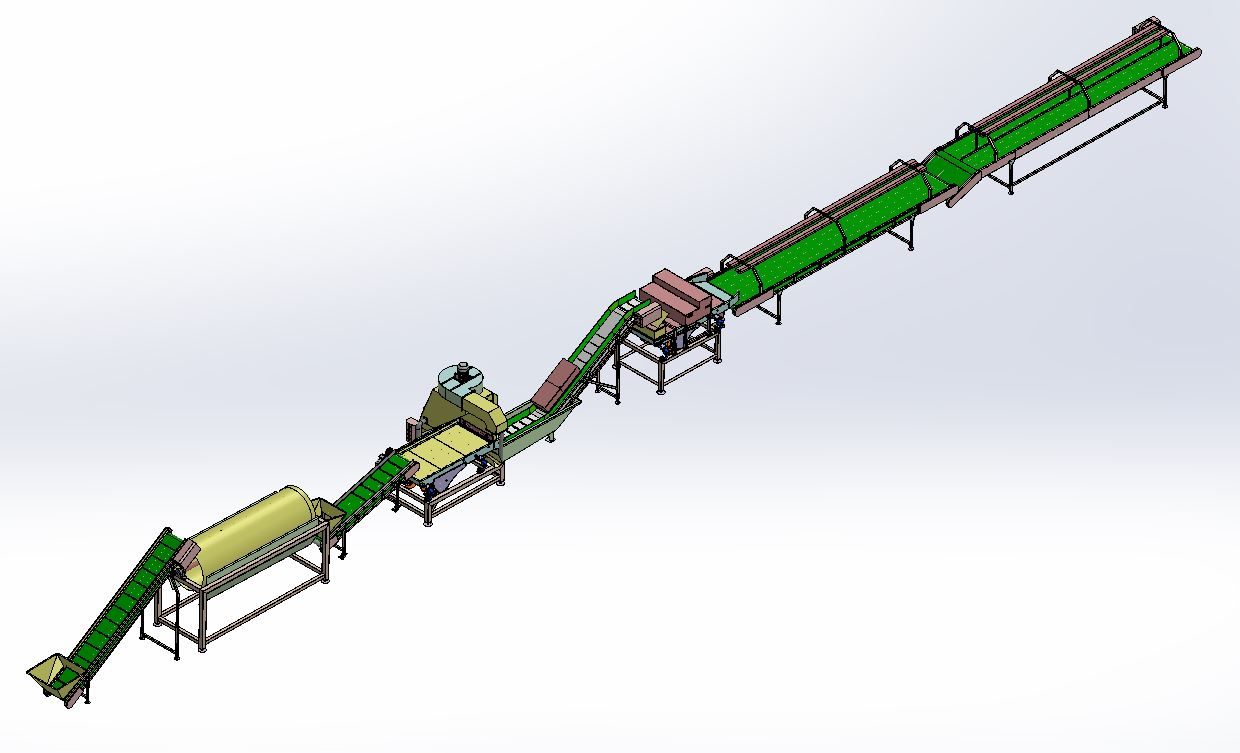
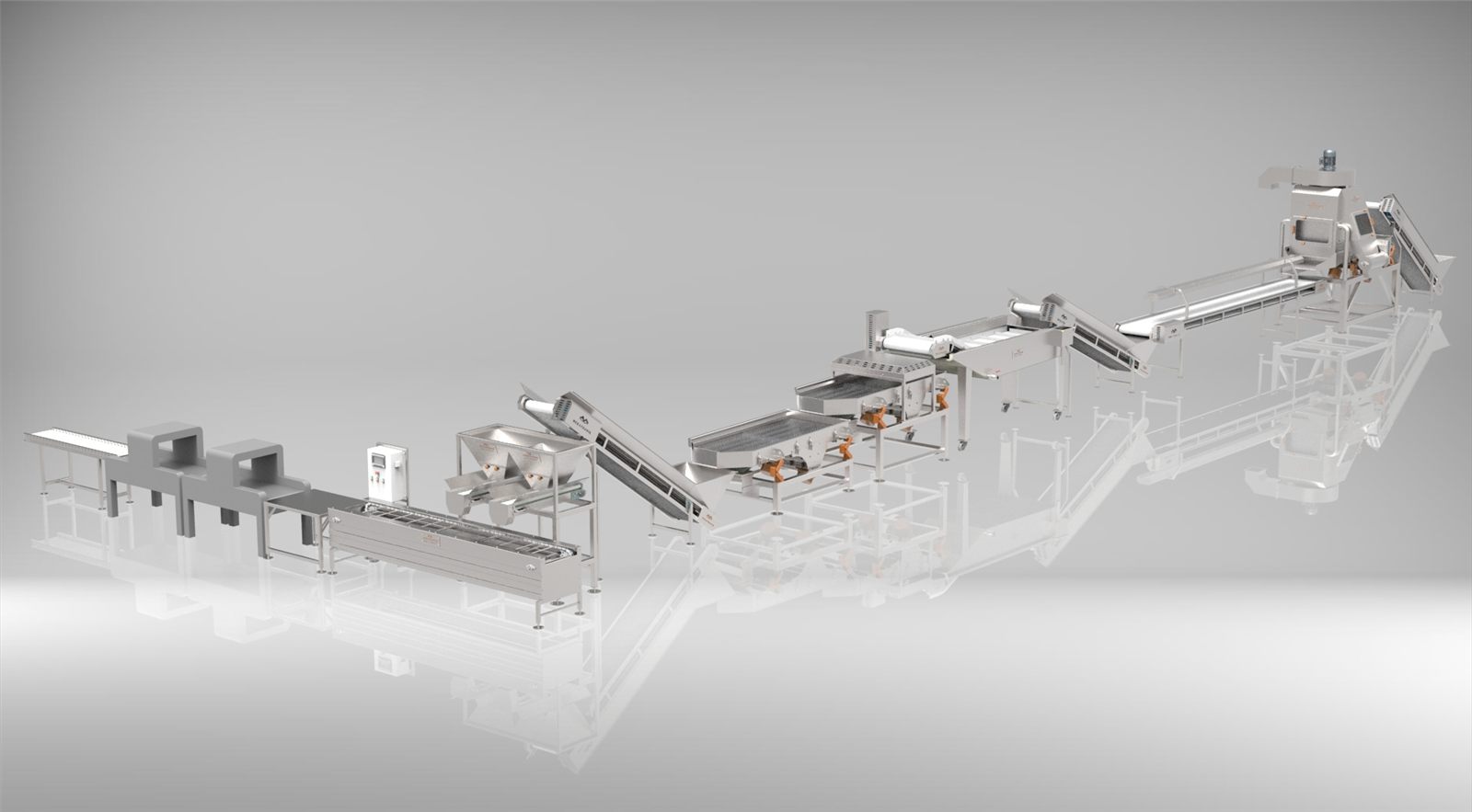
When line capacity comes up, the conversation usually turns to the slowest machine. In practice the problem is more often the regularity of the feed than the speed of anything. Product arriving in heaps at intervals stops every station on the line from working the way it was designed to.
01
What heaped product breaks
Screening machines work on product spread across the screen surface. If fruit arrives stacked, the pieces underneath never touch the screen and, for them, no separation has taken place at all. The same holds at washing: product inside a heap does not make full contact with the water.
At cutting the effect is more visible. Product entering the blade set unevenly gives pieces without a defined size. So irregular feeding surfaces as a quality problem at the end of the line, where it is easy to blame the machine standing there.
02
What the shaker feeder does
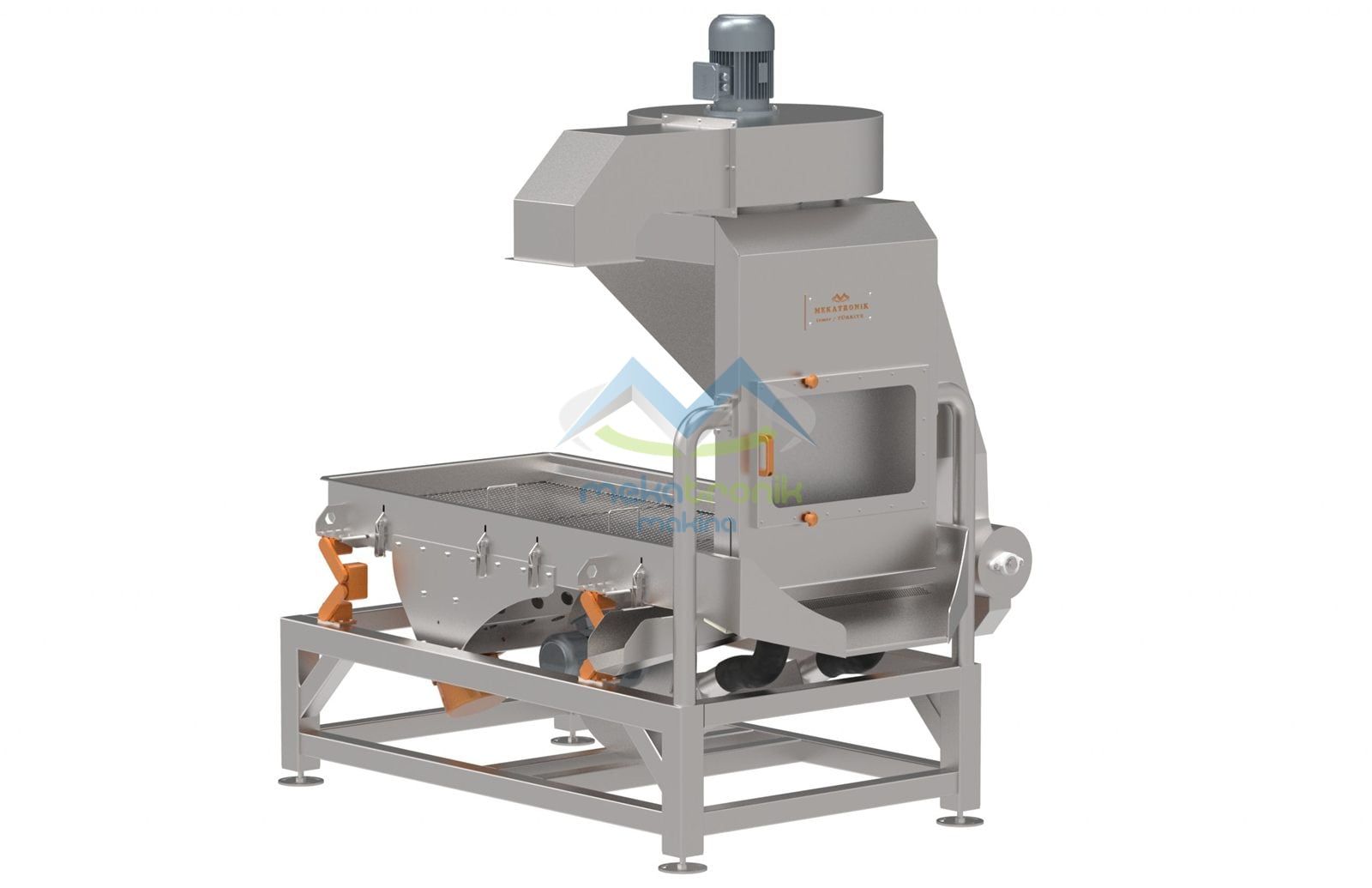
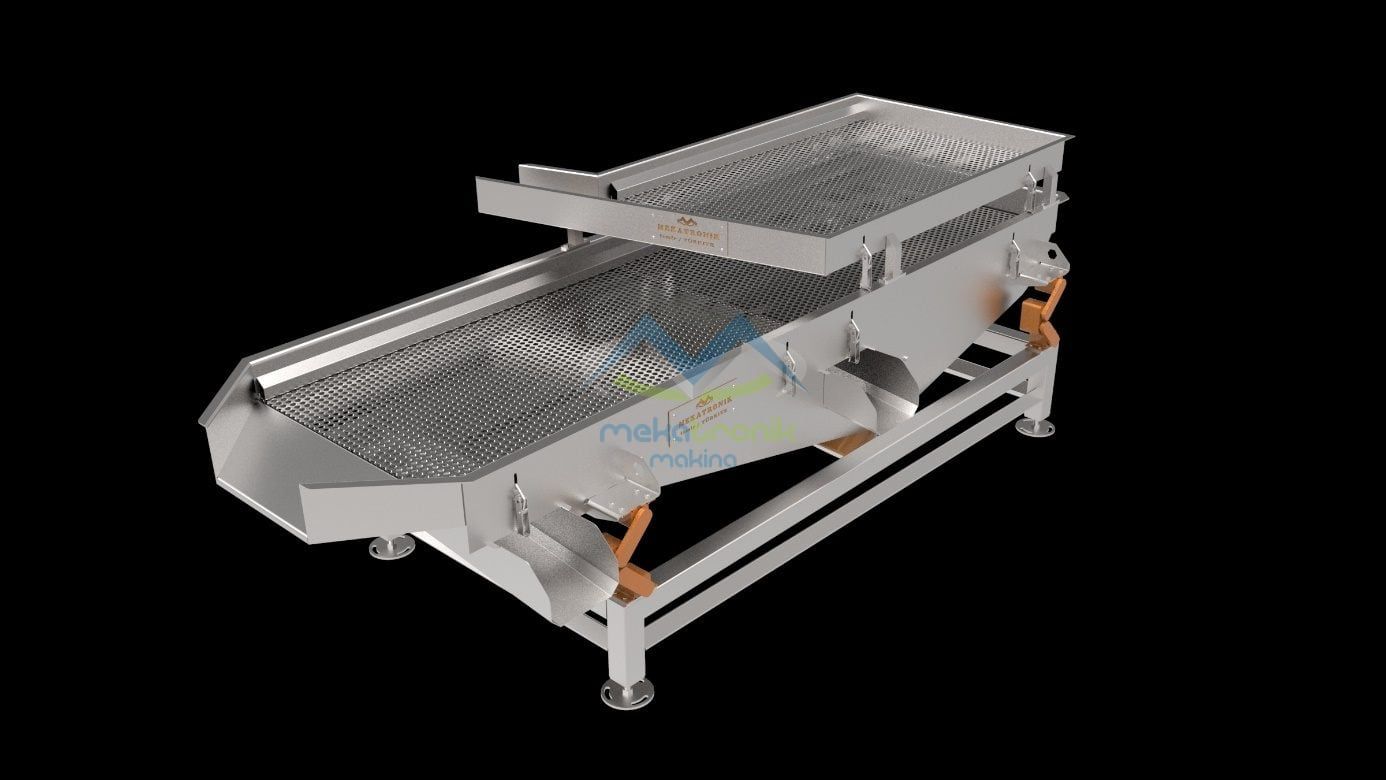
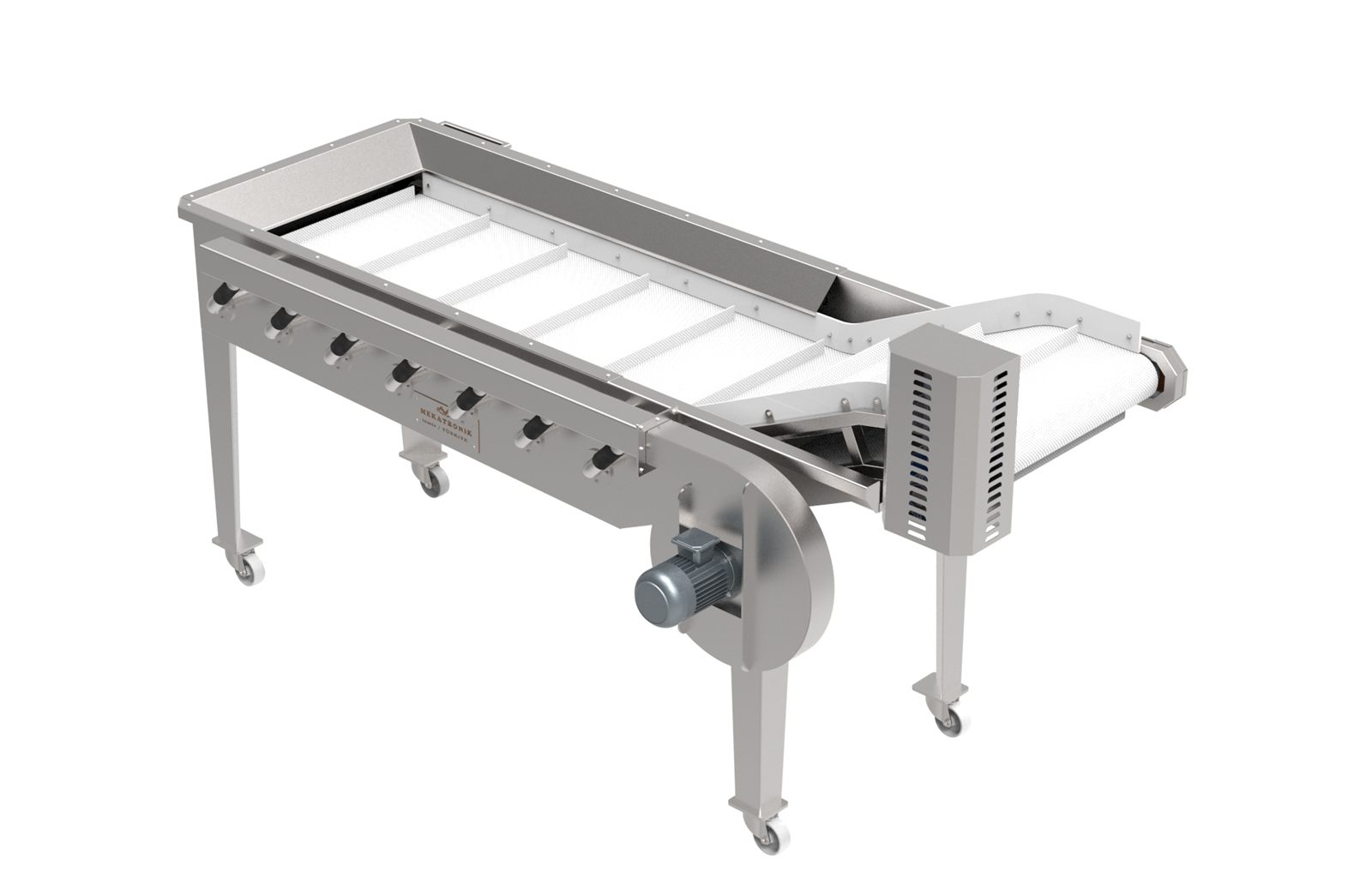
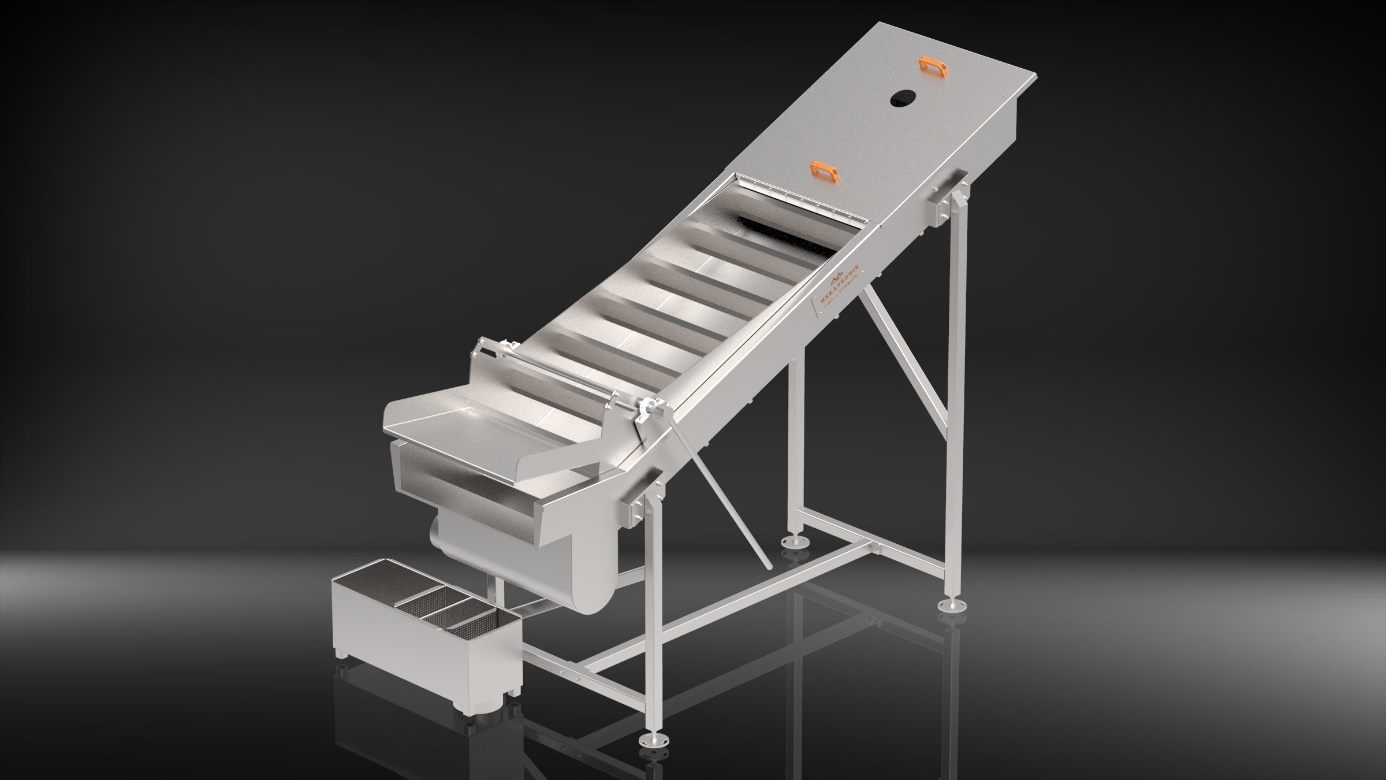
The vibration shaker feeding machine carries manually discharged product forward to the next stage in a balanced way. Product is taken into the trough and advances by vibration, while the agitators inside help separate it into individual pieces as it goes.
That is where its two jobs at once come from: dosing, meaning the amount going down the line is evened out, and breaking apart product that has stuck together. With dried fruit coming out of storage, both are usually needed at the same time.
03
Where it sits on the line
Shaker feeding sits close to the point where product enters the line:
- 01Product taken in by crate tipping or manual discharge
- 02Vibration shaker machine, even feeding and separation into single pieces
- 03Debris removal and screening
- 04Washing and dewatering
- 05Sizing and cutting
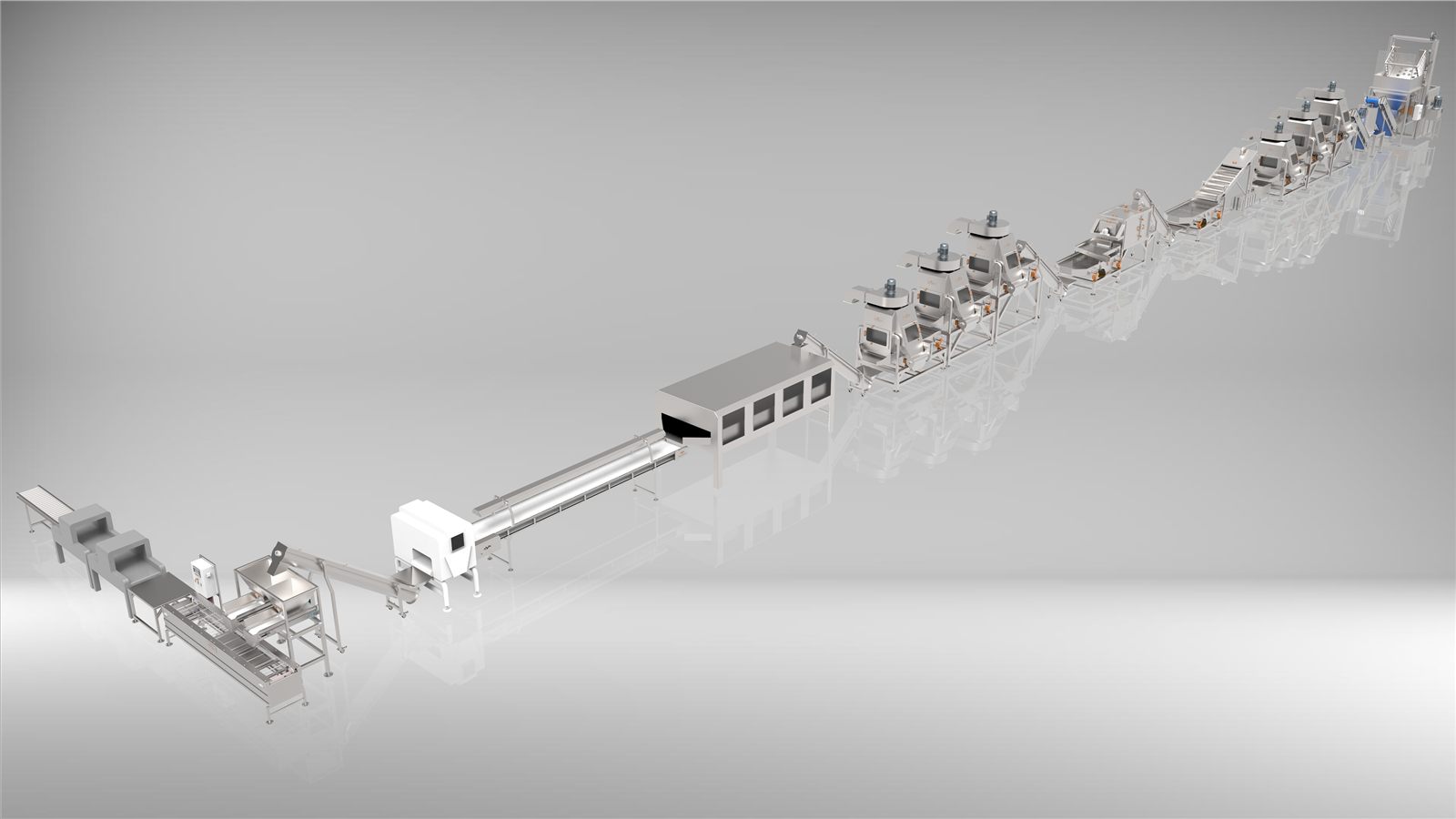
A crate tipping machine usually stands ahead of it; emptying a crate is a bulk movement by nature and always needs an evening step behind it. The flow across a whole line is laid out on the raisin processing line page.
04
Technical frame
| Item | Value |
|---|---|
| Body material | AISI 304 stainless steel |
| Product contact surface | AISI 304, AISI 316 optional per process |
| Operating principle | Balanced product feeding with internal agitators |
| Drive | Geared motor |
| Control | PLC controlled or standalone operation |
| Capacity | Defined per project |
| Supply | 380 V / 50 Hz |
| Cleaning | Easy to clean construction |
Running either under PLC control or standalone makes it straightforward to add to an existing line. Where the line is automated, feed rate is set together with the other stations; where it is not, the machine runs on its own.
05
What to check when specifying one
- 01How product reaches the line: crate tipping or manual discharge
- 02How much the product tends to stick, that is whether agitators are needed
- 03The flow rate the next station accepts
- 04Cleaning interval and how often products are changed over
- 05Whether custom dimensions are needed for the place of use
Capacity figures are defined per project: the type of product, how it arrives and the daily target of the line are assessed together.
06
How the feed rate is set
The right feed rate is not the highest flow the machine can deliver but the flow the next station accepts. Push more than its capacity onto a screening machine and the deck saturates and separation degrades; at a cutting station, size drifts.
The machine runs under PLC control or standalone. Where the line is automated, feed rate is set together with the other stations and feeding stops when a station stops. On a line running standalone the setting is left to the operator, and the rate is then fixed to what the most critical station accepts.
07
Product changeover and cleaning
The trough and the internal agitators are in direct contact with the product, which makes them the first thing to clean at a changeover. An easy to clean construction reduces the risk of carry over between two batches, and in plants running sticky products that is part of the shift plan rather than an afterthought.
Product contact surfaces are AISI 304 stainless steel, with AISI 316 where the process calls for it. On the drive side there is a geared motor, and capacity figures are defined per project.
Send us the feeding point of your line and your daily target and we can work through the size and layout that fit. The quotation page is the quickest way to reach us.