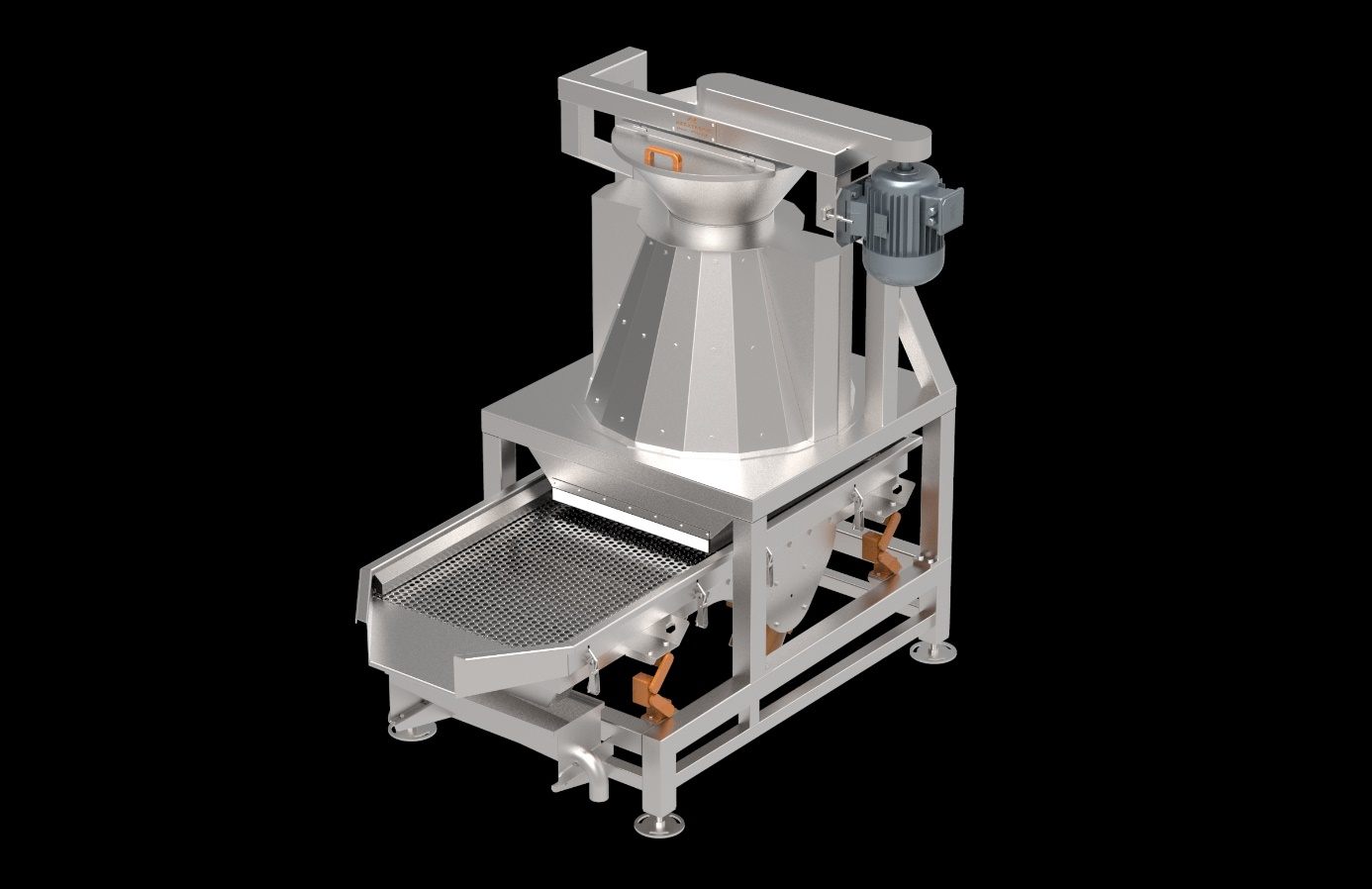
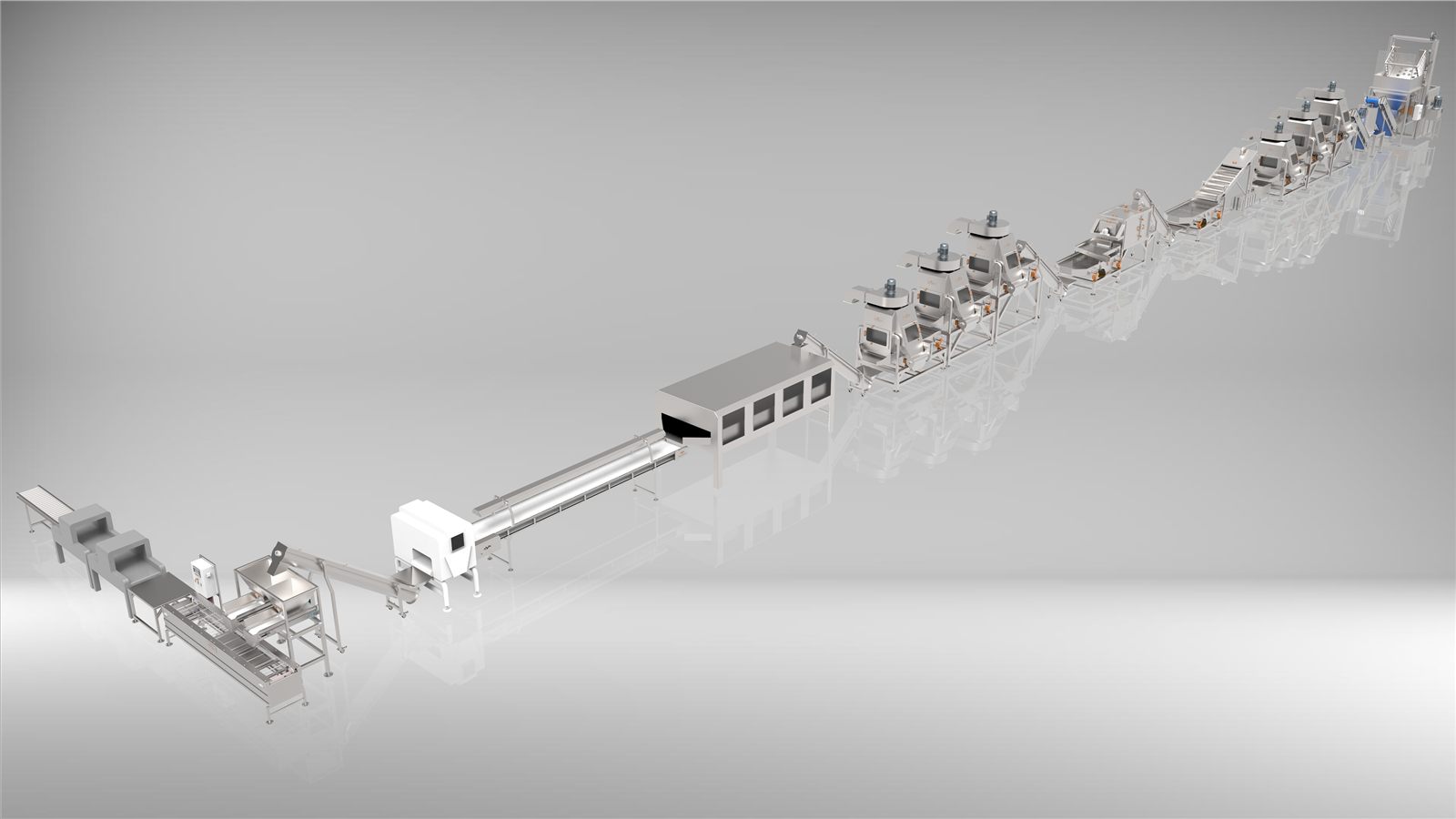
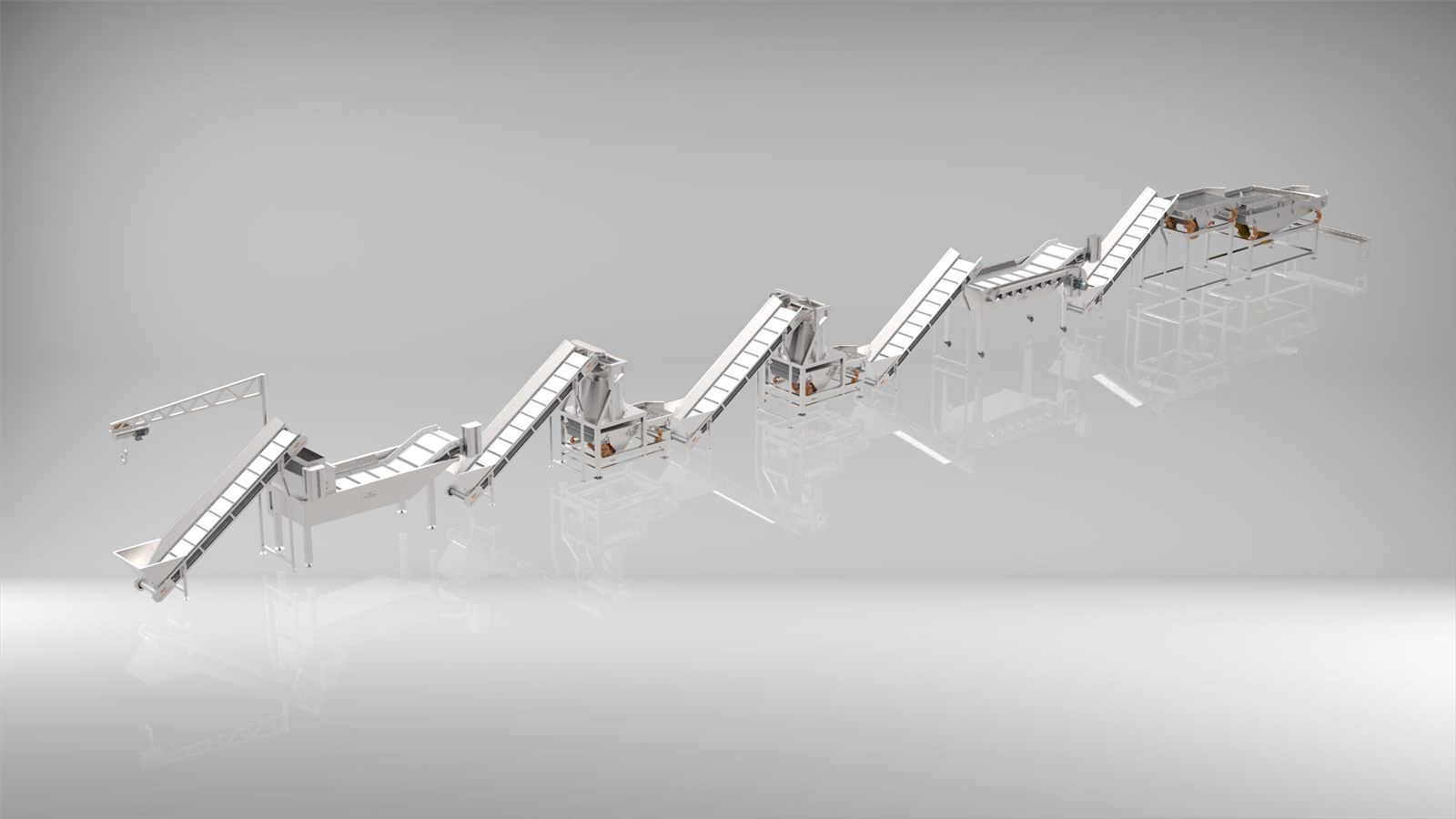
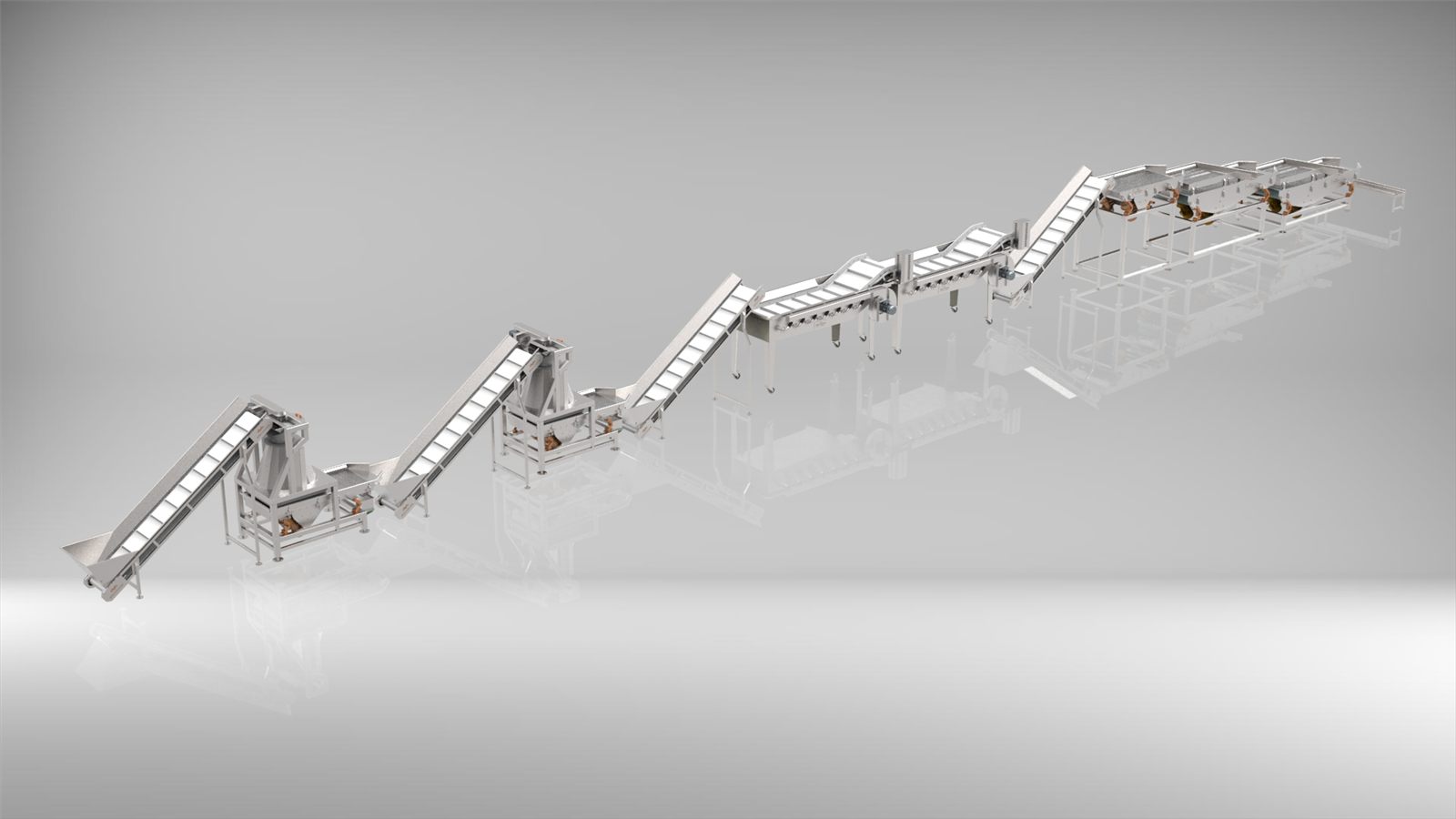
Moving a wet product from a washing tank to the next station sounds simple, but a standard liquid pump can bruise or split soft fruit and vegetables in seconds. A wet product transfer pump is built specifically to carry a mix of water and solid pieces, such as tomatoes, apricots, figs, or dates, without turning that flow into a crushing operation. Here is how the mechanical choices behind the pump keep the product intact from tank to tank.
01
Why a standard pump crushes wet produce
A conventional centrifugal pump moves clean liquid at high rotational speed through a narrow impeller gap. When a piece of fruit or vegetable enters that gap along with the water, the clearance that works for a liquid becomes a crushing point for anything solid. The same damage repeats at any sharp bend, narrow valve, or undersized pipe diameter along the transfer route, so the pump housing is only one part of a wider design problem that includes the piping around it.
02
How a wet product transfer pump avoids that
The working principle is to treat the product as cargo carried by the water, not as an obstacle the impeller has to push past. That changes several design choices at once:
- 01Wide impeller clearance sized for whole or cut fruit pieces, not only for liquid.
- 02Lower rotation speed than a standard liquid pump, which reduces the impact force on each piece.
- 03Smooth, large-diameter flow channels with as few sharp turns as possible.
- 04A product-to-water ratio kept high enough that pieces stay suspended in the flow instead of dragging against a surface.
03
Where it sits in the line
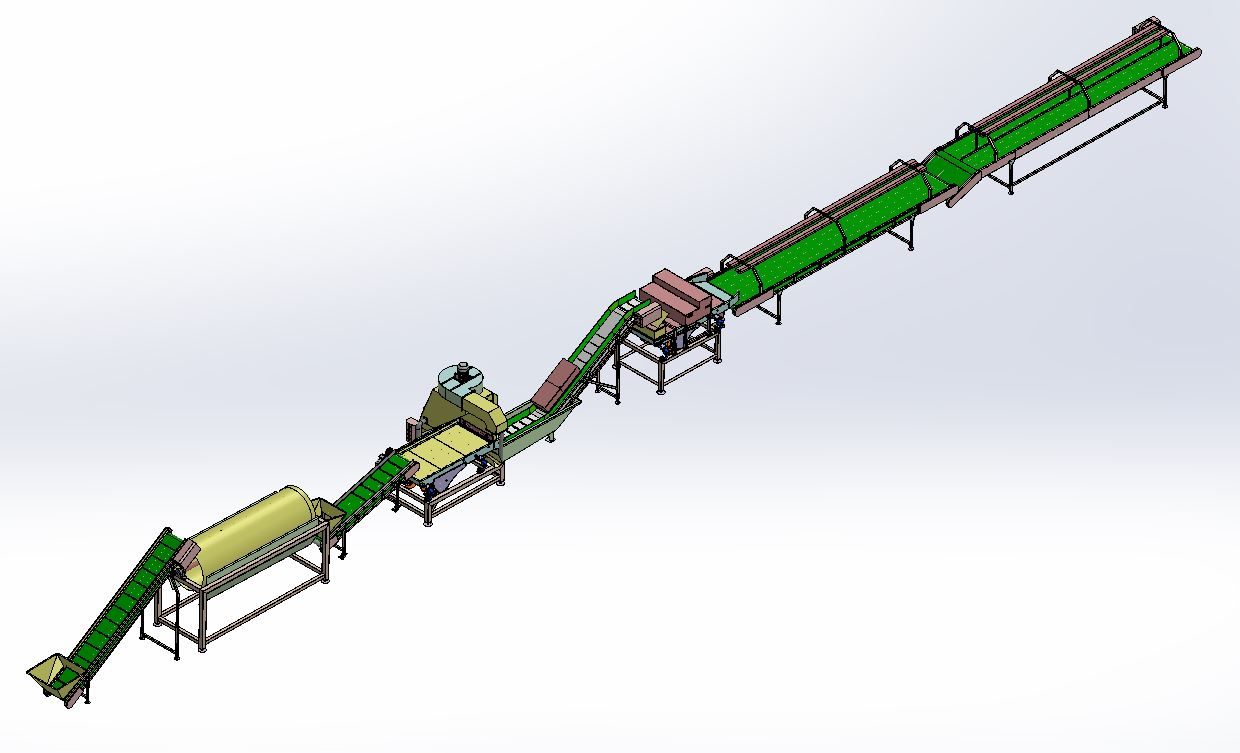
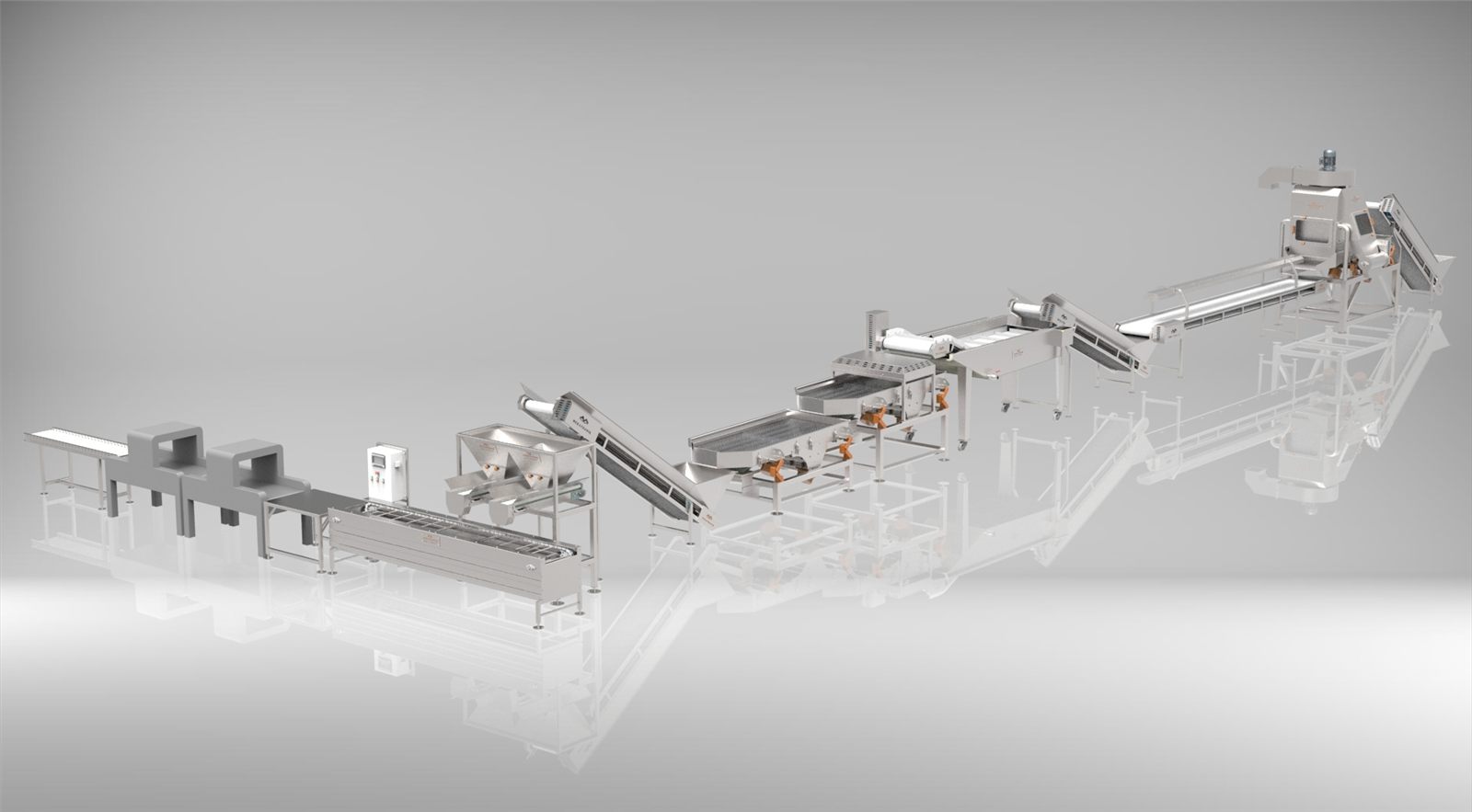
The pump usually follows a washing or soaking stage and carries the wet mix forward to sorting, cutting, or the next tank, for example right after a multi-purpose liquid tank used to hold water between process steps. Where exactly it sits depends on the layout of the specific line, the distance between stations, and the height difference the water and product need to travel.
Wet transfer by pump is most useful wherever the product would otherwise be handled by hand while still soaked, or where a mechanical conveyor would mark the surface. Dried tomato lines moving fruit out of a wash tank, apricot and fig lines after soaking, and date lines after the initial rinse are common cases, since all of them combine a soft product with a wet, water-heavy stage of the process.
04
Materials and CE compliance
Every surface in contact with the product is AISI 304 stainless steel. Where the process calls for it, for example with acidic products such as tomato or with brine contact, the wetted parts move up to AISI 316. Design and manufacture follow CE conformity requirements, covering guarding, electrical safety, and the pressure-bearing parts of the pump housing.
05
Wet pump or feed screw conveyor?
For the same transfer step, some projects compare a wet product transfer pump against a feed screw conveyor. The right choice depends on how wet the product is and what happens right before and after that point in the line.
| Criterion | Wet product transfer pump | Feed screw conveyor |
|---|---|---|
| Medium moved | Water plus solid pieces (slurry) | Mostly dry or lightly wet product |
| Typical placement | Right after a washing or soaking tank | Between drier processing stations |
| Main advantage | Keeps delicate pieces suspended in the flow | Simple, few moving parts in contact with product |
| Main limitation | Needs a liquid carrier to work | Can mark soft or wet fruit at the flight edge |
06
Maintenance and hygiene
Wetted parts are designed for regular cleaning: smooth stainless surfaces without dead pockets reduce the points where residue can collect between shifts. Exact capacity figures, cleaning intervals, and motor sizing depend on the product, the line layout, and the working hours per shift, and are confirmed during the project stage rather than fixed in advance.
If a project involves moving wet, delicate fruit or vegetables between stations, our team can review the layout and the machine list, including the wet product transfer pump, as part of a quote request.