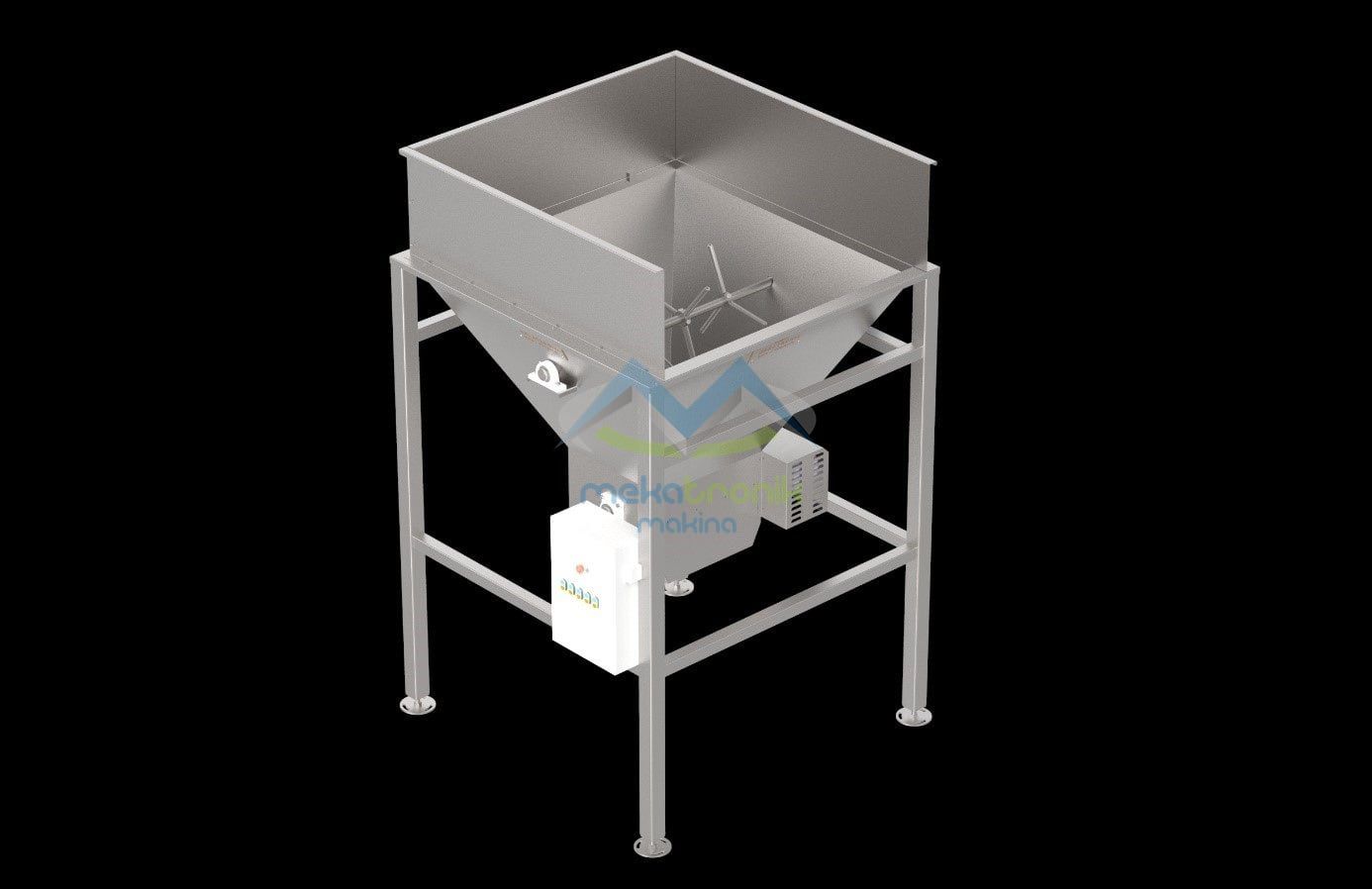
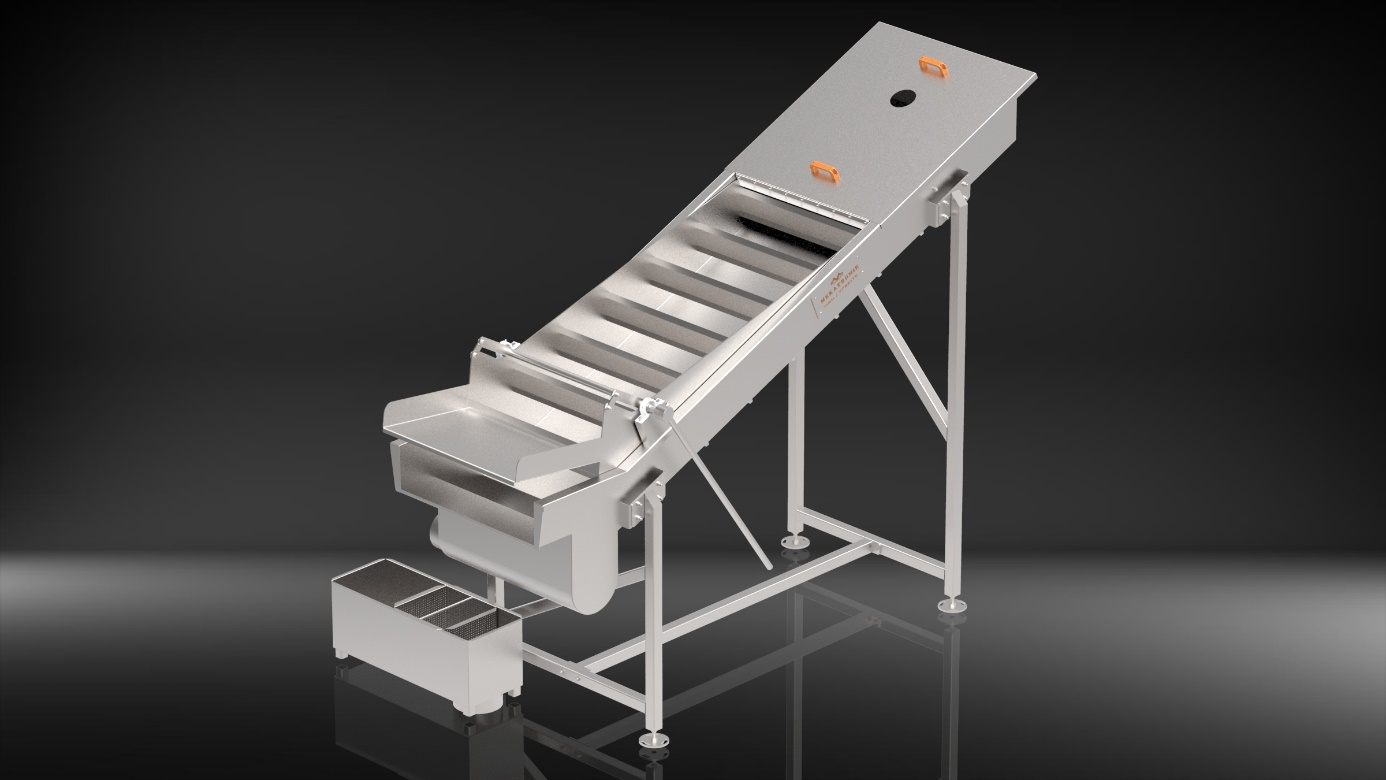
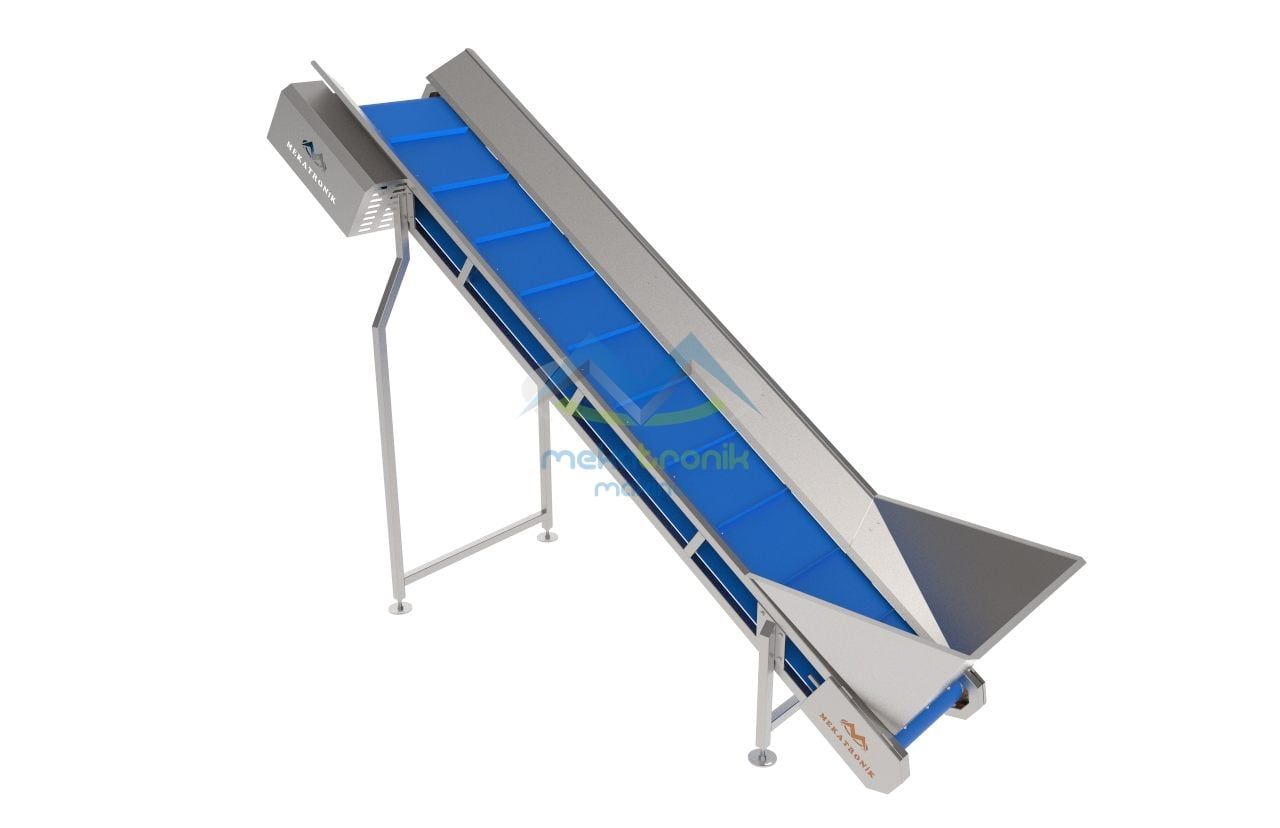
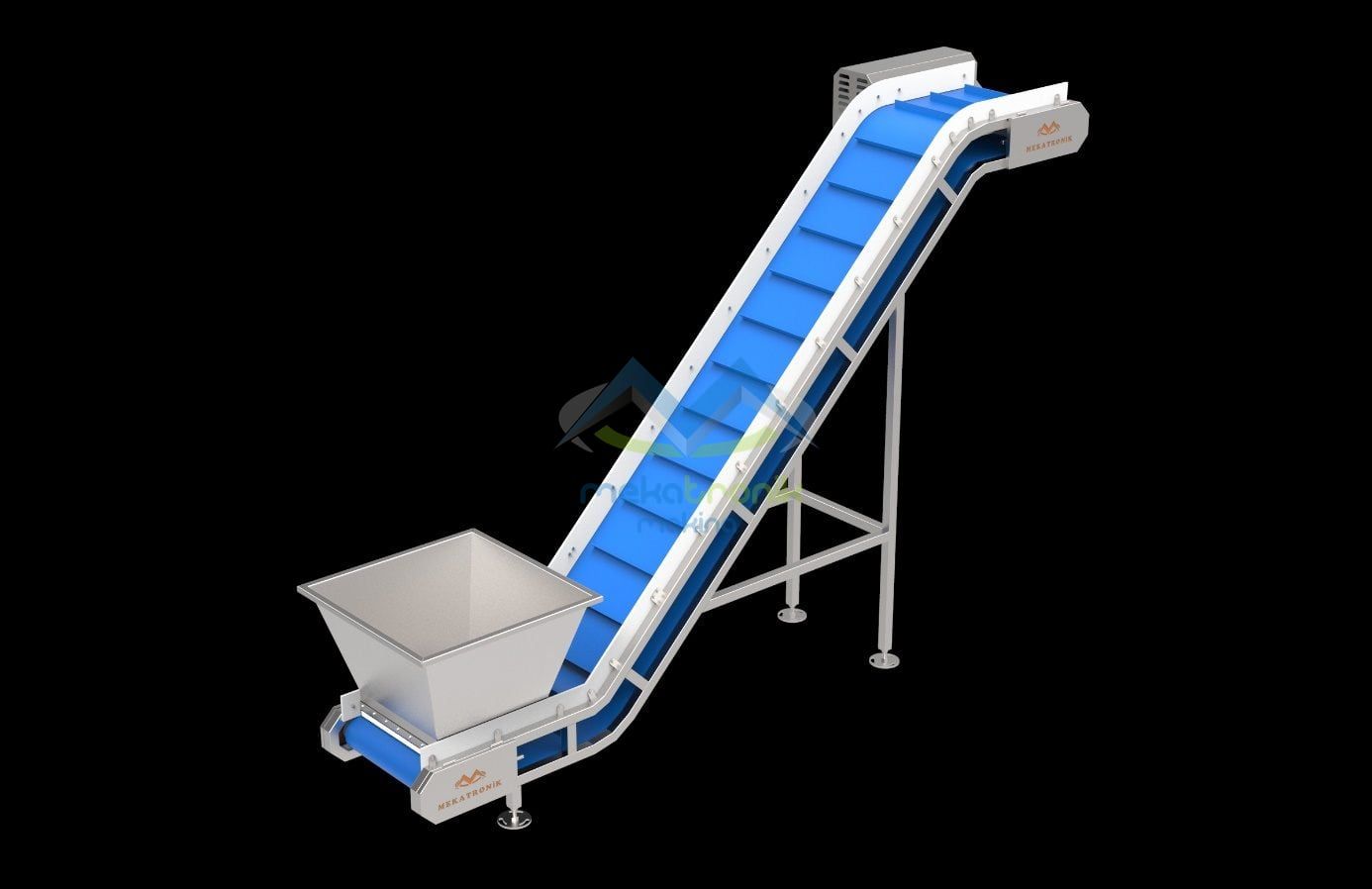
On an agitated dosing hopper no single setting decides the flow rate. The feed to the line is the result of belt speed, how quickly the agitators break up lumps and how much product sits in the hopper. This is why the same machine is not run at the same values for every product. The agitated dosing hopper has a belt whose speed is adjustable with a frequency inverter, so the setting is made on site for the product in hand.
01
Why does the flow rate change with the product?
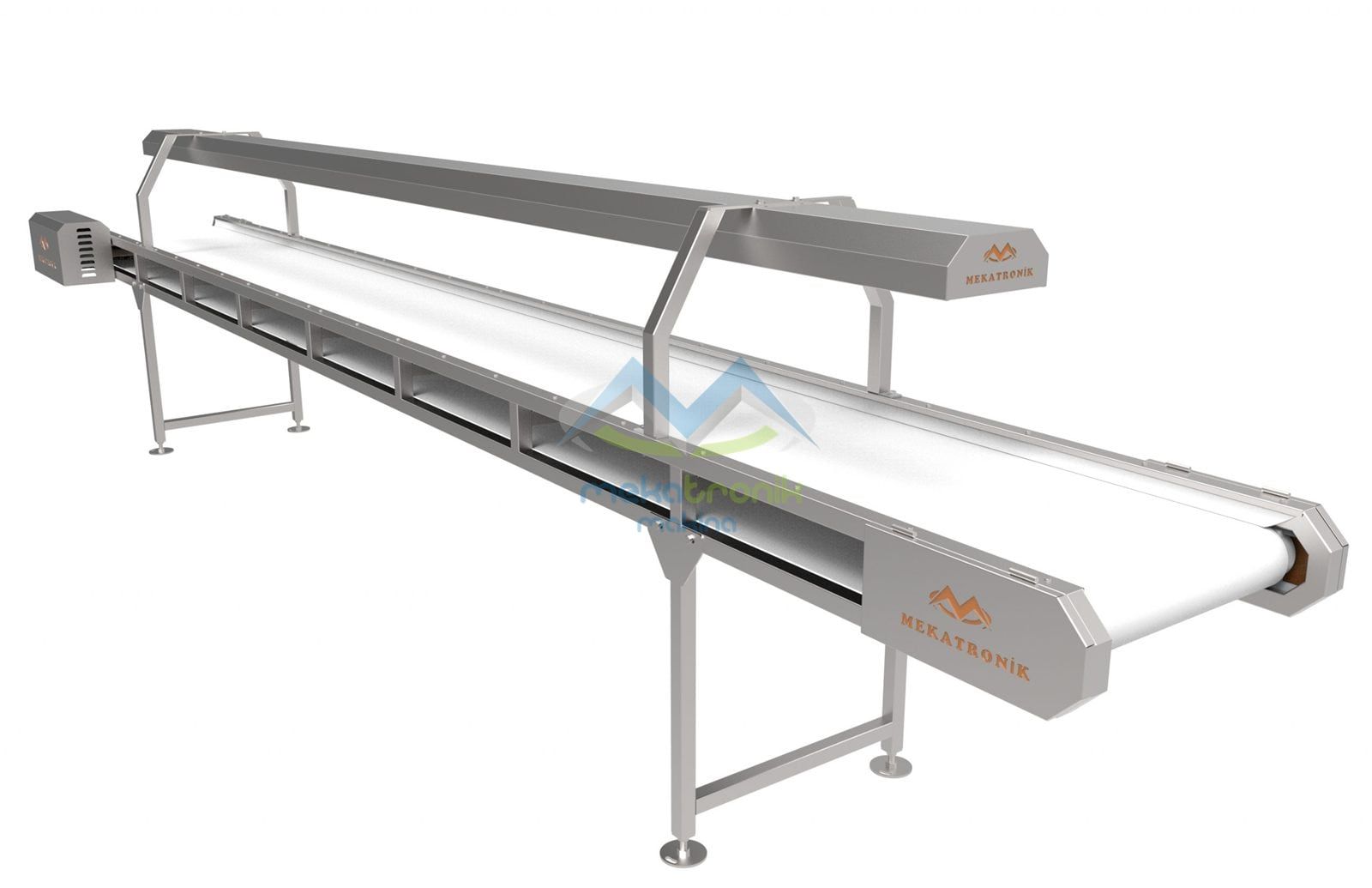
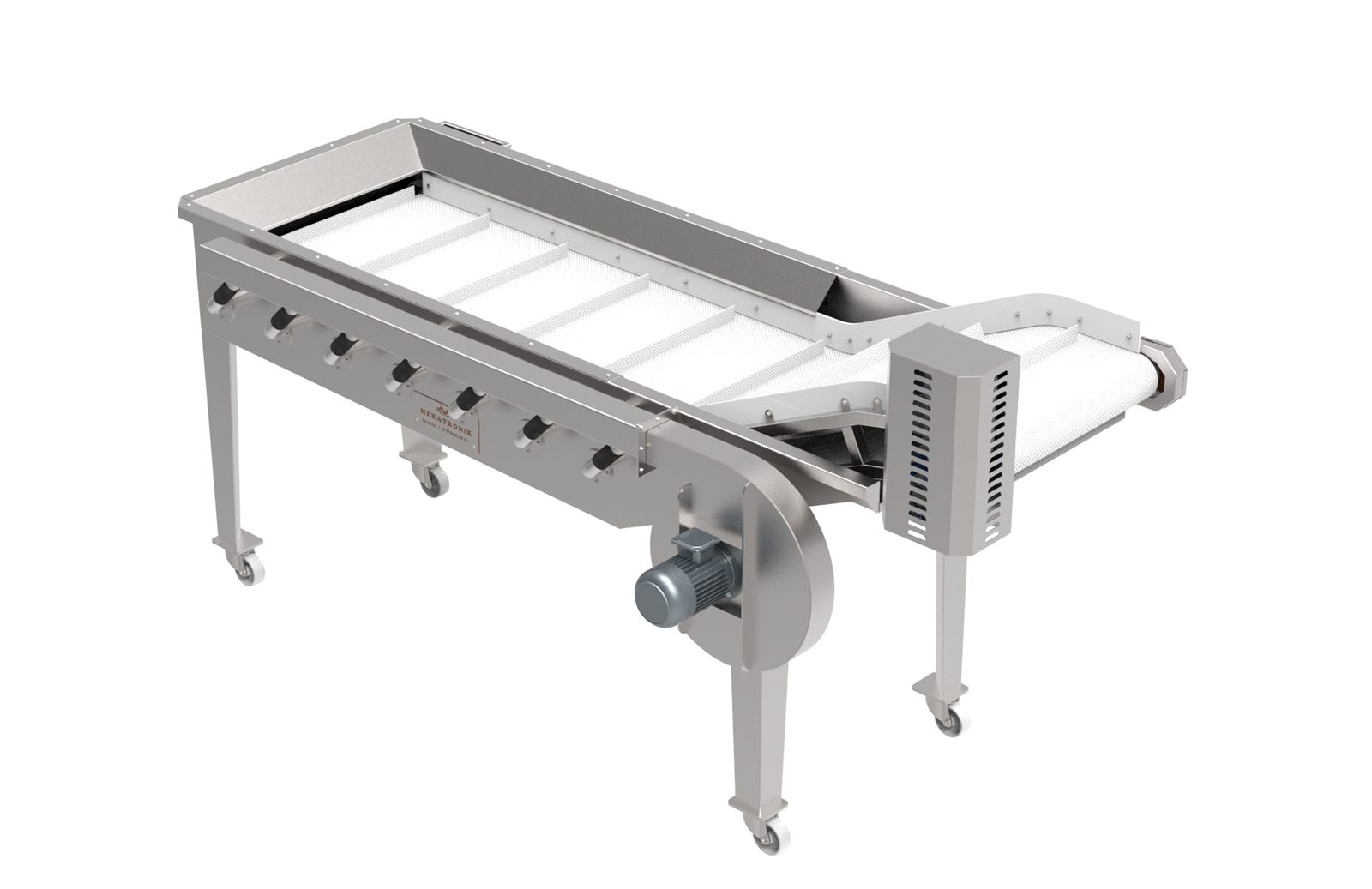
The hopper receives product poured in bulk and in lumps from the crate tipping machine. The agitators inside break the lumps into smaller pieces and the belt carries the product on to the conveyor. The stickier and lumpier the product, the longer the agitators need; the looser the product, the easier it is to form an even layer on the belt.
With raisins, moisture and stickiness vary from batch to batch and with the harvest period. A product that flows freely one day can arrive in large lumps the next. For that reason the flow rate is read from the product of the day, not from a fixed table.
02
Which settings decide the flow rate?
- 01Belt speed: set with the frequency inverter; it directly decides the feed to the line.
- 02Agitator action: decides how fast lumps are broken; lumps that are not broken stay on top of the belt.
- 03Hopper fill: the tipping rhythm of the crate tipping machine changes the amount in the hopper; an overfull hopper strains the agitators and an almost empty one interrupts the feed.
- 04Control mode: the machine can run alone on its electronic hand control, or under PLC control it is managed together with the rest of the line.
These four settings depend on each other. Raising belt speed alone does not help while lumps are in the hopper; the lumps pile up on the belt and feed the next machine unevenly.
03
What should be observed for each product behaviour?
The table below gives no numbers; it shows what to look at on site. Exact values depend on the product, the batch and the line capacity, and are confirmed in the quotation.
| Observation | Likely cause | First check |
|---|---|---|
| Lumps travel on the belt | Agitators cannot break them in time, hopper too full | Slow the tipping rhythm, lower the hopper level |
| Belt sometimes full, sometimes empty | Uneven feed, product bridging in the hopper | Keep the hopper level steady, tip in smaller and more frequent portions |
| Next machine runs empty | Belt speed below what the line needs | Raise belt speed in steps, watch the layer |
| Next machine overflows | Belt speed high or layer thick | Lower belt speed in steps |
| Product sticks to the agitators | Moisture or sugar may have come to the surface | Check the batch and its resting time |
04
How is it adjusted on site?
Changing one variable at a time makes the work faster. Keep the tipping rhythm fixed and change belt speed in small steps; this makes it easier to tell which setting caused which effect.
- 01Write down the product type and the lump condition of the day.
- 02Change belt speed in small steps and look at the layer at the end of the belt after each one.
- 03If lumps are passing, correct the tipping rhythm and hopper level before raising speed.
- 04Record the value you find together with the product type and confirm again when the product or batch changes.
The body and the hopper surfaces that touch the product are made of AISI 304 stainless steel, with AISI 316 optional depending on the process. Checking the hopper interior and the agitator area at the end of each shift is sensible, because built-up sticky product is one of the causes that upset the flow the next day.
05
Where does the hopper sit in the line?
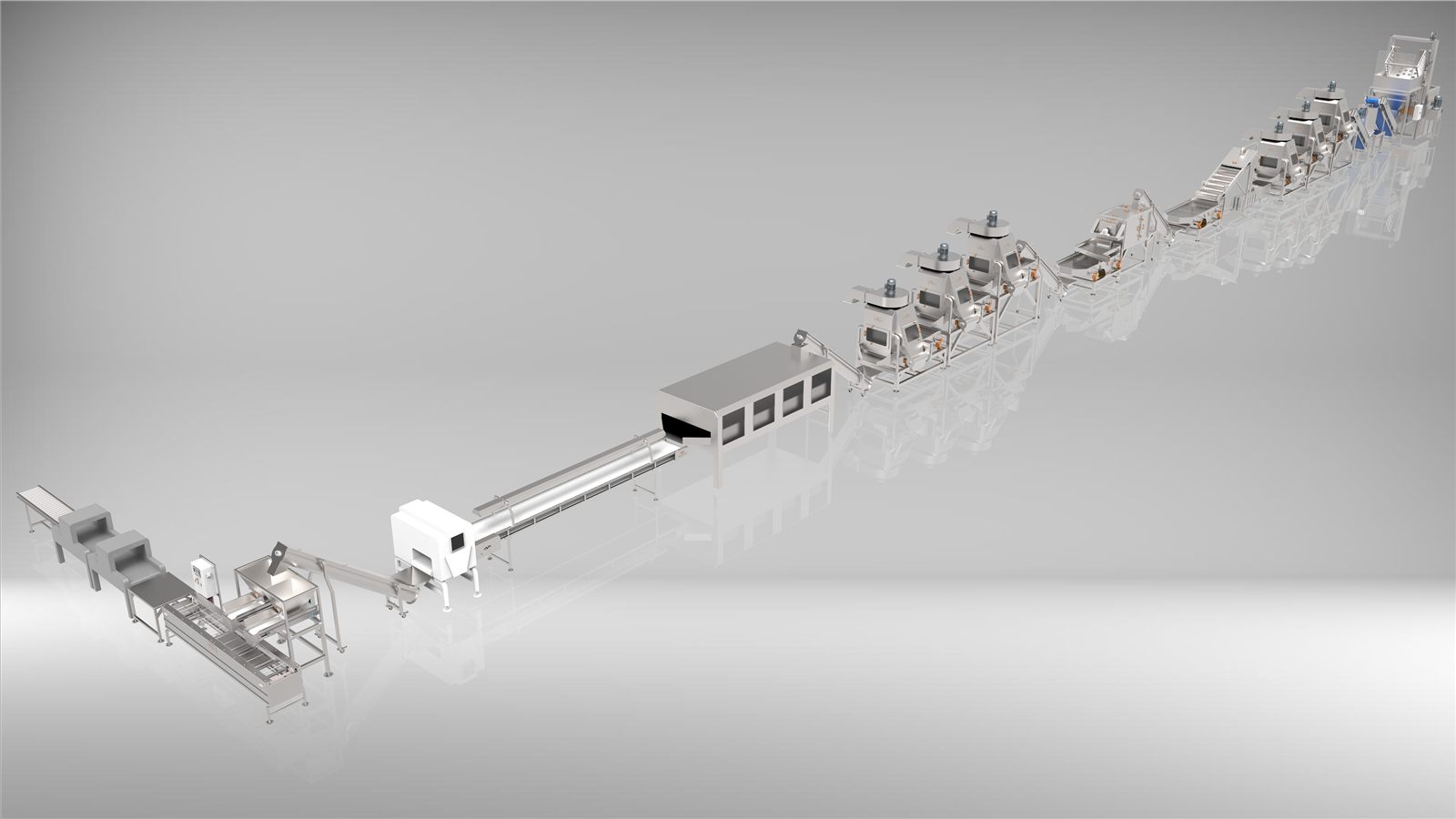
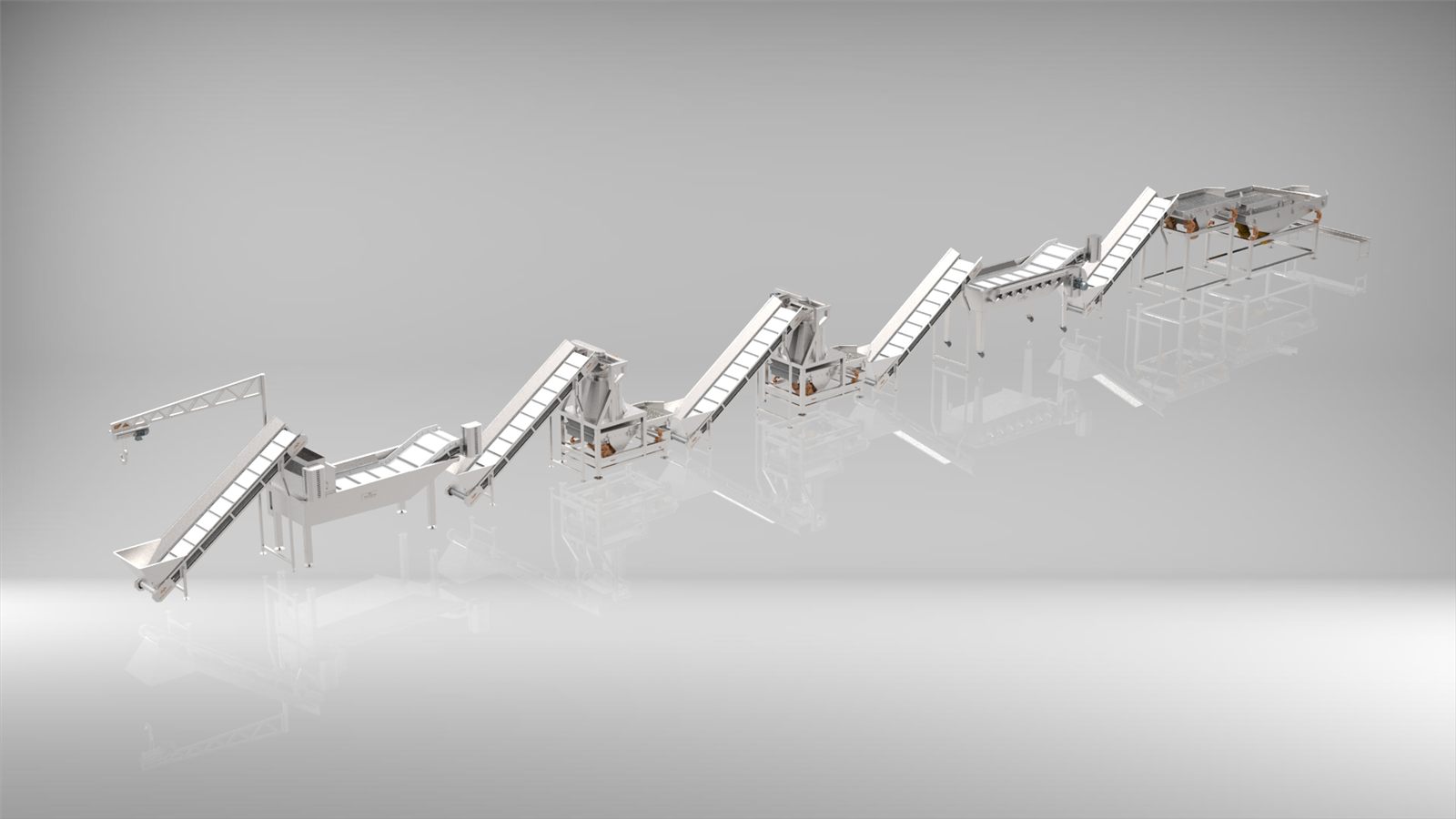
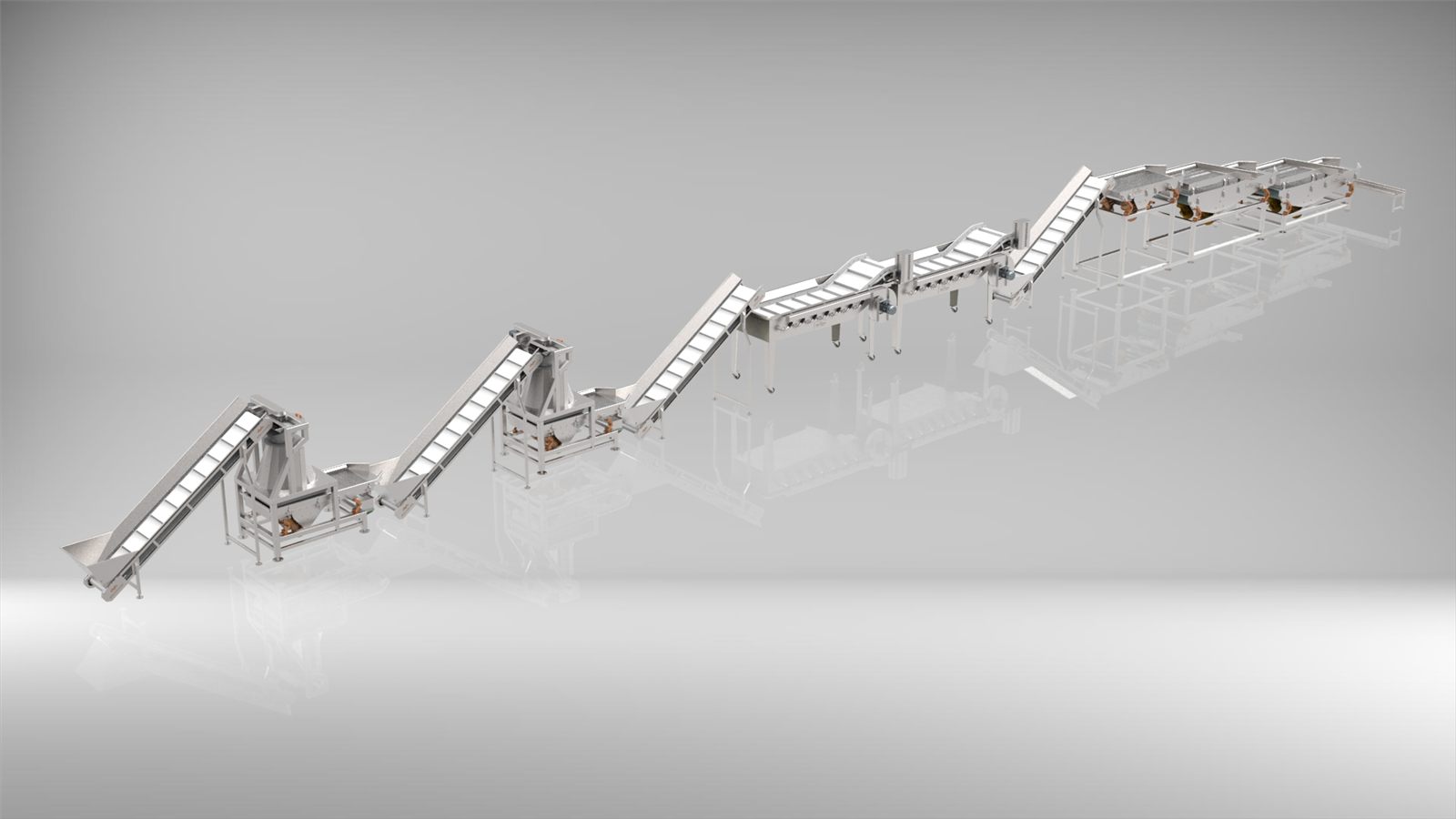
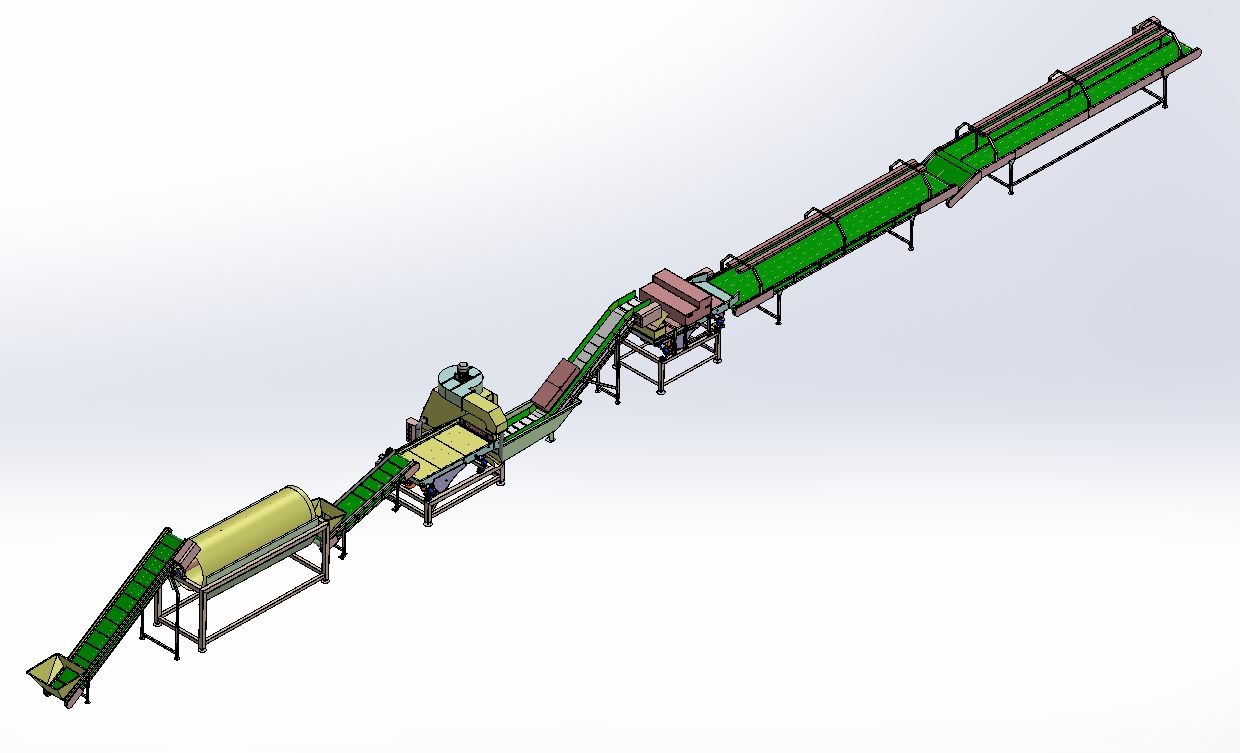
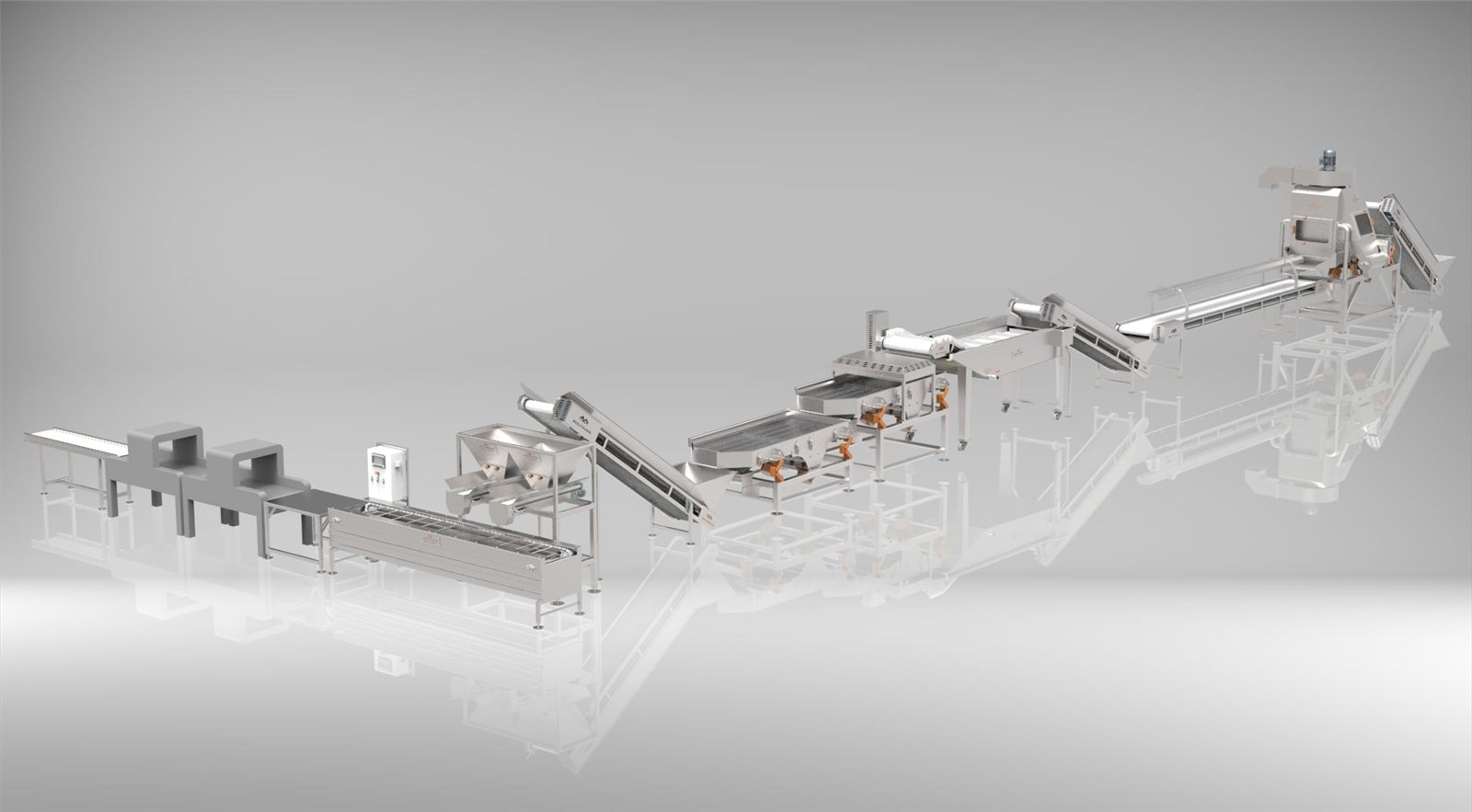
In the raisin processing line the hopper regulates the feed between the crate tipping machine and the conveyor. If this stage is uneven, every station after it, such as washing and sorting, inherits the same unevenness. Capacity is set per project, and the hopper size and speed are chosen to suit the total flow of the line.
Next step: share your product type, how lumpy it is and the target line flow in the quotation form, and the hopper setting and its place in the line will be confirmed together.