When crates are emptied at the start of a line, the product rarely arrives as loose, separate pieces. It comes in bulk and in lumps, and if that lump load lands on the conveyor in one go, the first machine downstream either sits half empty or gets choked within minutes. The agitated dosing hopper sits between the tipping point and the belt to solve exactly this. Below we explain what it does, how the feed rate is adjusted and what to check before choosing one.
01
What does an agitated dosing hopper actually do?
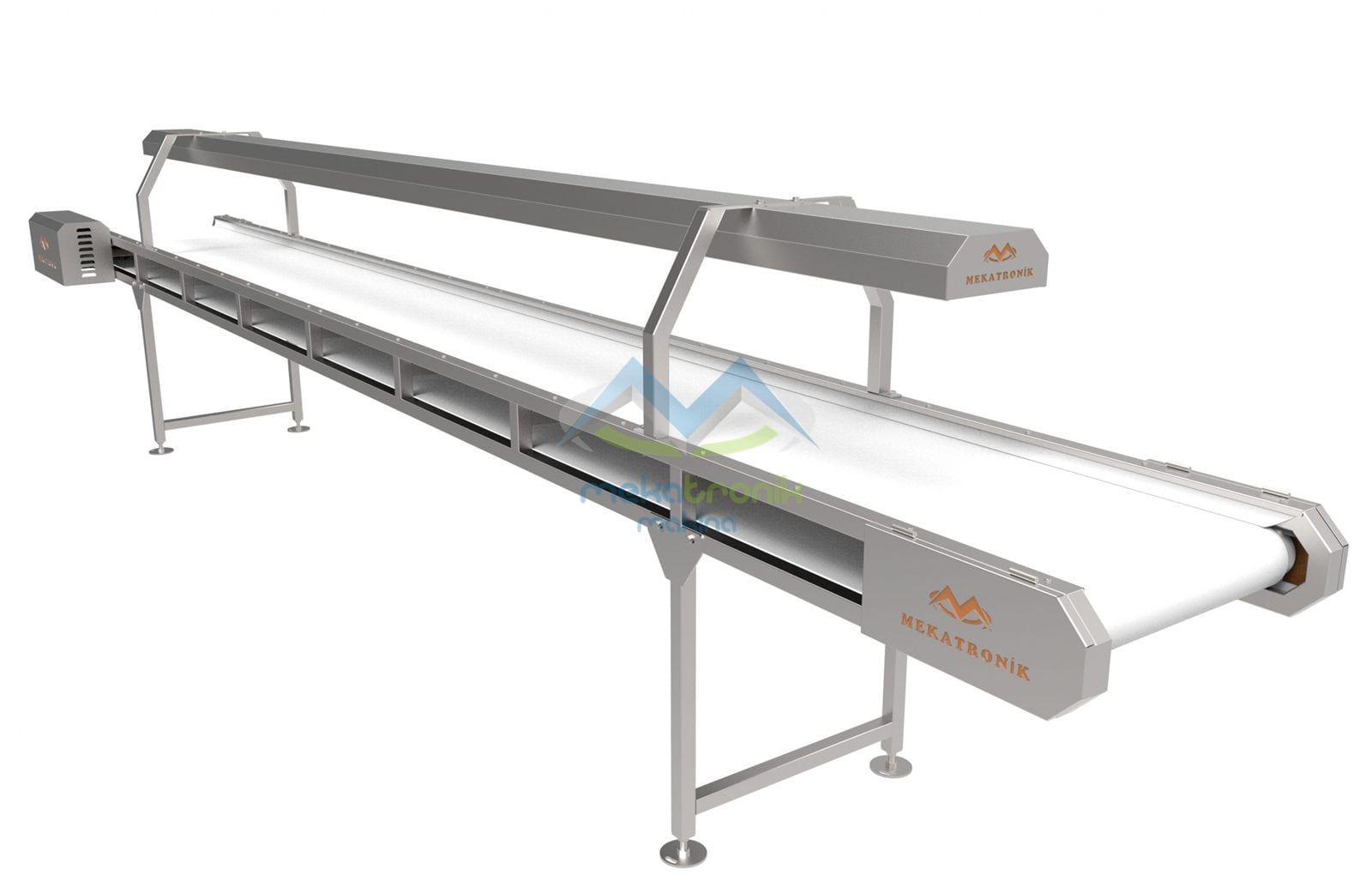
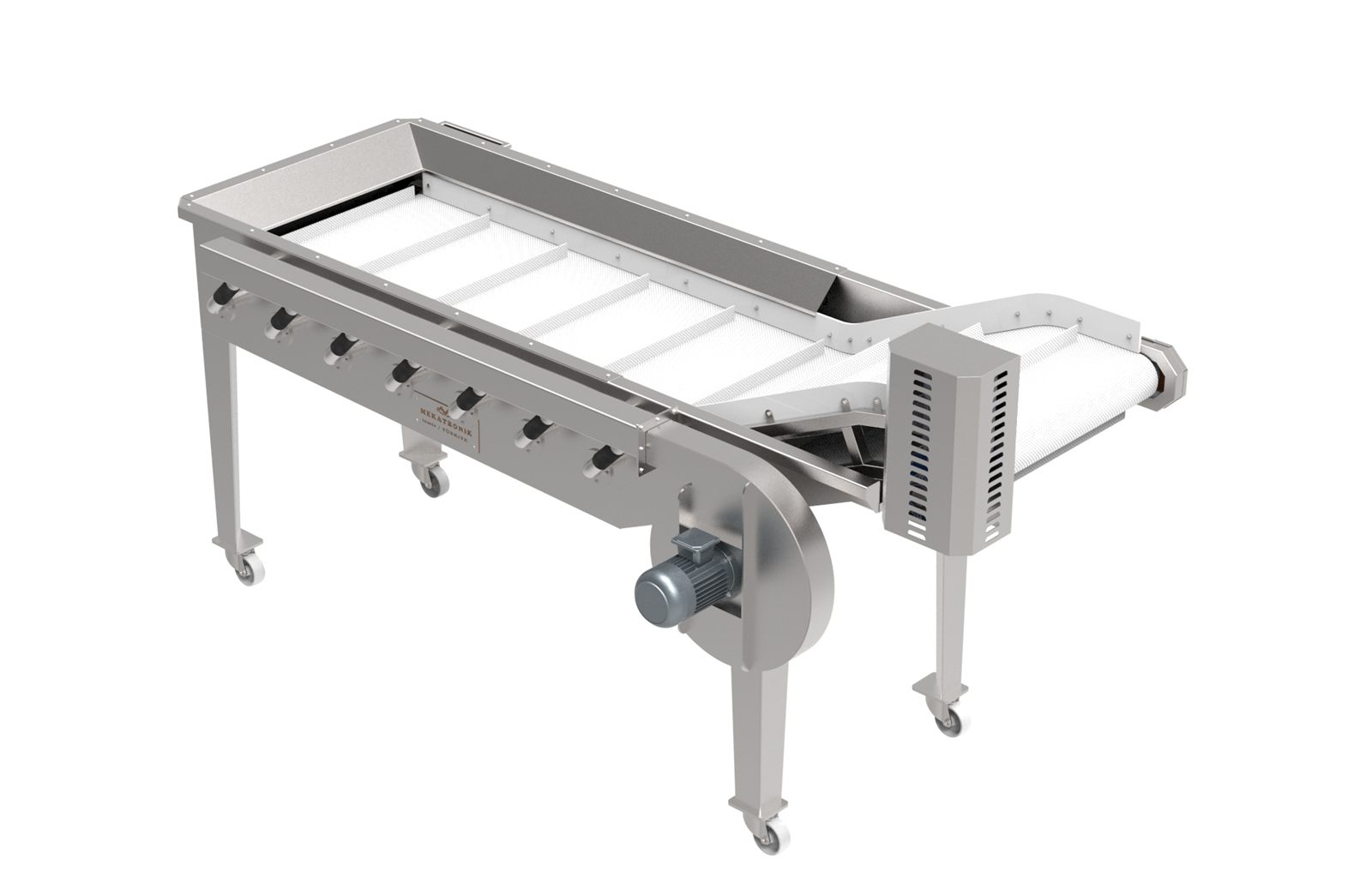
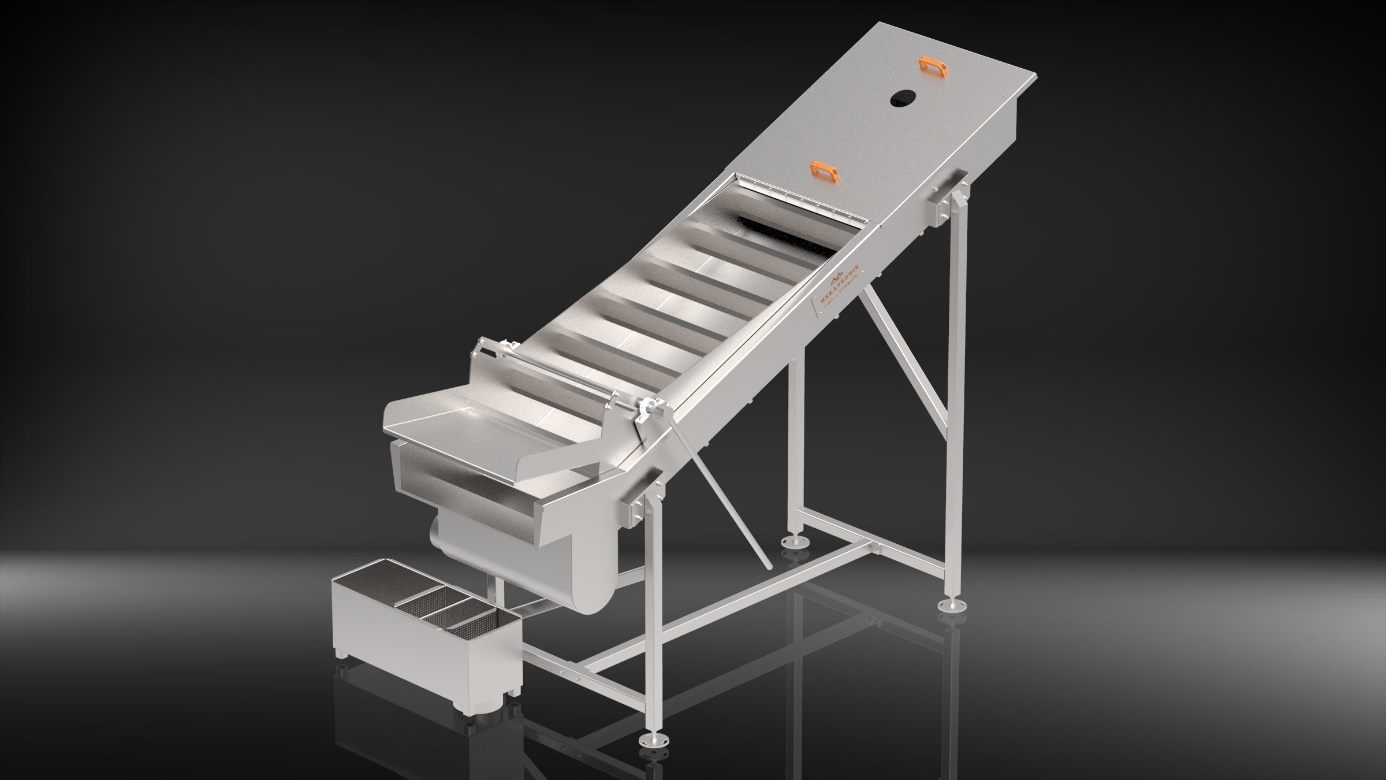
It does two jobs in one body. First, the agitators inside the hopper break the lumped product into smaller pieces. Second, the hopper doses that product onto the conveyor belt at a rate the rest of the line can take. The machines after it see a steady stream instead of an irregular heap.
The catalogue describes the sequence in three steps: the lumped product coming from the crate tipping machine is poured into the hopper, the agitators break it into smaller pieces, and the product is dosed and transferred onto the conveyor belt. Most feed problems at a line head come from one of these three steps being skipped or poorly set.
02
How does product reach the hopper?
In a line where product arrives in standard crates, the usual partner is the crate tipping machine. It lifts the crate in a controlled way and empties it towards the hopper. Because a tipped crate releases a lot of product at once, the hopper has to turn that sudden load into a flow the line can carry.
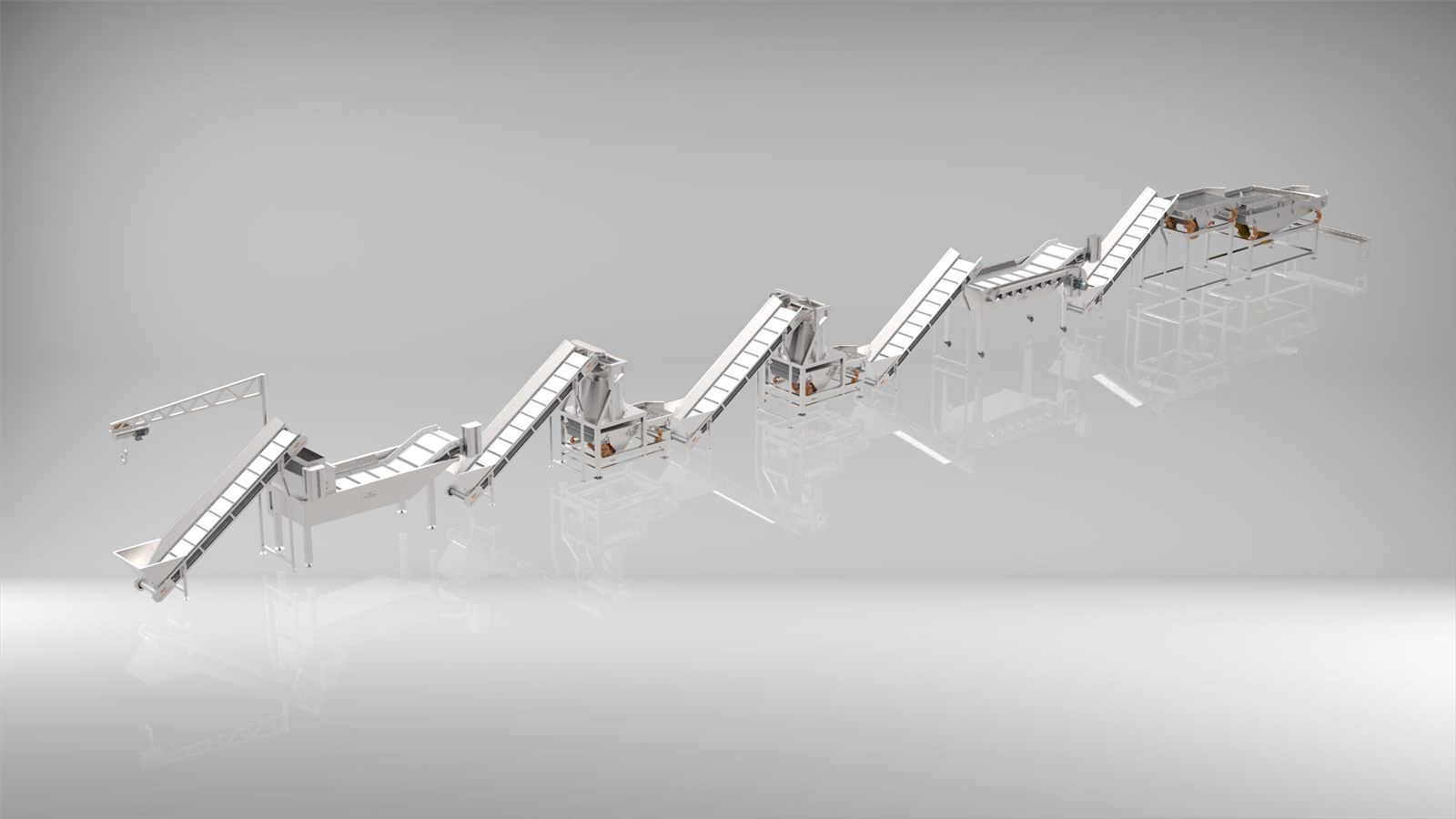
This is why the two machines are planned together. Placing the hopper under the tipping point, with the belt leaving towards the first processing machine, avoids hand shovelling and keeps the line head tidy.
03
How is the feed rate set?
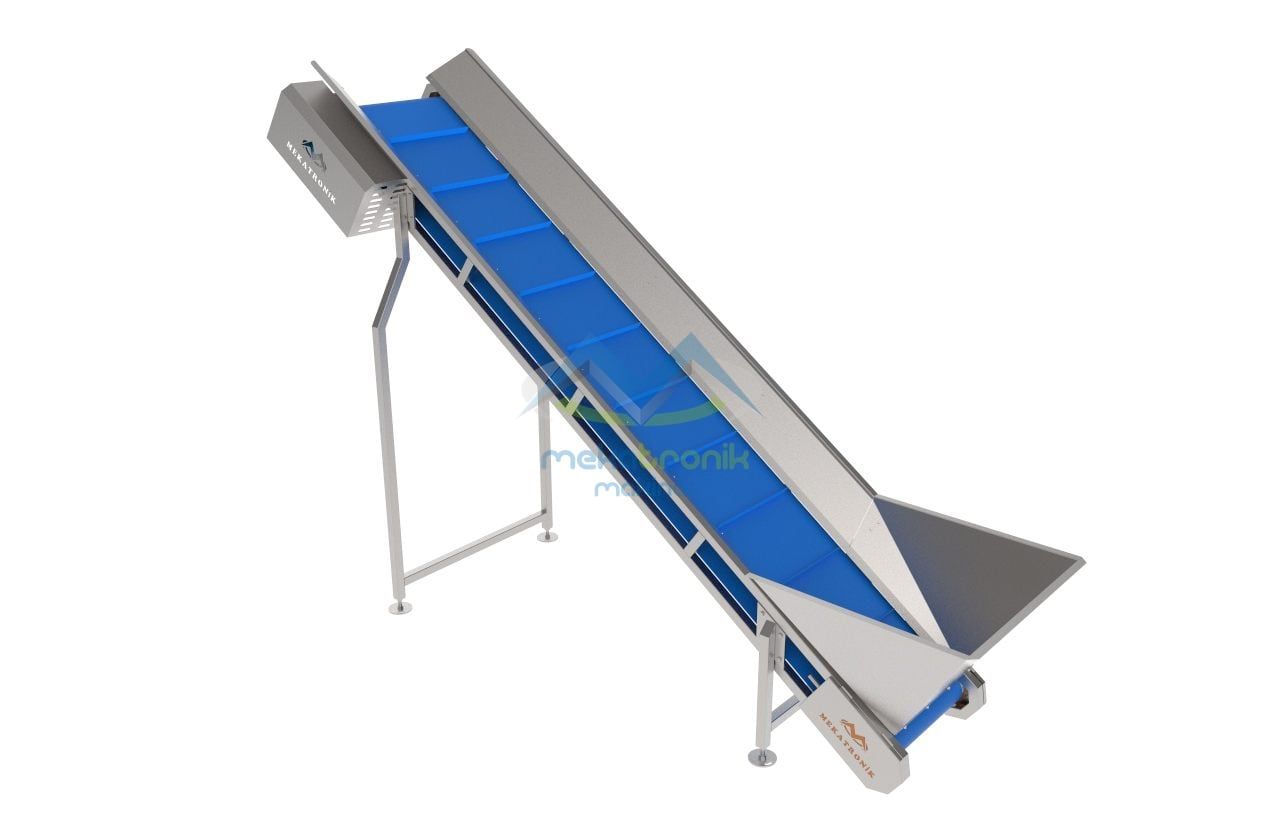
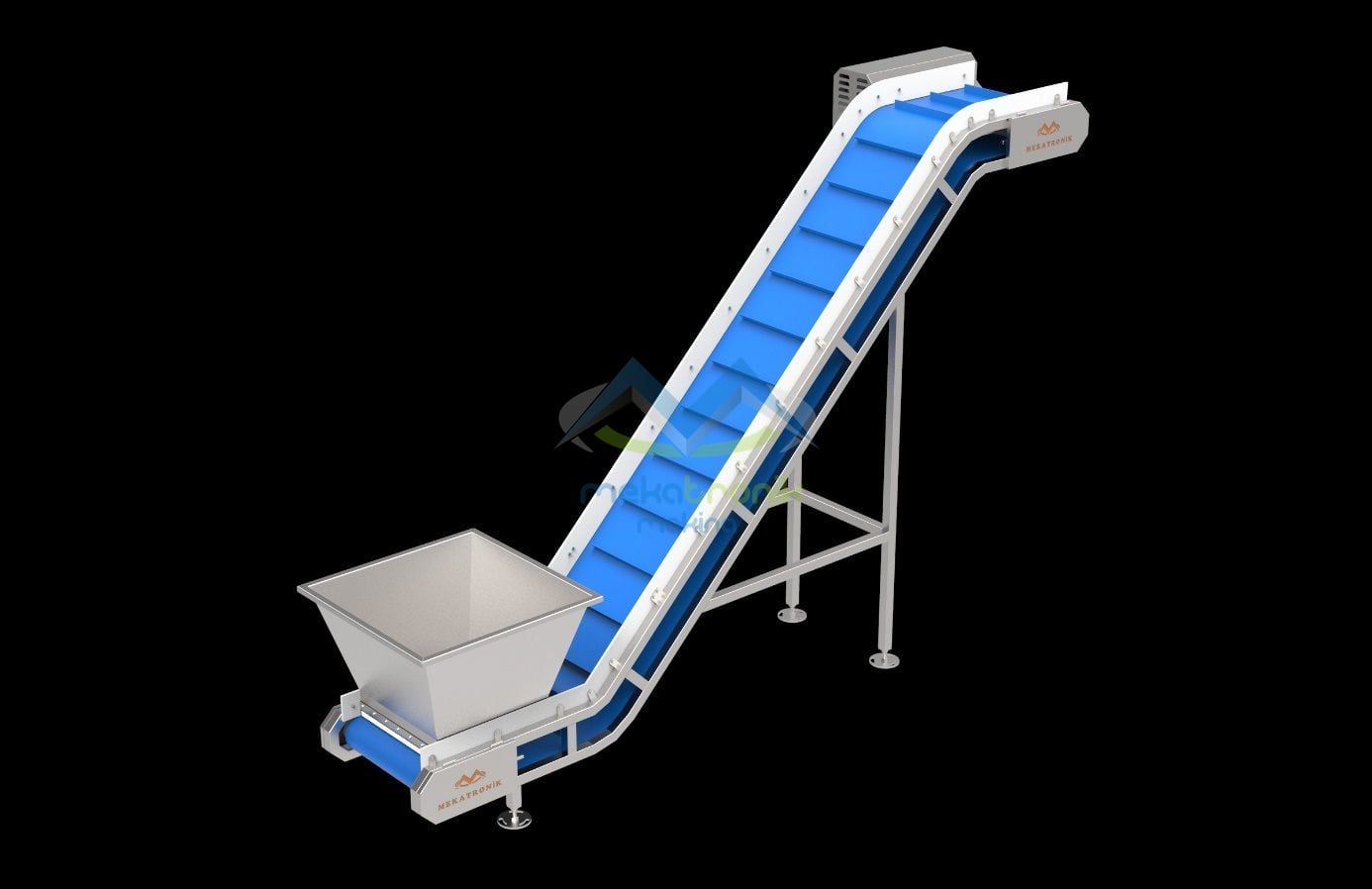
The belt speed of the hopper is adjustable with a frequency inverter, and the drive is a geared motor. If the product type, its moisture or the intake speed of the next machine changes, the operator can rebalance the feed instead of living with a fixed rate.
The reasoning is simple. If the hopper releases product too fast, the next machine piles up. If it releases too slowly, the line runs empty and works below its own capacity. Breaking the lumps matters for the same reason, because large lumps on the belt create an uneven load and send product to the next machine in bursts. Capacity depends on the project and the product, so exact values are fixed at the quotation stage rather than quoted in general terms.
04
What does the control system offer?
The standard control is an electronic hand-control unit. The operator watches the feed next to the machine and corrects it directly. For lines that need more automation, PLC-controlled or stand-alone operation is available according to the catalogue.
- 01Lump-breaking agitator system (standard)
- 02Electronic hand-control system (standard)
- 03Belt speed adjustable with a frequency inverter
- 04Geared motor drive
- 05Custom shapes and dimensions for the place and purpose of use (optional)
05
Which materials touch the product?
The body is AISI 304 stainless steel. Product-contact parts are a food-grade PVC or PU belt and an AISI 304 stainless steel hopper, with AISI 316 available as an option depending on the process. This does not mean every component is stainless: motors and electrical parts need protection when the area is washed down.
The agitator zone is where product can pack and leave residue. Emptying and cleaning it at product changes and at the end of a shift lowers the risk of carry-over into the next batch.
06
Where does it sit in a dried fruit line, and how do you choose?
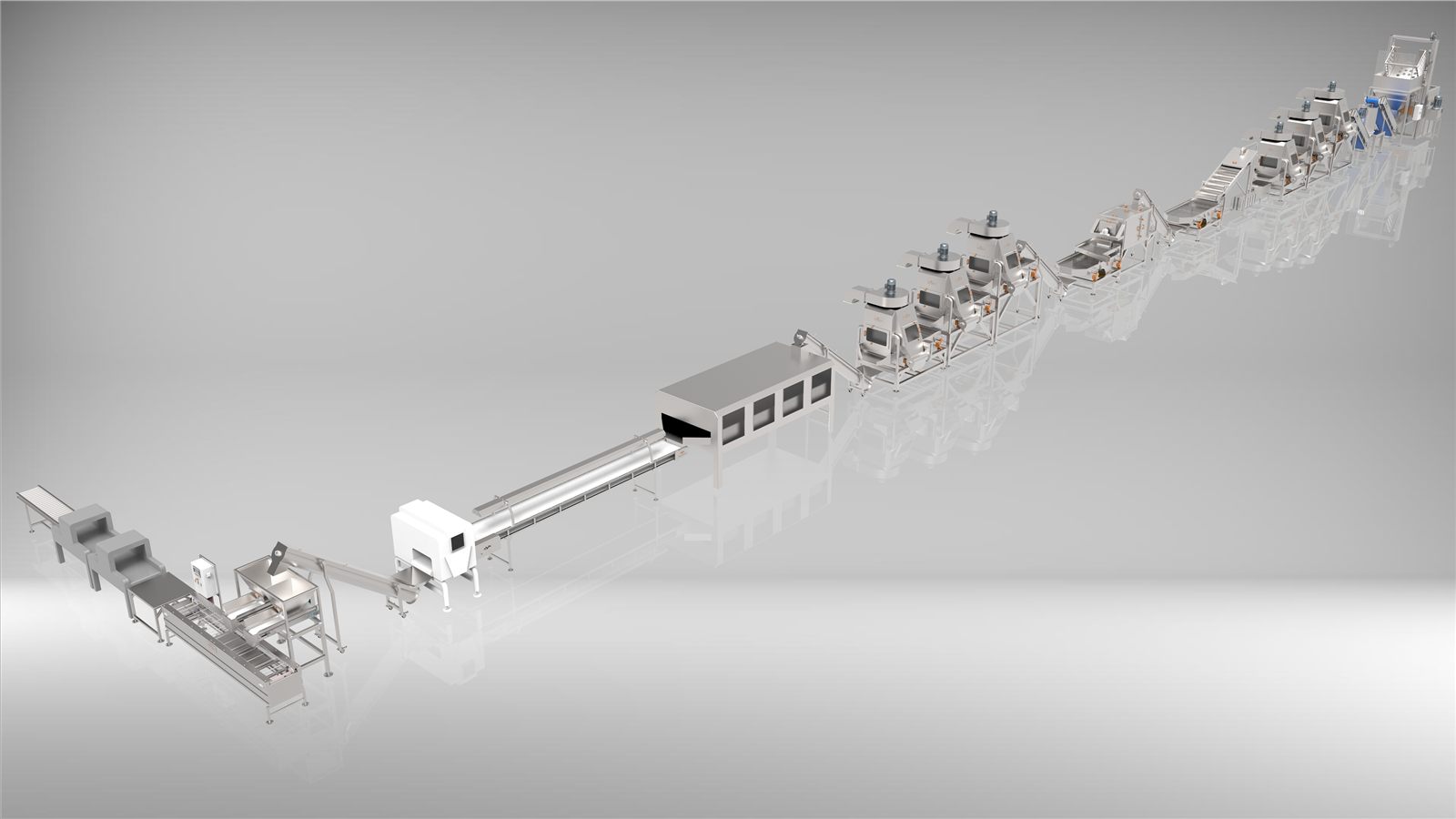
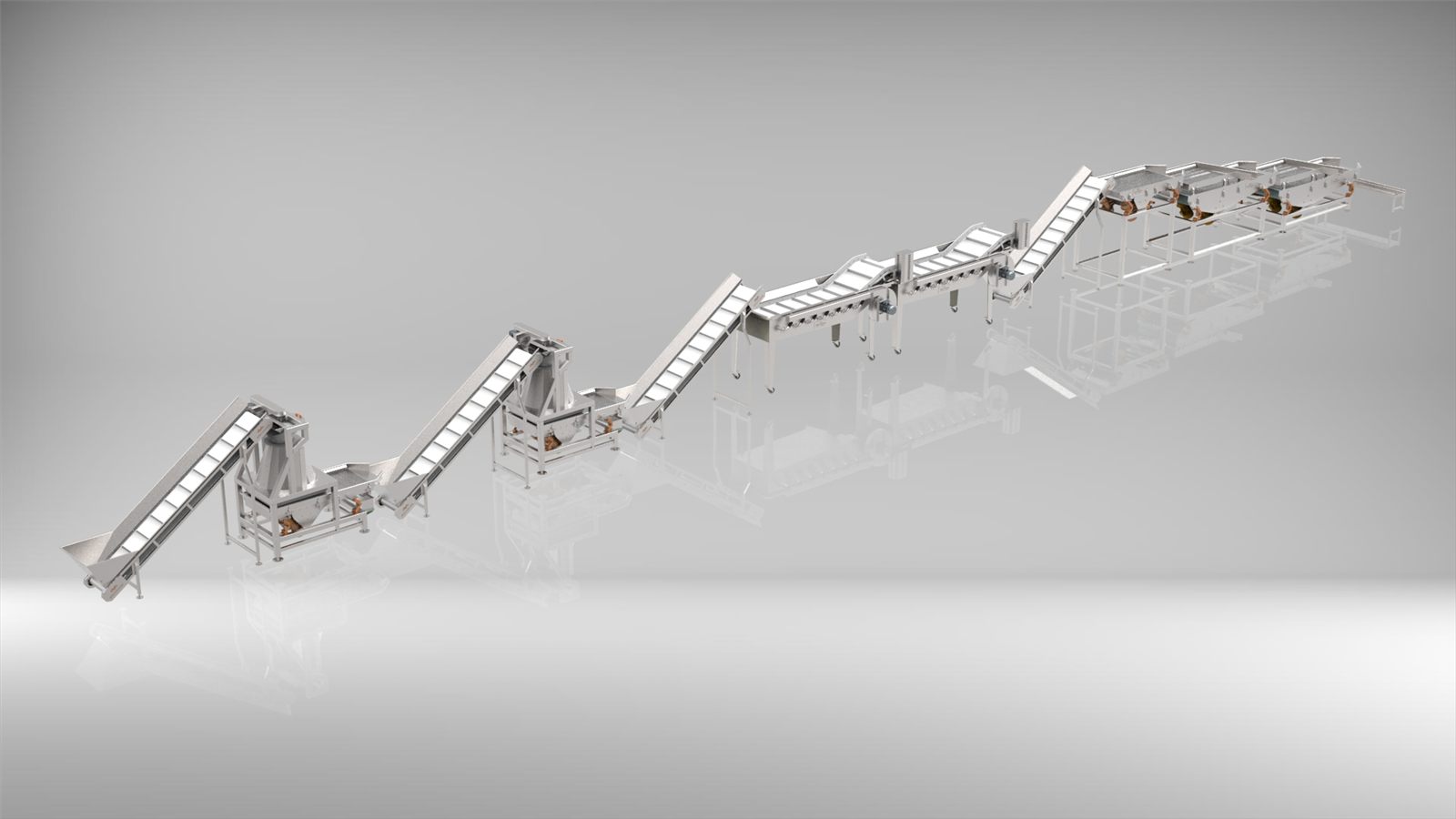
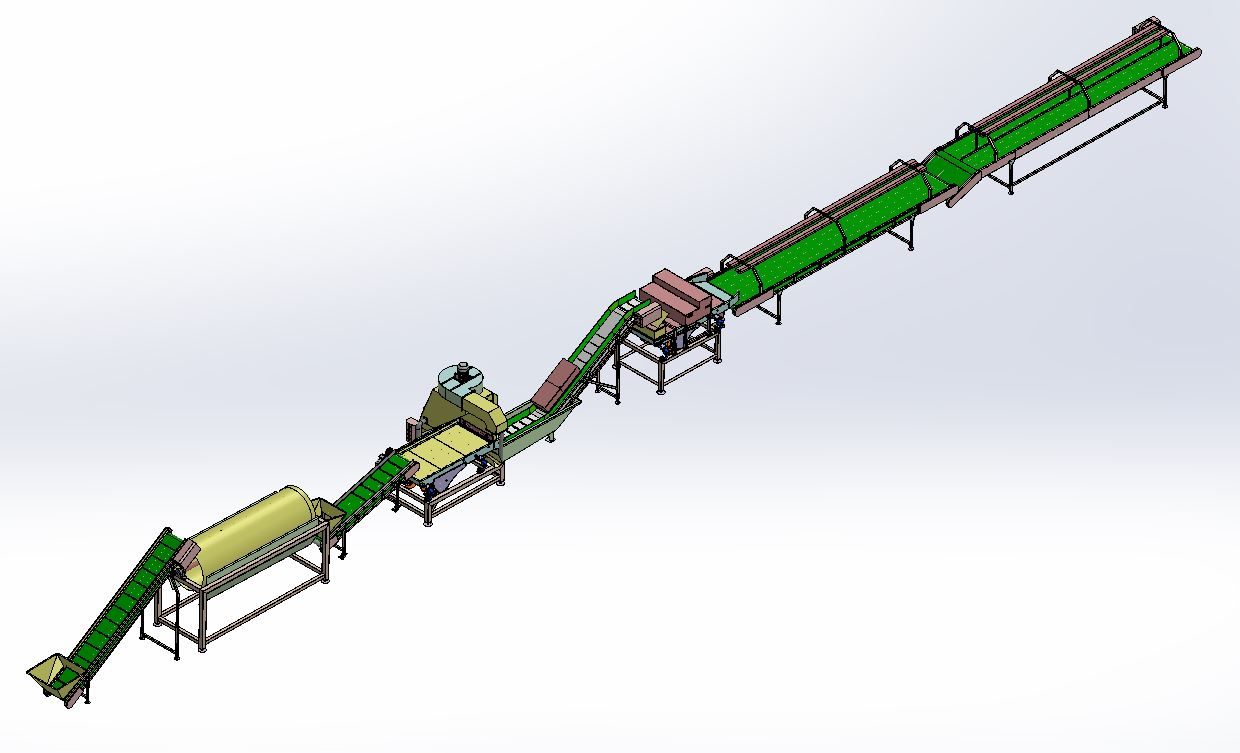
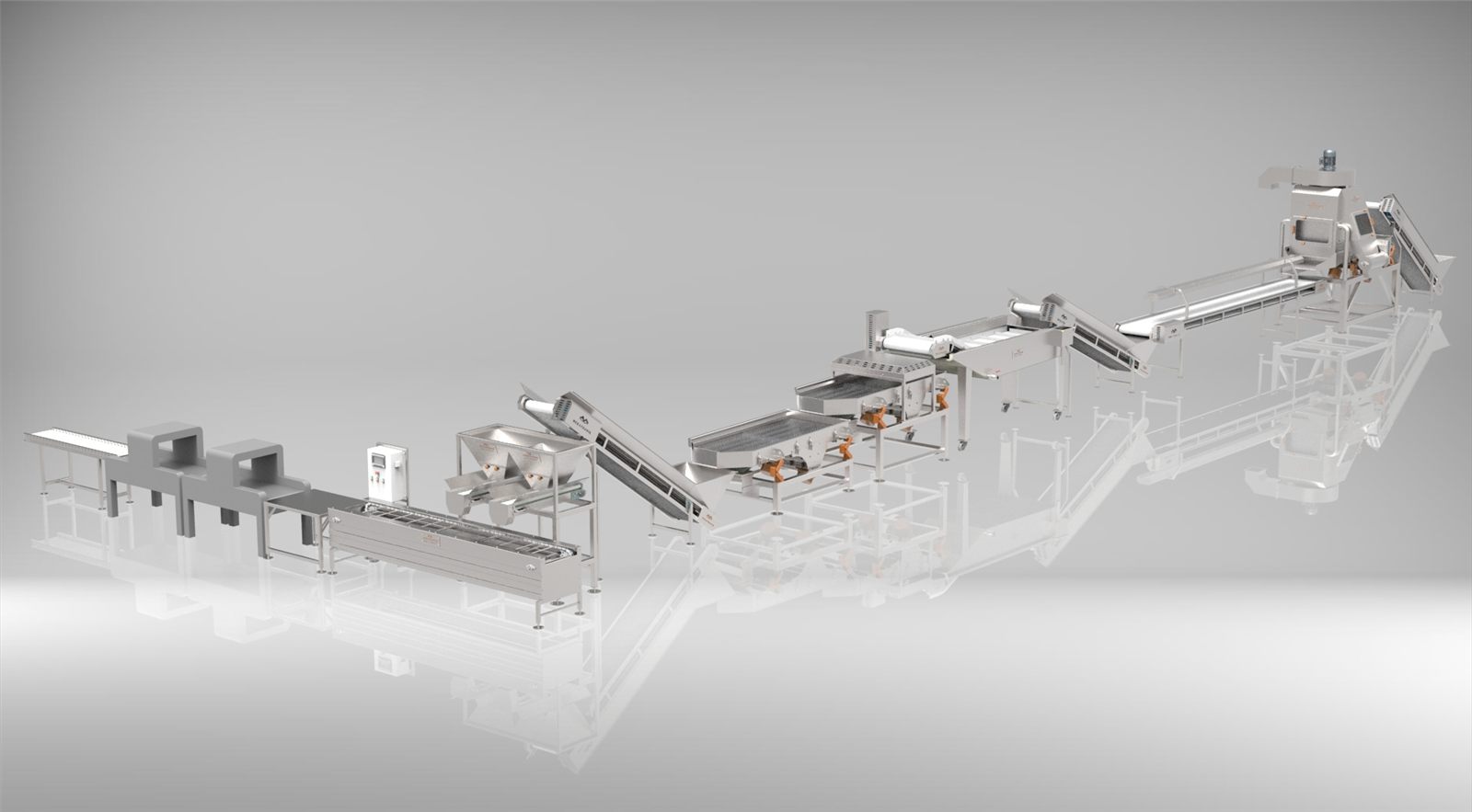
In the catalogue, the hopper is listed for the raisin processing line, where it works at the very beginning, at the point where product leaves the crate and enters the flow. How the following machines perform therefore depends partly on how well this first step is set up.
| Situation | What to look at |
|---|---|
| Product arrives in crates and pours out in lumps | Agitated dosing hopper after a crate tipping machine |
| Product is already loose | A lighter feeding arrangement may be enough |
| Next machine intake is slow | Lower the belt speed so the belt does not pile up |
| Line sits below capacity | Check whether the feed is too low or the lumps are not broken |
Four points guide the choice: how the product enters the line, the product type and moisture, the intake speed of the machine behind the hopper, and the available space under the tipping point. Custom dimensions can be built for the site, but final sizes are confirmed once the layout is known.
The agitators and the geared motor are moving parts and belong in a periodic check plan. The interval depends on the product and shift pattern, so no fixed figure is given here. A good operator habit is to watch the belt while the crate is emptied: build-up on the belt or idle agitators both mean the speed needs adjusting.
Next step: to define the hopper and the feed arrangement together with your line capacity and product, send your details through the quotation page. Dimensions and capacity are confirmed in the quotation according to the project.